Only Connect


The marathon began, like all my best marathons – and like all my worst – after too little sleep and too much coffee. Even before I start I know I will learn something today. Every marathon brings its own teaching.


I run alone. I train alone. All my running comrades have aged and retired, some defeated by injury, others redeemed by family. Alone, but never lonely, today least so, with friends waiting at Mile 23 and wife and kin at Mile 25. My wife Annette had her fill of marathons decades ago. The novelty of travelling to an inconvenient, often inaccessible rendezvous and waiting there for some hours just to sight and greet and embrace and encourage a sweaty spouse has worn off. Yet today bears the promise of Annette.


Fifty thousand-plus of us runners moved by ferry and by bus to Staten Island, New York’s forgotten borough. All had drunk copiously from early morning, against the inevitable drying out of our bodies during the run. After 90 minutes on the bus we debarked, bladders groaning, seeking relief.


I looked around me. I saw bushes aplenty but of toilets I saw none. The official marathon booklet warned us runners (on pain of disqualification!) not to use the bushes. I found a very long queue leading to the portable toilets which bore the name Royal Flush. I jiggled, moving from one foot to the other. Looking up, I saw many others in this queue and in others adjacent, dancing the urinary gavotte.


(I know no way of reporting the grit of the marathon without dealing with the seamy reality of the body. When we mammals run our bodies heat up. To contain that heating, a dog will pant, but we human mammals sweat. By the end of the marathon the human kidney is under siege from breakdown of muscle protein, the circulation struggles to compensate for dehydration, toes purple and balloon as blisters fill with blood. Elsewhere, armpits and scrota shed skin, nipples bleed, bladder walls abrade each other and haemorrhage into urine already laden with albumin and urea. The runner eliminates a scant flow of disreputable gravy. Great runners are not immune: champions of major marathons have voided into their shorts, have shat themselves when their bowels outran them, and/or shed public menstrual blood on their way to victory. It’s not a glamorous sport.)


The morning was crisp and bright. The sun streaming through the window of the bus had warmed me luxuriously, but once out of the bus I crisped up nicely. Dunkin Donuts make a drink they call coffee and Americans pay good money to drink it. For us runners the drink was free. I welcomed it for the warming. My Wave in the marathon would not start for two hours, so I sat in the lee of a large tree and read the Book Section of the New York Times. A thin lady with fair skin, her freckles pale in the sunlight, wore a shirt blazoned with the dying words of Pheidipides, ‘Rejoice, my friends! Ours is the victory!’ The young woman claimed Pheidipides as her running inspiration. ‘Mine too’, I told her. She said, ‘I tell the story to my little girls, but I don’t dwell on his dying.’ Soon we were talking about books and favourite authors, and time trickled away pleasantly until Marshalls called my Wave to the starting corral. I suppose that was the story of my day; simple connection with another that would blind me to small things like tedium and pain and tiredness.


The day, like the poets, starts in gladness and ends in madness. Events, faces, sounds, sights and crowds merge into montage. Memory becomes a scrambled egg. A body starts out full of running, it sobers and slows, it falls into a plod, later it labours, only to speed up again, endorphin-fuelled. By the end of the race I remember all, but chronology blurs.


Every runner contemplates three distinct finishing times – the one most likely; the acceptable slower time; and the secret time, very fast, of the runner’s dreams. A couple of months ago I ran in Alice Springs with an injury. I completed the 26.2 miles in 344 minutes, equating to a mile every 13.13 minutes. Feeling fitter now and more hopeful, I dreamed of running this marathon in eleven-minute miles. A marathon is one of those things dreams are made on.


One thing certain: if I run more quickly than I can sustain I will regret it later. With my mind full of calculation, I heard a cannon fired somewhere in the distance. Runners shuffled forward towards a Starting Line none could see, the roadway rose beneath our feet and abruptly we were running up the long incline of the bridge over the Verrazano Narrows. I tried to forget how high we were above the waters. I tried not to run too fast. I noted with dismay the rough, harsh concrete surface that jolted my joints with every step.


I looked from one to another of my fellow runners in all their heterogeneity. (That’s another secret – distraction by the human landscape.) I saw we were thin, we were fat, we were tall, we were short, we were of all races; some of us were twisted, some wasted, some blind; one ran upon a metal spring in place of a foot; we were young, we were old – one runner older still, for on his back I read, ‘Born Before WWII.’ The man was weedy, his trunk narrow and his hair long and wavy, a white savannah. He radiated a perky energy, his marionette limbs jerking along effectively at roughly my own pace. After a time I lost him but we were to cross paths repeatedly over the coming hours.


We descended from the bridge into Brooklyn where the first of countless New Yorkers came out to bless us and feed us and celebrate us as we passed through their multifarious neighborhoods. Those New Yorkers held aloft signs. Some named their hero: ‘Daddy, we’re proud of you!’ ‘Miss Jones, Grade 4 think you rock.’ ‘Lucy, marry me. Please shower first.’ Others were philosophic: ‘Pain is temporary, glory is forever.’ ‘Pain is temporary, Facebook is forever.’ And, ‘Pain is just French for bread.’ 


And one sign humbled me with, ‘Stranger, I salute you.’ (The shock of the true. Who is this who speaks thus to my soul?)


I was dreaming I suppose when a sign told me I’d run three miles in 29 minutes. Too fast! I knew already my hope of a good time was ruined, the work of mutinous legs and wild ambition.


Bluetooth carried music through my hearing aids. Suzanne started me, followed by Sisters of Mercy, then Hey, That’s no Way to say Goodbye, So Long Marianne, and so on, through the Leonard Cohen songbook, eighteen songs over one hour and 18 minutes. From the Start on the bridge from Staten Island the entire album carried me into Brooklyn, but not beyond. This, I realised, would be a slow marathon of many albums. “Graceland” next.


Numerous young women brandished warning signs: ’Run faster, I just farted.’ (How rude.)

A tall black man at a pedestrian crossing held a sign that urged the endless passing stream, ’Speed up. I’m waiting to cross.’ (I larrfed.)


We runners too wove a legible thread, of words worn on our bodies, some playful, some sombre. I read tee-shirts as I ran. Cancer was condemned, Muscular Dystrophy unpopular, diabetes damned.  When I read ‘Pancreatic Cancer’ – remorseless killer of numerous close to me – I gulped. Quite a few runners simply wore the two names, ‘Martin Richard’, without elaboration. Those names rang a bell from Boston, 2013; Martin Richard was the 8-year old boy blown up by the gormless younger bomber. The photograph in the papers showed a child standing on the pavement, gazing outward; behind him a young man in a peaked cap, at his feet the fatal backpack. That was Memorial Day in Boston, 2013, the day our folly lost its innocence.


Other signs memorialized a friend or parent – ‘This is for you Dad’ – occasionally the name and likeness of a child lost to cancer. ‘Charlene 10/13/08 – 2/9/14.’ All lightness sinks when you run behind that shirt and you contemplate the heartsickness of the wearer. Others wore the names of the Pittsburgh Eleven. (I was one of those.) 


After I’d run a couple of hours an ugly low bridge loomed ahead. That bridge (by name, Pulaski)  obeyed New York’s Law of Concrete Bridges, which ordains a cement surface, pitted and rutted, intensely hostile to the runner’s foot, ankle, knee and hip. The bridges of New York City are many. Next comes Queensboro, the great bridge from Queens to Manhattan. Lying in wait are the Willis Avenue Bridge and the Madison Avenue Bridge. The five bridges of concrete reality.


The Pulaski marks 13 miles, the halfway mark. By all accounts Mister Pulaski was a good bloke: 

www.polishamericancenter.org


[Kazimierz Pułaski, (English Casimir Pulaski, born March 6, 1745, Warsaw, Poland—died October 11/15, 1779, aboard ship between Savannah, Georgia, and Charleston, South Carolina, U.S.), was both a Polish patriot and U.S. colonial army officer, hero of the Polish anti-Russian insurrection of 1768.]


Good bloke or otherwise, to the runner, Pulaski means fatigue. By this point 13 miles felt to me quite sufficient. A tee-shirt ahead of me agreed: “Why didn’t Pheidipides fall at 13 miles?” Up, jolting and wincing, up Pulaski and over, and there, two-and-a -half miles ahead rose the great metallic arcs of the vast Queensboro.


In the company of The Boy in the Bubble I started the long climb. Into Graceland and beyond I climbed on. With Diamonds in the Soles of her Shoes I climbed still. Outside my earphones the world was quiet. Runners ran and breathed and grunted with effort. No crowds on the bridge, no wild animating distractions.


In the quiet I sensed my lips were moving, Hebrew words emerging. “Hear O Israel, the Lord our God, the Lord is One.” I am my sole self, again and ever the four-year old child reciting the creed. From that time I’ve recited that initial verse of the “she’ma”, twice daily. From that age I’ve known it to be the final prayer of the Jew at the moment of death. Why now? Why here? Perhaps it’s the relative isolation of these miles on the bridge, perhaps the mere mechanics of plod induce trance. I cannot say, beyond noting how, as I walk or run this earth, ancient prayer will surface unbidden. Liturgy-laced, my life has been framed by the times and seasons of the prayers.


I ran on and I heard my mouth say, “Uvlechtcha baderekh”, and I heard my father teaching us small kids, “And you shall repeat them unto your children, and you shall speak of them as you sit in your houses, as you walk upon the way, when you lie down and when you rise up…”


On and up, on and up, Under African Skies I ran, on and up, Homeless and joint-shaken until the top where the road ahead was blocked by a huge red firetruck. The truck revved us up, its deep horn blasting, booming, blasting. Legs took heart, the road sloped down and to the left, freewheeling I allowed my speed to pick up as I jolted the long mile down to Manhattan.


In four previous NYC Marathons, First Avenue always defeated bonhomie. Debouching from the Queensboro Bridge, we ran into an ambush of ecstatic goodwill in First Avenue, with crowds wildly excited at our arrival in Manhattan.  Manhattan! – a name to conjure with, name of the great centre of excitement that is New York. However, runner beware:according to an article in the New York Times, Manhattan is derived from the local tribal language word Mannahatta, with a likely meaning, “island of many hills.”


Erst, the excited crowds were brief and the Avenue long. Crowds would thin, muscles flag, spirits wilt and on we’d run, and on, towards a distant island of further desolation, The Bronx. No desolation today: today the crowds do not thin, enthusiasm blooms at every side, the sun shines upon spectator and hero alike. Spectators in wild array, in every mode and manner of dress, watchers in love with their particular hero, in love with this stranger that is within their gates. The sun warms them, large plastic beakers of lager cool them and their cup runneth over. 


I’ve claimed often I’m the world’s slowest runner, adding, ‘a good walker will beat me’.  Here at 18 miles I see my words made flesh. Striding at my left a compact young woman (they’re all young now) walks smoothly past while I runshuffle on.


And here’s music!  A bunch of schoolgirl drummers, exuberant in sky blue, drummed and danced us up First Avenue. Harlem, where runners’ limbs are leaden, boomed to the beat of rappers. Everywhere rock bands with driving guitars and belting vocalists shook us as we plodded along, revving us up. All music up-tempo. In Brooklyn a Spiritual choir outside a church (emblazoned with the Star of David – go figure) flung soaring soprano sounds into the heavens. 


At twenty-two miles I overtook a young woman whose shirt read, ‘Running for Two.’ Apprehensively, wondering who she’d lost, I asked, ‘Will you tell me who else you run for?’ Her face lit up as she pointed to her belly: ‘My baby. I’m 10 weeks today.’ ‘Your first?’  (I meant the baby). ‘Yes’ – another bright grin – my doctor gave me the all-clear. (She meant the marathon.) The woman’s sheer delight infected me. Today, a maiden marathon, in 30 weeks a new human, born to love.


At length the golden light began to fade and the day cooled. At the same time my running slowed further and I too began to cool. I was heading up Fifth Avenue now, not that Fifth Avenue where every shop sells goods you don’t need and cannot afford, but a sylvan Fifth that curves and hides in the beechen green of Central Park.


Mile 22, mile 23, a steepish little uphill and I look around into the collar of crowd for a face I know. A doctor who has ministered to my family since my eldest daughter was 12 – that’s thirty-four years – has promised to meet me hereabouts with iced coffee. A voice roars from my left, ‘Howard!’and I totter over and accept a pint of the magic fluid.’ Brian and I shake hands, Onella beams, other voices from faces new to me tell me how great I am. And recharged with water, sugar and caffeine I’m of a mind to agree. Feeling at least a little greater I plow on, on toward another rendezvous.


The road curves and dips, the crowds are excited, solicitous, effulgent with love that seeks an object. ‘Nearly there! Nearly done!’ – they scream. People peer and read my shirt: ‘Australia! Australia! – seemingly exultant as their love is requited. 


The crowds bring me back in time to the marathons I ran with Melbourne Marathon Legend (his actual, formal designation) Manny Karageorgiou. The Melbourne crowds adored Manny, as he transcended his malignancy, time and again rising from his bed to run Melbourne, while his Greek soul dreamed ever of running the Athens Marathon –  the Marathon marathon. Manny died last year, his dream unrequited. Two weeks from today his son Panayioti will run Athens in Manny’s stead.


Mile 25, and when I sight upon my right a head of curls atop a short female form, I know I’ve arrived. My wife Annette runs from the verge, arms wide, smiling wide, and although there remain 1.2 miles to the Finish, I’ve arrived. I fall into those open arms and fold that small person and sob. A red head of curls at Annette’s right and a silver head at her left tell me my faithful sister Margot and my brother-in-much-more-than law John, are here too. Margot feeds me oranges that come all the way from China as I hold on to Annette, holding on for love, and holding so I won’t fall down. After a time I de-clutch and run on. And as in all my NYC Marathons, Margot runs alongside. The final mile and-a-bit are dull but painless. Nothing hurts as I crank the limbs into a jerky sort of sprint to the Line.
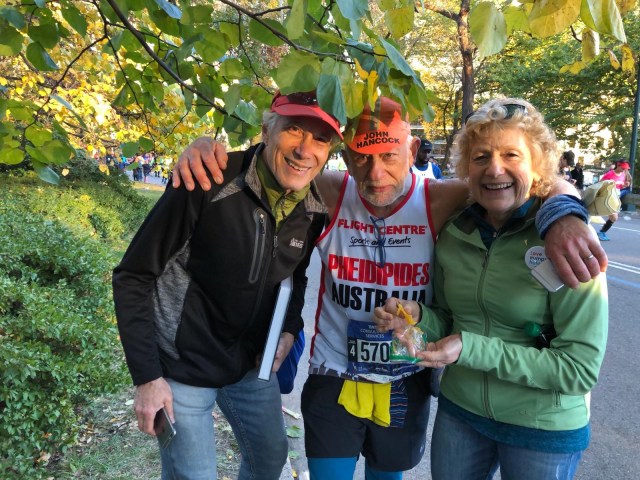


But someone else has fallen down. Mister ‘Born Before WWII’ lies face down on the bitumen. Gently, ever so gently, two large cops of the NYPD raise him from the road. His nose is bloodied but his smile is undimmed. ‘No, no, I don’t need a medic. No, I’m going to finish.’ With a cop cradling each arm, but under his own steam, the old man totters on. He will finish.


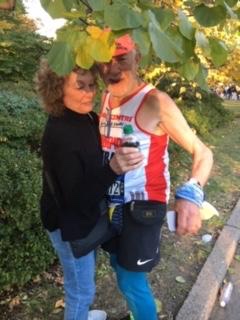
And as for me, my arrival happened before the Finish, back at Mile 25, back in Annette’s arms. I hurtle now across the Finish Line of diminished relevance, happy before I reach it. They give me a medal, they drape me in foil, they throw a blanket about me, but nothing hurts, nothing chills in this arrival, this return.
Appendix

And for the record Pheidipides Goldenberg, runner bib no. 57072, finished the  NYC Marathon in 5 hours, 34 minutes and 40 seconds, coming 118th of 231 runners aged between 70 and 75 years; 993rd of 1147 Australian runners.
The fastest Australian was Lisa Weightman (former Olympian, formerly Ondieki, nee Weightman), finishing in 2.29.11.
The fastest Australian male was Jarrod McMullen, finishing in 2.36.11.
The following day Jarrod crossed the North American Continent and the Pacific in 22 hours, seated next to Pheidipides Goldenberg, who crossed in the same time.

Dennis


When I was born my elder brother was two years and two months old. When my brother died he was sixty-two. Tonight my younger brother and I will remember our firstborn brother. We’ll recite Kaddish together in his memory.


When I was newly born Dennis filled my baby carriage with all of his toys, submerging me. I didn’t recall that; our mother told me of it. She said Dennis loved his new brother so much he wanted me to have all his toys. All of our lives Dennis gave away everything that was his.


Dennis and I always bathed together. When I was five years of age, and trusting, Dennis conned me into an act of fellatio in which he pissed in my mouth. I recall that clearly.


I’ll light a memorial candle tonight. The candle burns longer than twenty-four hours. When I walk into my night kitchen the small flame takes me by surprise. I stop and I remember. The small flame flickers and falls. It looks about to die, but then it rises and burns brightly.


I sit alone in the kitchen and the truth comes to me anew: we all flicker before we die. But Dennis! Dennis had such a force of life. I see him pushing Mum in her wheelchair along a steep winding path, pushing her up, up, to catch the sea view from a peak at Wilson’s Promontory. The tyres sink deeply into the sand but Dennis, by sheer force of will, propels Mum forward and upward.


Dennis the fearless. Dennis undaunted, never defeated. When his affairs took a reverse I’d worry for him, but he’d say, ‘It’s always darkest before the dawn.’  Dennis meant that, he believed it, he lived by it.


Life brought ease to the second brother, a harder path to the firstborn. Dennis rejoiced for me in all my little successes. He knew no envy, never felt usurped by the younger brother who got the birthright. He bought me a holy book and inscribed it with his heart’s blood: ‘For my brother Howard. God must be proud of you.’


Dennis had the gregariousness of the deeply lonely. I sit and leaf through his address book, an odd keepsake. The crammed pages teem with names, so many names, names of down and out people he’d find and succour. These people, themselves lonely, found in my brother a man who’d give away all his own toys. 


Dennis decided to undergo major surgery, hazardous surgery. I misgave. But he said, ‘Doff, It will cure my diabetes, I’ll get my life back.’  He had the surgery, his flame flickered and he died.


Eini, eini, yorda mayyim

My eye, my eye runs with water.


Ellul, 17-18, 5779.

Autumn Notes 111

The ruler of this blog disqualified the title of my previous post. I’d proposed “Autumn Notes -III”, but the blogmeistress ruled that out. ‘It’s a book review, Dad, it’s nothing to do with autumn. You’ll confuse people if you call it that.’

I disagreed.

She insisted.

I demurred.

She overruled.

So here we ago again. I’m writing this in autumn. Brown leaves are falling, the air is chilling, malicious winds lash the streets. What’s more, I’m in the autumn of my days. And today when I visited my aunt I glimpsed Winter.

My mother-in-law is a beauty. At 91 years she dresses like my daughters and she’s still admired as a beauty. Her name’s Helen. As in Troy. Ma-in-Law Helen remarked to me once,   ‘Your Aunty B was the most beautiful bride I ever saw’. On a separate occasion Aunty B said to me ‘Your mother in law was the most beautiful bride I ever saw.’

I’ve seen wedding photos of them both and I can’t disagree with either of them.

Today I visited Aunty B. Family news had filtered through the dark: B isn’t doing well. I found her sleeping in her room, surrounded by her daughters and her doctor-granddaughter. I saw her, I saw that same face, beautiful still. I thought of Aunty B’s life of battles, of her buoyancy and grace, her good cheer. I remember how she took this bewildered country boy under her wing on lonely visits to Melbourne. Now Aunty opened an eye. Was that a smile? Her hand opened to my touch, the grip strong. My last surviving aunt opened her mouth to speak. No words. The eye closed and she slept. Like Hemingway’s Old Man (of the Sea), did she dream?

It’s not yet Winter but it’s coming.

Love

I realise I have written little in this blog that does not touch on death in some way or other. I have written less of love. Probably I write of death as one preparing for that moment of truth. I write myself toward it and around it as one not yet in it. The pursuit, neither morbid nor frivolous, is the necessary (if deplorable) corollary of growing up. If I write little of love it is because I dwell within it and have done all my days. But the third day of December arrives every year and it reminds me.

Here then, conceived on December 3 2017, is a love story.

My wife is married to a pleasant enough man. I’ve known him for a long time, and although I admire him generously, yet I concede he is not perfect. My wife has put up with imperfection, with hopes incompletely realised for 48 years. On December 3 this year she gave her spouse a card, upon which the following words appeared:

This is my wish for you…


Comfort on difficult days,

Smiles when sadness intrudes,

Rainbows to follow the clouds,

Laughter to kiss your lips,

Sunsets to warm your heart,

Hugs when spirits sag,

Beauty for your eyes to see,

Friendships to brighten your being,

Faith so you can believe,

Confidence for when you doubt,

Courage to know yourself,

Patience to accept the truth,

Love to complete your life.


Better than the average Hallmark homily, I thought. And indeed the name I read beneath these lines was Ralph Waldo Emerson.

But the platitudes of the great philosopher were not penned by my wife. I opened the card and read her handwritten message.

I won’t share those words beyond this: my wife commanded herself to love me for a further 48 years. I did a little weep for joy and for thanksgiving. And the words remained in me, resonating, lighting the damp and darkened world about me. We drove to the country to lunch as the guests of our recently widowed friend. Aged in her mid-nineties, our host prepared our meal with dogged independence and perfect accuracy. We sat in her sylvan retreat and we shared her sorrow. For the first time in our long friendship our host’s beloved was absent. Only love abided.

Outside the window the green world was soaked by unseasonable rains. Behind and above the green the world was grey. Suddenly my wife started: ‘Look!’ she said. I turned and looked and there, a glory of gold and green, sat a king parrot, nibbling the widow’s birdseed.

Love lit my night. I recited my morning prayers and read the Shema with its credo. Immediately following the words of that key formula of faith was a concrete Commandment. And the command was love.

I opened the novel* that my men’s book club will discuss tonight. The editor wrote: If the novel can be said to have one central idea, it is surely of love, the many forms love takes…’a passion neither of the mind nor of the heart… a force that comprehends them both.’


*’Stoner’, by John Williams


Sadie

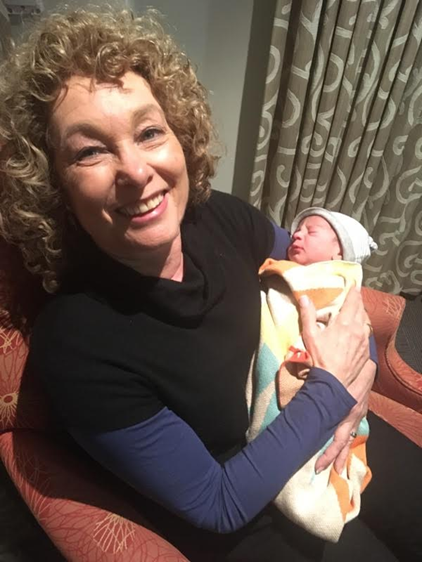
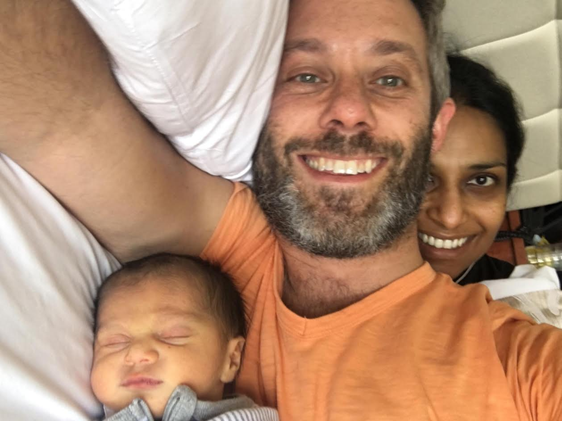
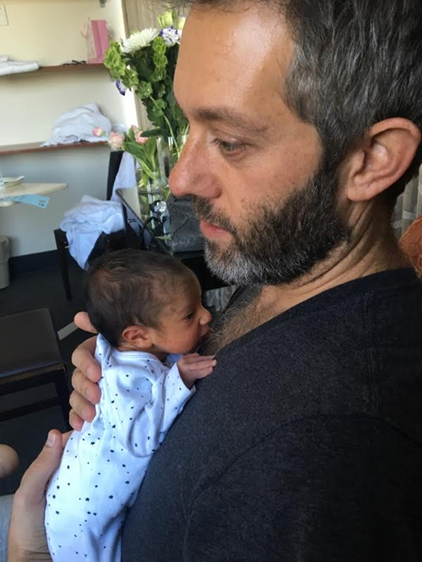
The baby slid into our lives one day earlier this month. I can’t recall exactly which particular day, but the day was particular for the sliding.

Doctors inspect, find all parts present and correct, a girl. Parents check: not simply present and correct, but perfect, their girl child. 

Grandparents arrive, enter the dimmed room, quieting exultation. They sight the child, suppressing gasps of joy. 

They behold, astonished by smallness, their newest beloved. Already, immediately beloved.  

Lips a circlet of pink, the baby in stillness. Parents drained – but for now – electric with joy, unaware of their deepening sleep deficit, aware only of baby, baby, baby, miracle, fact, miracle.  

What is this love that bursts into being? This finer, purer love, this love that seeks nothing of the child, this love that demands nothing beyond that she be? This love, this agape? The grandparents are certainly agape. At this child, this miracle, fact, miracle.

In the quiet and stillness, in this room, tenderness has her domain. This room contains a new human person who sleeps, whose lips flicker and semaphore mystically. She sleeps and she teaches love.


Once Upon a Poem 


Once, when two persons were walking together at day’s end, the elder of the two remarked on the sunset. He spoke and said:


the sky is burning

in my mind


Once Upon a Story


Once, when two were walking on the beach the younger saw a rock that looked like Leviathan and she said:


Last night I was here and that rock wasn’t a rock.

Last night I saw it move from the sea. It moved up the beach and it came towards me. It was a whale. It chased me up the sand and I ran and I ran and I didn’t stop running until I got home.


Once Upon a Song


Once, when two walked together a song drifted towards them. The song had no words. The sounds of the song reached them from somewhere higher or darker or hidden. The sound surrounded them. The flapping of wings, the whoosh of flight, made them think of birds. And the drift and drone, the rise and fall, the start and pause, mad them think of a breathing. Perhaps a person. Perhaps their planet.
Once and Always


The poem and the story and the song came and went, went and came, always different, ever the same. The song and the story and the poem bound the younger to the elder and both of them to all who came after and to all who came before.


Sometimes the two remembered or wondered or dreamed or knew: the song and the poem and the story had been there before they were, before the sunset, before the rock. Perhaps song, poem and story had brought the sunset and the rock and the flapping wings into being.


The two knew they could exist only in a world of story and poem and song.


Favourite Books

After he died, my brother Dennis’ lifetime collection of books was set out on tables and benches, in boxes and on shelves at our parents’ house, for family members to choose and keep. Revealed before us was a catalogue of the brilliant and searching mind of my big brother. Biographies, especially political, books on management, art books and book after book on music. And cooking books, books on sailing, on fishing. The study and the joys of a big appetite for life and ideas. Books of all sorts, but not much literature and very little fiction. 


Dennis always named his three favourite books as the biblical Book of Ecclesiastes, Kahlil Gibran’s, ‘The Prophet’, and Siddhartha’, by Hermann Hesse. I knew and loved the first of the three, I knew and liked (and mistrusted) the second, and – as for the third – I didn’t know Siddhartha from Hiawatha. 


Dennis would read my writings, shaking his head, unhappy with my obliquity and my complexity. ‘Read Siddhartha’, he’d say, ‘And learn the beauty of writing simply.’ Dennis admired narration that was free of ornament and artifice. ‘You make me think too much,’ he said. I felt flattered and confirmed in my path. And I did not take up Siddhartha.


‘Ecclesiastes,’ I read religiously, every year, entranced by The Preacher’s philosophic quest, as he tastes and tests every idea and temptation, as he broods and takes up and sets aside every sacred and profane thing. And the rhythms of the text, whether in Hebrew or in English, have always entranced: 


To every thing there is a season,

and a time to every purpose under the heaven:
a time to be born, and a time to die;
a time to plant, and a time to pluck up that which is planted;
a time to kill, and a time to heal;

a time to break down, and a time to build up; 
a time to weep, and a time to laugh;

a time to mourn, and a time to dance; 
a time to cast away stones,

and a time to gather stones together;

a time to embrace, and a time to refrain from embracing;
a time to get, and a time to lose;

a time to keep, and a time to cast away;
a time to rend, and a time to sew;

a time to keep silence, and a time to speak;
a time to love, and a time to hate;
a time of war, and a time of peace.


Dennis’ birthday falls on November 22. Each year on that day the stated gap between our ages would open up from two years to three. On November 22, 2016, Dennis would have turned seventy-three. But he never reached even threescore years and ten. He died aged sixty-three. Ten years later I pick up Siddhartha and read it, to mark his birthday and to honour the wishes of the older brother who always willed me to be better in the particulars that he selected. I read the work, too, to learn more of my brother’s questing soul.


I need to digress here, to my misgivings about ‘The Prophet’. I find it calming, pleasing, gently uplifting. It is as smooth as gravy, as sweet as the dulce de leche upon which my Argentine relatives were weaned. That’s my problem: ‘The Prophet’ lacks grit. You read and you wallow. As an essayist remarks in the New Yorker: ‘In “The Prophet” Gibran (mixed) a warm, smooth, interconfessional soup that was perfect for twentieth-century readers, many of whom longed for the comforts of religion but did not wish to pledge allegiance to any church, let alone to any deity who might have left a record of how he wanted them to behave. It is no surprise that when those two trends—anti-authoritarianism and a nostalgia for sanctity—came together and produced the sixties, “The Prophet” ’s sales climaxed.’


Raised as we all were, in a strictly Orthodox Jewish family, Dennis chafed against God the father and against our godlike father. He found the courage – indeed the compulsion – to rebel, but he never ceased to feel the pull and the lull of the old-time religion of his early nurture. He tried to relinquish Jewish restriction but the ritual would not let him go. Hence the enduring attraction to him of ‘The Prophet’, with its ‘anti-authoritarianism and its nostalgia for sanctity’.


Back to Siddhartha, another huge hit among those who were young adults in the seventies. When a book is so uncritically adored as this I start to feel uneasy. When I take up my newly purchased copy and discover that Paulo Coelho has written the introduction, my unease deepens. For – possibly alone among its millions of readers and adorers – I found the pretentious simplicism of ‘The Alchemist’ alienated me.


So you see, these works find me out as cynical.


But cynicism falls away as I read Hesse’s account of his searcher for enlightenment. Dennis sought enlightenment with his strong, rational mind. I recognise Dennis as the Buddha’s chastens Siddhartha: ‘You are clever…,’ said the Illustrious One; ‘you know how to speak cleverly, my friend. Be on your guard against too much cleverness.’

I see here Dennis, my too clever brother, the troubled searcher, endlessly testing his traditions, endlessly questing. This is the brother who embraced ‘Ecclesiastes’, in which The Preacher seeks but never finds a truth that satisfies. ‘Vanity of vanities, saith the preacher, all is vanity.’ It is an honest quest, brave and lonely. That was my brother Dennis, brave and lonely, longing, as his son remarked at the funeral, ‘to love and to be loved.’


But unlike the monk Siddhartha, Dennis did love: most particularly he loved our mother, and he loved me. And I loved him, and I miss him still.


Empty, Empty and Desolate the Sea

I can’t see Manny anywhere. I stand and fret in St Kilda Road. The spring gale blows a clatter of discarded plastic drink cups along the great boulevard. The cups fly and land and take flight again, baffling the redshirted volunteers who try to arrest them. In all the great sweep of road it is only the volunteers who run, no others: the marathon field has swept past me as I keep my watch and ward, as I wait and wait for Manny.
 

It is eight thirty-five. The marathon runners have passed, the half-marathoners too. Where is Manny? We’d arranged to meet at seven thirty. When we saw each other a week ago Manny told me he could run only two hundred metres without breathlessness. I was treating him for the respiratory infection that he’s prone to: whether it’s his cancer therapy or the cancer itself or a recurrence of pneumonia, he’s been unable to train. ‘Until the other day’, he says hopefully, ‘I did 10K on the treadmill.’ Then he concedes, ‘I had to walk and jog.’


Last night Manny sent a message: I’m hoping miracles do happen. This will be my thirty-ninth Melbourne Marathon. I am determined to start. I don’t want to embarrass myself. I hope I make it to the five kilometre mark. I’ll meet you there around seven-thirty I hope.


I have been watching since seven-fifteen, searching faces, peering into the throngs for sight of Manny’s familiar features, his labouring body. The road has been full, but empty, empty and desolate. So Manny has been defeated at last. After running thirty-eight successive Melbourne marathons, one of only eight people who have started and completed every one, Manny has admitted defeat. And it is not the event that has defeated him, but his illness. The wind howls in my ears, dust flails my face. I am almost relieved that Manny does not have to run into the gale.


I turn for home then look back over my shoulder. At the extreme of sight two figures are dimly seen. Their bodies are shapes, undefined. They seem to move: are they moving towards me or away? I wait. Yes, two figures, moving slowly, making slow progress in my direction down St Kilda Road. Can this be Manny and another, a support person? I wait my turn to become the next in Manny’s chain of supportive escorts. The figures approach, they gain definition. They move comfortably, they laugh and wave. They are young, female, they are not Manny.


Sombrely I jog back, keeping pace now with some lagging half-marathoners. Sloggers, these, a sub-sub-sub elite, united in dour resolution. These runners have the Manny spirit, the spirit that brought him through and home in the last two full Melbourne Marathons.


Back home I try to call Manny. No luck. I call his devoted son – all his relatives love and cherish him: no answer. I leave an anxious message. Restless, I await news. Day ends without word. I send an email.

Finally the following arrives: With help from my wonderful family I did the impossible and finished the thirty-ninth Melbourne Marathon.

I did the Cliffy Young shuffle and someone was with me all the way to help me along. I’m feeling very sore and tired.

I’m sorry I missed you. Hopefully we can run together next year.

‘Next year’. Two years ago Manny’s cancer doctor warned him against running: You fractured a cancerous rib just by coughing. You might have cancer in any of your bones. You can’t afford to run. But Manny did run. In 2016 with the same warning echoing, he asked his GP what he thought; this GP said, I’ll run at your side. And that was our plan again this year. But I missed him.
I missed him but Manny ran. He shuffled through the spring gales and he completed the full forty-two kilometres, plus the final terrible two hundred metres. And I missed witnessing one of the great athletic feats, one of the triumphs of the spirit over the flesh.


Next year, Manny, next year.


THE MCG STANDS EMPTY, THE SOLE RUNNER, LIKE PHEIDIPIDES OF OLD, ENTERS ALONE

Long in the Tooth

To celebrate our wedding anniversary (tantrum warning; see footnote) my wife and I arranged to spend an intimate weekend in a sleepy coastal village an hour or two from Sydney. At our advanced stage of life our offspring seek to protect us from any reckless or imprudent intimacy, and so it was our Sydney family joined us in the seaside cottage.
Annette and I married forty-six years ago, when she was twenty years of age and I was twenty three. We were children, who did not know each other; in fact we did not know ourselves. 
I did some arithmetic recently and realised we have been married for 66.66*% of my life. Annette’s percentage is even higher. We thought the marriage a good idea at the time and I think it a good idea still.
After so many years it is delightful to make fresh discoveries of one’s bride. On Day One of our anniversary weekend I disturbed Annette in the bathroom after lunch. I saw she was brushing her teeth. I said, ‘I didn’t know you brushed your teeth after lunch. I thought I was the only person in the world who did that. If I had known I’d have spread toothpaste on your brush when I did mine.’

With her sweet mouth foaming dentrifice attractively , Annette replied, ‘I always brush after lunch.’

On Day Two I went to the bathroom to perform my midday oral toilet and found my toothbrush, freshly spread with toothpaste. 
From brusher, with love.   
FOOTNOTE: TANTRUM.
THIS IS OUR FORTY SIXTH ANNIVERSARY. IT IS NOT NOT NOT OUR ‘FORTY SIX YEAR ANNIVERSARY’. THERE IS NO SUCH THING. THERE CAN NEVER BE SUCH A THING AS A ‘ONE YEAR ANNIVERSARY’ OR (HEAVEN FORBID) A ‘HALF-YEAR ANNIVERSARY’ OR (SAINTS AND REBBES PRESERVE US) A THREE MONTH ANNIVERSARY’. WHY NOT?

BECAUSE ‘ANNIVERSARY’ MEANS ‘TURNING OF A YEAR’; HENCE FORTY SIX YEAR ANNIVERSARY IS A TAUTOLOGY AND AN OFFENCE AGAINST LOGIC AND MEANING.
END OF TANTRUM.

Two Recipes for a Long Life

Recipe One
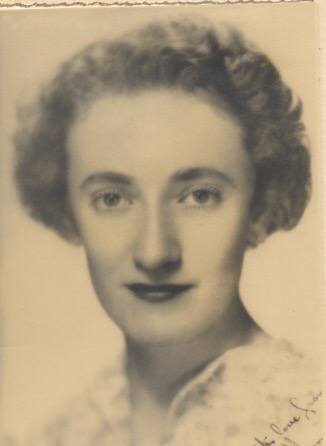
(Yvonne Mayer Goldenberg, 8 June, 1917- 7 June, 2009)

  
Eat only foods rich in butter and cream. Avoid any food that requires chewing, especially vegetables. (My mother was frightened by a vegetable as a child and never came near one again.)

Relax. Do not rush. Shun punctuality.

A lady who possesses the skill of changing a flat tyre should conceal such knowledge. ‘Why deprive some gentleman of the opportunity to behave chivalrously?’
(Mum believed in chivalry. As a child when instructed by her teacher to use the word ‘frugal’ in a sentence, Mum understood ‘frugal’ to mean one who saves. She wrote: ‘A lady was walking by the sea. A strong wind lifted her up and flung her into the waves. She could not swim. She saw a man on a white horse: “Frugal me! Frugal me!”, she cried. So the man leapt into the waves and frugalled her. And they lived happily ever after.’)

Rejoice in your kin; they are life’s benison to you. You will not have them forever. (Mum’s parents died in her childhood. Left with her younger sister in the care of her beloved grandmother, Mum cherished all her descendants with promiscuous undiscrimination.)

Smile. Nothing is so serious that it should furrow your brow – unless it hurt your little ones.

Talk to strangers, visit their countries. Walk the earth without fear. People are good.

Forgive your children their naughtiness. Indulge your adolescent children in their self-absorbtion. They owe you nothing; they give you all.

What you cannot cure you must endure – with a smile. (Mum’s hip was shattered in her twenties. For forty years she walked in pain, with a marked limp. She did not think to complain. Pain did not interest her. Likewise the disabling strokes she suffered in her last decades. ‘A stroke is boring’, she said.)

Decorate your life. Eat every day from your best china; use the good cutlery. (Which day will be better than today? Who better than the family to enjoy these things?)

Raise your boys to help. (‘Why should I be your kitchen slave? There is no pride in being a parasite.’)

Sex is good, sexual pleasure very good. Never boast of your conquests. Use a condom. (These last two dicta were delivered to her sons before the age of nine.)

Feminism is a mistaken impulse. (It arises from the absurd notion held by some that a woman could possibly be inferior to a man in any particular.)

Never open someone else’s mail.

Read. Meet new words. Look up every one in the dictionary. Read everything – the classics, the junk mail, the cornflakes packet.

Don’t fear death. Speak of it freely. (‘Death is a part of life, darling.’)

Do not fear harm. Fate is kind. Clothe your young in love but do not over-wrap them. Harm probably won’t befall them. Entrust them to the care of the universe.

Do not fear at all.

Recipe Two
(Myer Goldenberg, 5 December, 1909 – 10 September, 2003)

  
Fear everything. (Dad witnessed his friend die of electrocution when the stays of his yacht struck power lines. He operated on trauma patients without number. These events made him warn his children of the injuries that result from inattention or lack of care. One warning would never suffice. No number of warnings could suffice.)

Do everything. But take care. Sail, drive, use power tools. Never wave a knife around. Safety first. Safety last.

Fear nothing and no-one. No task is beyond you, no skill too hard to master, no knowledge beyond your reach, no person to be feared.

Eat vegetables. Overboil them first.

Be firm with children. Demand they meet your own high standards. Don’t coddle them in their minor ills. But if real harm come near, cross the country to protect or repair them.

Don’t let your children off lightly. But protect them ferociously from attack by an outsider.

Cherish your kin. Honour your parents. Honour your ancestry.

Honour your work.

Work hard. Keep going. Do not weaken.

Do not run marathons.

Be worthy. (Dad idolised his parents, particularly his father. Through his long life Dad wished always ‘to be worthy’. He meant worthy of his own father. Even in his eighties Dad fretted he was not worthy. I ached when I heard him speak so.)

Forgive. Never hold a grudge. Speak your anger then reconcile.

Never forget or forgive one who hurts your young.

Keep your words clean. Do not say ‘bum’, never say ‘bloody’. Forget ‘dick’. When you belt your thumb with a hammer, allow yourself ‘YOU BITCH!’

Exercise. Where you could drive, choose to walk. Walk fast. Your children can run to keep pace.

People are good. Life is good, health a blessing. Protect it with injections.

Do not fret about germs. They build resistance.

Breast feed. (‘They’re not just there to fill jumpers’).

Cuddle your children. Kiss them – the boys too. And not just in private.

Pass on your faith. Drill your young in ancient ritual and practice.

Tell the children Bible stories. Read those stories with passion and conviction. Pass on your heritage with love and pride.

Be proud. You are as good as anyone else. And no better.

Be authentic. Do not fear being different. Respect yourself and others will respect you.

Love your children. Succour them in your old age as you did lifelong when the need was real.

Show tenderness. A man can be soft and still be strong.

Tell the truth. Demand the truth. Nothing is more sacred than your word. Nothing nourishes better than trust.

Don’t arrive on time. Arrive early.

Never open someone else’s mail.

Work hard. Save for a rainy day. (Dad worked very hard. He practised medicine to the age for ninety-two and a half. To the end of his life he saved for a rainy day, never feeling the heavy rain upon him, never knowing the time had come to take shelter.)

Sing. Sing loudly. Sing with your children. Sing table hymns with your children on Shabbat; sing loudly in synagogue; sing sea shanties, sing nonsense songs. Opera is grand but Gilbert and Sullivan are brighter, more fun.

The compass needle on your boat flickers; at the poles the compass fails. Know your own True North. Follow it.

Embrace the sea. Sail, fish, and sing. Travel by boat at night, navigating by stars, chart and compass. Do not fear the sea. Never take it for granted.

Be vigilant. Experience the rapture of your mastery of an alien element.

Do not fear. Relax. Never relax your vigilance.

See the beauty, smell the ozone, relish this given world.

Thrill to the cresting wave, the heeling sailboat.

Surrender to the windless calm. Experience tranquillity.
Feel the caress of the sun, the bracing breeze. Both are good.

Give thanks. Be thankful.

Love your kin. Nourish them, work for them protect them, nurture them. Demand resilience.

Be brave. Be true.

When all is said remember the love.