Lemon Tree, Very Pretty …

Today my brother and I went south into the Negev to prune a farmer’s lemon trees. We arose early, leaving home at 6.00 and arriving at the farm by 8.00.  We volunteers were a mixed group, some from Jerusalem, some from nearby towns. The Brothers Goldenberg appeared to be the sole foreigners. None of us looked agricultural. But I have learned not to underestimate Israelis, their stamina, their drive, their idealism.

The orchardist hadn’t expected us until 10.30; we hung about, some of us disgruntled, others philosophical. At 9.15 the farmer arrived in his lemon grove where he found uswaiting, sweating, gruntling. He addressed us at length. His heart, full of pain, had a message to discharge. He spoke first for himself: You might imagine it’s a small thing that twelve volunteers come here to work for a short time. It is not a small thing. Since October 7, I have no agricultural workers. The Thai people have been ordered home by their government. The other workers who worked outside in the field have not been replaced. Without volunteers like you, I would despair.

The farmer then took on the voice and the persona of Israeli Agriculture. He embodied its agony, its crisis. He had a smooth baby’s face, bronzed by the sun. He spoke for the State, he spoke for the soil, its crops and its custodians. His pain was palpable, and we, we few, we city slickers, wewere his hope. The baby face looked as if it might, at any moment, melt and weep.

We knew nothing about the task ahead of us. We received instructions in Hebrew, which we hoped we understood. We were to prune away the wild spring growth that looked so fresh and green. Apparently these so-promising andexuberant suckers would never bear fruit, but would drain the soil and the lemon tree of its life, meaning water. 

At first we set about this task with bare hands. Lemon trees grow a myriad of thorns which pierce the skin of city folk. This is how the countryside punishes us for the soft lives we live in the metropolis. Many scratches and pinpricks later we received gloves; now our hands were somewhat protected. Later still, secateurs arrived. Suddenly the job seemed possible. The temperature rose and rose, we sweated and we drank, we pruned away delinquent growths, we cursed thorns whenever necessary, we turned a disorderly grove into rows of orderly lemon trees that would now turn precious water into precious fruit.

At intervals the sound of aircraft flying high above reminded me of our proximity to a war. I found myself singing those hopeful and elusive lines of the prophet Isaiah, 

lo yissa goy el goy herev,

lo yilmedu ohd milhama…

Nation shall not lift up the sword against nation,

Neither will they learn war anymore…

As thought leads on to thought I realised I was replacing manpower in a time of war.

Now the words I heard were: 

Where have all the young men gone?

Gone for soldiers every one

when will they ever learn…

Was I enabling a conflict, or simply helping a farmer to grow lemons? I could not escape a sobering truth. I came here to help the State. The State was defending its people, it was defending my people, my relatives. It was fighting for me, and, lemon by lemon, I was enabling it.

I realised that among all the great losses in this region, losses that hurt all the children of Abraham, there exists a further tragedy, personal in scale, and timeless. It is the tragedy of the reluctant recruit, the one who finds herself a participant in a conflict. People on campuses who mean well, who think little for themselves, and who know less than little, might read this and decide I am a war criminal. So be it.

After a little longer than three hours of hacking away the green, we were commanded to stop. The reason? It’s 37 degrees. In truth we had not noticed. 

On the way back to Jerusalem, our minibus made a bladderstop. During this interval, a twenty-seven-year old social work student and I fell into conversation. Her name, she tells me, is Gilly.

Where do you come from Gilly?

Metullah.

(Metullah, one of the very northernmost settlements in Israel! Metullah, sitting beneath Hizbullah’s rockets, Metullah, now flattened, emptied of its residents. What Gilly did not need to tell me is her state of internal exile, continuing beyond these past eight months.)

In the old song of the early state, we sang: 

mi’ metullah ad ha’negev…

from Metullah in the far north, 

to the far south of the Negev…

Gilly’s exile was sung before her birth.

What do you think will happen, Howard?

I fear we will fight this fight again. And again. And again. As we’ve been forced to for the last seventy-five years. 

Gilly’s face fell.

Why do you say that, Howard?

I look at the history of the State.

Don’t you see hope?

I considered, then I answered. Yesh Tikvah. Tamid yeshtikvah. There is hope, there’s always hope. Sometimes we have to search for it. Give me your email and I’ll send you something hopeful.

Gilly paused, then she said: I have hope. What gives me hope is this…she waved towards her fellow volunteers… After eight months, people are still volunteering.

My own contribution to Gilly’s state of mind comes from my son. I sent her the link to his story.

https://blogs.timesofisrael.com/orange-picking-the-jewish-family-and-why-we-cant-be-beaten/

The Man said to the Woman

The man said to the woman, look how beautiful is the wide blue sea. The woman looked at the sea and saw what the man saw. She saw how the sea sparkled in the light of beginning. She saw its beauty and she knew this was what she wanted. She wanted to share it with the man. She felt something in her hand and when she looked she saw the man’s hand was holding hers. The two hands looked comfortable and strong together.
 

The woman said, yes, it’s very beautiful. It looks like it has no end.


The man said, we’ll need to build a boat. The man and the woman looked down and both saw how each hand held the other; how the hands were comfortable and strong together. The woman said, we can build this boat together and we can sail it together on this sea that has no end. And the man said, we’ll build our boat and we’ll care for it together and we’ll sail on the endless sea together and we’ll never stop.


The woman and the man understood it would take a long time to build a boat. They had long dreamed of the beautiful voyage that had no end. In their dreams their longing moved to their lips, and one murmured about the beautiful sea, and the other murmured about the voyage that has no ending, and the murmurs entered their sleeping ears and when they awoke they both knew they would build and sail together.


They knew too a boat must be safe and strong. They both knew that the beautiful sea could become fierce and dark and stormy. Their boat would have to be strong enough for great storms, for hot weather and for cold, for rain and for long dry times. Their boat would need high walls to keep out the sea, especially if children might come aboard.


The man and the woman worked hard and patiently. In childhood they had floated sticks in the rain that ran down the gutters into the great drains and they had pretended their sticks were sailing ships. But neither had never built a real boat before. They chose the good stout timbers of the kauri tree. They weathered the timbers and after one year the timbers were ready for shipbuilding. The man and the woman measured and sawed and glued and soon their timbers took the form of a boat. Then the man and the woman caulked the gaps between the timbers, and they daubed the inside with tar. Finally they painted the hull with marine varnish, and below the waterline they applied anti-fouling to stop barnacles from spoiling the stout kauri timbers.


The boat was ready to float. The man built a cabin to keep the sun and the rain and the wind from his crew; and the woman built bunks inside the cabin and a galley where food would be made for the crew.

The man and the woman slipped their boat into the water and they saw it floating and their faces shone like the sun that blazed upon the bright blue sea.


The final task was to create a crew. This took time and care. The crew arrived one at a time. They were very, very small. The woman placed each one gently onto a bunk that she had made. After a good many years the man and the woman had a full crew of small children, and the children knew no home other than their good safe boat and they grew there and became strong on the face of that shining sea. The woman looked at the crew, all hale and bronzed from the sun, and she said to the man, let’s set sail on our journey of no end.

The journey took them years. The children grew bigger and stronger. All of the children suffered falls and cuts and bruises and burned in the strong sun, but all of them healed. The man and the woman steered their boat away from storms and pirates, away from icebergs and reefs that might crash or tear their boat apart. Together the man and the woman and their crew visited islands and ports, from Mombasa to Saskatchewan. They saw volcanoes from Vesuvius to the great extinct Mount Erebus. They saw the great leviathan that leaped and blew, they loved the merry dolphins that escorted them, they knew the flying fishes and the jelly fishes, the octopus, the inky squid, the dignified seahorse. Their strong boat housed them and moved them and kept them afloat and the crew and the woman and the man knew their planet as they knew their boat, which was their world.


Sometimes a sudden tempest would arise. The children would cling to their bunks as the waves threw the craft high upon crests then plunged it deep into troughs, and the winds shrieked in the sheets and the rain fell in torrents that ran down the decking and into the sea. The children looked at the great waves of dark green and the foaming crests of white and their world was angry and unkind. Deep inside themselves they feared their boat would break and they’d all be lost. And they felt a mighty fear for the man and the woman who made their world and kept it afloat. The children wept but their cries could not be heard over the scream of the wind and the thunder of the skies. And the woman did not come and the man did not come and each child feared and cried and shivered alone.  


And as suddenly as the squall arose it would subside. The sun shone upon a gleaming world and the terrified crew came up from below and joined the man and the woman who commanded their boat. And in that sunshine the world was at peace, the craft sailed on and the crew recovered.


In every storm the children knew those fears. And in every storm they understood the man and the woman could not comfort them. But luckily, after a few frightening storms the children found their own way to feel safe. The biggest child opened his eyes just as the boat climbed up, up, up a mighty wave then down, down, down the far side, and he saw the smaller crew weeping through closed eyes, and he sang to them. And as he sang the smaller ones heard snatches of sweet sound, a lullaby, and they opened their eyes and saw the singer was their big brother and they managed to smile. From that time, when storms came the crew would all climb onto the big bunk where the man and the woman slept, and they would hold each other and sing or hum and all knew they were not alone.


After every storm the children came out and looked anxiously at their boat, but the boat looked sound and the children mostly lost their fears. But the eldest child worried: how much violence, how many storms could the boat sustain and survive?


The storms came more often and they went on longer. The howling winds and the crashing seas were slower to make peace, and the children clung to each other and sang and hummed as they trembled and tried not to show their fear.


From time to time the man and the woman would steer the craft to a port and put in for repairs. And the boat’s invisible tears and strains and cracks and leaks were glued and tarred and caulked, the barnacles were sanded off the kauri and the hull repainted as before. And the boat seemed safe and strong. And the crew and the man and the woman continued their voyage.


One day the crew awoke to a frightful storm. They heard roaring and screaming. It was the voice of the wind that screamed and the voice of the sea and the thunder that roared. And the boat shook and the small crew members saw cracks opening between the timbers and water pouring in. The biggest little crew man grabbed a bucket and the smaller crew grabbed cups and bowls from the galley and all the small people filled their cups and bowls and bucket with the sea water and threw it over the side. Each of the crew filled and bailed and threw the waters away, each of them sensing they had to be the one who would save the boat. But it was no use: the waters came up through the floor boards and up to their ankles, then their knees. Now the woman came below and the man came with her and they told the crew what they already feared. Perhaps they already knew. Perhaps the sea waters had told the young crew that their beloved boat could no longer take them on their journey safely.


The woman spoke kindly and the man spoke gently. The man said, we will always protect you, and you will sail again in peaceful waters. The woman said, you will always be our crew even when we no longer sail this boat that was so beautiful. And as the two spoke gently and kindly, the children realised the screaming and the roaring had stopped. And the small ones thought, no, that’s not going to happen; this beautiful boat will be made better and we will all sail in it again. But the biggest crew child looked at the boards, all swollen and splintering, and he knew the boat would not sail again.


The boat did not sink straight away. The brave man and the sad woman steered it and sailed it to a safe place. The bow of the boat rested on dry land, and the man jumped ashore and the woman lifted the children from the broken boat and passed the crew, one by one, to the man who set them down on the shore. The smallest crew person wasn’t used to the feel of sand and grass underfoot, and started to cry. The other crew tried to comfort the smallest one, but they could not speak; their throats were full of a great ball of sadness, and when the man and the woman tried to cheer the sobbing child their throats blocked too. Suddenly all found voice and the voice they found was the voice of sadness and they wept together. And when at last they all finished weeping they looked one last time towards the boat they loved. But the boat had gone. Only a swirl on the surface of the sea marked where it had been.

The Bed Remembers


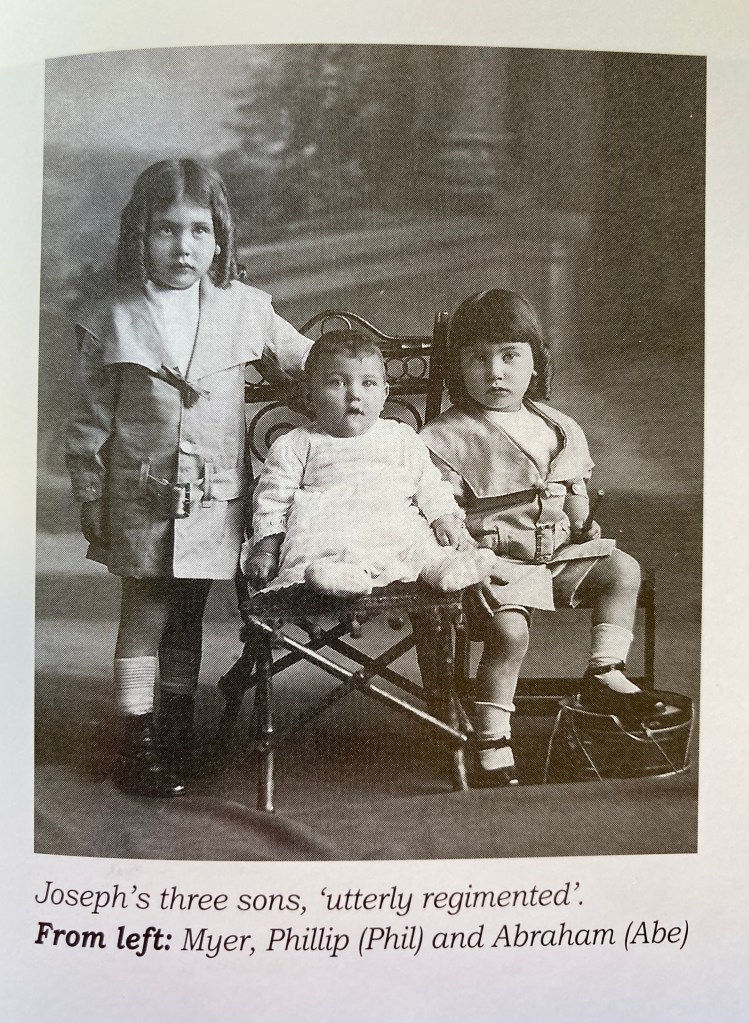
The Bed Remembers the Goldenbergs

I’ve known Goldenbergs.

I’ve known Goldenbergs for over one hundred years.

The couple from Palestine, they were the first. He was Joe and she Millie. He called her Mil.

Joe was restless, a striver, full of energy and ideas. He was a shouter. Millie would say timidly, I’m not deaf Joe. Later in her life Millie became deaf. Perhaps that was her defense.

They must have been young when they married. Their first son was born in 1910, when Millie was just 21 and Joe slightly younger.

Millie

Was that firstborn conceived on me? I don’t recall. They had me built to order, me, together with a companion dressing table, two bedside tables and a swing mirror. There was a tall wardrobe too. All of us pieces were french-polished and elegant. We were expensive, craftsman built, well beyond the means of young immigrant battlers. In the dim bedroom of that dark house, we would have shone. Our lustre, our sheen would have declared to the world, these Goldenbergs, they’ve arrived.

How could Joe possibly afford us? The only way I can imagine would be a big win at the trots. Joe had trotters, I recall. I heard Joe confide to his first son, Myer, something that made me think. It was only a snatch of conversation, mind. I could be wrong. Joe told his son how he instructed the trainer on the eve of a race in which his trotter was the favourite, ‘not to wear the horse out’. Perhaps Joe planned for his own trotter to lose – against the odds. Perhaps he bet against his own horse and won big. Who knows?  

Joe

In any event, I arrived at that big house at Number 6 Goathlands Street, I and the entire suite. I do recall Joe testing me for structural strength. In case his weight might not have been a severe enough test, Joe lay down together with Millie. That was early summer, I remember. In August the second baby, Abraham, arrived. Everyone loved Abe. Of the three Goldenberg sons, I knew Abe best because he never really left home. I mean long after he grew up and married Clara, he came back to that house, every day, to see his parents. I suspect he came back to bring some comfort to his mother, some softness. Joe was out in the world, Millie at home. Joe would come back home, full of the tensions of the day, he’d shout at Millie. Sometimes I’d hear her cry.

But they weren’t always like that. They had their better times, particularly on a Friday night. Those happier times bore fruit. The third son, Phil, was the last fruit of Millie and Joe. I know: I was there at his conception.

As Millie and Joe aged and as the boys grew up and left home, the big house at Number Six became quieter. The big bedroom where I’d reigned took on the air of a secret place, not frequented at daytime. Grandchildren arrived and explored and penetrated the gloom. Chirping as they approached, they’d enter and fall silent and sneak away. Perhaps Joe had roared at them. I don’t know, I couldn’t say. I do remember Myer’s second son entering one day. He opened the door, peered around and tiptoed into the room. Shafts of sunlight penetrated the gloom, heightening somehow the darkness of the wood, the sense of dusk at noon. He stopped, that skinny little kid, struck by the atmosphere. Was it the unnatural dark that frightened him? Or was it fear of his grandfather? I don’t know. Within seconds he was gone and we of the bedroom suite were alone with our secrets.

Years passed, decades. The three sons married and moved out.  Late one night the telephone rang. The telephone was a daylight instrument in those days. A call at night was alarming. Joe answered: Hello! Hello! No! No… I’ll tell Millie.

I don’t know what Joe told his wife. I heard her wailing, saying repeatedly, I wanted to go before her, I should have gone first…

The big house watched Millie and Joe pass into old age. Joe smoked his daily sixty cigarettes and bloomed, while Millie withered from the inside. I thought at the time she was too timid to thrive. Perhaps she was too intimidated to live. Doctors said later that Millie died because her APC tablets destroyed her kidneys. But that amounts to the same thing; Millie needed all those painkillers for the headaches that life caused.

One day the empty old house filled with people. Some arrived early in the morning, big men, hairy, some with black beards, some grey, some white. Lots of sidelocks, big black hats. Joe and the boys – Myer and Abe and Phil – sat on low chairs every morning for about a week. I heard the beards chanting in a language that wasn’t English. Millie was not there. In the afternoon and in the evening the house filled to overflowing, the beards, women in another room, men whom the boys went to school with, even to kindergarten, faces from the early days, the days when Joe and Millie and her large family all lived in North Carlton. Days of richness without money, Abe said.

So many people, I heard crying, laughing, every day for a week. Then they all went home. The house was empty. Joe never slept on me again. He moved to the single bedroom, down the hall. I’d hear him crying in the night.

Then Myer’s second son started coming, Thursdays I think it was. He’d arrive after school and he’d stay the night. They’d sit in front of the TV, the old man and the boy, just the two of them. They watched until the close of transmission, around 10.30. The boy would go upstairs then ‘to study’ he said. And Joe would shuffle around, delaying his own bedtime.


It was good to feel life stirring, hear voices echoing in those dark rooms. I heard him tell the boy how he left school in the third grade to help support the family. We were poor in the old country. When there wasn’t enough food, my father’s new wife would feed her children first. The rest of us would go hungry. I went to work in the Turkish Post Office. The postmaster trusted me. One night I came home with the key to the Post Office. I wore only shorts. The key was big and heavy, made of bronze. I tucked it into my shorts but you could still see it. My father saw it and felt terrified. If anything went missing at the Post Office I’d be blamed and Father would pay. He sent me back with the key. He never let me go back. That’s when I started my own business. I became a watermelon seller. I sold melons to fishermen. I’d swim out into the sea, floating melons before me. Other boys did the same, but I made sure I swam out furthest. I’d be the first melon boy the fishermen would see as they sailed back to Jaffa at the end of the day. I knew they’d be thirsty and they’d pay.

Joe would lament to the boy about Millie. He’d recall old times, their younger days together, Millie’s beauty and allure. She had full, firm breasts…This left the boy lost for a response. I imagine he blushed.

Joe was liberal with his criticisms. He’d tell the boy, It’s a good thing your father is a doctor. He’d be useless at anything else…Then, He’s your father, I shouldn’t criticise him…but he’s my son so I have the right! He’s got no head for business…

There came a morning without words, without any sound or movement. Later there was the sound of a key in the lock. I heard Abe’s voice, Father! Father! There was no answer. I heard fast movements, doors opening, slamming, then Abe’s voice, Father! Father! Speak to me! Joe’s voice never replied. Not long after Myer’s voice spoke: He’s had a stroke, Abe. I’ll call an ambulance.

Silence followed. Nothing was heard for six weeks, then the house filled. I heard voices in all accents, old people, young, children. Crying, praying, chanting, laughing, people talking over each other, people from many places, from many times.  People came and came. The front door never closed from early morning to after dark. Then after seven days silence fell.

I left the old house in a van. Together with the stately swing mirror, the bedside tables, the big, big wardrobe and the dressing table, I was taken to the small flat where Myer’s second son lived with his new wife. I was sixty years in the house of Millie and Joe Goldenberg. 

Now begins my the next family era. There’s a new Goldenberg couple. I’ll spend the next half century under Annette and Howard. I’ll tell you some of their secrets presently…

Once, on a cold day in Melbourne

Someone called the Clinic the other day and left this message: ‘Alexa Rosa wanted to speak to the doctor who treated her mother a long time ago. And she wanted to buy your book.’ Did I know an Alexa Rosa? I thought somehow I should. A scene came back to me: a cold winter’s day in Melbourne, a young family in a front room, a sick mother, her worried husband, their adult daughter.

If this truly was my Alexa, then her story was strong and bright in my recall. I could never forget it. It was the winter of 1971. I had a new marriage, a new licence
to practise medicine outside of the hospital and a brother about to marry
in the United Kingdom. In order to raise the fares to the wedding I moonlighted as a radio locum. A radio locum installed a two-way
radio in his car and travelled, like a taxi driver, to wherever the job
called. On this occasion the call came to the Migrant Hostel in Kororoit Creek Road Altona. My bride, an able map reader, sat at my side and navigated.


Kororoit Creek Road in Atona was a long drive from everywhere else. When we arrived and parked in a vast car park, Annette (the bride) repeated the Controller’s directions, “Building 19, apartment 5.” I stepped outside.
Here, at Melbourne’s western edge, you could see the setting sun
disappearing beneath the horizon and the world darkening.

I didn’t feel happy leaving Annette there in the dark. I looked beyond the carpark toward the distant buildings. Would Annette be any safer in that lowering mass? Annette said, “I’ll be alright here. Just go.” Troubled, I went. How would I find building Nineteen where someone needed a doctor, someone who was suffering from something, possibly something serious? Having now reached the first of the buildings I could see my search was hopeless. The buildings were all great bulky cuboids of concrete. All were unli. And the dark was cold. I wandered and looked for numbers. No number nineteen anywhere, no five. I knocked on a door to enquire. The door opened, I asked, Can you direct me to Flat Five? A hand flew to the heart. The head shook: I not English. I sorry.

I felt sorry too. I turned dully away. Of course no English, everyone here newly arrived, everyone indoors, appalled, like me, by the cold. Movement in the shadow on
my left. I hailed the shadow: Excuse me, do you speak English? The head
shook no, while the face smiled a wide yes. The shadow, a young man,
beckoned, and signed me to follow. I followed. He moved swiftly along cement paths, in and out between buildings, along corridors, until abruptly he stopped in his tracks, pointing and nodding furiously. The shadow knocked on a door, turning to me, smiling. Pointing towards the door, the shadow said, English! The door opened and a voice spoke: Good evening. How can I help you?
Did you send for a doctor?
No.
Is this Apartment Five?
No. This is seven.
Is this Building Nineteen?
No but I’ll take you to Number Five..

This was someone not lost in language nor in space. Feeling found, I followed. A building or two or three later, my guide stopped and knocked on a door. I noted a large numeral 5 next to the doorway and felt almost
hopeful. The door opened and a pretty young woman appeared. Behind her stood a man, older than she; behind him a couple of small children, curious and fearful, clutched at the man’s legs and peeked. The young woman saw my
medical bag. She told me her name and said, Come in Doctor. Thank you for coming. My mother is sick.

Mother lay on a couch. She did not look well. Her daughter explained: We arrived just today from Spain. During the flight Mother started to cough and it was hard for her to breathe. Now she has a fever. We didn’t know how to call a doctor. Thank you for coming.

I examined the lady. I thought I heard altered breathing sounds in one
lung. I bent and listened hard. The air struggled into one side of the chest, it rattled and squeaked.This was bronchopneumonia. Ordinarily a hospital matter, this called for X-RAY, possibly intravenous treatment as an inpatient. How would this lady get to hospital? Would Medicare cover a new arrival? Would the ambulance take her? Was there another way?

I straightened and addressed the  man through his adult daughter. Mother is sick. She has an infection in her chest. She needs strong antibiotic medicine, she might need to go into  hospital. If you wish I can start some treatment here, now. And with luck she will improve quickly.

The daughter translated for her father. The two spoke with the mother, the three nodded. They had decided. The daughter spoke. Thank you doctor, yes, we would like you to treat her. Thank you doctor…we don’t want hospital.  I fished out some  penicillin – no, mother is not allergic – and gave the lady a hefty dose by injection. I wrote out a prescription for oral penicillin to commence the next day. 

Leaving detailed instructions for a range of eventualities I prepared to take my troubled leave. I wished the lady well, I wished the whole family good health in Australia. The daughter reached for a purse. How much do we pay you, Doctor? I did not want payment. A doctor who deserted his sick patient didn’t deserve payment. I said something like, There is no charge. To myself I said, You have paid me, you’ve paid off my guilt. The young woman protested, No Doctor, we must pay you. We don’t know who sent you. How did you know we needed you? I didn’t know. Once again I wished them well and I left, my ears burning with blessings I could not accept.

Back in the car, I found Annette unharmed. I said, I couldn’t find my patient. And I told her the story.

***

It might have been six months later when I was called to the Delivery Suite for the birth of a baby. Birth was not expected for some weeks. Labour was well advanced when they called me and birth was imminent. I needed the mother to help. ‘Push, hard, push! The mother didn’t speak English. A masked figure at her side coached her, translating my words: Big, long push. Push….The mother pushed, her face turning deep red, the veins standing out on her forehead. Stop pushing now! Don’t push! Breathe, breathe…The mother breathed and with each breath the head advanced. The mother breathed her baby into this life, accompanied by fluids, red and clear and mucoid, and followed by the placenta and cries from the baby and crying from the mother. I counted fingers and toes and other parts and placed the baby on the mother’s chest and wished the new family joy. I pulled off my mask and thanked the person whose interpreting had made the birth smoother. I extended a hand, My name’s Howard. We have met, she said, removing her mask. I am Alexa.

***

Alexa explained she had come to visit her friend, now a new mother, in her ward. Abruptly, labour started and accelerated. The hospital discovered there was no-one to interpret for a Spanish speaker so Alexa volunteered. We chatted. She told me her own mother was well, recovery had gone smoothly. She, Alexa, was working as a wardsperson in this hospital. She told me she hoped to study nursing.

I said, I don’t know if you realised I had been called by an entirely different person on the day you arrived from Spain. I never found that person. I never discovered how I fund your Mum. I know, said Alexa. God sent you.

A few weeks later my father told me a new family had started seeing him as their local doctor. They’re from Spain, he said. They tell me you treated the mother for pneumonia.

***

Forty-nine years passed. Locked down, I’m doing Telehealth from home. A message arrived for me, asking me to contact an Alexa whom I had know years before. I rang the number. Alexa speaking, said a voice. The voice sounded Aussie. I told Alexa who I was. She asked, Do you remember us? If you arrived from Spain in 1971, then yes I do. How could I forget? We did. It was 1971. I guess you were about nineteen then. Exactly. So you’re sixty-eight now? Yes. And I did do nursing. I’m still nursing. We talked for a while. Mum is still alive. She’s ninety-three now. Dad only died last year. Do you remember what you said when you left us that night? What did I say? You said, I wish you health and happiness in this country. You blessed us and your words came true. I reminded Alexa of her words to me in the Delivery suite. You said, ‘God sent you.’ That’s right. God did send you. It’s the only explanation. That was the night I became a believer. I found God in the Hostel.

***

In the few days that have passed since Alexa opened the closed door on half a century, I’ve felt excitement and perturbation. I’m excited that Alexa and I will ‘meet’ again, that I’ll ‘see’ my pneumonia patient again, spry and vital; that I’ll meet the children and their father, that I’ll learn their stories. At the same time, some different, powerful feeling operates and unsettles me. It’s the thought of the power of a word, the reverberation of a small act. Alexa sees the hand of the Divine. Does that make me somehow an instrument in a plan? I cannot begin to recognise anything so lofty. I dismiss any idea of some special mission I might have; I find that sort of belief a burden, an embarrassment; it makes me want to run away.

But I’ve been moved to tears thinking how a simple act might lodge in memory, might germinate as a seed, might influence a life; that somehow, quite without intent or thought or awareness, a simple act could take root, help, lift, encourage, perhaps inspire. That thought brings with it a glow, the sense I have done as I know my father did before me – many times – some act of unwitting goodness that lived on afterwards. I’ve felt overcome with a feeling of blessing, perhaps of being a small link in a long chain that might continue on, in lives undreamed…

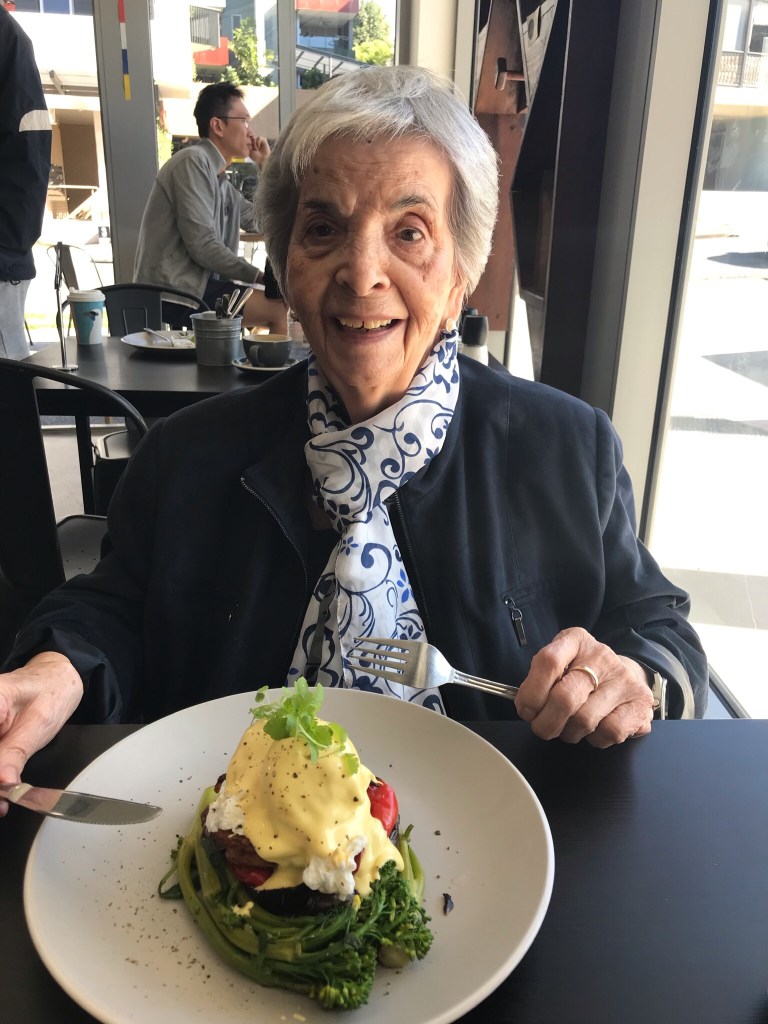
Mercedes, aged 92 years
Alexa and son

Letter to an Old Friend

Friend,

I write to you from quarantine. My wife and I have been ordered to isolate ourselves. 

Old friend, you and I are old. We have passed the threescore and ten years of the Psalmist. A short time ago we were heading confidently full steam ahead for one hundred. So we proposed. So life seemed to promise. But now, this virus.  

Man proposes, Virus disposes. The virus has disposed of thousands. In Spain overnight, three hundred. Overnight in Italy, 800. I’ll write that more plainly. Three hundred persons. Eight hundred persons.At the start of the year all eleven hundred would have been steaming ahead. I imagine them looking confidently to the future as recently as the start of the month of March. By the close of the equinox all were dead. Few will be those who follow their caskets to their burial.

While going about my work in the past weeks I’ve found the most worried people have been those with the least to fear. Young parents have been terrified for their young children. Truly that suffering has been unnecessary. For most people younger than forty, COVID-19 is a milder illness than the ‘flu. I have heard of no deaths of children anywhere in the world. That should bring blessed relief, but although those facts are widely known, the fear for their young extinguishes parents’ peace of mind.

Curiously, we old ones need fear not so much for our young, as from them. The theory runs that children are unhygienic creatures that act as vectors for this novel virus (they certainly do that service for the influenza viruses), and they endanger and infect us older, more vulnerable subjects. That is why I am writing.

If you are over seventy, go inside now, close the door. Shun your children, ban the grandchildren. Ours is the age group in which most of those hundred of persons died. Ours is the sector at greatest risk of the pneumonia that fulminates and kills. Ours is the group who will not receive respirator treatment and Intensive Care when those services are rationed.

This is cautious advice that might later be seen to be over-cautious. As the W.H.O. Chief of the Ebola response advises, ‘Go early, go hard’ when it comes to responding to pandemic. There will be no second chances for us once we catch this catchiest of germs.

My wife and I passed a weekend of grotesque denial of the love between us and our grandchildren. Encounters were fleeting, spatial remoteness was enforced, no-one kissed, no-one cuddled. Time and again, puzzled children approached instinctively, loud voices repulsed them. Astonished, the children felt every instinct of love denied; and the deniers were precisely those wrinkled figures who ever doted and dandled. Suddenly loving behaviour was wrong.

My resolve wavered. My wife, the softest being in our family constellation, commanded austerity. One of my children has a newborn; we cannot visit, cannot cuddle, cannot relieve exhausted parents at 2.00 in any morning. Our daughters, both recovering from surgery, wait on us, rather than the reverse. The fibres of parenthood are warped and strained by fear of a new virus. And it is precisely those deprived adult children who direct us: go inside, stay inside, keep the world away. ‘‘We’d sooner miss out on you both for weeks or months than miss you forever.”

Old friend, I won’t be with you this Friday for lunch. We won’t see each other at the coffee shop in the mornings. Our house of worship is forbidden to us. Seeing each other as faces on a screen is a cold change after years, after decades of warm touch. I don’t know when we’ll be together in those old ways again. I reckon our best chance of those old pleasures again, some day on the far side of this fear and horror, is cold resolve today.

Until then, old friend, until then,

Yours at a distance,  

Howard

Fathers Day


They say Fathers Day is the invention of the people at Hallmark Cards. That doesn’t make it a bad idea. If someone told me Hallmark had just invented the wheel or the toilet brush or brotherly love, I hope I’d give those ideas worthy consideration.


No it’s not Hallmark that’s my problem. (And I do have more than one problemwith Fathers Day, none more pressing than where to place the apostrophe. I have every confidence I’d dispute whatever verdict were chosen. You only have to look at this paragraph to see I like the apostrophe, I cherish it and I bewail its* public fate.)


When the first Sunday in September dawns no-one feeds me breakfast in bed, no-one buys me neckties or self-help books or DIY apparati. And I never did any of these for my own father. (Well, almost never: when I was five my elder brother spent five shillings on a large tea cup for Dad, which we presented as a joint Fathers Day gift. The cup showed a man seated on an easy chair and smoking his pipe. Dad didn’t smoke and never drank tea. He held tea to be addictive,correctly so. That, after all, is its beauty and its purpose.) 


Breakfast in bed could not have enhanced the love that existed between my father and me**, nor would it have reduced the pain my brother and my father experienced in their own shared loving. 


My own children accept my distance from Fathers Day (as from Mothers Day). They see it as just another eccentricity of their wilful father. Seven hundred telephone calls per annum from my children to that difficult father say all that needs to be said.


Numerous earnest homilies (‘Slow down, Dad’; ‘Don’t you think it’s time you workeda bit less?’ ‘Have a good run, Dad, and don’t come back dead’; ‘I don’t want you riding your bike at peak hour, Dad. If anything ever happened to you…’)


Well of course one day the anything will happen to me. And as far as fathers go, I’ll go happy, well fathered and well loved by those I’ve fathered.


Nowadays my children have their father on Brain Watch. About time. And one single day a year would not suffice for the purpose.


Note*: no apostrophe.

Note:** It took me 220 pages to sketch the love between my father and me, in ‘My Father’ Compass’ (Hybrid, 2007). A young man approached me after reading the book. He said, I always wanted to be a loving father and no-one ever showed me how. But when I read your book I knew.’


Dennis


When I was born my elder brother was two years and two months old. When my brother died he was sixty-two. Tonight my younger brother and I will remember our firstborn brother. We’ll recite Kaddish together in his memory.


When I was newly born Dennis filled my baby carriage with all of his toys, submerging me. I didn’t recall that; our mother told me of it. She said Dennis loved his new brother so much he wanted me to have all his toys. All of our lives Dennis gave away everything that was his.


Dennis and I always bathed together. When I was five years of age, and trusting, Dennis conned me into an act of fellatio in which he pissed in my mouth. I recall that clearly.


I’ll light a memorial candle tonight. The candle burns longer than twenty-four hours. When I walk into my night kitchen the small flame takes me by surprise. I stop and I remember. The small flame flickers and falls. It looks about to die, but then it rises and burns brightly.


I sit alone in the kitchen and the truth comes to me anew: we all flicker before we die. But Dennis! Dennis had such a force of life. I see him pushing Mum in her wheelchair along a steep winding path, pushing her up, up, to catch the sea view from a peak at Wilson’s Promontory. The tyres sink deeply into the sand but Dennis, by sheer force of will, propels Mum forward and upward.


Dennis the fearless. Dennis undaunted, never defeated. When his affairs took a reverse I’d worry for him, but he’d say, ‘It’s always darkest before the dawn.’  Dennis meant that, he believed it, he lived by it.


Life brought ease to the second brother, a harder path to the firstborn. Dennis rejoiced for me in all my little successes. He knew no envy, never felt usurped by the younger brother who got the birthright. He bought me a holy book and inscribed it with his heart’s blood: ‘For my brother Howard. God must be proud of you.’


Dennis had the gregariousness of the deeply lonely. I sit and leaf through his address book, an odd keepsake. The crammed pages teem with names, so many names, names of down and out people he’d find and succour. These people, themselves lonely, found in my brother a man who’d give away all his own toys. 


Dennis decided to undergo major surgery, hazardous surgery. I misgave. But he said, ‘Doff, It will cure my diabetes, I’ll get my life back.’  He had the surgery, his flame flickered and he died.


Eini, eini, yorda mayyim

My eye, my eye runs with water.


Ellul, 17-18, 5779.

Reds Under the Beds

Michael Benjamin Komesaroff was a conspicuous proletarian classmate of mine during our later years at Scopus (1963). He had a lived political ideology, like other Komesaroffs before him, an indivisible loyalty to Jewishness and to his country of citizenship. I recall his vernacular speech deafening us classmates in his espousal of Labor politics. We called him Kommo; he was a social democrat before most of us knew the term. Those same politics marked the generation of his immediate ancestors, and brought them to the attention of ASIO. At the time Lenin was preaching international revolution, a doctrine that unsettled Australia’s conservatives. Here were the Komesaroffs, newly arrived from that revolutionary hotbed. Where did their loyalties lie? ASIO became very interested in them, and now their descendant, with a career in international journalism behind him, investigates the investigators in a new book. “Reds Under the Beds” is the result.

“Reds Under the Beds” describes the abiding interest of Australia’s intelligence community in a family who had immigrated in the early decades of the Twentieth Century.  The author’s love and respect for those ancestors match his feelings for Australia. His meticulous research informs this account of a group whose hallmark was loyalty. The Komesaroffs were loyal Jews who became loyal citizens of Australia. Jewish loyalty mandated their love of Zion and their opposition to fascism, while loyalty to the country of adoption saw them acknowledged as exemplary citizens. Somehow ASIO became all too interested in the Jewish concerns of the Komesaroffs and quite blind to their lives as citizens.

Michael Komesaroff writes his family’s story dispassionately, in clear and clean prose. His analysis of the political tides and times is  revelation, as is his understanding of the contest for middle Australia between Social Democrats and Conservatives. With a calm that is unusual he identifies prevailing anti-semitic attitudes without inflating it beyond its true dimensions. Most topically, Komesaroff shows us how Australians of the most ordinary loyalty can come under pervading suspicion and investigation by Intelligence organisations. In our times, when mistrust of the citizenry is translated into something of a growth industry, a poised and intelligent balance is needed between the community’s needs of security and of community. In the case of these ‘Reds under the Beds’, ASIO emerges, showing limited intelligence.

“Reds Under the Beds” is published by Hybrid Publishers and is available from most booksellers and Amazon. Further details of the book are contained on the Amazon website (here).

As outlined in the flyer, I have the pleasure of launching the book at 4:00 pm on Sunday 15 July at Glen Huntly Park Function Room, Glen Huntly Park, corner of Neerim and Booran Roads.

Autumn Notes 111

The ruler of this blog disqualified the title of my previous post. I’d proposed “Autumn Notes -III”, but the blogmeistress ruled that out. ‘It’s a book review, Dad, it’s nothing to do with autumn. You’ll confuse people if you call it that.’

I disagreed.

She insisted.

I demurred.

She overruled.

So here we ago again. I’m writing this in autumn. Brown leaves are falling, the air is chilling, malicious winds lash the streets. What’s more, I’m in the autumn of my days. And today when I visited my aunt I glimpsed Winter.

My mother-in-law is a beauty. At 91 years she dresses like my daughters and she’s still admired as a beauty. Her name’s Helen. As in Troy. Ma-in-Law Helen remarked to me once,   ‘Your Aunty B was the most beautiful bride I ever saw’. On a separate occasion Aunty B said to me ‘Your mother in law was the most beautiful bride I ever saw.’

I’ve seen wedding photos of them both and I can’t disagree with either of them.

Today I visited Aunty B. Family news had filtered through the dark: B isn’t doing well. I found her sleeping in her room, surrounded by her daughters and her doctor-granddaughter. I saw her, I saw that same face, beautiful still. I thought of Aunty B’s life of battles, of her buoyancy and grace, her good cheer. I remember how she took this bewildered country boy under her wing on lonely visits to Melbourne. Now Aunty opened an eye. Was that a smile? Her hand opened to my touch, the grip strong. My last surviving aunt opened her mouth to speak. No words. The eye closed and she slept. Like Hemingway’s Old Man (of the Sea), did she dream?

It’s not yet Winter but it’s coming.

Goodbye My Friend

We are saying goodbye to Mannie today.

Mannie, my friend.

Mannie, whose loved ones weep today.

Manny, one sole man, who ran and ran.

Mannie whose race is finally run.

Mannie’s roots lie in Greece.

Mannie was true to his roots.

Those roots brought forth shoots who live and grow and bear fruit. The shoots are the children of Mannie and Demitra. When the young couple named their shoots they were visited by the muses: they named their children not Lucy but Alithea; not Robert but Panayioti; not Susan but Leni. The names carry meaning, love of course, and destiny.

Mannie did not give his children easy names, Aussie names, names to hide behind. He gave them what he received – a culture, a tradition, a history of beauty and pride.

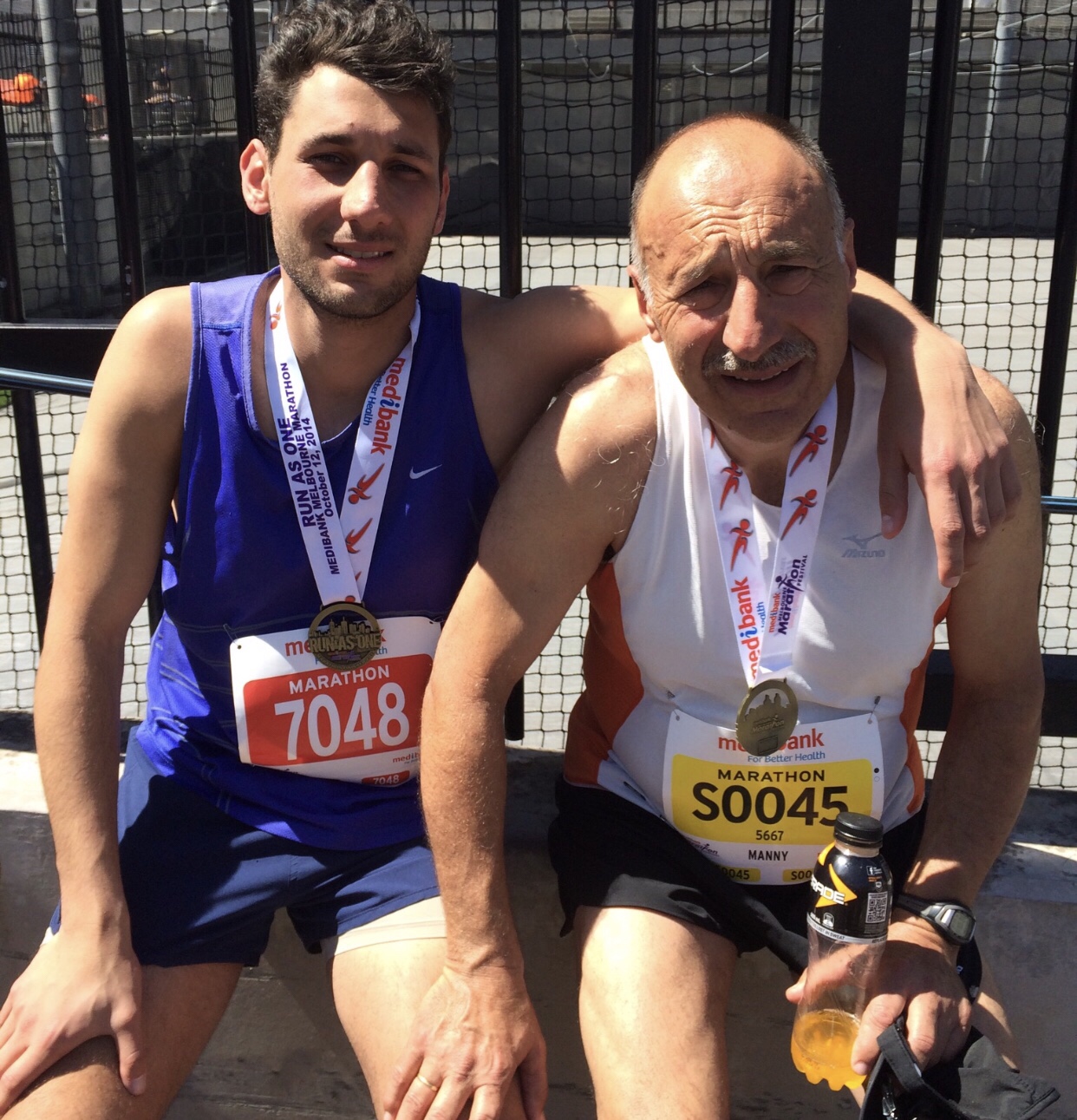
Everyone knows of the feats of Manuel Karageorgiou, Mannie, who ran the first Melbourne Marathon and the second and the third and …

Manny was one of the eight. Eight glorious souls who had lived and toiled and wrought in every Melbourne Marathon from the first to the latest. Forty consecutive marathons. Foolish.

I want to suggest to the non-runner reader what Mannie’s folly entailed. Physiologists have identified an end point of energy. And adult human can run about 32 kilometres, then energy reserves are exhausted. After that the runner faces a wall. The runner digs into a core of belief and runs a further step. There remain ten kilometres, ten thousand steps. The runner digs further, drawing on pride, on mystic need, on love, on some truth in the soul. And the runner runs on, runs through a wrecked body. The runner now is pure spirit.

And then there are the final, agonising, ecstatic one hundred and eighty steps. The runner crosses the line and then the race is run.

A few paragraphs ago I began listing Mannie’s Melbourne Marathons. I stopped after three. Were I merely to list the forty your eyes would glaze, your mind would wilt, you’d leave the track that Mannie and the Eight would not leave.

My Greek friend always dreamed of running the Athens Marathon, a homecoming profound beyond imagining. But Mannie never allowed himself to run Athens because it clashed with Melbourne. And Mannie owed the event his presence, his being. Mannie would not desert his friends of the Eight.

I’d like you to visit www.howardgoldenberg.com and look up posts that tell of three of Mannie’s marathons. You’ll find them dated October 2014, 2015, 2016. And then read https://howardgoldenberg.com/2017/10/23/its-not-how-long-youve-got-its-what-you-do-with-it/ from October 2017.

I’ll reveal here some of Mannie’s medical history, normally a forbidden act. But Mannie as we know was not a normal man:

While on an early morning training run before the Melbourne Marathon a few years ago I sensed a solid bulk of human flesh approaching in the gloom. The flesh developed a face and the face shot a me smile through the mist. Mannie recognised me first.

Here he was, I knew, fresh from his bone marrow transplant. Preposterous – Mannie understood – to run a marathon with that illness, outrageous, with those therapies. He’d visited me the previous week to talk about running again. ‘The specialist says I shouldn’t run. Howard, is he right?’

‘I suppose he must be Mannie. One fall and your bones can break, so easily.’

It was a broken rib, cancerous, we both recalled, that uncovered Mannie’s diagnosis.

Mannie looked at me. Mannie knew I was no cancer expert, just a runner. His look was a plea; he wanted a reprieve.

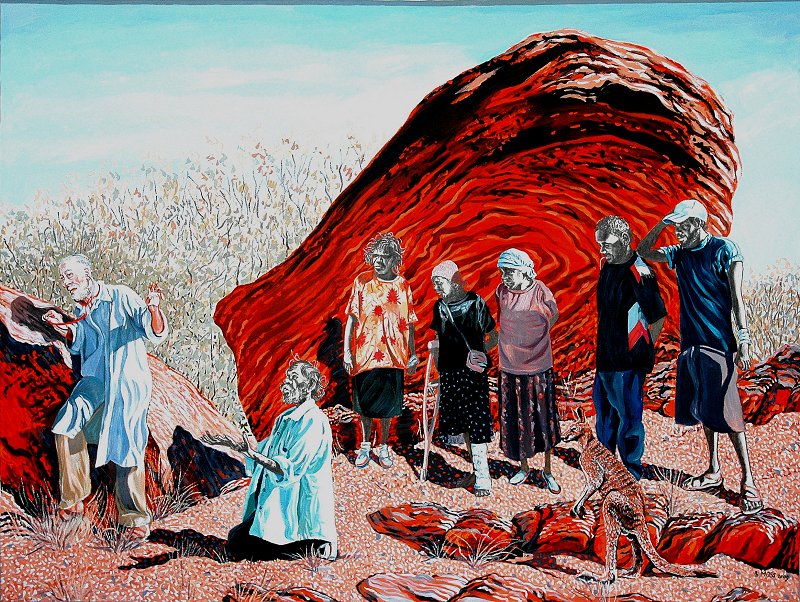
I said I could tell him what was the safest course. But then I told him about my mother:’Late in Mum’s life her health was shattered by strokes, but the spirit of the wanderer that had taken her to the bright and the dark ends of the globe, burned still. My sister and I were going to fly to Uluru. Mum wanted to come. She said, “If I stay at home I’ll die one day anyhow. I’d sooner go and see and find and know; and if I die doing it, I’ll have seen the rock. That would still be a good deal for me.” Mannie thanked me and left.  You know what Mannie decided.

I referred before to Mannie’s folly. I’ve seen marathons. I’ve seen and felt the interest and the indifference of spectators. I’ve seen the fellowship of running. I’ve felt the loneliness of the Malta plains. I’ve seen the splendour and I’ve seen the blackness: both were present that day in Boston. I thought I had seen it all, until I ran a marathon with Mannie. An entourage ambushed him – a son, a brother, a younger leviathan figure, a clutch of attractive young women (I wondered who they were. I learned they were girlfriends of nephews of Mannie.) This phalanx of nonrunners surrounded Mannie, they spread widely across the road. Mannie was one runner among thousands, but he alone moved in this stream of flesh aching with love. They ran and ran alongside their hero – the older man, the fat man, the glamorous girls. They tasted fatigue but they would not leave him, not until he reached the next plank in Mannie’s platform of love; and this, of course, was Demitra. ‘DEM!’, he cried, and they kissed. And Demitra held their grandbaby. Mannie stopped. He held that chubby child close and inhaled her. And then he ran on.

I have written of a human, a person. I have written of him chiefly as the operator of a pair of legs. A person is more than that. More than a disease, more than his diagnosis. But in Mannie the runner I see the human and his fate. This man faced Nemesis and outran him for year after year. And when at last – five kilometres into the fortieth marathon, after Mannie stumbled and fell, then arose bloodied – it was Demitra who stepped from the footpath, who took his hand and led him away.

“..Old age hath yet his honour and his toil;

Death closes all: but something ere the end,

Some work of noble note, may yet be done…”

Farewell, Mannie. We will not see your like again.

Mannie’s family have let it be known they don’t want floral tributes to mannie. They’d prefer us to donate to the Myeloma Foundation in his memory. And of course, in his honour.