Do You Have Children? 

She was the first patient in my day.
She was sent to this city in North Queensland by the foreign mining giant that employs her. 
I had never met her before. We introduced ourselves.
 She said: ‘I was woken by awful pain in my bladder. It’s an infection, I’ve had them before. I couldn’t sleep for the pain. It was four in the morning, but I got up and went out and walked the streets until I found a 7- eleven. I bought some Nurofen tablets for the pain.’
‘Did they help?’
‘A little.’
Her urinalysis was positive.
‘I think you’ll need an antibiotic. Antibiotics famously render the oral contraceptive pill inoperative. Maybe. So during this cycle you shouldn’t trust the pill… unless you want a baby.’
A smile and a shake of the head. The smile is not that smile that says, ‘Tread with care.’ She is a mature woman at peace with herself. Excepting for her hostile bladder. The smile licensed me:
‘Do you have children?’
‘No.’
Another smile as she sat and formulated a response to my silence.
‘I never thought I would. Now I realise I really have to decide – this month in fact. You see I’ll turn thirty-nine next month. I wouldn’t want to have a baby after forty.’
‘Why the late uncertainty?’
‘It hit me I might come to regret never experiencing that.’
 

She talked about childbearing and childraising, describing the contrasting experiences of her sisters. I agreed it was a momentous question. We talked about bladders and we parted.

 At home I asked myself how I’d describe my own experiences. I’d be unable to resist describing – at clear risk of malicious misinterpretation – the intense pleasures of bathing or changing soft bodies, the satiny skin, the small weightiness in arms or lap.
I thought about my feelings and the word that came was ‘intensity.’ Had she asked I might have said, ‘Becoming a parent deepened me. I believed I was tender towards children, but my firstborn taught me how I had tiptoed through mere shallows.’
I recalled an early piece of Martin Flanagan in the Melbourne ‘Age’. He described nursing his small daughter through a night of torrid fevers. From memory, I recall him writing, ‘I know I will never feel closer to this child than I have this night.’
I might have quoted an early patient who became an enduring friend. Her asthmatic sons struggled night after night for breath. She told me how she’d walked the floors, holding them, counting breaths, weighing ambulance against a dash in her own car.
Inevitably I was visited by verse.
I have walked and prayed for this young child an hour
And heard the sea-wind scream upon the tower,
And under the arches of the bridge, and scream
In the elms above the flooded stream….

(W B Yeats, ‘A Prayer for My Daughter’)

I might have described the common and uncommon thrill of feeling a newborn curling her fingers – by reflex – around the finger that I rest on her palm. I might have said, ‘The unearned trust of my child makes me know – as I have never known before – I am significant.
 

I might have said, ‘My children gave me a clarity that was visceral: I knew through them my task, the meaning of my being alive. I knew I would give my labour without question or measure or thought of recompense.

I could never have dreamed the reward that would follow – grandchildren. And of course, with grandchildren comes the renewal of mission, of labour, of redemption of my aging. Feeling anew that deep significance I stride towards my latter end with head high.’


Had she asked, that’s what I might have said. But of course we will not see each other again.
Postscript: But we did see each other again – the next morning. With her consent I read aloud the words you just read. I looked up. Her face was suffused, on her lips the widest smile, from her eyes a flow of tears.
She thanked me and in answer to my question she said, ‘Sure, you can publish that.’

Concussed

The phone call comes at 3.30 on the last afternoon of term. An unfamiliar voice speaks: ‘I have your boy here. He came into the shop and collapsed.’
The woman’s voice is concerned, competent: ‘He wants to get back onto his bike and ride home but I won’t let him.’ The woman gives the address, a shop on busy Centre road, Bentleigh.
 
The mother of the child calls the boy’s father, cannot contact him, drives towards the place in Centre Road. The heavy Friday afternoon traffic races, stops, starts, unpredictably. The mother suppresses her urge to speed, shakes her head: ‘What if he’d collapsed in this traffic!’ Alone with her fear, she calls her father, doctor to the injured boy. She gives her father the bones of the story, adding: ‘He told the lady in the shop he was hit in the head earlier today. She says he’s talking but he’s not making sense. He couldn’t remember my number. Didn’t know the password to his phone. She rang the school and they put us in touch… I’ve nearly arrived. I’ll call again once I’m with him. ‘Bye.’
 
At 3.50 the doctor’s phone rings. His daughter’s voice, the boy’s, an unfamiliar woman’s voice, traffic sounds, snatches of conversation – ‘Dad, I’m with him now. He’s awake. He’s seeing double… Yes, thanks, in the back here. Sorry Dad, the lady who’s been looking after him is helping me get the bike into the car. He lost consciousness a couple of times. What does it mean that he’s seeing double? And he wants to vomit?’
 
Forty-eight hours earlier the doctor saw a boy in Resuscitation at the Royal Children’s Hospital. The boy had been hit by a car. He lay on a trolley, his body a gangle of bones, on his face a large bruise and the dopey smile of a child with no memory of the car that hit his head. The doctor-grandfather spends a lot of time with injured children in Emergency Departments. The doctor knows what double vision means, he knows what vomiting means. The grandfather in the doctor avoids the question, asking some of his own: ’Has he had a head injury?’
‘Yes Dad. A kid at school swung his locker door open and belted him in the head. He went to sick bay for an ice pack. After school he rode to the shops.’
The boy’s voice pipes, indistinctly, the phone set on speaker. ‘Saba, when I look at anything I see two of everything.’ The child slurs the words.
‘What part of your head did the locker hit, darling?’
‘What do you mean, Saba?’
‘Was it the front or the back or the side?’
‘Are you joking, Saba?’
‘No darling. What part of your head was it?’
‘Above my ear, a bit in front of it.’
 
Just in front of the ear, in the temporal region, runs a vulnerable artery which shelters behind skull bone thinner than elsewhere.
The doctor instructs his daughter to drive directly to Monash Medical Centre which is not far distant.
‘I don’t know the way, Dad.’ The father-grandfather-doctor is notorious for his lack of sense of direction. He directs the daughter, hoping. ‘I’ll call Emergency at Monash, darling, so they’ll expect you… Take a book with you. You’ll be there for hours.’
‘Dad, he’s just vomited. Now he’s falling asleep. Does that matter? Do I need to keep him wake?’
‘Try to keep him talking, darling.’
The grandfather speaks to the child: ‘Darling you’ll go into the hospital and they’ll look after you until you’re better. Then they’ll let you go home. You probably won’t be staying in the hospital.’
‘Saba, what will happen to me?’ The voice quavering:’ Will I be alright?’
‘Dad, where will I park?’
‘Drive straight to “Ambulances Only”. At the moment you are an ambulance.’
 
At 4.10 the doctor calls Monash, asks to be connected to the Consultant in Emergency. A young voice, informal: ‘Emergency, Preeti speaking.’
‘Hello Preeti, I’m sending you a child with concussion. I’m his GP. Are you the consultant?’
‘Yes.’
The doctor briefs the young voice. She listens, asks a couple of questions, says, ‘Thank you. We’ll be expecting him.’
‘Thank you, Preeti. I’m quite concerned… He’s my grandson.’
 
When the doctor’s phone rings the time is 4.40. It rings as he’s hurrying to the toilet to pee, the third time in twenty minutes. He stands still, commands his bladder to wait.
‘Dad, I dropped him and they took him straight in. Doctor Preeti was waiting. I’ve just come back, I had to move the car. My phone’s about to die.’
‘Darling, Shabbat is about to start. But I’ll answer the phone if you ring. Someone will lend you a phone. If you need me, call me, even though it’s Shabbat.’
‘’Bye, Daddy. I love you.’
 
The old man puts the finishing touches to his Shabbat table. His wife is away, visiting their Sydney daughter and Joel and Ruby.
He covers the loaves of challah, races to the bathroom, showers, dresses, recites the Afternoon Prayer, racing the setting sun. He finishes, checks the time, realises he’s just too late to light the Shabbat candles: he won’t make fire on the Sabbath. Ordinarily he won’t use the phone. During Shabbat he’ll allow the phone to ring, enjoying freedom from the i-tyrant, celebrating the sample of paradise that is the Sabbath. But tonight he’ll answer it.
 
Darkness falls. The old man recites his Evening Prayers, rich with poetry from the mystics of Safed and the Golden Period in Spain. The dying of the day, the passing of the workaday week, the beauty of the sung hymns, all these have always found him susceptible; since childhood the eve of Sabbath makes him prey to tender feeling.
 
He looks across at the table, set for two. He recites the She’ma Yisrael prayer, inserting, by old family custom, an improvised prayer. He prays: ‘ Heal the boy and all who love him.’
 
The old man sings the hymns, he welcomes the Ministering Angels, he praises his wife – “A woman of Valour, who can Find? Her Price is above Rubies” – then he sings the Kiddush dedication, drinks his grape juice, washes his hands and sits to break bread. Before him, chicken soup with noodles and kreplach, four salads, slow cooked lamb shanks, potatoes. He eats alone, wolfing the feast he prepared for two. His elder daughter won’t be finished at the hospital until very late.
 
The food is good. He’d made a great effort for this meal with his daughter. He eats and gives thanks. Afterwards he reads. He reads three newspapers then opens the political biography a friend gave him. Deprived of sleep as he always is by Friday, he doesn’t expect sleep will come quickly tonight.
 
At 8.00 the front door opens. His daughter enters and they embrace. The boy is well. He’s back home with his brothers and his father. Surprised by her early arrival, the doctor listens to his daughter: ‘Dad, they asked him questions, they checked his eyes and his pulse and his blood pressure again and again. They tested his balance. He improved and they let us go. They said once four hours had passed the danger was much less. They timed it from when he collapsed in the shop.’
 
While the mother speaks the father prepares a salad to replace the four he wolfed. The child-mother eats with relish. ‘I’m sorry I spoiled our meal, Dad.’
She toys with the lamb shanks that come cold to the table. ‘Dad, I can’t eat any more. It’s been a big day.’
Father and daughter look at each other. No words are spoken, none needed; each knows the content of the other’s mind. The father looks away, knowing without looking how his child’s lip trembles and her eyes fill.
 
A minute or two of quietness, then the daughter smiles: ‘By the time we were leaving ED his speech was perfectly clear. He was saying he wanted junk food. Then he said, “Let’s ring the kind lady in the shop and thank her.”’

Writing as Healing

The mother of identical twin boys sent me this story by Ranjava Srivastava.


“Losing my twin baby boys for ever changed the way I treat my patients.

I will never know the kind of doctor I would have become without the searing experience of being a patient, but I like to think my loss wasn’t in vain.

‘My obstetrician’s tears stunned me but also provided immediate comfort. They normalised the mad grief that had begun to set inside me.’
Around this time 10 years ago, I was poised to start my first job as an oncologist when personal tragedy visited in a way that would forever change the way I would practice medicine.

I had returned from my Fulbright year at the University of Chicago, blessed with only the joys and none of the irritations of being pregnant with twins. Landing in Melbourne, I went for a routine ultrasound as a beaming, expectant parent. I came out a grieving patient. The twins were dying in utero, unsuspectedly and unobtrusively, from some rare condition that I had never heard of. Two days later, I was induced into labour to deliver the two little boys whom we would never see grow. Then I went home.

If all this sounds a little detached it is because 10 years later I still have no words to describe the total bewilderment, the depth of sorrow and the intensity of loss that I experienced during those days. Some days, I really thought my heart would break into pieces. Ten years later, the din of happy children fills our house. But what I have found myself frequently reflecting on is how the behaviour of my doctors in those days profoundly altered the way in which I would treat my patients.

An experienced obstetrician was performing my ultrasound that morning. Everything was going well and we chatted away about my new job until he frowned. Then he grimaced, pushed and prodded with the probe, and rushed out before I could utter a word. He then took me into his office and offered me his comfortable seat. Not too many pregnant women need a consultation at a routine ultrasound.

“I am afraid I have bad news,” he said before sketching a picture to describe the extent of the trouble. I thought for a fleeting moment that my medical brain would kick in and I would present him with sophisticated questions to test his assertion that the twins were gravely ill. But of course, I was like every other patient, simultaneously bursting with questions while rendered mute by shock.

I was well aware that doctors sometimes sidestepped the truth, usually with the intent of protecting the patient. I knew he could easily get away with not telling me any more until he had more information but I also knew that he knew. I read it in his face and I desperately wanted him to tell me.

I asked the only question that mattered.

“Will they die?” 

“Yes,” he said, simply holding my gaze until his tears started.

As I took in the framed photos of children around his office he probably wished he could hide them all away.

“I don’t know what to say,” he murmured, his eyes still wet. 

Until then, in 13 years of medical training, I had never seen a doctor cry. I had participated in every drama that life in bustling public hospitals offers but never once had I seen a doctor cry.

My obstetrician’s tears stunned me but also provided immediate comfort. They normalised the mad grief that had begun to set inside me. Yes, the doctor’s expression said, this is truly awful and I feel sad too.

“You are sure?”

“There is a faint chance that one lives but if you ask me, things look bad. You know I will do everything I can to confirm this,” he said.

The obstetrician had told the unflinching truth and in doing so almost surgically displaced uncertainty with the knowledge that I needed to prepare myself for what lay ahead. I had test after test that day, each specialist confirming the worst. I think I coped better because the first doctor had told the truth.

Two other notable things happened that week. Among the wishes that flowed, another doctor wrote me an atypical condolence note. His letter began with the various tragedies that had taken place that week, some on home soil and others involving complete strangers. “I ask myself why,” he wrote, “and of course there is no answer to why anyone must suffer.”

Until then, everyone had commiserated only at my loss – and I was enormously grateful – but here was someone gently reminding me that in life we are all visited by tragedy. All the support and love in the world won’t make you immune to misfortune, he was saying, but it will help ease the pain.

Finally, there was the grieving. I lost count of the pamphlets that were left at our door to attend support groups, counselling sessions and bereavement seminars but we were resolutely having none of it. My midwife called me out of the blue – it was a moving exchange that taught me how deeply nurses are affected too. But I didn’t need counselling, I needed time. I valued the offers but I knew that my catharsis lay in writing. I wrote myself out of suffocating grief, which eventually turned to deep sadness and then a hollow pain, which eventually receded enough to allow me to take up my job as a brand new oncologist. How I would interpret the needs of my patients was fundamentally altered now that I had been one myself.

Cancer patients are very particular about how much truth they want to know and when. I don’t decide for them but if they ask me I always tell the truth. A wife brings in her husband and his horrendous scans trigger a gasp of astonishment among even the non-oncologists.

“Doctor, will he die from this?” she asks me.

“I am afraid so,” I answer gently, “but I will do everything in my power to keep him well for as long as I can.” 

It is the only truthful promise I can make and although she is distressed she returns to thank me for giving her clarity. Sometimes honesty backfires, when the patient or family later say they wanted to talk but not really hear bad news. I find these encounters particularly upsetting but they are rare and I don’t let them sway me from telling the truth.

Oncology is emotionally charged and I have never been afraid of admitting this to the very people who imbue my work with emotion. I don’t cry easily in front of patients but I have had my share of tears and tissues in clinic and contrary to my fears, this has been an odd source of comfort to patients. In his Christmas card, a widower wrote that when my voice broke at the news that his wife had died he felt consoled that the world shared his heartbreak.

It can be tricky but I try to put my patients’ grief into perspective without being insensitive. It’s extraordinary how many of them really appreciate knowing that I, and others, have seen thousands of people who are frightened, sad, philosophical, resigned, angry, brave and puzzled, sometimes all together, just like them. It doesn’t diminish their own suffering but helps them peek into the library of human experiences that are catalogued by oncologists. It prompts many patients to say that they are lucky to feel as well as they do despite a life-threatening illness, which is a positive and helpful way of viewing the world.

I will never know what kind of a doctor I might have become without the searing experience of being a patient. The twins would have been 10 soon. As I usher the next patient into my room to deliver bad news, I like to think that my loss was not entirely in vain.” 

……… 

I read this story with alarm. It made me feel anxious because I have and love a pair of identical twin boys. I felt involved because, like the writer’s doctor, I am a doctor who cries; and like the writer, Dr Srivastava, I am a doctor who writes. Finally we two are products of the same medical school (Monash) – Dr Srivastava graduated at the top of her class, in the present century, I graduated at the opposite end of my class, in antiquity (1969).

A final point of commonality was her reassuring remark that ten years after her doctor wept her home is full of the noise of happy living children.

I found the piece helpful. Dr Srivastava identifies and untangles the strands of her experiences with surgical deftness. Her doctor weeps, her colleagues show support and care and empathy and she heals. As a trained observer, the writer dissects her experience of grief, lays out its anatomy and reflects upon its organs and parts.

Like the writer, I find relief and understanding in the act of writing. I suspect that a part of this relief results from word search. The writer is obliged to seek the precise word for the experience. In my case this forces me to test and taste a number of words. Perhaps a dozen words might work more or less passably, but the acts of searching, of choosing, of trialling, help me to clarify what my feelings were not quite like. I mean I discover what I mean. Perhaps this functions as a working through, a self-conversation, something between analysis of an experience and re-imagining it. In my case too, the pleasure of words is an aesthetic joy that comforts me.

Medicine is a pursuit conducted with the living in the shadow of death. It is a pursuit packed with anxious questions: what is wrong with me, will I die, what can be done, will it hurt, how much, how will I know the answers, when will I know? This crying doctor feels the patient’s fear and his own and has to know the border that divides the two. My fears are for the patient, of the patient, of failure, of failing a person of flesh and feeling. My fears include the terror that strikes me when I see my patient slipping away, the knowledge of my mortal inadequacy.

The writer who lost her twins precisely names the elements in her emotional experience. With remarkable poise she traces the costs and the benefits of the loss. So coherent are her reflections I could feel myself learning as I read. I learned about her life and her work, how the two are not the same but never severable. I learned more of how a doctor feels, who she is, who I am.
Where Do We Come From, What Are We, Where Are We Going?

This blog has spent the Passover period training for the Boston Marathon. Training has consisted exclusively of that intensive form of carbo loading which is the consumption of loads of matza. As matza is highly constipating carbo unloading has presented a challenge. Reminiscent of Martin Luther, who struggled mightily with his bowels, the Passover observer passes little.

In short I have been busy: as a result the blog has followed the admirable maxim of the ancient Sages of the Mishna: “Do much, say little”.

Shortly the blog will have much to report: of a visit to sit at the feet of another Ancient Sage, Dr Paul Jarrett, 95-year old surgeon of Phoenix Arizona; of fetching myrrh to Jack, the new babe born unto us Goldenbergs in San Francisco; of drinking GOOD COFFEE ! in New York City!!! (at ‘Little Collins’, my nephew’s celebrated joint on Lexington Avenue); of learning the latest in neuroscience from Joseph John Mann at Columbia Presbyterian; of Shabbat observing in New Rochelle; of entraining to Boston on the Sunday; and on Monday 20 April of observing Patriots Day in Boston.

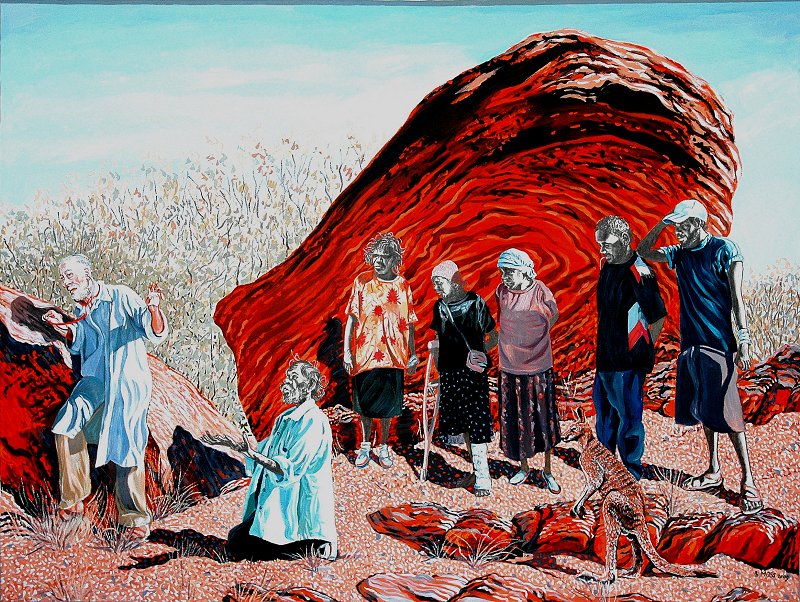
On Patriots Day much is afoot in Boston, when this Athens of the United States becomes Sparta. The public holiday commemorates the ride of Paul Revere and the start of the American Revolution. (I refer to Boston as Athens as an incubator of wisdoms but also as the place of Gauguin’s masterwork, ‘Where do we come from, what are we, where are we going?’ That painting and its title encapsulate the entire enterprise of human storytelling.
The painting is strategically located in a gallery situated directly across the road from Dunkin Donuts [Aussies must indulge the local spelling] where the donuts are certified kosher. But I digress.)

gauguin.org.au

For us runners Boston is THE marathon. More broadly, Boston, most humane of cities, hosts the most charitable of marathons. The event admits both the athletic elite and the footslogger, those who qualify by their speed over 26.2 miles and those who qualify solely by fundraising. I belong to the fundraising sluggards. This will be my fifth Boston, a further opportunity to put my feet to the service of the good. Unavoidably we come here to evil: in my old home town of Leeton a bride who loved the colour yellow is murdered unaccountably one week before her wedding day; in Boston bombs explode the innocence of thirty thousand runners and one million natives. Three die, two hundred and sixty four injured – many grievously – survive.

And I ask myself: Where do we come from, what are we, where are we going?

The small town of Leeton turns out to honour lost youth: multitudes gather in the park wearing yellow; married women hang their bridal gowns on front fences; on the victim’s planned wedding day brides all around the country add a dash of yellow to their apparel.
In Boston the city grieves, runners shake their heads, and return to the marathon with intent. Among them is one Gillian Reny.

“The Gillian Reny Stepping Strong Fund at Brigham and Women’s Hospital will support life-giving breakthroughs in limb reconstruction, bone regeneration, orthopedic and plastic surgery, and skin regeneration. Established by the family of Gillian Reny—a young, pre-professional dancer who was critically injured in the 2013 Boston Marathon bombings—the fund will fuel cutting-edge research and clinical programs in three areas:

Stepping Strong Research Scholars
: The Research Scholars project has two components: using stem cells to advance bone regeneration, and developing better methods to regenerate skin and heal wounds to reduce the suffering of amputation.  

Stepping Strong Trauma Fellowship
: The Trauma Fellowship will train the next generation of trauma surgeons in advanced techniques for treating acute and complex traumatic injury. Fellows will gain proficiency in surgical management, rehabilitation, limb reconstruction, and scar management.

Stepping Strong Innovator Awards: 
To inspire innovative research in areas including limb regeneration, limb transplant, advanced stem cell technology, orthopedic and plastic surgery, and bioengineering, BWH will offer Innovator Awards through an annual, competitive, request-for-proposal process. These awards will fund high-reward projects by our best and brightest physician-researchers.”

This is the good for which my feet will run on Monday April 20. This, like the wearing of the yellow, is the good that transcends evil. This is the good to which you can contribute. Go to:

https://www.crowdrise.com/brighamwomensboston2015/fundraiser/pheidipidesgoldenber

Sylvia and Bruno, A Love Story

I watched an aged couple today as they made love.

She is in her late eighties, he’s a little older. Thirteen years ago, Sylvia (not her name)
became vague and forgetful. Bruno (not her husband’s name) passed the farm on to 
the children so he could care for Sylvia at home. For ten years this worked well, but as 
Sylvia became less active she gained weight and as Bruno aged he lost muscular 
strength, the strength that built the farm that sustained a family. Three years ago, Sylvia was admitted to the nearby nursing home. Bruno visits Sylvia every day.

Until today Sylvia had remained the most placid, easy-going resident in the home. When she was found this morning, burning with a high fever, pale and limp, helpless even to sit, breathing fast, her heart racing, her blood oxygen levels low, she remained that same tranquil, agreeable person.

“She’s severely demented”, said the nurse, “It’ll be cruel if we overtreat her. Let’s just 
keep her comfortable.” This is code for, let her die.’

When I met Sylvia at 0630 she gazed at me, eyes wide. Was this recognition? The opposite? What, who, remained behind that enquiring gaze?
‘Hello, Sylvia, I am the new doctor.’
Sylvia, her face pale, yellowed, smiled. I thought of my mother, another placid smiler.
Sylvia spoke, a voice soft, barely reaching my hard ears.
I leaned over her and listened as she spoke again: “You’re the doctor.”  
Attending at her bedside in the early morning, clad in my running shorts, vivid cap and colourful singlet, I don’t look like anyone’s idea of a doctor  – or a runner. But Sylvia knew. 
These were not the words of one ‘severely demented.’ 

I called Bruno, made the call that relatives know will one day come, the call they dread: ‘Bruno, I’m the doctor caring for Sylvia. She has a fever. I thought you should know… She’s not in danger, but we need to decide what treatment will be best for her and I’d like you to come in and give me your advice.’ A lot of words, too many words. Words to paper over insecurity, uncertainty.
Bruno thanked me for calling. He asked, ‘When would you like me to come, Doctor?’
‘Any time that suits you, Bruno.’
‘No Doctor, you’re a busy man. My time is my own. When will it suit you best?’
We agreed to meet at nine-thirty.

I studied Sylvia’s file. There was a reason for her long stare – she has glaucoma. And diabetes which will make her vulnerable to infection.
I read the family’s biographical notes: ‘Sylvia is a gentle, happy, quiet and kind person; compliant; she has sons, husband, extended family, friends who visit her often; she likes fruit, enjoys stories on television; she understands, even though she answers with only a few words. Please speak to her slowly.’ 
Elsewhere I read a relative’s observation: ‘I believe Sylvia does not have the ability to consent to or decline treatment.’
Once again I thought of Mum, a patient who’d always agree with a doctor, always wish to defer, to oblige.

I found Sylvia’s End of Life Directives: ‘Keep her clean and dry and as free of pain as possible. Please do not provide therapy that is futile. In the event of acute deterioration or critical event, she may have IV fluids, IV antibiotics, CPR, defibrillation not more than twice, a short course of ventilation.’

I tried to decode the directives: the family allows resuscitation, ventilation and defibrillation – more or less Intensive Care – while excluding futile treatments. But you never know whether intensive treatments might be futile. You do know CPR must be vigorous to succeed. In the words of an Emergency Medicine Physician of my aquaintance, ‘If you don’t break any ribs you won’t save them.’  And short ventilation slides easily into prolonged. Dying is prolonged and deformed; and any living that remains is disfigured.
This constitutionally gentle soul, comfortable in her frailty, undistressed even in her febrile state, would she welcome such rough treatment? What roughness, which bodily incursions, can the family tolerate? 
I needed Bruno to help me untangle this nest of contradiction.

At nine-thirty, I found Bruno seated by Sylvia, holding her hand. On her bedside table, a pear, freshly peeled and sliced, waited Sylvia’s pleasure. I introduced myself. Once again I told Sylvia I was the doctor. She looked at me, then over to Bruno. He nodded and her wide face relaxed and fell into a smile. Since my earlier visit her temperature had fallen and her breathing improved.

I listened to the front of Sylvia’s chest. I wanted to examine further, to hear the breath sounds at the lung bases. Sylvia, aged, weak and ill, would need help to sit up. Ordinarily I’d ask a nurse to support her but Bruno was here. Sylvia would know, her body would remember the touch of Bruno’s hands.
‘Bruno, when I sit your wife up, will you hold her shoulders for me?’ 
I hauled Sylvia’s upper body upright and Bruno leaned forward and placed one hand on each shoulder and steadied her. My stethoscoped ears listened intently to the breath sounds. Faint crackling betrayed the pneumonia I suspected.

Pneumonia, the old person’s friend. Will antibiotics save Sylvia? ‘Bruno, this is pneumonia. It’s a dangerous illness. Do you want us to use antibiotics? We’d give them through a vein…’
But Bruno, raised in a time and a school where the doctor gave orders, replied: ‘You’re the doctor. Whatever you decide will be for the best.’ 

Deep in cogitation, I applied the stethoscope again. Eventually I looked up. Two large brown hands, the joints wrecked by time and work on the farm, supported Sylvia’s creamy shoulders. Bent forward, held by her man, Sylvia gazed into Bruno’s eyes. I noticed her right hand. Sylvia moved it back and forth along the inside of Bruno’s forearm. Up to the elbow, back down to the wrist, up, down, Sylvia’s fingers stroked Bruno’s skin.
The fingers caressing, moving upon the silence.
Two people, oblivious of this interloper, oblivious of all, man and woman made love and confounded me: where I had wondered how much treatment would be too much, now I sensed how much the two still gave and received from each other, how precious to each was time with the other. 
How much treatment will be enough? 

Tearful in New York City

My red rimmed eyes smart. Tears fall. A victim of homeland security in the United States, I cannot blame the state of my eyes solely on the State of Siege. My blephs were reddened and my tears prone to fall before leaving Australia.

What is blepharitis?

In general I know –itis. -itis is my stock in trade – be it stomatitis, be it balanitis*, be it appendicitis – if it’s inflamed, it’s an –itis. My own inflammation is blepharitis. Blepharitis is the inflammation of an organ that has no known name: search as we might in medical dictionaries and in general lexicons we will find no blephs. But blepharitis, which is the inflammation of that part of your eyelid which is neither external skin, nor internal membrane, but the terminal edge of the lid, hurts in a niggling and mildly miserable manner. The seat of the problem is a scaly deposit, a scurf, somewhat like dandruff, that forms on the edge of the lid. With every blink that scaly stuff scratches the surface of the eye. The eye responds with perpetual tearing.

There is no cure for blepharitis.

My grandson Toby – known in this blog for his flirtations with danger and for his love of this grandfather – witnesses my tears as they swell to a fullness and fall. His insect features tighten with concern. He approaches, leans forward, pulling me down towards him,
studying my face anxiously. His rodent digits grab at my arms to arrest me: ‘Are you sad, Saba?’

His love makes me laugh for joy. My mirth augments the tearing. A full waterfall of affection and my blepharitis is somehow sweetened.

My son-in-law Dov, a rising genius in ophthalmology, advises me: ‘There’s no cure, but there is treatment; you need to dip a cotton bud in diluted baby shampoo then scratch away at the scaly stuff at the edge of your eyelids. I invite my readers to try this: most enjoy the practice quite as much as vaginal douching performed with sandpaper.

On the eve of my trip abroad, I decant some baby shampoo into a urine-less urine specimen jar. I seal the jar and pack it carefully in a nest of socks in my suitcase. On arrival in the United States I open my suitcase and read the enclosed:

NOTICE OF BAGGAGE INSPECTION.

To protect you and your fellow passengers, the Transportation Security Administration is required by law to inspect all checked baggage. As part of this process some bags are opened and yours was selected for physical inspection.

My suitcase has been selected! I feel honoured. Glad to protect my fellow passengers in this manner, I rummage for a pair of socks. My fingers report something unexpected, the tactile sensation of something cold and viscous and gooey, not unlike cooled semen. Sticky soggy socks everywhere swim in baby shampoo manufactured by Johnson and Johnson. The urine jar itself is fragmented, shards of plastic dripping yellow.

The shampoo treatment suspended, my blephs scale, my eyes smart and redden and weep. Without Toby’s loving concern blepharitis is no fun at all.

Melatonin and the Meaning of Five Lives

Melatonin and the Meaning of Five Lives

– written in the high season of jetlag

Why would I wake after only four hours of sleep? Here I am, sleepless in Pittsburgh. It is 2.00am and for five days now I have slept too little. There is nothing to stop me sleeping: the house is quiet, snow falling outside hushes the world. Sleep is an ambition unrealised.

My mind has nothing useful to do other than to keep me from sleep. My mind visits my home in Diamond Creek. The date is December 7, 1974. I see it all in the dark from my bedroom upstairs in the house of friends in Pittsburgh.

Around 7.00 am

I am first to waken. I wash my hands and a noisy clanking in the pipes threatens the precious sleep of the children. Steam emerges when I turn on the hot tap. I turn it off. I pay no heed to the meaning of noises in the plumbing, to steam from the tap. These are practical concerns; I wash my hands of practical concerns. I remove my wedding ring to recite my morning prayers and go to my work, leaving the children unkissed, leaving the ring on the dresser, leaving Annette as she prepares for the day.

Around 8.15 am

The receptionist says: ‘Mrs. West is on the line. She says it’s an emergency.’ I take the call. Lynne says, ‘Howard. I think you’d better come home, straight away. There’s been an explosion at your house.’ I don’t come home straight away; Lynne West is an excitable person and I have a patient sitting before me. More patients wait in the waiting room. I see these patients and I drive to my house.

Around 8.10 am

The house exploded.

Around 9.15 am

I do not witness the explosion but Lynne is eager to regale me: ‘I heard a loud boom from your house and I looked over and a huge cloud of smoke came out of the roof. And the walls fell down.’

But before encountering Lynne and her tale of smoke and thunder I turn from the unmade road into our dirt driveway at 36 Deering Street. Lying flat on the ground to my left are the brick walls of my home. Before me the driveway leads to an empty carport. ‘Empty, ergo Annette is not at home, the children are not at home. Ergo I have lost nothing but bricks and mortar.’ And, as I will discover later, a wedding ring.

Until I married I disdained rings on men. Worse than effeminate, in my regard they were affected. A judgement made before I married. This ring was different: slender, of unostentatious white gold, engraved on the inner surface with words of love from Annette, words for my eyes only.

Around 10.05 am

I run Annette to ground at her sister’s house. She has dropped our firstborn at kindergarten early, as she always does. Earlier Annette sat in the armchair, breastfeeding the newborn while the older two watched Sesame Street on a couch in the same room. I ring Annette and tell her she is homeless. That we have been so since shortly after

8.05 am

Annette and the children left home for kindergarten. Punctual as always. Not only early, but early for early, as I was prone to point out irritably, in Annette’s overturning of my native tardiness.

11.00 am

Annette joins me at the wrecked house. We find two goldfish still alive, lying in the few milimetres of water on the surface of the kitchen table. That flimsy table is one of the few sticks of furniture that still stands. Paintings hang at angles from the walls, canvas gashed by flying debris. The dining table lies in heavy fractions, its geometry denuded. Ancestral bedroom furniture has collapsed. Of the wedding ring no trace.

My mind is fixed on the hot water service that exploded. Emplaced on the slope beneath the house, the hot water service – that ticking bomb – stood directly beneath the armchair where Annette sustained our baby with her milk; one metre removed from the suckling pair were the Sesame Street watchers, sitting in pleasant terror of Cookie Monster. Lynne West’s ‘smoke’ was the steam released by that bomb.

Annette is upset: unlike me she never held in her imagination the thought that arrested me for one second or perhaps two: that my loved ones are lost. Annette is a mother of children and she knows, as I will continue to refuse to know, that a family lacking a home is a frail thing, that we have lost our anchor upon this earth.

Our son, aged two and a half, knows something. Prior to December 7 he is a highly verbal person. From that time, for the next six months, Raphael will not speak.

I lie in the dark, useless to myself, tossing in all this unusable time. But unwelcome consciousness wastes nothing. It takes me back thirty-nine years in time. There were questions that Annette faced in those first few seconds, questions that my son asked in his mutism.

In the simplicity of 1976 I asked nothing. Now the darkness asks me:

What does it mean?

Why has this happened – this loss?

Why has this happened – this being spared from loss?

What, as our lives were spared, are our lives for?

What will you do with, how will you use this time?

A novel experience, this guilt, this sense of time debt, the debt unserviced, accruing, unpaid. The infant at the breast, her elder brother, their big sister, each of them has employed the time, each has grown and grown, grown and learned, grown and created a family. Throughout all Annette has been their home.

What have I not attended to?

I must listen to the pipes. When the pipes, the pipes are calling I must listen. I must not wash my hands of practical matters. The practical reality was shrapnel of exploding wine bottles stacked next to the suckling chair, next to the Sesame watchers. Those jagged fragments were flung with force from floor through the ceiling into the roof space. Grenades of glass shattered the room of milk and sesame and soft infant flesh.

I must learn from the steam. Steam, as Lynne might put it, is smoke – and where there’s smoke, there’s fire. The steam warned me: get your loved ones to safety, far from the fire.

Why live? Why us? These teasing whys tease. Abstruse abstractions, they distract from the concrete, the practical.

And Annette? Annette is where truth is writ plain and practical. The truth lies with Annette.

These musings are, as I suggested at the beginning, the children of the muse melatonin. I am in foreign territory here, lost, perhaps even found, somewhere between memory and regret.

As if to answer the questions of the dark, questions I never spoke aloud, my host passes me ‘The Descent’, a poem of William Carlos Williams:


No defeat is made up entirely of defeat –

Since the world it opens up is always a place

Formerly unsuspected.

A world lost, a world unsuspected

Beckons to new places

And no whiteness (lost) is so white as the memory

Of whiteness.

Rape

One night when I was about thirteen the local police called my father to examine a body that had been found in the park. The woman (the girl?) was eighteen. She had been raped and strangled. Dad returned, a great sadness in his face. His voice was drained. He said, ‘Her only crime was being a woman.’
I did not understand.

I met a young woman recently who has been treated over twenty years for depression and anxiety. She’d been given medications as well as psychological therapies and psychiatric help. She still sleeps poorly and takes sleeping tablets as well as Valium when she’s anxious. She tells me she spent years drinking a bottle or two a night, ‘closed away’, later using cocaine, ecstasy and ice. She hears the ticking of her fertility clock, she wants children but she feels unready.

Diffidently I asked about abuse. She trusted me enough to confide, ‘I was raped when I was thirteen.’
‘Was it a relative?’
‘No, a school friend one year older than me… I looked for him recently on Facebook and I wrote him a message. I’ll email you what I wrote if you’re interested.’
I was interested.

Hey XXXX,

I’m not sure if you remember me but just wanted to touch base after so many years and confront something which happened when we were at school together.

Remember the night we went to one of your female friends place and another one of your mates came along (apologies but their names don’t spring to mind).

Anyways, the events of that might have haunted me since and, well, finally I’ve managed to build up the courage to message you and speak up.

It saddens me that what happened has affected me so much and for so long.

I honestly thought that you were a friend back then and you and your friend took something away from me and I have never forgotten and it has affected me all this time.

My dignity was taken away and diminished.

I still have vivid images in my mind of being extremely intoxicated even to the embarrassing point prior to what happened that I had been sick on your jacket which I wore as it was cold.  After this I was too ill and had to go to the spare room to sleep it off and at that point both you and your friend had taken advantage of the situation of me being passed out drunk and you both fucked me.

I will never forget also to this day that your mum, and I understand her being your mother defending you and your friend in saying that neither of you would ever do such a thing.

Saddens me that I was the one apparently untrue to the situation in yours/your families eyes.

The next morning my mother and brother had picked me up and they saw that something was not right. I had blood on me and looked a mess and was taken to the doctors but I was too shocked and embarrassed to admit to anything.

XXXX this was probably not the best way to do this via FB and just understand I’m not wanting anything from you nor an apology or anything but just feel that this is something that I’ve had to stand up to and to give me peace of mind after so many years.


***

I understand violence born of anger or fear. What is it in a male that allows him to hurt a woman or a child by calculation? I know this violence, I see it and I treat its fruits; but I don’t understand it. That people live and re-live and suffer and endure I do know. Some suffer beyond endurance and slash or die. I know some few who manage to create an enlightened response. This young woman said, ‘I changed cities to change my life.’ Soberly she added, ‘I think I am making progress.’
She found work in the justice system. And she found a sort of spiritual greatness that shows in these closing lines to her old school friend:

I would however like to ask you to always watch over your daughter, nieces if you have any and younger family members so this never happens to them
.

Jeremiah Jan

She sits in the waiting room, reading. Any patient who enjoys a good read will enter my consulting room in a good mood. I do allow my patients time for a very good read.
The book she reads from is thick, with old-fashioned morocco covers and red-tipped pages. Looks like the Bible! She doesn’t look mortally ill. Perhaps she’s mortally afraid of the new young doctor.
‘Good morning, my name’s Howard.’
We shake hands. Her hand is fair, a youngish hand. The owner of the hand says, ‘Hello, I’m Jan.’
‘You’re reading the Bible? Which book?’
‘Jeremiah.’
Jeremiah the cheerless, prophet of doom, a man willing to be jailed for speaking truth to power. Serious reading. Might have been worse, could have been Job.
The serious reader sits down. She speaks: ‘Howard, I’ve come for a talk. I don’t need a diagnosis; if I want a diagnosis I’ll see Doctor Don. I don’t need a diagnosis, I need a talk.’
We have our talk.

Another visit by Jan, another long period in the reading room. Eventually I show her in. We are only about ten minutes into today’s talk when the phone interrupts us: ‘Howard, Doctor Don needs you in the Treatment Room. Now!’
‘Gotta go, Jan. Sorry.’
I go.

When I return, after about twenty five minutes, I resume: ‘So, Jan, you were about seven when…’
‘Howard, you can’t just do this.’
‘Do what, Jan?’
‘Take up our conversation without a break, as if nothing terrible or significant has just happened.’
‘Can’t I? Why not?’
‘You need time, some space. You need to come to terms with whatever it was that was so urgent. You are a person too, Howard.’

In my consulting room, situated at the furthest end of the building from the Treatment Room, Jan would not have seen the frantic mother, the pale plump doll that was the baby, the child inert, lifeless. She would not have felt the body still warm, not seen two adult males breathing desperate air into a new body that would not breathe again. She would not have seen the face of the mother passing through shock to grief to the start of lifelong self-accusation.
Did she perhaps hear sounds of stifled sobs?

Many chapters of Jeremiah and of Job have been read in the thirty-five years since that day. I remember the child, I have not forgotten the mother.
Nor have I forgotten Jan’s instruction.