It’s Not How Long You’ve Got, It’s What You Do With It

I’ve got six to twelve, the older man said.

The younger man said quietly, they give me three to six.

But you never know, said the elder, my count is down. A little. I might get longer. Doctors can be wrong…If the count keeps falling, I might last longer than the twelve; I might be able to take the family to Greece next year. I’d love to go…

The younger man said I want to get to my brother’s wedding in February.

Silently we did the sums. February will be after three months.

The elder man’s oval face creased. He said to the younger: maybe you can get into a trial. I’m on a trial drug. My count is down, a bit. Are you on a trial?

No. I’m not eligible. I don’t have the mutation.

The elder urged the other to do things, to try things, not to accept predictions as solid fact: They can be wrong you know.

The young man smiled his crooked smile, stretching the wasted side into momentary symmetry. I know, he said. At first they gave me twelve months. That was five years ago.

The elder man’s eyebrows shot up. Wow, he said, that’s beating the odds. His earnest face relaxed, happier now. Are you on chemo?

I have been. On and off. It’s stopped working.

I keep hearing about people who have their brain tumours removed. Couldn’t they try that?

They did. Twice.

Twice? The elder man winced. He was trying everything, fighting the younger man’s disease.

Whenever he spoke the younger man’s voice was quiet. A physiotherapist, he was trained in disability. Now it had come to him, kept coming, unfolding in his body. His brain analysed each stumble, he processed the growing weakness down the left side, every step was improvised, his studied speech experimental, not bitter.

I stumble too, said the elder man. Last week, I was only one kilometre into the marathon when I stumbled. The ambulance men would have taken me away but Howard here wouldn’t let them. It’s just the foot, it flops.

The younger man said you can get an orthotic to keep the foot straight. They work. They’re not comfortable but you won’t stumble.

The ‘stumble’ was a crash. Down he went, his heavy body accruing momentum that his muscles could not brake. Six of the last eight months in hospital had seen powerful tissues soften and shrink, proud muscles, muscles that had carried this man 39 times the full 42.185 kilometres and across the Line. One of the Legendary Seven, last Sunday he lined up for his fortieth. He walked, he trotted, he shivered wildly, then he fell. Bent forward at my feet the man groaned loudly. He crouched, his head folded under his belly and he groaned again. Blood oozed, first from his knees, soon from the heels of his palms.  Two tall young men materialised, one on either side of the fallen man. They asked questions, good paramedical questions. The athlete groaned. I said, He’ll be alright.

The ambos said, He doesn’t look too flash.

I said, I’m his doctor.

What’s his diagnosis?

Everything, I said. He’ll be right.

At the prospect of unwelcome rescue the runner hauled himself up the helping arms of his son and his doctor. His sister-in-law mopped blood. The tissue was soon soaked. He said to his son, I’m shivering. Can I have your jumper?

He started walking again. People in the crowd recognised him. He was one of the Seven. Good on you, they cried. Legend! Keep going!

The man kept going. So did his teeth, chattering violently now, drumming time with his gait. The doctor in me wondered about fever, the return of infection that had seen him in hospital again and again.

A little short of the Fitzroy Street landmark his wife intercepted him. She took his arm and guided him gently to the kerb.

***

The younger man and the elder had not met before, although each had heard me speak of the other, a person like him, another with a problem that doctors could not cure.

The younger man regarded the elder. This rotund man, this athlete, this grandfather who’d three times risen from his sickbed to run so far. He sat at a remove from his stricken body, his face alight in wonder.

I nudged the younger: tell him what you’ve been doing since your diagnosis. The younger man spoke a little in the voice I have come to know, the voice he always uses when speaking of his living while dying. The voice speaks softly, a grin riding above the speaking mouth, ironic knowing in the background. The elder sat and listened. He heard of the classes the younger man runs for children with disabilities: They’re the kids no-one can do anything for. I mean no-one can fix them. There’s no cure for their cerebral palsy or their intellectual deficit or their severe ADHD.

The younger man did not mention to the elder how he teaches children they can be anything, do anything. His own life is the textbook, held open to the kids.

How do they come to you? Do you advertise?

Not as such. More word of mouth.  And there’s the website*.

A smile dashed across the younger man’s face: We start off each time with a group hug. It’s more a gang tackle – they race across towards me and throw themselves onto me and we hold each other. It will be fun tonight. The younger man glanced at his failing left leg:  Until now my balance and strength have been fine. Tonight I’ll go down and I’ll stay down. He laughed. It was a merry laugh, no irony, just the laugh of a man looking forward to sharing with his small friends the joke that is his health. The joke that is all health that is broken or twisted or failing.

We ate, all of us suddenly hungry. The younger man’s left hand rested in his bowl of hot dhal. I looked down, wondering when he’d remove it. The hand stayed put. The brain that should have perceived and sent the message to the hand neglected its work. The brain has been invaded and the invasion continues.

I asked them both, Don’t you feel angry? (I felt angry.)

The older man said, Why would I feel angry? Look, I’ve lived, I’ve got my wife, my children, a grandchild. I have a lot, I’ve lived. I feel sorry for my mother. She rings me every day, every single day. She worries.

A moment passed while we thought our thoughts. I felt for the younger man sitting at the side of the elder and hearing of the joys of a life lived, of a man full with his generations.

The younger man said, I’m not angry about this. He pointed to his head. I just get angry when doctors won’t listen. I nodded. Some of my starchier colleagues are uncomfortable with a patient  who is more than his disease, one who charts his path, who travels his world so widely and deeply as my friend.

A week earlier I asked the younger man was he frightened of dying. He said no. Later, a characteristically quirky text appeared on my screen: On the way down in the lift I worked out why I wasn’t scared. Dying isn’t scary – if you get it wrong then you stay alive.
*www.camerongill.com.au

Keeping Quiet

A young poet friend shared a poem with me. Gabriel Garcia Marquez declared the poet – Pablo Neruda – to be the twentieth century’s “greatest poet in any language.”

Such an accolade claims plenty poetic licence: does Mister Marquez read Sanskrit? Korean? Swahili? Arrernte?

Never mind: I think Mister Marquez is a good judge.

What is this power of the artfully selected offering of words?

This power that rivals music?

Read the poem; best of all, have someone read it aloud to you while you sit with your eyes comfortably closed:

Keeping Quiet Pablo Neruda


Now we will count to twelve and we will all keep still.

For once on the face of the earth, let’s not speak in any language; let’s stop for one second, and not move our arms so much.

It would be an exotic moment without rush, without engines; we would all be together in a sudden strangeness.

Fisherman in the cold sea would not harm whales and the man gathering salt would not look at his hurt hands.

Those who prepare green wars, wars with gas, wars with fire, victories with no survivors, would put on clean clothes and walk about with their brothers in the shade, doing nothing.

What I want should not be confused with total inactivity. Life is what it is about; I want no truck with death.

If we were not so single-minded about keeping our lives moving, and for once could do nothing, perhaps a huge silence

might interrupt this sadness of never understanding ourselves and of threatening ourselves with death.

Perhaps the earth can teach us as when everything seems dead and later proves to be alive.

Now I’ll count up to twelve and you keep quiet and I will go.

Intimacy

‘The oldest profession’ denotes a trade kindred to my own. In fact quite a cluster of old trades are equally ancient. Their practitioners include the massager, the beautician, the doctor, the physio, the kinesiologist, the acupuncturist. All practise the touching trades; they are the intimate touchers.

The tradie I dread the most is that one who invades my tenderest aperture, violating my mucous membranes while passing casual moral judgements and aspersions, such as, ‘you don’t floss enough.’

Last week I hurried out to visit another ancient professional. I headed for the well-beloved parlour where I visit my own well-loved toucher (of whom I wrote in an earlier post – see July 2017).  Time was short and I found the parlour chockers with men waiting on seats and clustered outside, each standing in silent confession of his private quest.

I raced up a city lane where previously I’d glimpsed another barber’s sign. There it was: I read Barber. I entered and a slim maiden turned from her counter. Smiling, she asked me what I’d like.

‘Can you make this beard almost disappear in ten minutes or less?’
‘Somehow, I doubt I can manage that sir.’ She smiled again, a kindly smile, the smile you reserve for the harmless lunatic and the feeble of mind.
Confused, I looked around. Instead of barber’s chairs I saw racks and racks of shoes. I looked again at the sign: the word, I now realised, was not
‘Barber’ but ‘Bared.’
Bared, it appears, means footwear.

I tried to explain. The shoe lady smiled again.
Blushing richly, I thanked the young lady and blundered outside and along the lane.

Moments later a second laneway led me to the barber’s shop I was seeking. I entered as a stranger, took a seat and watched luxuriant locks that a Samson might covet, sliding in and out of the kneading fists of the barber. Those were mighty paws. The shop itself was snug. The walls were covered with the likenesses of champions of Australian Football, signed by the champions themselves. Here was no mere barber’s shop, this was a gallery of greatness.

The barber, a short man of perhaps fifty years wore a body enclosed in walls of muscle. His movements were deft, swift and precise. He flashed a mirror behind his client with the biblical tresses, the man nodded and rose, the strong man separated him from some of his cash and despatched him.

‘What you want?’
I pointed at my chin.
‘Not head?’
‘No. Thanks. Just beard. No time.’
The man sat me down, grabbed my head, yanking it back to the headrest which rose from his ornate chair, a marvel of worked steel, a classic from the era of The Man from Ironbark. I looked up at my toucher. Most particularly I gazed at his face which he presented as a work of art, or at least of artifice. A close-cropped beard of palest mustard surmounted by tailored moustaches in silvery grey that curved upwards like the toe of a sultan’s slipper. Skin of olive. No breath odour.

I placed my order: ‘short please, very short, as short as you can make a beard without removing it.’ He robed me, wound self-adhesive paper into a clerical collar around my adam’s apple and seized a heavy metallic cylinder that sat in his paw like a classy handgun. I thought, ‘Berretta’. The sound of a chainsaw with a silencer approached my throat. I closed my eyes. The metal slammed against one of my softish parts and ploughed upward and outward towards my mandible. After the initial slapping impact of first contact I reckoned the pressure, although intense, might be consistent with continued respiration. The man ploughed and I respired. I kept my eyes closed.

I lay there for a few breathing minutes as the Berretta slapped, ploughed and buzzed across the regions of my face. With eyes shut I pictured the damage I should see once the assault was completed. Bruises certainly, abrasions of course, possibly burns from the hot metal, perhaps the odd bleeding point.

I realised I had surrendered to my anonymous assassin. Curiously nothing quite hurt. I lay back, flinched a lot and tried to hide my unmanly flinching. Altogether it was a strange exercise, a sort of extreme facial hot yoga.

Too soon it was over. Eight minutes had passed, fifteen dollars changed hands. I emboldened myself sufficiently to ask: ‘What’s your name?’ The barber presented me with his card, upon which I read his forename: BHOUJ. Boldly I essayed the pronunciation: ‘Booohhsh’, I said.
A shake of the head: NO! It’s BOOJJ!
Boojj: a brutish sound. Naturally.

Last night I took some grandchildren to Luna Park. Thirty dollars bought me a couple of rides. In terms of value – I mean fear per dollar per minute – Bhouj beats the scary rides paws down. I still have Bhouj’s card: I’ll be back.

Imagine a World

Imagine a world without i-phones.

Imagine we lost our i-phones.


Imagine a world in which the President of the United States of America lost his i-phone.

Such a state of affairs might easily be.

Just imagine the President decided last week to cosy up to the Jews.

Such a thing might easily be: the previous week it was the anti-Semites.

So the Pres attends a Rosh Hashanah meal.

At that meal everyone is given a slice of apple.

All hold the apple in their hand and dip the apple in honey.

All intone: ‘may it be your will that you renew unto us a good year and a sweet one.’


The Pres watches and follows suit. The honey pot passes to him and he dips his Apple well and truly in the honey.

As is the wont of the incumbent of the White House he decides then to send off a tweet. Just as he did after meeting the Saudi king, declaring he had overcome Islamist terrorism, he now purposes to tell the world he’s given the Jews a good and sweet year.


But the thing with Apple is their device no longer works after a honey dipping.

The Apple Warranty states explicitly: ‘Apple Corp offers no warrant of service if the device be dipped into any fluid extruded from the rear of a bee.’


In the untweeting silence America is lost. For her

president cannot tweet.


The Pres finds himself impotent to provoke North Korea.

The Pres cannot encourage racists.

He cannot insult patriots.

He cannot communicate ill will.

He is powerless to wedge.

He cannot wage war against the climate of our planet.


The President remains, of course, incapable of coherent argument; and incapable sustaining any argument longer than 40 abusive characters.


A world in which our President presides without his i-phone is a different world.

It is a better world in which we can look forward to a good and a sweet year.


In an Age of Nausea, Auguries of Sweetness

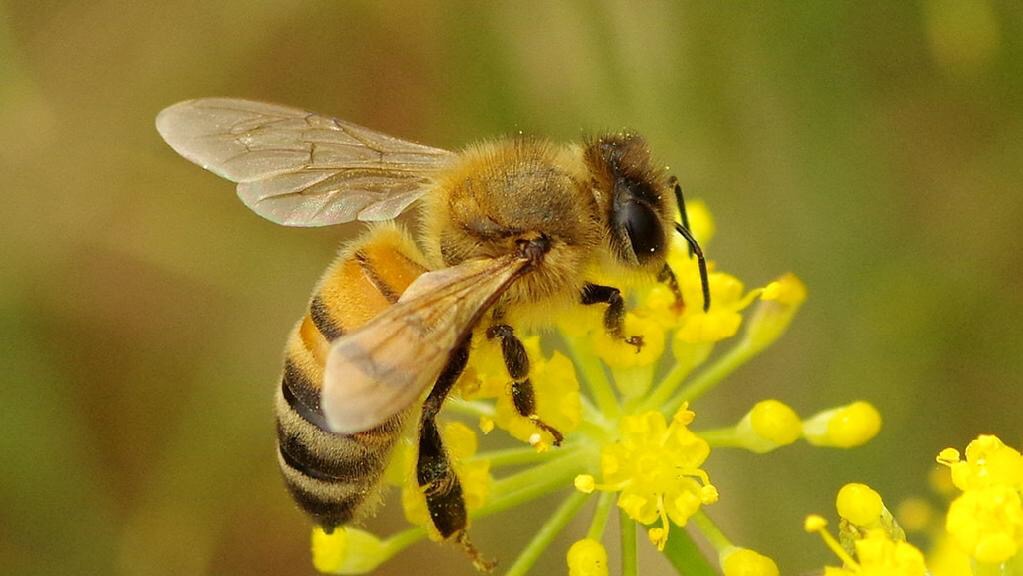
A year or so ago the news was full of the globe-wide threat to honey bees

The threat was not confined to the buzzing, stinging insect but to all vegetal life: no bees, no pollination, no animal life

A simple silence, the end, good night, no tomorrow, no new year, no honey

It didn’t transpire – at least it hasn’t yet

We still have bees, pollen, honey

I recall a patient of mine, not Jewish, who always knew, well in advance, of the approach of Rosh Hashanah

He’d wish me the greetings of the season

He knew about our new year through his work: he was an apiarist who would visit all the Jewish schools and kindergartens with honey and stories of honey bees, and bee raising and honey making and honey collecting

He’d bring honey to the children

I write this letter in the same spirit: I wish, I wish us all, a year sweetened, a year of blessing

howard

Conversation with Clare

Every Wednesday 774 ABC Melbourne’s Clare Bowdich puts a question to the world of listeners to her radio program. She asks: ‘How can a person improve this world?’

The question has exercised the minds of good people since we first emerged from our caves.

I gave Clare the best answer I could: ‘Become a starfish flinger.’

You can hear the conversation here (about an hour into the link): http://www.abc.net.au/radio/melbourne/programs/afternoons/afternoons/8880310

Or here:

https://wetransfer.com/downloads/e0957563203072fda91a305971ca6d6120170914013429/5789f7a6216473dd097cc05c2acabc1220170914013429/9a192a

Magnified and Sanctified

It’s been ten years, Den, and only now do I feel I can say goodbye to you.

You were sixty three, I was sixty one. You died on Friday night. Your son brought the news to us at our shabbat table.

We buried you on the Sunday. We laid you to rest at an odd corner of the Jewish burial ground, beneath a young gum tree. I looked at the tree at that time and I remembered Dad’s fear of falling gums. I thought, here you are again, going against Dad’s prudent judgement. And I smiled.

You lie now, beyond the judgement of humans. Many were the people who judged you, fewer were those who tried to walk a mile in your shoes. They were big shoes.  Like everything about you, very big. Magnified, sanctified… People who did understand loved you extravagantly, in proportion to your extravagant life.

And now I can let you go. From the time of our final conversation I dreamed of you. The dreams were dreams of helplessness. You could not help yourself, I needed to help, I tried to help, but in those dreams, I could not. You called me that last time. The phone woke me from a dreamless sleep. Your speech rustled and crackled, the sweetness of your voice ruined by seven days with the breathing tube. You had rallied, they’d removed the tube; now, with your breathing failing, they needed to replace it. Your voice crackled: ‘Doff, they want to put the tube back. What should I say?’

I heard your breathing, a rasping, gasping sound. ‘Do as they say Den.’

‘Is it my best chance?’

‘Den, it’s your only chance.’

They returned you to your coma and they replaced the tube. Three days later you breathed your last.

At the cemetery we said, magnified and sanctified be the holy name.

One evening during the week of shiva my son led the prayers in honour of his uncle. He loved you Den. We loved you.

For ten years I dreamed of you, restless dreams, frantic. I was unable to help. Then I started writing about you and the dreams stopped. Now I sleep without the dreams. Sleep in peace beneath your gum tree, Den.

Starfish Flingers

Running along Cable Beach very early this morning I passed a couple who carried small plastic bags of a primrose colour. The two peered and bent repeatedly, picking up small items unseen and popping them into their yellow bags. I’d seen people at this before, collecting pippis, also known as cockles. Some collect them for bait (whiting love them) while others eat them cooked in garlic and herbs and wine. I sang to myself as I ran one of the old songs Dad used to sing with us kids as we travelled by boat or by car:


She was a fishmonger

And sure ’twas no wonder

For so were her mother

And father before


She wheeled her wheel barrow

Through streets broad and narrow  

Crying, ‘Cockles and muscles

Alive, alive O…’


I ran a long way before retracing my steps. On the return I passed the cockle collectors. I changed course to inspect their catch. ‘Are these to feed you or to feed the fish?’

‘They would have fed the fish, but not now,’ said the woman, a person in her early sixties, her skin fair beneath her tan. ‘Take a look.’ I looked into the bulging bag she held: no pippis, just sandy cigarette butts, scores of them. Her husband held his bag open. More butts, many more.


‘He collected 160 of them today,’ said the woman, ‘Same number yesterday.’ I stood and mused for a bit. The woman explained: ‘People sit on the beach and smoke and drop their butts on the sand. Later the incoming tide washes the butts out to sea where fishes see them and take them for food. After a fish swallows a butt it swells up in the belly of the fish and the fish suffers and dies.’


‘Look at this, and this’ – her husband pointed out filter tips – ‘These filters catch all the poisons and toxins, and if the fish happens to survive you might catch it and eat it.’


I looked at the man, his build compact, his face a scrotum. The white hat he wore had seen better days and even the best of those days wouldn’t have been much good. I liked the cut of his jib.

‘Are you locals?’

‘No. Bunbury’s home for us.’

I pictured the couple walking the beaches from the south of the state all the way north to Broome, collecting cigarette butts. One hundred and sixty butts a day.


And I recalled Jonathan Sacks, the immediate past Chief Rabbi of the English-speaking world (by which term I mean to exclude the USA), who quoted a vignette of two men strolling along the seashore which was littered with starfish washed up and freshly stranded on the sand. One of the two bent repeatedly to pick up the starfish and to throw them as far as he could out to sea. His companion watched and mused and finally spoke: ‘There are so many, hundreds, probably thousands. You can’t possibly save them all; even if you labour all morning, your effort won’t make any appreciable difference…’


The first man paused, starfish in hand. He regarded the creature, still alive, then threw with all his might. He said, ‘To this one it makes a difference.’

Johann Appleseed

He stands in the mall, an oddly striking figure. His right foot perches before the left, the heel resting on pavement, the sole raised at angle of forty-five degrees to the horizontal. The man looks as if captured in the act of tapping a foot to music. But the foot does not stray from its perch; and where is the music? Listen carefully and you hear a sighing, a musical sound in time with his breathing. Look closely: held between fine fingers that protrude from fingerless grey woollen gloves is a silver harmonica. The man is playing. Or is he merely respiring – breathing in, breathing out through the instrument?  My friend Rod is a local. He traverses the mall every day.  ‘I don’t think he’s playing music’, says Rod. ‘Or if he is, it’s one single note.’
 
 
The man’s appearance is unusual. His hat is of classic design, early American Puritan I guess. Johnny Appleseed's name that comes unaccountably to mind. That old apple-planting, godbothering American pioneer, an early conservationist, a beloved and mythic figure in his own lifetime and since. Doubtless it's the headgear: the high peak of the hat is a tall cone, the brim a wide downsloping verandah . The colours of the felt shift subtly from mouse-grey to a junior navy blue to a peacock green. The effect strikes me as quite beautiful. The man himself is slim and he stands a full head taller than I. The hair of his head and his beard is turning from jet to silver. He looks as if he might command a fleet or conduct an orchestra.
 
 
The man stands singularly alone. I mean not simply that he is unaccompanied, nor that he neither receives nor seems to need notice: I mean there is in his solitude a seeming self-sufficiency that contradicts his act of his busking. For surely he is busking, this man who stands and plays music in a public place. But if he is busking, where is a receptacle for coins or notes? No cup or box or instrument case on the pavement before him, no hat either. That rainbow remains on his head. I stand at a distance, observing, wondering. I approach and wait for a hiatus in the sounds that emerge from his instrument. There is no pause. Neither is there a meeting of eyes. I step a little closer, not close enough to offend, but too close to ignore. I stand in silence while the musician plays on in near silence. I have time sufficient to study the sounds he makes. I hear more than Rod’s single note, at least three. The sounds flow and merge like the hues of his hat. While I wait I admire the close-fitting leather vest that clings to his lean frame. At length, a pause. I ask, ‘Do you mind if I speak to you?’
The man looks down towards me, an expression without a smile. He speaks: ‘For what purpose?’
‘I am puzzled. I see you standing in this public place, you play your instrument as one might who is busking. Yet you provide no container for a passer-by to show appreciation…’
‘Yes. ‘
‘Would the offer of money offend?’
‘No.’
‘But you do not encourage it.’
‘Nor discourage. If a person wishes to show appreciation, a conversation must first take place. As is occurring at present.’
The man’s old-fashioned formality has seduced me into unconscious imitation.
‘Would you object to telling me your name?’
‘Possibly not. What is yours?’
“Howard.’
‘Good morning, Howard. My name is Johann.’

He pronounces it unexpectedly as Jo-Han.
‘Isn’t it really Yo-hahn.’
‘Yo-hahn, yes.
‘Dutch?’
‘Yes.’ A smile, good teeth, (a little yellowed) emerge from the shrubbery of his upper lip. It’s a nice smile. ‘My parents, from the Netherlands.’
‘Do you live in Alice, Johann?’
‘Yes. For five winters now.’
‘And before that?’
‘I wandered. I carried my swag from place to place, I slept where I chose, under the stars. I came to Alice Springs and it was good place and I stayed. I do not expect to find a better. I do not need a better.’  
‘Do you play here every day, Johann?’
‘It provides my breakfast. I meet here interesting people from many places. I enjoy conversation. As is occurring at present.’
 
 
Johann accepts some money gravely. And no, he has no objection to being photographed or filmed.

Death Visits

Death visited last week, snatching away a lady whom we’d expected would recover. She was 87 years of age, a little disorganised in her brain, not vigorous but not too ill. We admitted her to hospital in the morning for observation and nursing care. Her elder sister had dementia too. She visited in the afternoon, escorted by her carer, a slim Asian woman.
 
 
At 3.00pm our patient enjoyed her afternoon tea. At four she took a nap. While asleep she stopped breathing. Big sister called us. Her cardiogram showed a heart attack. Her end of life instructions read: NO CPR. NO RESUSCITATION. She died. I left the dead concealed behind curtains and approached the living. I leaned and spoke clearly: ‘Your sister has just died in her sleep.’ It was the carer who fell onto the shoulder of her client, crying. The elder sister comforted her: ‘Don’t be upset. You get used to that.’ The calm features of the Asian woman twisted in grief, her face suffused. What silent sorrow of her own had been roughly torn open?


Meanwhile death had been stalking another two of my patients for days. I could hear his tread closing on them, unhurried, inexorable. For the younger of the two, death – release from her cancer – could not come soon enough. She begged, 'Let me die. Help me to die.' We gave her all we had, our promises of kindness, the usual feeble half-answers. She lapsed into a dull quiet, defeated by our timorousness.
 
 
The elder patient was far from ready. She had lived through the Second War in Europe, had seen much. Late at night she grasped my hand, breathlessly contriving a voice that filtered feebly through her oxygen mask. She pulled me close: ‘What will happen to me?’
I looked at her aged face, searching her: ‘Are you afraid?’
‘Yes.’
‘What are you afraid of?’
’Dying.’ She looked hard into my face.
‘You don’t need to feel afraid. When the time comes you will fall sleep. You will not suffer. You will sleep and you will not wake up. We won’t let you suffer.’
The old lady brought my hand to her chest and gripped it hard, pulling me closer. We breathed together in the darkness. No voice. Her smile said her thanks.
 
 
I went to my quarters and fell fast into sleep.  My phone rang. When the screen read ‘Unknown Caller’, I knew it would be the hospital calling. Surmise told me death had arrived for one or other of my friends. No, not yet. A third patient, more peremptory, had summonsed death by swallowing two weeks’ medications. With one hundred and forty tablets inside her she dictated to the nurse the disposition of her possessions: ‘Give my good overcoat to this one. Give the money that’s coming to me to that one.’ 
 
 
Sleep was slow to return. I lay and calculated the effects of twenty-eight strong blood pressure tablets, and an overdose of aspirin. I must have slept, for the ringing of my phone disturbed me. ‘Unknown Caller’ again. No, no-one had died. A child had a red throat.
 
 
Over the following hours of darkness ‘Unknown Caller’ rang six times. Asthma, wet lungs, fever. No death. At dawn the call hauled me from deep sleep: ‘Come now! Cardiac arrest!’ A large inert body, a small nurse pushing down hard, again and again and again. A flickering trace on the cardiac monitor, a chain of us thumping an unwilling heart, injections of adrenaline, a failed electric shock. No pulse at the wrist. I called a pause, the hopeful triangles on the monitor fell into a flat line. No breaths, no heartbeat. The husband of the inert figure stood, watching, his hand on his mouth. We tried again.
 
 
After a time I called a second halt. I listened for a heartbeat. I listened and watched for breathing. I shone a torch into pupils and found them wide with death. I walked across the room to the husband and said, ‘Your wife has died.’ A massive man, erect, he crumpled into silent weeping. His heaving trunk was enveloped instantly in the embrace of a woman I had not sighted. I spoke into the bereaved man’s free ear, ‘She didn’t suffer. She was unconscious from the instant she fell.’ The embracer’s arm groping blindly, grabbed me, held me hard in the grieving ruck.
 
 
At length I extricated myself. The small nurse from Uganda wiped his eyes. Another nurse said hoarsely, ‘I was at school with the husband.’
After certifying the death and writing my notes I left the hospital. Outside, the chill of an Alice Springs morning felt welcome on my skin. I wandered to a park and attended to my dawn prayers, delayed by a death.