The World Sounds Very Crisp

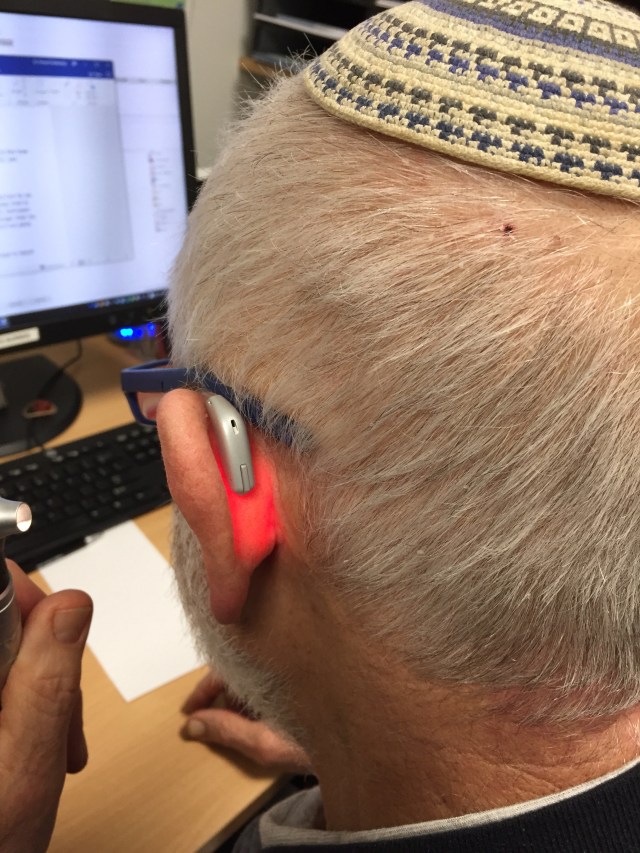
In recent days my world has clicked and rustled and rattled. Birds have started singing again in the early morning. My foot strikes the carpet and a smart rap is heard. Opening an envelope is a musical experience, and as I type these words the keyboard clicks smartly.

I have re-entered the world of sound. I’m reading lips less and hearing more. The winds of winter blow and my ears sense the rustle of molecules in flight. Most remarkable are the slurpings and the snapping of my own mastication.

I am newly born into this world of sound.

My hearing aids literally cost more than my car. I’m learning small skills: In the morning I poke a slender little microphone into an orifice that I cannot see; in the evening I remove it and encounter the day’s crop of soft brown wax. I use an alcohol swab to cleanse the mike. This routine will bring excitement to the balance of my days upon this earth.

So loud, so clear the clarion of the world! Is this how the baby feels on leaving its mothers warm, wet world of silence?

Never at home with gadgets I advertised first for an ear trumpet. E-bay offered none. So I play host to these miniature miracles in my auricles, bemused as ever by the absurdity of surviving longer than my senses as well as numerous other worn-out parts.

Next will be the cataract surgery. I hope to report then on a world of light.

In Praise of a Very Small Town

Before I answered the calI I’d never heard of Trundle. When I googled it I might have giggled. A town of six hundred souls, Trundle boasts the second-widest main street in New South Wales, and its pub boasts the longest verandah in the state. I didn’t giggle. I held my mirth.

All morning I chased my tail in the big city, I caught my plane, I recited the Traveller’s Prayer and I breathed out.

It was dark when the plane dropped me at Dubbo. The bloke in the burger shop near the airport added up my bill for one bottle of iced coffee, one bottle of putative lemon. I pulled out a ten-dollar note.

Something was different: the man didn’t scan the bottles. He did his calculation in his head. Ten dollars fifty, he said. The man looked up and saw my money. Ten bucks, he said. I thanked him. You’ll know where to come next time, he said. I said I will. I meant it.

I took the shorter route to from Dubbo to Trundle. I didn’t realise the shorter route would take me by dirt roads for much of the distance. Over the two hours on those back roads I startled a few kangaroos but encountered no vehicle passing in either direction. The dark of Dubbo was darker out there in the quietness and the road signs were unlit. I took a wrong turning and got lost. I got unlost and entered Trundle. The wide main street was brightly lit. Nothing moved.

At the hospital I asked the nurse, can you direct me to my quarters? No, she said, I’ll take you. Follow me. She jumped into her car, I into mine and we drove through the dark to a house that wasn’t brick. We bought this to let to visitors, she said.  We’ve spent seven years renovating it. The nurse opened the front door and I stepped into the perfumed past. Motel deodorant swamped all olfaction. The nurse pulled a switch revealing animals that greeted me from every side. A steel sheep and a steel cow stood at either side of the front door. In the lobby a crocheted mouse in a lilac dress stood knee-high by a bedroom door. A second mouse in white stood guard at the second bedroom. A third mouse in soft pink waited by the third bedroom. Ladies’ hats hanged from hooks, trailing ribbons of many hues. A large painting of Trundle’s main thoroughfare (famed for its width) stood on the loungeroom floor. The streetscape peeped brilliantly from behind a swath of brown paper upon which someone had written, apologetically, Sorry, Not For Sale.

Flowers fashioned of bright fabrics overflowed from waterless vases in every room. In the kitchen, mugs of colourful ceramic spilled from every cupboard.

Relentless decoration everywhere. Art deco china cabinet, four kinds of chilli sauce and very white bread indeed.

Décor surrounded me, pressing in from every side. Furnishings that dated backwards in time from the year 1950 overflowed in every room. Here was the Australian rural past in glowing abundance.

Tucked behind a bedroom door, in the depths of a very large leather hatbox, sat a felt hat in sky blue. An emphatic navy ribbon decorated the hat. Above all stood a framed text, written in smart neo-gothic. Its title read, The Story Of a Hat. The story told how that hat was made by hand for a wedding at a period when no woman went to church unhatted or ungloved. It was a matter of respect. The story, unsigned, ended with the words, This hatbox belonged to my grandfather.

Two thoughts registered: This house was, not renovated but de-novated – a home to memory. You would not sneer at sincerity. And kitsch would not be the word; this was love.

In the main street shopfronts stood beneath brave signage. Two of every three shops were closed. A sign read, Trundle Talkies. Excited, I raced across the road to check the movie times. I was too late by thirty years. I read the signage above the garage. Pontiac, Plymouth – those makes that ferried my family across the state in the 1950’s – now extinct.

A card in one shop window read, closed until further notice, ill child. I saw five clothing shops. The stock seemed to be the same in all five. Three were closed, one with a notice advising, Yvonne comes Thursdays and Mondays, 11.00 to 3.00.

I went to the first of the open shops to buy undies. The child in charge was sorry, they had none. I might try the Op Shop two doors down. No undies there either, but I noted the stock in the Op Shop looked the same as in its competitors.

Two doors down was the office of the Annual Abba Festival. Thousands attend. They put on a special train from Sydney. Everyone dresses up as one Abba person or another. Great are the festivities.

I doctored in Trumble for three days. Most patients were farmers, heirs to farms worked by their families for generations. Many of these people were older than I. None complained when an emergency elsewhere in the hospital detained me. If I said, sorry to keep you waiting, they looked mystified, then assured me it didn’t matter.

I thought about this. These people worked the farm from sunup to sundown. There was always work to do. But they had time to spare for other people. They’d survived the long cycles of dearth and plenty. In the present dry – the worst in memory – people were feeding their stock by hand. They’d stopped planting crops, waiting for the rains. They knew time differently from my patients in the centre of the great city.

My principal in the practice spoke of an epidemic of depression, of farmers dying of sadness. Others would be forced from the land, to walk away from the family farm. It occurred to me to ask, where are the Aboriginal people? Not here. We’re not on a river. And there’s no community in Parkes either – no river there. But strong communities in Dubbo and Forbes. They’re on rivers.

My three days completed I rose at 2.45 am to drive to Dubbo to catch the earliest flight to the city. I drove down that wide, wide street, built for the bullock trains to do their long u-turn.

I hurried through the dark, eyes wide for suicidal kangaroos. I arrived at the airport and checked in. I checked my phone: I’d arrived on time. Chasing my tail again.
Reds Under the Beds

Michael Benjamin Komesaroff was a conspicuous proletarian classmate of mine during our later years at Scopus (1963). He had a lived political ideology, like other Komesaroffs before him, an indivisible loyalty to Jewishness and to his country of citizenship. I recall his vernacular speech deafening us classmates in his espousal of Labor politics. We called him Kommo; he was a social democrat before most of us knew the term. Those same politics marked the generation of his immediate ancestors, and brought them to the attention of ASIO. At the time Lenin was preaching international revolution, a doctrine that unsettled Australia’s conservatives. Here were the Komesaroffs, newly arrived from that revolutionary hotbed. Where did their loyalties lie? ASIO became very interested in them, and now their descendant, with a career in international journalism behind him, investigates the investigators in a new book. “Reds Under the Beds” is the result.

“Reds Under the Beds” describes the abiding interest of Australia’s intelligence community in a family who had immigrated in the early decades of the Twentieth Century.  The author’s love and respect for those ancestors match his feelings for Australia. His meticulous research informs this account of a group whose hallmark was loyalty. The Komesaroffs were loyal Jews who became loyal citizens of Australia. Jewish loyalty mandated their love of Zion and their opposition to fascism, while loyalty to the country of adoption saw them acknowledged as exemplary citizens. Somehow ASIO became all too interested in the Jewish concerns of the Komesaroffs and quite blind to their lives as citizens.

Michael Komesaroff writes his family’s story dispassionately, in clear and clean prose. His analysis of the political tides and times is  revelation, as is his understanding of the contest for middle Australia between Social Democrats and Conservatives. With a calm that is unusual he identifies prevailing anti-semitic attitudes without inflating it beyond its true dimensions. Most topically, Komesaroff shows us how Australians of the most ordinary loyalty can come under pervading suspicion and investigation by Intelligence organisations. In our times, when mistrust of the citizenry is translated into something of a growth industry, a poised and intelligent balance is needed between the community’s needs of security and of community. In the case of these ‘Reds under the Beds’, ASIO emerges, showing limited intelligence.

“Reds Under the Beds” is published by Hybrid Publishers and is available from most booksellers and Amazon. Further details of the book are contained on the Amazon website (here).

As outlined in the flyer, I have the pleasure of launching the book at 4:00 pm on Sunday 15 July at Glen Huntly Park Function Room, Glen Huntly Park, corner of Neerim and Booran Roads.

Ecclesiastes, 12, 1

A letter arrived inviting me to join a panel of former students addressing a bunch of peers from my old school. Panelists were to discuss a number of questions which all boiled down to If you knew then what you know now, what would you have done differently?

The questions made me think about my schooldays. I loved school. I felt happy. I thought the brutality of our teachers was somehow just the way of things, neither wrong nor right, simply conduct that lay beyond judgement. I didn’t like it – in fact when I witnessed it I’d whinny with the ugly mirth of the unpunished; when I received it I felt I might vomit. But then I didn’t like winter either. Winter and corporal punishment were both unpleasant and both lay beyond lawmaking.

As I reviewed our jungle behaviour my older self felt sad and ashamed. I wished we had been kinder. An instinct revealed to us whoever was the most vulnerable. Arriving as a new boy in mid-term I was conspicuously vulnerable and the hounds duly bayed and pursued me. Being new was a temporary condition; others suffered perpetually. In my turn I identified one or two of these and I teased them with relish.

In time I saw how that fat child, this gay person, that person whose father belted her every day, attracted the crows, and I declined to join in the pecking. In time two of these three were to die by their own hand; the third tried and failed.

I wasn’t fat, or gay. My father didn’t beat me. My schooldays were happy. Inspiring teachers inspired me; loving mentors nurtured me. I suppose I blossomed.

Half a century and more have passed since I lived in that arena of mind-nurture and bloodsport. My eyes, clouded now with cataract, my knees grating, my hearing dimmed, my balance wonky, my farting – ever a reckless delight – now hazardous, what advice would I offer today’s schoolchild? Should I say Rejoice in the days of your youth before the evil days come when you will say, “I have no pleasure in them”?

I watch those tender green shoots anxiously as they don school garb and they venture into their jungles. I hold my breath and hope. Will she make her way? Will she find a friend? What wise words might I proffer?

Instead of speaking words I hope I might hold my peace and let her be, and let her become.

Faith and the Flu Vaccine

Some trust in God, some trust in nature, others trust in nothing and no-one.

The roots of these feelings lie deep, too deep generally for the light to penetrate.

These feelings are almost religious: they express some faith or, occasionally, a fear of all faith.

If you try to debate feelings of this nature you’ll find them impervious to argument. They are held sacred and well away from the light of enquiry.

If you believed I held a particular faith you might consider my belief absurd. But because of your good manners you’d probably keep that view of my quaint beliefs private. You’d realise argument would not budge me and, out of kindness you’d refrain from locking horns with me.

Circumcision evokes a great example of quasi-religious positions. Whenever you hear the subject discussed you’ll recognise the intensity with which a person expresses a position. Here we find conviction, not opinion. Convictions are guarded fiercely, they are immune to fresh evidence: conviction is the opposite of scientific openness of mind. I have noticed how lay people, doctors and nurses alike defend their positions on the foreskin with religious intensity. I do not argue with the foreskin zealot.

Winter has come to Australia with promise of our regular influenza epidemic. With winter comes a rise in religious sentiment on the matter of immunisation against the flu. The government preaches immunisation, we doctors echo with our own hosannahs, the trusters in nature shriek back. We all talk at each other. We find it hard to listen when our faiths collide. Doctors trust in herd immunity. On Facebook my daughter tells ‘friends’ she trusts her doctor father. One respondent trusts in nature (“I‘ve been vegan for seven years, and I’ve never had the flu during all that time.”). Another respondent trusts no-one and nothing (“ It’s a conspiracy. Big pharma in cahoots with government.”)

I looked up some facts about influenza and vaccination. I found plenty of facts but these will change few minds. (Two thousand proven influenza deaths. Lots of people become unwell in the two weeks following vaccination. Not everyone who is vaccinated with be immunised. Not a single proven death from the vaccine.)

I had been doctor for two weeks when I saw my first influenza death. The patient caught the flu late in pregnancy. She deteriorated rapidly, developed pneumonia and was soon brain-dead. Her baby was delivered by emergency caesarean section and lived. That baby never knew her mother. Mother was twenty-four years of age. That was my own age at the time.

Last week I vaccinated my children and my grandchildren against the flu. I had the vaccine myself. I offer the same vaccines to all my patients. I answer their questions, I provide information, but I don’t enter into religious disputation.

Autumn Notes, IV

As I write this it’s still autumn. I need to point that out lest winter arrive before this is posted. You know how pedantic my blogmeistress can be.

Winter is lurking, waiting its moment. I left the hospital last night and walked into the dark and rain. Rather than wait in the wet for the correct tram I took another which would take me close to the station. ‘Close’ was actually a mile or two. I enjoyed a philosophical walk through the bleak, absorbing heaven-sent water through hat, jacket and leather shoes. Three jolly Chinese women sheltered in a doorway beneath bright umbrellae that flapped in the wind. Nice and damp by now, I thought of the umbrella, a found object, furled, resting in my bag. If ever I’d have an umbrella moment this would be it. I don’t like umbrellas – a prejudice from childhood dressed up as a principle. The umbrella stayed furled.

On the tram this morning three young women sat and consulted their screens. Melbourne passed by them, damp, dark, unnoticed. Their devotion was religious. One of the three wore an eskimo jacket, her face fur-framed, her free hand clutching two slices of vegemite toast. The bread looked like rye. A semicircular bite in the upper slice showed where the screen interrupted the young woman’s breakfast. Twenty minutes after boarding, eskimo-lady alighted, her neglected toast undepleted. I mention the breakfast because it looked hearty, just right for the weather.

At the hospital last night I ate the meal I brought from home, a soup described as ‘Tuscan Lentil & Grain Broth’. A woman I know found the recipe in one of the weekend magazines. The soup was new to me. Among the ingredients were carrot, celery, onion (of course), garlic (gratefully), tomatoes, lentils, barley and a green called cavolo nero. That’s Italian for kale. I saw through the disguise; I don’t eat kale, like umbrellae – a matter of prejudice. Well I ate the soup, hot and hearty. Oh what a moment! The soup warmed me and filled me so all the wet and wind and cold that followed could not dampen the love I felt for the soupmaker. I decided I wanted her to be my wife. Which, happily, she is.

I Blame Seinfeld

I blame Seinfeld.

Someone has to be blamed.

My kids watched as they grew up. My wife watched. I tried not to. There was the hapless George: no shabbier soul ever sullied a screen. Every so seldom Kramer might pop up. He’d break me up. A wondrous comic creation. But between cackles I could feel something niggling at my austere soul. It was only later, with the advent of ‘Friends’ – not as funny, the characters even more ordinary – that I could define what offended me.

Nowadays, what was subtext in Seinfeld and in Friends is the explicit in the great world. What those characters (Seinfeld) and those nonentities (Friends) did constantly was normative and, in time, became normal. The banks do it, the captains of cricket, the captains of industry do it. The incumbent in the White House does it, the churches, the military, politicians (of course) – they all do it.

They all lie.

In those TV shows the ethos was subterranean. You could feel the tremors but you didn’t always sense the accumulating weight of untruth; nor how truth as a value kept receding into distance. In response to any difficulty, every character lied. They lied by reflex. Awkward situation? Tell a fib. Everyone does it…

I’ll tell you a story from the Olden Days. It goes like this: A child goes into a bank with his piggy bank.  The banker, a man in his fifties, helps the child to open a savings account. The banker congratulates the child on her thrift. The banker does not sell further products to the child.


Today that’s a fairy story. That banker will never drive a Ferrari.

Here’s a contemporary story: A customer goes into a bank and asks the banker a question. The banker replies, “I’m a banker. I tell only lies.” Should the customer believe the banker?

The makers of Seinfeld knew what they were doing. They were blowing a whistle on untruthtelling.

The makers of Seinfeld made us laugh. We laughed and we laughed. And we paid no attention to the whistle. And now the Liar in Chief sits in the White House tweeting. And the laugh is on us all.


Autumn Notes 111

The ruler of this blog disqualified the title of my previous post. I’d proposed “Autumn Notes -III”, but the blogmeistress ruled that out. ‘It’s a book review, Dad, it’s nothing to do with autumn. You’ll confuse people if you call it that.’

I disagreed.

She insisted.

I demurred.

She overruled.

So here we ago again. I’m writing this in autumn. Brown leaves are falling, the air is chilling, malicious winds lash the streets. What’s more, I’m in the autumn of my days. And today when I visited my aunt I glimpsed Winter.

My mother-in-law is a beauty. At 91 years she dresses like my daughters and she’s still admired as a beauty. Her name’s Helen. As in Troy. Ma-in-Law Helen remarked to me once,   ‘Your Aunty B was the most beautiful bride I ever saw’. On a separate occasion Aunty B said to me ‘Your mother in law was the most beautiful bride I ever saw.’

I’ve seen wedding photos of them both and I can’t disagree with either of them.

Today I visited Aunty B. Family news had filtered through the dark: B isn’t doing well. I found her sleeping in her room, surrounded by her daughters and her doctor-granddaughter. I saw her, I saw that same face, beautiful still. I thought of Aunty B’s life of battles, of her buoyancy and grace, her good cheer. I remember how she took this bewildered country boy under her wing on lonely visits to Melbourne. Now Aunty opened an eye. Was that a smile? Her hand opened to my touch, the grip strong. My last surviving aunt opened her mouth to speak. No words. The eye closed and she slept. Like Hemingway’s Old Man (of the Sea), did she dream?

It’s not yet Winter but it’s coming.

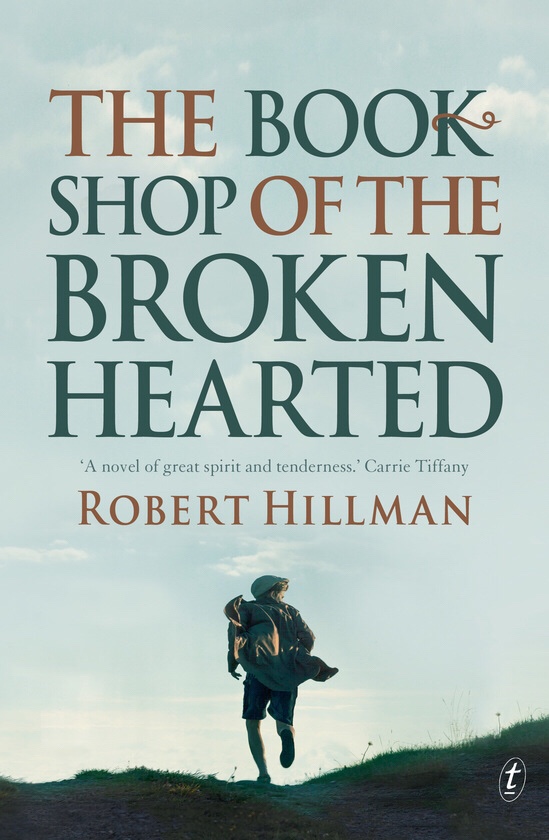
The Bookshop of the Broken Hearted

Every so seldom I come upon a book to treasure. Every day I read. I inhabit a forest of books,

I sleep between towers of books, some read, some half-read, most unread. No day goes unbooked.

Some in my world of books inform or advise or enlighten. Others – not enough of them – delight or tickle me. Some inspire, some shock, others outrage and a few disgust me. Plenty bore me. But every so rarely comes a story that calls for that overused word, love. Robert Hillman’s ‘Bookshop of the Broken Hearted’ is a book to love.

What do I mean here by love? In two separate surveys carried out a decade or so ago, respondents were asked to name their most-beloved Australian novel. I saw listed many books I’d enjoyed, by authors I admire. Before reading the results I made my own nomination – Tim Winton’s ‘Cloudstreet’. I read the rankings, and there, topping both surveys, was Cloudstreet.’Just so: Winton’s characters, their stories, their rich and variegated humanness, are given to us in their fulness, given us to love. ‘Cloudstreet’ stays with the reader and is recalled with love. ‘To Kill a Mockingbird’ is another such.

Ripe for adding to that list is Hillman’s ‘Bookshop’. It broke my heart and it healed it. I laughed (my guffaws this morning alarmed a tramful of screen-trapped commuters) and I ached for the child. And for the adults who saw this child and that child torn from them I felt a distress that has visited me only once outside of a book, when the (false) report arrived that my child had a fatal malignancy.

‘Bookshop’ left me hopeful but not complacent. I will cherish the simple farmer who is the protagonist and I will tremble for him so long as memory abides.

I invite you come to Readings Bookshop in Carlton, to hear Robert Hillman in conversation with this happy blogger at 6.30 pm next Monday, May 7th.

Autumn notes: The Song Keepers

I’m probably posting this too late.

I want to tell you about a documentary movie my wife and I saw a few days ago. The movie overwhelmed me.

My wife and I arrived a few minutes early and we took our seats. We were the first to arrive. We watched trailers of a number of forthcoming films in which an individual or a group achieves redemption through performance of music.

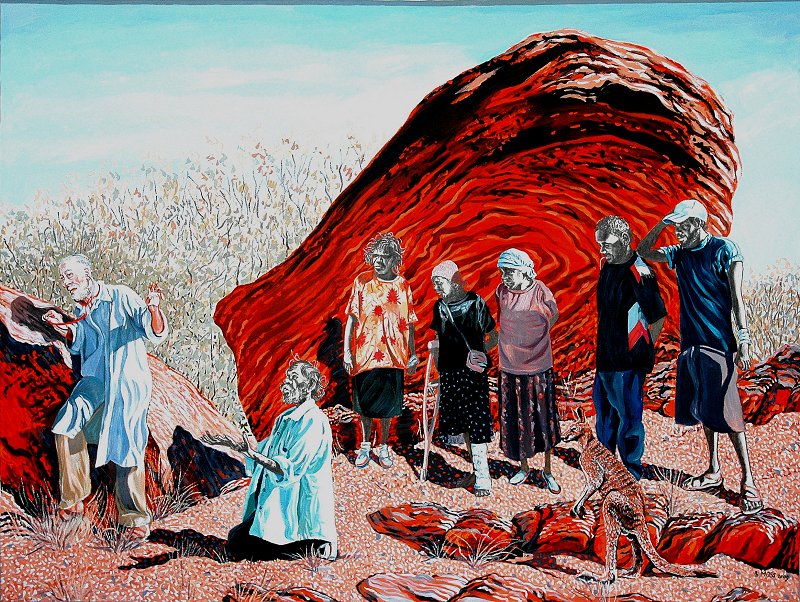
Then our movie began. Within minutes the story is told: a black man who travels to Central Australia finds groups of women choristers, all of them Aboriginal. The women used to sing ancient Lutheran hymns, not in German but in their own (far more ancient) Aboriginal languages. The man revives the choirs, brings them together, trains them and flies with them to Germany where the ladies (whose massed choir somehow includes two men) perform and triumph. Simple story, simply told.

The choirmaster drives from Alice Springs to the settlement of Hermannsburg (126 kilometres), from Alice to Areyonga (214 kms), from Alice to Docker River (673 kms), to meet and recruit his singers. Arriving in one remote community after dark, he feels his way to the little church by torchlight. The church is empty. Addressing the camera cheerfully, the would-be choirmaster says, I wonder how many will come. I wonder if any will come. A handful gathers and embraces the rebirth of their old songs. We see these women, clearly inspired and energised. Something, some memory, stirs them.

We watch these joyous women, mostly old and fat and jolly, in their singing and in their joyous being. We witness the joyfulness of these ladies, the exultation that flows from them and between them as they join together in song. We hear them tell their stories, stories of massacre, of confiscated children, stories of loss and of love. We watch and we tremble with formless stirrings of our own.

We watch the singers clothe their corpulent selves in their gowns of earth colours (I mean earth browns and earth reds), we see them congregate at Alice Springs airport for the unfamiliar enterprise of commercial jet travel. They land in the cold of Germany and discover Lutheran churches vaster and more ancient than they have known. Congregations materialise and the choristers master their nerves and they give voice. The local Lutherans are overcome: here is their old time music brought back alive and pulsating in tongues they do know. And yet they do know.

The locals weep, the choristers weep, and two old Jews seated in the cinema – the sole patrons in this screening –  weep too. My eyes moistened with the first sung chords and never dried, as I vibrated to the passion and the glory. What is this alchemy of sound, of treasured memory, of lost ceremony regained, that lets loose these springs of cleansing tears?

I realise I’ve probably spoiled the movie for you. Perhaps that doesn’t matter: the movie will end its so brief season any day now. But if you do manage somehow to catch ‘The Song Keepers’ remember to bring along a hankie.

https://www.youtube.com/watch?v=lhEh3kmBSxI

Jun 21, 2017 – Uploaded by MIFF

The Song Keepers Australia | 85 minutes Central Australia’s answer to The Buena Vista Social Club, The …

The Song Keepers – Trailer – YouTube

 2:43

https://www.youtube.com/watch?v=xUFXbQAX9Z4

Mar 14, 2018 – Uploaded by Potential Films

Dir. by Naina Sen, Australia, 2017. 84 min | Documentary Four generations ofsong women that make …