On the Passing of a Great Writer

At the time of writing this, I have read scores of tributes to Gabriel Garcia Marquez, all of them as tweets. In other words, I have read nothing so far in mature media, (an expression that identifies me as a culturally bewildered old fart).

Great writers will have their say in traditional media.
Thus far the twitterers. Now me.

I was intrigued as I read these tweets. They poured, a growing stream of tributes, pausing at intervals, I suppose, to gather electronic breath, then flowing again. The process seemed as alive, as dynamic, as the flowing of a swift rivulet that paused on reaching rocks, only to cascade over and around them and plunge downstream in a Gabriel Garcia Marquezswelling spate. I felt excited by the energy I witnessed. I felt I heard the whisperings of legion one-hundred-and-thirty-character authors, everyone of them sounding forty years younger, forty years more at home here than I. Their twittering grew and grew to a chorus.
The energy was mildly thrilling as it gathered strength. It could frighten me if (forget “if”; think ‘\’when!”) it becomes a mob. I remember, too well I remember the cries at Cronulla; the cries of the mob as Dreyfus is cashiered (“Death to the Jew!”).
But I digress. Or do I digress? Only if the medium is not the message.

And what did I hear, what sense as the tweeting reached crescendo?
I heard love. I heard grateful appreciation. Marquez became a beloved writer. And his writing was the antithesis of the tweet. Substantial, considered, it paced itself with the uneven gait of the human.

I was impressed by the way tweeters reached for language worthy. None found his writing “awesome”; no-one said Marquez was “amazing”. No-one buried him in dead language.
Instead they offered back beloved lines. I record the four most quoted in ascending order of popularity:

Fourth: The only regret I will have in dying is if it is not for love.

Third: Nothing in this world was more difficult than love.

Second: Nobody deserves your tears, but whoever deserves them will never make you cry.

First: What matters in life is not what happens to you but what your remember and how you remember it.

Of these the first three are switches planted onto the pages of Marquez’ writing that light up a remembered feeling, an emotion recognised by the grateful reader.
The lines on memory appear more elusive than allusive. Subtle, demanding a pause, requiring meditation, the memory quote speaks to all who are mortal of what might remain, of the immortal.

What is my own response to Garcia Marquez’ writing? People call it magic realism. I recognise something older. I hear the thrust of story in the bud, bursting into flower. I hear the pulsing of the “Thousand Nights and One Night”. I hear storytelling.
 

Where Else But Alice?

Where else but Alice Springs can you run through Honeymoon Gap (part of the Macdonell Ranges, not part of the body) and see the world ablaze as the sun rises, greeting a file of self-selected marathoners with silent fanfare?
Where else than Alice can such a mediocre runner place fifteenth in a marathon? (There were only seventeen starters that year).
Where else than Alice do the volunteers – endlessly cheering us, feeding us, hydrating us – outnumber the runners?
Where else in the running world can you run through air as pure as crystal and finish your marathon in the mild golden glow of mid-morning?

Alice has the best kept secret in the world of marathon running. I’ve done Boston (four times), New York (thrice), Traralgon (ten times), Melbourne (15 times) – and Alice just as often. I come back for every third Sunday in August. My wife is suspicious: she should be: Alice Marathon is my secret love.

Sexual Misconduct

A first grader I know confided in me recently. He said, I’ve got a problem. You know my girlfriend, Tori? She kisses me and she wants me to kiss her. At school!
I didn’t see his problem: Is that bad?
Yes! What if the teachers find out?
What would happen if they did find out?
They would send me to the principal.
Why?
The child looked at me as at a simpleton. Because you can’t kiss people at school! It’s against the rules!
Really? I never saw any rule like that? Especially if the girl wants you to kiss her. And if you do.
Exasperated now: Look, if we kiss and other kids know about it, soon the whole school would be kissing…
That’s better than fighting, isn’t it?
A deep breath. He tries a different tack: What if Tori’s parents found out?
What if they did? If your parents wouldn’t mind – why should her parents feel differently?
You don’t understand. Tori’s parents aren’t like mine. They… they live in a great big house…They would go crazy if they knew I kissed Tori.

“Slip me a Mickey”

Mum is about sixty. She speaks with her doctor son, aged thirty. He’s still a bit wet behind his medical ears.

Mum: One of these days I’ll have stroke darling…

Son, provoked: How can you know that, Mum? I’m a doctor and I’m not able to predict that. You can’t know you’ll have a stroke.

Mum: Well, I do have high blood pressure and my cholesterol is high. Those are the factors. Anyway, when I do, I want you to slip me a Mickey.

Son: You mean kill you? No! I won’t.

Mum: Alright, darling.

Son, contrite: Look Mum, if you do have a stroke, I’ll come and visit you every day. I’ll read every word of Dickens to you. And after that, I’ll read all of Shakespeare to you.

Mum: Thank you darling. That would be nice.


Son, six months later: Mum, remember how you asked me to knock you off if you had a stroke? Would you still want me to do that?

Mum: No, certainly not.

Son, triumphant: You see Mum, if you’d had a stroke, I’d have killed you – and you wouldn’t have wanted to be dead.

Mum: No, darling – I’d have been dead and happy, and you’d be alive and feeling guilty.


Fifteen years pass. Mum goes to see the Australian Ballet and suffers a mini-stroke. Her doctor – a specialist, not her son – starts her on aspirin. She suffers a cerebral thrombosis, a full sized stroke. Her hand is weakened and her memory is patchy. Her specialist decides she needs warfarin – rat poison – to thin her blood. After watching ”In the Name of the Father” with her doctor son she vomits suddenly. Son helps her to her feet, but she falls, a dead weight. Her son and her daughter in law heave and drag her to the car. They drive to hospital.

Mum’s blood has become so thin she’s suffered a cerebral haemorrhage. Her specialist doubts she will recover consciousness. She does so. While she remains in her coma someone in the hospital relieves her of her engagement ring. She never sees it again.

Mum wakes up. Half her hindbrain is demolished and with it her balance and her ability to walk. Her champagne voice loses its sparkle. She speaks huskily now, coughing often, searching for sounds to carry her meanings.

She says to her doctor son: I reckon the next stroke will get me.

What do you mean?

It will see me out. Dead.

Son, not irritably: I don’t know, Mum. How can anyone know?

Mum: I’ve had two strokes now. Isn’t that what they say – ‘three strokes and you’re out’?

The son laughs. The old lady laughs too. A stroke is a nuisance – “boring” is her word for it – but time spent with any of her children is recompense.

Belatedly the son recalls his promise – Dickens! Shakespeare! Mum, remember I promised to read novels and plays to you?

Did you darling?

I did promise, but I never came good.

Never mind, darling.
She squeezes his hand with her own – the one that still works.

The son launches into reminiscences of the time, more than thirty years distant, when they lived in the country. His stories bring back the days when her young body obeyed her quick mind, when it was she who nurtured the stumbling child. He finishes his vignette. The mother smiles, squeezes his hand again and thanks him: That was lovely darling.

Son: You know what, Mum? I’ve got lots of stories from those times. How would you like it if I were to write them all down and read them to you?

Mum: I’d love that darling.

He starts to write the stories. He supplies them to Mum and to her oldest friend from those days. The two old ladies feast their tear glands on the stories.


Mum needs a helper now to shower herself. Sometimes the helper takes leave and bathing her falls to a son, the oldest one, not the doctor.

Mum: Isn’t this awful for you, darling? Bathing an old wreck?

Eldest son: When I soap your back, I remember with my skin how you soaped me. It’s a return, a coming home. I bless myself for the privilege.


The stairs in her old home are beyond Mum. The doctor son and his grown son carry her up and down on wrist-linked hands. Mum asks: Don’t you boys want to euthanase me?

Son: At last I can do something for you in return for carrying me all my life.


Mum and Dad settle into their new single storey home. After a time, the doctor son asks: Mum, do you remember a conversation many years ago? You wanted me to give you a fatal overdose of a sedative if you ever suffered a stroke. Now that you’ve suffered a few of them, do you still feel the same?

Oh no, dear. Certainly not. Do you know why?

Her emphasis makes her wheeze and cough.

Son waits for the squall to pass: No Mum. Why?

Mum: I thought if I suffered a stroke I’d be handicapped; and I was right. And if I was handicapped, I’d lose my independence; and I was right. I thought if I lost my independence I’d be a burden; and I was wrong.

A pause.

You know – I’ve never been happier in my life.

He stares at his mother.

Mum: And the reason is I am surrounded by people who love me.


20130604-204052.jpg

On Quietly Going Deaf

IMG_1696 IMG_1646 IMG_1046“What?”

“What did you say?”
My family is sick of my hardness of hearing. It seems that hearing hardens and arteries harden at just the time that other things soften.
One of my body’s pumps has softened noticeably. I refer to the one with the ventricles.
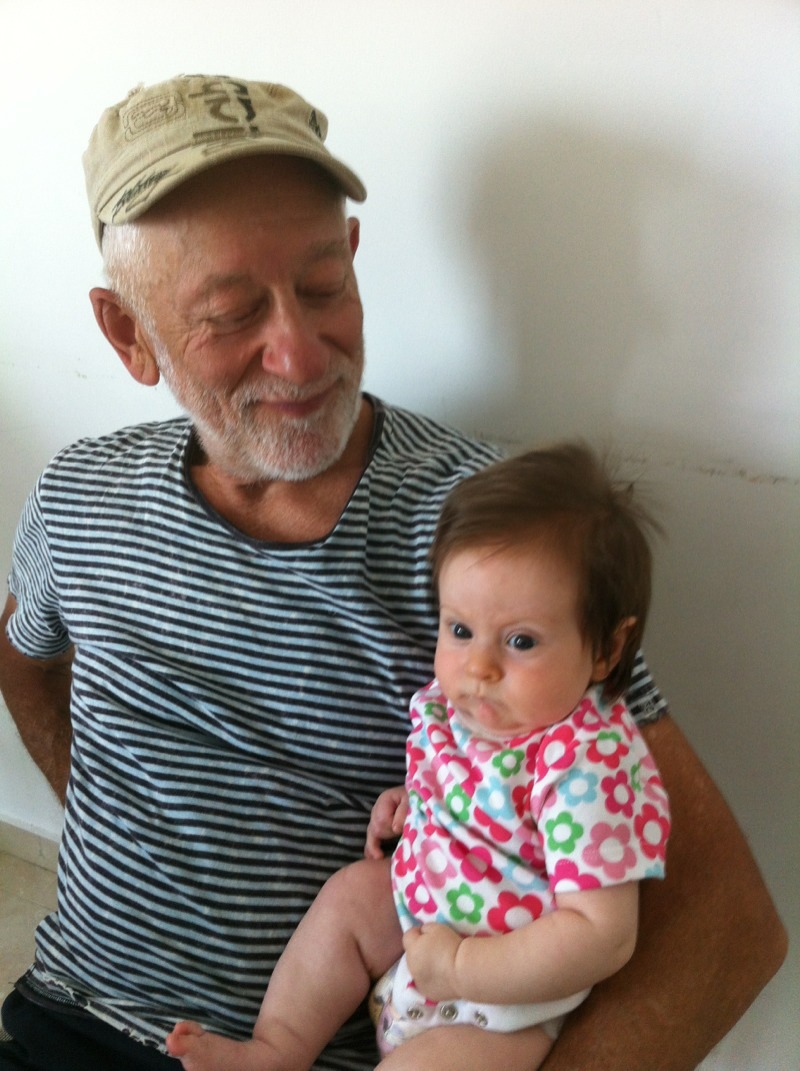
What human heart can stand firm against the arrival of grandchildren?
This happy, happy stage of life where our children use their sexual organs for the pleasure of us, their parents!
Technological Man has invented old age. Nature, blind and base, has no use for us once our litters have matured and reproduced. We are supposed to wither quickly and politely die. But doctors have intervened and prolonged the moments of aging into an epoch. From fifty to ninety we live on, noting the failing function of joints and arteries, of ears and eyes. Our teeth desert us, our balance fails, our uteri prolapse, our prostates swell, our bladders leak and we dare not trust a fart.
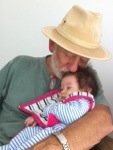
But we have grandchildren. I can hold a newborn on my knee and croon off key and she will not object. I can hold the toddler in my arms and tell him a thousand stories, long after my eyesight darkens, for just as long as memory holds strong. And when memory fails, I can confabulate.
Who needs hearing aids, dentures, titanium hips, dental implants? We have grandchildren.IMG_0009 IMG_1603 IMG_0482

The Festival of Eating Cheesecake

The festival has  a number of names: Feast of the Ingathering of the Harvest, Shavuoth (or Weeks), The Season of the Giving of our Torah; or Pentecost (for speakers of Ancient Greek); but in practice the festival we observe is The Feast of Eating Cheesecake AND Cheese Blintzes.

In the diaspora we will celebrate for 48 hours, commencing next Tuesday night. We eat dairy foods in appreciation of the promise of a “land flowing with milk and honey.” That is the standard translation, but the Hebrew – eretz zavath halav u’d’vash – really signals a land oozing milk and honey. The root comes from the verb ‘to sweat’. The land sweats milk, beads of honey form, merge and flow upon its surface.
This is intimate, physical language, the language of love. We consummate our love by the eating of cheesecake and cheese blintzes. We have loved this land and worked it and helped it to flow now as in ancient times.
Some will read these lines and lather themselves into a fury at my suggestion that my people have known and loved this land for thousands of years. They will diagnose my true racist, apartheid-mongering self. They will hate my love.
To all who read this, my greetings: Hag Sameach, happy festival! Good Yomtov.

A Gift from a Dead Lady

Ruby came into my life three years after my mother died. Mum would have loved this newest baby, not just because of her unruly, abundant hair; not only for her full moon abundance; nor for her kookaburra laugh alone; but because Ruby is of a rare species, a female.

Most of Mum’s kids were boys. And she loved us even though we were boys.

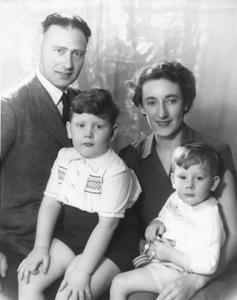
My brother Dennis was Mum’s firstborn, a peach-faced baby with golden hair. Adored, but a boy.

I was next, a truly lovely child, I often said as much. And Mum agreed. But still, a boy.

On Friday evening May 13, 1949, Mum came into labour a third time. The rains came, the river broke its banks and in the next town of Narranderra, Mum’s doctor was stuck in his shrinking island in this Riverina sea.

Mum laboured on. The Sabbath came. Dad lit the Shabbat candles and went to the hospital where he delivered Mum’s third baby.

The next morning Dad read in the paper that a resident of our small town had won the lottery.

Full of the news, he hurried to Mum in hospital: ”Yvonne, a Leeton man has won the Sydney Opera House Lottery.”

“That’s nothing. I’ve got a girl!”

Last December our thirdborn gave birth in a hospital in Bristol. My wife was present but I was not. Thirty-six years previously I had delivered that thirdborn, a girl. Now she had borne a girl, Ruby. One of Ruby’s Hebrew names memorializes my Mum.

I met Ruby about six weeks ago and spent three weeks loving and learning her. Since I parted from her, Ruby has learned to laugh and to suck her thumb. She is the smartest kid of the present century. Mum would have loved her.

(If you look at this little movie you’ll fall in love too.)

My Mum would have burst with love for Ruby.

But Mum died. She left little pieces of beauty, bits of jewellery she gathered here and there during a long and travelling life. These lovely things have found their way to her female descendants as keepsakes.

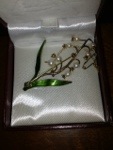
One item, a small brooch of enamel and pearls, wanted a claimant. I saw Ruby, I came home and found the brooch. Then I remembered Mum and how she was about little girls.

If, one day, a score of years from now, you happen to bump into a plum-cheeked young lady with disobedient hair and this brooch (see link) in her lapel, you’ll know: this is Ruby; her great-grandmother would have loved her.

Copyright Howard Goldenberg, 28 April, 2013.

20130428-163421.jpg

Ruby My Love

Crossing the world to meet Ruby, to feel her feel, to smell her smell, to catch her smiles, to hear her voice – her voices actually; meeting this newest granddaughter after she and I have waited for each other for three months; holding her close in her crying moments, in her moments of calm, watching her slow smiles of pleasure as she fills a nappy; hefting her little body, laid prone along my forearm; bathing with her slippery-smooth pink body on my lap; whispering, crooning, humming, singing silly sweet nothings to a bundle whose gaze meets mine only fleetingly.
With her barely four kilograms, this small potentate holds me hostage: she reduces me with a cry, with a smile she plenishes my wrinkled life with freshness.
All this, in the Festival of Spring in the holy land, where Ruby and we, her suitors, estivate.

20130326-060328.jpg

Running in the Breeding Grounds of Yangon

The weather forecast is for a hot day. That’s the forecast every day in Yangon. My own forecast – it’s hot now at 8.00 am, it will be hotter soon: if I am going to run today I should leave now.
I take a taxi to the park. Were I hungrier for inhaled hydrocarbons I’d run there, but I’ve already breathed enough smog to create a decent cancer.
Yangon boasts the largest city park in the known world. I do like to boast that I have run around the largest park in the known world: in Vancouver I ran around the world’s biggest, then in Bristol I did the same on the Downs.
But this beauty might just be the real thing. I can’t see its further end. Its jewel is the lake, a lime green affair that stretches further than my eyes or legs can follow.
The world’s longest boardwalk is a joy, bouncy and springy underfoot, launching my every next step upward and onward – and backwards in time to when running fast was effortless. Zooming around the lake, I find myself running parallel and close to the shore, close enough to feel like a voyeur as I pass numerous courting couples. The young people, engaged discreetly in the business at hand, hear my footfalls and look up in surprise. I keep my eyes on the winding boardwalk which flings me around bend after bend. At every turn I disturb another couple’s progress.

The shoreline is ringed by tall trees and shrubbery. Between the botanical specimens the park’s designers have placed benches large enough for two adults to recline, one beneath the other. The plantings afford privacy which the occupants appear to enjoy and take for granted. So when an old foreign mountain goat speeds into their breeding grounds, the locals are surprised. The consternation is mutual and thankfully brief.
After a time the boardwalk deserts the shore and heads off into open waters. The circumambient lime-green is the colour of too much life, of a watery milieu where plant growth is phenomenally fast and rotting keeps pace. The confectionary colour makes me slightly uneasy: I’m not anxious to take a dip in it.
Abruptly that becomes a real prospect as the boardwalk comes to a fullstop. I jam on the brakes and retrace my bouncing steps. Once again I disturb the courting couples, who, I cannot help noticing, are making good progress.
It reminds me of Buenos Aires, city of the long slow kiss. Another town where the poor are many and libidinous and strong urges find no indoor accommodation.
I leave the lake and head deep inland. Atop a rise I come to a large emerald of lawn. Eight slim men, bare chested, wearing longhis, trim the grass, each wielding sort of scythe, a linear metal blade about a metre long, with which they shave the green. Labour must be cheap: the area they ‘mow’ is about the size of a doubles tennis court. Hot work on a hot day, their bronze bellies shine in the sun.

***

I’d like to have a longhi. Which man wouldn’t?
I enquire and the smiling men of the mowing brigade direct me to the market. Happily I get lost many times: lost among the strong-smelling smoked fish sellers, lost among the fruit vendors, lost in the laneways clustered with jade merchants, lost among the corn on the cobmen, the hot food stallholders, the fabric traders, the toysellers, the tobacco factors, the beggars, the amputees, the gleaming smiles of white, the grins that drip red with betel juice.
At last I ask: longhi? – indicating my below waist area. More smiles on every side. The word goes around, people point and smile and tell their neighbour about the old foreigner who points to his privates.
A kindly soul – they all seem kindly – taps my shoulder, points to the shop directly behind me and nods: longhi, longhi.
The shop is narrow, but easily wide enough for the four or five – they come and they go, so the count is fluid – four or five fetching females who attend to me. They show me bolts of fabric, all smartly pattered cotton affairs. I choose the two lariest fabrics. The four or five fit me with my longhi. I leave, beaming, a prince among princes, splendid in my longhi in Yangon.

Wedding Rings

A voice says will you marry me?

Annette looks up in surprise – I am a bit surprised myself: where did that voice come from?

Annette says are you joking?

The voice says no, Annette says yes, and a week or so later we are buying a ring to make the meaning of our voices concrete.

A few months later, our voices exchange promises before witnesses, and we exchange rings to cement the promises.

I have never worn a ring before. In my family, real men never wore rings – were we too modest, or simply too poor? – I don’t know. There was certainly a feeling of disdain for ostentatious jewellery. The ring that Annette gives me is a narrow band of white gold, quite weighty for its modest size. It is a discreet, silvery statement of love and commitment. It feels fine and it sends a message to all from Annette that she claims me. The inner surface of the ring is engraved with my name and the date, 3.12.69. This is the date that marks my movement from my family home and ways into a new way.

But surgical asepsis allows no concessions to love and marriage. I am newly wed also to medicine, so the ring comes off for every surgical scrub in the operating theatre and for the delivery of every baby in labour ward.

And I slip the ring off my finger every morning for the ceremonies of worship: I wash my naked fingers before prayer, then wind the leather strap of tefilin around my left fourth finger while reciting the threefold declaration of betrothal to the Creator.

After these rituals the finger is ready to resume its conjugal connection to Annette. I slip that silvery band back onto the finger with a feeling of conscious pleasure.

On the seventh morning of the month of December in 1976, I take that ring off for the last time. I place it on the shelf in our bedroom, wash and say my prayers. Hurrying away to work, I leave the ring on the shelf. I never see it again.

When I return to my destroyed house a few hours later, the exploding hot water service which sat for years in dutiful silence beneath our home has torn, enraged, through the floor, through the ceiling and through the fabric of our lives. The bedroom is unrecognizable: there are no horizontal surfaces, no shelves, no ring.

Annette and our children are intact, we are all intact, the three goldfish – Shimmy, Pizza and Coco-Pops are all intact. This is no time to grieve for a ring.

Twenty years pass, the children are adults and the goldfish have gone the way of all flesh, fowl and fin.

My finger itches again for the trappings of marriage, so I buy a slim band of white gold and wear it. The world at large makes no comment but Annette marks my wearing of the ring, and understands.

A few years later, the second ring falls while I am praying, onto the floor. My search for it is anxious then rapidly frantic. I find to my surprise that I am sobbing as I bend and scrabble on the floor for a small piece of absence surrounded by an annulus of gold.

That little circular symbol of the big fact of my life is never found. In its place is rediscovery of the intense nature of my commitment.

Some fingers never learn. After 32 years of marriage, the fourth finger on my left hand demands a third wedding ring. My friend Colin is on his third ring and his third wife: he has three mothers-in-law and he has earned his jewellery.

In my case, I still have Annette and I wish to show that fact to the world. So I buy a new ring.

This ring is heavier and tighter – harder to lose, but also harder to pull off and to put back on. This is no simple sensual pleasure, no slip off – slip on, but a struggle in which three fingers from the right wrestle with the left fourth. Before every scrub, before every morning wash and prayer, I shed some skin on the altar of marriage, a small sacrifice of my flesh. After twelve months of the third ring, my finger is scarred. There is a cicatrice, a ring of flesh which is permanent. This is a ring which no-one can remove and I can never lose.

It looks like I am married. For good.