At that Precise Spot at that Exact Moment

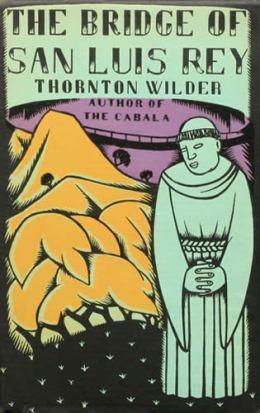
Centuries ago a bridge suspended high above an Andean valley collapsed. As a handful of travellers fell to their deaths, a Franciscan Friar approaching the bridge witnessed the event. Hundreds crossed that bridge every day. He never doubted God had decided to end those lives for a reason. Certain those lives had reached their completeness, Friar Juniper set out to investigate, to prove meaning in the seeming randomness. The author Thornton Wilder wrote a short, intense account of the monk’s quest in his book ‘The Bridge at San Luis Rey.’


Thirty years ago I made the winding climb from the valley floor to Marysville’s lovely Steavensons Falls. Half way up, nearing a bend in the cool and green, I encountered a plaque that read:  

IT WAS AN ACT OF GOD ON A WINDLESS MORNING 

          FOR THAT PARTICULAR TREE TO FALL 

         AT THAT PARTICULAR PLACE AND TIME 


PETER JOHN SYMONS AGED 19 YEARS 

MAXWELL JAY HUTTY AGED 18 YEARS 

DOROTHY PATRICIA MCNALLY AGED 15 YEARS

JANINE CLARK AGED 13 YEARS


The plaque had aged, its sheen lost. The text begged the Great Question. A smaller question lay buried in the ordering of names, listed – not alphabetically but by age. The fact of ordering betrayed the human need that pressed upon the text’s composer, the need to overcome chaos, to quell the fear of existential meaninglessness.


On an idyllic summer day in the heart of Melbourne, streets milled with innocents in their hundreds, in their thousands. They were schoolchildren, adults, workers, lovers. They were foreigners and out-of-towners here for the tennis, they were suited business people and bewigged barristers. They were in the liveable city where life was blessed by a gentle sun, a sweet torpor, a Friday feeling. One of those thousands was a baby boy whose life was about to end at the age of three months; one a twenty-two year old woman who bubbled with laughter; two were men, aged 25 and 33 years. A fifth was ten years old, a school girl.


On Patriots Day, 2013, thirty thousand of us set off to run from the village of Hopkinton to Boston, 26 miles and 185 yards away. The marathon started at 10.00 in the morning. One million Bostonians lined the route, standing outside until all had passed, cheering us on. Boston loved us all, from the elite to the aging plodders. Celebrating this, their ceremony of innocence, the spectators offered us oranges, bananas, sausages, beer. They held up signs: YOU ARE ALL KENYANS. At 2.46 pm the first bomb exploded at the Finish Line, followed moments later by the second. Of the many hundreds shouting and cheering in Boylston Street, three were killed, 264 injured. One of those killed was a boy aged eight. Sixteen survivors lost limbs.


In Wilder’s classic novel, the Friar spends years seeking the proof of divine design in the chaos and cruelty of life. His researches culminate in a book in which simple faith is upheld by simplistic conclusions. Wilder writes:


I shall spare you Brother Juniper’s generalizations. They are always with us. He thought he saw in the same accident the wicked visited by destruction and the good called early to heaven…


The book being done fell under the eyes of some judges and was pronounced heretical. It was ordered to be burned in the Square with its author. Brother Juniper submitted to the decision that the devil had made use of him…The little Friar was given to the congenial flames… he called twice upon St Francis, and leaning upon a flame he smiled and died.


In the final few pages Wilder makes clear his rejection of The Friar’s ‘generalizations.’ Instead he writes of those who loved and lost and lamented and never healed. All these live out their days numbed, unable to find solace or meaning. One by one, they cross the lonely years and confess their grief, their self-blame, to an aged Abbess, herself bereaved of the two who used to be orphans in her care. All the bereaved live out their days waiting for death.


For the present generations, living in our scientific age, reared as we are with data to slake our thirst for the rational, attempts to rationalise last week’s experiences fail to satisfy. Instead explanations are felt as an affront. The image of a pram, upended, empty, upon the bloodied street; a child lying face down, entirely alone in death, torn from her mother and sister who struggle for life elsewhere, in Intensive Care Units; the Japanese stranger – still unidentified – who dies alone and unknown, far from his home – who, in the face of these, can find comfort in pious nostrums?


Ultimately Wilder’s Abbess finds, not explanation, not meaning, but reconciliation: Even now – she thought – almost no-one remembers Esteban and Pepita but myself… soon we shall die and all memory of those five will have left the earth, and we ourselves shall be loved for a while and forgotten. But the love will have been enough. Even memory is not necessary for love. There is a land of the living and a land of the dead, and the bridge is love, the only survival, the only meaning.


As in Boston after the bombs, once the fatal car had passed, the people of Melbourne beheld those injured, those lost in wild surmise, those stunned. The cabbie who leaped from his car, the citizens who took travel brochures, garments – whatever they found to hand – to bind wounds, all became sudden trauma nurses and paramedics. So too the shop attendants who streamed from department stores with towels to stanch haemorrhage, with a board torn from a wooden pallet to splint a broken leg.

 A terrible beauty born.


Australia Day in Doomadgee

Doomadgee, we write it
In our orthography
Really should be
Dumat’ji
 

No flag raising here
No speech or ceremony
On Australia Day
In Doomadgee
 

River runs warm
Kiddies swim and swarm
On Australia Day
In Doomadgee
 

Uncles bashing
In Australian passion
On Australia Eve
Here in Doomadgee

 
Broken hand, broken
Jaw, cut faces and more:
That’s Australia Day
In Doomadgee.
 

Adam Goodes
Too far away
This Australia Day
In Doomadgee
 

A busy day this
Australia Day
In the hospital
In Doomadgee
 

We plaster, we suture
Like there’s no future:
Future no feature 
of Australia Day,
Not here, no way, 
In Doomadgee
 

The end of Australia Day –
Quietness falls
In hospital halls
Of Doomadgee
 

But short the respite –
Quick! Elder sick,
Dying On Australia night –
Dying here in Doomadgee?
 

Quiet, quiet, his voice, his breath –
Small his smile at threshold of death –
Good night Australia:
System failure in Doomadgee
 

Beside him, quiet woman – or girl –
His guard and ward in this world
Trembles, faces an Australian day
Elderless in Doomadgee.
 

He slips away from teeming kin
Who hold tears and keening in;
A dreadful peace on Australia Day
And quiet, this night in Doomadgee.


Once Upon a Poem 


Once, when two persons were walking together at day’s end, the elder of the two remarked on the sunset. He spoke and said:


the sky is burning

in my mind


Once Upon a Story


Once, when two were walking on the beach the younger saw a rock that looked like Leviathan and she said:


Last night I was here and that rock wasn’t a rock.

Last night I saw it move from the sea. It moved up the beach and it came towards me. It was a whale. It chased me up the sand and I ran and I ran and I didn’t stop running until I got home.


Once Upon a Song


Once, when two walked together a song drifted towards them. The song had no words. The sounds of the song reached them from somewhere higher or darker or hidden. The sound surrounded them. The flapping of wings, the whoosh of flight, made them think of birds. And the drift and drone, the rise and fall, the start and pause, mad them think of a breathing. Perhaps a person. Perhaps their planet.
Once and Always


The poem and the story and the song came and went, went and came, always different, ever the same. The song and the story and the poem bound the younger to the elder and both of them to all who came after and to all who came before.


Sometimes the two remembered or wondered or dreamed or knew: the song and the poem and the story had been there before they were, before the sunset, before the rock. Perhaps song, poem and story had brought the sunset and the rock and the flapping wings into being.


The two knew they could exist only in a world of story and poem and song.


I Read the News Today, O Boy

I read this news report today. You probably missed it as mainstream news media don’t print this sort of news.
“Mourners are streaming to the central Israel city of Tira to comfort the family of a nineteen year old woman killed by ISIS. Lian Zaher Nassser was one of 39 people killed by an ISIS gunman at a New Years celebration at an Istanbul nightclub.
She was laid to rest at a funeral attended by thousands on Tuesday, just over a week after another Israeli woman, Dalia Elyakim, was buried. 

Nasser, an Israeli Arab, was on holiday in Istanbul with three friends, one of who(m) was injured. Elyakim, killed in the Christmas market attack in Berlin, had been travelling with her husband Rami, who was badly injured in the attack.

In the Nasser family’s sorrow, it found help from an unexpected source – ultra-orthodox Jews. The parents wanted to get their daughter’s body back to Israel as quickly as possible, but ran into difficulty as she was not insured, and in the end enlisted the help of the Haredi-run rescue organisation, ZAKA. ‘ZAKA is an international humanitarian organisation that honours the dead, regardless of religion, race or gender,’ said the organisation’s chairman Yehudah Meshi-Zahav.”

People react differently to this sort of report. For some the news comes as a salve, a corrective to the bad news tsunami. Others read it and say, ‘Yes, but…’

Working at the Children’s Hospital recently I treated a child who wore a pink hijab. She did not look mid-eastern, nor African. Her surname was unusual. I wondered a bit then hazarded a guess:’Are you from Albania?’ Her dad was amazed. ‘How did you know?’ 

Then, ‘Where do you come from, Doctor?’

‘Australia. I was made here – with all Australian parts.’

I removed my whimsical hat, exposing my yarmulka.

The father practically whooped with delight:’ You are Jewish! How wonderful!’

Then, ‘Do you know the story of my people and your people during the Second War?’

I admitted I knew it but dimly.

Father filled me in: ‘Albania was one of the few nations to give Jews shelter. We hid them and protected them. And after the War, the Jewish Holocaust Centre here – in this city of Melbourne – honoured my people.

And do you know, Doctor, our mosque was Melbourne’s first?’

Some will read this and feel the salve. Some will react, ‘Yes, but…’


At the Fragrant Church

 
I went to the church today
Not, I admit, in order to pray –
Rather you might say,
To pry,
To spy.
 
Outside the church
In desert sun’s scorch
Littering the porch, lay
Gum droppings, eucalypt
Bark, twig, in mad disarray.
 
Silent the shrine,
White, quiet, fine,
And a smell rose up,
And spoke: ‘breathe deep,
Take pleasure, take, keep!’
 
Is it camphor?
In all candour
I cannot say, but can report
The heated gum odour
Lifted me wholly in transport.
 
The river gums here –
“My aspens dear” –
Grow, persist, survive,
Through rains, flood, mud
And when long droughts arrive –
 
And they speak to me
And say, ‘Wrinkled man, grey,
Gaze on our bark, ridged too
And stark, and keep good humour:
Breathe deep, deep, inhale our aroma.’
 
And so I do. And on church porch did today
Despite the heat, one hundred Fahrenheit,
To read what and when – I never dreamed if –
Services there’d be, on twenty-fifth. And confounded,
Found nought; no report. Really? Reel, sniff –
 
That sweet fragrance’ll
Endure by chancel,
By happy chance,
Though town’s broke and townsfolk
Leave with parting glance.
 
The church stands, white,
Quite quiet. And by it –
All around, littering the ground –
Pragmatic, aromatic, lies gumbark,
Fruit of time’s wound,
Immanent, permanent
And profound.

The coal resource exhausted, the town on death row, the mining townsfolk have drained away to seek their separate fortunes elsewhere. Too few faithful remain for a quorum or even a service on Christmas Day.

December Seventh

As I left my house this morning, my hand drifted up, as it often does on my leaving home, to touch the mezuzah on the doorpost. I kissed my fingers, as I often do, but this time quite consciously. I was visited by unexpected thoughts: I hope this house is still here when I return. Will I find my loved ones safe and well this evening?


Musing, I walked to the tram.


It’s December seventh today. Indelible date. A baby in my arms, born three months ago, named Aviva for the season. Small, pink, warm, her lips a rosebud. We return from a week in the wilderness, wife, the two older children and the baby, two days ago. Back at home the hot water tap runs cold. And stays cold. We call the plumber, he calls the electrician, he replaces the thermostat.


December seven I am up first. I go to wash for the dawn prayers; a clanking in the pipes, steam issuing from the hot tap. I think little of it. Back in the bedroom I remove the wedding ring that bears Annette’s inscription: ‘Howard, with love, Annette. I enfold myself in ritual gear and recite sleepy prayers. The family is up now. Annette sits in an armchair, breastfeeding springtime baby, while the three-year old and the five-year old sit and wait for Sesame Street. Kisses goodbye and I am off to work, leaving my wedding ring on the dressing table. The hands on the bedside clock point to 0745. 


Work is busy, absorbing. Quickly I slip into country doctoring. Families, wives, children, snot, cut legs, bruised feelings, breaking hearts, then a phone call from our neighbour: ‘Howard, I think you’d better come up home. There’s been a small explosion.’ I know the neighbour, an excitable person. There’s no rush. I see a few more patients before a voice says ‘go home’. I do so.


It’s sunny and pleasant. The warmth beguiles me as I drive up the unmade road that twists and turns on the way to number 43, Deering Street.


I turn into the steep driveway. Ahead I see the carport, tall, stout, ugly. The carport is empty. To the left I see the brick walls of our home lying flat on the rough grass. Grey oblong bricks, Besser Bricks, they call them, I don’t know why. The wooden house frame hangs drunkenly, the roof sits skew-whiff above the frame. A moment of amazement. Then a warming, a drenching flood of relief. The carport is empty. No-one is home. Annette, the kids, they’re safe. We have lost a house but I have lost nothing.


In the hours that follow I trace Annette to her sister’s house and tell her. She has to drive, to arrive, to look, to sift through rubble before she understands the import of the excitable neighbour’s ‘small explosion.’ A mother has lost her children’s nest. Our son loses speech for the next six months. One goldfish has lost its life, the second survives in the millimetre of water that covers the floor next to the shattered fishbowl.


In the bedroom the bedside table is a shatter of toothpicks. Of my wedding ring, no trace. Ever.

Anniversary Homicide Plot

The homicide will be premeditated but justified. That much is clear. Just whom I will be constrained to slaughter, and how many, will become clear in time.

These thoughts surfaced as I lay in bed with my wife on the morning of December 3 this year. We married on that date in 1969, an overcast day with threat of rain. It was a good day and many good days have followed. We lay together and did what we often do: I slandered our children and their mother defended them. Together we reviewed our forty seven years: accrued are three children and seven* grandchildren; lost are three parents and one sibling. Time’s balance sheet. 


The three children are of good character but, as even their mother is forced to admit, of infirm mind. Two of the three watch ‘Survivor’ and ‘Australian Survivor’, while a third watches ‘Bachelor’ and ‘Bachelorette’. Compounding this, the last-mentioned watches those programs in company with his underage children.

We shook our heads. We shook our jowls. Where did we go wrong?

But wherefore homicide? This day, this turning of our year, is called an anniversary. It is our forty-seventh.

Listening to the National Broadcaster nowadays we hear such fatuities as ‘On the six-month anniversary of such and such…’ The same offense against grammar and logic is perpetrated in my narrowsheet (formerly broadsheet) newspaper. I grind my gums and froth and writhe.

And here, in whispering small font, I confess to shameful acts carried out by our own posterity: our children speak of their parents’ forty-seven year anniversary.

So, homicide of course. Naturally. How will I do it? Strangulation, I suppose. While I plot it in cool blood, I know it will be in white heat that I silence those tautologising throats. In the face of such provocation no jury could possibly convict.
*Watch this space, as the uterus said to the ovary.


How the President-elect Refined my Attitude

I have written recently of my feeling that the words of the male candidate in the recent US Presidential election somehow left language tainted. And I started to regret my every dirty thought and word. Deeper than my aesthetic recoil, and more disturbing, is how I felt shamed: I felt I was somehow unworthy simply by belonging to the same gender. I have found it difficult to explain this feeling; I do so here, expecting, like Saint Thomas Moore in Robert Bolt’s ‘A Man for all Seasons’, to make myself completely obscure.

The White House


If the groper made me feel dirty, the release of details of the murder of a bride in the country town of Leeton accentuated and deepened my discomfort. The facts of that murder shocked and disgusted the nation. We heard uncontested evidence from the defendant’s statement: I had to kill her, I wasn’t angry or anything. Basically emotionless. Just that I had to kill her. Two months before the murder the defendant typed search terms into his computer that included, bride rape, bride kidnapping, necro rape, bride raped with wedding dress. Australians heard this evidence and shuddered. We heard how he had actively stalked up to six other women in the area, how he had photographed a twelve-year old girl 1800 times and recorded her movements in a notebook. Of that child he said, had he abducted her, he probably would have killed her.
 
Detail followed detail of methodical and revolting acts that preceded and followed the fatal attack. I absorbed all of this with growing horror. I am a Leeton boy. The offender was a cleaner at the primary school and the Infants’ School I attended in Leeton. He cleaned half a dozen schools in the area including the boarding school where my best friend was educated.
 

Yanco Agricultural High School


Any reader with a stomach for revolting reality can find more detail on the net. I don’t care to elaborate. The perpetrator’s menu of horrors is vast. Instead, I want to trace the way in which I felt shame that lingered, and surfaced again and again within my mind. Somehow the Groping Candidate and the killer, widely as their acts differ in proportion, resided in the same part of my mind. It takes no great insight to see that the words of one and the acts of the second exhibit a shared disrespect for female humans. For both the woman is meat. Appetite expresses itself without remorse.
 
Horrible, uncommonly so, but why feel shame? I surveyed my life as a male: consciously randy from the age of five (when a pretty red-headed classmate informed my mother, ‘Howard kisses me and lifts up my dress’); raised in a family where the male ruled by silent assent; nurtured by a loving mother who demanded respectful behaviour towards all (‘Darling, whatever you and a girlfriend agree to do together, you must never boast of it to other boys!’); recoiling at my father’s words after he returned from examining the body of an eighteen-year old girl, raped then murdered (‘All that poor girl did wrong was to be born female.’) – I realise that I share appetites with those men who disgust me.
 
To have appetite must surely be guiltless. To think thoughts, to feel urges, must be close to universal. We thought, we felt, but we did not act in those egregious ways.
 
Females of my generation have given their men opportunity to learn that gaze can offend, intrude, unsettle. We have been led to understand the complex nature of harassment, the ubiquity of unspoken postures of dominance, the power of language to hurt. Those of our generation who relinquished authority are the first and only group I can think of to wield power and to surrender it readily. Gratefully in my case.
 
As I learned how women have been hurt I came to realise how much that I liked of myself, might be termed ‘feminine’. Nevertheless my self-examination was the impulse of uncomfortable conscience. All those behaviours of mine were well short of shameful. They fall into the class of behaviour that I never wished my daughters to endure. But they are not atrocity.
 
But shouldering and shoving their way into my mind come the Candidate and the Convict from my place of innocence (for the town of my childhood had retained its rustic peacefulness); and my mind arraigns me in that same dock.

Favourite Books

After he died, my brother Dennis’ lifetime collection of books was set out on tables and benches, in boxes and on shelves at our parents’ house, for family members to choose and keep. Revealed before us was a catalogue of the brilliant and searching mind of my big brother. Biographies, especially political, books on management, art books and book after book on music. And cooking books, books on sailing, on fishing. The study and the joys of a big appetite for life and ideas. Books of all sorts, but not much literature and very little fiction. 


Dennis always named his three favourite books as the biblical Book of Ecclesiastes, Kahlil Gibran’s, ‘The Prophet’, and Siddhartha’, by Hermann Hesse. I knew and loved the first of the three, I knew and liked (and mistrusted) the second, and – as for the third – I didn’t know Siddhartha from Hiawatha. 


Dennis would read my writings, shaking his head, unhappy with my obliquity and my complexity. ‘Read Siddhartha’, he’d say, ‘And learn the beauty of writing simply.’ Dennis admired narration that was free of ornament and artifice. ‘You make me think too much,’ he said. I felt flattered and confirmed in my path. And I did not take up Siddhartha.


‘Ecclesiastes,’ I read religiously, every year, entranced by The Preacher’s philosophic quest, as he tastes and tests every idea and temptation, as he broods and takes up and sets aside every sacred and profane thing. And the rhythms of the text, whether in Hebrew or in English, have always entranced: 


To every thing there is a season,

and a time to every purpose under the heaven:
a time to be born, and a time to die;
a time to plant, and a time to pluck up that which is planted;
a time to kill, and a time to heal;

a time to break down, and a time to build up; 
a time to weep, and a time to laugh;

a time to mourn, and a time to dance; 
a time to cast away stones,

and a time to gather stones together;

a time to embrace, and a time to refrain from embracing;
a time to get, and a time to lose;

a time to keep, and a time to cast away;
a time to rend, and a time to sew;

a time to keep silence, and a time to speak;
a time to love, and a time to hate;
a time of war, and a time of peace.


Dennis’ birthday falls on November 22. Each year on that day the stated gap between our ages would open up from two years to three. On November 22, 2016, Dennis would have turned seventy-three. But he never reached even threescore years and ten. He died aged sixty-three. Ten years later I pick up Siddhartha and read it, to mark his birthday and to honour the wishes of the older brother who always willed me to be better in the particulars that he selected. I read the work, too, to learn more of my brother’s questing soul.


I need to digress here, to my misgivings about ‘The Prophet’. I find it calming, pleasing, gently uplifting. It is as smooth as gravy, as sweet as the dulce de leche upon which my Argentine relatives were weaned. That’s my problem: ‘The Prophet’ lacks grit. You read and you wallow. As an essayist remarks in the New Yorker: ‘In “The Prophet” Gibran (mixed) a warm, smooth, interconfessional soup that was perfect for twentieth-century readers, many of whom longed for the comforts of religion but did not wish to pledge allegiance to any church, let alone to any deity who might have left a record of how he wanted them to behave. It is no surprise that when those two trends—anti-authoritarianism and a nostalgia for sanctity—came together and produced the sixties, “The Prophet” ’s sales climaxed.’


Raised as we all were, in a strictly Orthodox Jewish family, Dennis chafed against God the father and against our godlike father. He found the courage – indeed the compulsion – to rebel, but he never ceased to feel the pull and the lull of the old-time religion of his early nurture. He tried to relinquish Jewish restriction but the ritual would not let him go. Hence the enduring attraction to him of ‘The Prophet’, with its ‘anti-authoritarianism and its nostalgia for sanctity’.


Back to Siddhartha, another huge hit among those who were young adults in the seventies. When a book is so uncritically adored as this I start to feel uneasy. When I take up my newly purchased copy and discover that Paulo Coelho has written the introduction, my unease deepens. For – possibly alone among its millions of readers and adorers – I found the pretentious simplicism of ‘The Alchemist’ alienated me.


So you see, these works find me out as cynical.


But cynicism falls away as I read Hesse’s account of his searcher for enlightenment. Dennis sought enlightenment with his strong, rational mind. I recognise Dennis as the Buddha’s chastens Siddhartha: ‘You are clever…,’ said the Illustrious One; ‘you know how to speak cleverly, my friend. Be on your guard against too much cleverness.’

I see here Dennis, my too clever brother, the troubled searcher, endlessly testing his traditions, endlessly questing. This is the brother who embraced ‘Ecclesiastes’, in which The Preacher seeks but never finds a truth that satisfies. ‘Vanity of vanities, saith the preacher, all is vanity.’ It is an honest quest, brave and lonely. That was my brother Dennis, brave and lonely, longing, as his son remarked at the funeral, ‘to love and to be loved.’


But unlike the monk Siddhartha, Dennis did love: most particularly he loved our mother, and he loved me. And I loved him, and I miss him still.