Flannelled Fools at the Wicket

We live in historic times. Australia humiliated! Slaughtered! Ten batsmen dismissed in the shortest space of time, surviving the fewest balls in all Test Match history! It happened overnight against the English whom we expected to slaughter, to humiliate, to crush. We had announced those intentions, declared them as good as facts.

 
The Test Cricket contests between Australia and England – termed reverently, ‘The Ashes’, for reasons as fatuous as they are imperishable – excite citizens and journalists of both countries inordinately. Five test matches, each of up to five days’ duration, hold the attention and the hopes of tens of millions at opposite ends of the globe. A strange set of phenomena, these, phenomena that speak seriously to the human condition.
 
What is the human condition? Broadly speaking we human animals are born and we die. In the interval between our beginning and end we live. Our animality drives us to compete, to form packs, while our humanity creates consciousness of self and pursuit of transcendence.
 
Like other animals we play. Alone and in groups, dolphins play, both with fellow dolphins and with humans. Lambs plashing on their dewy grasses play, gamboling and skipping. Foals and adult horses alike gallop and canter in groups for no other reason than they can. 
Humans play too.
 
Watch children as they proceed from A to B. Unconsciously, automatically, universally, they wander, they saunter, they skip, stride, jump and run. They do so because they can. Apparently they must.
 
In respect of play, adults remain children. Play rehearses animal needs: hence running races, wrestling, jumping and leaping contests, swimming contests. Primates learn the use of implements. Fencing as sport exemplifies the primitive contest with the evolved use of an implement, in this case an implement for slaughter, modified for play. At some early time in our story humans invented or discovered the ball. Arguably the ball surpasses the wheel as the singular development in this story.
 
Early in the story of warfare, which closely corresponds to the story of humans, the idea emerged of the champion, the representative best skilled in slaughter. The champion went out to battle on behalf of the tribe; if your champion slew the opposing champion, your tribe enslaved the opponent tribe.
 
Test Cricket survives as the recognisable fusion of these elements. When English persons wearing white flannels, and using sticks and a ball, compete for five days in fierce opposition to eleven Australian persons in similar attire, all twenty-two play out ancient animal and human impulses.
Preserved in the game are ancient rituals: fierce facial expressions, face painting, taunts and challenges, insults and oaths; violence in the flinging of the ball, in the plying of the willow; elegance, in batting poetry, in fielding as in batting the highest graces of dance; among players exhibitions of courage, hubris, cunning, strength, nimbleness, speed and deception; among the supporters, transcendence, transports of joy, of grief, of shame, of pride.
 
With the unbearable recent exception of Phillip Hughes, no-one dies. As in chess, the highly comparable very slow game of transmuted murder, cricket fulfills our animal need for mayhem, without shedding blood. It was Wellington (‘the Battle of Waterloo was won on the playing fields of Eton’) who pointed, albeit from a different angle, to the relation between games and war.
 
In the present Ashes series, we have SLAUGHTER! HUMILIATION! TRIUMPH! We have the march of the superlatives, but nothing new. Nothing at all.

Rachel’s Story

Malcolm Fraser lived and worked his work, then he died. His political career and mine started around the same time: he became leader of his party and I became a voter. I enjoyed voting against Fraser and I enjoyed disliking him. At the time I barracked hard for the brilliant Whitlam. By contrast I found Fraser dour, unimaginative and colourless. But from the first moments following the Dismissal I liked Gough less; the oratory which had always sparkled now became tarnished with absurd hyperbole: expressions such as “Maintain the rage”; “Kerr’s Cur” and so on. In time I discovered no-one could adore Gough as much as he loved himself, while Malcolm seemed to grant himself no more regard than we did in the electorate.
Decades passed, we lost the war in Vietnam, and the refugees whom Gough rejected (he judged they’d all vote for the conservatives) were succoured in their tens of thousands by that cold man, Malcolm Fraser. We buried Fraser last week and those refugees took out a full-page advertisement to express their sorrow and their regard for that colourless man. The page teemed with Vietnamese-Australian organisations, marshalled on the page, pouring out thanks and regret in a poignant
effusion. 
Around the same time I received the following from one who is a friend of the friendless in this country:

The following is an abridged version of Rachel’s story, reproduced here with the writer’s consent. Rachel a refugee from the Democratic Republic of Congo, who was resettled in Adelaide seven years ago (taken from Faces of the Refugee Story: Portraits and Stories of 15 people who now call Adelaide home):

“I was born in the Democratic Republic of Congo but when I was about 1 years old the First Congo War broke out and we fled and we went to our first refugee camp in Nakabande and then from that camp we returned back home again to Congo. The Second Congo War broke out and I was almost 2 years old. My family fled again and when we fled this time we knew it was something that was going to be permanent – we wouldn’t be returning back – and it’s a very long journey from Congo to wherever we are going because we didn’t know where we are going. We found ourselves on the border of Congo and Uganda but we didn’t know who was going to be waiting – it could be the rebels to kill us or it could be someone to help us. 
Luckily the UNHCR were there and we were rescued by them and they took us into another refugee camp in Uganda…from there it got too crowded – too many people coming in – and so they had to move us to another camp. We were given cooking oil, beans, flour and we settled there. The UNHCR gave us tents and eventually land to start our new life there and we were able to build our own houses.

In 2002 we were attacked by rebels in that camp. We did have protection but…it was quite a walk from where we were to them. It was a military base where they had soldiers and they were supposed to protect us but because they were so far away from us the rebels came from the other side, not the side that they were on, so they were not aware of us being attacked until some of the men …went to tell them that we had been attacked.

They had taken my Dad. Because our house was the first on our Block (like a suburb) and the place around us hadn’t been cleared of heavily grown bushes we didn’t hear anything. About four heavily armed men kicked down our door (this was about 11-11.30pm) and wanted my eldest sister but Dad said no and so they took him. I remember that very vividly. They killed a woman that had a baby on her back but her child survived. My mum took us and fled with the other women and we went into a part that was well hidden by overgrown grass and trees. We were stuck not knowing whether Dad was coming back in the morning or not.
The soldiers [came] and fought [the rebels]. There were lots of guns going off and I could hear them from the ground we were laying on keeping quiet.
Continue reading

Abbott and Abbot: The Ethics of the Fathers

One of the more accessible elements of the rabbinic literature is PIRKE ABBOT, a collection of maxims, proverbs, pithy sayings and principles of early post-biblical sages. Literally translated, Pirke Abbot should be ‘Chapters of the Fathers’, but ‘Ethics’ is generally preferred. By curious chance ‘Abbot (fathers)’ is a homonym of ‘Abbott’ (Prime Minister of Australia).

Pirke Abbot makes lively reading. It includes some very golden rules
for living. Such are the maxims of Rabbi Hillel, a sage beloved for
his humanity. He wrote: ‘If I am not for myself, who will be for me?
But if I am only for myself what am I? And if not now, when?’
My nine-year old grandson Miles, much troubled by predictions of a
world where temperatures would rise and life be threatened, noted our
government’s anaemic response to the matter and wrote to the Prime
Minister echoing Hillel – if not now, when?
‘Dear Mister Abbott’, he wrote, ‘Please protect our planet before we
run out of water and every living thing will die.’
Mister Abbott, as befitting the Father of his country, wrote back to
the child he’d sworn to protect:

letter from tony abbott

(In summary:)

Dear Miles,

Thank you for taking the time to write to me. It is a very good thing that you are
interested in the wellbeing of our country. I hope you will continue
to show this interest in the future.’
The letter was signed (in ink), ‘Tony Abbott.’

Miles was not reassured.

“Mummy, he did not even mention the environment and what he was going to do about it.”
When Abbott succeeded Turnbull as leader of the Liberals, I felt
Australian politics might become more interesting. Here was something
novel, a potential prime minister who happened to be a conscience
politician. Noting Abbott’s sincerely held opposition to abortion and
the unpopularity he had courted in his restriction – on principle – of
an ‘abortion drug’ much sought by both doctors and patients, I
thought, ‘Well, I don’t like his politics, I don’t think he’ll last
long, I don’t much like his style, but I respect these signs of
integrity.’ Meanwhile the urgers in the Murdoch press drooled in a
chorus of relief at the eclipse of Turnbull and of the climate.

Of course, I had misjudged Tony. Moralistic but never simply moral, he
achieved a professional politician’s capacity for the flexible
backflip. His ‘style’ flowered into an idiosyncratic misreading of the
public mind that robbed the poor to enrich the already rich; and
culminated in advising the woman whose job it is to create knights to
dub her husband, a non-Australian, Knight of the Order of Australia.

At this stage the public gasped in disbelief, Abbott’s own party
gagged and even the Murdoch Urgers looked about for a successor to
anoint. Commentators commented – that’s what I am doing now – and we
all had a wonderful time frothing at the inevitable (if not imminent)
fall of this man of hubris.
Enter another grandson, Joel, aged nearly four: fresh off the plane
after three years’ exile in Britain this young citizen observed the
image of Tony Abbott appearing day after day for on the front page of
the paper.
He asked: ‘Who is that man, Mummy?’
‘He is the man the people of Australia chose to look after us, darling.’
‘Why is his picture in the paper?’
‘People are feeling cross at him.’
‘Why?’
‘You know how people in this family try to be kind to each other?
Well, people feel cross at that man because he hasn’t been kind to the
people he should look after.’
[At this stage I need to inform the reader of the Corrections
Protocols operating in Joel’s household: in the case that one child
having many toys withhold a toy he isn’t using from his smaller
sister, who then purloins said toy; and that older child then belt the
younger, the older child’s conduct is designated as ‘not kind’; and
that elder child is directed to take some time out. He is sent to the
staircase where he must sit and reflect upon his unkind action until
he feel ready to seek forgiveness and make amends]
Joel, regarding the image of the Prime Minister pictured descending
his aircraft’s steps in Canberra, said: ‘That man needs to go to the
time-out step.’
In the event, ignoring Hillel’s second clause of selflessness, the PM
followed only the sage’s first clause: ‘If I am not for myself, who
will be for me?’ He brought forward the party room meeting to deprive
plotters of time to plot. His party met and voted him not time out but
more time in.
Abbott vowed he would change. He’d listen. He’d become consultative.
Good government would ‘start today.’ No-one believed he could change.
I do not believe he can. But how miraculous would it be to witness
such change, how interesting to watch a small spirit grow and enlarge
and show kindness?

Small Town

Wide streets, slow talk, visible horizons, unhaste, drinkable coffee, air you can’t see, first prize in the Trap Shoot a ham (second prize two chooks), courteous people, a main street monument to Glenn McGrath, traffic slowing to circle the cenotaph that recalls the one-hundred-year dead, terrain so flat a granite mound (250 metres) is a mountain)*, forty eight social, sporting and cultural clubs (including Writers’ Inc – contact Mrs Shirley Todhunter**), a nursing home full of smiling nonagenarians, churches of wood, the CWA***, a beauty queen crowned Miss Beef…

I like the town.

Walking down the sunblazing main street on a Friday afternoon I pass by three girls slim enough to sit side by side on a single doorstep. All three meet my curious gaze, two smile, one speaks: ‘Good afternoon.’

‘Good afternoon girls.’

Three smiles. These girls, just at the threshold of puberty, haven’t been taught to fear. They smile like their great-grannies who greet me at the nursing home.

I like the town.

In the hospital I treat too many for alcoholism. Ice floods the town, destroying minds, ravaging families. I feel a pang for the three small smilers who did not fear to smile at a stranger.

I come as a gap filler for the doctor who left last week after twenty years of service. The town is in mourning. ‘Will you be staying, doctor?’, the townsfolk ask me.

I don’t like to say no: I like the town.

* Mount Foster.

** I did contact her.

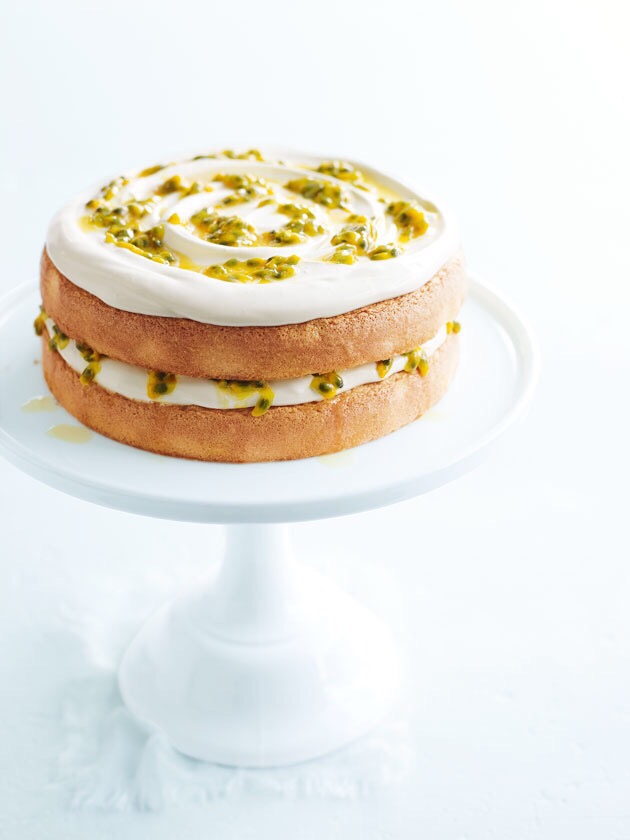
*** If you don’t know the CWA (Country Women’s Association) you have probably never eaten a cream-filled passionfruit sponge cake. If you haven’t eaten a passionfruit sponge, move to a small town and do so.

nevertire of eenaweena

never beenta eenaweena

you’ll never tire of nevertire

when I’ve beenta

eenaweena and nevertire

i’ll have beenta elong elong –

grong grong and matong

were nearer my home town:

I’ve eaten meringue

in wulgulmerang –

in betweena hell,

booligal as well

a long time ago,

in eulomogo;

been alone in quambone

felt at home in gulargambone

done algebra in egelabra

and once in gilgandra

reclined on veranda

and free from hungery

in eumungerie

with grub o from dubbo

found peace, release, ease

at least in burrumbuttock

never felt foreign

in a small town like warren

/home/wpcom/public_html/wp-content/blogs.dir/27f/42161029/files/2014/12/img_4762.jpg

Do Not Vote – It Only Encourages Them

We had an election last year and I warned all – especially myself – to consider casting a donkey vote.
This coming weekend I will be fined if I don’t vote and angry with myself if I do. On the other hand I do believe it’s every citizen’s duty to help to choose a government. In practice I think this means my choice must encompass one of the two major parties somewhere on my ballot paper.

I consider the present government has made many inequitable decisions which are either corrupt or woefully incompetent. I have always voted for the other team, but Labor has worked assiduously to convince me of its own venality and hopeless thrall to factions.

I look about me and wonder, where is the Labor candidate or the Liberal who rises to cry ‘whoa!’ about our cruelty towards people seeking refuge on our shores?

You might think me absurd to consider a national issue in what is ‘only’ a state election in which the issues should be local.

But the refugee is neither local nor national. Literally, she is non-national. Morally she is universal. She is us, she is me.

Who, among the incompetents and the self-seekers and the factionistas and the corrupt – who will stand for the person on the boat?

I do know that many Aussies in the neighbourhoods stand alongside the newcomer and brotherhood and help. Which is the party – or the nonparty candidate – who will stand against Party and for ‘mon semblable, mon frere’ – the newcomer?

Mending the Broken Runner

Spring months are the cruelest, mixing memory and desire. And I have felt the sun soft on my skin, have woken with birds that called me, watched the young and the not young but not broken, all at their running, running, running. And I have felt self-sorrow, sincerest of emotions, and I have felt the creeping entry of a green stranger. And I have resented and I have envied those runners, their unforgivably beautiful limbs, their light and loping tread. In short I became that miserable creature, the broken runner.

Yesterday I drove with daughter and grandboys to Wilson’s Promontory National Park. All was as ever it was; emu browsing, shy wallaby, slow wombat, delicate birds, hills, hills, hills, bouldered beaches and the odd ‘mountain’. Only in Australia, and perhaps the Netherlands, would you grace Bishop and Oberon as mountains. But when you run them your legs cry out and the mind, the mind has mountains.

There was Mt Bishop. We drove past and I told the kids, I used to run up there, all the way to the top. Unable to see the top, too small, too low in the car, the kids made no response.

This morning I awoke and the cabin slept. My knee felt OK. There were the car keys, here were running clothes unrun-in for five months, no family duty called, no excuse. Five minutes’ drive to the track saved me twenty minutes’ running dull bitumen. Here was the track, sandy, scattered with leafmeal, meandering into bush. My legs smiled and snuffed the battle with delight.

And I was running. And nothing hurt. And my lungs kept up with my legs. I ran carefully, judiciously. I avoided rocky footfalls, I paced myself, I spared the left leg and I climbed.

I climbed the twisting turning tilting track, gently, gently, enquiring ever of the knee, feeling no angry response.

The track was mine, mine alone, mine this domain, this splendour, these rugged crags, that ribbon of silver of tidal river, the dull green of bushland, the sweeter green of spring growth, the dead trees white, trees blackened by the fires but shooting green, greening too the great denuded gorges scoured by the floods.

All this juice and all this joy, all for me, a message, a consolation, hope in dried tubers.

The track softened beneath my gladding feet, the gradient gentled, the summit sighted.

There at the summit, the track ended at that same old tumble of broken shapes and abrasive surface: Snack Rock. Slowly I climbed those last metres, transferring weight, o so cautiously, sparing the knee, old man’s knee, unwelcome stranger’s knee, imperious ruler for five months of my youngering spirit.

I offered a line of thanks and ate my apple. I took my first selfie. I photographed the terrain.

And down I ran.

Now, descending, pain pounced and grabbed the rear of the injured knee. Small pain this, the same as I feel on the bike, pain of no portent. And as on the bike, brief of tenure.

Down, down, down, through avenues of wattle unnoticed earlier by the runner with head bent on the ascent. The wattles arching over me, an avenue of honour, reminding me, reminding me of the day I ran into a bunch of hockey players blocking the path ahead of me. This was a serious run, a timed solo marathon to qualify for entry to the hundredth running of the Boston Marathon. A cry from their leader, “Guard of Honour, Guard of Honour!”; and the hockey guys fell into two lines, raising sticks above my head, applauding me as I ploughed on.

There is honour in the long run, a tearful thankful joy, a discovering of the self. I felt all those, all that old knowing, all those strong sensations. And something else, something new – signs of life.

Australia Day in Doomadgee

Doomadgee, we write it

In our orthography

When really –

It should be – Dumat’ji


No flag raising here

No speech or ceremony

On Australia Day

In Doomadgee


The river runs warm

Kiddies swim and swarm

On Australia Day

In Doomadgee


Blackfellas bashing

(It’s the national fashion)

On Australia Eve

Here in Doomadgee


Broken hand, broken

Jaw, cut faces and more:

That’s Australia Day

In Doomadgee.


Adam Goodes

Too far away

This Australia Day

From Doomadgee


A busy day this

Australia Day –

Hordes in the wards

In Doomadgee


We plaster and we suture

Like there is no future:

Future no feature of Australia Day,

Not here, no way, in Doomadgee


The end of Australia Day –

Quietness falls

In hospital halls

Of Doomadgee


But short the respite –

Quick! Elder sick!

Dying on Australia night?

Dying here – in Doomadgee?


Quiet, quiet, his voice, his breath –

Small his smile at the threshold of death –

Good night Australia:

System failure in Doomadgee


Beside him, quiet woman – or girl –

His guard and ward in this world

Trembles, facing an Australian day

Without him in Doomadgee.


He slips away from his teeming kin

Who hold their tears and keening in;

A dreadful peace on Australia Day

And quiet, this night in Doomadgee.

Exultation is

Exultation is 

The going out

Of an inland soul

To sea

The train leaves Southern Cross right on time at 7.10. No queueing, No Security. No fumes.

The price of a cup of coffee at Southern Cross does not amaze the buyer nor does the drink disgrace the bean. (The cup is of paper; you can’t have everything.) Once aboard, no safety sermons, no-one forbidding standing or moving about the cabin, no weight limits, no serpentine lines of tired, tense travellers with toddlers to repress.

How old fashioned this iron caravan. The carriage rolls, moving in its jazz rhythms forwards, side to side, moving as it did in the rides of childhood, in those long slow rides across time, across the wide, dry land, singing clickclack past silent mobs of kangaroo, putting to flight soundless pink-grey clouds of galah, slipping past indifferent cows looking at me in philosophic enquiry, rolling past stands of eucalypt, no two gumtrees the same, every one the same – whether elegant, smooth and pastel, or scarred, twisted and greygreen – every gum tree declaring I am Australia, I survive, I thrive, I endure, every gumtree bearing, proffering vital knowings.

Only the cabinet has changed. Gone is the sign requesting passengers not to use the appliance while the train is standing at the platform. A press of a button, an airliner’s hiss, and everything disappears without trace.

The twenty-first century city, where they’ve gone about as far as they can go, the city, with its looming concrete overpasses, its car-teeming freeways and tollways, its roar and bustle, its gouging, its uprooting, its foetid air and gritty, its smoking and choking, its babel towers rising up to the heavens, its pavements grey; this great, enfolding and alarming home to millions and to me; this violence, this violation, this nature denying, this horizon hiding, this coded mute cry, this city slips away. And I ride.

The ride beguiles. It seduces. It invites nostalgic romancings of the past, endless retrogression, convenient forgettings of how railways were themselves violators of countryside, the out of control, accelerating agency of dangerous change.

The train to Albury accelerates, exhilirates into the green.

And for all that nostalgia is malignant – 

acceleration is/the going out/of an inland soul/to sea

Past the houses, past the headland/to deep eternity…  

A nod to Yeats, a filching from Paterson and a bow and apology to Emily Dickenson.

Toujours Gai

MELBOURNE SPRING RACING MEETING - RACE FOR THE...

MELBOURNE SPRING RACING MEETING – RACE FOR THE MELBOURNE CUP (Photo credit: State Library of Victoria Collections)


Dom Marquis wrote Archie and Mehitabel, Faber and Faber published it, and when I first read it (in my teens) the book cheered me immensely. Fifty years later it still does.


Mehitabel, a once-attractive cat-on-the-tiles has fallen upon hard times. In 1960 one could get away with calling her a clapped out old whore. Now we would categorise her as a superannuated sex worker. And miss the point. Although the times are tough, Mehitabel claims she remains cheerful: toujours gai, Archie, toujours gai.


For gaiety we humans have the racing game. From Cup to Cup a nation in its cups loves a winner. Memories of breaches of trust have no currency. The past? – another country. Our crooks, our own, they’re OK.  So long as the offender isn’t an oriental, an emir, a sheikh.


The trainer Tommy Smith was a winner, his daughter is another, his bookie son-in-law Robbie is a winner. So too are the bookie grandson and the jockey Damien, a non-dynast.


Toujours gai  we head off to the races, to the TAB, to the gambling sites and we invest. Mug punters all, a nation toujours gai, we surrender to the winners. Our screens and our papers salute the winners. Lipstick, champagne, heels, joie, winning is the theme. There is no other.


In the carnival of innocent joie Damien speaks of his redemption – I did the crime, I served my time – and, unblinking, a stopped nation knows the game’s all clean now. Gai was fined, remains unrepentant, defiantly innocent. Clean.  She faces fresh charges (allegedly committed on the very day she became The Winner). These stir no reflection, no recollection. The stewards offend the mood. They are churls, wowsers. Singo forgives Gai; who are we, in all this due process, this penitence, this righteousness, who are we to question, to misgive? Cheer up, pay up, drink up. In all this joie, we must look to Mehitabel and remain toujours gai.


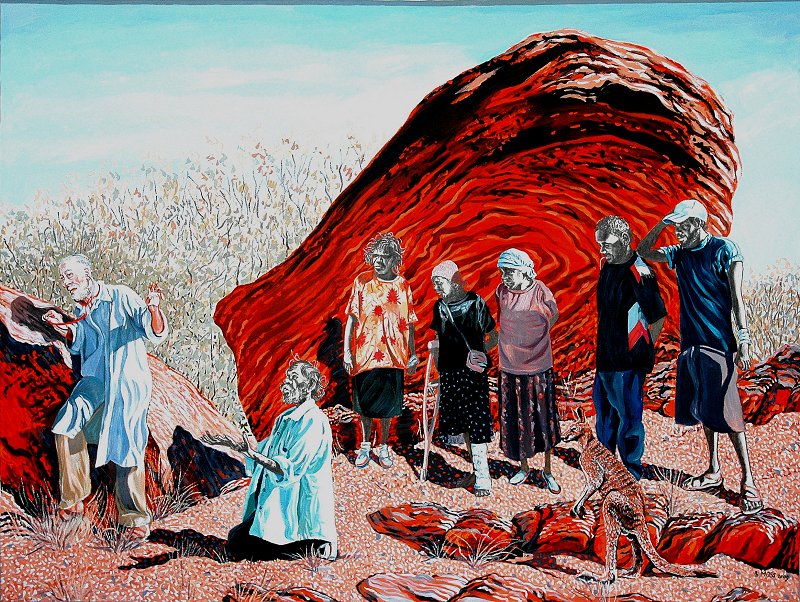
A Review of One Thousand Cuts, by Rod Moss

One Thousand Cuts by Rod Moss

One Thousand Cuts by Rod Moss

One Thousand Cuts: Life and Art in Central Australia

A book of the dead?

Yes, explicitly so.

Names are named, a violation of all norms, all practice in both whitefella and blackfella Australia.

Rod does this by virtue of trust, explicit consent, indeed the command of Rod’s friends.

Rod Moss’ singular role – to witness, to record and transmit.

Rod Moss grew up in the country. Well, in the 1950’s the Dandenong Ranges were country-ish. But he was never “in country” until some time well into his long apprenticeship under Edward Arranye Johnson, in and around Alice Springs.

Moss’ first book, “The Hard Light of Day” recounts that apprenticeship, which began with a spontaneous act of neighbourliness and evolved through friendship to become a connection of spiritual father to son. The building and the losing of that bond are the subjects of that first book, winner of the Prime Minister’s Award. It might sound like a large statement that the second book builds on and exceeds the first in its power. It does so by the swelling sorrow of loss after loss after loss, of the weight of pain.

The present volume is unique in the way it illuminates the experience of being “in country” – an opaque expression that whitefellers who work outback hear often from blackfellers. Subtly, delicately, in a characteristic Moss undertone, being ‘in country’ becomes luminous. The light is shed by Moss as he moves around Arranye’s hereditary domain as his named spiritual heir.

Moss gives us birdsong, birdflight as he walks beneath. He breathes the breezes and tempests that flutter or flatten foliage and carry mood or prophecy.

He names and describes the fauna – from grub to reptile to marsupial – that create the country.

Moss does all this in the same manner as in his painting. His colours are florid, his verbal sallies frequently outrageous, his attack fearless. But in all this bravura there’s nothing flash or glib, as Moss walks and paints and photographs the lands of his spiritual patrimony, bearing the loss of spiritual father (and of many brothers and sisters), accruing more and more losses until their weight becomes unbearable.

Most of the losses come abruptly. Each comes with the force of a thump to the solar plexus.

Moss, with his reader at his shoulder, absorbs blow after blow.

At this point we have Moss Agonistes, crying: “It rains in my heart. One drop at a time.”

Moss misses a much anticipated funeral: “I find myself crying on Saturday morning …Though I was sad at the gravesite, it has taken until now, opening the brochure and studying the commemorative words…for me to be sobbing.”

Continue reading