Hanky no Panky

A woman of my acquaintance declared herself ready to acquire a boyfriend. Having emerged from an emotional crash site, having brushed herself down, cheered herself up, adopted mindfulness and become a yogi, the woman confided, ‘I wouldn’t mind having a boyfriend.’ She meant me to understand ‘boy’ as a person in her own, non-juvenile age bracket. She comes, as she often reminds me, to a different – younger – generation.


The woman selected a promising candidate – fellow yogi, terrifically mindful, neither bankrupt nor lumbered with children, not a Trump supporter nor addicted. After the first date she favoured me with a report: ‘Charming fellow, good company.’ Yes, she’d see him again.
 
 
Following the second encounter I found her beaming. ‘He’s funny!  And considerate. I like him.’
 
 
The woman saw him on a third occasion. Following this
I heard no report. In due course the woman and I bumped into each other. ‘Well?’ I asked.
 
‘Well what?’
 
‘How are things with Mister Right?’
 
‘What are you talking about?’ A bit frosty. Irritated.
 
‘You know, Mister Funny, Mister Considerate, Mister…’
 
‘Him!  We’re not seeing each other. I’m over him.’
(That’s how she talks. That’s how Generation Alphabet talks.)
 
 
Nonplussed, I asked, was the matter settled, final? It was, utterly. Finally. Beyond redemption.
 
 
‘What happened?’
 
‘Nothing happened. He’s repulsive.’
 
‘Why?‘ I asked: ‘Bad breath?’
 
‘No. Something he did.’
 
‘What?’
 
‘Blew his nose.’
 
‘What’s do you prefer? Nosepicking?’
 
‘It’s not just that. He uses a hankerchief.’
 
‘What?’
 
‘He reached into his pocket, pulled out this square of folded fabric, buried his nose in it and blew.’
 
‘That’s all?’
 
‘No. After he finished, he folded up that precious bit of rag – some heirloom from his grandfather – and put it into his pocket!’
 
‘What’s the problem. His technique seems sound. Copy book, in fact. What would you suggest?’
 
 ‘A tissue.’ 'Since when did snot become so important that you need to carry a piece of material around just in case you need to blow your nose? Do you carry toilet paper in your pocket just in case you need to shit? And if you did, would you use it and then put it back in your pocket?'
 
 
This woman is not a doctor. She does not interest herself in the absorbing topic of how macrophages make their way to pathogens, how they engulf, destroy and wash them away. For her, it is not immune competence that matters, but style. Aesthetics. As a result the woman has no time for snot. I offered to enlighten her about the secret life of the albumen-born macrophage. ‘It’s not glamorous, but it is marvelous,’ I begin. She turned her face to me, sneering. From a person of her non-judging, all-accepting, mindful, universe-loving, recently renovated nature, that expression was alarming. And enlightening.
 
 
I persisted: ‘You know, we all make mucus. The membranes that line our hollow organs are named after it. That’s why they’re called ‘‘mucous membranes.’’ Their cells secrete a smoothing film of pearly fluid to keep things moving. Your nose does it, your sinuses, your eustachian tubes, your lungs, your bowel. And if you’ll forgive the expression, so too does your vagina. Snot makes the world go round.’
 
‘Not my world.’
 
“You’d be shot without snot.’
 
 ‘If you say so. I say, if you’ve got it, blow it and stow it, don’t store it.’
 
‘So, blowing your nose on a tissue is more elegant? Every tissue user knows the moist warm feeling of snot overflow drowning the tissue. Is that glamorous enough for you? Hygienic enough?’
 
‘Look, don’t give me your science. I just don’t want to be close to a man who keeps a clothful of old germs, and cold slime and green crusts in his pocket.’
 
The voice had climbed a few octaves and grown emphatic. Sober discourse and factual analysis were not what my friend was after. Aesthetics were the thing. And, as in all matters of taste, consistency is not the prize. It’s the vibe. I did not invite my friend to consider the content of the nation’s gussets, where innocent slime thickens and dries, its macrophages dying content with a job well done.
 
 
Troubled by thoughts of the man’s unfair dismissal, I appealed to proportionality, an element of justice; ‘So you deprive a person – a good person by your own description – of the sunshine of your company simply for possession of flannel and mucus?’
 
‘Certainly. I could respect him, but inwardly I’d shudder. I could never be intimate with someone like that.’

'It's also a symbol of his mindset. Who of my generation carries a hanky? Deep down he is obviously conservative, boring and predictable. The hanky says a lot about him as a person. If lunch hadn't been spicy I may not have found out about the hanky until it was too late.'
 
‘What if he treated you with tenderness and respect?’
 
‘Tenderness and respect? That’s exactly how he treats his snot. Reaches into his pocket, pulls out his damask, which he’s folded and refolded into a fussy little square, unfolds it, takes a big breath and blows. You look away, trying not to vomit. You hear the flow. He sneaks a little sideways peek at his ejaculate, tries to hide his satisfaction, folds up the hanky and pops it into his pocket.’
 
‘So?’
 
‘So, if he carries a hanky – no hanky panky!’
 

My Private Knee

After three months of physiotherapy and rest and exercises and anti-inflammatory tablets had failed to fix my injured knee, an MRI explained why: the outer cartilage was torn and the inner was tatty. I saw a surgeon last Wednesday and on Friday he repaired what was reparable and removed what was not.
 
 
The next day I sat on my couch in small pain, enjoying a liberal dose of self-pity. I had time and excuse to sit and live slowly. I read the ‘paper. A fellow citizen wrote to the editor in praise of Medicare, our universal health scheme. Her small daughter fell acutely ill and she hurried to the public hospital, where the waiting area was crowded and the public address announced the arrival of a series of ambulances. The delays would be long. However the sick child was assessed in Triage as urgent, was seen and treated expeditiously and expertly. By morning she was well enough to go home and her mother took up the pen in praise and thanksgiving. ‘How lucky we are’, she wrote, ‘to have such an excellent public health system.’
 
 
A second letter to the editor told the opposite tale. The writer suffered a limb injury and attended a public hospital. His injury was disabling and unremittingly painful. It was rapidly recognised as in need of early surgery. That was two years ago. His case is classified in the category of Most Urgent (elective). Every three months since he has returned to the hospital for routine appointments, where the diagnosis and the urgency are confirmed. His letter ends with a lament: ‘How can we kid ourselves we have a health scheme where Most Urgent can languish for years?’
 

****
 
 
The writer and I both suffered injuries. Both of us received expert advice that surgery was necessary. Mine was performed within days, while my fellow languishes for years. My injury was minor but it did not feel trivial. For three months it hurt too much to run. I turned to the bike and the knee felt worse. Soon I could not walk without pain. I watched the muscles of my thighs wither and I lamented. Those legs had been my pride. I contemplated a life without exercise and I knew I would not know myself.
 
 
How is it my leg improves by the day while a fellow citizen suffers a worse problem and waits interminably? I cannot doubt the sufferer subsists on medication which is neither curative nor safe. By now he is surely addicted to his opiates. Why the disparity? The answer is my private health insurance, which, by dint of thrift and belief, I afford. Not everyone is so fortunate.
 
 
Even an unbleeding-hearted economic rationalist would see the disparity as just that, an inequality. I believe there is a solution which is not a new idea, but a forgotten one. I recall a politician by name of Don Chipp who became Minister for Health in the Liberal Government in the days before Medicare was sanctified, beatified and became untouchable. Facing the disparity, Chipp proposed government would underwrite the private health insurance of the poor. All citizens would be insured, all would enjoy choice of surgeon and hospital, the private health sector would expand and prosper through efficiencies that Public Health can never match, investors would rejoice and the Liberals would be congratulated in the polls. Meanwhile Most Urgent Surgery (elective) would be performed within a humane frame of time.
 
 
That scheme, which bore some resemblance to Obama Care, never came to pass. Labor rejected the necessary Means Test as ideologically repugnant. Chipp moved out of his party and created a third force in politics, which soon became a chronic and disabling pain to Liberal governments. Decades later my fellow citizen, uninsured privately, suffers privately, where he could be cured.


One Grandchild, One Sickness

A contemporary told me of a rule she and her friends observe at the monthly meetings of their luncheon group: “Only one grandchild, only one medical diagnosis.”


The rule struck me as wise. My grandchildren proliferate, for which I give thanks and tell stories and show pictures. This is a picture of my latest, Sadie.


Last night I visited Sadie’s house. To my good fortune she happened to be crying. My son passed Sadie to me and I placed her against my left breast. My heart beat at its steady 46 beats per minute and over the next few minutes I patted Sadie’s back in gentle diminuendo. She stopped crying. She rooted and tried to suckle. My collar proved unnourishing. After a while Sadie gave up on fluid and slept. I held her there, on my breast, for some minutes: was it twenty? Was it only five? I never felt more deeply alive.


So much for the one grandchild. Now for the one medical condition. Like grandchildren these proliferate as we age. I have lots. Every condition generates a story of compelling interest to the sufferer, and to the sufferer alone. Today’s was a visit to the periodontist. Have you ever been treated by a periodontist? If not I congratulate you.


In reality the periodontist is a dentist. The difference is one of specialisation. This practitioner doesn’t implant, doesn’t fill cavities, doesn’t do root canals, doesn’t make bridges. Nor even, in the usual sense, do extractions. Instead the periodontist extracts scale, plaque and whatever you have saved for your retirement.


Because the periodontist is truly a dentist she has lying horizontally on a jet age bed that rises and bends and straightens in response to unseen signals from the practitioner. Behind your right ear the practitioner keeps a small table upon which lurk small pointed instruments of hardened steel. These she keeps out of your line of sight lest you seize one, and in a reflex of self defense, you plunge it deep into her eye.


In short, periodontic procedures are notoriously painful. I took my seat this morning on the dental bed. The bed lay down and so did I. I opened my mouth. A bright light shone upon my face. I closed my eyes. At this point I ceased speaking. The periodontist looked inside. She said some gloomy things: ‘Gingival recession… pockets… these front teeth are loose, might lose them…’ She fondled my gums for a good time: ’I’m applying local anaesthetic jelly’, she said. I tasted something distinctive and highly unpleasant. I recognised the taste, one I remembered from the day in the bath in 1951 when my older brother pissed in my mouth.


Perio, as I will call her for brevity, now poked a hissing instrument into my mouth. I salivated. As the instrument hissed it cooled itself with a constant spray of watery mist. Fluid accumulated somewhere near the hole through which I customarily breathe. Perio probed, the gadget hissed and misted, the fluid level rose and for a time I breathed under water. This went on for a longish time, a form of dental waterboarding during which Perio asked repeatedly, ‘Are you OK, Howard?’ Each time I lied: ‘Yes, fine.’


From behind my left ear the unseen dental nurse waved a wand that hissed and sucked. Frequently this sucking instrument missed its target and sucked at my lower lip, a strangely sensuous experience. My mouth being open and full of fluid prevented me from thanking my unseen sucking kisser.


The bed became erect: ‘Rinse’, said the Perio. I rinsed. The bed collapsed and I took the hint. My mouth fell open and so, briefly, did my eyes. I beheld before me at eye level a long thin syringe of glass and steel, moving towards my gums. I’ve seen that sort of syringe before in movies in which a figure such as Mengele carries out unspeakable acts. I closed my eyes. My trapezius muscles clenched. My gums swelled hugely, all sensation fled and the balance of my hour passed. I drowned repeatedly. I rinsed, I spat. The bed erected itself, Perio said, ‘That’s it.’


Happily, I paid for her next BMW. I was happy because nothing hurt. I’m sure she’s not a real periodontist.


Dressing up to Undress

Patients who attend a doctor in emergency come dressed in their ordinary rags and tatters. Their outer clothes vary and their undies are sundry. Those who attend, foreknowing, for their piles or their pap, wear their best undies. We all do it; we prefer to dress up to undress.
 

That’s why I’m hurrying out to purchase a toothbrush. When my regular dentist enquires I assure him I my teeth regularly – and I do – every birthday as well as at Passover and Yom Kippur. Regularly. Never fail. (I suspect my dentist’s true question goes not to regularity but to frequency. But I answered truthfully.)


So I do already own a tooth brush. It has served me, three times a year, for twenty years. It’s an old comrade, faithful and ragged. Today, however, I’m investing in a toothbrush of twenty-first century manufacture. I’m going to brush my teeth today. I’ve googled ‘how to brush your teeth’ and I’ll imitate the you-tube that shows how it’s done.


I’m preparing to visit a special dental practitioner, a periodontist. I’ve never seen a periodontist before but I am reliably advised that this professional will be a torturer with higher degrees and advanced training. So I will come prepared – with a brand-new overdraft facility from the bank and my gums sparkling after the attention of the new toothbrush.


Why has my faithful old dentist sent me to his colleague? Apparently my long gums are going to get longer, my wobbling teeth will all fall out, my destined dentures will never chew adequately and a gummy grin will decorate my mouth in senescence. In short my days of mastication, like life on this planet, are numbered. There’s just time to enrich a professional before it all comes to pass.


Like everyone else I’m dressing up for my own funeral.


Teaching an Old Dog Old Tricks


“Good morning, Doctor.’ The good-looking man is new to my practice. He offers a hand, shakes manfully, breaks no bones but leaves none unfirmed. His smile launches a promising relationship. ‘I’m new to Melbourne, doctor. Just moved here – for my studies.’


The man looks a young forty. I check his date of birth; he’s forty-nine.

‘What are you studying?’ – I ask.

‘Philosophy. Classic Philosophy, the greats, you know, Plato, Aristotle, Aquinas, Maimonides…’

He’s won me.


‘I used to be a lawyer. Made some money, made a family, four kids. Now it’s time for me. Time to pursue wisdom.’

‘Share it with me when you find it,’ I say.

He smiles.


‘Doctor, I wonder if you can help me out. Awkward situation. I’ve left my tablets in Sydney. They’ll arrive Monday next with the family. My doctor prescribed a short course of Temazepam for sleep. Exams next week and I can’t sleep. If I don’t sleep, I’ll fail. If I fail I’ll never find wisdom.’ The winning smile again.


 ‘What are the tablets?’

‘Temazepam, the weaker ones, the tens. I’m scared of anything stronger.’

‘Very wise. They’re habit-forming.’

The man looks shocked: ‘Habit-forming? Really? My doctor never mentioned that. I just want enough to get me through these exams. I finish in three weeks.’


The man and I spend a little time discussing Temazepam, natural remedies, his own preference for a long hard run (‘Wouldn’t you know, Doctor, my running shoes are still in Sydney?’) The man looks up at the marathon photos that cover my walls where other doctors show their degrees.

‘Are you still running, Doctor? Marathons? Really? Amazing!’


The man leaves my room with his limited prescription, leaving behind his protestations of delight, his vows he’ll be back, how lucky our paths crossed, he’s found a disciple of Maimonides, he wants me to be his new doctor.


A couple of patients later the receptionist buzzes me and pricks my balloon: ‘That new patient, do you know what he said about you, Howard?’

‘No.’

‘”What an amazing doctor! Still running marathons!” Says you are a scholar, an expert in Greek Physiology.’


‘You know what else he said?”

‘What?”

‘He said he left his wallet in his car. He said he’d be back in five minutes to pay. I asked him for his Medicare card, but that was in the car too. But he knew his number, he said, and I took it down. Thirty minutes and he’s not back. I rang Medicare: there’s no such number and they have no record of that name at the Sydney address he gave. I rang his mobile. “Optus advises the number you have called is incorrect or has been disconnected.”


Three years pass. Three years are not sufficient to heal a wound in trust.

Last week a new patient registers with Reception. He presents his Medicare Card, asking a series of questions:

‘What doctors are consulting today?

‘Who will I be seeing?’

‘How long has he been at this practice?’

‘I just need a prescription. I’ve lost my tablets and my wallet too. Can I pay with my credit card?’


The relatively new receptionist was not with us three years ago. She calls me: ‘Are you with a patient, Howard?

‘No.’

‘May I come in and talk with you?’

‘Certainly.’

The young woman is shaking: ’I think your next patient is lying. I think he might be the man who came here a few years ago and lied to you to get tablets.’


A phone call to the Doctor Shopping Line at Medicare. I give the Medicare number of the new patient. ‘We suspect he’s a doctor shopper’, I say. I give the new patient’s stated name. The Medicare person confirms the validity of the card and the truth of the name given. ‘We have records of that patient’s recent prescriptions. He’s had eighteen prescriptions since March first, every one of them for twenty Temazepam tablets, each prescription from a different doctor in your area. You might like to inform the patient of these facts, Doctor.’


The Night Away from my Wife

At breakfast yesterday morning I said to my wife: ‘I won’t be coming home tonight.’

My wife was reading the paper. She said, ‘Le Pen looks ominous.’

I said: ‘I won’t be coming home tonight. I’ll be sleeping out.’

‘That’s nice, darling.’

I said, ‘I’ll be sleeping with a stranger. For money.’

‘That’s nice darling.’

I kissed my wife goodbye. She said, ‘Have a good one.’

I went to work.


After work I went to the place that offers the services I desired. Discreet premises, modest, not flamboyant at all. I knocked on the door. The person who opened the door was a man. He asked my name. I said, ‘Howard.’

‘Goldenberg?’ – he smiled. A nice smile. ‘I’ll be looking after you first’, he said. ‘Then my colleague will take over. I’ll just measure you now – as a preliminary. So my colleague will have an idea of your…dimensions.’

The pleasant man measured me here and there and wrote in a file. ‘Come this way, ‘he said, you can take your clothes off and shower first. Then you can change into something, ah, a little less formal.’

He showed me down the corridor past a series of doorways to a small room in which I found a small table and a chair, a TV and a bed. The bed was larger than a single, cosy for two. Three, I reckoned, would be a crowd.


The pleasant man turned to go. ‘What about payment?’ – I asked. ‘I don’t deal with the money. You pay your particular worker for their services.’

I felt unhappy about this – not the matter of emolument but the grammar. ‘Their services’ sat poorly with me for one worker. Or – a late thought – would I be spending the night with more workers than one? This might be expensive.


I took a shower. It was not until the hot water was running over my grateful shoulders that I realised I’d brought no soap. I looked around and saw a liquid soap dispenser above the sink at the opposite side of the bathroom. I turned off the shower, emerged, dried myself, pumped a palmful of semen-coloured liquid, (which, upon sniffing, I found to be some innocent hydrocarbon derivative) and returned to the shower recess, where I employed a busy free hand to turn on the water, to adjust the temperature and to dip into the reservoir-palm for moieties of soap, which I then deployed to those portions of my body I judged strategic for the encounter ahead. 

I dried myself and wrapped my glowing body in something a little more comfortable. The time was seven fifty. The room was booked to me until seven the next morning. When I booked no-one actually told me when my worker/s would commence work. I sat on the bed and crossed my legs. I moved to the chair and sat. And waited. Nothing happened, no-one arrived at my door. I listened and I heard voices, other doors than mine opening, doors closing, then silence.

What to do? Perhaps I should read. I went to my daypack and found a book. Edited by the former Chief Rabbi Jonathan Sacks, the book was my siddur, the book of Jewish Prayer. I opened the book and I prayed for strength and guidance. There came a knock at the door. Engaged in my devotions, I did not answer. Another knock. More silent prayer. Another knock, and a voice that said, ‘Knock, knock. Anyone there?’ That, I reflected, is precisely what the worshipper is asking at prayerful moments. The door opened behind me. A voice, a pleasant voice, said, ‘Good evening, I’m your…’ – then choked: ‘Oh! I’m sorry. I’m so sorry.’ I heard the door close behind me.


 After a time I finished, replaced my siddur in my pack and went in search of my visitor. I found the owner of the pleasant voice, a woman, younger than I, perhaps half my age. She looked Samoan. Her voice spoke a volley of apologies, my voice answered with assurances and then she said, ‘My name is Hortense. And you’re…’ she was studying my folder in which her male colleague had recorded my dimensions… ‘You’re Howard. Let’s go to your room Howard.’ I did as I was bid.


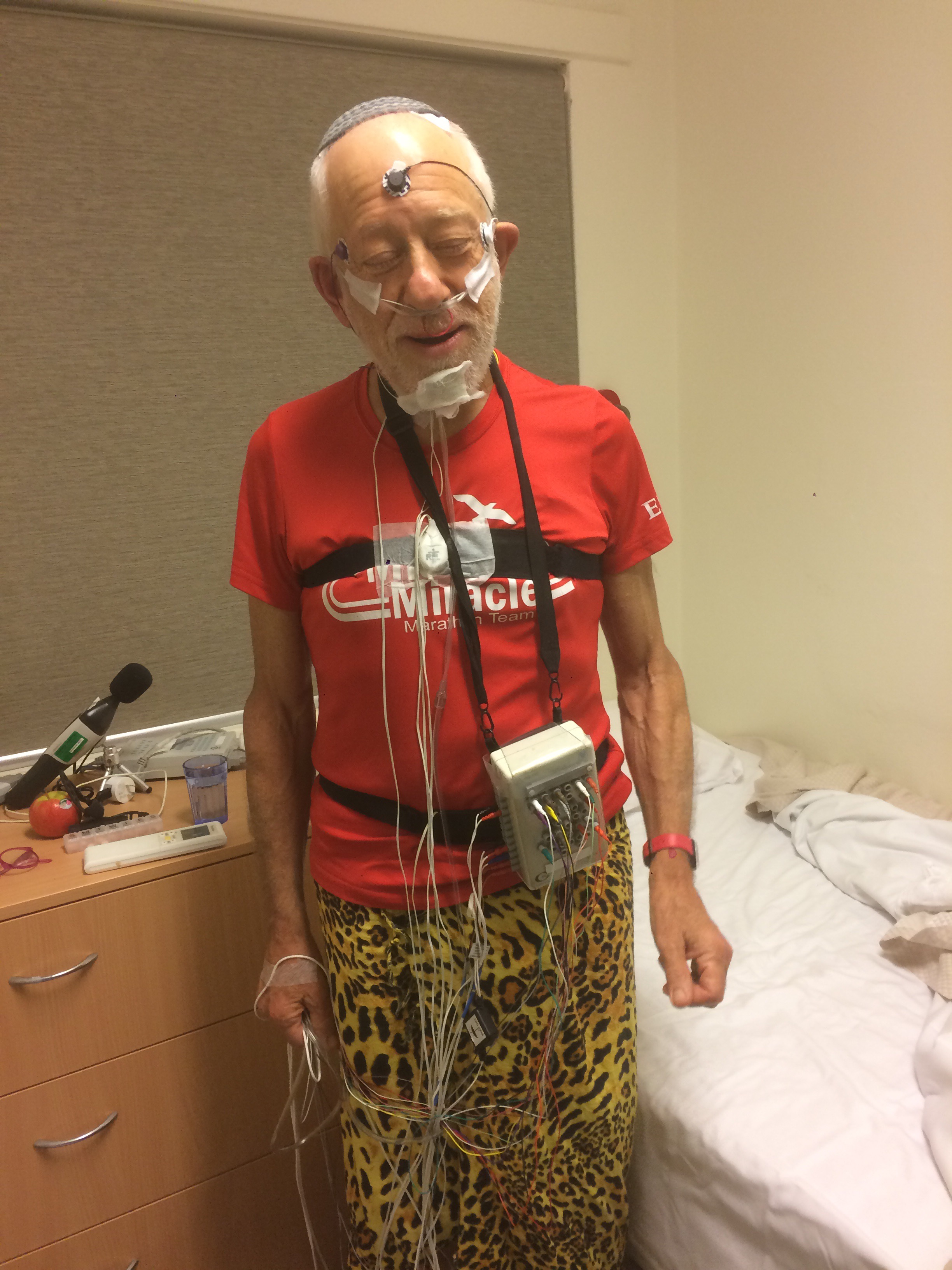
‘Would you like to sit on the bed, Howard?’ It didn’t seem like Hortense expected any verbal reply. I sat. She stood facing me, looking down at the top of my head. ‘How do you keep those on? Do you wear it everywhere? I mean, all the time? Like in bed?’ I explained. Then I had questions of my own: ’Hortense, will anyone else be joining us tonight?’ ‘No, just me, Howard. I think I’ll manage alright. I’ve done this before. You’re not nervous are you? You don’t need to feel nervous.’ I reassured Hortense I was not nervous. I too had done it before. 


‘First I’m going to tie you up,’ said Hortense, indicating the forest of leather straps and wires festooning a rail on the far wall. As Hortense leaned generously forward, ‘tying me up’, her crucifix dangled just above my nose, pendulating and tickling me as she moved. It was a not-unpleasant preliminary.

Hortense returned to her folder. ‘Oh, you’re a doctor!’ There was delight in her voice. She looked again at my yarmulke. ‘Well Doctor, I suppose you do circumcisions?’

‘I used to. Hundreds of them, not anymore.’

‘It’s so much better, isn’t it.’

‘Isn’t what?’

‘Much nicer. Don’t you think?’

I could not fashion a suitable response.

‘Well, look at me’, said my companion for the night, ‘I’ve been dating for a long time now, quite a number of partners. It does look much nicer, doesn’t it. Cleaner too, you know, once they’re done?’ I couldn’t really say, so I didn’t say anything. Hortense took my silence as affirmation.


I had a pleasant enough night with Hortense. She said, ‘I suggest you take a shower before you go home to your wife.’ I did so, paid my money, jumped onto my bike and rode home through the rain, accumulating grit and road grime as I rode. As her drowned rat of a husband came sweating through the door, my wife was breakfasting: ‘Le Pen did badly,’ she said.


Striped Socks

In late 1969 the new doctor emerges half-baked from his progressive medical school. After graduation he spends three years in residence in major hospitals. He emerges from that great womb and enters family practice, feeling underdone still. But he blazes into his new work in a rural general with a few guiding verities. He will not create distance from his patients. He will not wear a white coat. He will wear bright socks, a signal to the young that he too is – was – is young. He will not hold himself aloof. He will not frighten children.


He starts his work and his feet are rainbows. When he treats children he sits next to them on the floor. Instinct rather than ideology guides the new doctor: he needs to be close; he wants to do away with barriers.


On his very first day, the ninth of April, 1972, the new doctor delivers a baby, a little girl. He becomes a long-term friend of the new mother. Every April ninth he remembers and often contacts the ‘baby’ – long after she grows, graduates, becomes a musicologist, a linguist, a creator of Aboriginal dictionaries.


He keeps changing his colourful socks but he does not change his ways. So long as his patients are, for the most part, young, the thin membrane that separates doctor from patient suffices for safety; the blurring of the professional and the human nurtures both the doctor and the doctored.


A young mother passes terrifying nights seated by her firstborn, watching him, willing his breathing as he gasps his inbreaths and wheezes his outbreaths. She brings the child to the new doctor. His concern comforts her. In time the boy’s asthma improves. The doctor meets and treats all three of that young woman’s children. He is drawn to the three, the thin boys gangling, the coal-eyed little girl, a faun. The children do not fear him. These too he befriends.


A few years pass and the young parents bring Grandfather to the doctor. The young family have taken the old man and Grandmother in to their home, thoroughly alarmed by the pneumonia he narrowly survived during the previous winter. Sixty years previously that man survived gassing in the trenches. His lungs are ruined, he might not get through another winter. Would the young doctor resume his care? He does, and further friendships grow.


Grandfather survives a dozen more winters in cheerful semi-invalidism, dying eventually in his late eighties. Grandmother, born in December 1899, lives to see three centuries and two millennia, living beyond all arithmetic probability, dying eventually, aged 104.


The father of the asthmatic boy likes to run. He’s a graduate in Architecture, a landscape artist who turns to teaching maths. He teaches at a school fifteen kilometres distant. Sometimes he runs those fifteen kms, up and down hills, across a couple of creeks to the school in the valley. The teacher shows his doctor friend the secrets and joys of running sandy country tracks. Up hills they run, sharing vistas of white, off-white, pale grey, deep grey, their breath white in the frosty mornings. Summer sees the two up and running before the heat strikes. Sweat-born raptures bind them in close friendship. The doctor showers and dresses for work in the en-suite bathroom of the aged matriarch. He tiptoes past the old lady lying asleep in her bedroom, greeting her after she has awakened. 


Years pass. Decades pass. All are older now. The Medical Board sends letter after letter to doctors, warning them to keep proper distance from patients. The Medical Board has never had the pleasure of being a country doctor. The doctor wears his garish socks still, unconsciously. He knows by now the byways of health, the pathways along which he and patients alike, stumble; ways that lead slowly or rapidly towards the universal destination. He knows his own vulnerability to the pain of others, the sorrows that seep through a thin membrane; and the power of hope to seep osmotically back. He knows too the cases where hopes of cure are cruel illusion. He seeks in these cases to be a guide, to keep company with his patient his friend. That a friend not pass, lost or alone, into finality.  


The running friend becomes unexpectedly breathless. Time passes and he cannot catch his breath. Tests show a shadow on a lung. Other tests reveal a tumour in the bowel. The years of torment begin. Surgery, chemotherapy, surgery again, scans and biopsies that show a third disorder, a serious chronic lung inflammation, nemesis now of three male generations. The teacher painter architect runner friend – what word can encapsulate a human person? – must take strong steroid medicines to stay alive, to breathe.


The breathing man works on a new painting. He paints a square-rigged ship negotiating a strait. He paints the ship then repaints it. His work reaches no finality. He shows the work to his doctor friend, who comes – as he used to in the running days – for breakfast. That’s a sound in New Zealand, a fiord really. It’s called ‘Doubtful Sound.’ Captain Cook came to the entrance, felt uncertain whether he’d get ‘The Endeavour’ out if he were to enter. He felt doubtful and he named the place for his doubt.


The painting shows a tall ship heeling before a strong wind. Its bow points bravely into the wind. The wind bears it towards the reef that guards the mouth of the sound. The rocks are a maw, open, baleful. The sails are close rigged. This is a ship under strain. Relieving that strain is a smaller boat whose heaving oarsmen pull the larger one towards safety. The doctor looks at the picture doubtfully. He was raised on boats. He’s negotiated dangerous narrows, but he had a motor to see him through.


That small boat, that’s a whaler. I used to row boats like that as a boy, on the Thames. In earlier times the master of a square rigger would launch the whaler to sound depths, but also, to help the mother vessel in places where the going was tight. When he felt doubt that he’d make it through.


The cortisone voice crackles, phrases punctuated by breathing pauses. The creator looks at his unfinishing work. Artful brushstrokes of blue, of greys, of white, create waves, wake, bow-wave. The ship holds its own. In all the stresses and forces it has not reached finality.

Australia Day in Doomadgee

Doomadgee, we write it
In our orthography
Really should be
Dumat’ji
 

No flag raising here
No speech or ceremony
On Australia Day
In Doomadgee
 

River runs warm
Kiddies swim and swarm
On Australia Day
In Doomadgee
 

Uncles bashing
In Australian passion
On Australia Eve
Here in Doomadgee

 
Broken hand, broken
Jaw, cut faces and more:
That’s Australia Day
In Doomadgee.
 

Adam Goodes
Too far away
This Australia Day
In Doomadgee
 

A busy day this
Australia Day
In the hospital
In Doomadgee
 

We plaster, we suture
Like there’s no future:
Future no feature 
of Australia Day,
Not here, no way, 
In Doomadgee
 

The end of Australia Day –
Quietness falls
In hospital halls
Of Doomadgee
 

But short the respite –
Quick! Elder sick,
Dying On Australia night –
Dying here in Doomadgee?
 

Quiet, quiet, his voice, his breath –
Small his smile at threshold of death –
Good night Australia:
System failure in Doomadgee
 

Beside him, quiet woman – or girl –
His guard and ward in this world
Trembles, faces an Australian day
Elderless in Doomadgee.
 

He slips away from teeming kin
Who hold tears and keening in;
A dreadful peace on Australia Day
And quiet, this night in Doomadgee.


A Lime

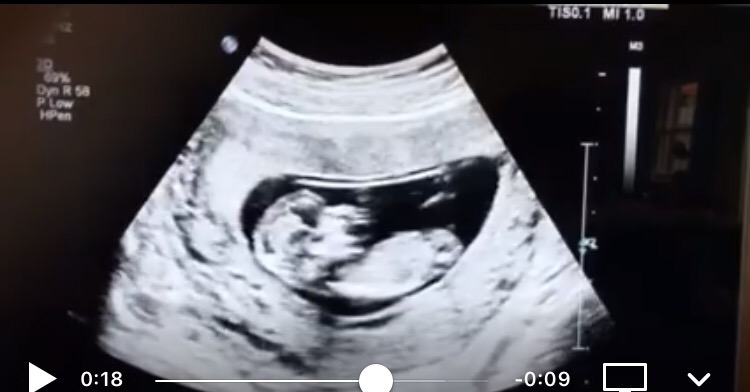
The doctor showed them the spine, the limbs, the minute digits. The heart in its cage, beating, beating, beating. Kidneys, liver, lungs, all manner of organs, organised and working against their day.
The watchers watched and listened and wondered. Their unborn, unknowing it was watched, moved, metabolised and grew. This watching, this lovecharged voyeurism through a window that opened only half a century ago. They saw their unborn, alone, confined, silent, breathing bathwater, drinking sewage, content withal. The watchers felt awe and hope. The man leaned over and held the woman and came away sticky with gel.
 
The doctor said, it’s the size of a lime. The man and the woman closed their palms against a mental lime. They saw with their hands how big, how small was their unborn. The woman giggled with delight.
 
They told me and I thought of the days I delivered babies – that age before ultrasound, when mother, father and doctor looked on the baby and the baby looked on them in equal discovery. Ultrasound alters human relation. Now fathering starts thirty –four weeks before the father is born into fatherhood.
 
I thought too of Judith Wright and her secret love and her poem:
Woman To Man
The eyeless labourer in the night,

the selfless, shapeless seed I hold,

builds for its resurrection day—

silent and swift and deep from sight

foresees the unimagined light.
This is no child with a child’s face;

this has no name to name it by;

yet you and I have known it well.

This is our hunter and our chase,

the third who lay in our embrace.
This is the strength that your arm knows,

the arc of flesh that is my breast,

the precise crystals of our eyes.

This is the blood’s wild tree that grows

the intricate and folded rose.
This is the maker and the made;

this is the question and reply;

the blind head butting at the dark,

the blaze of light along the blade.

Oh hold me, for I am afraid.