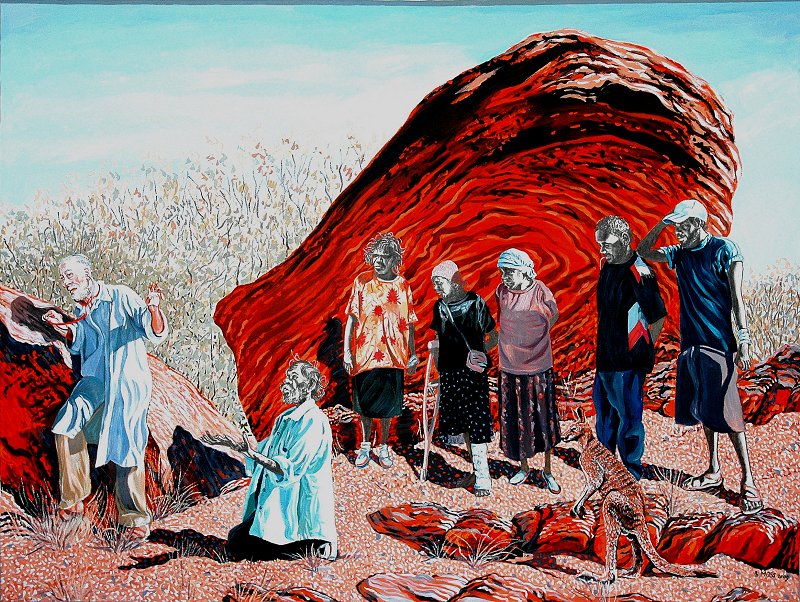
We Don’t Know their Names

An internet friend sent me some thoughts last week about the writing of the 2014 Nobel winner Patrick Modiano and his preoccupation with the lost. At the same time I was steaming towards the end of ‘Kamchatka’, a novel of the Disappeared in Argentina. Modiano wrote of Rita Bruder, a young French Jewess who went missing from her safe haven in a convent during the German occupation of Paris. Modiano is driven to search out the child’s fate. He cannot let the past and the lost rest unpursued.

I found myself acutely vulnerable to my e-friend’s story of stories. Partly it was the menace quietly gathering in ‘Kamchatka’ of the inevitable disappearing of a loved one; but more, the Modiano quest brought home a long overdue quest of my own: my destined search for my mother’s lost cousins. My knowledge of the cousins in question is slight and fragmented. It shifts in memory’s half light, lacking solidity, its textures diaphanous with the partial attention I must have paid in early childhood to a story my Mum told me. Seventy years after their presumed deaths in Auschwitz I feel the weight of silence.

My mother’s parents died of natural causes in her early adolescence. Somehow the orphan never lost her faith in living or her relish in it. Failing her Year Ten examinations she left school, trained as a bookkeeper, went to work and saved. In 1939, at the age of twenty-one Mum travelled alone to France where she had good clean fun. She spoke of dining with the Captain and the young officers on the Dutch ship which took her to Europe. She spoke of the beauty of Bali, then a Dutch outpost, almost untouched. On my mother’s return to Australia her younger sister Doreen asked her: ‘Are you still a virgin, Yvonne?’ ‘Yes,’ came the reply, ‘But it wasn’t easy.’ Mum made friends with men wherever she went, two of whom would bob up in our Leeton home while I was still too young for school. The two men, to the best of my knowledge, never knew each other. Their visits were separate and apparently independent events. We’d form a threesome for picnics by the river, the respective Continental, Mum and Howard, her four-year old chaperon. The men’s mysterious names – ‘Syd Viberow’, ‘Romain Hudes’ – intrigue me to this day. Googling has not relieved my curiosity.

These matters I recall well. I recall the smooth Continental gentlemen basking with my young and attractive mother on the riverbank. On one of those picnics we ate kedgeree. On another was it curried hard-boiled eggs? Europe was – I am confident – earnestly wooing; Mum remained Mum, Plato on the riverbank. I mean platonic; Mum might well have enjoyed being admired, but assuredly she liked her good fun clean. My memories are scatterings. Atmospheres are clearer than some factual details. Mum’s prudent inclusion in the picnics of an attention-hogging four-year old was strategic.

More scatterings: In Paris Mum’s tight black curly hair excites the admiration of a German hairdresser who marshalled her best English to compliment her: ‘You have vonderful viskers, Mademoiselle’; Mum’s accounts of the anxious urgings of the family back in 1939, to ‘come home now! There’s going to be a war.’ Mum is in no hurry. She spends time in France with her young cousins. Eventually she sails for home: ‘We slept on deck that last week, half expecting every night to be sunk by a U-boat. We arrived in Fremantle on the day war was declared.’ More good fun.

Much less clearly come memories of Mum’s cousins. The names are feminine and French, that I recall. Or I believe I recall it. They must be the daughters of Mum’s mother’s cousin. In 1939 they are teenagers, while Mum is twenty-two.

Mum says nothing to us children touching her cousins’ fate. But she must have known. I know that from the international telegrams that sped across the world late in1944; from Melbourne to Paris, from New York to Paris, with mounting anxiety. From Paris silence. From Melbourne to New York, from New York to Melbourne, in tones of deepening dread, cousins ask for word. There is no word. “Oed’ und leer das Meer”, ‘empty and waste, the sea.’ I know Mum knew; I found these telegrams among her papers after she died.

Mum and Dad bring up their four children very Jewish in the Riverina. In Leeton we children never hear of the Holocaust. We are as far from Auschwitz as Jews can be. Only three hundred miles south of us, Melbourne, thronging with survivors, is as close to Auschwitz as Australia can be. At the age of nine and a half I am translated from the Riverina to Mount Scopus in Melbourne. There, in a classroom full of Jewish children I am one of very few with living grandparents. I experience myself as a Jew whose family was safe, intact.

I regret now that innocence. A child who sat at the side of his father every Ninth Day of the Month of Av, listening to Dad as he lamented the destruction of the Temple and the sack of Jerusalem in the year 70 CE, knew nothing of Europe only a few years earlier. We sat on the thin, scratchy carpet of our dining room floor, the house lights turned off, a single candle our only light as Dad chanted the Book of Lamentations in its distinctive moaning and sighing melody. Dad translated and together we bewailed the ‘breach of my people’ at the hands of Rome. Sixty-plus years later I can feel that carpet itching my thighs. But the Third Reich never touched me.

Why was Mum silent? Assuredly she cared for ‘Sophie’ and ‘Josephine’ – names that lurk just beyond memory’s outer fringe, names that might even be true. Assuredly Mum knew. But she said nothing. No stranger to closer loss, Mum could and would speak of her beloved parents, tenderly but with a composure that unnerved this small child. Strangely disconnected from grief, Mum thrived as an orphan, much, much later as a widow, and even managed to live on in joy after losing her one lifelong companion, her sister Doreen; and after Doreen Mum lost her firstborn son. From her early years Mum knew loss but managed to keep sorrow a stranger.

At what cost, I wonder. I read Modiano and I understand the Nobel judges’ remark about ‘his art of memory.’ My mother practised her own arts of memory. Did she survive a life that was punctuated by loss by excision of sorrow? Perhaps what started as a young girl’s strategy led to atrophy and involution of the organs of sorrow. In that case my own memories of Mum’s account of Europe might be actually complete: do I in fact recall the entirety of the particles that Mum allowed herself?

I bless Mum for her faculty of joy. And now she is gone I must investigate my own faculty for grief. I want to find my cousins.

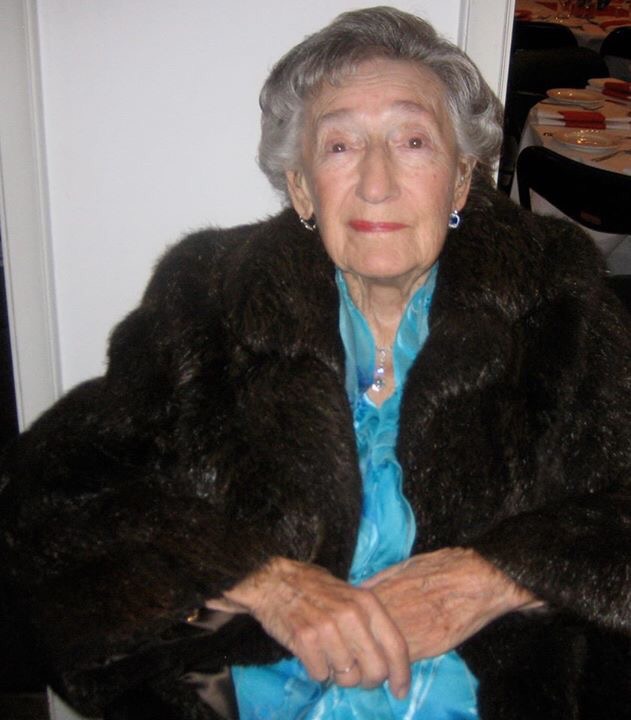
Intimacy 

First I used to sleep with my older brother, later with my sister, finally with my younger brother. I liked the closeness. Nowadays I sleep only with my wife and with persons whom I pay for their services. 

These latter liaisons occur infrequently. I enter a smallish room where my hostess – or as it sometimes plays out – my host, invites me to remove some of my clothing. I lie down in whatever posture my companion suggests. There my companion applies lubricant liberally and proceeds to caress my breasts. Of an instant my nipples leap to nuggety erection while the echocardiographer’s probe performs its ultrasonic mysteries. In the course of these intimacies I invariably fall asleep. In this way I have slept with a lady scientist from Shanghai, an earnest Adventist from Portland and a courtly Zoroastrian gentleman from Persia. (Noting the ritual fringes beneath my shirt, that gentleman and I compared notes on our respective holy undergarments.)

Following these pleasant liaisons I wipe my breasts, get dressed and visit my cardiologist to learn the bad news.

In his Saturday column last weekend Philip Adams wrote: ‘… when Qantas sat the first lady beside me I can still see Mrs Howard’s expression of distaste. “Don’t worry, Janette,” I soothed, “I’m passing out.” And, popping on the eyeshades, I did. But couldn’t resist telling listeners that night: “I just slept with the prime minister’s wife.”’

The story reminded me of another journalist, invited to cover the Concorde’s one and only trip to Australia. As part of the media gaggle the reporter sat in the body of the plane, with notables seated further forward. Among the notables was then prime minister, Gough Whitlam, a large man. (Malcolm Fraser, asked once how he’d compare himself to Whitlam, responded: ‘I’m taller, he’s wider.’)

In the course of the flight Whitlam wound his way down the aisle in the direction of the reporter, slowing as he neared. The reporter felt intrigued and excited: Why me? – he wondered. Whitlam came to a stop at precisely that row, and, turning away from the reporter, leaned forwards to speak to another media person seated in the opposite aisle. The ample prime ministerial posterior moved ever closer to the reporter’s face. The conversation went on for a good while. Eventually Gough straightened and returned to his seat. After sitting in a state of prolonged near-intimacy the reporter wondered: ‘Has any citizen ever been so close to his leader without exchanging words?’

The Princeling and the Premier

Mum has a brand new car. It’s not the Rover of Leeton days, it’s a Holden Premier. But it’s pretty fancy for a Holden – green duco with a metallic sparkle, luxurious bucket seats in rich tan leather.

Dennis’s close friend at Swinburne is Aly Ong, direct descendant of a line of Malay princes. One day Aly tells Dennis he has a date. Instantly Dennis offers Mum’s new car to Ali. Aly is amazed: ‘I can’t take your mother’s car!’
‘Yes you can.’
‘No I can’t. It’s brand new.’
Uncharacteristically, Dennis asks Mum’s permission.
‘Of course, Darling. With pleasure. Tell Aly to have a lovely evening.’

Is Aly a cautious driver? Has he a license to drive? Mum doesn’t think to ask.

At midnight Aly returns, knocks on our door looking desolated. ‘I need to speak to your mother. It’s terribly late, I hate to disturb her, but something terrible has happened.’
Night and day are one to Mum. She comes down the stairs, delighted to see Dennis’ friend: ‘Hello Aly. Did you have a nice time?’
‘No, Mrs Goldenberg… I ,mean yes. But something terrible has happened…’
Mum, concerned, her face softer than ever: ‘What, Aly? Are you alright?’
‘Yes, Mrs Goldenberg, I’m quite alright. But your car is not. I crashed your car!’
‘But you’re not hurt, Aly?’
‘No, not at all, but I’ve spoiled your lovely car.’
‘Thank goodness you’re not hurt, Aly. Come and sit down and I’ll make you some supper.’

188861_large

My Mum

My mother is dead. This is not news to me nor to an attentive reader of my musings on the net; Mum’s been dead since 2009. But the fact precedes the realisation. I feel the pleasure of being her son every time I think of her. That pleasure persists, felt it in the present tense. Especially today.

  To know my Mum was to smile. She was both vague and humorous, almost daffy, at least in respect of the weight of the world.

Mum knew sorrow. She lost both parents to natural causes in her childhood. She survived the death of her husband (‘he was a lovely man’) and a few years later, the death of her firstborn son, who lived, it seemed, solely to bring pleasure to Mum’s last years. A few days before her ninety-second birthday, battling the heart failure that would kill her only a few days later, Mum literally laughed at death. Already breathless, with fluid pooling suddenly in her lungs, she suffered a coughing fit, gasped, gasped more deeply, turned grey and slumped. A few milligrams of hero molecules and some litres of oxygen later, Mum awoke and grinned. From behind her mask she chuckled and gasped: ‘They thought I was going to croak, but I didn’t!’

Dad’s heart started to play up in the months preceding his demise. I felt a doctor son should warn my unworrying mother: ‘Dad’s heart disease could kill him, Mum.’

‘I know that darling. That happens to old people.’ And to comfort and prepare me, she added, ‘Death is part of life.’ 

Mum’s acquaintance with sorrow seemed to leave her unharmed. Events always had their brighter side. You could always laugh.

I wondered about this. This was not a shallowness. Mum loved generously in a way that would be reckless in any normal person. She’d invest in love, lose the entire capital and somehow end up liquid.

What was her secret?

Did she learn something early in life that helped her to surf, ever buoyant, upon the waves and dumpers?
All I have to account for my mother’s lightness of being are my memories and her stories.

Of her father: ‘Daddy was at sea on his lugger for weeks at a time. He’d spend the idle hours carving mother of pearl and tortoise shell to make jewellery for Mummy.’

‘Daddy used to give concerts at the Town Hall on his one-stringed violin. He was very artistic.’

Mum’s face is alight as she speaks. Her father is always ‘Daddy’, the affectionate diminutive bright in a daughter’s smile and lilt of voice. ‘When Daddy was dying the nuns asked the whole school to pray for him.’

‘Daddy carved this brooch from the mother of pearl and pearls he brought from the bottom of the sea. He made it for Mummy when they were sweethearts.’

‘During the Depression Daddy went bankrupt. He worked for a real estate agency after that.’ Mum points to a black and white photograph of the staff of the Agency. Four stiff middle-aged men and one commanding matron stare at the camera. As old as any but much the youngest in facial expression, my grandfather smiles impishly.

‘Then he got lung cancer and died.’

Driving past Brighton Cemetery, with a wave of a hand, ‘Daddy and Mummy are in there – just next to John Monash.’ A six year old boy cannot reconcile that champagne voice with the terrible intelligence of the death of parents. I wonder at first if ‘Mummy and Daddy’ might by some magic still live, ‘in there’.

Mum pronounces the famous surname, ‘Moanash.’

In my university years I need to correct her; ’Mum, it’s Monnash, not Moanash.’

‘No darling, it’s Moanash.’

‘Mum, three thousand people go to Monash Uni every day and they all pronounce it Monnash!’
‘Do they darling? I must be wrong then. It’s just we knew the family and they pronounced it Moanash.’
Of her mother: ‘Mummy died three years and three days after Daddy. She died of a broken heart.’ For Mum rheumatic heart disease is translated to a love that killed but never died.
‘Mummy was extremely elegant. She made her own clothes. If you look at her pictures you’ll see she always wears a half sleeve. Mummy’s arm was burned above the elbow and she always covered the scars.’ 

Of her philandering uncle; ‘Harold should never have married Grace. They lived perfectly happily while he kept her as his mistress. Once they married, Grace couldn’t tolerate his lady friends. After Harold took one lady friend on a cruise to Tahiti Grace never forgave him.’ Mum’s voice expresses wonder at the anger of a woman scorned. ‘So she tried to poison him by tampering with his heart medication. When that failed she removed the tacks from the carpet at the top of the stairs. Harold fell all the way down but he wasn’t hurt.’

Lots of stories, lots of memories, all recounted lightly. Did Mum have no bad memories? Or did she simply lack that faculty when to remember would create sorrow?

There was one. When Mum told me this in my own early childhood I felt swamped in vicarious grief. We were walking at the top of Pine Avenue in my home town of Leeton Mum paused outside the toy shop. ‘Howard I want to buy you a present. It’s important. You have to let me buy you something.’

Surprised by this; I didn’t need to be persuaded.

Mum went on: ‘When I was a little girl I didn’t allow Daddy to do that. He wanted it so much and I didn’t let him. It was a doll. Daddy took me into the toyshop and we both saw her. She was nearly as big as I was. I saw her and I loved her and I wanted her. I wanted her enough to burst. Daddy said, “Would you like that big doll, Yvonne?”

I wanted her so badly I felt it must be greedy to say yes. I shook my head. “Really?” – said Daddy. “I’d like to buy it for you. Say ‘yes.’” But I couldn’t say yes. Because I’d already said no. If I said yes now Daddy might think I was only pretending not to be greedy. He’d think I was greedy and bad for not saying what I truly wanted.

Daddy kept trying to persuade me. I kept shaking my head. Daddy looked hurt. My pride hurt Daddy and my foolishness hurt me. We left the shop, Daddy sad and confused and I too sad to cry. We left and I knew I would never have the dolly.’

One clear memory of sorrow. Clear, sharp, unbearable for the listening child. I said nothing because the sadness was stronger than my words. The only story of sadness I ever heard from my mother’s lips. All the rest – one day short of ninety-two years – is sunlight.


In an era where corporal punishment of children was everywhere and unremarked, Mum only ever smacked me on the bottom on two occasions. Afraid she’d hurt me, she didn’t have her heart in the job. On the second – and final – occasion Mum gave up when both she and I were overcome and helpless with laughter.
 
Here’s my best guess: her father (‘Daddy’) dies after a horrible illness; her mother (‘Mummy’) dies after a long, long illness. Aged fifteen she looks about her life. She sees Doreen, her younger sister, and ‘Gar’, her mother’s mother who moved in after ‘Daddy’ died. If that’s the worst life can do to her, she decides, life is worthwhile. There is still love.
In this all-female domesticity Mum learns from the example of Gar – herself an emancipated widow – that a woman ought be confident and fearless – of men (who are lovable and inferior) and of death. And Gar’s dictum, ‘what I cannot cure, I must endure,’ shapes the girl’s life.
 
Less than a decade later the girl will lose family in the Holocaust. In her seventies and eighties she will suffer stroke after stroke, culminating in a haemorrhage that tears her brain; she will lose fluency and clarity of speech, she’ll inhale perilously as she swallows, her gait will be shattered and continence lost. She will tell this son, ‘I’ve never been happier because I’m surrounded by people who love me.’ And as an afterthought, ‘I really think I could still drive, darling.’
 
She reviews her life: ‘I’ve never achieved any status, never followed a profession, never been well-known for anything. But I have four children who love me and that means something.’
Each one of the four feels so truly and well loved, we all feel morally certain we must be the favourite. All four of Mum’s children inherit, to a greater or lesser degree, Mum’s temperament. Of the four, it is Dennis whose life is most difficult, but he lives through loss and disappointment, ill health and frustration, buoyantly.
 
 
Today is Mum’s ‘yahrzeit’, the anniversary of her dying. In the Synagogue last night and again at dawn this morning, this son – this unmourning orphan – leads the congregation in prayer, recites Kaddish, and lights the memorial candle. He sheds no tears in remembering but he gives thanks.

Alone and Palely Loitering

You walk past them at lunchtimes and at smoko, you see them sheltering under eaves in foul weather, you see them in their outcast clusters, you see them and you avert your gaze for fear your concern will offend.

They are many, these persons of all ages, members of an underclass. If they were to unite as voters they’d overthrow governments. If they were to become radicalised we’d tremble in our beds. But no, they do nought to us and all to themselves. These human persons harvest leaves and dry them and chop the dried leaves finely then wrap the product in a cylinder of paper. Carefully, accurately, with practised fingers, they burn the leaves, then hungrily, deeply inhale.

Alone in the animal kingdom these sentient creatures do not flee from smoke.

I see them, I see my friends, who meet my gaze and smile in confession – and I am sorry to see – in embarrassment.

A long time ago my father in law was dismayed when advised by his tobacconist (yes, he saw a specialist, no mere candy vendor) that Chesterfields would no longer be imported to Australia. The tobacconist asked: ‘How many do you smoke a day?’

My father in law told him.

The tobacconist responded: ‘You are a very special customer; we’ll make sure you stay supplied.’

images-4

The very special customer became too breathless to read a bedtime story to his grandchildren. Soon he developed a cough. Suspecting cancer he stopped smoking.

Not long after, the very special customer died of his disease and my children lost their very special grandfather.

Manufacturer Phillip Morris continues to accommodate its special customers. My friends huddle and shelter while I shudder. And I direct my superannuation to alternative investments.

My Sister Margot


May thirteen 1949 my sister emerged as the sun set and the sabbath arrived.


The doctor from the next town, nineteen miles distant, did not arrive – the Murrumbidgee had broken its banks and a sea separated Narranderra from our town of Leeton.

Dad was an accomplished accoucher.  The other doctors in our town did not come up to his standards so Mum had to give birth to her firstborn and to me in the City.  Third time around Dad had chosen that doctor in Narranderra – apparently he was competent enough to bring Dad’s children into the world.

But the waters held him distant.

So Dad delivered my parents’ third child, their first – and as it turned out – their only daughter.


She had red hair and she grew freckles, but my parents overlooked those abnormalities and rejoiced.

The baby’s name was Margot.

I look at the watercolour portrait of Margot that we grew up with and I see now she really was beautiful.


I could not see her beauty back then. She attached herself to her older brothers and wanted to go everywhere with them. One day when she was fifteen months old Dennis and I had urgent business at Iano’s Milk Bar. Margot, mother naked, wanted to come. We said no, closed the gate behind us and set off, ignoring her cries. 

At Iano’s someone said: Is that little girl your sister?

Margot had run across wide Wade Avenue and chased us three hundred metres. Here she was, unclothed in her girl way, and embarrassing. 

I said, I’ve never seen her before.


Margot grew taller and her golden hair grew longer. Eventually it hanged down to her freckled bum. The photographer from Melbourne Herald sighted all that flowing splendour and the photo appeared on the front page of the paper.


Margot married. In her innocence she was unaware her husband was a genius. She could not foresee how his talent would drain them from Australia to America where successive chairs in neuropsychopharmacology awaited his brains.


When Margot removed to New York our mother did the maths: a year was a twelvemonth; Mum had four children. Twelve divided by four equals three. Mum would spend three months of every twelve with Margot and the tribe she was creating in America. 

Dad stayed at home and worked and missed his freckled girl.


In my novel, ‘Carrots and Jaffas’ I create a titian-haired woman with freckled, sinewy legs who lives by the Hudson in Riverdale, New York. She runs like the wind and never tires. She is good to her brother.


She’ll turn sixty-six this may thirteenth.

An Outbreak of Bibliophilia

Children, like humans, thirst endlessly for stories. My own seven grandchildren, who range in age from twelve-year old Jesse to two-year old Ruby, love stories. They thirst for story as we elders hunger to give story.

‘My son,’ remarked Rabbi Joshua to Rabbi Samuel (Babylonian Talmud, Tractate Sanhedrin), ‘More than the calf yearns to suck the cow longs to give suck.’ How do I know this maxim? That story dates back to the commencement of the academic year in March, 1965, when I purchased the latest edition of Samson Wright’s textbook of physiology. I opened the great tome and found at the foot of an otherwise blank second page the above quotation. The sole yarmulke wearer in the class, I was the only one of 120 students likely to have knowledge of the Talmud. But the passage was new to me. And I was astonished to read the quotation and its attribution in this secular text.

What have the lactation urges of the cow to do with human physiology? Everything, it happens: that interrelation of forces, that feedback loop, that mutual energising is the very stuff of homeostasis, which operates also in markets, in the climate and in the biological relationships between humans. The sage Rabbi Joshua nailed a great truth. But I fear I wander.

The entire purpose of children is to satisfy the need of humans to regale them with stories. The reason children don’t run away is their reciprocal story hunger. The reason we don’t chuck teenagers out is the promise they’ll one day employ their disturbing sexual organs to create grandchildren for us so we can resume storytelling. And that’s what happened: my adult children used their sexual organs for the pleasure of their parents, creating seven grandkids.

All seven served their grandparents well, occupying yearning arms and longing laps, snuggling in and subsiding to the song of the story. Then they learned to walk. Two of seven, both of them boys, took to their heels and never stopped running. In time, although those two learned to read, they never took it to heart; it is in motion that they find themselves, one in organised sports, the other in disorganised sport. (Readers of this blog will recall this boy and the rescue of his fingers when trapped in a bathplug.)

Their bookish grandfather gazes upon the boys and sighs. He calls them to the couch for a story but the call of their balls is louder. Off they run, to soccer, to cricket, to mayhem.

What will become of them? What will become of grandfather?

Later the ball-players have returned home. Grandfather wanders to the toilet. Before him, on the floor, lies a cornucopia of books; the disorganised sportsman comes to a stop in this place. And in this sanctum he reads.

Back to Boston

Running a marathon is an undertaking of but a single dimension. At least that is how it appears to the non-marathoner: the runner places one foot in front of another and repeats that act 42,184 times. Inexplicable to many, perverse in fact. And in the course of the event the runner herself might feel the same: there is but one dimension which is distance. In physics we call this Space and it implies a further dimension which is Time. But we runners can quite forget time, becoming oblivious, entering a kind of fugue state. The corresponding sole dimension in the body is fatigue, a fatigue singularly profound in the lives of the modern first-worlder. And the moral or spiritual correlate is courage or the pursuit of courage.


In the course of the career of the continuing marathoner that analysis undergoes change. The change occurs by evolution or by revolution.

For some that revolution, that turning over, occurred at Boston in 2013. I ran Boston that day. I was among the thirty thousand on the course whose lives changed. We were outnumbered by the three million, the people of Boston who take us into their homes, who take us to their hearts, whose day of days is the third Monday in April, Patriots’ Day. Those people, acted like a polity wounded. The wound was psychic and social, a wound that was the denial of the hospitable self of Boston. On Patriots’ Day one million of the citizens of that small big city come out and stay out to watch their home event. They come out early and they stay late, cheering on not only the swift Kenyan but the aged Melbourne schlepper. To all they offer oranges, bananas, jelly snakes, beer, sausages, and Vaseline as groin balm.

The bombs went off and Boston exploded in grief and contrition. The world had come to celebrate the folly and the freedom of running too far; the world was their guest and abruptly the ceremony of innocence came to an end.

Too slow, too tardy, I missed the Finish Line explosions. Turned away by police at the top of Boylston Street I walked away through stunned and grieving Boston. Evening came on, the chill came down and Boston offered me the use of its i-phone, the gift of a jacket, the shelter of warm shops, the gentle pat on the shoulder. Bostonians wanted to drive me wherever I needed to go, then walked miles out of their way to conduct me to my family meeting place.


I flew home the next day.


Ever since Boston has sent me reports on its healing and rehabilitation. Most telling have been testimonies of the injured. One wrote of her amputation, her new prosthesis, her learning to walk and her completing the marathon the following year.


The research community of Boston has wasted no time in applying its collective brain to research into trauma and recovery. You can read some testimonies by clicking on this link.


http://www.nytimes.com/interactive/2014/04/13/us/100000002820641.mobile.html


In October last year Boston wrote and invited me to run as a guest in the 2015 marathon. Having just recovered from injuries (self-inflicted!) I leapt into training. And I decided to support the Stepping Strong Team that raises money for research into trauma such as Boston experienced. My wife and my daughter are psychologists, both practising in the field of trauma. Between them they have nearly fifty years’ experience in a field that is as endless as human cruelty. I see the work they do and the need. I wrote on the subject in yesterday’s Age:

http://m.theage.com.au/national/when-a-helper-needs-help-20150328-1m646f.html


I want to raise $1000.00 for the Boston research. I’ve kicked it off with $180.00 of my own. Please read and consider: if you want to make a contribution you can do so at https://www.crowdrise.com/brighamwomensboston2015/fundraiser/pheidipidesgoldenber


Rachel’s Story

Malcolm Fraser lived and worked his work, then he died. His political career and mine started around the same time: he became leader of his party and I became a voter. I enjoyed voting against Fraser and I enjoyed disliking him. At the time I barracked hard for the brilliant Whitlam. By contrast I found Fraser dour, unimaginative and colourless. But from the first moments following the Dismissal I liked Gough less; the oratory which had always sparkled now became tarnished with absurd hyperbole: expressions such as “Maintain the rage”; “Kerr’s Cur” and so on. In time I discovered no-one could adore Gough as much as he loved himself, while Malcolm seemed to grant himself no more regard than we did in the electorate.
Decades passed, we lost the war in Vietnam, and the refugees whom Gough rejected (he judged they’d all vote for the conservatives) were succoured in their tens of thousands by that cold man, Malcolm Fraser. We buried Fraser last week and those refugees took out a full-page advertisement to express their sorrow and their regard for that colourless man. The page teemed with Vietnamese-Australian organisations, marshalled on the page, pouring out thanks and regret in a poignant
effusion. 
Around the same time I received the following from one who is a friend of the friendless in this country:

The following is an abridged version of Rachel’s story, reproduced here with the writer’s consent. Rachel a refugee from the Democratic Republic of Congo, who was resettled in Adelaide seven years ago (taken from Faces of the Refugee Story: Portraits and Stories of 15 people who now call Adelaide home):

“I was born in the Democratic Republic of Congo but when I was about 1 years old the First Congo War broke out and we fled and we went to our first refugee camp in Nakabande and then from that camp we returned back home again to Congo. The Second Congo War broke out and I was almost 2 years old. My family fled again and when we fled this time we knew it was something that was going to be permanent – we wouldn’t be returning back – and it’s a very long journey from Congo to wherever we are going because we didn’t know where we are going. We found ourselves on the border of Congo and Uganda but we didn’t know who was going to be waiting – it could be the rebels to kill us or it could be someone to help us. 
Luckily the UNHCR were there and we were rescued by them and they took us into another refugee camp in Uganda…from there it got too crowded – too many people coming in – and so they had to move us to another camp. We were given cooking oil, beans, flour and we settled there. The UNHCR gave us tents and eventually land to start our new life there and we were able to build our own houses.

In 2002 we were attacked by rebels in that camp. We did have protection but…it was quite a walk from where we were to them. It was a military base where they had soldiers and they were supposed to protect us but because they were so far away from us the rebels came from the other side, not the side that they were on, so they were not aware of us being attacked until some of the men …went to tell them that we had been attacked.

They had taken my Dad. Because our house was the first on our Block (like a suburb) and the place around us hadn’t been cleared of heavily grown bushes we didn’t hear anything. About four heavily armed men kicked down our door (this was about 11-11.30pm) and wanted my eldest sister but Dad said no and so they took him. I remember that very vividly. They killed a woman that had a baby on her back but her child survived. My mum took us and fled with the other women and we went into a part that was well hidden by overgrown grass and trees. We were stuck not knowing whether Dad was coming back in the morning or not.
The soldiers [came] and fought [the rebels]. There were lots of guns going off and I could hear them from the ground we were laying on keeping quiet.
Continue reading

Sylvia and Bruno, A Love Story

I watched an aged couple today as they made love.

She is in her late eighties, he’s a little older. Thirteen years ago, Sylvia (not her name)
became vague and forgetful. Bruno (not her husband’s name) passed the farm on to 
the children so he could care for Sylvia at home. For ten years this worked well, but as 
Sylvia became less active she gained weight and as Bruno aged he lost muscular 
strength, the strength that built the farm that sustained a family. Three years ago, Sylvia was admitted to the nearby nursing home. Bruno visits Sylvia every day.

Until today Sylvia had remained the most placid, easy-going resident in the home. When she was found this morning, burning with a high fever, pale and limp, helpless even to sit, breathing fast, her heart racing, her blood oxygen levels low, she remained that same tranquil, agreeable person.

“She’s severely demented”, said the nurse, “It’ll be cruel if we overtreat her. Let’s just 
keep her comfortable.” This is code for, let her die.’

When I met Sylvia at 0630 she gazed at me, eyes wide. Was this recognition? The opposite? What, who, remained behind that enquiring gaze?
‘Hello, Sylvia, I am the new doctor.’
Sylvia, her face pale, yellowed, smiled. I thought of my mother, another placid smiler.
Sylvia spoke, a voice soft, barely reaching my hard ears.
I leaned over her and listened as she spoke again: “You’re the doctor.”  
Attending at her bedside in the early morning, clad in my running shorts, vivid cap and colourful singlet, I don’t look like anyone’s idea of a doctor  – or a runner. But Sylvia knew. 
These were not the words of one ‘severely demented.’ 

I called Bruno, made the call that relatives know will one day come, the call they dread: ‘Bruno, I’m the doctor caring for Sylvia. She has a fever. I thought you should know… She’s not in danger, but we need to decide what treatment will be best for her and I’d like you to come in and give me your advice.’ A lot of words, too many words. Words to paper over insecurity, uncertainty.
Bruno thanked me for calling. He asked, ‘When would you like me to come, Doctor?’
‘Any time that suits you, Bruno.’
‘No Doctor, you’re a busy man. My time is my own. When will it suit you best?’
We agreed to meet at nine-thirty.

I studied Sylvia’s file. There was a reason for her long stare – she has glaucoma. And diabetes which will make her vulnerable to infection.
I read the family’s biographical notes: ‘Sylvia is a gentle, happy, quiet and kind person; compliant; she has sons, husband, extended family, friends who visit her often; she likes fruit, enjoys stories on television; she understands, even though she answers with only a few words. Please speak to her slowly.’ 
Elsewhere I read a relative’s observation: ‘I believe Sylvia does not have the ability to consent to or decline treatment.’
Once again I thought of Mum, a patient who’d always agree with a doctor, always wish to defer, to oblige.

I found Sylvia’s End of Life Directives: ‘Keep her clean and dry and as free of pain as possible. Please do not provide therapy that is futile. In the event of acute deterioration or critical event, she may have IV fluids, IV antibiotics, CPR, defibrillation not more than twice, a short course of ventilation.’

I tried to decode the directives: the family allows resuscitation, ventilation and defibrillation – more or less Intensive Care – while excluding futile treatments. But you never know whether intensive treatments might be futile. You do know CPR must be vigorous to succeed. In the words of an Emergency Medicine Physician of my aquaintance, ‘If you don’t break any ribs you won’t save them.’  And short ventilation slides easily into prolonged. Dying is prolonged and deformed; and any living that remains is disfigured.
This constitutionally gentle soul, comfortable in her frailty, undistressed even in her febrile state, would she welcome such rough treatment? What roughness, which bodily incursions, can the family tolerate? 
I needed Bruno to help me untangle this nest of contradiction.

At nine-thirty, I found Bruno seated by Sylvia, holding her hand. On her bedside table, a pear, freshly peeled and sliced, waited Sylvia’s pleasure. I introduced myself. Once again I told Sylvia I was the doctor. She looked at me, then over to Bruno. He nodded and her wide face relaxed and fell into a smile. Since my earlier visit her temperature had fallen and her breathing improved.

I listened to the front of Sylvia’s chest. I wanted to examine further, to hear the breath sounds at the lung bases. Sylvia, aged, weak and ill, would need help to sit up. Ordinarily I’d ask a nurse to support her but Bruno was here. Sylvia would know, her body would remember the touch of Bruno’s hands.
‘Bruno, when I sit your wife up, will you hold her shoulders for me?’ 
I hauled Sylvia’s upper body upright and Bruno leaned forward and placed one hand on each shoulder and steadied her. My stethoscoped ears listened intently to the breath sounds. Faint crackling betrayed the pneumonia I suspected.

Pneumonia, the old person’s friend. Will antibiotics save Sylvia? ‘Bruno, this is pneumonia. It’s a dangerous illness. Do you want us to use antibiotics? We’d give them through a vein…’
But Bruno, raised in a time and a school where the doctor gave orders, replied: ‘You’re the doctor. Whatever you decide will be for the best.’ 

Deep in cogitation, I applied the stethoscope again. Eventually I looked up. Two large brown hands, the joints wrecked by time and work on the farm, supported Sylvia’s creamy shoulders. Bent forward, held by her man, Sylvia gazed into Bruno’s eyes. I noticed her right hand. Sylvia moved it back and forth along the inside of Bruno’s forearm. Up to the elbow, back down to the wrist, up, down, Sylvia’s fingers stroked Bruno’s skin.
The fingers caressing, moving upon the silence.
Two people, oblivious of this interloper, oblivious of all, man and woman made love and confounded me: where I had wondered how much treatment would be too much, now I sensed how much the two still gave and received from each other, how precious to each was time with the other. 
How much treatment will be enough?