The Wrong Doctor

 A lady older than I – all the patients seem older than I am – enters my consulting room. Tall, broad in her build, her face is oblong. If she were a horse she’d be a Clydesdale. A voice rattles and grates from the lady’s throat, the voice of a thousand cigarettes: ‘What’s your name, son?’

I tell her.

‘And you’re Frank’s locum?’

I confess I am.

‘Right. This is what I need.’ The lady pushes a scrap of paper across my desk.

I read her list: Valium, Nembudeine, Mogadon.

Diffidently I wonder aloud, ‘What conditions do you take these for?’

The lady – was her name Gloria? – it was so long ago – the lady looks at me in mild disbelief. Is the doctor a bit simple?

‘For pain of course. And nerves. And to sleep.’

I commence writing out her prescriptions. In 1970 we wrote our scripts longhand. Valium for her nerves, nembudeine, a handy concoction of narcotic and barbiturate, mogadon, another benzo.

A doctor stirs within me: ‘I should point out the risk of becoming dependent on these medications.’

‘Rubbish! You think Frank doesn’t know what he’s doing? He knows I’m not the addictive type.’

Subdued by the confidence of my neighsaying patient, I resume writing.

‘I need a smoke. Want to join me?’

The doctor within feels more secure on this ground. ‘No thanks. Smoking isn’t all that good for your health.’

‘Rubbish! A few fags can’t hurt. Frank smokes.’

‘Well, I’m not Frank’s doctor. But no-one smokes in here.’

‘Rubbish!’ The lady reaches across the desk, her broad arm brushes me as she removes the lid from a small ceramic jar, revealing a dozen or so cigarettes all standing to attention. She takes one, flips it expertly between her lips, sucking back a denture that ventured a peek at the world outside. ‘Got a light, or do I have to use Frank’s?’


The locum is always the wrong doctor. Gloria expected to see Frank and, doubtless, to subdue him at his point of weakness, his fondness for the occasional fag. This very young locum is composed almost entirely of weaknesses, but smoking is not one of them. He is decidedly the wrong doctor: ‘I’m afraid no-one smokes in here with me.’

‘What do you mean?’

‘I mean no-one smokes in this room while I am in it.’

Gloria gives me hard look: ‘It’s not your practice!’

‘That’s true. But you must excuse me if I step outside while you light up.’

Glowering, Gloria snatches her script and takes her leave.


Later, Frank chuckles: ‘Gloria always tries that out on me too. I always say no. Glad you did as well.’


image: envisioningtheamericandream.com

Last Coffee at the Prairie Hotel


It will be centuries/before many men are truly at home in this country,/and yet, there have always been some, in each generation/there have always been some who could live in the presence of silence.*


Have you ever visited Parachilna? Situated in the remote north end of the Flinders Ranges in the South Australian outback, this town is reckoned to have a population of six souls. The principal edifice in the town is the Prairie Hotel. If you visit this pub, as I have, repeatedly over the past two decades, you will count many more bodies than the half dozen you might expect. We come in all our different ages and stages to Parachilna and we stop at the Prairie Hotel. We come – grey nomads and graziers and gourmands – we come in our large SUV’s, our battered utes, our private planes. We arrive for the famous food, the haunting landscape, the novelty, the romance!


Though I myself run to the cities. I will forever/be coming back here to walk…up and away from this metropolitan century…*


I come for the coffee and the company. Around Christmas time, with summer blazing in the Flinders, the nomads have fled back south, tourism has withered and the hills stare back at the bleaching sun. The world lies silent, listening to its aeons. The Prairie Hotel is old, its walls of stone thick, holding the heat at bay. In this heat and desolation eccentrics and locals gather in the cool of the bar of the pub.


And some, I have known them, men with gentle broad hands,/ who would die if removed from these unpeopled places…*


At this time of the year Christian doctors have joined their loved ones in the moist green down south, leaving in their place a locum, old, wearing his Jewish hat. In that sense I am both eccentric and a local. 


Though I go to the cities, turning my back on these hills/…for the sake of belonging…/the city will never quite hold me. I will be always/coming back here…to see, on far-off ridges,/ the sky between the trees, and…to hear the echo and the silence.*


I mentioned the coffee. If you hate coffee most places in the Flinders Ranges will reinforce your hatred. But if you revere the sacred bean, come drink at The Prairie Hotel. There, Lachlan Fargher presides over a serious espresso machine. There I drop in year upon year, unannounced. Lachie looks up, says, ‘Hello Howard. Strong latte, extra hot?’ I nod, Lachie bends his handsome head in concentration and soon I sip that elixir that brings me on a drive of sixty-seven kilometres (each way) every lunchtime of my fortnight locum. (Excepting Shabbat. I sure as shit don’t drive on Shabbat.) Others come to drink the eponymous Fargher Lager, others to eat the famed Feral Grill, a collation of native viands, not – I regret – kosher.

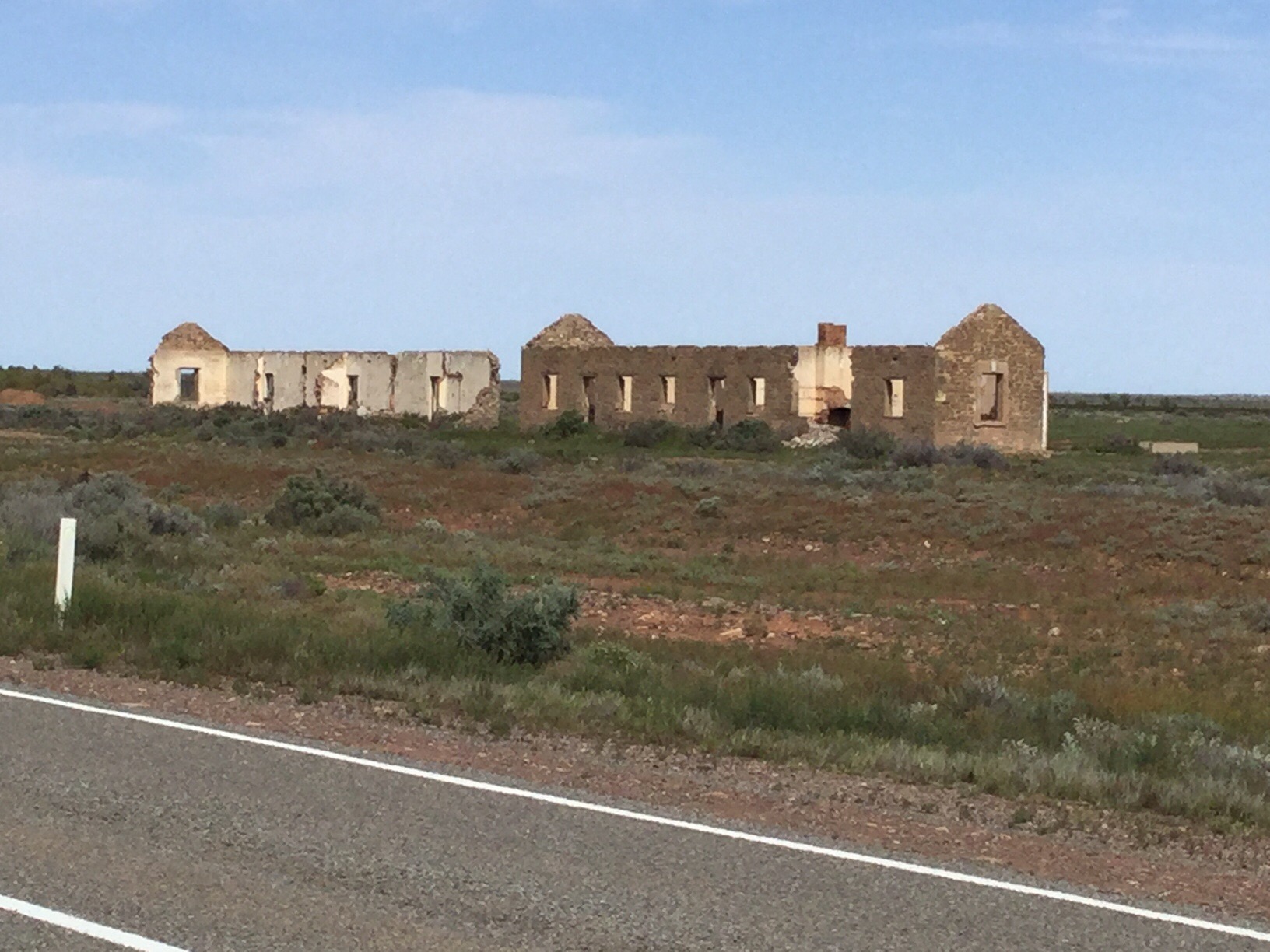
 ‘To everything under the sun there is a season…’ All ends, everything passes. That’s what nostalgia is for. The North Flinders is a treasure house for the nostalgist; in Brachina Gorge, see geological striations in great walls of rock telling their mute tale of aeons unimagined; in Arkaroola, note and lament the passing of the ediacaran, whose fossils mark the first life on earth to have nerve cells organised to process sensation; and note the lonely stone walls – unroofed but still erect in their noble proportions – of dwellings abandoned by pioneers whose hearts cracked in the long droughts.


Add to this is my own lament. With the passing of the unlamented, lamentably polluting coal resource in Leigh Creek, the mine has closed. Soon the Clinic that served the mine will close too. In future summers the North Flinders will not summon its Jewish locum.


Driving south yesterday, at the conclusion of a medical estivation in Leigh Creek, I stopped at the Prairie Hotel. Lachlan Fargher looked up: ‘Hello Howard. Strong latte, extra hot?’ I looked at the Aboriginal paintings in the Dining Room that is really a gallery of fine art. I took in the old timbers, the scarlet collection tin for The Royal Flying Doctor Service. I took in Jane Fargher, Licensee, the brain and spine of a brave enterprise. I looked at Lachie, his black curls bent over his machine; at Avalon, springtime’s barperson. Tomorrow, or tomorrow’s tomorrow, the former will brew Aussie coffee in Nashville Tennessee and the latter will practise criminal law. I drank my latte, said goodbye and drove away.


• Fragments of ‘Noonday Axeman’, by Les Murray


More Unnatural Medicine 

Following my recent blog post titled ‘Unnatural Medicine’ one correspondent bothered to respond thoughtfully and at considerable length. As you will see from the passage below (excerpted from his comments) he writes insightfully and with strong feeling. I quite understand that intensity; health is both a personal and a universal concern. Further, at the head of its hierarchy and ruling our fate, standing over us, exciting our awe and our resentment, are the doctors.

 …On the other hand we see leaders in western medical practice dismiss Chinese medicine, for example, as quackery and voodoo medicine. Despite clinical trials clearly demonstrating the effectiveness of acupuncture, for example, many Scientists declare that there are no such thing as “meridians” in the human body as their existence has not been clinically demonstrated. The hypothesis is dismissed despite evidence gained from the applied testing that they do. Further, many assert that all forms of Chinese medicine, sometimes including acupuncture, should not be considered “real” medicine. (This includes senior doctors advising government and insurers.) Yet this practice has 4,000 years of accumulated clinical practice, is taught in major teaching hospitals in China and practiced daily by doctors in conjunction with “modern” western practice. Numerous clinical trials of diagnostics, treatments and herbal concoctions have been conducted, which are generally dismissed in the west, often merely because they are not available in English. When they are available, the results are howled down because there is no critical mass of such research available. Yet the Chinese pharmacopeia is yielding impressive results in western labs in the treatment of everything from common infections to malaria and cancer. Why is there such resistance to the science of Chinese medicine?
With the social and economic power of the western pharmaceutical industry we continue to see western medicine practised with an emphasis on the provision of drugs as first recourse in treatment. So pervasive is this that you have written about patients who want the prescription of a drug, any drug, rather than wanting to hear a more complex story of how to achieve health and of some doctors who support this approach. We have a culture of “science” where alternatives can often be dismissed and
where pharmaceuticals are pushed to the frontline of treating almost any and every condition. Incidentally, my father peddled Debendox – among many other drugs- to doctors in the 1960s and ’70s for the treatment of morning sickness and later associated with birth defects. It was given to me as a treatment for travel sickness. Hard science and its practice makes mistakes.
Please forgive my self indulgence in presenting my rant, Howard. I know your musings are often light-hearted and exploratory of deeper things. But I guess my point is this: there is an ideological
spectrum in medical practice, which can be said to range from “natural” to “unnatural”. There is medical practice that works with the “natural” processes of the human, which includes an understanding of diet, exercise, psychology, history, social conditions, the environment, etc all having their effects, good and bad, on human lives. In common parlance “natural” usually refers to seeing patients as people first, human beings subject to and part of nature in never-ending cycle of birth, life, death, repeat (depending on your belief). My experience of your practice puts you in this camp. Do as little harm as possible, be cautious, be curious, respect the person, do not jump to conclusions or easy answers, respect the life process. Sometimes trauma means offering treatment (or not) that may cause damage or harm. A difficult choice.
There is also practice that does not respect the human, does not give value to patient’s experience, knowledge of their body, etc. There is a dominant (moot?) practice of prescribing western pharmaceuticals first and asking questions later in the next 15-minute consultation a week later. This well-documented practice is disease focussed
and knows little of health, except as the “absence” of disease. This “unnatural” practice is characterised by a focus on the disease or condition, of which the “patient” is merely the subject. Treat the disease, not the person.
This spectrum lies at the heart of current debate and power struggles within medicine and in policy regarding human health. It has enormous implications also for all policy that focuses on the human species as somehow separate from “nature”, implicitly subject to different rules, with or without the possibility of divine intervention to protect us from
ourselves.
 
I find myself highly stimulated by my correspondent’s comments. I’m bursting with an accumulation of thoughts and feelings of my own, musings and speculations. I suppose these have gathered and grown within me over a lifetime in medicine. (It has quite literally been a lifetime: born into a household that accommodated my family and my father’s medical practice, I grew up in medicine. I was weaned on milligrams and speculums.)
 
My own feelings about western medicine and doctors are as mixed as anyone else’s. I am old enough to need the services of my doctors quite frequently, while still young enough to be doling out medical services to others. Macbeth cries, ‘Throw physic (medicine) to the dogs. I’ll none of it!’ And in a few cryptic words the Talmud declares: ‘”tuv harofim le’ge’hinnom” – the best of doctors can go to hell.’
Does medicine have an ideology? If an ideology is a system of beliefs or ideals or principles, I believe medicine does have an ideology. In the practice of that ideology I see the best of medicine, and in its abuse, the worst. That worst is the exercise of power for its own sake, a petty parochialism, a readiness to denigrate what it does not understand; and, in budget season, a hypocritical piety.(“No, no, no, Mister Treasurer , you must not cut, peg or regulate our fees – or our patients will suffer.’) The best is seen in your doctor’s service of ‘scientia cum caritas’, knowledge with loving care.
For me it is the ‘scientia’ which is the hard bit. Your good doctor is a scholar: the word means ‘teacher’, ‘master’, ‘wise one.’ That scientific doctor applies himself to the evidence. He suppresses his own human hankerings, his romantic leanings, his wishful thoughts. That doctor brings to his work a rigour, an austerity, a devotion to the pursuit of demonstrable truth. When I am sick I truly need that science; and your good doctor brings that to my bedside.
Let me give you an example. While working in the Emergency Department of Alice Springs Hospital last week I watched while five doctors worked to save a man who had been found at a remote roadside, unconscious and convulsing violently. The man was tall, strongly built, apparently athletically fit. His mountain bike was found lying near him. Unable to tell us how or what or when, his powerful body defied his absent mind as it jumped and threw itself around. I stood, quietly appalled, watching a man fifteen years my junior, disconnected from mind, at the threshold of the void.
The doctors watched him for signs. Acutely attentive to which limb moved, which did not; how his pupils reacted to a pencil beam of light; whether and how strongly he responded to voice (initially he’d stir; later he did not), and to a painful stimulus. Here was a biological organism in a near agonal state. The doctors looked up to study the lines and waves and numerals on the screen. How strong is his heartbeat, how effective his circulation? How much oxygen are his lungs delivering to the circulation and – critically – how high is the blood pressure? The readings were elevated above the norm. I misgave and pointed out the elevation to the Team Leader. ‘That’s good,’ he said. He explained that the damaged brain was much more vulnerable to low blood pressure than high. The outcome, he explained, was worse when pressures were low. ‘The outcome’: two words pregnant with knowledge, with meticulously gathered and tested and scrutinised evidence. Tough minds had obeyed tough rules in the gathering of that evidence; now smart scholars would deploy this in our immediate emergency. I witnessed dry science at the service of hot blood. 
It was imperative to control the seizures and to treat pain. Surely he had pain – he’d had a fall, presumably at speed, his skin was torn from his body, gravel and mud grimed his raw wounds – and he was vomiting forcefully on arrival. He must not be allowed to vomit lest he aspirate and block his lungs.
Next the man’s respirations must be controlled. He’d be paralysed and placed on a respirator. He’d become utterly defenceless. The very doctors who would overcame his defences must become his protectors.
To all these ends, all of them critical, all of the utmost urgency, strong drugs would be used – opiates, benzodiazepines, muscle relaxant drugs, anaesthetic agents, anti-emetics. Doses must be calculated minutely, effects monitored, dosages re-calibrated. The precise numbers of milligrams and micrograms would determine whether this man would live, would walk, would think, would speak, read, laugh or love. ‘Will this man ever get back on his bike?’ All lay in the hands of these scientific doctors.
 But how to calculate dosages? Unable to weigh a stuporose man threshing his own body, the doctors had to guesstimate. Too much opiate would lower blood pressure and endanger the damaged brain. Too much anti-convulsant would do the same. And both classes of chemicals might suppress breathing. The anaesthetic drugs must be adequate to paralyse him (to allow intubation and the use of the respirator), but again these agents can defeat their own purpose.
So the doctors injected morphine, eagle eyes upon oxygen saturation and respiratory rate and blood pressure. They injected metoclopramide to prevent vomiting that morphine so readily triggers. They deployed three different anticonvulsants, in doses nicely titrated, before they were able to control the fitting. Now came the intricate business of intubation, the act of introducing a breathing tube deep into the throat in defiance of every natural reflex and physiological objection; this procedure, a pas de deux of surpassing intensity, saw all present hold their breath in unconscious imitation of the patient, now paralysed, whose breath was held from him by chemical restraint. Now the tube was guided truly, now oxygen supply was resumed, hypoxia reversed. All breathed out.
Our patient would never know how medical science saved him. How doctors had used just enough of every hero molecule, how they had threaded that narrow path between his own injuries and the potential harm of their remedies. How every drug might poison him. And of the race of his life, the literal counting of seconds where every second counted, the quietly hectic passage of time when he arrived as quivering meat and was so soon stable. Safe!
Equally deep was the pool of knowledge that detected the cause of all – no, not head injury, not brain contusion, not spinal cord injury – a heart attack had thrown this athlete, engaged in a mountain bike race in unseasonal heat, into coma and convulsion at the threshhold of death.
So, yes, western medicine has its ideology. Last week I saw that ideology save a human person. Clearly I am in awe of that sort of intellectual discipline which is so far above and beyond my suburban skills.
By way of contrast we who practise by instinct, by intuition, must tread the shallows of organic disease, even as we grope in the deeps of human suffering. You cannot afford to indulge our speculative modes of medicine when your damaged organs call out for science.
In the earliest years of my practice I felt frustrated when patients informed me of the advice they’d received from alternative practitioners. Those healers would declare to my patient her spine was out and they’d put it back; they’d looked in her eyes and found her pancreas was sick and they’d cured her with herbs. Not with drugs, no, never with drugs. Those healers prescribed detox diets for the liver, cheerfully unaware that the liver detoxifies all. They told my patient they knew what was wrong, where I knew I did not, where no doctor could – in any scientific sense – know.
I came in time to respect the achievements of these practitioners. My patients felt better for seeing them, encouraged, confident in their recovery. I wondered how this could be and it came to me that the naturopath gave the patient the gift of an unrushed, attentive hearing. The amplitude of time, the emphasis upon natural healing, the resounding vote of confidence in the forces of the natural body helped the patient materially. I realised how intuitive, how insightful, how respectful was this practitioner. I recognised in the naturopath the healer I wished to be. But there was one difference, ineradicable: I never heard a patient quote the alternative practitioner confess ignorance or impotence. Free of the shackles of constraining science, the practitioner never said three words that I need to use every day. Those three words are: I don’t know.
I am pretty confident I have by now offended some readers. This is always a risk with the trenchant expression of strong opinion, of ideology, if you like. And it is not only western doctors who hold an ideological position. I consider it natural to humans, perhaps universal, to cherish convictions about health and its care. These convictions too encompass values, traditions, emotional needs. Mine are distinctively my own. Every distinct human will differ. Expressing my full thoughts on these subjects might offend seven billion humans.
Nevertheless I propose to write a series of short pieces which might include:
Why some doctors resist and resent alternative medicine;
‘Thou shalt not kiss thy patient’ and other absurdities.
Why I recommended acupuncture for a patient whom doctors could not help.
Why doctors prescribe medicines: Big Pharma, big mamma, bad sicknesses;
My Debendox daughter.
In writing on these matters I expect to relieve myself of strong feeling, long pent. And after all that I will scarcely have responded to my correspondent’s weighty concerns.
 
One final vignette before I let you go. In 1972 I joined a rural practice where I worked happily for almost thirty years. Around that time I met a squat jolly man and his slim jolly wife. The couple had three small daughters and I became their family doctor. They were a devout family, members of a small local congregation of a church which is possibly the most widely respected by the secular majority in this country. They wore their piety tactfully – neither crucifix nor yarmulke nor hijab declared publicly their private faith.
From time to time Mother brought the little girls, slim, elfin presences with smiles that sweetened my day. They’d sit on my knee while I discussed their condition their mum. In time they grew up and left their small home town. One of the three, whom I’ll call Sarah, returned and introduced me to her fiancé, a member of Sarah’s church. The two had decided on a career as ministers to the youth in the service of their church. Soon they would marry and take positions in a distant city interstate.
 
When I saw Sarah next seven years had passed. Her father had died of complications of orthopoedic surgery. Her face shone with grief and pride as she introduced her batch of three small children to me. Slim like Sarah, all with biblical names, they played at our feet as we spoke of their grandfather, that squat jolly man, and of his passing. Sarah and her husband petitioned the church for a posting in Melbourne to be nearer the family.
They settled in an outer suburb on the far side of town and I saw nothing of them for about three years, when Sarah turned up in my waiting room. Delighted and surprised I listened as Sarah told me of the strange and slow development of her second child, a boy. ‘Jeremiah might have autism.’ We talked. I told Sarah I was no expert in that condition. She seemed to know that already. She wasn’t after diagnosis, but counsel and for that it was to her old family doctor she turned.
Years passed. Once again I was delighted one day to discover Sarah in my waiting room. She was the final patient of my morning. By chance I had no more patients to see for the next hour and a half.
‘Hello, Sarah. What brings you here?’
‘Howard, this morning in the shower I found a lump in my left breast.’
‘Does it hurt?’
‘No.’
‘Do you have chills, a fever?’
‘No, it’s not mastitis. I weaned Benjamin a year ago.’
I examined Sarah’s left breast. Her slim body habitus made the lump easy to find. It was a hard lump, a little larger than an almond. I felt the opposite breast: normal. I probed her axillae. There, in the left armpit I felt a second lump, also hard. I tried to hide the dread I felt.
Sally looked up at me, searching my face: ‘Can you feel the lump?’
‘Yes. It’s a worry. Please get dressed and we’ll talk.’
We talked for an hour. We talked of the probable cancer, of its possible spread, of treatments, of specialists – who, where, when? Sarah asked, ‘Do think I’ll be cured, Howard?’ I did not think she would. I said the signs were worrying and I feared the worst. Sarah looked down and rummaged in her handbag for her hanky. She sat quietly, tears rolling down her cheeks. She dabbed her eyes and cried some more. The hanky was a sodden ball in her hand. She blew her nose and said, ‘I’m not frightened for myself. The children… they’re so young.’ Fresh tears followed.
At length it was time to finish. I stood up. On blind instinct, driven I suppose by hard feeling, I said, ‘Sarah, stand up.’
She did so. I stepped forward, took her in my arms and hugged her. She hugged me back, hard. I dropped my arms but she hugged on. And on. At length she released me. She took a deep breath, found a small smile and said, ‘That’s what I crossed Melbourne for, Howard.’
I never saw Sarah again. Her surgeons wrote to me from time to time. Eight years after her doctor took her in his arms and breached medical ethics, Sarah died. 
Lights off in the City of Churches

We are driving along a principal Adelaide artery. Dusk has fallen and passed. It is dark now. This main road carries a lot of traffic along its numerous parallel lanes. Unfamiliar with Adelaide and totally devoid of any sense of direction, I pay close heed to my guide, Georgie, a native of the city.

 
‘Merge left,’ commands Georgie. I obey. On my right a larger car swoops close, overtaking me. Studiously attentive to my own lane, I concentrate on the road ahead.
 
Georgie explodes. Pablo guffaws. They point: ‘Look! Look! Look over there!’ I look over there. Over there is the car that swooped by a few seconds ago. Indistinct movement from the roof of the car. Lines of cars in our many lanes slow now to take a bend and we close on the vehicle of interest. I sneak another look. There is movement: a head and torso project up through a sunroof.
 
Straightening up now, I resume driving as Pablo and Georgie shriek ever louder: ‘Look! Look!’ I do look. The moving torso has arms. The arms wave frantically. The face appears to be female. The torso is manifestly female: with every wave of her arms the waver causes her breasts to wobble wildly. I know all this because the waving woman is naked from the waist up. What is more, the waving lady seems to be performing specifically for us.
 
This is puzzling. Unfamiliar with local road culture, I wonder whether we are witnessing a species of road rage. In fact the waving and the wobbling – and quite likely the undressing – are all the opposite of road rage: road love, in fact.
 
Jumping and wobbling and waving in the cold of this winter night the woman mouths words in our direction. We cannot hear. Quite frantic now the dancing mime of The Great Northern Road redoubles her tempo. Surely we will notice her, surely we must hear.
 
The traffic lights turn red and all cars come to rest. The swooping car has swapped lanes, drawing directly alongside us so the terpsichorean gesticulator can make herself heard. She makes a winding movement with her right hand. She mouths her message. Windows slide downward in the car on our right. We lower our own. Voices are heard, a chorus from our neighbours: ‘Your lights! Turn on your lights!’
 
We turn on our lights, smile, wave and mouth our thanks. The lights turn green, the dancer disappears from the sunroof and we drive our ways.


On the Main Road

Friday afternoon, the eve of the sabbath. Riding home from my shift in the Emergency Department at Alice Springs Hospital I would have missed her if I’d been abiding by the law. Luckily I was riding along the footpath when I came upon her. She looked about fifty but I reckon her true age at mid-thirties. Her large face seemed inflated, her eyelids puffy, her lips swollen, her natural flabbiness accentuated by deforming scars and oedema. The face was bronze in colour. Her gaze was inward – even when I was abreast of her, when I addressed her, I was absent to her. 

In all our minutes together we were never more than ten metres distant from people passing in cars and on foot. But in our leaden ballet we would dance alone.
She was shorter than I and a good deal heavier. The weight differential would matter when I’d struggle to lift her. I was a metre from her when I first registered her human presence. A slender tree at my right shoulder obscured her from sight. Abrupt movement caught my eye, a straining, forceful jerking of her thick neck and thorax as if she sought to escape. In fact the opposite was the case. 
The woman’s hands worked to adjust a cord that looped once around the tree then twice around her neck. I saw the cord and stopped. With all in place she suddenly slumped. Don’t! Don’t do that! – these were all the words I found. I flung my bike aside and threw myself towards the woman. She grunted but did not speak. My arms about her did not arrest her fall. The cord tightened. I remembered the knife in my lunchbox. As I groped frantically in my backpack she thudded suddenly to earth at my feet.  
A white cord floated down after her. The cord was a lengthy bootlace, the sort you pull on to tighten your running shoes. That slender tie would never support ninety kilograms of self nihilation.
Lying on the earth her silent body did not move. Was she breathing? A wave of alcoholic air reaching my nostrils answered that question. Was she conscious? I spoke. No response. I shouted. No answer. I placed my right thumb into the small bony notch above her eye and pressed hard. This truly painful stimulus evoked no movement, not a flinch. On the Glasgow Coma scale I reckoned her score at eight of a possible fifteen.
As I crouched in all my clinical perplexity an Aboriginal woman appeared at my side. Gesturing in the direction from which I’d been riding she said, The hospital is just back that way. Did I smile as I thanked her? I don’t know.
My lady was alive, breathing, intoxicated, apparently unconscious. In the long seconds since slumping she had not moved. What harm had her spinal cord suffered in that violent moment when the bracing cord arrested her fall? I could not know. My phone: where was it? Fast fingers delved and delivered from my pocket. I rang triple zero. The voice asked, Police, Fire or… Ambulance! I shouted. Ninety seconds after giving location and clinical details the siren sounded behind me. The vehicle pulled up alongside my waving, jumping body. A tall woman blonde woman alighted. She would have been in her thirties – like our patient, and unlike her. I answered her questions. A friendly smile lit her face as she said, Big shock for you, I’d imagine. This time I did smile. After a shift in Alice’s Emergency Department I’d become inured to shocks. The paramedic crouched over our patient and I heard her say: Hello girlfriend! as I mounted and headed home for the peace of Shabbat.
   

Bob in Starbucks 

I’d like a soy chai latte, please.

Grande? Venti?

A shake of my ignorant head.

The young man explains.

Grande please.

Marker pen raised above paper cup: What’s your name, sir?

Howard.

Pardon me?

HOWARD.


Next time, a different Starbucks: what’s your name sir?

Howard.

Pardon me?

Bob.

Sure, Bob. Won’t be long.


Bob loiters and in truth it is not long before he is drinking the curiously tolerable blend of sugar, sugar, sugar, spices and soy.


My name has always been plastic.

I keep at home a newspaper cutting from ‘The Murrumbidgee Irrigator’ of early January 1946, announcing the birth of Yvonne and Myer Goldenberg’s second child: ‘Myer and Yvonne Goldenberg are delighted to welcome their second child, Adrian. Brother to Dennis.’

Friends flocked to the Leeton District Hospital to congratulate Myer and Yvonne and to commiserate with Adrian. Horrible name, they said to my parents. Do you really hate him that much?

Ben and Ethel visited, bringing their four-year old boy, Howard. Mum looked at Dad, Dad looked at Mum and Adrian became Howard.


I got used to Howard. The softness in Mum’s voice as she spoke the name, the pride in Dad’s, convinced me Howard was good. I used it for a long time.


I came to Melbourne, became an adult and learned to drink coffee. I patronised Universita Café where a short, round young waitress named Theresa asked me my name.

Howard.

Pardon?

Howard.

OK John, I’ll bring your cappuccino to your table.

She did, John drank and the coffee was excellent.

John patronised the Universita for twenty years.

One day I bumped into a man there whom I knew. (I had his baby son’s foreskin at home, but that is another story.)

Hello Zev.

Hello Howard.

We sat down.

Theresa brought our coffees. Handing me my cappuccino, she said, There you are John.

Zev said, Who’s John? This is Howard.

Theresa looked confused. Mortified actually.

I never had the heart to return to the Universita.


I reverted to Howard for a further score of years. And remained Howard. Until I broached the threshold of Starbucks.


Unnatural Medicine

The young woman who sat before me said she was overwhelmed. Earlier that day she had visited a woman doctor for her Pap test and to discuss contraception. The young woman (whom I have known since the evening of her birth) sat and listened to the cascade of information and advice that flowed over her. She felt she was drowning; ‘My head swam. I thought I might faint or vomit. It was too much for me.’


The young woman is no dimwit. A graduate in Neuroscience and Philosophy she handles ideas that make my head swim. Her doctor is a thorough and thoroughly modern practitioner. She explained the actions of oestrogens and progestogens. She detailed the various routes of administration. She canvassed the respective durations of action of the different preparations.


Let us give the young woman a name. She can be Lucy.


Lucy explained why it was now critically important that she not conceive. For pressing medical reasons pregnancy could be disastrous. Her past use of barrier contraception would no longer do. Hormonal means were required. I asked, ‘Lucy, what is it you don’t understand about the Pill or the progesterone IUD or the progesterone implant?’

‘I understand them alright’, she said, ‘I just don’t want them. None of them. They’re all unnatural.’


I asked Lucy to elaborate. ‘Those hormones, they all do things to you. They affect your organs. I don’t want that. I’ve never liked that.’


Lucy is quite correct. They all do things to you. Whether it’s a device impregnated with progesterone that is inserted into the uterus – with or without a general anaesthetic (another unnatural chemical) – or a tablet that contains both oestrogen and progesterone, or a small progesterone-impregnated rod sewn under the skin of the upper arm, all will prevent pregnancy by violating Lucy’s natural biology. It was these assaults that alarmed Lucy. She felt she’d be a traitor to her own health if she embraced any of those measures. Her audience with the doctor struck at her ideology, her beliefs.


I sat and listened. I know how Lucy feels. Like most of my patients I am drawn to the natural remedy. Whether it is a hot lemon drink for a sore throat or a hot salty water soak for an infected finger, I have always prescribed these for my children, knowing I have no skerrick of scientific data attesting to their value. They just feel good. And right. And natural. My children have long mocked me for my atavism. And nowadays I see them treating their own children with the same nostrums.


Science has no truck with ideology. Science is an unsympathetic bastard. And profoundly unsentimental. The science of pharmacology defines a drug as any substance that alters a biological system. In other words, in our retreat from such unnatural substances as drugs, we resort to our hot lemon drinks and our hot salty soaks. And we feel better. But pharmacology’s corollary declares: any chemical which alters a biological system is a drug. If my inflamed finger feels better, if my sore throat improves, the salt or the lemon is a drug. Or a placebo.


I love placebos. Over the many years they’ve relieved lots of my symptoms. But, as I explained to a forlorn Lucy, placebos don’t prevent pregnancy. Against an incoming tide of one hundred and fifty million sperm cells, the placebo cannot prevent penetration of her waiting egg.


I tried to comfort Lucy. ‘There can be no natural contraception. Nature wants your every egg to be fertilised. Only the highly unnatural (but physiologically innocent) condom or the highly unnatural act of withdrawal or the offensive intrusion of hormones will prevent conception. Those or celibacy.’


Lucy took this in. She had no enthusiasm for celibacy. I added my opinion that withdrawal and cyclic celibacy were the two parents of most of the babies ever born.


Lucy left me, taking with her a prescription for the Pill. She will violate her biology that would otherwise have seen her conceive at fifteen and again – following two years of lactation – at eighteen, and again and again every three years or so until menopause and subsequent senescence and early death.


Of course everything I do in my work is unnatural. I intervene when hypertension or diabetes or elevated cholesterol would otherwise hasten the onset of heart disease. I order x-rays which expose the body to cancer-causing radiation. My surgical colleagues introduce stents. My psychiatrist friends alter brain chemistry with their medications, as they struggle to control the demons in our minds of schizophrenia and bipolar disorder. Sometimes they save lives. Most unnatural. All of it, most unnatural.


There are two Laws I have learned.


FIRST LAW: There is no such thing as natural medicine.


SECOND LAW: There are no cures. Medical science always fails. We all die.


After Boston

There is nothing sensible about running a marathon. It is a difficult thing to do. There appears to be a physiological upper limit of tolerance to distance running. At some point around 35 kilometres most runners experience a steep falling away in efficiency. Sports physicians suggest humans were not made to complete a marathon distance, which is a little over 42 kilometres.  
 
People die running marathons. While most do not die, or even suffer serious or lasting harm from the marathon, even a single death is one too many, given that there is no need, no practical purpose, to completing the full distance.
 
Running marathons is not even an efficient means to attaining physical fitness; you can achieve equal fitness with brisk walking as with running, and the risk to life and joints is far lower when you walk.
 
Earlier in my own marathon running ‘career’ (a suggestive term: it isn’t a career in the sense of something I do for a living; something that runs off the rails is said to ‘career’) I had the opportunity to go for a training run with the great Rob De Castella in Boulder, Colorado. Earlier I had discussed with sports doctors my experience – common among marathoners – of slowing radically over the final 7 kms of the race. The physicians had suggested that human beings weren’t meant to run that distance: there was the physiological limit I referred to earlier. De Castella, himself a sports physiologist, was educated by the Jesuits at Xavier College in Melbourne. 
After our run, exquisitely taxing at that altitude, I put the same question to De Castella. It was the Jesuit rather than the physiologist who answered: “If human beings gave up just when something became difficult we wouldn’t achieve very much, would we?”
 
That is the answer. In that nutshell is the reason that Paris and London will see tens of thousands compete in their respective marathons next weekend. It is for that reason that we love to do what we hate. I have run and hated and loved forty three marathons, in places as diverse as Boston and Alice Springs. I hope to run more.
 
If the marathon runner defies physiology the marathon watcher defies sense. In all weathers she stands outdoors and watches an endless, anonymous train of athletic mediocrities, watches for hours on end, feeding these strangers everything from jelly snakes to orange segments to fried snags. At her side her small child claps everyone who lumbers past. Her teenage daughter holds a placard that reads: YOU ARE ALL KENYANS.
 
My mother knew nothing of sport. Her lack of knowledge stood her in good stead for the marathon, indeed for any sporting event she witnessed. At the time of the Melbourne Olympics Mum took us kids to the fencing. She knew only that the swords were not lethal weapons, that the fencers’ precious eyes were safe. Those facts were enough for Mum. She barracked for the victor, she urged on the vanquished. She loved them both equally and generously.
 
IN 1956 the Olympic marathon course led from Melbourne to Dandenong and back to the MCG. The route followed the Princes Highway, which passed the end of our street. Mum stood and cheered every contestant on the way out and waited for their return. By that stage the runners were jaded and strung out. The leaders too were well separated. As the runners passed our street an American was leading. Coming second or third and looking tragic (in a way I came to recognize in my adult life) was a New Zealander. “Good on you, Kiwi”, were Mum’s words from the empty kerbside, a distance of only a couple of feet from the runner. Mum’s sweet urgings encouraged the runner, who visibly accelerated. Later Mum would say, “I helped him to win.” In fact the Kiwi did not win – Mum was no stickler for small facts – but she put her finger on a larger truth: he was a winner: he finished. He did his best.
 
It is in Boston that the runner and the spectator most truly meet. There the amateur runner is embraced by the uncritical spectator. She too is an amateur. She hasn’t a clue who is favoured to win; she has twenty seven thousand favourites; she loves them all. A literal amateur. Extraordinary statistic: of a population of three million persons in the greater Boston area, one million spectators come out to watch the race. The spectator comes out and she remains there, cheering, clapping, waving placards, uselessly feeding, encouraging every last pathetic struggler, every finisher, every champion. These three, as she well understands, are one and the same.
 
She was there, this ignorant dame, when I sailed past her, full of hope, energy, crowd fever and coffee early in last year’s race. She was there as I struggled up Heartbreak Hill. She was there in Boylston street to see the winners – man, woman, wheelchair champions (both genders) – as they crossed the line. She was there when the first bomb went off. Was it the first bomb or the second that took her life? I do not know. 
 
I know this: she will be there again this year when the race is run again; there in her thousands at the start, in her tens of thousands in the middle, in her weaving, praying throngs through the weary late stages, there among the ecstatic crowds that squeeze joyously at the kerbside as crazed runners find speed for the final gallop along Boylston Street. She’ll be hoarse and weeping as the untalented race along those cobblestones in their ragtag glory, arms pumping, heads high, fists aloft as they cross the line.
 
And what of the runners? We are wiser now. Inevitably, sadder. Running – that senseless frolicking of supposed adults will never be the same.
A record field will contest Boston in 2014. Terror will enjoy its limited success – some attention for a cause, or as seems likely in this case, no clear cause; some increased security, some minor oppression of amenity and civic liberty – but the lovers of Boston will meet and embrace as they always do, at this, their festival.
Running, our ceremony of joy, now sanctified, will always be the same, that familiar pointless folly. 
 

Melbourne’s Daughter

Deep with the first dead lies London’s daughter

(Dylan Thomas)
The newspaper article was short, buried at the bottom of an inner page: Man Sought in Child Death was the headline. Ambulance officers were called to attend an infant who was not breathing. They found injuries described as Non Accidental. They detected a feathery heartbeat and commenced resuscitation and brought the baby to hospital.
Following further treatment the baby underwent scans of the brain. These demonstrated Injury Incompatible with Life. Police wished to interview a man in connection with the matter. 
Nearly forty years ago I became intimately familiar with that hospital. At the age of fifteen months our youngest child was treated there for Aplastic Anaemia. I had learned enough of this invariably fatal disease at medical school to dread it. Over three miraculous days and three intense nights nurses and doctors worked on our infant as if she were their own. Three days following her admission our baby was home again, her condition in spontaneous remission. It never recurred.
I witnessed at that time what a friend describes as the operation of ‘an edge’. He says a hospital like that is a line where the worst and the best meet and rub up against each other. The worst, he suggests, is the suffering or death or loss of a child; the best is the application of skill and care and discipline in opposing the worst. The line where the best strains against the worst is a hospital like this one. My friend describes this as ‘OUR best’. By extension the loss or suffering of the child is OUR worst. I mean we are all implicated.

 
What must we learn from those pregnant expressions: ‘Non Accidental Injury’ and ‘Injury Incompatible with Life’? Horribly intrigued I sought more news in the next day’s paper. I found nothing. For the first time in my life I went to the news on-line. I googled ‘non-accidental injury to baby’. Straight away I was sorry I had done so. Case after case, headline after headline, BABY AFTER BABY, the web told of the slaughter of our very young in Australia. RecoiIing, I quickly ungoogled. A phrase from the biblical book of Numbers came to me – ‘a land that devours its children.’
Another friend is a senior doctor at that same hospital. He is the person with whom the buck stops, it is he who has to confront the adults in whose watch a non-accidental injury has taken place. Too often the x-rays show the many non-accidental fractures that have healed or half-healed or never healed in a baby’s short tenure. He sees the scans that show the brain bruised and bleeding from multiple sites. Calmly, civilly, he must direct questions to the adults. He says, ‘Your baby has been injured in ways that cannot occur by accident. Can you explain the injury to me?’ The adult partnership fissures along one of many fault lines, the truth emerges. And the truth is braided of many rotten strands. The perpetrator – sometimes more than one perpetrator – is almost never the simple monster we like to imagine. The perpetrator too often had himself been monstered – his life fractured, his brain contused by one evil or by another or by many.
I read, over the days that followed, a scattering of further details, most of them horrible beyond my imagining. And finally, this: the injuries being incompatible with life, the parent of the child had agreed the doctors should turn off the machines. But before that, she donated the baby’s organs. Injuries incompatible abruptly became compatible with saving half a dozen young lives.

 
I described babies who are killed as OUR babies. I felt, as I read Helen Garner’s, ‘This House of Grief’ that the three murdered boys were in a real sense Garner’s children, they were mine, they were all our children. And in my moments of google horror I felt the same shock of personal responsibility.

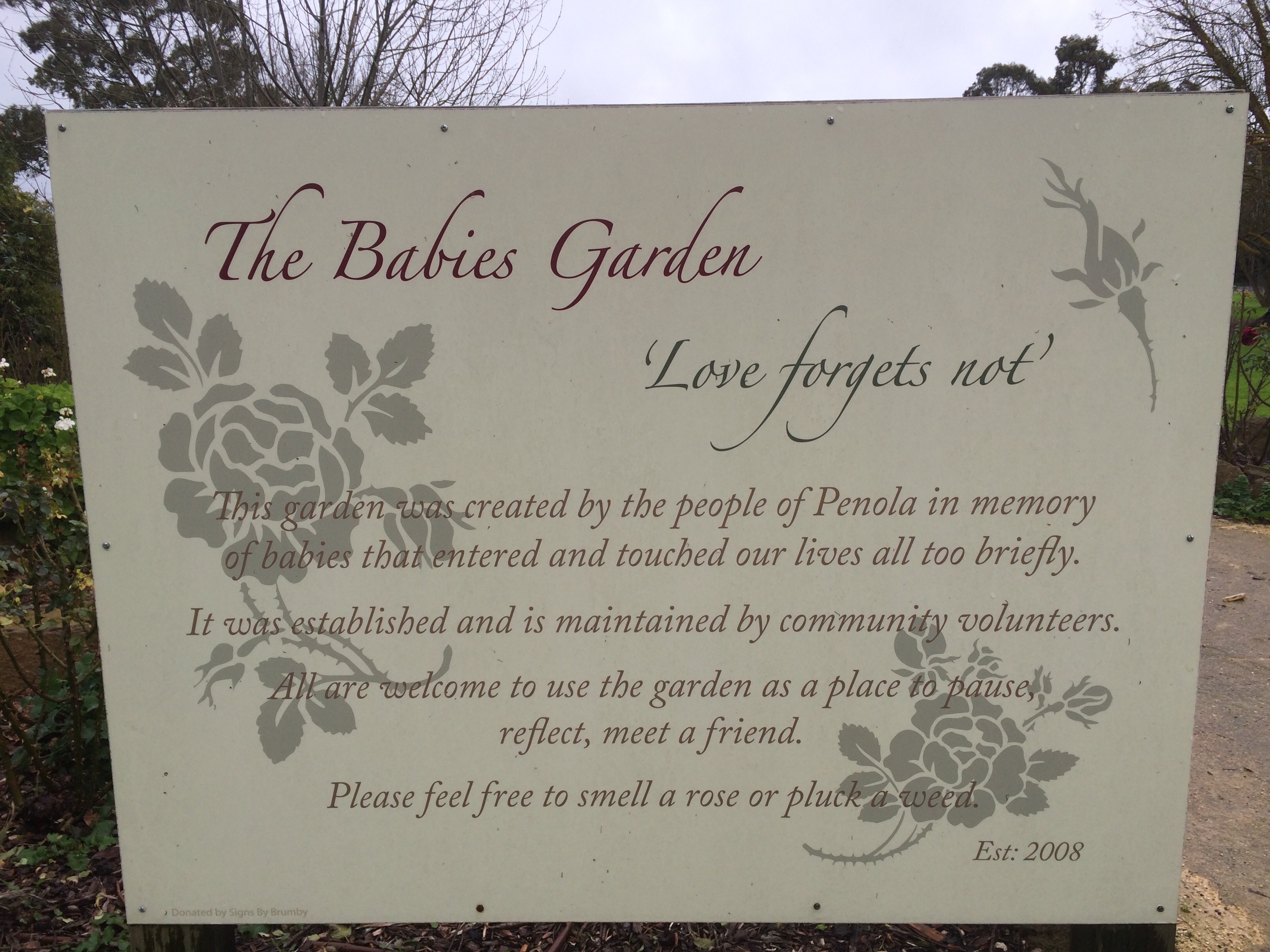
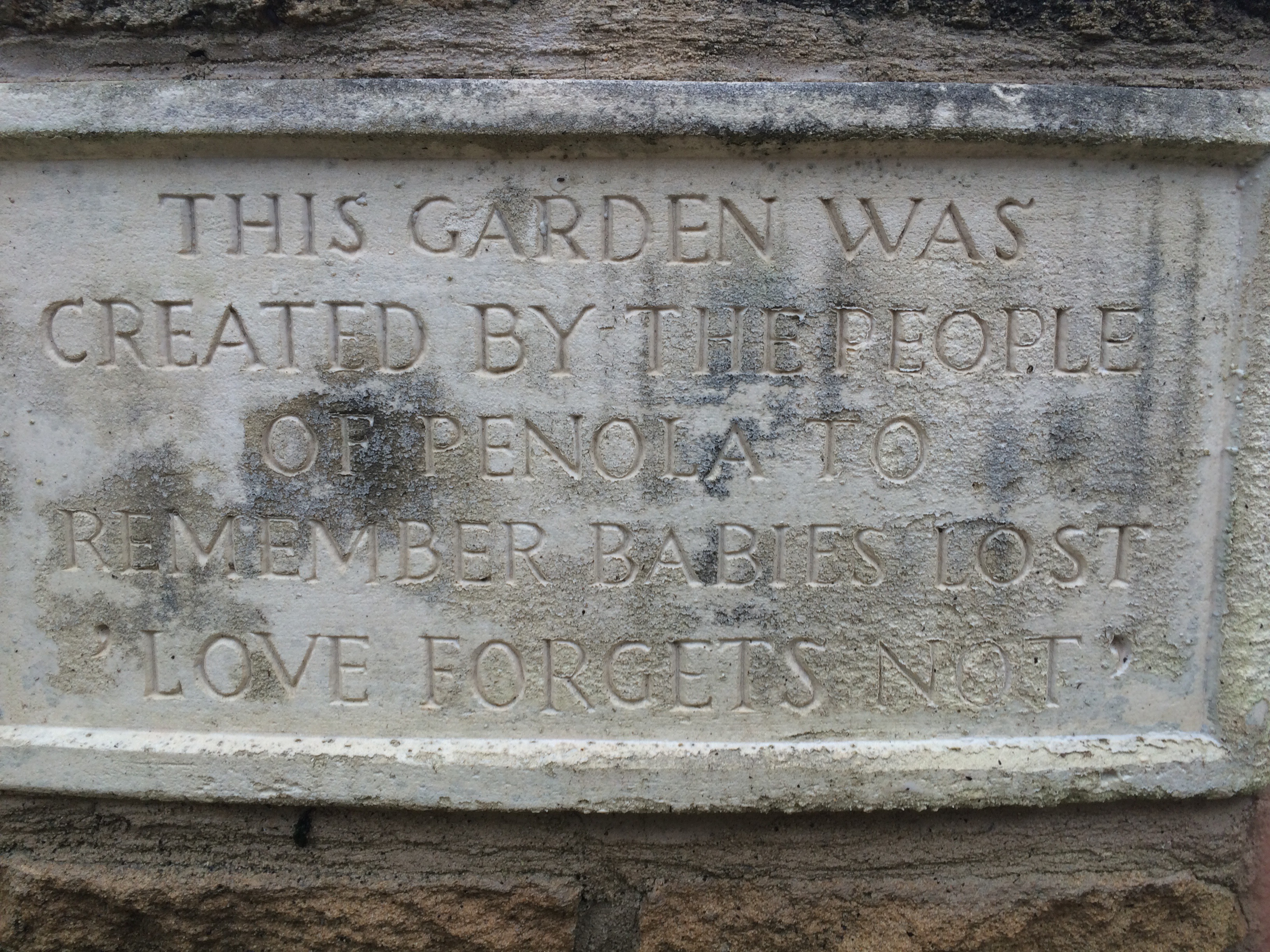
In the small South Australian town of Penola people built and tend a park to remember their babies lost.

Blue Label

My brother Dennis presented me with a blue carton containing a bottle of whiskey. I had never heard of Johnny Walker Blue Label. Whiskey did not interest me. All I knew was I couldn’t afford good whiskey, I didn’t like cheap whiskey and I couldn’t tell the difference between cheap and uncheap. 

Dennis died ten years ago but the box and the bottle survive, unopened. Dennis died poor and intestate after forty-five years working in Finance. Dennis didn’t drink whiskey either. Strong drink was not his weakness. His loves were his weaknesses. One of his loves was for this brother, the one who survives him, healthy and unpoor.


I picture my firstborn brother in an airport palace of luxury items for sale duty free. He looks around for something good, something precious to buy for his loved brother. His instinct draws him to the most expensive items. A man of the world, Dennis recognises the blue label. He takes the box in one arm, reaches for his credit card, approaches the cashier. He makes the purchase he cannot afford, with funds he does not yet own, for the brother who will see no occasion to drink it.


To paraphrase O Henry’s closing remarks in ‘The Gift of the Magi’:


The magi, as you know, were wise men—wonderfully wise men—who brought gifts to the Babe in the manger. They invented the art of giving presents. Being wise, their gifts were no doubt wise ones, possibly bearing the privilege of exchange in case of duplication. And here I have lamely related to you the uneventful chronicle of an unwise child who most unwisely sacrificed for the brother other the greatest treasures of his house. But in a last word to the wise of these days let it be said that of all who give gifts these were the wisest. O all who give and receive gifts, such as they are wisest. Everywhere they are wisest. They are the magi.