Jogblog, 1

Around 1980 I came across a supposed distinction between a runner and a jogger. A runner, I was pleased to learn, was one who could beat one kilometre every five minutes. At that stage I could run the 42.2 kilometres of the marathon at a rate just quicker than 5-minutes a kilometre, finishing in three-and-a half hours or less. To be classed as a fast runner, you had to beat forty minutes for the 10K. Over the next fifteen years I raced a dozen 10K’s, finishing always in 42 minutes and 23 seconds, precisely. I was consistently not fast.


Running not fast, I’ve barely outpaced packs of semi-wild dogs on hot dusty outback tracks; I’ve chased my childhood along the perimeters of Leeton, where I lived my halcyon seed time; I’ve outpaced skinny dogs in Old Havana and reproachful cats in Israel; I’ve skidded on the black ice in New York City and plodded through the silence of snow falling heavily about me in Mount Kisco and Pittsburgh; I’ve run past the legendary spud farmer Cliff Young, and side by side with the heroic Manny Karageorgiou, who never stopped for Death until Death stopped for him. I’ve trained at Olympic Park as Cathy Freeman whizzed past me. I’ve run in the Rockies with Rob DeCastella, in Alice Springs with Steve Monaghetti, and in NYC behind the gracious Juma Ikaanga. I know I’ve dogged the heels of greatness.


Running alone on the scorched desert floor beneath The Breakaways out of Coober Pedy, on the abrupt slope of The Gap at Balgo, climbing the Snake Track at Masada, in the darkness before dawn at Uluru, I’ve encountered my sole self, arriving – it seemed – but moments after the Creator completed the work.


In the dark of a starless night in midwinter, following a road in the hills of the Diamond Valley, my feet traced the sole marker of my way, the luminous white median line on the bitumen. No sound save for my footfalls and my breathing. No hum of motor, no bark of guard dog, no lowing of cattle; just me, the sharp intake of breath, the slap of my foot. In that world of black I shivered not for the cold but for desolation. Then – a sound? – impossible. But heard again, approaching me, low, rhythmic, utterly unaccountable, utterly real sounds. Hairs stood rigidly erect. Then a collision! My legs registered some mammalian presence as I leaped into the air. A thoroughly startled wombat, a speechless runner, silence restored.                                                                                                                                                                                                                                                                                                                                                                                                                                                                                                                                                                                                                                                                                                                                                                                                                                                                                                                                                                 


The mother of my brother-in-law was a midget dynamo who’d survived Belsen. When I entered her orbit in the mid-70’s she reproved me for my waste of a life: “Marathon running is somehow disordered”, she said. She spoke with the moral authority of one who knew too much. I listened but I kept running. I considered her words as I ran marathons, some of them alongside my brother-in-law, her only child. I recalled the legend of Pheidipides of Marathon. I came to see my life as the marathon, a passage through time and space, blessed and made rich by encounters with those who make the passage with me, and before me, and who will jog on after I have passed. 


Rejoice my brethren. Ours is the victory.  

The Erratic Reader


Every so often I feel the urge to tell the world what I’m reading. I’ve thought, I’m going to write and tell the world about this essay, that novel, this poem, but I’ve almost never done so. The explanation is I’ve been too busy reading to jot down my reactions to the written material. And now that I’m actually beginning, it’s not because you need to know what I read and what I think, but because I need to nudge someone in the ribs and say, golly, wow, how beautiful, how sad, how simple and true, how complex and elusive!  In short I enjoy a treasure most richly when I can share it. The loneliest person in the world must be he who looks up and regards El Capitan and has no companion to share the wow.


Let’s start:


I’ve found the most effective way to make someone yawn is to read a poem aloud. This doesn’t stop me from doing it; the power and beauty of a poem so often compels me. 


My day starts with a package of poems. These are psalms, attributed to David, the poet-warrior king of ancient Israel. I read these religiously. Like all actions that are ritualised, the ritual intended to enhance meaning can bleach it out of sight. I regret how often I bleach out beauty through simple inattention. But when an accident of biorhythm or a pang of piety actually slows my recitation I can stumble across purple passages* like this:  


Praise God from the heavens

Praise Him from the heights

Praise Him all His angels

Praise Him all His hosts


Praise Him sun and moon!

Praise Him all starry lights!

Praise Him the utmost heavens!


****


Leviathans and all deeps

Fire! Hail! Snow and Mist

Wind of storm

All work His word


The mountains and all Hills

Fruit tree and all cedars

Carnivore and Behemoth

Creeping thing and bird on the wing


Earthly kings and all nations

Potentates and all earthly judges

Youths and also young girls

Old men together with young lads


Let them praise the Name of the Lord…


While you yawn let me tell you how I love this tumbling catalogue of beings and phenomena, its plenitude, its richness, as the poet, God-drunk, calls the roll of the universe; how he brings into chorus every voice (Creeping things! Snow! Leviathan! – did David imagine what we now know and record – that the great whales sing?) – his imagination fires his love into hyperbolic song. After King David I had to wait for Gerard Manly Hopkins for such spiritually excited verse.


As I remarked above, golly. 


*The translation is my own. Don’t blame King James.

SUMMER STORIES, III   The Fruit of the Vine

Here I am, alone among the thirty thousand-odd residents of Broome, the sole shomer shabbat*. For this evening’s sabbath meal I have challah, (the delicious plaited loaves of brioche), I have candles, I have cooked a delicious meal for four, (which I’ll eat unaided). But something’s lacking, the kosher grape juice for kiddush. I left it in the city and here in Broome neither Woollies nor Coles stocks kosher supplies. But they do sell grapes.  


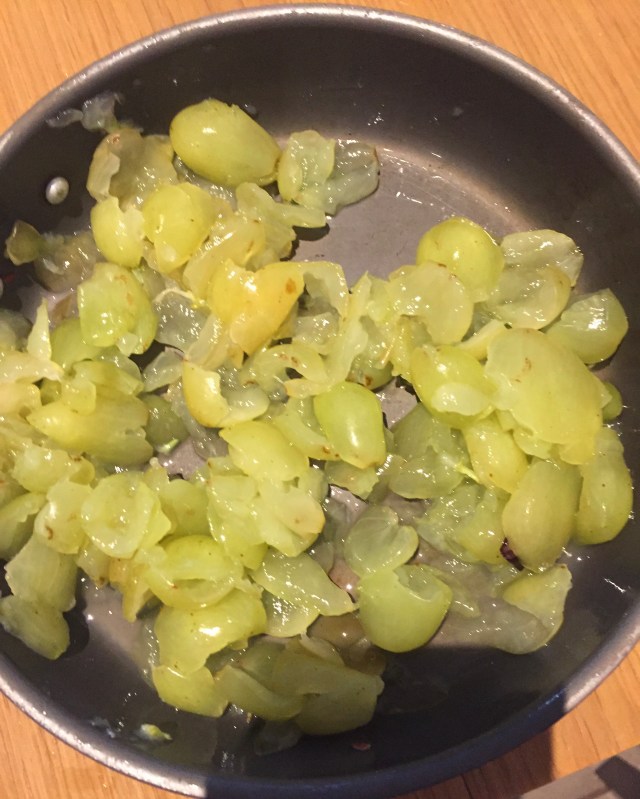
No problem. Buy grapes, squeeze grapes, chant the kiddush, drink juice! I purchase green grapes, sweet and tasty; and purple grapes, great bursting spheres, less sweet but full of character. I’ll include both and create a rose. My technique will be the ancient one: crush the grapes underfoot in the old-fashioned way, with but a single variation: to create a tinea-free beverage, enclose grapes in a sealable bag, zip it locked, drop bag into a steel bowl and trample. Simple, yes? No. These grapes are tough. They’re putting up a fight. After a good deal of trampling I haven’t burst a single one. There they lie, those green pearls, gleaming insolently up at me. I tramp harder, engaging my heels now. No good. Intact still, my green foe lies unjuiced, defiant, at my feet.


It’s personal now. 


I try my luck with the purple. Those spheres, their skins looking stretched to breaking, should be easily persuaded. But no, stubborn atheists these, like their cousins in green. I clench a fist and regard its hard, cruel bones. I hoist the footbowl, place it on a bench top, rest my knuckles on the plastic bag and lean down hard. Something gives. Encouraged, I push down harder. More movement, a slipping. Anticipating free fluid, I look down. No juice, just grapes in a bag of plastic…and air! That’s the problem, I’ve been bouncing these demons inside their cushions of air! I unzip the ziplock, deflate it and apply my shoulder, my steeled upper limb, my fist, and I push down and rotate as I push. Now, now is my foe giving way. But the fight remains dour. Grape by grape they split, and grape by squeezed grape they yield their life’s juice.


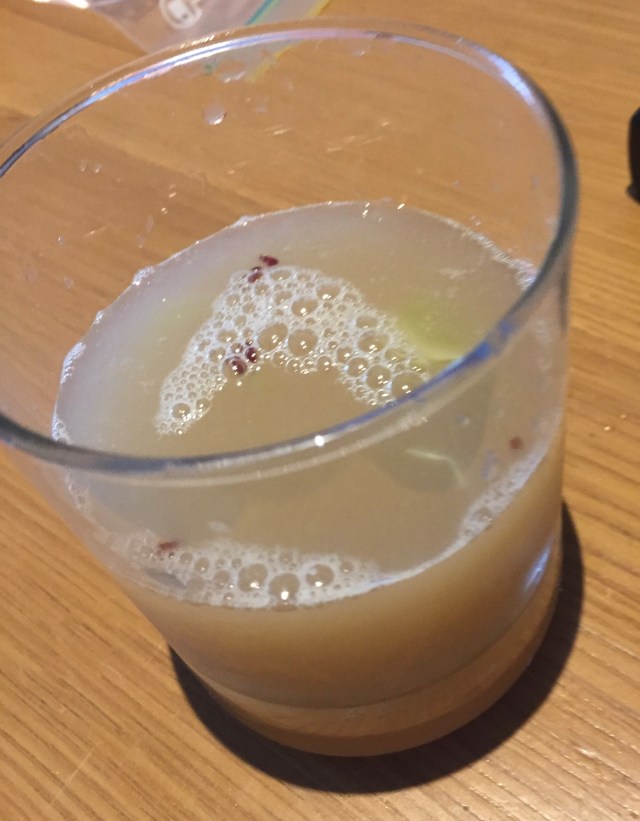
Fifteen minutes pass. Both grape and grapist are sweating now.  After thirty minutes I have collected half a small glass of pale silvery juice and a similar volume of pinkish nectar. The two combined become a translucent rose. Violence grudgingly rewarded, a victor feeling strangely compromised. How did grape-squashing become a moral test? How did I fail it?  


Absent-mindedly I pop a green grape into my mouth. My tongue pushes the little balloon up against my bony palate. A little further pressure and the skin gives way. Sweet juice flows and my molars engage and grind the pulp. In midgrape my mouth stops its motion. Now I have it: this grape, like all the grapes of my life, had to be forced. Ostensibly a mild soul, have I hidden my innate violence in silent acts of mastication? Certainly a cruncher, an audible biter down, one whose apples snap loudly as I sunder them, who is it who bites thus? And what is it that bites me?


Might there be another way? There is another way, I know it, I’ve seen it. My mother, God rest her gentle soul, never burst a grape. Mum enjoyed grapes but brutality never occurred to her. Instead she’d peel a grape, slide it into her mouth and suck it to sweet oblivion. 


*Shomer Shabbat, one who honours the Sabbath, one who guards it and makes it holy.

Summer Stories, 2

Catch the Flying Undies Game


It all starts when six-year old Ruby decides to change from day clothes into her bathers for a beach picnic. She regards the undies she’d just removed and decides she’ll need them later. She flings them to her mum, standing nearby. “Catch!”, she shouts.

“You catch”, says Mum, flinging them back. Just then Joel runs into the room and, leaping, brings down a smart catch.

Adult applause, beaming seven-year old boy, hilarious Ruby.


The game is afoot. Ruby says, “It’s called ‘Catch the Flying Undies!’”


(Later the mother says to her father, “You have to write this story, Dad.”

I demur: “ Hard to write, darling. A game without rules or shape… And flying undies might be open to misrepresentation. Better for a mother to report to her friends on her social media. Older men should steer clear.”

“Since when did you ever play it safe, Dad?”)


Ruby runs at Joel and grabs at the undies. A tug of war, Joel, legless with laughter, tumbles backwards and yields the garment. Ruby swings her arm in a mighty arc and flings with all her midget might. She forgets to let go and the lump of fabric falls at her feet. Mum swoops, grabs, chucks and the little lump hits grandfather in the face. 


There’s a science to undie chucking, I find. Flung open, undies sail, stall and fall haphazardly. Tied tightly into a knot a pair of undies becomes a projectile that flies true. The adults learn the science and exploit it. The children never master the science. Instead they charge the person holding the garment and grab at it. Much tumbling, endless screaming, brief triumphs (pun unintended), misgrabs, misfires, children helpless with mirth, adults little better. Exultation, the sense of chance, some freak or wrinkle in Time, a moment of miracle, this once and never again ecstasy.  


The children whirl and leap and fall. They shriek in their delight in our unwonted adult craziness. They won’t allow the moment to end. As they whirl they lose all balance, fall drunkenly and shriek the more. The adults keep their feet but not their dignity. Whooping and jumping and flinging undies in endless keepings-off, we grownups are mad as the children are mad. They’ve admitted us to a world we had left behind and lost. We are become children again. 

Summer Notes, 1.

On the morning of our southern Solstice I step out into the summer and the heat burns my eyeballs. December 21 in the Pilbara, a vast desert area in Western Australia, is a little hotter than the local average of 39 degrees Celsius. The temperature rises day by day, astonishment by astonishment. Tomorrow it will reach 45. A patient agrees: “Yeah it’s pretty warm up here in Newman. Not as hot as Telfer, but. When I worked out there it’d get up to sixty.”

My patient is a blaster. His job is to place explosive charges inside great rocks and blast those rocks into manageable lumps for the dump trucks. (The trucks are bigger than my two-storey house). My patient continues: “You can’t do that work inside a cabin with aircon. You have to get out into the sun and do it. It can be pretty warm work.”

At lunchtime I drive my vehicle – yes, it has aircon, but the black steering wheel doesn’t know that: it’s too hot to touch. I steer with shirtsleeved elbows – and I park in the shade. Bracing myself for the heat outside I look up and watch an Aboriginal group as it files quickly across the sunburned concrete. Number One wears boots, Number Two wears thongs, Number Three wears nothing on his feet. He moves fast, his footfalls are brief, his gait a skipping as he literally hotfoots it to the supermarket.

While working a few years back in another mining town, this one in the Flinders Ranges, they told me of a young man who drove up into the Arkaroola hills and went hiking in the heat of the day. He carried insufficient water. When they found his body a day later it had been cooked.

Forgive and Forget?


Once, a long time ago, I was sitting in a barber’s chair when the hairdresser unexpectedly laid down her comb and scissors and stood gazing at me. Her hands opened and closed. At length she spoke: “There’s something important I need to ask you.”

“OK.”

“ I belong to a Bible study group. We’ve been reading Romans…”

“And?”

“And I’m ashamed.”

I was taken aback. Through our respective professions the hairdresser and I were well acquainted. I’d treated her and her children, she had cut my hair. In those days I had hair to spare. She was perhaps seven years older than I. She had been born in Germany around the start of the Second World War; she’d have been six when the war ended, the age now of her younger daughter. From the outset we’d had a comfortable relation of trust and openness, but at this moment my patient was not comfortable at all.  

“What about? I mean why are you ashamed?”

“ What we’ve done to you. What we’ve always done, we Christians. Reading Romans, I was shocked. I suddenly thought what it meant, how it all started, how it never stopped…”

“What started? What never stopped?” 

“Jew hatred! It starts with the birth of the Church, we learn it with mother’s milk, we take it in and we pass it on. And then my people… with Hitler, we were the worst of the worst! I’m ashamed. I’m sorry. I need you to know I’m sorry, how sorry I am.”

Ahhh. 

I had no words.


At length I spoke: “You said you wanted to ask me something.”

“Yes. I want you to forgive us.”


In my work I had touched her, in her work she had touched me. A pair of licensed touchers, touching now too closely. I felt out of my depth.

My supplicant stood before me, unclothed, holding her burden of history like so much unwanted clothing. 

Words came to my lips. I spoke them, grateful to extinguish the crowded silence.  Were my words wise? Were they kind? What would the six million have me say?


My words must have been enough for the moment. My hairdresser completed my haircut and we parted, knowing each other differently, sufficiently. The pain, the shame, the decency of the woman, her courage stayed with me a long time. Eventually our close encounter sank beneath the surface of life’s events and I seldom thought of it. Forty years passed.


Last week I read an article written by a survivor of the Shoah. After the War he’d become a doctor. In the course of his work he was told a dying patient, not in his care, was asking for him most particularly, insisting on talking with him. Puzzled, the doctor made his way to the bed of the dying man. The patient told him he’d been a member of the SS. He said he’d been a guard in one of the camps, he’d killed Jews, many of them. Now he was dying. He needed to confess, to a Jew. And more than that, he wanted the Jew to forgive him. 


The doctor did not know how to respond. He searched himself, he thought of those he’d known in the camp, of those he’d lost. What would they want of him?   


The doctor did not know. Not knowing, he said nothing. The patient died, unshroven. Years later the doctor wrote a letter which he sent to dozens of people, people of moral stature. From memory, he sent his letter to the Dalai Lama, to Martin Luther King Junior, to Abraham Heschel, to others whom he esteemed. In his letter he recounted his encounter with the dying SS officer and he told of his non-answer. He asked his recipients what he should have done. Opinion was divided. Over years the doctor wrote to more and more people, an Ancient Mariner, burdened by his own feeling of self-dissatisfaction, a species, perhaps, of guilt. He published the replies he received.


 Last week this story came to me and stayed with me. I recalled the good woman who cut my hair. I recalled my response. I had said: “It is not for you to apologise to me; it is not for me to forgive; it is for both of us to remember.” Today I feel more dissatisfied with my response than I did forty years ago. I should have added: “It is for all of us to teach.”  How was I to know how the deep ocean of Jew hatred would gather again its force, how it would rise again to the mighty wave we see today?  

While Reading my Book of War


Seated on the tram, reading on a spring day
 at noon, I’m distracted by a pink robe passing close to me. My eyes lift to a young face, pale and wet with tears. No sounds, just a face folding beneath its weight of pain. The rest of the person is young, thin, female, quite tall. She’s partially covered by a pink polyfleece robe. Beneath the robe two pale legs stretch down to feet in thongs.

The girl looks about seventeen. Her features are Chinese. I check her for external signs of physical illness and detect none. She’s just a young girl silently weeping. Happily she’s not alone; standing close to her a taller girl clasps her gently. The second girl looks about the same age. She too is Chinese. The comforter’s free hand rests against the back of the  weeper’s head. She bends the head tenderly forward and rests it on her shoulder where it stays a good time.

The two stand, lightly enfolded, bracing against the far side of the tram. They ignore free seats close to them. The tram moves on, leaving behind them the beachside where they boarded. Were the two swimming? What grief or pain or random unkindness of life brought them from the beach?

Ten minutes pass. The weeping face lifts from time to time and faces the tram, unseeing. Tears trickle. No words pass between the girls. The two have not moved from their station at the opposite side. A fair youth seated legside looks up and stares briefly, perplexed. His mouth opens, falls shut. Respectful of private suffering, he turns away. I too feel prompted to help, but diffidence holds me back. What’s more the friend seems to be comfort enough.

Watching for my own stop, I look up at intervals from my book. A few stops out from my destination I look up and find the wall opposite empty. The girls have gone, pink robe, bare legs and tears, and all.


Zeide

Tonight* my wife will light a memorial candle for her father. Her sister Robyn will do the same. Tonight will mark the anniversary of his death, in both the Jewish calendar and the secular. The two dates coincide only once in nineteen years; this is the second time they’ve concurred; Zeide died thirty-five years ago.

My father-in-law wore any number of names. In Russian he was Grigori (he’d sign loveletters to his children with “Gregory”), his wife called him Harry, friends called him Hershel, my children called him Zeide, and he asked me to call him Dad. That wasn’t difficult: it wasn’t hard to love a man who never had a son and who treated his sons in law like his own.
Harry adored his grandchildren. He was a natural grandfather. He had a gift for it. He showed me how I might do it, when the time for it would come.
Harry Novic burned with love of family. He loved Italian food, Italian clothes, Latin music. Harry loved his friends and he loved his Chesterfield cigarettes. His tobacconist alone knew how many he smoked and he assured Harry, when importation was to be halted, ‘You’re a very special customer. I’ll make sure you have them.” He told his daughters, ‘If you ever smoke I’ll break every one of your fingers.”
One day Zeide confided to his sister, ‘I think I’ve got “that thing”‘. He used the yiddish to name the un-namable, a tribal practice, as if to name it might be to bring it on. The medical name of the un-namable was mesothelioma. In less than a year Zeide had died.
Months later Zeide missed his first grandchild’s Batmitzvah. He missed two more batmitzvahs and three barmitzvahs, as well his grandchildrens’ many weddings. He never saw a grandchild graduate, he never knew his fourteen great-grandchildren. He died and he never saw his generations bud and flower.
The family grows and grows. We miss him – as my son remarked today – at every celebration, at every milestone..
What would Zeide think, If he were to come back tonight, if he were to stand alongside the evergreen Helen who was his bride, who became his wife, whom he made his widow? What would he say, what amazement would be his!
I think what I learn is how grandchildren need their grandfather, how a grandfather might be missed, how his memory is  a candle that burns.
*written just over a week ago

Peak White

These observations might anger the reader, or alarm her. Possibly they’ll gratify someone. I’ll be sorry if I upset you.

At some quiet moment recently Australia reached peak white, reached it and left it behind. That’s the observation that I make. The notion dawned on me late. I might have been asleep.

The Australia I was born to was pretty uniformly white. Although I grew up in the country of the Wiradjuri people, I saw few black faces. In my home town in the Riverina, two black boys turned up at my school a couple of times. They owned no shoes. After two days they crept away and I never saw them again. By contrast, when my ancestors arrived here in the mid-nineteenth century, white and black populations were more evenly balanced. Over the following one hundred years, by means more or less shameful, white largely erased black.

Around 1970 I started working in a green village of white people on Melbourne’s edge. Here I became the family doctor of a small girl with caramel skin. She grew up to be a beauty. I had known her for nearly twenty years before she spoke to me of her lineage. The child was Australian royalty incognita, descended from one of the first great indigenous footballers. But I was not to tell anyone. During that same decade, in the United States, Black was becoming Beautiful. And after a while Australia’s indigenous people too began to declare their origins. From the start of the sixties we’d been going to school and university with students from Asia. Successive governments relaxed the White Australia Policy and finally dismantled it. Government and Opposition agreed to agree: Australia would open up. And the world entered, first Asia, later Africa. Australia entered the world and the world entered Australia. So Australia, a black country that became a white settler country, developed into a variegated society.

Over that wider world white has always been a minority. Anomalous then for white to exercise hegemony in so many places and for so long. It’s over now and white should have no complaint. Of course white will fight to protect its advantages. History tells us that struggle will be rough and rude.

What will follow – now the wide world is past peak white? It would be naïve to expect power to practise charity. And why expect peoples, long oppressed by white, to respect the rights of their oppressors? We’ve seen the experiment of democracy take root – sometimes deep, often shallow – in many countries. Few of those non-white countries enshrine human rights after the recent Western example. India comes nearest perhaps. Why expect a dominant China or some ascendant Asian Tiger to be more merciful to us once they overtake and possibly colonise us, than the white West was in the times of its dominance – before the peak? (Of course, here in Australia, we’ve been an economic colony ever since Kellogg made our breakfast, Kraft made our foods, Nestle fed our infants, Xerox made or photocopies, Kodak took our photos.

When change comes people feel threatened. Anxiety begets aggression, aggression begets retaliation. At the level of local communities, neighbours begin to distrust each other. Community suffers. And we can feel confident that the hatemongers in public life, refreshed and encouraged, will monger away at their rodent work. Meanwhile we’ve developed the sweet tooth of America; eating the whirlwind, we achieve American obesity and diabetes, which we treat with medications from Big Pharma. Now the Pentagon directs our defences, while Amazon, Google, Facebook, Microsoft and the whole gang exercise hegemony in the tax haven they create in Australia. Who can suggest we are not colonized already? With their mass and their electronic power and expertise, who would be surprised when we become a colony of Asia?

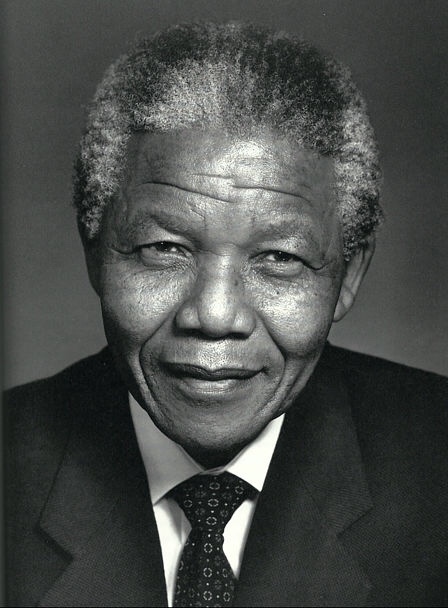
If this makes you feel gloomy I can offer one striking example of hope trumping fear. That example occurred in the Republic of South Africa where, under Mandela, the black majority gained power. White had long resisted black rights; there’d be chaos, a bloodbath was inevitable. Black assumed power through the ballot, not by bullets. Although plenty of disorder followed, the feared bloodbath never took place. The explanation? I think Nelson Mandela was the explanation.

Humanity will need more Mandelas.

Only Connect


The marathon began, like all my best marathons – and like all my worst – after too little sleep and too much coffee. Even before I start I know I will learn something today. Every marathon brings its own teaching.


I run alone. I train alone. All my running comrades have aged and retired, some defeated by injury, others redeemed by family. Alone, but never lonely, today least so, with friends waiting at Mile 23 and wife and kin at Mile 25. My wife Annette had her fill of marathons decades ago. The novelty of travelling to an inconvenient, often inaccessible rendezvous and waiting there for some hours just to sight and greet and embrace and encourage a sweaty spouse has worn off. Yet today bears the promise of Annette.


Fifty thousand-plus of us runners moved by ferry and by bus to Staten Island, New York’s forgotten borough. All had drunk copiously from early morning, against the inevitable drying out of our bodies during the run. After 90 minutes on the bus we debarked, bladders groaning, seeking relief.


I looked around me. I saw bushes aplenty but of toilets I saw none. The official marathon booklet warned us runners (on pain of disqualification!) not to use the bushes. I found a very long queue leading to the portable toilets which bore the name Royal Flush. I jiggled, moving from one foot to the other. Looking up, I saw many others in this queue and in others adjacent, dancing the urinary gavotte.


(I know no way of reporting the grit of the marathon without dealing with the seamy reality of the body. When we mammals run our bodies heat up. To contain that heating, a dog will pant, but we human mammals sweat. By the end of the marathon the human kidney is under siege from breakdown of muscle protein, the circulation struggles to compensate for dehydration, toes purple and balloon as blisters fill with blood. Elsewhere, armpits and scrota shed skin, nipples bleed, bladder walls abrade each other and haemorrhage into urine already laden with albumin and urea. The runner eliminates a scant flow of disreputable gravy. Great runners are not immune: champions of major marathons have voided into their shorts, have shat themselves when their bowels outran them, and/or shed public menstrual blood on their way to victory. It’s not a glamorous sport.)


The morning was crisp and bright. The sun streaming through the window of the bus had warmed me luxuriously, but once out of the bus I crisped up nicely. Dunkin Donuts make a drink they call coffee and Americans pay good money to drink it. For us runners the drink was free. I welcomed it for the warming. My Wave in the marathon would not start for two hours, so I sat in the lee of a large tree and read the Book Section of the New York Times. A thin lady with fair skin, her freckles pale in the sunlight, wore a shirt blazoned with the dying words of Pheidipides, ‘Rejoice, my friends! Ours is the victory!’ The young woman claimed Pheidipides as her running inspiration. ‘Mine too’, I told her. She said, ‘I tell the story to my little girls, but I don’t dwell on his dying.’ Soon we were talking about books and favourite authors, and time trickled away pleasantly until Marshalls called my Wave to the starting corral. I suppose that was the story of my day; simple connection with another that would blind me to small things like tedium and pain and tiredness.


The day, like the poets, starts in gladness and ends in madness. Events, faces, sounds, sights and crowds merge into montage. Memory becomes a scrambled egg. A body starts out full of running, it sobers and slows, it falls into a plod, later it labours, only to speed up again, endorphin-fuelled. By the end of the race I remember all, but chronology blurs.


Every runner contemplates three distinct finishing times – the one most likely; the acceptable slower time; and the secret time, very fast, of the runner’s dreams. A couple of months ago I ran in Alice Springs with an injury. I completed the 26.2 miles in 344 minutes, equating to a mile every 13.13 minutes. Feeling fitter now and more hopeful, I dreamed of running this marathon in eleven-minute miles. A marathon is one of those things dreams are made on.


One thing certain: if I run more quickly than I can sustain I will regret it later. With my mind full of calculation, I heard a cannon fired somewhere in the distance. Runners shuffled forward towards a Starting Line none could see, the roadway rose beneath our feet and abruptly we were running up the long incline of the bridge over the Verrazano Narrows. I tried to forget how high we were above the waters. I tried not to run too fast. I noted with dismay the rough, harsh concrete surface that jolted my joints with every step.


I looked from one to another of my fellow runners in all their heterogeneity. (That’s another secret – distraction by the human landscape.) I saw we were thin, we were fat, we were tall, we were short, we were of all races; some of us were twisted, some wasted, some blind; one ran upon a metal spring in place of a foot; we were young, we were old – one runner older still, for on his back I read, ‘Born Before WWII.’ The man was weedy, his trunk narrow and his hair long and wavy, a white savannah. He radiated a perky energy, his marionette limbs jerking along effectively at roughly my own pace. After a time I lost him but we were to cross paths repeatedly over the coming hours.


We descended from the bridge into Brooklyn where the first of countless New Yorkers came out to bless us and feed us and celebrate us as we passed through their multifarious neighborhoods. Those New Yorkers held aloft signs. Some named their hero: ‘Daddy, we’re proud of you!’ ‘Miss Jones, Grade 4 think you rock.’ ‘Lucy, marry me. Please shower first.’ Others were philosophic: ‘Pain is temporary, glory is forever.’ ‘Pain is temporary, Facebook is forever.’ And, ‘Pain is just French for bread.’ 


And one sign humbled me with, ‘Stranger, I salute you.’ (The shock of the true. Who is this who speaks thus to my soul?)


I was dreaming I suppose when a sign told me I’d run three miles in 29 minutes. Too fast! I knew already my hope of a good time was ruined, the work of mutinous legs and wild ambition.


Bluetooth carried music through my hearing aids. Suzanne started me, followed by Sisters of Mercy, then Hey, That’s no Way to say Goodbye, So Long Marianne, and so on, through the Leonard Cohen songbook, eighteen songs over one hour and 18 minutes. From the Start on the bridge from Staten Island the entire album carried me into Brooklyn, but not beyond. This, I realised, would be a slow marathon of many albums. “Graceland” next.


Numerous young women brandished warning signs: ’Run faster, I just farted.’ (How rude.)

A tall black man at a pedestrian crossing held a sign that urged the endless passing stream, ’Speed up. I’m waiting to cross.’ (I larrfed.)


We runners too wove a legible thread, of words worn on our bodies, some playful, some sombre. I read tee-shirts as I ran. Cancer was condemned, Muscular Dystrophy unpopular, diabetes damned.  When I read ‘Pancreatic Cancer’ – remorseless killer of numerous close to me – I gulped. Quite a few runners simply wore the two names, ‘Martin Richard’, without elaboration. Those names rang a bell from Boston, 2013; Martin Richard was the 8-year old boy blown up by the gormless younger bomber. The photograph in the papers showed a child standing on the pavement, gazing outward; behind him a young man in a peaked cap, at his feet the fatal backpack. That was Memorial Day in Boston, 2013, the day our folly lost its innocence.


Other signs memorialized a friend or parent – ‘This is for you Dad’ – occasionally the name and likeness of a child lost to cancer. ‘Charlene 10/13/08 – 2/9/14.’ All lightness sinks when you run behind that shirt and you contemplate the heartsickness of the wearer. Others wore the names of the Pittsburgh Eleven. (I was one of those.) 


After I’d run a couple of hours an ugly low bridge loomed ahead. That bridge (by name, Pulaski)  obeyed New York’s Law of Concrete Bridges, which ordains a cement surface, pitted and rutted, intensely hostile to the runner’s foot, ankle, knee and hip. The bridges of New York City are many. Next comes Queensboro, the great bridge from Queens to Manhattan. Lying in wait are the Willis Avenue Bridge and the Madison Avenue Bridge. The five bridges of concrete reality.


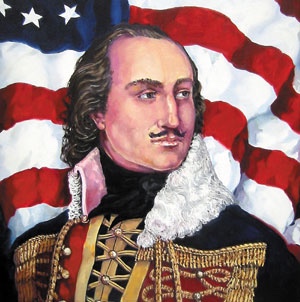
The Pulaski marks 13 miles, the halfway mark. By all accounts Mister Pulaski was a good bloke: 
www.polishamericancenter.org


[Kazimierz Pułaski, (English Casimir Pulaski, born March 6, 1745, Warsaw, Poland—died October 11/15, 1779, aboard ship between Savannah, Georgia, and Charleston, South Carolina, U.S.), was both a Polish patriot and U.S. colonial army officer, hero of the Polish anti-Russian insurrection of 1768.]


Good bloke or otherwise, to the runner, Pulaski means fatigue. By this point 13 miles felt to me quite sufficient. A tee-shirt ahead of me agreed: “Why didn’t Pheidipides fall at 13 miles?” Up, jolting and wincing, up Pulaski and over, and there, two-and-a -half miles ahead rose the great metallic arcs of the vast Queensboro.


In the company of The Boy in the Bubble I started the long climb. Into Graceland and beyond I climbed on. With Diamonds in the Soles of her Shoes I climbed still. Outside my earphones the world was quiet. Runners ran and breathed and grunted with effort. No crowds on the bridge, no wild animating distractions.


In the quiet I sensed my lips were moving, Hebrew words emerging. “Hear O Israel, the Lord our God, the Lord is One.” I am my sole self, again and ever the four-year old child reciting the creed. From that time I’ve recited that initial verse of the “she’ma”, twice daily. From that age I’ve known it to be the final prayer of the Jew at the moment of death. Why now? Why here? Perhaps it’s the relative isolation of these miles on the bridge, perhaps the mere mechanics of plod induce trance. I cannot say, beyond noting how, as I walk or run this earth, ancient prayer will surface unbidden. Liturgy-laced, my life has been framed by the times and seasons of the prayers.


I ran on and I heard my mouth say, “Uvlechtcha baderekh”, and I heard my father teaching us small kids, “And you shall repeat them unto your children, and you shall speak of them as you sit in your houses, as you walk upon the way, when you lie down and when you rise up…”


On and up, on and up, Under African Skies I ran, on and up, Homeless and joint-shaken until the top where the road ahead was blocked by a huge red firetruck. The truck revved us up, its deep horn blasting, booming, blasting. Legs took heart, the road sloped down and to the left, freewheeling I allowed my speed to pick up as I jolted the long mile down to Manhattan.


In four previous NYC Marathons, First Avenue always defeated bonhomie. Debouching from the Queensboro Bridge, we ran into an ambush of ecstatic goodwill in First Avenue, with crowds wildly excited at our arrival in Manhattan.  Manhattan! – a name to conjure with, name of the great centre of excitement that is New York. However, runner beware:according to an article in the New York Times, Manhattan is derived from the local tribal language word Mannahatta, with a likely meaning, “island of many hills.”


Erst, the excited crowds were brief and the Avenue long. Crowds would thin, muscles flag, spirits wilt and on we’d run, and on, towards a distant island of further desolation, The Bronx. No desolation today: today the crowds do not thin, enthusiasm blooms at every side, the sun shines upon spectator and hero alike. Spectators in wild array, in every mode and manner of dress, watchers in love with their particular hero, in love with this stranger that is within their gates. The sun warms them, large plastic beakers of lager cool them and their cup runneth over. 


I’ve claimed often I’m the world’s slowest runner, adding, ‘a good walker will beat me’.  Here at 18 miles I see my words made flesh. Striding at my left a compact young woman (they’re all young now) walks smoothly past while I runshuffle on.


And here’s music!  A bunch of schoolgirl drummers, exuberant in sky blue, drummed and danced us up First Avenue. Harlem, where runners’ limbs are leaden, boomed to the beat of rappers. Everywhere rock bands with driving guitars and belting vocalists shook us as we plodded along, revving us up. All music up-tempo. In Brooklyn a Spiritual choir outside a church (emblazoned with the Star of David – go figure) flung soaring soprano sounds into the heavens. 


At twenty-two miles I overtook a young woman whose shirt read, ‘Running for Two.’ Apprehensively, wondering who she’d lost, I asked, ‘Will you tell me who else you run for?’ Her face lit up as she pointed to her belly: ‘My baby. I’m 10 weeks today.’ ‘Your first?’  (I meant the baby). ‘Yes’ – another bright grin – my doctor gave me the all-clear. (She meant the marathon.) The woman’s sheer delight infected me. Today, a maiden marathon, in 30 weeks a new human, born to love.


At length the golden light began to fade and the day cooled. At the same time my running slowed further and I too began to cool. I was heading up Fifth Avenue now, not that Fifth Avenue where every shop sells goods you don’t need and cannot afford, but a sylvan Fifth that curves and hides in the beechen green of Central Park.


Mile 22, mile 23, a steepish little uphill and I look around into the collar of crowd for a face I know. A doctor who has ministered to my family since my eldest daughter was 12 – that’s thirty-four years – has promised to meet me hereabouts with iced coffee. A voice roars from my left, ‘Howard!’and I totter over and accept a pint of the magic fluid.’ Brian and I shake hands, Onella beams, other voices from faces new to me tell me how great I am. And recharged with water, sugar and caffeine I’m of a mind to agree. Feeling at least a little greater I plow on, on toward another rendezvous.


The road curves and dips, the crowds are excited, solicitous, effulgent with love that seeks an object. ‘Nearly there! Nearly done!’ – they scream. People peer and read my shirt: ‘Australia! Australia! – seemingly exultant as their love is requited. 


The crowds bring me back in time to the marathons I ran with Melbourne Marathon Legend (his actual, formal designation) Manny Karageorgiou. The Melbourne crowds adored Manny, as he transcended his malignancy, time and again rising from his bed to run Melbourne, while his Greek soul dreamed ever of running the Athens Marathon –  the Marathon marathon. Manny died last year, his dream unrequited. Two weeks from today his son Panayioti will run Athens in Manny’s stead.


Mile 25, and when I sight upon my right a head of curls atop a short female form, I know I’ve arrived. My wife Annette runs from the verge, arms wide, smiling wide, and although there remain 1.2 miles to the Finish, I’ve arrived. I fall into those open arms and fold that small person and sob. A red head of curls at Annette’s right and a silver head at her left tell me my faithful sister Margot and my brother-in-much-more-than law John, are here too. Margot feeds me oranges that come all the way from China as I hold on to Annette, holding on for love, and holding so I won’t fall down. After a time I de-clutch and run on. And as in all my NYC Marathons, Margot runs alongside. The final mile and-a-bit are dull but painless. Nothing hurts as I crank the limbs into a jerky sort of sprint to the Line.
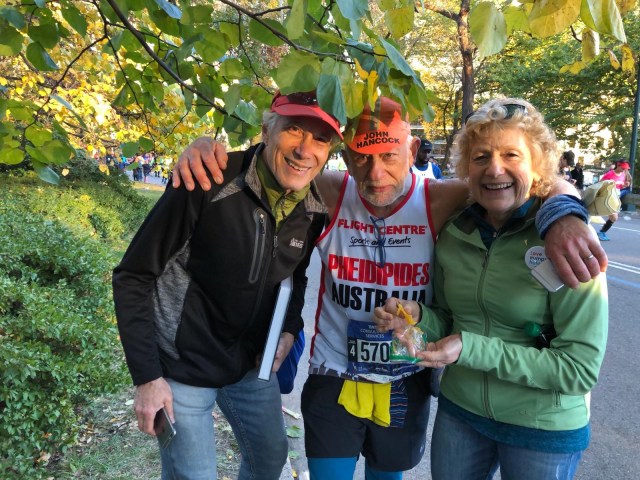


But someone else has fallen down. Mister ‘Born Before WWII’ lies face down on the bitumen. Gently, ever so gently, two large cops of the NYPD raise him from the road. His nose is bloodied but his smile is undimmed. ‘No, no, I don’t need a medic. No, I’m going to finish.’ With a cop cradling each arm, but under his own steam, the old man totters on. He will finish.


And as for me, my arrival happened before the Finish, back at Mile 25, back in Annette’s arms. I hurtle now across the Finish Line of diminished relevance, happy before I reach it. They give me a medal, they drape me in foil, they throw a blanket about me, but nothing hurts, nothing chills in this arrival, this return.
Appendix

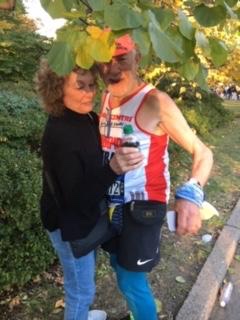
And for the record Pheidipides Goldenberg, runner bib no. 57072, finished the  NYC Marathon in 5 hours, 34 minutes and 40 seconds, coming 118th of 231 runners aged between 70 and 75 years; 993rd of 1147 Australian runners.
The fastest Australian was Lisa Weightman (former Olympian, formerly Ondieki, nee Weightman), finishing in 2.29.11.
The fastest Australian male was Jarrod McMullen, finishing in 2.36.11.
The following day Jarrod crossed the North American Continent and the Pacific in 22 hours, seated next to Pheidipides Goldenberg, who crossed in the same time.