Of Chillis and Medicine

It was early in my medical career when I first encountered the diabolical burn of the chilli pepper.
A Greek man ferried, carried, hurried his screaming child down the driveway of our home to the side door that admitted patients to Dad’s consulting room. The child’s round cheeks were red, his eyes streamed, his left upper and lower eyelids were scarlet. The father’s distress equalled the child’s: grief and fear contended in his broken speech: Is doctor house? Too much paining! My son, he burn… Terrified – I was fourteen, and although self-apprenticed to Dad, I knew I was out of my depth – I opened the door and stammered over my retreating shoulder, Doctor will come soon, I’ll tell Mum. The man wept, rocked his child, rocked himself, his tears fell, mixing with his son’s.

Mum hurried and said kind, calming things. She fetched damp cloths and wiped the boy’s eyelids and his lips, swollen like plums. Afterwards Doctor did come, gave an injection and peace returned.
Mum explained, The boy thought the red chilli pepper was some sort of lolly. When it burned his lips he cried. Then he wiped his left eye with his chilli hand. He must have rubbed the right eye with the other.

All that happened a long time ago. I was reminded of it today as I peeled and chopped mango for a lime and mango fruit salad. I sucked a lot of mango pips, I slurped the juicy flesh from mango peelings. And my fingers and palms began to tingle. My lips tingled too. Soon tingle turned to burn. I looked at my fingers, all red and juicy and I remembered the day I prepared mango mousse for twelve. That day a dozen mangoes bled onto my lips and hands; and today my skin remembered. I had disregarded the warning at the end of the recipe to protect my skin with rubber gloves. The recipe closed with the words, both the mango and the chilli originate in Latin America. They are botanically close.
The word recipe is one a doctor uses with every prescription: the large R stands for the instruction to the compounding pharmacist, Recipe – please make up the following recipe. I did some doctoring today as well as some cooking. I claim to be a bold cook, not a good one. My family are bold eaters and candid critics of my cooking, just as they are of my healing. They will tell me after dinner what they think of my recipe.

Dinner with Some Old Teenagers

Word reached me, and when it came, it came obliquely. My writer friend in England, Hilary Custance Green, forwarded a letter that had reached her by way of one or another of the virtual media. ‘I wasn’t certain what to do with this,’ she wrote, ‘I thought it might be spam, but I decided to forward it, just in case.’ The writer of the letter asked Hilary if she could forward it to her old doctor. The letter bore strong feelings that had brewed and bubbled within the writer over years.
‘Dear Dr Goldenberg, I don’t know if you remember me but I remember you and I have wanted to contact you for a long time.’ There followed the remarkable declaration that my actions had saved the writer, now aged fifty-five, when she was a girl of seventeen. She owed her present happy life, she wrote, to my intervention, as well as the help of some others around that time. 

The letter, and the memories it evoked, thudded, jolted within me. Yes I did remember the girl, firstborn of three, trapped in a hell where her violent alcoholic father abused all in the home. I remember the face, fair skinned, the coronet of fair hair. And her brave, fugitive smile. 

I read on, and as I read the girl’s name came to me, a diminutive in the Australian way, never Anna but ‘Annie.’ Annie’s father was a helpless, hopeless drunk, and when drunk prone to unpredictable extremity. Annie would await his return from the pub with dread, hoping he’d keep away, hoping helplessly her mother and sisters would be safe. She’d have fled the family home long before but father had screamed and waved his gun at her. His words – ‘If you try to leave I’ll shoot you and the others and myself’ – shocked me. Uselessly, helplessly, I trembled for the child. The child confided she never brought a friend into that house, for fear of the shame. She told me these things, forty years ago, and I recognised a further shame, even deeper, Annie’s self-disgrace to be ashamed of her own father.    

In her letter Annie reminded me of the Saturday night she finally escaped. Father had drunk all that day and into the night. Annie sheltered in her bedroom but when father burst in she ran from him, wearing only her nightclothes. Father screamed behind her, ‘You’ll never come back into this house, girl!’ The girl walked through the early hours, avoiding exposed places. She found herself in the deep dark of a railway culvert and, terrified in that blackness she decided, ‘This is where I’ll have to sleep from now on.’
Annie wrote, ‘I walked to the clinic and laid down and waited there for you to arrive. You’d always been kind and understanding. I knew you worked the Sunday mornings. I didn’t have anywhere else. You took me in when you arrived and after work you drove me home so I could safely collect some clothes. Then you drove me to a refuge.’

Annie’s account of that last-first morning was only dimly familiar. I felt small stirrings of pride, and a tenderness for the girl in the nightdress. Much stronger was my shock as I realised I had not thought of her since the ‘rescue.’ Annie had disappeared from the days of those busy years. She had lived, thrived, suffered reverses, sought salvation, recovered, blossomed, become the assertive woman her mother could never be, married happily and raised children, good citizens, and now saw grandchildren. Forty years and no thought by her wonderful caring doctor. That child had come into her own and that doctor had reached his prime and passed it.
Perturbed, I wrote to Hilary to thank her for sending word, for her gift.
The word found me in the outback. I wrote to Annie, giving my phone number and told her I was anxious to speak to her. My phone rang as I rode my bike across the railway line. I dismounted and answered and the voice said it was Annie and for twenty minutes I listened to her narration of the events of a turbulent life. We agreed we’d meet after my return from the outback.
In the exchange of emails that followed a second voice entered, followed by a third, then a fourth. Later a fifth and a sixth made contact. The writers, all roughly contemporaries, had been my patients in their teenage years. Each bore a burden of recollection which pressed now to be discharged.

Three women, matrons now, waited for me at the restaurant. I opened the door to faces that shone. I saw three faces of girls in their teens. I stepped forward and found myself clasped. Lined faces kissed mine, ample bodies held me close.

We sat. The women said how young I looked, I said how good they looked. The past was with us, the past with its beauty and its horror. The past, reverberating with friendships I had forgotten and the three had remembered. 
How had I forgotten?
The waitress came, hovered, departed. Again she came and we promised we’d soon choose and order. It was not soon. Forty years here, twenty there, so much event, so much life. Babies – it turned out I had delivered them – were now adults, some even parents.  
The waitress returned. Jerked into the present we ordered.

Girls Numbers Two and Three are sisters. I asked after their parents, immigrants, older than me by ten years, proud people, beavers in the general community and within their own. Mum was alive, still vibrant – ‘and fat, like all of us!’ Shrieks of laughter. And Dad?

‘Dad’s fat too, and dementing. The grog; it’s Korsakov’s.’ The speaker is Number Two, now a nurse. In the care of their aging parents she’s the officer commanding Number Three and their brothers. 

Both Three and Two were married when I last knew them. They’d married matching buffoons, agreeable blokes when sober, not often sober, not often enough agreeable. Three spoke: ‘Even before we married I saw how my father in law treated his wife. He’d tell her she was stupid, shout at her to shut up when she spoke. One time I saw him belting into her – he was full as usual. I froze. We never saw that. Mum and Dad would drink a couple of gins after work but they never got nasty. Not like that.’ 

Memories returned to me of the mother in law. A tall trembling lady, her face pink and scarred, she’d address me in a soft trembly voice, describing symptoms I could never fathom, never cure. Now I understood.

‘It wasn’t too long before Robbie was getting aggressive like his Dad. He’d go to the pub after work, get full, drive home drunk. I had my first girl, then the second. I thought, “No. This isn’t what I want for them, not what I want them to see.“ I rang Robbie and I said, “Don’t hurry home you drunken bum. Your wife and your kids have split.”’ Peals of laughter from Three, far the widest at our table. ‘Did he ever hit you?’ – I wondered. ‘Lot’s of times, but I’d belt him too!’ More jolly mirth. Three sits opposite me, her great arms a gallery of art in brilliant reds. Finer tattoos crawl upward from her bodice, another spiders around her neck.

‘Weren’t you scared, leaving him?’

‘No.’ The thought is a stranger to Three. She stares at my unexpected question. ‘There was no future there. I got up, took my girls and went.’

Did I raise an eyebrow? I certainly wondered at her resolve, her clarity. Her fearlessness. ‘Yeah, money was tight. I got a job and I worked and I looked after my girls. They’re good. Their blokes are lovely. And the three of us, we’re very close. Like me and sis here.’ The two women looked at each other and smiled.

Two reminded me: ‘I was a mother at nineteen. Got married. You delivered my babies, Howard. I was in labour, terrified, not knowing anything. You got up on the bed beside me and stroked my back.’ Did I? Nowadays the Medical Board would caution me for this sort of thing. They’d require me to undergo Education.

Two continued: ’You know everything about us. You’ve seen all our vaginas!’ Careless in their merriment the girls showed none of the self-consciousness that saw me look down and blush. ‘I’m diabetic now,’ continued Two. ‘But I’m good. After I left my husband I worked as a nurse, you know, State Enrolled. When my kids were adult and near-adult my partner encouraged me. He said, “You’ve always wanted to study. Do it.” So I did. I studied nursing at Melbourne University. Boy that’s a gap – from Victoria Uni to Melbourne. But I did well…’

‘Got Distinctions’, Three’s voice was proud.

‘I did all of it on scholarships. I had to perform. They can take the scholarship away if you get bare passes. Now I’m specializing in Mental Health, in charge of the ward. I love it.’

Three told me how she too had always worked in health, in administration. She described without bitterness how, after eighteen years, her institution had managed her out of her job and into retirement. ‘Now I write poetry. I go to Creative Writing classes. And every Wednesday I post a poem on Facebook. Wednesday is the hump of the week. I call my readers, my “humpies.” Here’s this week’s poem’. Three handed me her phone where I read her tidy quatrains. The verses spoke in anticipation of this gathering, in praise of the poet’s doctor, his kindness, his understanding. Blushing again I came across a ‘Like’ in response. The author of the Like was Four, another ex-teenager whose family I’d been close to. Four wrote, ‘I remember how Dr Howard comforted me when Karen died.’ Another thump. 

I remembered Four, a striking girl with olive skin, tight black curls, a smile that made you feel like singing. I remembered Karen, Karen who was lost, that sparkling child. Karen was in the car that drove to the pub in the bush hamlet twenty kilometres distant from my country practice. The pub filled the young driver up with grog and watched him drive the carful of friends home. How many died when the car missed the bend? Four? Five? Karen was extinguished in that crash. I remember speaking afterwards with Four. Was she the only one I was trying to comfort? I think I was trying to comfort myself too. A year or so later another young driver killed himself driving home from the same pub. His passenger suffered a fractured neck, became quadriplegic. From that time until left I doctored the human wreckage. And my rage burned against that pub. I nursed a futile wish to close it down.
*** 
The girls spoke of the men in their present lives. Annie had formed a lasting union with Ian that prospers still. She showed me the album her family made for her fiftieth birthday. Here were Annie’s mum, Annie at fifteen, Annie’s own grown children, Annie with Ian. I saw a tall man, angular and strong-looking, with a craggy face. Two and Three spoke warmly of their own blokes. All three had known some duds but the ‘girls’ bore no hostility to the male race. When, at the conclusion of the evening, Ian turned up to drive Annie home he towered over me. My not-small hand was lost in his handclasp. Instantly likable, solid as a wall, he smiled and I felt gladdened for Annie.

Two asked Annie: ‘Have you ever seen your father again?’ Quietly came the reply: ‘I always vowed I never would. Then four years ago he wrote to me, to all of us, Mum, my sisters. He said he was dying, in Mallacoota. His heart was failing, from the grog. He wanted to see us. Mum wouldn’t come, neither would my sisters. But I thought, “He can’t hurt me now.” So I went. He talked and he talked, poured out his side of our lives. He lay on the bed and asked me to lay by him and cuddle him.’ 
I looked at Annie, my eyes wide. 

‘I thought, “He can’t hurt me now. He’s old and he’s dying alone.” He’s got a partner but she’s not his blood. It’s not the same. I climbed up beside him and I held him. We laid there together for a good while. After a couple of days I went home. He died two weeks later.’
Writing as Healing

The mother of identical twin boys sent me this story by Ranjava Srivastava.


“Losing my twin baby boys for ever changed the way I treat my patients.

I will never know the kind of doctor I would have become without the searing experience of being a patient, but I like to think my loss wasn’t in vain.

‘My obstetrician’s tears stunned me but also provided immediate comfort. They normalised the mad grief that had begun to set inside me.’
Around this time 10 years ago, I was poised to start my first job as an oncologist when personal tragedy visited in a way that would forever change the way I would practice medicine.

I had returned from my Fulbright year at the University of Chicago, blessed with only the joys and none of the irritations of being pregnant with twins. Landing in Melbourne, I went for a routine ultrasound as a beaming, expectant parent. I came out a grieving patient. The twins were dying in utero, unsuspectedly and unobtrusively, from some rare condition that I had never heard of. Two days later, I was induced into labour to deliver the two little boys whom we would never see grow. Then I went home.

If all this sounds a little detached it is because 10 years later I still have no words to describe the total bewilderment, the depth of sorrow and the intensity of loss that I experienced during those days. Some days, I really thought my heart would break into pieces. Ten years later, the din of happy children fills our house. But what I have found myself frequently reflecting on is how the behaviour of my doctors in those days profoundly altered the way in which I would treat my patients.

An experienced obstetrician was performing my ultrasound that morning. Everything was going well and we chatted away about my new job until he frowned. Then he grimaced, pushed and prodded with the probe, and rushed out before I could utter a word. He then took me into his office and offered me his comfortable seat. Not too many pregnant women need a consultation at a routine ultrasound.

“I am afraid I have bad news,” he said before sketching a picture to describe the extent of the trouble. I thought for a fleeting moment that my medical brain would kick in and I would present him with sophisticated questions to test his assertion that the twins were gravely ill. But of course, I was like every other patient, simultaneously bursting with questions while rendered mute by shock.

I was well aware that doctors sometimes sidestepped the truth, usually with the intent of protecting the patient. I knew he could easily get away with not telling me any more until he had more information but I also knew that he knew. I read it in his face and I desperately wanted him to tell me.

I asked the only question that mattered.

“Will they die?” 

“Yes,” he said, simply holding my gaze until his tears started.

As I took in the framed photos of children around his office he probably wished he could hide them all away.

“I don’t know what to say,” he murmured, his eyes still wet. 

Until then, in 13 years of medical training, I had never seen a doctor cry. I had participated in every drama that life in bustling public hospitals offers but never once had I seen a doctor cry.

My obstetrician’s tears stunned me but also provided immediate comfort. They normalised the mad grief that had begun to set inside me. Yes, the doctor’s expression said, this is truly awful and I feel sad too.

“You are sure?”

“There is a faint chance that one lives but if you ask me, things look bad. You know I will do everything I can to confirm this,” he said.

The obstetrician had told the unflinching truth and in doing so almost surgically displaced uncertainty with the knowledge that I needed to prepare myself for what lay ahead. I had test after test that day, each specialist confirming the worst. I think I coped better because the first doctor had told the truth.

Two other notable things happened that week. Among the wishes that flowed, another doctor wrote me an atypical condolence note. His letter began with the various tragedies that had taken place that week, some on home soil and others involving complete strangers. “I ask myself why,” he wrote, “and of course there is no answer to why anyone must suffer.”

Until then, everyone had commiserated only at my loss – and I was enormously grateful – but here was someone gently reminding me that in life we are all visited by tragedy. All the support and love in the world won’t make you immune to misfortune, he was saying, but it will help ease the pain.

Finally, there was the grieving. I lost count of the pamphlets that were left at our door to attend support groups, counselling sessions and bereavement seminars but we were resolutely having none of it. My midwife called me out of the blue – it was a moving exchange that taught me how deeply nurses are affected too. But I didn’t need counselling, I needed time. I valued the offers but I knew that my catharsis lay in writing. I wrote myself out of suffocating grief, which eventually turned to deep sadness and then a hollow pain, which eventually receded enough to allow me to take up my job as a brand new oncologist. How I would interpret the needs of my patients was fundamentally altered now that I had been one myself.

Cancer patients are very particular about how much truth they want to know and when. I don’t decide for them but if they ask me I always tell the truth. A wife brings in her husband and his horrendous scans trigger a gasp of astonishment among even the non-oncologists.

“Doctor, will he die from this?” she asks me.

“I am afraid so,” I answer gently, “but I will do everything in my power to keep him well for as long as I can.” 

It is the only truthful promise I can make and although she is distressed she returns to thank me for giving her clarity. Sometimes honesty backfires, when the patient or family later say they wanted to talk but not really hear bad news. I find these encounters particularly upsetting but they are rare and I don’t let them sway me from telling the truth.

Oncology is emotionally charged and I have never been afraid of admitting this to the very people who imbue my work with emotion. I don’t cry easily in front of patients but I have had my share of tears and tissues in clinic and contrary to my fears, this has been an odd source of comfort to patients. In his Christmas card, a widower wrote that when my voice broke at the news that his wife had died he felt consoled that the world shared his heartbreak.

It can be tricky but I try to put my patients’ grief into perspective without being insensitive. It’s extraordinary how many of them really appreciate knowing that I, and others, have seen thousands of people who are frightened, sad, philosophical, resigned, angry, brave and puzzled, sometimes all together, just like them. It doesn’t diminish their own suffering but helps them peek into the library of human experiences that are catalogued by oncologists. It prompts many patients to say that they are lucky to feel as well as they do despite a life-threatening illness, which is a positive and helpful way of viewing the world.

I will never know what kind of a doctor I might have become without the searing experience of being a patient. The twins would have been 10 soon. As I usher the next patient into my room to deliver bad news, I like to think that my loss was not entirely in vain.” 

……… 

I read this story with alarm. It made me feel anxious because I have and love a pair of identical twin boys. I felt involved because, like the writer’s doctor, I am a doctor who cries; and like the writer, Dr Srivastava, I am a doctor who writes. Finally we two are products of the same medical school (Monash) – Dr Srivastava graduated at the top of her class, in the present century, I graduated at the opposite end of my class, in antiquity (1969).

A final point of commonality was her reassuring remark that ten years after her doctor wept her home is full of the noise of happy living children.

I found the piece helpful. Dr Srivastava identifies and untangles the strands of her experiences with surgical deftness. Her doctor weeps, her colleagues show support and care and empathy and she heals. As a trained observer, the writer dissects her experience of grief, lays out its anatomy and reflects upon its organs and parts.

Like the writer, I find relief and understanding in the act of writing. I suspect that a part of this relief results from word search. The writer is obliged to seek the precise word for the experience. In my case this forces me to test and taste a number of words. Perhaps a dozen words might work more or less passably, but the acts of searching, of choosing, of trialling, help me to clarify what my feelings were not quite like. I mean I discover what I mean. Perhaps this functions as a working through, a self-conversation, something between analysis of an experience and re-imagining it. In my case too, the pleasure of words is an aesthetic joy that comforts me.

Medicine is a pursuit conducted with the living in the shadow of death. It is a pursuit packed with anxious questions: what is wrong with me, will I die, what can be done, will it hurt, how much, how will I know the answers, when will I know? This crying doctor feels the patient’s fear and his own and has to know the border that divides the two. My fears are for the patient, of the patient, of failure, of failing a person of flesh and feeling. My fears include the terror that strikes me when I see my patient slipping away, the knowledge of my mortal inadequacy.

The writer who lost her twins precisely names the elements in her emotional experience. With remarkable poise she traces the costs and the benefits of the loss. So coherent are her reflections I could feel myself learning as I read. I learned about her life and her work, how the two are not the same but never severable. I learned more of how a doctor feels, who she is, who I am.

Jeremiah Jan

She sits in the waiting room, reading. Any patient who enjoys a good read will enter my consulting room in a good mood. I do allow my patients time for a very good read.
The book she reads from is thick, with old-fashioned morocco covers and red-tipped pages. Looks like the Bible! She doesn’t look mortally ill. Perhaps she’s mortally afraid of the new young doctor.
‘Good morning, my name’s Howard.’
We shake hands. Her hand is fair, a youngish hand. The owner of the hand says, ‘Hello, I’m Jan.’
‘You’re reading the Bible? Which book?’
‘Jeremiah.’
Jeremiah the cheerless, prophet of doom, a man willing to be jailed for speaking truth to power. Serious reading. Might have been worse, could have been Job.
The serious reader sits down. She speaks: ‘Howard, I’ve come for a talk. I don’t need a diagnosis; if I want a diagnosis I’ll see Doctor Don. I don’t need a diagnosis, I need a talk.’
We have our talk.

Another visit by Jan, another long period in the reading room. Eventually I show her in. We are only about ten minutes into today’s talk when the phone interrupts us: ‘Howard, Doctor Don needs you in the Treatment Room. Now!’
‘Gotta go, Jan. Sorry.’
I go.

When I return, after about twenty five minutes, I resume: ‘So, Jan, you were about seven when…’
‘Howard, you can’t just do this.’
‘Do what, Jan?’
‘Take up our conversation without a break, as if nothing terrible or significant has just happened.’
‘Can’t I? Why not?’
‘You need time, some space. You need to come to terms with whatever it was that was so urgent. You are a person too, Howard.’

In my consulting room, situated at the furthest end of the building from the Treatment Room, Jan would not have seen the frantic mother, the pale plump doll that was the baby, the child inert, lifeless. She would not have felt the body still warm, not seen two adult males breathing desperate air into a new body that would not breathe again. She would not have seen the face of the mother passing through shock to grief to the start of lifelong self-accusation.
Did she perhaps hear sounds of stifled sobs?

Many chapters of Jeremiah and of Job have been read in the thirty-five years since that day. I remember the child, I have not forgotten the mother.
Nor have I forgotten Jan’s instruction.

Small Town

Wide streets, slow talk, visible horizons, unhaste, drinkable coffee, air you can’t see, first prize in the Trap Shoot a ham (second prize two chooks), courteous people, a main street monument to Glenn McGrath, traffic slowing to circle the cenotaph that recalls the one-hundred-year dead, terrain so flat a granite mound (250 metres) is a mountain)*, forty eight social, sporting and cultural clubs (including Writers’ Inc – contact Mrs Shirley Todhunter**), a nursing home full of smiling nonagenarians, churches of wood, the CWA***, a beauty queen crowned Miss Beef…

I like the town.

Walking down the sunblazing main street on a Friday afternoon I pass by three girls slim enough to sit side by side on a single doorstep. All three meet my curious gaze, two smile, one speaks: ‘Good afternoon.’

‘Good afternoon girls.’

Three smiles. These girls, just at the threshold of puberty, haven’t been taught to fear. They smile like their great-grannies who greet me at the nursing home.

I like the town.

In the hospital I treat too many for alcoholism. Ice floods the town, destroying minds, ravaging families. I feel a pang for the three small smilers who did not fear to smile at a stranger.

I come as a gap filler for the doctor who left last week after twenty years of service. The town is in mourning. ‘Will you be staying, doctor?’, the townsfolk ask me.

I don’t like to say no: I like the town.

* Mount Foster.

** I did contact her.

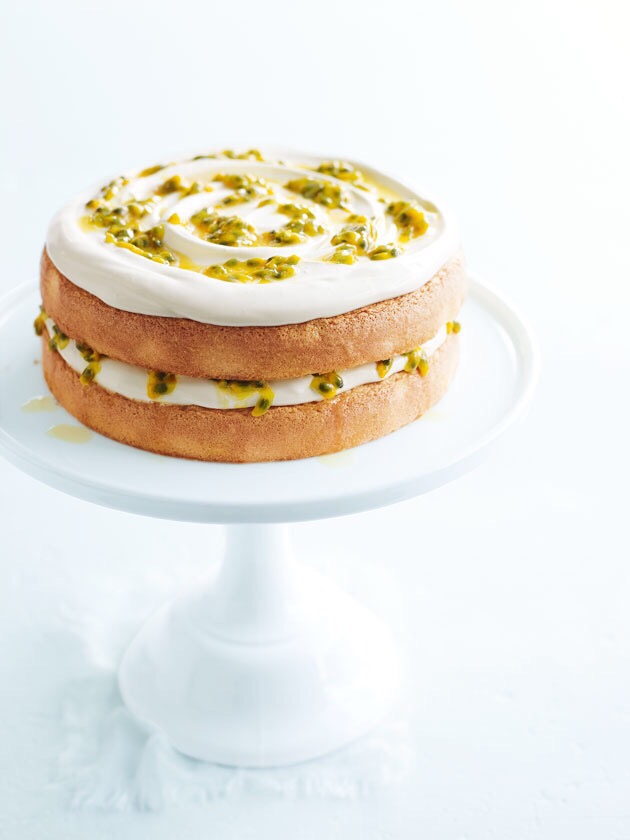
*** If you don’t know the CWA (Country Women’s Association) you have probably never eaten a cream-filled passionfruit sponge cake. If you haven’t eaten a passionfruit sponge, move to a small town and do so.

nevertire of eenaweena

never beenta eenaweena

you’ll never tire of nevertire

when I’ve beenta

eenaweena and nevertire

i’ll have beenta elong elong –

grong grong and matong

were nearer my home town:

I’ve eaten meringue

in wulgulmerang –

in betweena hell,

booligal as well

a long time ago,

in eulomogo;

been alone in quambone

felt at home in gulargambone

done algebra in egelabra

and once in gilgandra

reclined on veranda

and free from hungery

in eumungerie

with grub o from dubbo

found peace, release, ease

at least in burrumbuttock

never felt foreign

in a small town like warren

/home/wpcom/public_html/wp-content/blogs.dir/27f/42161029/files/2014/12/img_4762.jpg

Africans in my Lounge Room

Trudy ushered them in, the two-and-two-thirds doctors from Africa. Tall, beautiful and young, each greeted us in perfect Hebrew: ‘Shabbat Shalom’, a peaceful Sabbath. Three smiles of perfect teeth lit our room on a rainy Saturday afternoon.

First and oldest was Tom, thirteen years a doctor, eight months in Australia on a Bridging Visa. Next came Afia, with 18 months’ experience in Ethiopian hospitals and I don’t know how much time in refugee camps. She too holds a Bridging Visa. Last and youngest was Oprah, the vulgar fraction: she has completed four years of medical studies in the Congo. Her birth country is Rwanda. I did not prosecute her with enquiry about her double expatriation. Like the other two, Oprah subsists in Australia at the pleasure of the government. That means the kindness of Mister Morrison.

All three understand fully they can be evicted from this land of asylum at which ever moment Mr Morrison’s kindness might run out. As none of the three came by leaky boat they have the right to work. If they can get work. Trudy brought the three to us to help them find work. I had invited two august medical friends, superbly connected senior people in their fields.

We sat down and talked. Tom outlined his situation. In his early thirties, married, experienced in hospital medicine and a recognized expert in immunisation in third world countries, he is permitted to work here as a doctor only under supervision. At present this distinguished professional works as a medical menial, washing incontinent bodies in a place for the aged. Tom makes no complaints about the red tape, he is grateful to be here, willing to go anywhere – to the outback, to the western suburbs – he just wants to use his training. Can we help him find work? This expert in immunisation – he is just back from Geneva, where he was summoned by the WHO to a conference – with his rich experience of tropical disease would be a gift to a hospital or a tropical medical school or an immunisation project or in policy in any of our tropical zones.

Afia, aged twenty-seven, came to Australia by invitation, to attend the recent world AIDS conference. She applied for asylum with her husband, a chemical engineer who is also looking for work. They too will go anywhere. Afia wants to be a GP. I pictured our large communities of people from the Horn of Africa with Afia as the needed human bridge of cultural understanding to bring these many to safety. I saw the many Aboriginal communities crying out for GP’s.

Oprah has been here for a few weeks. Trudy has given her shelter. Oprah wants to become a nurse. In this country nursing is university course and monumentally expensive. However asylum seekers can pursue TAFE studies at no cost. Oprah managed four years of a medical degree; nursing will not be beyond her grasp. She’d be able to train as a State Enrolled Nurse at TAFE and from that platform gain employment and support herself while studying at Uni. I work with numerous African nurses, highly appreciated in the outback, where the barriers between the African and the whitefella are as nought compared to the gulfs all must cross in indigenous health.

There was little talk of the revolutions, the wars, the massacres; there was scarce mention of refugee camps; there was no complaint, no sense of entitlement, no pity of self, no cries for the families left behind. None of the three had met the others until Trudy brought them together on Saturday and coached them in the Hebrew greeting on our doorstep. Afia, Oprah, Tom, three islands in this distant country, three shimmering humans simply happy to be here, eager to work, to stand up, to make their way.

Theirs is an old, old Australian story. I saw the Reffo, the New Australian, the Boat Person, the Gold Rusher, the survivor of the Shoah, the Balt on the Snowy Scheme, the student from Tiananmen Square. I saw my wife’s mother, a child fleeing Danzig in 1938, I saw my Grandpa arriving here alone, aged thirteen, a stowaway escaping the Ottoman police in Palestine.

There we sat – three young Africans, three old Australian doctors and one good citizen. An atmosphere quietly joyful, of welcome guests meeting grateful hosts, a current flowing back and forth of appreciative respect. A meeting, in short, of human people.

The next morning my wife and I happened to have three guests for brunch. One of the three, an old friend, works with survivors of torture; the second is a classmate from medical school whom I knew is a shy blonde, now President of the World Psychiatric association; the third is her husband, a distinguished gastroenterologist, now practising in Addiction Medicine. Our refugee advocate friend, his face ravaged, spoke of the horrendous week just past in which the Minister of All Prerogatives (Mister Morrison) sold the freeing of 103 detained children in exchange for numberless others, both adults and children. These others are offshore, in another country, beyond the borders of Australian conscience.

My wife and I told our brunch friends of the Africans in our loungeroom. Five Australians, all thoroughly unexceptional in our impulse, in our wish to help, spoke with eager seriousness of people, places, organisations, of contacts, of opportunities and of need. Nothing new, nothing unusual transpired. Five Old Australians, descended from New Australians, animated by memory and self recognition, each saw ‘mon frère, mon semblable’. I read in Sunday’s paper of the endless tides of Libyans escaping likely death, arriving in Italy where the locals, quite overwhelmed, yet see what our Morrisons and Abbotts and Gillards and Shortens will not: they see the human face and they give the arrivals succour.

In the few days since this human weekend I have tried to reach beyond my customary postures of anger and self-righteousness, to grope for understanding of my hard Government, of my soft Opposition, of my fearful fellow citizens in the electorate. I can only surmise that, somehow, at some time, my representatives and my fellow citizens have lost something they used to see – the image of the self in the face of the other.

An afternoon in the loungeroom with guests like mine might change everything.

She Would Not Look at Me

Only three days following the fall of the twin towers the Israeli author and journalist David Grossman wrote a thoughtful piece that was reprinted in The Age. The first and always casualty of terror – he wrote – is trust. You do not trust your fellow citizen, you feel you cannot afford to. Your neighbour of yesterday might be your enemy of today. Community is the casualty.

In the happy isle in which I live and move and work, terror and war and conflict are seldom seen. Insulated as we have been we could afford still to trust – long after other communities had been rent apart into fractions and fractious factions. So it is that when I go to work at the hospital for sick children, one half of my children come from homes where the first language is not English. There is a bridge of trust between us, where we meet and work harmoniously. Fifty percent of the non-anglophone families are Muslim. The parent looks at me, sees an oldish man in a skullcap. That adult thinks whatever she thinks but receives and returns my asalaam aleikum courteously.
Sometimes cautiously, often gladsome, the adult moves towards me across our bridge of trust and we meet. Minutes later, the old man in the yarmulka is no longer an infidel, a foe: he is just a person who understands the child’s illness and who cares about that child and can help. My guest sees in the Jew a fellow human.

Now the children of Abraham are locked in cousin conflict again. My first Islamic parent identifies himself as Ibrahim. He smiles at his cousin’s greeting and returns it.
Later a tall dignified woman, taciturn, her head veiled, her face exposed, meets the doctor who will treat her child, with evident displeasure. She has no smile. Her daughter’s earache, which has been distressing, is easily diagnosed and will be readily relieved. I know I can help her and within minutes I have. The child is five years old. She does not speak,a mutism that can be explained by shyness, by a lack of English, by illness, or by family custom. But her mother, face tight throughout, spares few words and no smiles for the doctor. After I have explained the nature of the illness, its treatment and its happier future course, there is no thaw. I express the hope and the belief that the child will be soon well, insh’allah.
No smile.
There is a war.
The bridge is broken.

New to the Country

A thin teenage boy limps into my consulting room. His file gives his age as fourteen. He accepts my offered hand and shakes, his narrow face opening into a shy smile. His English is slow, studied, like his gait. Mum, accompanied by a three-year old son, enters with the bigger boy. She is trim, confident in English, smiles readily. This reversal in facility with English is curious: more commonly the parent’s tongue limps in the new language while the child’s races ahead and translates for the parent.

I examine the painful foot which is swollen and tender at the top of the instep. The diagnosis eludes me. “I don’t really know what has made this foot sore. But I can try some treatment which I think will help.”
Fourteen-year old appears happy with this. Mum says, “Thank you.”
The three year-old wanders quietly around my consulting room, locates all its fittings and gadgets, investigates their workings and adjusts all to his satisfaction.

I guess from the family’s surname they come from Vietnam. The older boy confirms this.
I hand the boy a prescription and prepare to write a letter for him to take to his own doctor.
Mother, smiling, shakes her head: “He doesn’t have a doctor.”
“I can write a letter for your clinic and you can take your son there. Will that be OK ?”
“Yes”. Another smile.
The letter written, the family rises to leave.
Mother turns to me. “He has been here in Australia two weeks only. Until now he was in Vietnam. And we have been without him.”
“How long have you been apart?”

“One year and a half a year.”
“Did you miss each other?”
The boy nods. Mother says, “We miss very much. Now happy. Now family all together.”

She thanks me and heads for the door, then adds:”You are the first doctor he sees. Thank you for being so kind.”
At the door, the three-year old folds his arms across his upper trunk and bows.
Mother says: “In our culture that means he show you respect.”

****

Another consultation, this one in 1971. I take a phone request to visit a patient in Altona who has a fever and is unwell. I make my way to the address, which turns out to be the migrant hostel. The sun is setting as I park my car in the enormous parking area. Ahead of me in the gloom I sight squat oblong buildings that proliferate wherever I rest my gaze. All have the same design. My instructions are to proceed to “Room Number Seven”.
But number seven in which building of these many? I cannot know. (Mobile phones have not yet been invented.)
Dismayed, I look around. I see buildings that are anonymous and many. Of residents I see none. Continue reading

Gun and Pelvic Floor Control

My ancient friend (and immensley experienced) colleague in Arizona, Dr Paul Jarrett, is a humane and wise man. Despite our closeness, we do not agree on all matters, in particular, on gun control.
Put briefly, I favour gun control, Paul opposes it.

He forwards me this news item:

“Cops: Teen Had Loaded Revolver In Her Vagina”

It is not that I search for prurient headlines, they find me. Hey, I didn’t make this up.

One can not help but be intrigued by bizarre reports that come our way via the News.

Here for example is an unusual holster for a six-shooter. One wonders how “Quick on the draw” the wearer of such a weapon can become? One would expect that in a teen-ager it would be a tight fit, but one never knows about teen-agers any more.

I would never be able to complete a pelvic exam on this “heat packer”, I’d have my hands up.

PBJ

In this particular case, Paul and I are in agreement: this armed individual is a hazard to herself and to her intimates. Most concerning to us is the danger she poses to doctors.

Mouth to mouth

Once a year your accredited family doctor undergoes retraining in CPR. Commanded to forget previous models she learns the latest tweak, he meets the newest gadget.

It’s pleasant, collegial, unreal.  They practise on a manikin. The plastic model lacks the saliva the pinking agonal froth. There are no dentures to yank out in a fret of haste, no sweat on the body that foretasted its death, no lips of purple grey in a face of grey.

My phone rang. It was a nurse in an outback hamlet no-one ever hears of. I know the nurse. I know her clinic.

“Howard? Thank goodness!”

A great indraft of air.

“There’s been a death. I have to report it.”

“What happened?”

“There was a fight. They’ve been rioting and fighting all week…” The nurse’s voice thinned and rose an octave. She gulped air.

“Someone raced into the clinic and called me out into the street. They said there was a man who was hit and fell and wouldn’t wake up. I looked down the street and I could see him, lying there. I ran and I asked what happened: a witness said he copped a glancing blow to the chin.  He said it wasn’t forceful.

I did CPR. I worked on him for a long while. I’m alone here. The only nurse. A copper helped me.

“Howard, I know him. It was Billy. He’s a lovely old man, gentle, you know. He was an old stockman. He always wore his old cowboy hat and his stockman’s boots. And now he’s dead!.

“Howard, we don’t have a morgue here. What do I do?”

I ran through the formalities, the bureaucracy of sudden death. There was a noise in the background, a moaning, wailing. Behind that, angry voices, shouting.

The nurse listened and took notes. Our conversation neared its end. Her work demanded and pressed but she didn’t seem ready to finish. She would be busy through the day with phone calls to the coroner, to the bush undertaker, and to the director of regional and remote nurses. There’d be the paperwork. And then she’d go home: home to her donger, the bedsitter that is really a shipping container; home to the memory of cold lips and the gentle fellow she liked and she couldn’t bring back.

“Howard, he’s lying here in the clinic. I checked him again in case I was wrong. But there’s no chest movement and I can’t hear a heartbeat. His pupils are dilated and they don’t react to the light. Is there anything else?”

There wasn’t anything else.

“Howard, Billy’s gone and now there’ll be Payback. He’s still wearing his hat and his boots.”