Let Me Die! Help Me!

The right to die has found its voice. Past generations heard little of that claim, the cri de coueur of our day.

I imagine we never wanted to die so much as we do now. In previous times when life was short, brutish and mean we struggled to stay alive. But now Medicine has taken over. Deaths are prevented, delayed and deformed. Few families in advanced societies have been spared the grotesque spectacle of a loved one subjected to medically prolonged dying.

Because we enjoy better health we live longer lives. Because we reach old age we accumulate the mutations that overwhelm our defences. Cancer results. The cancer epidemic is the trophy won for us by medical advances. And so Medicine sets out to fight its ugly daughter. We cut out tumours, we poison them with chemotherapy, we shrink them with X-Rays, we outwit them with genetically engineered antibodies. Many are the gains, great are the costs.

Eventually dying happens.

Death frightened me when I was younger. Now I can see death as a sometimes friend. John Keats nursed his brother through the long death of tuberculosis. Then Keats himself became tubercular. He knew what lay in wait for him: cachexia then death. The terminus he contemplated was like late–stage cancer, the body self-starved, the mind too aware, the complexion ghastly pale, the skin empty, disfigured:

                                                The weariness, the fever, and the fret 

                                                Here, where men sit and hear each other groan; 

                                                Where palsy shakes a few, sad, last gray hairs, 

                                                Where youth grows pale, and spectre-thin, and dies; 

                                                Where but to think is to be full of sorrow 

                                                And leaden-eyed despairs –


Keats wrote dreams of an easy death (in his Ode to a Nightingale):

                                                           Darkling I listen; and, for many a time 

                                                           I have been half in love with easeful Death, 

                                                           Call’d him soft names in many a mused rhyme, 

                                                           To take into the air my quiet breath; 

                                                            Now more than ever seems it rich to die, 

                                                           To cease upon the midnight with no pain, 

                                                           While thou art pouring forth thy soul abroad 

                                                           In such an ecstasy! 

                                                           Still wouldst thou sing, and I have ears in vain— 

                                                           To thy high requiem become a sod. 


When recently I posted ON EUTHANASIA I anticipated readers might react strongly. I was right: most who responded – on–line and off-line – experienced my thoughts as a wound. I learned how a doctor is expected to relieve all suffering. A doctor is a trusted friend. Once the doctor denies his patient her right, she feels he has betrayed her. The wounded person’s gaze is not directed here to the doctor as a moral agent, not as a person entitled to moral autonomy, simply as one who could help, who now, abruptly, at this last critical and defining moment, acts selfishly.

I wrote that changing a law does not necessarily serve wisdom. The reality here is no conceivable law can resolve all of the problems of our competing needs and values. We need relief. We need a doctor who respects our autonomy. We need a doctor who will not sit in lofty judgement.  We need a doctor who will protect life and now we need one who will take life. And we need to know he’ll protect when he should and take when we seek it. The forgotten need is that of the doctor to reconcile those parts of his work. Putting it a different way, if the doctor, in trying be all those things, violates her own being, inevitably she disintegrates. She must give away her integrity. And then all lose.

I read the responses. I felt them, the tremor of the soul that prompted brave, naked, passionate disclosure of self.  My mind went back to deaths I have known, deaths I have conducted. I recalled the baby who aspirated meconium in the birth canal. The baby’s chest heaved as it worked to ventilate lungs clogged with a material of the texture of bitumen. We ventilated him, he did not improve, he did not die. He would not die. Morning after morning I entered NICU and there he was, his skin marbled, his chest rising and falling in obedience to our machine. His life felt like a reproach. We had turned on the machine. I learned then that the decision to bring in the technology is more onerous than to withhold, to wait.

I recalled the first person to ask for my mercy. That person was my mother, the one who had given me life. Mum would have been sixty, I thirty. ‘Darling’, she said, ‘I have high blood pressure, I have high cholesterol; one day I’ll have a stroke. When that happens, I want you to slip me a mickey.’

I understood Mum’s reference to ‘a mickey finn’ – a lethal draught.

‘Mum, NO!’ – was my instinctive response, which I quickly softened with promises to read favourite literature to her.

Twenty or more years later Mum duly suffered stroke after stroke, the final one devastating. My son and I carried her up the stairs one day and I asked her whether she recalled our conversation. She did, clearly. I asked Mum whether she regretted my failure to ‘slip her a mickey’. Mum’s blithe response did not surprise me. Whichever way she might have responded would not prove any argument, would be particular, not general, would not resolve the next sufferer’s dilemma.

I sat with the heat and the passion and the pain of this debate. Having little faith in lawmakers to solve the problems of human existence and oblivion, I searched for some useful fragment to proffer. I recalled those numerous patients who had made written Advance Care Directives. For the simple doctor these expressions of your wishes are a godsend. I read them and I am ruled by your refusals. Some decline ventilation, some explicitly forbid ICU, some decline antibiotics or feeding by tube. Many directives are less specific: ‘Do nothing more than keep me comfortable.’ ‘Let me die with dignity.’ These last call for my deepest self-search. They challenge me to imagine what  comprises and what violates your dignity. They draw my mind into the unknowable tomorrow. But these directives too are helpful. Your opaque request demands my vision of your humanity. It’s a big ask and it’s a fair one. My parents asked of their children that we allow them to die with dignity. We did our best and we saw Mum and Dad pass more or less peacefully from us with our honest best. It’s a big ask but I feel equal to it.

So that’s my first suggestion: COMPOSE YOUR THOUGHTS, EXPRESS YOUR WISHES, WRITE THEM DOWN, GIVE THEM TO YOUR DOCTORS (IN THE PLURAL), TO YOUR LOVED ONES, TO YOUR LAWYER.

No guarantees.

The second idea came to me as I wondered about by own expertise in the matter of ending life by intent. I must do it unerringly. You don’t want to wake up mute and paralysed after I have botched it. Your family doesn’t want to see you struggle or convulse or vomit then inhale, gag and gasp. I’d need training. Then it came to me: the legalized euthanaser must be trained, supervised and certified. You’d want him to know the relevant law, the protocols. The euthanaser might benefit from ethical training. I am sure the practitioner will need pastoral support and peer supervision. He’ll need to be able to recognise and resist the opportunist heir-designate who wants Aunt Nancy knocked off before her care costs consume too much of the inheritance. (I had to do this once.)

So here’s my second suggestion, this to the lawmakers: A PERSON MUST BE LICENSED TO END LIFE. THE LICENSE WILL ASSURE THE COMMUNITY AND PROFESSIONAL PEERS THAT THE PRACTITIONER IS TRAINED, COMPETENT, HONEST AND WILLING. That final adjective might save many patients from the painful disappointment of denial of help by a doctor not prepared to end a life. (That doctor might be me.) You might or might not be able to respect the difficulty of a doctor who feels torn between your need and his vanity/arrogance/integrity/different sense of defining mission, but you need not suffer a humiliating rebuff in your extremity of need.

As I wrote earlier, a change of law cannot resolve everything.
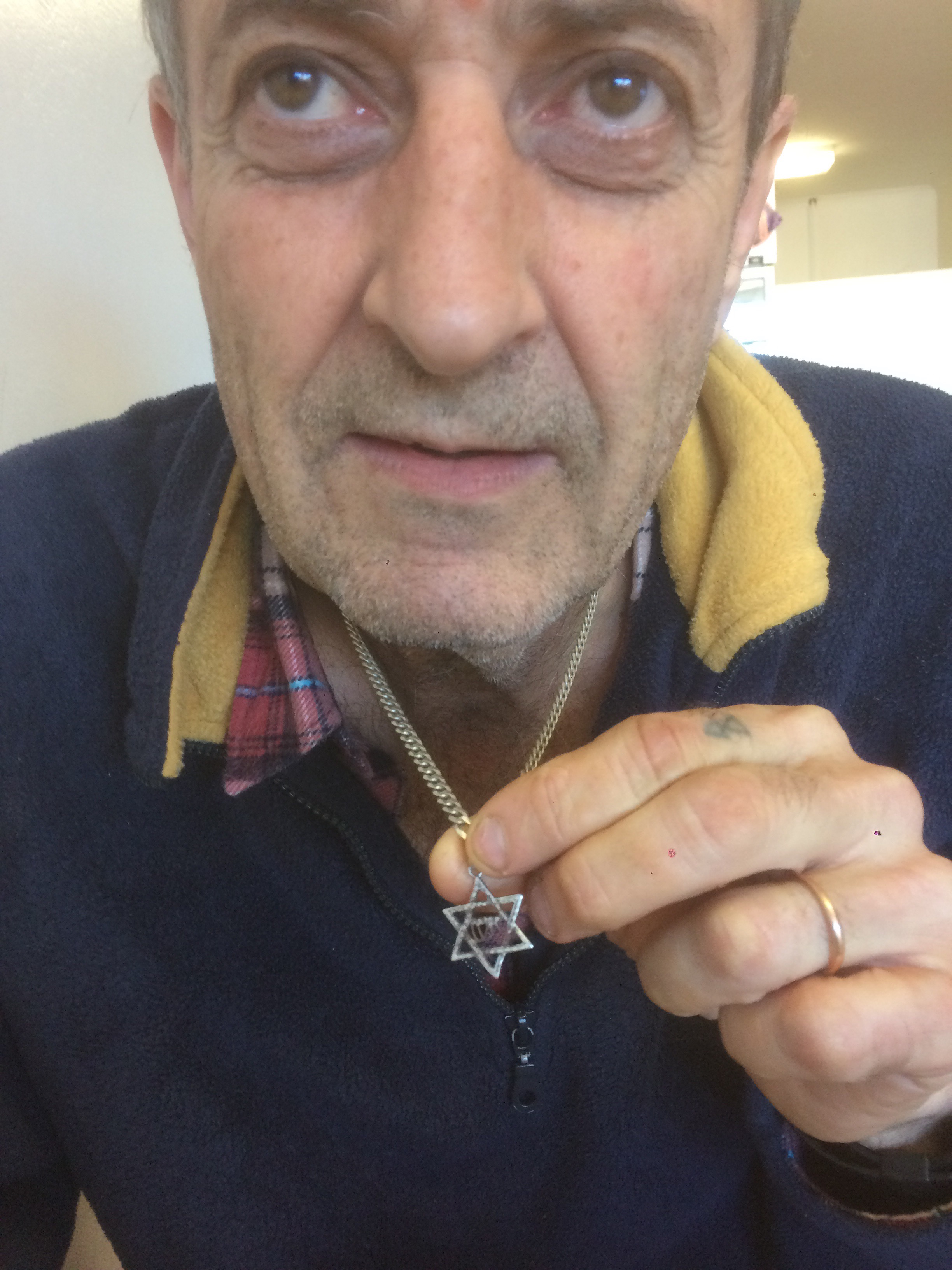
From Laurenzo Marques to Nyngan on Bogan

A man accosts me in the darkened lobby of the hospital in the small town where I’m working. ‘Shalom’, he says.
He gropes inside the front of his shirt and pulls out a silver magen david.
‘Shalom aleichem’, says I.
We swap names. For the purposes of this story, his name is Federico.
Federico looks not ancient, not brand new. He’s tall, compact, has an olive complexion and he bends forward as he speaks. His accent is not Australian-made. His English is arrhythmic.


‘What are you doing In Nyngan, Federico?’
‘I live here. Thirteen years now.’
‘Will you tell me your story?’
He does so.
 
 Before I repeat Federico’s story, allow me orient you to the remote, obscure town of Nyngan by referring you to my recent blog post (Nyngan on the Bogan).
 
Back to Federico: ‘I come from Mozambique. You know, was colony of Portugal. In 1976 Salazar dies. A bastard, Salazar. Like Franco, not a Jew-lover. Both of them, friends of Mussolini. Salazar dies, the blacks start to revolt and Portugal says, OK, we leave. They just run away, no negotiation, no transition. Then starts the war. A civil war. Massacres, the usual thing. First the Portuguese come to the coast in sixteenth century, they set up the port, Lorenzo Marques, a stopping place to their bits of empire in India. They go to India for the spices. They build their African colony by sending all their criminals, convicts. Like Australia. Like Australia, the same, those convicts become successful and they are comfortable. Portugal comes, butchers the blacks, in 1977 they go, then more massacres. Africa.
 
A nice place actually, Mozambique – for a Portuguese. But not now, not in ’77. In ’77, I know if I stay I will die. I leave my birthplace. My barmitzvah was there. In the synagogue, in Lorenzo Marques. Now I am in Portugal, a refugee, among all the refugees – from Mozambique, from Timor, from all places that Portugal runs away from. I cannot go back to Lorenzo Marques. Another Jewish refugee. History’s old story.
 
 
No-one can go to LM now. It does not exist: now the town is Maputo. And the big statue of that old colonist, Lorenzo Marques, they tear it down. Now in that square is a sculpture of a bird.   
 
 
My grand-grandfather comes from Portugal to Mozambique. Now my family, all gone, all scattered. Six brothers and sisters, some in London, some in South Africa, one sister in Norway. She was the last one of the six I have seen. She used to visit me here in Nyngan, every winter of Norway. Last time I visited her was before five years. That last time, in Norway. Family all scattered. The Jewish story. Always the same. You know.
 
 
You want to hear how I come to Australia? Things happen for a reason. There is a meaning. I study history, I research. There is a reason. I believe that. So in Portugal I am safe. My grand-grandfather was Portuguese so I have citizenship. But no future, a refugee. The Jewish story. Always the same. So I wander. I work in Vancouver, I leave, my visa has finished. I work in South Africa. Many Jewish there. I work In London, in Finchley Road. Again many Jewish. I work in Norway. In between visas I work on cruise ships. Eight years on cruise ships; you don’t need a visa. On cruise ships there are Jewish. Also Barbados, every one old, everyone rich. Some Jews there too. I work In Korea. That’s where the miracle happens that brings me to Australia.
 
 
One year before Korea in Vancouver I apply for Australia. A Mozambiquean friend in Australia advises me: be careful what you tell them when you apply in the Embassy. Don’t say the wrong thing. So the embassy woman, she asks me what I will do – she means work – in Australia. I say I have qualification. I tell her I am chef. I don’t know what answer is the right answer. I know from my friend they don’t tell you what they want and what they do not want, but if you say wrong, they close the door. I answer, I pay the application. It will take a few months, the application, she tells me. Another cruise. And another. A letter arrives from Ottawa. The letter is from Australian High Commission in Ottawa. I have immigration visa. But no money. To come to Australia I must pay. So I wander on cruises and I work and I save. And I know I will leave the ships one day and I will settle and all my friends on the ship, always they will be slaves. I pay for a flight from Korea to Australia. Maybe three hundred American dollars, I go to the airline office to pick up ticket, the day before my flight. But it is a public holiday in Korea. Office is closed. I have paid, I have visa, I have no ticket. My flight is tomorrow. Here happens the miracle. I put my face against the window. I see people inside, cleaning. I make with fingers – come here please – come to window, I must ask. They come, but no-one speak English. They find someone. I tell him I need my ticket, I point to the office where the woman sold me the ticket, they go in, bring the woman out. A miracle. A public holiday, in Korea, the office is closed but I have my ticket. Things happen for a reason, I believe it.


In Australia, in Sydney, I work in Bondi Junction. Again many Jewish. I am there some years. I marry there, my wife have lymphoma before we meet. Then she is cured and we marry. Have children. Since thirteen years I am in Nyngan. I come here, I come here for the peace. I work at the pub as chef. Then the manager closes the kitchen, leaves Nyngan, manages from the city. I have no job, but things happen for a reason. I believe that. I sit in this coffee shop and the manager of the biggest hotel comes in, says, Hello Federico. Come work for me.
 
 
Small town, you know, everyone knows everyone. Good people here. My wife gets a second cancer. We drive to Dubbo, we drive to Sydney, we drive, drive. Always long drives, costs hundreds of dollars petrol. And the people of Nyngan collect money for our travel. Good people in Nyngan. Nothing happens without a reason. But my son, he’s grown up, I tell him – get out of Nyngan, no future for you here, go see the world, go build your future. You know I believe.
 
 
Will you do me a favour, Howard? I want for my doorpost the Jewish sign, for the doorpost, you know. I google but I don’t just buy. Has to be real, you. Needs the writing inside, not just the box .   

Teaching an Old Dog Old Tricks


“Good morning, Doctor.’ The good-looking man is new to my practice. He offers a hand, shakes manfully, breaks no bones but leaves none unfirmed. His smile launches a promising relationship. ‘I’m new to Melbourne, doctor. Just moved here – for my studies.’


The man looks a young forty. I check his date of birth; he’s forty-nine.

‘What are you studying?’ – I ask.

‘Philosophy. Classic Philosophy, the greats, you know, Plato, Aristotle, Aquinas, Maimonides…’

He’s won me.


‘I used to be a lawyer. Made some money, made a family, four kids. Now it’s time for me. Time to pursue wisdom.’

‘Share it with me when you find it,’ I say.

He smiles.


‘Doctor, I wonder if you can help me out. Awkward situation. I’ve left my tablets in Sydney. They’ll arrive Monday next with the family. My doctor prescribed a short course of Temazepam for sleep. Exams next week and I can’t sleep. If I don’t sleep, I’ll fail. If I fail I’ll never find wisdom.’ The winning smile again.


 ‘What are the tablets?’

‘Temazepam, the weaker ones, the tens. I’m scared of anything stronger.’

‘Very wise. They’re habit-forming.’

The man looks shocked: ‘Habit-forming? Really? My doctor never mentioned that. I just want enough to get me through these exams. I finish in three weeks.’


The man and I spend a little time discussing Temazepam, natural remedies, his own preference for a long hard run (‘Wouldn’t you know, Doctor, my running shoes are still in Sydney?’) The man looks up at the marathon photos that cover my walls where other doctors show their degrees.

‘Are you still running, Doctor? Marathons? Really? Amazing!’


The man leaves my room with his limited prescription, leaving behind his protestations of delight, his vows he’ll be back, how lucky our paths crossed, he’s found a disciple of Maimonides, he wants me to be his new doctor.


A couple of patients later the receptionist buzzes me and pricks my balloon: ‘That new patient, do you know what he said about you, Howard?’

‘No.’

‘”What an amazing doctor! Still running marathons!” Says you are a scholar, an expert in Greek Physiology.’


‘You know what else he said?”

‘What?”

‘He said he left his wallet in his car. He said he’d be back in five minutes to pay. I asked him for his Medicare card, but that was in the car too. But he knew his number, he said, and I took it down. Thirty minutes and he’s not back. I rang Medicare: there’s no such number and they have no record of that name at the Sydney address he gave. I rang his mobile. “Optus advises the number you have called is incorrect or has been disconnected.”


Three years pass. Three years are not sufficient to heal a wound in trust.

Last week a new patient registers with Reception. He presents his Medicare Card, asking a series of questions:

‘What doctors are consulting today?

‘Who will I be seeing?’

‘How long has he been at this practice?’

‘I just need a prescription. I’ve lost my tablets and my wallet too. Can I pay with my credit card?’


The relatively new receptionist was not with us three years ago. She calls me: ‘Are you with a patient, Howard?

‘No.’

‘May I come in and talk with you?’

‘Certainly.’

The young woman is shaking: ’I think your next patient is lying. I think he might be the man who came here a few years ago and lied to you to get tablets.’


A phone call to the Doctor Shopping Line at Medicare. I give the Medicare number of the new patient. ‘We suspect he’s a doctor shopper’, I say. I give the new patient’s stated name. The Medicare person confirms the validity of the card and the truth of the name given. ‘We have records of that patient’s recent prescriptions. He’s had eighteen prescriptions since March first, every one of them for twenty Temazepam tablets, each prescription from a different doctor in your area. You might like to inform the patient of these facts, Doctor.’


The Night Away from my Wife

At breakfast yesterday morning I said to my wife: ‘I won’t be coming home tonight.’

My wife was reading the paper. She said, ‘Le Pen looks ominous.’

I said: ‘I won’t be coming home tonight. I’ll be sleeping out.’

‘That’s nice, darling.’

I said, ‘I’ll be sleeping with a stranger. For money.’

‘That’s nice darling.’

I kissed my wife goodbye. She said, ‘Have a good one.’

I went to work.


After work I went to the place that offers the services I desired. Discreet premises, modest, not flamboyant at all. I knocked on the door. The person who opened the door was a man. He asked my name. I said, ‘Howard.’

‘Goldenberg?’ – he smiled. A nice smile. ‘I’ll be looking after you first’, he said. ‘Then my colleague will take over. I’ll just measure you now – as a preliminary. So my colleague will have an idea of your…dimensions.’

The pleasant man measured me here and there and wrote in a file. ‘Come this way, ‘he said, you can take your clothes off and shower first. Then you can change into something, ah, a little less formal.’

He showed me down the corridor past a series of doorways to a small room in which I found a small table and a chair, a TV and a bed. The bed was larger than a single, cosy for two. Three, I reckoned, would be a crowd.


The pleasant man turned to go. ‘What about payment?’ – I asked. ‘I don’t deal with the money. You pay your particular worker for their services.’

I felt unhappy about this – not the matter of emolument but the grammar. ‘Their services’ sat poorly with me for one worker. Or – a late thought – would I be spending the night with more workers than one? This might be expensive.


I took a shower. It was not until the hot water was running over my grateful shoulders that I realised I’d brought no soap. I looked around and saw a liquid soap dispenser above the sink at the opposite side of the bathroom. I turned off the shower, emerged, dried myself, pumped a palmful of semen-coloured liquid, (which, upon sniffing, I found to be some innocent hydrocarbon derivative) and returned to the shower recess, where I employed a busy free hand to turn on the water, to adjust the temperature and to dip into the reservoir-palm for moieties of soap, which I then deployed to those portions of my body I judged strategic for the encounter ahead. 

I dried myself and wrapped my glowing body in something a little more comfortable. The time was seven fifty. The room was booked to me until seven the next morning. When I booked no-one actually told me when my worker/s would commence work. I sat on the bed and crossed my legs. I moved to the chair and sat. And waited. Nothing happened, no-one arrived at my door. I listened and I heard voices, other doors than mine opening, doors closing, then silence.

What to do? Perhaps I should read. I went to my daypack and found a book. Edited by the former Chief Rabbi Jonathan Sacks, the book was my siddur, the book of Jewish Prayer. I opened the book and I prayed for strength and guidance. There came a knock at the door. Engaged in my devotions, I did not answer. Another knock. More silent prayer. Another knock, and a voice that said, ‘Knock, knock. Anyone there?’ That, I reflected, is precisely what the worshipper is asking at prayerful moments. The door opened behind me. A voice, a pleasant voice, said, ‘Good evening, I’m your…’ – then choked: ‘Oh! I’m sorry. I’m so sorry.’ I heard the door close behind me.


 After a time I finished, replaced my siddur in my pack and went in search of my visitor. I found the owner of the pleasant voice, a woman, younger than I, perhaps half my age. She looked Samoan. Her voice spoke a volley of apologies, my voice answered with assurances and then she said, ‘My name is Hortense. And you’re…’ she was studying my folder in which her male colleague had recorded my dimensions… ‘You’re Howard. Let’s go to your room Howard.’ I did as I was bid.


‘Would you like to sit on the bed, Howard?’ It didn’t seem like Hortense expected any verbal reply. I sat. She stood facing me, looking down at the top of my head. ‘How do you keep those on? Do you wear it everywhere? I mean, all the time? Like in bed?’ I explained. Then I had questions of my own: ’Hortense, will anyone else be joining us tonight?’ ‘No, just me, Howard. I think I’ll manage alright. I’ve done this before. You’re not nervous are you? You don’t need to feel nervous.’ I reassured Hortense I was not nervous. I too had done it before. 


‘First I’m going to tie you up,’ said Hortense, indicating the forest of leather straps and wires festooning a rail on the far wall. As Hortense leaned generously forward, ‘tying me up’, her crucifix dangled just above my nose, pendulating and tickling me as she moved. It was a not-unpleasant preliminary.

Hortense returned to her folder. ‘Oh, you’re a doctor!’ There was delight in her voice. She looked again at my yarmulke. ‘Well Doctor, I suppose you do circumcisions?’

‘I used to. Hundreds of them, not anymore.’

‘It’s so much better, isn’t it.’

‘Isn’t what?’

‘Much nicer. Don’t you think?’

I could not fashion a suitable response.

‘Well, look at me’, said my companion for the night, ‘I’ve been dating for a long time now, quite a number of partners. It does look much nicer, doesn’t it. Cleaner too, you know, once they’re done?’ I couldn’t really say, so I didn’t say anything. Hortense took my silence as affirmation.


I had a pleasant enough night with Hortense. She said, ‘I suggest you take a shower before you go home to your wife.’ I did so, paid my money, jumped onto my bike and rode home through the rain, accumulating grit and road grime as I rode. As her drowned rat of a husband came sweating through the door, my wife was breakfasting: ‘Le Pen did badly,’ she said.


Last Coffee at the Prairie Hotel


It will be centuries/before many men are truly at home in this country,/and yet, there have always been some, in each generation/there have always been some who could live in the presence of silence.*


Have you ever visited Parachilna? Situated in the remote north end of the Flinders Ranges in the South Australian outback, this town is reckoned to have a population of six souls. The principal edifice in the town is the Prairie Hotel. If you visit this pub, as I have, repeatedly over the past two decades, you will count many more bodies than the half dozen you might expect. We come in all our different ages and stages to Parachilna and we stop at the Prairie Hotel. We come – grey nomads and graziers and gourmands – we come in our large SUV’s, our battered utes, our private planes. We arrive for the famous food, the haunting landscape, the novelty, the romance!


Though I myself run to the cities. I will forever/be coming back here to walk…up and away from this metropolitan century…*


I come for the coffee and the company. Around Christmas time, with summer blazing in the Flinders, the nomads have fled back south, tourism has withered and the hills stare back at the bleaching sun. The world lies silent, listening to its aeons. The Prairie Hotel is old, its walls of stone thick, holding the heat at bay. In this heat and desolation eccentrics and locals gather in the cool of the bar of the pub.


And some, I have known them, men with gentle broad hands,/ who would die if removed from these unpeopled places…*


At this time of the year Christian doctors have joined their loved ones in the moist green down south, leaving in their place a locum, old, wearing his Jewish hat. In that sense I am both eccentric and a local. 


Though I go to the cities, turning my back on these hills/…for the sake of belonging…/the city will never quite hold me. I will be always/coming back here…to see, on far-off ridges,/ the sky between the trees, and…to hear the echo and the silence.*


I mentioned the coffee. If you hate coffee most places in the Flinders Ranges will reinforce your hatred. But if you revere the sacred bean, come drink at The Prairie Hotel. There, Lachlan Fargher presides over a serious espresso machine. There I drop in year upon year, unannounced. Lachie looks up, says, ‘Hello Howard. Strong latte, extra hot?’ I nod, Lachie bends his handsome head in concentration and soon I sip that elixir that brings me on a drive of sixty-seven kilometres (each way) every lunchtime of my fortnight locum. (Excepting Shabbat. I sure as shit don’t drive on Shabbat.) Others come to drink the eponymous Fargher Lager, others to eat the famed Feral Grill, a collation of native viands, not – I regret – kosher.

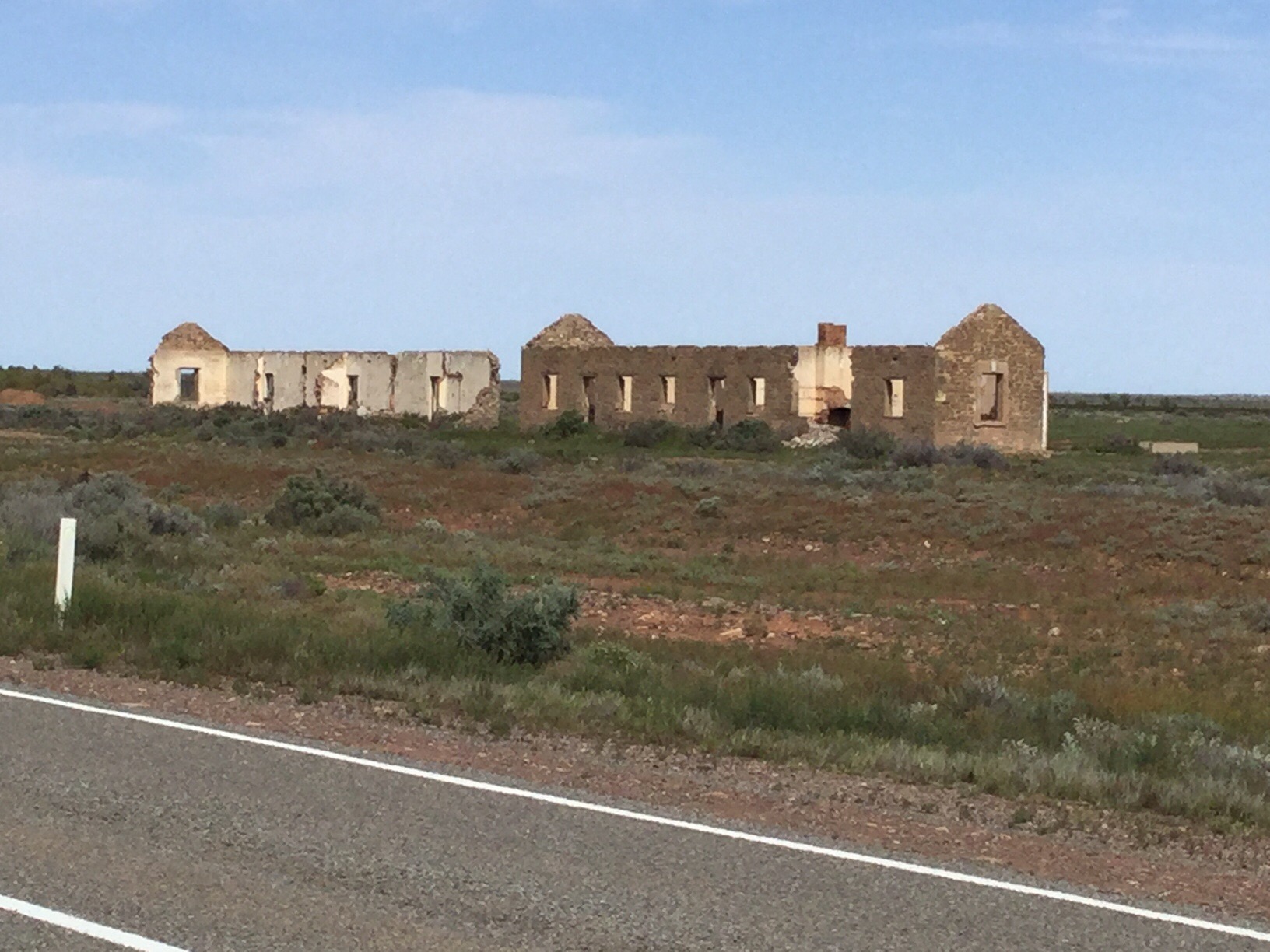
 ‘To everything under the sun there is a season…’ All ends, everything passes. That’s what nostalgia is for. The North Flinders is a treasure house for the nostalgist; in Brachina Gorge, see geological striations in great walls of rock telling their mute tale of aeons unimagined; in Arkaroola, note and lament the passing of the ediacaran, whose fossils mark the first life on earth to have nerve cells organised to process sensation; and note the lonely stone walls – unroofed but still erect in their noble proportions – of dwellings abandoned by pioneers whose hearts cracked in the long droughts.


Add to this is my own lament. With the passing of the unlamented, lamentably polluting coal resource in Leigh Creek, the mine has closed. Soon the Clinic that served the mine will close too. In future summers the North Flinders will not summon its Jewish locum.


Driving south yesterday, at the conclusion of a medical estivation in Leigh Creek, I stopped at the Prairie Hotel. Lachlan Fargher looked up: ‘Hello Howard. Strong latte, extra hot?’ I looked at the Aboriginal paintings in the Dining Room that is really a gallery of fine art. I took in the old timbers, the scarlet collection tin for The Royal Flying Doctor Service. I took in Jane Fargher, Licensee, the brain and spine of a brave enterprise. I looked at Lachie, his black curls bent over his machine; at Avalon, springtime’s barperson. Tomorrow, or tomorrow’s tomorrow, the former will brew Aussie coffee in Nashville Tennessee and the latter will practise criminal law. I drank my latte, said goodbye and drove away.


• Fragments of ‘Noonday Axeman’, by Les Murray


Health is not a Human Right

I am about to make some shocking suggestions: 

Health is not a human right.

The Morrison-Turnbull budget cuts to Medicare Rebates are not completely bad.
Running in the dark this morning, I noticed the illuminated sign outside the local hospital. It read:

PRIVATE HOSPITAL.


I felt unhappy reading that. A hospital is a place where human beings help other human beings with their health. The meaning of a hospital cannot be realised with that label. ‘Private’ tells the reader that some humans will be admitted and others turned away. Privacy as a personal property might well have been eclipsed by the internet, but ‘private’ survives with this message, unkind to some, saying ‘keep out.’


If health were a right we’d need to outlaw Down’s Syndrome, premature death and disability. We would legislate and make ourselves ridiculous. The error of language here betrays an error of thinking. We cannot assert a right to health, but we can create a right to equal access.


I am a private doctor. I am a public doctor. The public is composed of private persons. I treat one person at a time, privately. That is, personally, confidentially; two humans together, doing what every human does in a lifetime: ordinary transactions of care.


Doctors generally share a number of characteristics. We are serious, careful, committed and proud. We are defensive of our liberties, self-righteous and voracious of cures. We are expensive; I mean someone, somewhere, always pays for cures. In its new budget the government has pegged Medicare rebates. This skewers doctors and patients: either the doctor loses or the patient loses. There is nothing new in this.


When Hayden-Whitlam introduced Medicare I bulk-billed everybody. I thought it was a wonderful thing that a person, be she rich or poor, might consult a doctor equally. I thought so then and I think so still. To assure doctors they would not lose, the Hayden-Whitlam Government set up a referee who increased the rebate in pace with the rising costs of practice. This was costly. So the government told the referee to stop indexing rebates. And I stopped bulk billing. Often patients found themselves facing a choice – see the costly doctor or feed the family. When this occurred all doctors I know abated their fees so the patient might afford both cure and food.


What a government does in tightening benefits is to create the need for a new force to operate in care. The force is not one of rights but of grace. The doctor and the patient gaze upon each other as we did through all history, unmediated by refunds and rebates, freer now of the obscuring presence of the insurer. Two humans in a situation of human need.


The words ‘Private Hospital’ jolt me. They remind me that health is not merely a matter of economics or of civil rights, but of civil opportunity.


Taxi Driver in Jerusalem

The cab driver’s clothing smells of cigarette smoke. He looks about seventy but I tell him he is too young to smoke. He asks, ‘You are doctor?’His throaty voice is the ashtray of a thousand smokes.

I confess I am a doctor and the driver changes the subject. He drives with dash and confidence, like the tank commander he used to be, a few wars ago.


He detects my foreigner’s accent in his own language and asks: ‘From which country you come?’

‘Australia. You?’

‘Here. Born here, in this city. Only here.’

‘Here’ is Jerusalem.

The driver starts to sing a love song to his city, the song of a faithful son sung to a mother. 

I listen to the words and as the singer’s voice thickens I take a peek. Tears glisten on the driver’s cheeks as he sings his song.

‘All my life in this city. I live in the house I born. Never leave, never change address. This my one home.’


The song ends as we approach our destination, the fruit and produce market. ‘You maybe visit other places, maybe Tel Aviv?’

‘Yes, we’re going there in a couple of days.’

‘I take you. Only 260 shekel.’

The price is fair. We agree. I give him the address and he will pick us up at 8.30 am.

‘I am best taxi in Jerusalem. My mother tell me I am best. Not my wife say this.’ A hoarse smoker’s laugh.


Eight-twenty we sit at the kerbside, two old tourists and two thirteen-year old grandchildren and four suitcases and sundry packages. Eight-thirty, still sitting. Eight-forty, a bit restless. I call the best taxi driver in Jerusalem. The recorded voice invites me to leave a voicemail. I do so. Eight-fifty, no driver, a new voicemail with a bit of an edge to it. At nine, no driver and my voicemail is choicemail. I end with, ‘Would your mother be proud of you this morning?’


A man pulls up in a brand new cab, a squat little vehicle with a raised ceiling, a sort of minimaxicab. Yes, the driver will take us to Tel Aviv. His price? ‘Two hundred forty. Is OK?’ Is more than OK. The cab smells of new car. The driver hums with the pleasure of his new vehicle and the vehicle hums up and down the great hills that surround the city and the driver tells us what we are seeing. Hill follows hill, hills unfolds into yet more hills and every hillside is dotted with dwellings and farmland. Yaakov – that’s our driver’s name – gives a quick history of every community. ‘This one settled by Hasidim from Rumania, that one is collective, built by kibbutzniks, you know, communists? This one – you see minaret? – a Muslim community. That one a “moshav”, cooperative farm, Palestinians and Zionists together, in one community. Down there, old tank, burned out, from the first war.’ And so the drive goes on, every hill telling a story, the same old stories, sad stories of conflict, stories of hardship, of failure, of success.


Yaakov’s phone rings, a woman’s voice. He listens and answers: ‘Yes, we arrive soon. I meet you at the beach. Yes, I drop customers, I come and we meet.’ Yaakov smiling, the smile a grandfather smiles on his way to a picnic on the beach with his daughter and the grandchildren.


The land flattens, the traffic slows and thickens, green gives way to cement, here is Tel Aviv, sparkling by its beaches, the light a blaze. We alight and pay and take Yaakov’s card. We will ride with him again.


The best driver in Jerusalem is forgotten. Two days later my phone rings. A voice thick with smoke says, ‘I miss your call. You want me?’ It takes me a moment to recognise the voice of the lachrymose singer of Jerusalem, his mother’s pride. Not his wife’s. I remind him of our arrangement.

’O yes, something happen. Family…’

I remind him of my family. I remind him he has a phone and our number.

‘Yes. Sorry for that.’

I ask, ‘Would your mother be proud of you this morning?’

The man’s voice, softer now, says, ‘No.’

I tell him he has shamed his city. ‘Do better next time.’


Jim is Dead

December 18, 1969. A large moon rises before me in the geriatric wing of the Royal Hobart Hospital. This is unexpected as we are indoors and it is noon. The moon shines across the room in my direction. Beneath the bright disc sits a white clerical collar. Just below the disc’s equator a set of white teeth smiles widely. The smile advances, a pink fleshy hand extends and a voice says, ‘Hello. I’m Father Jim. I’m a chaplain here. Call me Jim.’ The hand is warm and kind. I am a new doctor. Today is my first day in my first job. All around me old people drool and gibber in a manner to overwhelm a new doctor.

The moonfaced Friar Tuck is delighted to meet Howard Goldenberg. He says, ‘You’re new here Howard? Welcome to the Royal. I hope you’ll be very happy here.’

Fifty metres distant stands the weatherboard shack which houses the new doctor and his new wife. The new doctor says, ‘Jim, will you join my wife and me for lunch? We’re going to eat soon. Fish…it’s an Indonesian recipe.’ Jim would love to. Thirty minutes later Jim and his new friends Annette and Howard are seated in the shack eating a luncheon of fish bones and curry. Jim fossicks for flesh among the fine bones, eats up and does not complain. And Annette and I have made the first new friend of our married lives.

April 6, 2016. My Facebook-facing daughter forwards the following:

Dear Howard, I am sorry to have to post a message like this via Facebook but I am sad to say that your good friend Jim Smith has died this week, here in London. My name is John and I am his partner, Jim & I met you in North London when you were visiting your family, I think in 2014. Jim had a stroke last year and I was caring for him at home, he had to go into hospital with a pulmonary embolus and then had complications which led to his death on Sunday. I know he always enjoyed his conversations with you, if you have any special memories you would like to send me I can include them in a JimMemory book I intend to put together. I will let you know when the funeral is, if you would like to light a candle and say a prayer for him.

PS RIP Jim! He was quite comfortable and free of pain (he had some back trouble) at the last. John

Jim is dead. Faster than tears an image flashes before me. I see a black and white photo in a family album of a moon-faced man seated outside our rustic house in a village outside Melbourne. The large face is crowned with a white handkerchief knotted at its corners. Upon the lap of the large man sits a small child, our angel Raphael, aged not many months. A perfectly ordinary image: no collar, no ecclesiasticals, no pretence; just a man nurturing a child. The image says enough. A man, a child. Poignant as a Pieta the image drives me from my screen to Annette. My voice disintegrates as I tell her the news. I ring my daughter who is tearful too.

Father Jim Smith married hundreds of heathen nurses to hundreds of pagan doctors in his days at the Royal. All those unbelievers flocked to this man who seemed to personify something missing from the lives of those science-infested people. But around 1990 Jim quit marrying. He said, ‘I marry them, they make vows, then they divorce.’ He felt the losses, each by each, personally. ‘It’s as if their marriage meant more to me than to them’, he said.

Father Jim introduced us to his partner in goodness, Jim Turley. Now we had two Father Jim friends. The two – together with a non-priest – created what might have been Australia’s first refuge. They called it St Michael’s Priory and to it flocked beaten wives, beaten children, lonely people, people mad and broken. All were taken in, housed and fed, and where possible, repaired.

The Priory rested upon the slender incomes of the three and upon donations from parishioners, who brought laying hens, a milch cow, produce – and a pair of Nubian goats. The Jims took us down to shed and showed us two sleekly beautiful creatures. Their coats of Nugget Dark Tan shone on the backs of their aristocratic bodies. Shy, their slender faces darting, their small ears rising and turning to sound, they looked like deer. ‘Meet the Goldenbergs’, said Jim Smith. He was addressing Annette and me, not the goats: ‘This one is Ruth and this is Naomi. They’re pedigreed. We were told we should register them. You could register them by name, so we chose from the Bible. Then Jim and I said, “Ruth and Naomi are Jewish names. Let’s give them Jewish surnames”. So we called them Goldenberg, after our Jewish friends.’

Years later Annette and I gave our third child a Biblical name. She became Naomi Goldenberg, named after a relative at St Michael’s Priory in Hobart.

The Jims used to come to our shack in Gore Street, for Shabbat dinner on Friday nights. They’d stand silently in their yarmulkes while I’d recite Kiddush. Afterwards they’d make a fair fist of translating odd phrases from the Hebrew, to which they’d been introduced during their studies in Divinity. One Shabbat eve one of the Jims – I don’t remember who – challenged the second: ‘Jim, I don’t sense you are making any effort at all to convert the Goldenbergs.’ The other Jim confessed: ‘That’s true.’ And the second Jim nodded and admitted he too was remiss. And one said: ‘I don’t feel any call to change the Goldenbergs.’ That moment love shimmered before us at our Shabbat table: two men of God had each found grace sufficient to deny abstract vocation in favour of human feeling.

Eventually Jim Smith left the Royal, left Hobart, said goodbye to the Priory and to his celibate brethren. It might, for all we knew, have felt like dereliction. Today I picture it as burnout, as an escape from accumulating vicarious trauma.

Jim took a job in Melbourne as chaplain at Pentridge. There his parishioners were prisoners and warders. He sat and he listened to their confessions and to their unconfessions, their lies and their rationalisations. One godless murderer habitually visited Jim on the pretext of spiritual need where he simply craved intelligent conversation. That man had forced his way into a hairdressing salon where he splashed lighter fluid over his rejecting girlfriend before igniting it. The woman survived her horrible burns. Her hairdresser did not.

An equally godless, notoriously brutal warder used to seek Jim out in the Officers’ Mess. He’d ask Jim, ‘Do you mind if I join you?’ Jim decidedly did mind but avowed the reverse. The man, loathsome and unctuous, habitually chose Jim as his companion. Jim couldn’t say which of the two – the murderer or the officer – he liked less.

On one occasion the murderer made a singular confession: boastfully he declared, ‘When we want to punish a warder, we do. We have our ways.’ Jim, genuinely curious, asked –‘How?’ He regretted the question instantly. The prisoner said, ‘We piss in their tea.’

Some time later Jim went to the Officers’ Mess for lunch, took his seat at an isolated table and said, ‘Yes, of course’ when the warder asked to join him. Shortly a prisoner arrived to take their meal orders. Jim ordered his lunch, the warder ordered, the prisoner noted their requests, then asked, ‘Beverages, gentlemen?’ Jim requested tea, the warder said, ‘Same for me.’

Jim sat and enjoyed the warder’s conversation until a second prisoner arrived bearing their food and drink. This prisoner was none other than the murderer. He handed Jim his food, passed the officer his, then said, ‘Here’s your tea, Father.’ He walked around the table and, standing a little to the side and behind the warder, passed him a second mug. Winking hugely at Jim he said, ‘And this is yours, sir.’ Jim sat and watched and kept his peace.

Once again Jim and we were living in the same city. Often he’d would join us at our Shabbat table and at Passover Seder and he’d report on what he called, ‘my time in gaol.’

Later, with his usual genius for vocation among the desperate, among those who were losing and those who were lost, Jim became chaplain to Intensive Care at a major Melbourne hospital. In ICU something like one patient dies of every four who enter. The rates of loss are higher than in a theatre of war.

Eventually Jim retired. Amazing us all, since he’d been resolutely republican and a pronounced proletarian, Jim settled in Britain. Here he found love, a partner in John, and diabetes – the lot of many Friar Tucks.

Every Passover and every Jewish New Year a letter would arrive addressed and written in the child’s block lettering that was the Jim Smith calligraphy. The letters told us of the Jewish roots of Jim’s belief. They’d include clippings from the newspaper columns of ‘my favourite religious writer, Rabbi Jonathan Sacks’, soon to become Chief Rabbi of the British Commonwealth. In his long London epoch Jim read widely and deepened his sense of following a Jewish Jesus. His pleasure in our friendship grew deeper and eventually he crossed the world to attend our eldest daughter’s wedding in Melbourne.

Jim lived with John, sharing travel with him as well as musical theatre, which he loved. A man great in his levity, Jim radiated a softness that healed, attaching him to old friend and to new. When I visited my daughter Naomi (the goat’s child) and her husband and children during their domicile in London, Jim, frailer now, crossed the great city with John for a visit. It was Shabbat and space and time had shrunk. Here was Jim, here were his old friends, here were our tender little ones. Jim was still Jim. The spark of joy still shone. But I wondered if we’d meet again. The moments passed.

And now Jim is dead.


Rembrandt’s ‘Return of the Prodigal Son’

In the course of conversation today a man said, ‘My doctor showed me a painting by Rembrandt. It was the Prodigal Son. Do you know it?”

I didn’t know it. 
I pulled Mister Google from my pocket as the man continued: ‘My doctor showed me the painting. I looked at the painting, wondering. I looked back at my doctor. He was looking at the painting and I saw his eyes in a sea of tears.’

It was my turn to gaze at the painting. I was right: I’d never seen the image before. My own eyes stung. 

The Tooth

In his last decade Dad and I drove every year to the Gippsland Lakes for a few days of sailing. Those lakes are plenished by rivers that flow down from the Great Dividing Range on their way to the sea. In the course of the drive of four hours we had time enough to evoke time remembered. Passing through the township of Trafalgar we’d sight the turnoff to Bruthen, a small town nestled high in those hills. Dad and I remembered Bruthen for our separate reasons, I for the Snowy River – mighty in verse, a miserable trickle in its reduced reality when I found it in 1968. Dad remembered Bruthen for the tooth.
 
‘I did a locum in Bruthen. It would have been 1935. I was a year or so out of medical school, wandering around the country, working in little towns – like you do, Howard.
I remember the drive up into the hills. I was driving a Sunderland. I remember that car for its unusual transmission: in those days manual transmission was all we had, but the Sunderland had something unique: you pre-selected a gear manually and it would change itself. Strange at first, unfamiliar, but just the thing as I wound up those hills and around those bends.’
 
Dad smiled as he remembered: ‘Bruthen was a one-doctor town. On my first day there a man came in with a toothache. His face was swollen and he pointed to his upper jaw on the right side. This was the 1930’s; we had no antibiotics the: the man needed a dentist. “Doc,” he said, “I’ve got a tooth for you to pull.”

(I pictured my Dad as I was at that stage – green, keen, torn between the need to be a proper locum tenens, literally, ‘holding the place’ of his absent Principal, while untrained for the task. Where I was timorous and trepid, Dad was fearless as an aspiring surgeon, aware of his solitary state – no colleague to consult, no training beyond seeking and accepting responsibility – and rising to the challenge. Dad would believe he could do the job and he must do so.)

Dad continued: ‘“I’m not a dentist. I can’t do that.”
“Why not, Doc? The regular doctor always pulls teeth.”
“I don’t have any instruments…”
“Yes you do, Doc. In the cupboard, up there.”

He pointed. Hoping he was incorrect I went to the cupboard. He was quite right. I found two pairs of steel dental forceps, half-familiar instruments, a bit sinister-looking.
“See, Doc? You use this pair for lower teeth, and this one for uppers. Mine’s an upper.”
The handles felt alright in my palm. Usable, not impossible…
“Doc, you know the trick to this tooth-pulling business? You have to push downwards to pull a lower tooth and you push upwards for an upper.”’
Dad said: ‘I didn’t know the trick.
The man pointed to the tooth. I applied the forceps, closed my palm, gripping the tooth hard, then I pushed up as the man advised. Nothing happened. I squeezed harder and pushed harder. A crunching sound then all resistance fell away. I looked down at the forceps: the tooth, a molar, sat beneath its roots, which were long and stout, like antlers on a stag.
“See, Doc? Nothing to it.”
The man fingered the cavity where his molar used to sit. He withdrew his finger, bloody and slippery with spit: “Wrong tooth, Doc. It’s this one.” He pointed again.
I said I was sorry: “You really need a dentist”, I said.
“No dentist in Bruthen, Doc. You do it.”
“Are you sure?”
“Yeah. You’re good at it. Go ahead.”
It was easier the second time. I looked down at the tooth feeling satisfied with myself.
“Good work, Doc!…but… it’s the wrong tooth.”
Feeling miserable I washed the forceps and placed them in the sterilizer.
The man said: ‘What are you doing, Doc? You haven’t finished.” He pointed to the next tooth along. 
“Are you sure this is the one?”
He was sure.
I removed that tooth like its predecessors. Like its predecessors it too was the “wrong one.”

‘We continued, tooth following tooth, until I had cleared all the upper teeth on the right side. Then we agreed to call a halt.’