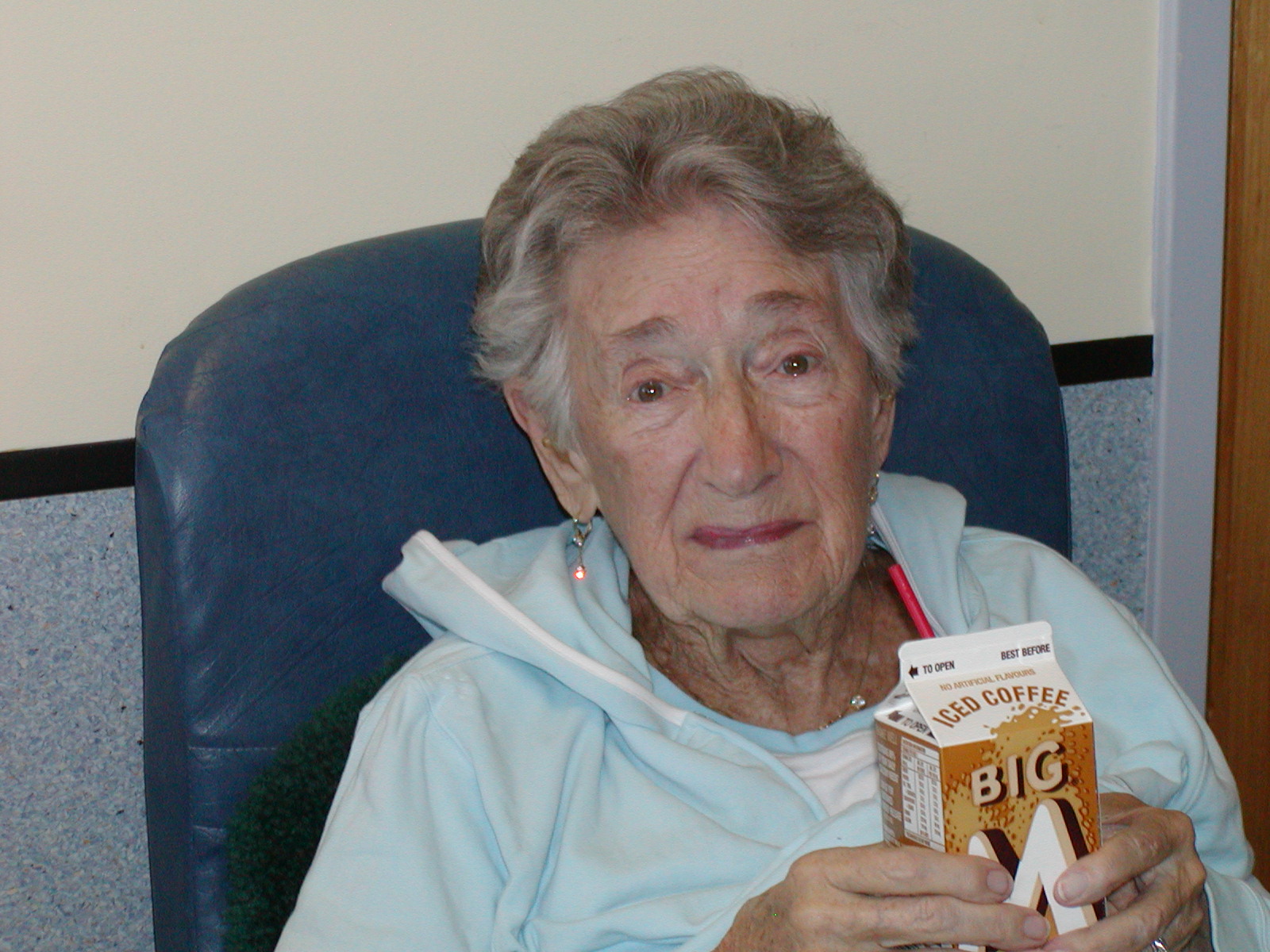
My Mum

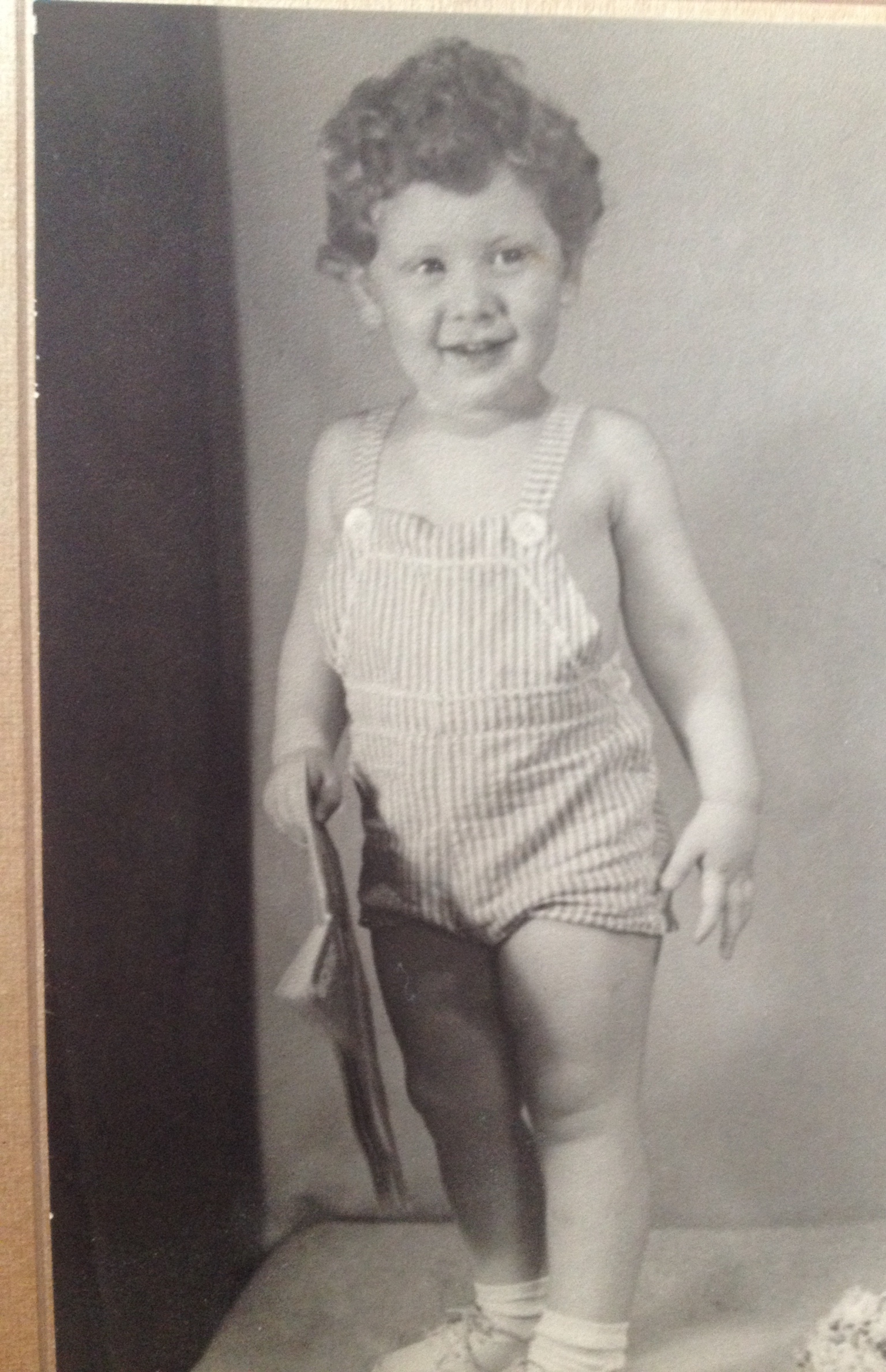
My mother is dead. This is not news to me nor to an attentive reader of my musings on the net; Mum’s been dead since 2009. But the fact precedes the realisation. I feel the pleasure of being her son every time I think of her. That pleasure persists, felt it in the present tense. Especially today.
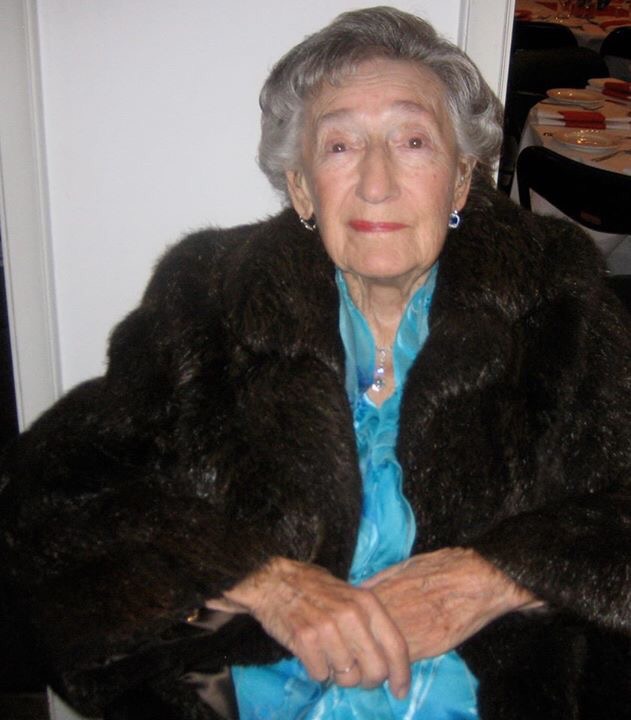
  To know my Mum was to smile. She was both vague and humorous, almost daffy, at least in respect of the weight of the world.

Mum knew sorrow. She lost both parents to natural causes in her childhood. She survived the death of her husband (‘he was a lovely man’) and a few years later, the death of her firstborn son, who lived, it seemed, solely to bring pleasure to Mum’s last years. A few days before her ninety-second birthday, battling the heart failure that would kill her only a few days later, Mum literally laughed at death. Already breathless, with fluid pooling suddenly in her lungs, she suffered a coughing fit, gasped, gasped more deeply, turned grey and slumped. A few milligrams of hero molecules and some litres of oxygen later, Mum awoke and grinned. From behind her mask she chuckled and gasped: ‘They thought I was going to croak, but I didn’t!’

Dad’s heart started to play up in the months preceding his demise. I felt a doctor son should warn my unworrying mother: ‘Dad’s heart disease could kill him, Mum.’

‘I know that darling. That happens to old people.’ And to comfort and prepare me, she added, ‘Death is part of life.’ 

Mum’s acquaintance with sorrow seemed to leave her unharmed. Events always had their brighter side. You could always laugh.

I wondered about this. This was not a shallowness. Mum loved generously in a way that would be reckless in any normal person. She’d invest in love, lose the entire capital and somehow end up liquid.

What was her secret?

Did she learn something early in life that helped her to surf, ever buoyant, upon the waves and dumpers?
All I have to account for my mother’s lightness of being are my memories and her stories.

Of her father: ‘Daddy was at sea on his lugger for weeks at a time. He’d spend the idle hours carving mother of pearl and tortoise shell to make jewellery for Mummy.’

‘Daddy used to give concerts at the Town Hall on his one-stringed violin. He was very artistic.’

Mum’s face is alight as she speaks. Her father is always ‘Daddy’, the affectionate diminutive bright in a daughter’s smile and lilt of voice. ‘When Daddy was dying the nuns asked the whole school to pray for him.’

‘Daddy carved this brooch from the mother of pearl and pearls he brought from the bottom of the sea. He made it for Mummy when they were sweethearts.’

‘During the Depression Daddy went bankrupt. He worked for a real estate agency after that.’ Mum points to a black and white photograph of the staff of the Agency. Four stiff middle-aged men and one commanding matron stare at the camera. As old as any but much the youngest in facial expression, my grandfather smiles impishly.

‘Then he got lung cancer and died.’

Driving past Brighton Cemetery, with a wave of a hand, ‘Daddy and Mummy are in there – just next to John Monash.’ A six year old boy cannot reconcile that champagne voice with the terrible intelligence of the death of parents. I wonder at first if ‘Mummy and Daddy’ might by some magic still live, ‘in there’.

Mum pronounces the famous surname, ‘Moanash.’

In my university years I need to correct her; ’Mum, it’s Monnash, not Moanash.’

‘No darling, it’s Moanash.’

‘Mum, three thousand people go to Monash Uni every day and they all pronounce it Monnash!’
‘Do they darling? I must be wrong then. It’s just we knew the family and they pronounced it Moanash.’
Of her mother: ‘Mummy died three years and three days after Daddy. She died of a broken heart.’ For Mum rheumatic heart disease is translated to a love that killed but never died.
‘Mummy was extremely elegant. She made her own clothes. If you look at her pictures you’ll see she always wears a half sleeve. Mummy’s arm was burned above the elbow and she always covered the scars.’ 

Of her philandering uncle; ‘Harold should never have married Grace. They lived perfectly happily while he kept her as his mistress. Once they married, Grace couldn’t tolerate his lady friends. After Harold took one lady friend on a cruise to Tahiti Grace never forgave him.’ Mum’s voice expresses wonder at the anger of a woman scorned. ‘So she tried to poison him by tampering with his heart medication. When that failed she removed the tacks from the carpet at the top of the stairs. Harold fell all the way down but he wasn’t hurt.’

Lots of stories, lots of memories, all recounted lightly. Did Mum have no bad memories? Or did she simply lack that faculty when to remember would create sorrow?

There was one. When Mum told me this in my own early childhood I felt swamped in vicarious grief. We were walking at the top of Pine Avenue in my home town of Leeton Mum paused outside the toy shop. ‘Howard I want to buy you a present. It’s important. You have to let me buy you something.’

Surprised by this; I didn’t need to be persuaded.

Mum went on: ‘When I was a little girl I didn’t allow Daddy to do that. He wanted it so much and I didn’t let him. It was a doll. Daddy took me into the toyshop and we both saw her. She was nearly as big as I was. I saw her and I loved her and I wanted her. I wanted her enough to burst. Daddy said, “Would you like that big doll, Yvonne?”

I wanted her so badly I felt it must be greedy to say yes. I shook my head. “Really?” – said Daddy. “I’d like to buy it for you. Say ‘yes.’” But I couldn’t say yes. Because I’d already said no. If I said yes now Daddy might think I was only pretending not to be greedy. He’d think I was greedy and bad for not saying what I truly wanted.

Daddy kept trying to persuade me. I kept shaking my head. Daddy looked hurt. My pride hurt Daddy and my foolishness hurt me. We left the shop, Daddy sad and confused and I too sad to cry. We left and I knew I would never have the dolly.’

One clear memory of sorrow. Clear, sharp, unbearable for the listening child. I said nothing because the sadness was stronger than my words. The only story of sadness I ever heard from my mother’s lips. All the rest – one day short of ninety-two years – is sunlight.


In an era where corporal punishment of children was everywhere and unremarked, Mum only ever smacked me on the bottom on two occasions. Afraid she’d hurt me, she didn’t have her heart in the job. On the second – and final – occasion Mum gave up when both she and I were overcome and helpless with laughter.
 
Here’s my best guess: her father (‘Daddy’) dies after a horrible illness; her mother (‘Mummy’) dies after a long, long illness. Aged fifteen she looks about her life. She sees Doreen, her younger sister, and ‘Gar’, her mother’s mother who moved in after ‘Daddy’ died. If that’s the worst life can do to her, she decides, life is worthwhile. There is still love.
In this all-female domesticity Mum learns from the example of Gar – herself an emancipated widow – that a woman ought be confident and fearless – of men (who are lovable and inferior) and of death. And Gar’s dictum, ‘what I cannot cure, I must endure,’ shapes the girl’s life.
 
Less than a decade later the girl will lose family in the Holocaust. In her seventies and eighties she will suffer stroke after stroke, culminating in a haemorrhage that tears her brain; she will lose fluency and clarity of speech, she’ll inhale perilously as she swallows, her gait will be shattered and continence lost. She will tell this son, ‘I’ve never been happier because I’m surrounded by people who love me.’ And as an afterthought, ‘I really think I could still drive, darling.’
 
She reviews her life: ‘I’ve never achieved any status, never followed a profession, never been well-known for anything. But I have four children who love me and that means something.’
Each one of the four feels so truly and well loved, we all feel morally certain we must be the favourite. All four of Mum’s children inherit, to a greater or lesser degree, Mum’s temperament. Of the four, it is Dennis whose life is most difficult, but he lives through loss and disappointment, ill health and frustration, buoyantly.
 
 
Today is Mum’s ‘yahrzeit’, the anniversary of her dying. In the Synagogue last night and again at dawn this morning, this son – this unmourning orphan – leads the congregation in prayer, recites Kaddish, and lights the memorial candle. He sheds no tears in remembering but he gives thanks.
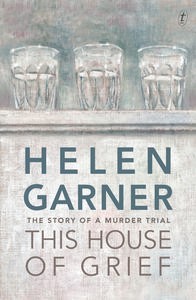
This House of Grief – by Helen Garner, A Review.

Helen Garner saw it on the TV news. Night. Low Foliage. Water, misty and black. Blurred lights, a chopper. Men in high-vis and helmets. Something very bad here. Something frightful.

It was truly very bad. A man had driven his car into a dam. He escaped from the car but his three small sons drowned. The man was charged with their murder and over the following eight years Garner attended the man’s exhaustive legal trials. She exhausted herself in the process of moral exploration of territory that is indeed, ‘dark, misty, black and blurred.’ Reading Garner’s ‘This House of Grief’ can exhaust a reader in turn.

Three hundred pages of scrupulous enquiry end with the author reflecting: ‘When I let myself think of Jai, Tyler and Bailey lying in their quiet cemetery…I imagine the possessive rage of their families: You never knew them. You never even saw them. How dare you talk about your “grief?”
But no other word will do. Every stranger grieves for them. Every stranger’s heart is broken. The children’s fate is our legitimate concern. They are ours to mourn. They belong to all of us now.’

Garner takes the deaths of the three children personally as if she were herself involved. She seeks to know whether they died by grievous mischance or by human intent. She needs to understand. She begs of fate, of the universe, ‘Oh Lord, let this be an accident.’ For us her readers – we who elect to follow her into this frightful something – Helen Garner attends the hearings as our emissary to that house of grief. We too need to know, we too seek to understand; the three lost boys are ‘our’ lost children.

Garner quotes three epigrams, each a succinct cry from a previous emissary, each a pair of hands flung upward in despair over the futility of the quest to comprehend.

He can’t possibly have done it. But there’s no other explanation.

There is no explanation of the death of children that is acceptable.

…life is lived on two levels: one in our awareness and the other only inferable…from inexplicable behavior.

On what account are Garner’s thoughts and reactions, naked here on page after page, a matter for a reader’s interest or a reviewer’s remark? What access has the reader to her deeps, her angst? Garner, the person on the page, our emissary, attends a day of ravaging evidence; afterwards she makes her way, blindly, solitary, to a bar for a vodka. On other occasions she resorts to magical thinking: If only Farquharson could be found not guilty, then the boys would not be dead…Garner pictures them in their domestic vitality, playing footy, watching cartoons, running with arms open for a cuddle. The only way I could bear it was to picture the boys as water creatures: three silvery naked little sprites,…who slithered through a crack and …sped away together.
Then, haunted by the chill of reality, she races homeward in her mind, to haul my grandsons …from their Lego and their light sabres, to squeeze them …until they squirmed. Young boys! How can such wild vital creatures die? How can this hilarious sweetness …be snuffed out?

And again, this longer account of the observer’s migratory flight of feeling: When I got home I sat on the back verandah mumbling to myself, sick at heart. My third grandchild came wandering around the house. He approached me without speaking, turned his back, and stood waiting to be picked up. I lifted him onto my lap. He was only a few months younger than Bailey Farquharson had been when he drowned. For a while the little boy sat on my knee. He relaxed his spine against my chest. Together we listened to the clatter of the high palm fronds, the wail of a distant siren. He glanced up sharply when a flight of lorikeets swerved chattering across the garden. Then he spread his right hand like fan, inserted a delicate thumb into his mouth, and tucked his head under my chin.

And yet only two hours later when he and his four-year-old brother disobeyed me… and went crashing and yelling down the hall to the kitchen like maniacs, rage blinded me. I ran after them, grabbed the nearest arm, and yanked its owner round in a curve. Before I could land a blow I got a grip on myself. The boys stood frozen in attitudes of flight. Nobody spoke. In a cold sweat I leaned against the cupboard door and took some trembling breaths.

Here Garner gives us her brittleness, her sense of near disintegration, her proximity in extremis to harming loved ones in her care; and subtly too, the boys’ “attitudes of frozen flight” recall the postures of failed flight of the boys in the drowned car.

There is a reticence, a holding back at certain points, a refusal to comment that shouts, no, screams, in unexpressed horror. Thus: The men from Major Collision looked into the car before they opened it to drain the water. Ten-year-old Jai was lying face down across the front seats with his head towards the driver’s door…
Seven-year-old Tyler lay on his right side behind the driver’s seat. His head was near the door and his legs were between the two front seats. Two-year-old Bailey was lying across the top of the baby seat, facing rearwards and still tangled in his safety harness.

It is not until the following page that Garner reveals the killer datum: all three seatbelts were unbuckled. It is this crushing fact that tells us that a child – or two children – struggled. It is this, delayed, that a writer striving for dramatic effect might have juxtaposed earlier and quite unbearably with those postures. As it is, the bodies lie diagonally, piercing my composure. I too need recourse to slithering fishes or to vodka or to clutching hard my own brood of near ten-year-old grandboys.

***

Writing to a friend some weeks following release of the book – a year or more I guess after the trial and the appeal and the retrial and the application to the High Court – after all had ended, Helen Garner said: “This is what I’ve learned from the last seven or eight years: ‘We are small. We are weak. We are mortal’… but I think I knew that already.”

After all had ended it had not ended at all.This House of Grief

What Can We Do Once We Lose Our Freedom?

We started gmail and we surrendered the final shred of privacy. We used the net and opened ourselves to every hacker, most of them those we elected. We read of the twin towers and were alarmed; we saw the beheadings and were rattled. Those we elected rattle us often and hard and by reflex and in all sincerity and – as in the case of asylum seekers – in the sincere anxiety that we might unelect them. Once thoroughly rattled we allowed our governments to suspend habeas corpus. We are each of us now, all citizens, all merely Mohammad Hanifs, awaiting the knock on the door of our terror police.

Terror has triumphed. As it usually does. Terror wins when we pay heed – as we need to; it wins when we panic – as we need not.

So what can we do once we lose our freedoms?

I saw an odd movie a score or more years ago in which an Orwellian change had occurred and citizens were forbidden to own books. Books were collected and burned. Publishers were taken away for re-education. The Good Book says: ‘Of making books there is no end.’ But this was an end.

A few resisted, silently abandoning the cities, coming together to meet in the forest. Here each escapee became a talking book. One became ‘War and Peace’, another recited ‘Animal Farm’. Those whose mental muscles were less hypertrophied recited ‘Ozymandias’, or ‘Waiting for the Barbarians’, or the Twenty-third Psalm. All these texts threatened the regime that murdered thought. All reciters risked death but inherited life.

Back here in my real life. I resolve to read poetry every day. I’ll rescue myself and succour others.

Dalia Died

A friend wrote the other day to tell me Dalia died.

I met Dalia in 1972 at the nursing home she ran in Wattle Glen. You descended from the bitumen into a silvan retreat, the buildings concealed behind flowering native shrubs. A quiet path led to a doorway. Through the door you entered a different world: smells assailled you, disinfectant, cooking smells and behind them, always, the smell of urine, the smell of the elderly and incontinent.

Dalia greeted you, her voice musical, her fetching smile stretched over an uneven lower lip, the more fetching for assymetry, her accent French and very pleasing. The bushland at the entry and the greeting upon entering, these redeemed you amid the oppressive smells.

Dalia moved with you from patient to patient. Almost all of them were women, aged, their men long dead, their families generally distant through geography or choice. This young doctor, oppressed by bodies that did not work, by diseases medicine would not cure, by alienating disfigurement and by disfiguring debility, by drooling helplessness, dementia, strange behaviours, this doctor nearing quiet moral panic, redeemed, redeemed always by Dalia. Dalia would proceed to the bedhead, cradle the neck of her charge, sing to the patient the glad news of the coming of the doctor: Here is Doctor to see you, darling. You remember, this is Doctor Howard. He comes to you every week.

Dalia was not alienated, never distanced. Dalia embraced her guests, kissed their foreheads, fixed their pillows, fussed over painless areas of red skin that she would not allow to break down. Dalia spoke to her speechless, apparently demented patient, as if she were wholebrained, fully alert, fully human. Only after taking doctor aside, out of hearing, away from the presence of the stricken, would Dalia allow any concession to incompleteness.
A secular person, she recognised tenderly the spiritual yearnings of her charges, old women born in an earlier age when churchgoing was a norm and a religious outlook sustaining. Poor Thelma, she weeps, she weeps because God has rejected her. She wants to die, she prays for death, and because death does not come, she believes her God will not have her in his heaven.

Now death has come for Dalia. She was ninety two years old.

Dalia left Wattle Glen and our paths did not cross again until a few years ago, when our respective writings brought us together. The accent was still there, the smile, the relentless action of her critical mind, unwilling to yield on any of her concerns. And all her concerns were for humans. I read her memoir, a work of humbling honesty, of emotional privation in Belgium in the middle years of last century, of falling in love, of the ending of love, of emotional collapse, of recovery, of growth, of a thirst for learning. Hers was a life of learning, of ever journeying in her wisdom towards greater wisdom. I thought of Cavafy’s ‘Ithaca”.

As you set out on the way to Ithaca
hope that the road is a long one,
filled with adventures, filled with understanding.
The Laestrygonians and the Cyclopes,
Poseidon in his anger: do not fear them,
you’ll never come across them on your way
as long as your mind stays aloft, and a choice
emotion touches your spirit and your body.
The Laestrygonians and the Cyclopes,
savage Poseidon; you’ll not encounter them
unless you carry them within your soul,
unless your soul sets them up before you.

Hope that the road is a long one.
Many may the summer mornings be
when—with what pleasure, with what joy—
you first put in to harbors new to your eyes;
may you stop at Phoenician trading posts
and there acquire fine goods:
mother-of-pearl and coral, amber and ebony,
and heady perfumes of every kind:
as many heady perfumes as you can.
To many Egyptian cities may you go
so you may learn, and go on learning, from their sages.

Always keep Ithaca in your mind;
to reach her is your destiny.
But do not rush your journey in the least.
Better that it last for many years;
that you drop anchor at the island an old man,
rich with all you’ve gotten on the way,
not expecting Ithaca to make you rich.

Ithaca gave to you the beautiful journey;
without her you’d not have set upon the road.
But she has nothing left to give you any more.

And if you find her poor, Ithaca did not deceive you.
As wise as you’ll have become, with so much experience,
you’ll have understood, by then, what these Ithacas mean.

Ultimately Dalia became a therapist. I thought how fortunate were her patients, what gifts of life she brought them from her lifelong travels to Ithaca.

Dalia became a little unwell a few weeks ago, persisting in her vigorous ways until her last days. When abruptly her blood pressure fell due to a prolapsed heart valve, she asked the doctors to perform the operation they’d ordinarily reserve for one decades younger. When they explained the risk of technical success with accidental brain damage, Dalia elected to die. She accepted a trial of hero molecules for twenty-four hours; when these duly failed, she embraced morphia, chatted with her loved ones and went to sleep, rich with all she’d gotten on the way, and arrived at last in her Ithaca.

Her believer friend, the young doctor of 1972, prays his God will give her rest. At this Dalia would smile her crooked smile and pat me on the head indulgently and forgive my wishful thinking.

Phone Calls from my Dead Brother

My brother Dennis

My brother Dennis

This evening and tomorrow the family will mark the seventh anniversary of the dying of my firstborn brother Dennis. We’ll light candles and congregations will join us in remembering him.

Two weeks before he died Dennis underwent elective surgery. I wondered if the surgery was wise. Dennis, whose life’s creed was hope, assured me: ”Doff, this operation can eventually cure diabetes. It will transform my life.”
We spoke daily on the phone – he from his hospital bed, I from a hellhole town in the deep Kimberley. Day by day Dennis seemed to be doing well. But on day four he told me: ”I’m OK but my belly hurts”. A belly ache bad enough for stoical Dennis to mention was bad enough to alarm me.

Day five, no phone call. That day the pain was worse. Dennis collapsed, his circulation failing as his abdomen filled with blood and stomach acid leaking from his wounds.
At his bedside in Intensive Care the following day we counted the tubes entering and departing Dennis’ comatose form. One into his windpipe to make him breathe; a second into a great vessel to deliver information; a third to bypass his kidneys which had failed; a fourth to drain his bladder; a fifth and sixth into peripheral vessels to deliver fluids and the hero molecules that just might save him.
The greater the number of tubes in a patient’s body, they told us, the lower the chance he would leave ICU alive.
I sat at his bedside and I watched my brother. Behind the clicks and gusts of his life machines swelled the sounds of classical music. Annette, his loving sister-in-law, thought to play that music, those patterned sounds that ever soothed his troubled breast.
I sat there and watched as nurses, tender or tough, kept my brother alive. The tough ones, resentful of something – were we too many, was this medical brother too medical, that sister too exacting, that aged mother too accepting? – made me feel small, in need again of a big brother.

Dennis turned the corner: blood pressure held firm, sleeping kidneys awoke, fewer molecules were needed. The doctors conferred and announced: “We’ll let him wake up now and breathe on his own.”

Dennis breathed and slept on. We all breathed, went home and slept.
At four in the morning my phone rang. A crepitous, rustling sound, a broken voice in windy gusts: it was Dennis: “Doff, they want to njjhrnnujicxvclbkvn”
“Den, I can’t hear you. Say it again.”
Gales and crackles and Dennis’ voice in fragments: “Doff… inaudible… they…unintelligible…the tube back in.”
“Den, are you saying they advise you to go on the respirator again?”
More gasping, a desparate heaving of voice: “Yes!” More gasping. “Is it a good idea?”
“Den, it’s your best hope. Say yes.”
“Alright Doff.”

That was the final phone call. Dennis and I never spoke again. By the time I reached the hospital Dennis’ coma was renewed, the respirator breathing for him. Soon his circulation collapsed again, the doctors tried heart-lung bypass (“It’s only ever been shown to work in children. It’s your brother’s last hope..”) and on the eve of Shabbat Dennis died.

***

I can speak or write of Dennis dying with a composure that surprises me. Even my fatal advice does not trouble me. Perhaps it was not the dying of my big brother, but his living, that calls to me and troubles my dreams.

Dog Days

Fidel at the beach on his last day.

Fidel at the beach on his last day.

Patchett opens her story with, “Two days before my dog Rose died…”* Who of us who has ever loved a dog can resist the urge to read on? Flung into foreknowledge of a death – knowledge humans share, but which animals might be – who knows? – spared, we realise this death is imminent. While many of us imagine we’d welcome such foreknowing of our own end, few could bear it. Patchett, it is clear, feels that burden of knowing.

Then there’s the dog’s name, Rose: this dog is particular. She has an owner, a name giver. Giving a name is an act of appropriation, literally a claim of belonging. Rose belongs to Ann. Sahara belonged to my brother Dennis; and Fidel belonged to my son-in-law Pablo. And, to our surprise, a widening circle of others.

My firstborn brother spent most of his last decade as the sole resident in a family sized dwelling. A gregarious, family-minded man, his loneliness would have been bleak without Sahara. To those who did not love her, Sahara, was completely unlovable, too small, too low slung, raucous and aggressive; she was in addition a sneaking, nasty, opportunistic biter. To Dennis alone was she cherished; blind to her antisocial nature, her repellent effect on all creatures on two legs or four, Dennis pampered her. He loved Sahara. She was his housemate, his friend, his nearest relative.

Happily for Dennis he never saw Sahara’s last days. After he died, one of his friends materialised in our house of mourning and volunteered to take her in. Relieved of a most undesired heirloom, we seldom speak of her. She lives on, however, under her own name, between the covers of my novel ”Carrots and Jaffas”, in which she functions as an unexpected redeemer. My fear is she might be alive somewhere in the flesh. A roar, a blur, a quick bite, sudden blood, quicker flight, you’ll recognise Sahara by her toothmarks.

***

By any standard Fidel was a Border Collie gentleman of refined habits. He growled only when a stranger ventured too close to the latest newborn of his household; he barked only at the one great hound to invade his territory outside Alma Espresso; he was quite useless as a watchdog. Fidel’s sole lapse of etiquette was his habitual piddling on my mother’s loungeroom carpet, but we excused that as the imperative of territory.

Fidel loved to run. I loved to run. Long after my running companions fell away to ruined knees or rescued marriages, Fidel kept me company on long lonely early morning runs. Young women smiled at me, my maleness forgiven in the company of Fidel.
Fidel was first dog across the line in the Traralgon Marathon of 1998. He was photographed smiling at my side with his medal around his neck. The officials were not to know he’d travelled some of those 42.185 kilometres – unwillingly and under protest – in my daughter’s car.

Fidel parted with his testes without complaint, he raised three small boys and won the hearts of widening circles of kin with his never ending grin and his always sweet breath. Like all his bottom sniffing kind Fidel seemed immune to odour. He’d keep me company when I was seated on the loo. Once in that small room he ventured forward, making mistaken fellatious overtures. Fidel and I were close but I drew the line here.

One day Fidel seemed tired, the next day apathetic; the third day he was rescued by surgery and transfusion (at the hands of his loving vet-in-law) from death by catastrophic internal haemorrhage. The vet-in-law confided he had had incurable cancer. Six weeks later my wife and I said our goodbyes to Fidel – my jowls quiver and my lower lip trembles as I recall it – at the seaside, his happiest hunting grounds where he was wont ever to chase seagulls into mocking flight. We embraced him and whispered last words. We knew what we knew; we wondered what Fidel knew? Not for the first time I kissed him.

***

Ann Patchett won the Orange Prize and a Pulitzer for ‘Bel Canto’. She won me first with a small booklet titled ‘The Bookshop Strikes Back’ (Bloomsbury, 2013), a safe enough speculative buy at $2.50, handsomely rewarding.

In her remarkable book, “This is the Story of a Happy Marriage”, Ann Patchett describes the passing of Rose. Rose was small, lap-sized, not a real dog to love and run a marathon with. From her opening phrase Patchett won me.

After Rose dies, Patchett writes: “I came to realize…there was between me and every person I had ever loved some element of separation…arguments and disappointments…over time people break apart, no matter how enormous the love…and it is through the breaking and the reconciliation, the love and the doubting of love, the judgment and then the coming together again, that we find our own identity and define our relationships.
Except…I had never broken from Rose…”

Patchett recruited me into her love, convinced me, changed me, enlarged my understanding.
What more can we ask of a writer?

*This must be the most arresting start since Annie Proulx’ “Postcards”, which opens with the protagonist’s realisation that the person with whom he has – one breath past – shared an unspecified se xual act has died in that act.

She Died with a Smart Phone in Her Hand

She approaches the kerb, this young woman, walking diagonally across the footpath towards the verge. As she walks her regard is upon the screen of the phone in her palm. Nimble fingers dance across the small keyboard as she composes her message.

The face is intent, neither unhappy nor animated, as she drifts in her fugue onto the roadway. Dancing fingers pause, poised above the screen while she searches for the word that eludes her. Her feet walk slowly. She has no regard to the now quickening flow of feet before her.

The message, the letter, these occupy her.

The red light tells her nothing.

My car moves forward with the greening of the lights, as others do on either side of me and from the opposite direction.

What does she write? To whom does she compose these thoughtful words?

Is there a beloved for whom she writes? Inching closer I imagine her words: ”Dear one,

Last night was so…”

The last dashers against the red light have made shore. But the drifting lover faces her palm. Her fingers busy again, she writes her closing words…

***

When one tonne of plastic-clad metal encounters sixty kilograms of human flesh at 50 kilometres an hour the tender flesh gives way. The body leaves the surface, rising briefly above the roadway before landing in an attitude determined not by volition but by physics. A gust of sound as air is forced from the chest. The head makes forcible contact, soft brain and delicate vessels slam against the hard vault of bone. Slender cervical vertebrae are wrenched violently, internal viscera suffer shearing forces.

I have seen these changes, seen them all, attended them at post-mortems and at roadside.

***

And then there was Barry, my younger brother. Barry was five when the phone call came. I was home sick, genuinely sick – we couldn’t put anything over my doctor father – and I watched Mum take the call. Barry had gone off to school that morning, unescorted by a bigger brother.

Mum stood with the phone in her hand, her face urgently attentive. “Yes, I am Barry’s mother.”

Frowning, silent, burning with inquiry, Mum finally cut in: ”Sir, I can’t understand you. Please compose yourself.”

Then, “Oh hello Mr Zizzis, yes, yes I do know you… from the milk bar. Please tell me…”

Mum listened for a moment or two.

“I’ll come now. I’ll be there in a few minutes.”

As she headed for the back door Mum said, “Barry’s been hit by a car…crossing Warrigal Road. Mr Zizzis says he’s alright. No, you stay here. You’re sick, remember.”

When Mum returned Barry was alright. He had an egg on his forehead and a guilty, relieved look on his beautiful face. Perhaps he was just pale, but his tight dark curls never looked so black.

Mum explained: “Barry ran in front of a car. The driver couldn’t stop in time. He was an old man, he said he’d never had an accident in all his life of driving… I couldn’t understand him on the phone, he was crying so much. Mr Zizzis saw it all through his window. He said the fender caught Barry and threw him up into the air. Barry just floated up from the roadway, floated and Mr Zizzis saw him going up, then landing on the bonnet. The driver wasn’t going fast. He just brought his car to a stop.

And Mr Zizzis knew Barry. He brought them in and gave the old man his phone. Poor man. Poor, poor old man.”

***

The daydreaming letter writer is safely beyond the eastbound lanes. Will she claim sanctuary on the double lines? The nearest westbound fender catches her. Her body rises, floats – I will her to follow Barry’s gentle parabola – she is young, too young to die. I am old, too old and too young – to bear witness again to the sudden extinction of breath, of life.

My Mother’s Amygdala

MumI am pretty sure my mother had an amygdala; every one of us does. If my friend Joe, who seems to know his amygdalas, is correct, Mum’s must have been smaller than most. He tells me the amygdala is the seat of fear in the brain.
Joe is a barrister. I remind him I am a doctor. “It’s fifty years since I last had need of any knowledge of the amygdala. How come you know about it?”
Joe says: “In my business it helps to keep up to date with neuroscience. Such things as the organ of fear can be important in court”. Which all makes sense for a criminal lawyer; but Joe does compensation cases only.

For a while I consider my mother. Then I describe her to Joe. Joe smiles. The more I speak of my mother the wider Joe’s smile.
“Mum lost her father to cancer when she was twelve. Then three years and one day later her mother died – “Mummy had rheumatic fever in her childhood. After Daddy went, she died of a broken heart.”
From the age of fifteen Mum and with her younger sister Doreen were raised by her widowed grandmother, “Gar”, a tender and enlightened and emancipated lady who taught her granddaughters to feel inferior to no-one on this earth. Nor superior, for that matter.

Mum failed her Intermediate Certificate, Year Ten in today’s language. She concluded she was a dunce (making no allowance for the effect on learning of the abrupt loss of a pair of parents) and left school. She attended secretarial college, worked as a bookkeeper, saved her salary and at the age of twenty set sail alone for Europe. The year was 1939. Her correspondence through that blithe passage via the Dutch East Indies into Western Europe is punctuated by increasingly urgent letters from Gar to hurry home: “There is going to be a war.”
Mum prepared for the war by sleeping on deck – “in case we were torpedoed” – on the last night at sea. Her ship made port in Fremantle on the day war was declared.

My parents raised us children in the country town of Leeton. Once a year we visited the great city of Melbourne where there were trams. Mum took me on a tram ride along Hawthorn Road, past the cemetery. “Mummy and Daddy are in there”, she remarked affably, indicating a long red brick wall. Behind the wall I glimpsed stone statues and crosses. Mum’s remark made no sense to me. ‘Mummy’ was on the tram with me and ‘Daddy’ was back home in Leeton. Mum explained: “It’s a cemetery. People who have died are buried there. That’s where my parents are.” Mum’s voice, warm with affection and remembered pleasure, sounded as it always did when she spoke of her mother and father. I heard no note of sadness. At seven years old I could only imagine losing parents as the absolute of perdition, of aloneness. A thought like the abyss. Mum seemed to think dying was a natural part of living; it happened but death didn’t spoil life. Not for Mum.

Mum told me once of a tram ride she took one night from Fitzroy Street to the home of her uncle (and co-guardian) in Beaconsfield Parade. “I was visiting a friend in St Kilda. I stayed later than I intended and I almost missed the last tram. I just caught it. In the morning I read in the paper that a young woman was murdered overnight at that same tram stop. She was killed some time soon after the last tram – my tram – left… Ever since I was fifteen I’ve known that people die. Last night just wasn’t my time.”

When we children were teenagers, now living in Melbourne, Mum sailed to Britain or Europe. She always stayed in the cheapest hotel, choosing the cheapest room that had private bathroom facilities. Invariably her accommodation was in some seedy district. One time she discovered she was staying in a brothel.”I was safely locked in my bedroom, when I heard a sound from the door. I looked up and I saw the door handle turning. Then the door that I’d locked opened. I sat quietly. No-one came in. The door closed and I heard footsteps walking away. Next day a man I didn’t know asked me to sleep with him. He couldn’t speak English but he showed quite clearly what he wanted in sign language. I couldn’t speak his language – which might have been Kurdish. But I showed him in sign language the answer was no.”
“How did you ‘show’ him?”
“I took out my photos of you four children. I told him your names and your ages. Your faces must have changed his mind.” I picture Mum recounting with delight details of her brood, regaling a puzzled predator with biography, smiling and brimming with goodwill in her natural belief that blood was thicker than semen. I think Mum’s sunny innocence would dent anyone’s carnal ardour.

Another trip, this one around the time of the Cuban missile crisis: mum decided to travel to Yugoslavia. Friends tried to talk her out of it, reminding her of the Cold War. Mum said, “I know it’s an Iron Curtain country, but I don’t think it’s very iron.” People in Tito’s concentration camp in the mountains probably felt both the iron and the cold. Mum, blessed in her innocence, did not sense the chill.

One week before her 92nd birthday, Mum lay in her bed in Cabrini Hospital and breathed. Breathing was a labour as Mum’s heart was failing. Between small gulps of oxygen Mum chatted cheerfully with me and Miriam, a neighbour. Suddenly she coughed. And coughed again and again. Wordless now, Mum at up straight and took great desperate gasps, one after another. Quickly Miriam excused herself and left. I turned up the oxygen flow and called a nurse, who raced in and injected some diuretic into Mum’s drip. Minutes later Mum was gulping comfortably again. She pulled off her oxygen mask and grinned: “Miriam and the nurse both thought I was going to croak, didn’t they?” – huge crooked grin now, now laughing – “Well, I didn’t!”
After that Mum and I talked seriously: I asked her if she had any late – possibly last – wishes. Day and night in the hospital she had her two living sons and her daughter and a tribe of grandchildren with her. Mum never wished for more than that.

Even the smallest amygdala will not save you when your heart is shot. Mum lived a few more days before falling asleep and dying without fear.

How we Killed Leo

Leo was an asylum seeker.  Let us put aside that weary term and see what Leo was and how we came to know him. Leo was a Tamil. That means he was born into that minority in Sri Lanka which gave rise to the Tamil Tigers. The Tigers rebelled violently against the Sinhalese majority, earning a reputation for terrorism.
A civil war was conducted over many years, culminating in a government offensive that put down the rebellion and targeted civilians. If I read the story right, both the Tigers and the government were guilty of atrocities.
Leo was a baby when, during the worst of the bombings, his father wrapped him in banana leaves and hid him in the jungle. The family fled to India when Leo was five. He lived there in a miserable camp for twenty years, visiting Sri Lanka once to see family. He was imprisoned and tortured. Why? I don’t know precisely, but the explanation would have to start with the fact he was a Tamil.
Leo became an asylum seeker, a boat person, a “queue jumper”, and made his way to Cocos Islands. After only four months of detention, Leo was resettled near Geelong.
That means the Australian authorities – Customs, Immigration, ASIO – found him to be a non-terrorist. They found that speedily.  Leo was judged not to be a risk to Australia.  He was given a Bridging Visa, which allowed him to work but did not endow him with Permanent Resident status.

We said, “Leo, although you jumped our queue, we are letting you into the country and out into the community. But you are a guest. We can tell you at any time to go back where you came from.”
In the last few weeks Leo learned that a couple of Tamil men with stories similar to his own had been taken back into detention. These two faced the prospect of joining the one thousand Tamils whom we have sent back to Sri Lanka where they face persecution. Leo knew that persecution; he knew it in his tortured mind and in his body.

How did Leo spend his time on the Bellarine Peninsula? He worked two days a week for an asphalting company, cleaning greasy trucks. In his spare time he volunteered in an aged care home, he donated blood, he helped bring aid packages to asylum seekers new to the community, he sent money every month to an orphanage in the refugee camp in India that is still his parents’ home.

Leo became an organ donor. Did he expect to die?
Mister Morrison, our Immigration Minister, declares Leo showed no signs of suicidal intent. We know Mister Morrison, a minister who acts as Ruddock spoke, with icy resolve. Only Morrison doesn’t speak to us much. We might judge from his record his capacity for empathy, for humanity. Our minister said Leo’s death “is a terrible and tragic incident and none of us can know the mind of a person in this situation.”
Here is where I can help the minister. I know the mind of a person in the situation of such parlous existence, endlessly uncertain what his fate will be, of having it determined by the opaque decisions of governments and ministers. I know it by the accident of my unusual experience working among detained people in Christmas Island. I know it too by the not unusual gift of empathy. I know Leo’s death was not an incident – far from incidental – it was our doing and it was in the statistical sense, predictable. We saw that with the Tamil man who burned himself to death a few weeks before Leo.

Continue reading