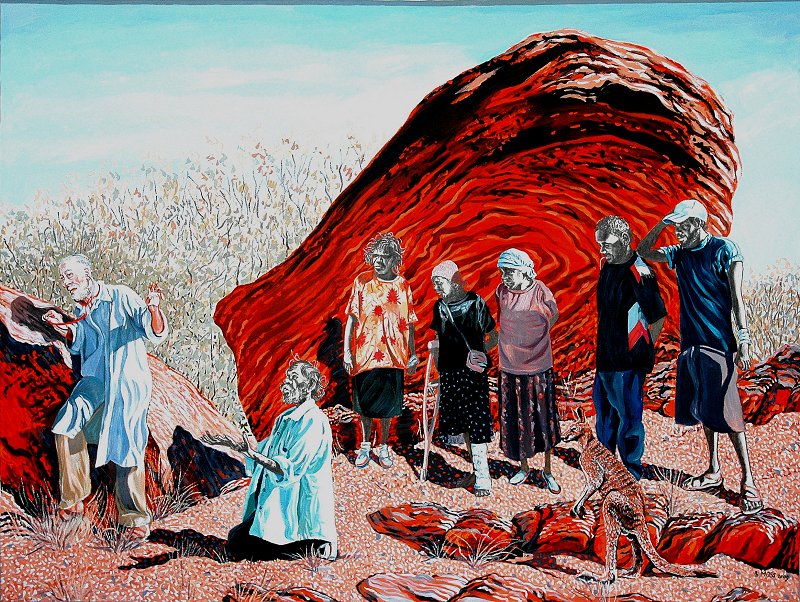
Alone and Palely Loitering

You walk past them at lunchtimes and at smoko, you see them sheltering under eaves in foul weather, you see them in their outcast clusters, you see them and you avert your gaze for fear your concern will offend.

They are many, these persons of all ages, members of an underclass. If they were to unite as voters they’d overthrow governments. If they were to become radicalised we’d tremble in our beds. But no, they do nought to us and all to themselves. These human persons harvest leaves and dry them and chop the dried leaves finely then wrap the product in a cylinder of paper. Carefully, accurately, with practised fingers, they burn the leaves, then hungrily, deeply inhale.

Alone in the animal kingdom these sentient creatures do not flee from smoke.

I see them, I see my friends, who meet my gaze and smile in confession – and I am sorry to see – in embarrassment.

A long time ago my father in law was dismayed when advised by his tobacconist (yes, he saw a specialist, no mere candy vendor) that Chesterfields would no longer be imported to Australia. The tobacconist asked: ‘How many do you smoke a day?’

My father in law told him.

The tobacconist responded: ‘You are a very special customer; we’ll make sure you stay supplied.’

images-4

The very special customer became too breathless to read a bedtime story to his grandchildren. Soon he developed a cough. Suspecting cancer he stopped smoking.

Not long after, the very special customer died of his disease and my children lost their very special grandfather.

Manufacturer Phillip Morris continues to accommodate its special customers. My friends huddle and shelter while I shudder. And I direct my superannuation to alternative investments.

“I’m just a boy whose intentions are good; Please don’t let me be misunderstood.”

Picture: Ray Strange Source: News Corp Australia

Picture: Ray Strange Source: News Corp Australia

A photo in the current issue of The Monthly shows Bob Hawke and John Howard seated together at a public event to honour the memory of a deceased Prime Minister. Their old faces deeply creased, their bodies close, Hawke’s right arm entwined with Howard’s left, the picture of two old men united in deep sympathy – and in Hawke’s case at least – showing characteristic demonstrativeness, as his hand gently grasps Howard’s thigh. The image arrested me. I thought of Yeats’ Lapis Lazuli:

‘There, on the mountain and the sky,
On all the tragic scene they stare.
One asks for mournful melodies…
Their eyes mid many wrinkles, their eyes,
Their ancient glittering eyes…’

In the same issue of the magazine I was arrested by an equally unexpected image: Noel Pearson the leading Aboriginal intellectual seated close to Tony Abbott, our Prime Minister. Pearson looks past the PM, gazing severely into the distance; Tony Abbott, smiling tightly, looks upward to Pearson’s face. I spent some time interrogating their expressions. In Pearson I found depth, a sober realism. In Tony I saw yearning. I wondered how it was the PM appeared to be the supplicant, the client, while the man from disadvantage wore such self-assurance.

Tony Abbott is co-author (along with predecessor PM’s and a succession of underlings) of our World’s Worst Practice towards human beings who arrive in Australia by boat and seek asylum. That policy is cruel by calculation; it is calibrated torture. Our practice is a precise antithesis of the parable of the Good Samaritan. Now, would-be-good Tony knows this and only by a sustained effort of moral contortion and will can he manage to unknow it.

Along with Morrison, Ruddock, Howard, Beasley and Rudd, Tony Abbott is an avowed believer. He belongs to a claque of believers who perpetrate this unchristian – indeed antichristian – policy. How do they all do it? What do the believers believe?

In Tony’s case the face I see is an innocent face. He gazes towards his grownup interlocutor, his expression seeking approval: he seeks a word or a sign: “Good boy, Tony, you’ve done well.” Like a small boy Tony seeks affirmation. By means of sustained effort he has gained this, successively from the ghost of Bob Santamaria and from Cardinal George Pell. From such firmly formed personages Tony learned notions of goodness. He would be good and thereby be approved.
The child looked for affirmation from John Howard and the Liberal Party. He sought our approbation too and, in opinion polls and at the last federal election we gave it. We became complicit in sustaining the ego structure of this needy child. Patently we no longer show approval to this immature person. He locks himself inside a tightening circle of insecurity, looking to spouse, offspring and advisors, some of them women, to whom he seeks mothering.

On Mother’s day I will muster all the compassion I am capable of and try to think kindly of Tony Abbott, the child leader who just wants to be good (just so long as we’ll approve).

A Musing

At first hearing the term “blog” feels slightly ingenious (web log – right, I get it). More than that the word falls heavily upon the ear, unsubtle, ugly and crude – the more so since in the vernacular of childhood the bog was the lavatory. When we visited the lavatory whatever solids we deposited there were collectively a ‘bog.’ The term remains current but not predominant.

Initially I disdained the term ‘blog’. I knew instinctively that a blogger must be vain and unselfconsciously vulgar. I knew I would never write one; I would never be one.

Yet here we are. Of course I am flattered that over  two hundred and fifty persons have managed to overcome these unpleasant redolences and ‘follow’ these postings. Yet, two or more years after embarking on the practice I remain unreconciled to blogs and blogging. The words suggest turds.

So what are we sharing? I think this is Howard Goldenberg’s column, too occasional to constitute a diary, yet intimate enough to be that. This is Howard thinking aloud, thinking personally. Self-absorbed in tone, vain in ambition, unexpectedly enriching to the writer in its fruitful exchanges.

Being now FED UP, I resolve that so long as I remain a bogger, I’ll no longer be a blogger. When King George V lay on his death bed a friend visited and remarked encouragingly, ‘You’ll soon be up and about and able to take your annual holiday at Bognor.’ To which the king replied: ‘Bugger Bognor!’ – and died.

As for me, Bugger Blogger! I am glad to announce this blogger has died, executed, the punishment for linguistic ugliness well overdue.

Good morning, welcome now and henceforth to the occasional musings of Howard Goldenberg.

Rachel’s Story

Malcolm Fraser lived and worked his work, then he died. His political career and mine started around the same time: he became leader of his party and I became a voter. I enjoyed voting against Fraser and I enjoyed disliking him. At the time I barracked hard for the brilliant Whitlam. By contrast I found Fraser dour, unimaginative and colourless. But from the first moments following the Dismissal I liked Gough less; the oratory which had always sparkled now became tarnished with absurd hyperbole: expressions such as “Maintain the rage”; “Kerr’s Cur” and so on. In time I discovered no-one could adore Gough as much as he loved himself, while Malcolm seemed to grant himself no more regard than we did in the electorate.
Decades passed, we lost the war in Vietnam, and the refugees whom Gough rejected (he judged they’d all vote for the conservatives) were succoured in their tens of thousands by that cold man, Malcolm Fraser. We buried Fraser last week and those refugees took out a full-page advertisement to express their sorrow and their regard for that colourless man. The page teemed with Vietnamese-Australian organisations, marshalled on the page, pouring out thanks and regret in a poignant
effusion. 
Around the same time I received the following from one who is a friend of the friendless in this country:

The following is an abridged version of Rachel’s story, reproduced here with the writer’s consent. Rachel a refugee from the Democratic Republic of Congo, who was resettled in Adelaide seven years ago (taken from Faces of the Refugee Story: Portraits and Stories of 15 people who now call Adelaide home):

“I was born in the Democratic Republic of Congo but when I was about 1 years old the First Congo War broke out and we fled and we went to our first refugee camp in Nakabande and then from that camp we returned back home again to Congo. The Second Congo War broke out and I was almost 2 years old. My family fled again and when we fled this time we knew it was something that was going to be permanent – we wouldn’t be returning back – and it’s a very long journey from Congo to wherever we are going because we didn’t know where we are going. We found ourselves on the border of Congo and Uganda but we didn’t know who was going to be waiting – it could be the rebels to kill us or it could be someone to help us. 
Luckily the UNHCR were there and we were rescued by them and they took us into another refugee camp in Uganda…from there it got too crowded – too many people coming in – and so they had to move us to another camp. We were given cooking oil, beans, flour and we settled there. The UNHCR gave us tents and eventually land to start our new life there and we were able to build our own houses.

In 2002 we were attacked by rebels in that camp. We did have protection but…it was quite a walk from where we were to them. It was a military base where they had soldiers and they were supposed to protect us but because they were so far away from us the rebels came from the other side, not the side that they were on, so they were not aware of us being attacked until some of the men …went to tell them that we had been attacked.

They had taken my Dad. Because our house was the first on our Block (like a suburb) and the place around us hadn’t been cleared of heavily grown bushes we didn’t hear anything. About four heavily armed men kicked down our door (this was about 11-11.30pm) and wanted my eldest sister but Dad said no and so they took him. I remember that very vividly. They killed a woman that had a baby on her back but her child survived. My mum took us and fled with the other women and we went into a part that was well hidden by overgrown grass and trees. We were stuck not knowing whether Dad was coming back in the morning or not.
The soldiers [came] and fought [the rebels]. There were lots of guns going off and I could hear them from the ground we were laying on keeping quiet.
Continue reading

Abbott and Abbot: The Ethics of the Fathers

One of the more accessible elements of the rabbinic literature is PIRKE ABBOT, a collection of maxims, proverbs, pithy sayings and principles of early post-biblical sages. Literally translated, Pirke Abbot should be ‘Chapters of the Fathers’, but ‘Ethics’ is generally preferred. By curious chance ‘Abbot (fathers)’ is a homonym of ‘Abbott’ (Prime Minister of Australia).

Pirke Abbot makes lively reading. It includes some very golden rules
for living. Such are the maxims of Rabbi Hillel, a sage beloved for
his humanity. He wrote: ‘If I am not for myself, who will be for me?
But if I am only for myself what am I? And if not now, when?’
My nine-year old grandson Miles, much troubled by predictions of a
world where temperatures would rise and life be threatened, noted our
government’s anaemic response to the matter and wrote to the Prime
Minister echoing Hillel – if not now, when?
‘Dear Mister Abbott’, he wrote, ‘Please protect our planet before we
run out of water and every living thing will die.’
Mister Abbott, as befitting the Father of his country, wrote back to
the child he’d sworn to protect:

letter from tony abbott

(In summary:)

Dear Miles,

Thank you for taking the time to write to me. It is a very good thing that you are
interested in the wellbeing of our country. I hope you will continue
to show this interest in the future.’
The letter was signed (in ink), ‘Tony Abbott.’

Miles was not reassured.

“Mummy, he did not even mention the environment and what he was going to do about it.”
When Abbott succeeded Turnbull as leader of the Liberals, I felt
Australian politics might become more interesting. Here was something
novel, a potential prime minister who happened to be a conscience
politician. Noting Abbott’s sincerely held opposition to abortion and
the unpopularity he had courted in his restriction – on principle – of
an ‘abortion drug’ much sought by both doctors and patients, I
thought, ‘Well, I don’t like his politics, I don’t think he’ll last
long, I don’t much like his style, but I respect these signs of
integrity.’ Meanwhile the urgers in the Murdoch press drooled in a
chorus of relief at the eclipse of Turnbull and of the climate.

Of course, I had misjudged Tony. Moralistic but never simply moral, he
achieved a professional politician’s capacity for the flexible
backflip. His ‘style’ flowered into an idiosyncratic misreading of the
public mind that robbed the poor to enrich the already rich; and
culminated in advising the woman whose job it is to create knights to
dub her husband, a non-Australian, Knight of the Order of Australia.

At this stage the public gasped in disbelief, Abbott’s own party
gagged and even the Murdoch Urgers looked about for a successor to
anoint. Commentators commented – that’s what I am doing now – and we
all had a wonderful time frothing at the inevitable (if not imminent)
fall of this man of hubris.
Enter another grandson, Joel, aged nearly four: fresh off the plane
after three years’ exile in Britain this young citizen observed the
image of Tony Abbott appearing day after day for on the front page of
the paper.
He asked: ‘Who is that man, Mummy?’
‘He is the man the people of Australia chose to look after us, darling.’
‘Why is his picture in the paper?’
‘People are feeling cross at him.’
‘Why?’
‘You know how people in this family try to be kind to each other?
Well, people feel cross at that man because he hasn’t been kind to the
people he should look after.’
[At this stage I need to inform the reader of the Corrections
Protocols operating in Joel’s household: in the case that one child
having many toys withhold a toy he isn’t using from his smaller
sister, who then purloins said toy; and that older child then belt the
younger, the older child’s conduct is designated as ‘not kind’; and
that elder child is directed to take some time out. He is sent to the
staircase where he must sit and reflect upon his unkind action until
he feel ready to seek forgiveness and make amends]
Joel, regarding the image of the Prime Minister pictured descending
his aircraft’s steps in Canberra, said: ‘That man needs to go to the
time-out step.’
In the event, ignoring Hillel’s second clause of selflessness, the PM
followed only the sage’s first clause: ‘If I am not for myself, who
will be for me?’ He brought forward the party room meeting to deprive
plotters of time to plot. His party met and voted him not time out but
more time in.
Abbott vowed he would change. He’d listen. He’d become consultative.
Good government would ‘start today.’ No-one believed he could change.
I do not believe he can. But how miraculous would it be to witness
such change, how interesting to watch a small spirit grow and enlarge
and show kindness?

Once Upon A Writer

Once upon a time I was a writer… No, not once – thrice upon a time.

First time: in second or third class the teacher directed us to write a composition. We did as we were told. I enjoyed writing. My composition was chosen and read to the class. I was a writer and one year later, when the Melbourne ‘Age’ published a little piece, I was a published writer.

Second time: at medical school, achieving mediocrity in exams, I found relief editing and writing for a paper. I published what I wrote.

Third time: with a family now grown up and my own parents failing, I was a writer heavily charged with material. I wrote and my friends and family responded. Among the responders one friend in particular responded decisively. Often enough she responded derisively; and not just often enough but more often than enough.

I had good reason to pay attention to my critic friend. She had been an adult reader for many more years than I had been an adult writer. Further my critic was trained in criticism while I was untrained in writing.

Curiously my early vulgarity didn’t trouble her much. My sentimentality (an abiding tendency) excited little reproof. And even the structural shambles, the way narrative fell upon narrative by accident into a happy enough heap, provoked no rebuke.

The problem with my writing was the writer. Contrary to my critic’s command I did not write of Howard the way Howard should write of Howard. In truth this was not willful delinquency (another abiding tendency) but incomprehension. So stratospheric is my critic’s sophistication, her principles eluded me.

The pages of my first two books are Howard-haunted. Howard Bloody Goldenberg is to be found in the middle of every page or in its margin or inescapably behind every page, pages that can never be thick enough to disguise Howard. This drove my critic mad. It was not that Howard was full of himself (he is that) but that Howard was represented without precisely the ‘self-reflexivity’ (my critic’s term) that she demanded. ‘Howard’, she wagged her finger imperiously, ‘Howard, you are refusing to become the writer Howard should be. Your subject, your great subject, is Howard…’

This criticism, emphatic and oft-repeated, merely increased my self-consciousness. Eventually it would drive Howard from the page. Thus, in book number three (‘Carrots and Jaffas’) there exists a character who resembles Howard but is not Howard. Although that character is a male in his sixties, a compulsive storyteller, an outback doctor with a large nose and lavatorial obsessions, he is not Jewish, not Howard per se. In truth I no longer trusted Howard to create Howard. My critic had achieved something worthwhile; she had demolished a formerly impregnable exhibitionist. This was surely to the good, for Howard the person showed an objectionable and retrograde refusal to adopt my critic’s view of the world. (The critic started adult life as a social activist, becoming a member of a commune, a welfare worker, resolutely a conscious and conscientious proletarian. In time she learned the profound error of her ways and unlearned her early amused tolerance of Howard’s political softheadedness.)

Meanwhile Howard had become a blogger and my critic became my bloggee. I would write, my daughter would post and my critic would criticise. More and more my critic criticised Howard for not being my critic’s faithful disciple. At one stage, in outraged surprise, she accused me of being ‘green’.

Given this blog’s unrepentant diarising of Howard’s life, his thought, his memories and stories – in short this blog being Howard on the virtual page – my critic found the entire exercise personally provoking. Possibly intentionally so. Her criticisms of Howard were now unrelenting, and of course, public.

It is timely here to remind my reader that my critic is a friend, that she certainly wishes for nothing more than my improvement. She has in mind my ascension into a literary realm which exists clearly in her sight and quite outside my powers of vision. In her private love of Howard this friend is staunch. In public she is an attack dog. At first puzzled, later a little hurt, eventually wryly amused that such a thing might be, I accepted her blank rebuttal of my private objection to her tone. ‘Howard’, she wrote (publicly of course), ‘Once your writing emerges into the public sphere you cannot expect criticism to remain private.’ Fair enough. Perfectly logical, fully consistent with literary purity. And perfectly blind to the imperatives of friendship.

I came to accept a painful reality:

The moving finger writes,

And having writ, moves on;

Nor all thy piety nor wit

Can lure it back

Nor cancel half a word of it

(From the Rubaiyyat of Omar Khayyam)

Eventually the moderator of this blog published guidelines of the limits to decent blogly conduct; and the critic, declaring herself to be my ‘troll’ (to me a new concept), banished herself from these pages.

My critic helped me immensely. She forced me to examine every self-syllable I wrote. She required of me an intensification of my self-consciousness. To this day she shadows every line I write, shaping my writing to conceal my thought, as she peers through the ether for Howard malignancy, stimulating me to a meticulous attention to some standard I never grasped but for which I blindly reach. Of course the cost is a friend who, in the name of friendship, has shat upon friendship.

Rape

One night when I was about thirteen the local police called my father to examine a body that had been found in the park. The woman (the girl?) was eighteen. She had been raped and strangled. Dad returned, a great sadness in his face. His voice was drained. He said, ‘Her only crime was being a woman.’
I did not understand.

I met a young woman recently who has been treated over twenty years for depression and anxiety. She’d been given medications as well as psychological therapies and psychiatric help. She still sleeps poorly and takes sleeping tablets as well as Valium when she’s anxious. She tells me she spent years drinking a bottle or two a night, ‘closed away’, later using cocaine, ecstasy and ice. She hears the ticking of her fertility clock, she wants children but she feels unready.

Diffidently I asked about abuse. She trusted me enough to confide, ‘I was raped when I was thirteen.’
‘Was it a relative?’
‘No, a school friend one year older than me… I looked for him recently on Facebook and I wrote him a message. I’ll email you what I wrote if you’re interested.’
I was interested.

Hey XXXX,

I’m not sure if you remember me but just wanted to touch base after so many years and confront something which happened when we were at school together.

Remember the night we went to one of your female friends place and another one of your mates came along (apologies but their names don’t spring to mind).

Anyways, the events of that might have haunted me since and, well, finally I’ve managed to build up the courage to message you and speak up.

It saddens me that what happened has affected me so much and for so long.

I honestly thought that you were a friend back then and you and your friend took something away from me and I have never forgotten and it has affected me all this time.

My dignity was taken away and diminished.

I still have vivid images in my mind of being extremely intoxicated even to the embarrassing point prior to what happened that I had been sick on your jacket which I wore as it was cold.  After this I was too ill and had to go to the spare room to sleep it off and at that point both you and your friend had taken advantage of the situation of me being passed out drunk and you both fucked me.

I will never forget also to this day that your mum, and I understand her being your mother defending you and your friend in saying that neither of you would ever do such a thing.

Saddens me that I was the one apparently untrue to the situation in yours/your families eyes.

The next morning my mother and brother had picked me up and they saw that something was not right. I had blood on me and looked a mess and was taken to the doctors but I was too shocked and embarrassed to admit to anything.

XXXX this was probably not the best way to do this via FB and just understand I’m not wanting anything from you nor an apology or anything but just feel that this is something that I’ve had to stand up to and to give me peace of mind after so many years.


***

I understand violence born of anger or fear. What is it in a male that allows him to hurt a woman or a child by calculation? I know this violence, I see it and I treat its fruits; but I don’t understand it. That people live and re-live and suffer and endure I do know. Some suffer beyond endurance and slash or die. I know some few who manage to create an enlightened response. This young woman said, ‘I changed cities to change my life.’ Soberly she added, ‘I think I am making progress.’
She found work in the justice system. And she found a sort of spiritual greatness that shows in these closing lines to her old school friend:

I would however like to ask you to always watch over your daughter, nieces if you have any and younger family members so this never happens to them
.

Africans in my Lounge Room

Trudy ushered them in, the two-and-two-thirds doctors from Africa. Tall, beautiful and young, each greeted us in perfect Hebrew: ‘Shabbat Shalom’, a peaceful Sabbath. Three smiles of perfect teeth lit our room on a rainy Saturday afternoon.

First and oldest was Tom, thirteen years a doctor, eight months in Australia on a Bridging Visa. Next came Afia, with 18 months’ experience in Ethiopian hospitals and I don’t know how much time in refugee camps. She too holds a Bridging Visa. Last and youngest was Oprah, the vulgar fraction: she has completed four years of medical studies in the Congo. Her birth country is Rwanda. I did not prosecute her with enquiry about her double expatriation. Like the other two, Oprah subsists in Australia at the pleasure of the government. That means the kindness of Mister Morrison.

All three understand fully they can be evicted from this land of asylum at which ever moment Mr Morrison’s kindness might run out. As none of the three came by leaky boat they have the right to work. If they can get work. Trudy brought the three to us to help them find work. I had invited two august medical friends, superbly connected senior people in their fields.

We sat down and talked. Tom outlined his situation. In his early thirties, married, experienced in hospital medicine and a recognized expert in immunisation in third world countries, he is permitted to work here as a doctor only under supervision. At present this distinguished professional works as a medical menial, washing incontinent bodies in a place for the aged. Tom makes no complaints about the red tape, he is grateful to be here, willing to go anywhere – to the outback, to the western suburbs – he just wants to use his training. Can we help him find work? This expert in immunisation – he is just back from Geneva, where he was summoned by the WHO to a conference – with his rich experience of tropical disease would be a gift to a hospital or a tropical medical school or an immunisation project or in policy in any of our tropical zones.

Afia, aged twenty-seven, came to Australia by invitation, to attend the recent world AIDS conference. She applied for asylum with her husband, a chemical engineer who is also looking for work. They too will go anywhere. Afia wants to be a GP. I pictured our large communities of people from the Horn of Africa with Afia as the needed human bridge of cultural understanding to bring these many to safety. I saw the many Aboriginal communities crying out for GP’s.

Oprah has been here for a few weeks. Trudy has given her shelter. Oprah wants to become a nurse. In this country nursing is university course and monumentally expensive. However asylum seekers can pursue TAFE studies at no cost. Oprah managed four years of a medical degree; nursing will not be beyond her grasp. She’d be able to train as a State Enrolled Nurse at TAFE and from that platform gain employment and support herself while studying at Uni. I work with numerous African nurses, highly appreciated in the outback, where the barriers between the African and the whitefella are as nought compared to the gulfs all must cross in indigenous health.

There was little talk of the revolutions, the wars, the massacres; there was scarce mention of refugee camps; there was no complaint, no sense of entitlement, no pity of self, no cries for the families left behind. None of the three had met the others until Trudy brought them together on Saturday and coached them in the Hebrew greeting on our doorstep. Afia, Oprah, Tom, three islands in this distant country, three shimmering humans simply happy to be here, eager to work, to stand up, to make their way.

Theirs is an old, old Australian story. I saw the Reffo, the New Australian, the Boat Person, the Gold Rusher, the survivor of the Shoah, the Balt on the Snowy Scheme, the student from Tiananmen Square. I saw my wife’s mother, a child fleeing Danzig in 1938, I saw my Grandpa arriving here alone, aged thirteen, a stowaway escaping the Ottoman police in Palestine.

There we sat – three young Africans, three old Australian doctors and one good citizen. An atmosphere quietly joyful, of welcome guests meeting grateful hosts, a current flowing back and forth of appreciative respect. A meeting, in short, of human people.

The next morning my wife and I happened to have three guests for brunch. One of the three, an old friend, works with survivors of torture; the second is a classmate from medical school whom I knew is a shy blonde, now President of the World Psychiatric association; the third is her husband, a distinguished gastroenterologist, now practising in Addiction Medicine. Our refugee advocate friend, his face ravaged, spoke of the horrendous week just past in which the Minister of All Prerogatives (Mister Morrison) sold the freeing of 103 detained children in exchange for numberless others, both adults and children. These others are offshore, in another country, beyond the borders of Australian conscience.

My wife and I told our brunch friends of the Africans in our loungeroom. Five Australians, all thoroughly unexceptional in our impulse, in our wish to help, spoke with eager seriousness of people, places, organisations, of contacts, of opportunities and of need. Nothing new, nothing unusual transpired. Five Old Australians, descended from New Australians, animated by memory and self recognition, each saw ‘mon frère, mon semblable’. I read in Sunday’s paper of the endless tides of Libyans escaping likely death, arriving in Italy where the locals, quite overwhelmed, yet see what our Morrisons and Abbotts and Gillards and Shortens will not: they see the human face and they give the arrivals succour.

In the few days since this human weekend I have tried to reach beyond my customary postures of anger and self-righteousness, to grope for understanding of my hard Government, of my soft Opposition, of my fearful fellow citizens in the electorate. I can only surmise that, somehow, at some time, my representatives and my fellow citizens have lost something they used to see – the image of the self in the face of the other.

An afternoon in the loungeroom with guests like mine might change everything.

Blogging On

I wrote a post a few days ago expecting it to pass with a yawn. That it did not is a surprise. That it might matter is an astonishment. That I’ll persist is the fault of the addressees below:

Dear palmerglassbox,

I am gratified to bring a ray of sunshine twice a week, but I am concerned about the other five sunless days. Please ask your doc to measure your vitamin D levels.

Dear Lionel Lubitz,
I like the idea of opening you (plural) up. It is ages since I performed a laparotomy. Thank you for your unhyperbole and for the teasing notion that the blog can annoy you (again plural). Someone’s taking notice.

Dear Susanne at Bilingual Options,
Your response delights me because you delight in the stories that delight me most, those about family. As one very familiar with the grandrats (Susanne is the model for the speech therapist in Carrots and Jaffas, and my twin grandsons were her patients), you know well their suicidal energies. And as for wordpress, it conquers even the mightiest intellect. Only my daughter can be its blogmeistress, and that by virtue of her power of persistence (in her childhood, read ‘stubbornness’.)

Welcome kaisywmills, who like Janus, has two faces, one feminine, the second bearded.

Claire McAlpine, bloggist and book critic, says blog on. Same to you, Claire, and more so. Your blog and your reviews bring good books to our attention.

Thank you Sulfen for what I take to be encouragement. It is no chore to write, the contrary in fact; my fear is creating a chore for the reader.

And Kerryn, who wrote so thoughtfully: Kerryn, when you encourage me to tell stories, you give my inner minstrel voice to sing. And your suggestion for a story about the bloke in my wedding photo is irresistible. (Watch this space.) Further, if, dear Kerryn you were born on New Year’s Eve about 35 years ago, you might have been delivered by me; and in that case you have met that man, you knew that face: he is my forever friend, my former partner in the medical practice you attended in childhood.

And dear Louis De Vries – the publisher all writers dream of and none can deserve – we know where the readers are: they are all reading on tablets, which were invented to bankrupt you, to frustrate me and to allow people to read in the dunny.

Dear Miriam Abud,
How delightful to find you finding me in this way. Suddenly the invention of the computer is justified, the existence of the internet worthwhile. The thought of anyone settling down to half a dozen of my writings thrills and amazes me. That it is YOU fills me with smiles of pleasure. I’ll keep going. And I think the radio would bring out all that is boring and pompous and opinionated in me. But if it would sell books…

And you, Helen, in urging more poetry you open a mare’s nest, a can of sperms, and a mix of metaphors. My own verse is largely limited to medical referral letters where, because they are confidential and hence unpublishable, the verse does least harm. On the odd occasion I post the verse of true poets, women – generally young undergraduates – drool and swoon, a pleasant surprise for an old gent. I suspect poetry drives many men away.

Hello, misssophiablog, welcome to this blog. I am impressed that yours has a FAQ section. Golly. When I need fashion advice I’ll turn to you, Courtney.

Hello Spot, your remark, ‘in the outback you give us another window on the world’ is unexpected and brings the sudden thought that a casual smartarse blogger might actually be some sort of postman to another person waiting for a letter, any letter. Suddenly, all this might be serious. Or significant. Thank you and golly!

Hello dear Faye Colls,
No writer could ever earn your unwavering loyalty. You are a warm and kindly spirit. Fair dinkum.

Dear Dear Bruce,
In your steadfast attention to my musings you create a blog of your own, revealing a soldier of the law who defended the weak to his own cost. You show us your wounds of honour, your human vulnerability. In all your humility you lift us up.

Dear Hilary Custance Green,
As well as having the very most remarkable and unforgettable and rhymable name an author or a blogger could desire, you write most thoughtfully and I should say, faithfully. Everyone should read your new novel, which I will buy in the UK in January – despite Amazon’s best efforts to sabotage you – and which I’ll review in this blog. Please ensure Foyles stocks the book.
I have just received your remarkable (and generous) review of Carrots and Jaffas. You have expressed my purposes so adroitly and divined my approach so comprehensively, you’ve actually deepened my understanding of my own book. Thank you, quite humbly, HCG. (in my trade hcg is the acronym for human chorionic gonadotrophin, which is the substance in a woman’s urine that tells her she’s pregnant when she pees onto a stick. You have elevated HCG to a more refined level.)

Dear Nick Miller,
Like you I find myself thwarted by wordpress. I’m all the gratefuller for your close attention to the blog, as to all of my writing. Carrots and Jaffas would have been a much poorer book without your criticisms.

Gerard Oosterman, hello, and thank you for commenting. Your own blog is masterly and you seem to have conquered wordpress. Bravo! (note to readers – chase up gerard’s blog: it’s a ripper!)

Dear I L Wolf, dear Margot Mann (in fact, beloved MCM), dear Glitchy Mind, dear Claire Word by Word, dear the chattyrachel, dear M. Talmage Moorhead (a name to rival Hilary’s), dear mannyrutinel, dear amandalyle, dear fictionistasan (intriguing monniker), dear M. Funk l PHOTOGRAPHY, dear Greg Mercer, MSN, dear jackiewilson, dear bluchickenninja – you all liked a blogpost that ran the risk of becoming a fishing expedition for compliments. You forgave me and you wrote. Thank you all.

And dear DovTheRov, you make me larrf, Thank you for the encouragement. You write a mean weekly newsletter. How many rabbis can make a minyan smile?

In Hebrew we have an expression: “acharon, acharon chaviv” – last mentioned, most beloved. Thank you Rachel, thank you, thank you.

Yours, twice weekly, I’m afraid.