Dalia Died

A friend wrote the other day to tell me Dalia died.

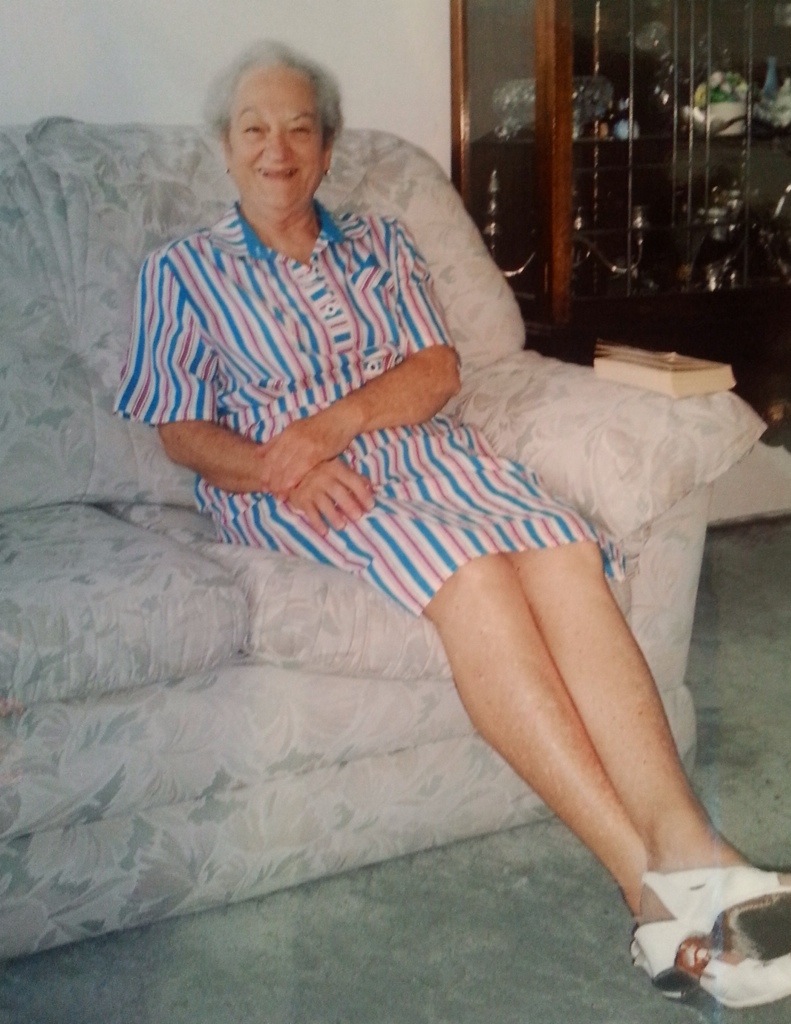
I met Dalia in 1972 at the nursing home she ran in Wattle Glen. You descended from the bitumen into a silvan retreat, the buildings concealed behind flowering native shrubs. A quiet path led to a doorway. Through the door you entered a different world: smells assailled you, disinfectant, cooking smells and behind them, always, the smell of urine, the smell of the elderly and incontinent.

Dalia greeted you, her voice musical, her fetching smile stretched over an uneven lower lip, the more fetching for assymetry, her accent French and very pleasing. The bushland at the entry and the greeting upon entering, these redeemed you amid the oppressive smells.

Dalia moved with you from patient to patient. Almost all of them were women, aged, their men long dead, their families generally distant through geography or choice. This young doctor, oppressed by bodies that did not work, by diseases medicine would not cure, by alienating disfigurement and by disfiguring debility, by drooling helplessness, dementia, strange behaviours, this doctor nearing quiet moral panic, redeemed, redeemed always by Dalia. Dalia would proceed to the bedhead, cradle the neck of her charge, sing to the patient the glad news of the coming of the doctor: Here is Doctor to see you, darling. You remember, this is Doctor Howard. He comes to you every week.

Dalia was not alienated, never distanced. Dalia embraced her guests, kissed their foreheads, fixed their pillows, fussed over painless areas of red skin that she would not allow to break down. Dalia spoke to her speechless, apparently demented patient, as if she were wholebrained, fully alert, fully human. Only after taking doctor aside, out of hearing, away from the presence of the stricken, would Dalia allow any concession to incompleteness.
A secular person, she recognised tenderly the spiritual yearnings of her charges, old women born in an earlier age when churchgoing was a norm and a religious outlook sustaining. Poor Thelma, she weeps, she weeps because God has rejected her. She wants to die, she prays for death, and because death does not come, she believes her God will not have her in his heaven.

Now death has come for Dalia. She was ninety two years old.

Dalia left Wattle Glen and our paths did not cross again until a few years ago, when our respective writings brought us together. The accent was still there, the smile, the relentless action of her critical mind, unwilling to yield on any of her concerns. And all her concerns were for humans. I read her memoir, a work of humbling honesty, of emotional privation in Belgium in the middle years of last century, of falling in love, of the ending of love, of emotional collapse, of recovery, of growth, of a thirst for learning. Hers was a life of learning, of ever journeying in her wisdom towards greater wisdom. I thought of Cavafy’s ‘Ithaca”.

As you set out on the way to Ithaca
hope that the road is a long one,
filled with adventures, filled with understanding.
The Laestrygonians and the Cyclopes,
Poseidon in his anger: do not fear them,
you’ll never come across them on your way
as long as your mind stays aloft, and a choice
emotion touches your spirit and your body.
The Laestrygonians and the Cyclopes,
savage Poseidon; you’ll not encounter them
unless you carry them within your soul,
unless your soul sets them up before you.

Hope that the road is a long one.
Many may the summer mornings be
when—with what pleasure, with what joy—
you first put in to harbors new to your eyes;
may you stop at Phoenician trading posts
and there acquire fine goods:
mother-of-pearl and coral, amber and ebony,
and heady perfumes of every kind:
as many heady perfumes as you can.
To many Egyptian cities may you go
so you may learn, and go on learning, from their sages.

Always keep Ithaca in your mind;
to reach her is your destiny.
But do not rush your journey in the least.
Better that it last for many years;
that you drop anchor at the island an old man,
rich with all you’ve gotten on the way,
not expecting Ithaca to make you rich.

Ithaca gave to you the beautiful journey;
without her you’d not have set upon the road.
But she has nothing left to give you any more.

And if you find her poor, Ithaca did not deceive you.
As wise as you’ll have become, with so much experience,
you’ll have understood, by then, what these Ithacas mean.

Ultimately Dalia became a therapist. I thought how fortunate were her patients, what gifts of life she brought them from her lifelong travels to Ithaca.

Dalia became a little unwell a few weeks ago, persisting in her vigorous ways until her last days. When abruptly her blood pressure fell due to a prolapsed heart valve, she asked the doctors to perform the operation they’d ordinarily reserve for one decades younger. When they explained the risk of technical success with accidental brain damage, Dalia elected to die. She accepted a trial of hero molecules for twenty-four hours; when these duly failed, she embraced morphia, chatted with her loved ones and went to sleep, rich with all she’d gotten on the way, and arrived at last in her Ithaca.

Her believer friend, the young doctor of 1972, prays his God will give her rest. At this Dalia would smile her crooked smile and pat me on the head indulgently and forgive my wishful thinking.

Robert Hillman’s Review of Carrots and Jaffas

Identical, red-haired twin boys are born to Luisa and Bernard Wanklyn, who live in Melbourne. The year is somewhere in the fairly recent past. Since we’re in Australia, the twins are naturally nicknamed Carrots and Jaffas, the only alternatives being Bluey and Ranga. Luisa, the mother, is a native of Argentina; Bernard was born in Australia. When the boys reach the age of ten, Wilberforce Reynolds, an addled one-time addict, makes an attempt to steal them from their parents. There’s a bleak irony there – ‘William Wilberforce’ and ‘Henry Reynolds’ being the names of emancipators. Indeed, Wilbur Reynolds is acting out of a grotesquely misconceived impulse to redeem a life of ratbag behaviour by making a gift of the two boys to Greta, an Indigenous woman of the Flinders Ranges who played a role in raising white Wilbur many years past. Greta’s own two sons had been taken from her in the 1950s by men with the legal authority to do so. The two red-haired boys will compensate her, so Wilbur hopes. But Wilbur manages to steal only one of the boys, Jaffas. The agony of Jaffa’s parents is matched in its intensity by the agony of the twins, each left yearning for the touch of the other.

The impression the reader will be left with after a quick reading of Howard’s novel is of a drama constructed around an appalling crime and its widening repercussions. Hearts are torn out, and in the broader community, people who hear of the abduction on the news put a hand to the head and murmur: “Dear God!” But the story told here is far more thoughtful, far more involving than that. As it was bound to be. This is Howard Goldenberg’s first novel, but two works of non-fiction precede it, “My Father’s Compass”, a memoir of Myer Goldenberg, Howard’s dad, and “Raft”, a book that records Howard’s engagement as a doctor with Indigenous Australians in remote communities all over the continent. Each of these earlier books is distinguished by the vernacular philosophy of a thriving intellect, and by a quality of observation that yields one poetic insight after another. If we speak of intensity of feeling, insight and quality of enquiry, Carrots and Jaffas is of a piece with those earlier works.

The broad strategy of the novel, in my reading, is to allow the story to unfold through five movements – Birth, Growth, Catastrophe, Healing, Reunion. With this strategy in place, Howard gives himself the liberty to riff on the themes that brace his story: the binding force of love; the rigour of grief; the perseverance of hope; the will and the wherewithal to imagine the life we hope for, and especially, what we expose ourselves to when another human being becomes more crucial in our vital life than our own wellbeing. (We might think of Bacon’s Hostages to Fortune lines: “He who hath a wife and children hath given hostages to fortune” but we should cheer Bacon up a little and subvert his meaning by saying: “Anyone who loves has given hostages to fortune.”)

Out of these themes emerge the book’s two arguments. The first establishes the enigma of individuality, taking in the sources and purpose of human individuality, and the second demonstrates the stubborn persistence of those forces in the world that oppose evil.

Let me return to love, the great emphasis in everything that Howard writes. Here is the mother of the twins experiencing the growth of love for her newly born, prematurely born children:
Luisa laughed the laughter of tenderness and body fluids, of manic collapse, of sleepless necessity.
On an impulse, or in forgetfulness or in simple exhaustion of thought, Luisa picked up both babies at once…offered each baby a breast. Both sucked….two small heads swiveled and searched, bony limbs extended, antennae into the void. One arm, flung outwards, came to rest on a brother’s shoulder. Gazes locked, spines unarched, mouths resumed sucking, smoothly, to satiety.

This conveys the growth of love of a mother for her children, and also the dependence of each twin on the other. Carrots and Jaffas cannot satisfy themselves individually; both must be satisfied together.

Later, Bernard, the father, in his quest to grasp what being the father of two children who can barely be differentiated involves, quotes from a poem on the subject of identical twins:

“The twins retain/intimate knowledge of each other,/ Theirs alone-/Of mind and body and being –/a knowledge preceding speech,/Transcending speech: Knowledge subtle as song,/Deep as the womb,/Pure as echo./Identical twins: One? Two? One?”

I wrote an endorsement for Carrots and Jaffas before its publication, and said this, amongst other things: “Howard Goldenberg’s story of identical twins, violently parted at the age of ten, reveals the hunger that dwells in all of us to stand distinct in the gaze of God.” To achieve that distinction in the gaze of God is our human struggle; to demonstrate that we cannot be packed by the gross; that we are marked with an individuality that honours, in its way, the teeming variety of life in the world. Think of Hopkins poem, “Pied Beauty” in which God delights in “All things counter, original, spare, strange…”But for Carrots and Jaffas, that struggle for originality is over at birth, or even at conception. The gaze of God is the gaze of the identical twin. The suggestion of Howard’s book is that the mystique of the identical twin is closely related to the mystery of divinity in our lives. We are unlikely ever to know what the identical twin knows, and unlikely ever to know what God knows. But one thing we can know is this: God is Himself, Herself an identical twin.

Wilberforce Reynolds parts Carrots and Jaffas. He hadn’t meant to. He had intended to steal both boys. It is a feature of acts of violence that they often do even greater harm that the perpetrator intended. Wilbur’s hope is that he will win the approval of a woman, Greta, who suffered the theft of her own two boys. In Archie Roach’s haunting song, “Took the Children Away”, Archie says: “You took the children away, The children away. Breaking their mother’s heart, Tearing us all apart, Took them away.” Those who took away Indigenous children decades ago knew that they were causing grief, but felt that a greater good justified the harm. And this is also Wilbur’s rationalisation.

My head will be right, doing this good thing…it’s the right thing to do, to bring kids, to steal them and replace kids stolen from blackfellers.

Howard makes very clear that Wilbur’s failure of imagination re-enacts the failure of imagination of those who had conceived the scheme of parting Indigenous parents from their children so much earlier. Jaffas, after his abduction, cries out in his anguish: “Run! Run back to Carrots! Run!” and we think of Leah Purcell’s song, ‘Run, Daisy, Run!’

Jaffas finds himself in the care of Greta and the white Doctor Burns up in the Flinders Ranges, the oldest place on earth. The creation of each of these characters are amongst the finest accomplishments of the novel. This Healing movement of the book sees Greta revealing to the traumatised Jaffas stories of the land, of her country, while the Doc contributes tales of scientific discoveries, of Indigenous distress, of the land as understood by a white man. Neither the Doc nor Greta know the true story of Jaffas abduction; Wilbur had spun a plausible tale to explain why he was leaving the boy with Greta. The Doc begins to suspect that Wilbur’s story is rubbish, and he wonders whether Wilbur’s real motivation has something to do with Greta’s past. He asks her, one day, about that past:

My boys, they take my two boys. Never come back. I reckon they big fellas now, fathers. Maybe grandfather. I never see them. Maybe they die, maybe they just lost….That what happen. That what they do. Steal ‘em…

But back at Jaffas home, his brother is tearing himself apart with grief, while his mother, Luisa, torments herself with stories of the unspeakable things done to other abducted twins by a certain Doctor Mengele during the Second World War. The strong suggestion is that Luisa, herself a one-time victim of hideous violence under the Junta in Argentina, will go mad if she is never to see Jaffas again. I spoke earlier of those forces in the world that oppose evil, and of their power. While Luisa is losing her mind, guarding her remaining son with a maniacal determination, Greta and the Doc are painstakingly rebuilding hope in the abducted Jaffas, mending, healing. In the oldest region of the earth, the aged (and Doc Burns is no longer a young man, nor Greta a young woman) dispense hope and love to the young.

Howard Goldenberg’s novel brims with suggestion, as a novel should. And the suggestion I want to make a big deal out of is this: that love, human love, is the finest accomplishment of the imagination. Maybe it is too easy to use a word like ‘evil’ and expect that everyone agrees about what evil is. But we do know what ‘wrong’ is. It is wrong to snatch a child from the street and drive away on some mongrel errand. It is wrong to wrench children in their thousands from the embrace of their parents on some state-sponsored mongrel errand of larger scale. It is wrong to gather people in their millions into camps, reduce their existence to wretchedness, then murder them. To do wrong requires no imagination at all; merely malice or egocentricity. To do good requires imagination. The Doc and Greta imagine the path to recovery that Jaffas might follow, then urge him along it. Their imagination stands in strong distinction to Wilbur’s crude lack of imagination.

Howard Goldenberg’s book is itself the product of a fine, creative imagination, and of a big heart. Like all such works of literary art, Carrots and Jaffas adds a welcome something to our chances in the world.
Robert Hillman is the renowned author of sixty books, including “The Rugmaker of Mazr a Sharif ” (Wild Dingo Press). His most recent works are the celebrated novel, “Joyful” (Text, 2014), and a young adult novel, “Malini” (Allen and Unwin, 2014)

Robert launched Carrots and Jaffas at the Melbourne Writers Festival in August 2014 with his speech above. 

Worst of Times, Best of Times

Ours is a world in agony. The holy is awash in profanation. Men hear the voice of a ravening god that sends them to cut off heads. Others kidnap children in the name of a god. Again the toxic cohabitation of religion with violence, the foul marriage that brought us the Crusades, the Spanish Inquisition and Bushido on the Burma Railroad.

In the centre of our own country the Hayes clan lives at Whitegate, a ‘town camp’ in Alice Springs. The site is ancestral land going back to a time before the counting. Last week local government cut the water supply to Whitegate. The power died there some time ago. The cold desert nights are bitter.

How to breathe? Where to find hope? Why believe in our species at all? What light can we show our small children?

Last week the International Council of Christians and Jews honoured Debbie Weissman, a veteran worker across the tribes and creeds, building frail bridges of peace. Peace has broken out in Gaza-Israel. Rod Moss, artist and writer, chops wood and hauls water to Whitegate.

The peacemakers, the hewers of wood and drawers of water: these small signs. I clutch at such as these.

She Would Not Look at Me

Only three days following the fall of the twin towers the Israeli author and journalist David Grossman wrote a thoughtful piece that was reprinted in The Age. The first and always casualty of terror – he wrote – is trust. You do not trust your fellow citizen, you feel you cannot afford to. Your neighbour of yesterday might be your enemy of today. Community is the casualty.

In the happy isle in which I live and move and work, terror and war and conflict are seldom seen. Insulated as we have been we could afford still to trust – long after other communities had been rent apart into fractions and fractious factions. So it is that when I go to work at the hospital for sick children, one half of my children come from homes where the first language is not English. There is a bridge of trust between us, where we meet and work harmoniously. Fifty percent of the non-anglophone families are Muslim. The parent looks at me, sees an oldish man in a skullcap. That adult thinks whatever she thinks but receives and returns my asalaam aleikum courteously.
Sometimes cautiously, often gladsome, the adult moves towards me across our bridge of trust and we meet. Minutes later, the old man in the yarmulka is no longer an infidel, a foe: he is just a person who understands the child’s illness and who cares about that child and can help. My guest sees in the Jew a fellow human.

Now the children of Abraham are locked in cousin conflict again. My first Islamic parent identifies himself as Ibrahim. He smiles at his cousin’s greeting and returns it.
Later a tall dignified woman, taciturn, her head veiled, her face exposed, meets the doctor who will treat her child, with evident displeasure. She has no smile. Her daughter’s earache, which has been distressing, is easily diagnosed and will be readily relieved. I know I can help her and within minutes I have. The child is five years old. She does not speak,a mutism that can be explained by shyness, by a lack of English, by illness, or by family custom. But her mother, face tight throughout, spares few words and no smiles for the doctor. After I have explained the nature of the illness, its treatment and its happier future course, there is no thaw. I express the hope and the belief that the child will be soon well, insh’allah.
No smile.
There is a war.
The bridge is broken.

A Good Life

A few months ago a man and I were engaged in a conversation. The talk ranged widely over the man’s new book and mine, over asylum seekers to indigenous health, then to my odd affection for running marathons. We visited the Boston Marathon of 2013 and the bombing that brought the event to a halt before I could reach the finish line.

While we talked like old friends, as occasionally happens with an engaging new friend, we were not alone. An audience of tens of thousands listened to us on local radio. Our conversation was coming to an end when the interviewer paused, mused for a moment, shot me a half grin and said: “Howard, I see you as an idealist, a person trying to do good in the world. So I want you to give me an answer to a question I ask myself every day: ‘How does a person live a good life?’”

The interviewer is an awarded journalist aged about forty, a father of young children. He smiled, acknowledging how his question had flown in and landed abruptly in a chat that had satisfied itself with surfaces. Stumbling, I gave a suitably useless answer. I groped for something wise but not too portentous and I came up with something incoherent.

Two months have passed since the challenge of that question. I realise I did have an answer. I have had it for ages. It is couched in religious terms but you could remove the divinity from it and still retain an essence that responds to my radio host. It comes to me from a fellow who lived more than two thousand years ago who had gathered an audience of his own (rather like a radio host of ancient day). His name was Micah. He distilled his understanding of life for his public, teaching them as follows: He hath shown you, O man, what is good: and what does the Lord require of thee – only to do justly, to love mercy and to walk humbly with thy God?

Aunty Pearly’s Sorry Business

I think many families have an aunty who is not really an aunt. That sort of aunt, usually a contemporary of a parent, is a person treasured across generations. You inherit that sort of aunty.

For many of my Jewish school friends in the fifties and sixties that was the only sort of aunt and uncle they knew: their parents’ blood siblings had perished in the gas chambers. Afterwards, close contemporaries were clutched and held closer, people who shared the stories and the memories.

The auntness of Pearly wasn’t woven of that tragic weft. Pearly was the sister of the wife of my father’s brother Abe. The earliest encounter I recall with Aunty Pearly occurred on a winter’s evening at the start of half a year of exile from my home and family. My older brother Dennis and I were to board with Aunty Clare and Uncle Abe in Melbourne, while Dad sold his medical practice in Leeton, our hometown. Transactions of that type take a long time.

The evening was erev shabbat, Sabbath eve, that fulcrum in the week that still finds me emotionally suggestible. The sun set and sank, and with it my mood.

While I enjoyed a period of self-pity – always the sincerest of emotions – our cousins Ruth and Carmel spoke elatedly: “Aunty Pearly’s coming for Shabbat. She always gives us a whole Vanilla Nougat or a Cherry Ripe. Each!

I didn’t know Aunty Pearly. She wouldn’t know me. Vanilla and Cherry and Pearly would be strangers to me. My sincerity deepened.


A knock at the door, a scamper of cousins, gleeful ‘thank you’s, and a deepish womanly voice called: “Where’s Dennis? Where’s Howard?”

Down the short hallway the voice approached, a bulky figure loomed, a smell of perfume, a slash of lipstick, and we were hoisted, one after the other, up into the soft valley between two mountainous breasts. Pearly handed me a Violet Crumble Bar. To Dennis she gave a Vanilla Nougat.

Somehow this stranger knew me, liked me, perhaps even loved me. In that instant I loved Aunty Pearly and the feeling never changed.


When Pearly’s real nephew – a blood nephew – called me early on a Sunday morning sixty years later, his slow agricultural voice had slowed further. “Aunty Pearly just passed away. The funeral will be tomorrow.” The day of Pearly’s passing was filled with celebrations at far ends of a widening clan: there was a Barmitzvah to attend of the grandson of my wife’s cousin and the wedding of the son of my first cousin. Such mixing of significant life moments!


Next day a wintry afternoon found us in a garden burial ground. In this light the grass took on a deeper shade. Black clothing against the green brought a sombre richness.

A crowd, many, many scores of people, gathered. Although some of the names eluded us we all knew each other’s faces from generations of family events. This was a gathering of the many from the fringes of a number of intermarrying clans. Pearlie was one of seven siblings. All of her siblings married and multiplied. Pearlie alone never married: she’d smile and call herself an unclaimed treasure. She treasured her siblings’ children and grandchildren, and their spouses, a growing multitude. But there were non-bloods there as well, numerous as her true kin. Pearlie gathered the young in her wake and we followed her, long after our own youth had gone, to her end. Everywhere eyes shone while mouths smiled, people cradled each other, faces looked serious but not in grief; for aunty Pearly died at the right time – before her dementia could ruin her, her slow cancer suddenly accelerated and she was gone.


Aunty Pearlie led a religious life. Her sacred places were the MCG and the Melbourne Synagogue. She never wavered from the worship of her idols at the Melbourne Football Club. But today it was the curate from her synagogue who led the ceremonies. It was a sweet moment when the young man – no relation to Pearlie or to anyone present – called her “Aunty Pearlie” as we all had. He was another honorary nephew, full of affectionate personal reminiscence. Pearlie’s life of faith ensured she would not be buried by a stranger.


In Aboriginal communities a burial takes place after indeterminate delay long enough for families to scrape the money together for a funeral. Then follows a further chapter of mourning where people gather from across a life history, from across a continent, for the Sorry Business.

Jews are buried with all decent haste. Then our own Sorry Business follows, the precisely calibrated period of shiva when first degree relatives sit low to the floor and receive condolence from their community. But Aunty Pearlie had neither spouse nor children to sit in her honour. Instead we gathered the next two evenings for successive memorial services at her synagogue. Same crowd as at the garden funeral, swollen now, and at a different venue. The Melbourne Synagogue is grand, cavernous, dripping with history, but too often attended by too few. A beautiful shell, the Shule waited for throngs that rarely came. But Aunty Pearlie came, Shabbat after Shabbat, at festival times, at all seasons. Over nearly seven decades she befriended each new rabbi, kept him company in his inevitable disillusion, saw him leave and welcomed and supported his highhoping successor. In this manner Aunty Pearlie outlasted seven Rabbis.


In the course of the Sorry Business I learned more of Pearlie’s growing up in Brisbane, of her service in WWII, of her friendships there with many women and men including a young Zelman Cowen. Pearlie seems to have won and kept many devoted friends.


Poignantly, one who resided so deeply in so many affectionate bosoms left no son to recite the mourning prayer Kaddish for her. Anxiously, I waited to see who might step forward and assume the mantle of the sons who never were. An aged brother in law, still erect, together with his not young son, and a couple of his not young cousins, all recited it together. One or two, more fluent in the Aramaic, led the others as they hobbled and stumbled in and out of time with each other. The four men freighted the feeling and the yearning of us hundreds, all of Aunty Pearly’s “young ones”, all of us wanting hard for her to be sung and storied, lamented and remembered, celebrated in this her holy place. Hundreds of us, all with our personal memories of some moment like mine with a Violet Crumble Bar when I was a child missing a mother’s love.


20140616-064031-24031367.jpg

You Can’t Chop your Momma Up in Massachusetts…

In January 2002, I went to Boston to cut a deal. The deal, a covenant really (in Hebrew, a brith), originated between God and Abraham. Abraham was the first to cut the deal. My job in Boston was to renew it in the flesh of my eight-day old great-nephew. When it was all over bar the feasting, all present joined in the heartfelt prayer: Just as he has entered into the brith, so may he enter into the Torah, into the nuptial canopy and into good deeds.

Then we joined in heartfelt feasting.

In the next room the baby, newly named Elisha, slept quietly. Quietly too, he bled into his diaper*.

When we checked on him we found him – as in the vision of the prophet Ezekiel – languishing in his blood. I applied pressure. This works nine times in ten. Elisha bled on. I sutured a little bleeder and waited. The baby boy bled on.

His mother and father and I bundled him up and raced him down the January street to the pediatrician’s* office. Boston is cold in January but we didn’t notice. The paediatrician’s nurse applied a tight bandage, saying reassuringly: ”Pressure always stops this sort of oozing.” Really?

Elisha bled on quietly. He remained pink and warm and peaceful.

An ambulance raced us across town, bells and siren ringing, to the Boston Children’s Hospital. Bearing all the authority of my years and my professional status, expressing myself with composed urgency and gravity, I gave Elisha’s history to a triage nurse; then to a nurse practitioner; after her to a surgical nurse and then to a medical student. All took notes, all reassured us pressure would do the trick, the ooze was slight, it would settle, Elisha looked well. All disappeared without trace.

Finally I met an Accident and Emergency physician from Iran and a Urology Resident from Israel. Beaut fellows both, they understood and honoured the Covenant of Abraham. The Israelite confided the story of his own son’s recent Brith Millah. And he spoke to the truism which comforts all surgeons: Healthy blood will always coagulate.

Meanwhile the sleeping baby boy oozed on. It was midday now, three hours after the Brith. A test gave Elisha’s blood count at forty percent. He slept on. And trickled away.

My brother surgeons took Elisha to the OR where, with the aid of the operating microscope, they ligated some minute bleeders. They invited me into OR where they demonstrated with some pride, a pink rosebud of glans, surrounded by a coronet of catgut sutures. “Look, no ooze”, they said.

No ooze is good news.

It was now three pm and I had missed my flight to the West Coast.

I hung around for an hour longer. At the next diaper change we saw the slightest pink loss. The same at the next change. And the next.

All the clinicians pronounced Elisha well. Cured. I should fly home, confident his little problem was fixed.

Misgiving, guilty at my surgical failure, I flew to LA and rang my niece from the airport. “He looks good, Unc. Hardly any ooze at all.”

I flew home to Australia.

A day later, Elisha’s mum called: “Elisha has haemophilia*, Uncle. The bleeding wasn’t your fault, not anyone’s fault, a mutation.”

Within weeks it became clear Elisha’s haemophilia was graded severe. Every second day of his life, Elisha has an intravenous injection of Clotting Factor Eight. On this regime he’s a healthy fellow.

Last week the World Haemophilia** Congress was underway in Melbourne with Elisha’s mum in attendance. She brought Elisha with her, together with his non-haemophiliac younger brother. Although I haven’t checked the pink rosebud I last saw in OR, the Elisha I see looks brilliantly healthy. Next January his multi-continental kin will gather in Boston to celebrate as, in fulfilment of our prayer, Elisha enters into the Torah at his barmitzvah.

· *In America they spell it thus.

· ** In Oz we spell it this way.

More Mother’s Day Thoughts

After my experience last Sunday I’ve decided I like Mothers Day. I enjoyed sharing vignettes of my old Mum. One of the first that I ever published, appeared in my first book, a memoir which I called “My Father’s Compass”. The vignette, a story about my 92 year old father battling the extinguishment of his great powers, and my mother battling nothing and accepting all, was titled: Falling gums.

“The phone rings at midnight. I walk towards the answering machine and listen for an urgent message. I do not pick up the receiver because it is Friday night, my Sabbath – Shabbat – when my soul visits paradise. When I am in paradise I do not answer the phone. There is no message.

Though puzzled – who would want to speak to me at midnight if it were not an emergency? – I begin to relax, then the phone rings again. Once again my machine offers to take a message, once again the caller is mute. I grab the phone. Dad’s voice says, ‘Mum is on the floor …’

‘I’ll come now,’ I say, and hang up. Dad and I have responded to the situation with the least possible desecration of the Sabbath.

Minutes later I let myself into my parents’ house. There, on the bedroom floor, in a tangle of limbs, is my mother. ‘Hello darling,’ she says. She looks up at me and gives me a grin. Recently, Mum’s front teeth have begun to desert her. Those teeth that remain are a picket fence, stained and in disrepair. Mum’s former serene smile has given way to a seven-year-old’s grin – all mischief and careless abandon.

I peer down at Mum’s legs. They are thin, too thin, except for her ruined knee which is swollen and misshapen. In the half light her skin is ivory. I crouch and put my hand on her leg and feel its cool and its smoothness. I touch my mother’s skin and I am her small child again.

A short time passes. ‘Does any thing hurt, Mum?’

‘No darling.’

‘Can you move your limbs, Mum?’

Dad’s voice breaks in: ‘Mum’s not hurt – she didn’t fall. She was reaching for the commode chair and she pushed it away instead of holding it still … she just slid gently onto the floor … I couldn’t stop her falling …’

Dad’s voice subsides. He sits on his bed and holds his head in his hands.

Mum speaks: ‘I’m quite comfortable, darling. It’s quite a nice floor, really.’ Another grin. I look at my mother. Her limbs are splayed and folded beneath and before her like so many pick-up-sticks. I wonder how I will pick them up.

‘If you like it on the floor, Mum, would you prefer to stay there until the morning?’

‘If you wish, darling.’ She extends a hand and pats my face.

I bend and begin to take her weight, my hands beneath her arms. Dad gets up to help but I knock him back because his heart is worn out and failing.

He recoils, recedes and sits down opposite me, his face wrought of grief and care. I feel a pang for my abruptness.

An in-drawing of breath, a grunt and Mum is aloft, her legs a pair of white flags hanging limply beneath her. Her arms are around my neck and we are locked in our accustomed embrace that has become so familiar since she began to suffer a series of strokes.

We know this moment well; each of us knows the sweetness of this slow dance. Neither of us would readily trade it, not even to make Mum whole again.

A moment later Mum is in her bed, covered up, wheezing, speaking breathily, her voice ravaged by stroke and by time: ‘Thank you, darling, what a treat!’ – and beaming with the simple pleasure of ­being tucked into her bed.

Dad, contrite, distressed, is saying, ‘I am sorry, darling. I hate to disturb you.’ And I am saying how pleased I am to come, and how come he didn’t speak into the machine when he rang. And Dad says, ‘I don’t know.’

‘Shabbat Shalom,’ I say, kiss them both goodnight, and go home.

Back home, but not yet in paradise, I sit a while and recall a conversation my friend Lionel reported to me. While driving with my father in the Flinders Ranges, Lionel asks this indestructible old man a singular question: ‘What are you afraid of in this life, Myer?’

My dreadnought father has fought all his sixty-seven years as a doctor against illness and injury. Of all diseases, I know that cancer and stroke fill him with terror beyond naming. And I recall, too, Dad confiding to me his fears for Mum: ‘I am grateful for every single day that I have her; and I am so frightened of the day that …’ He falls silent, his voice drowning in the grief of his imagining.

When Lionel asks his question, Dad looks up and out and away from inside him, and he sees those silent, massive and beauteous living things, so inviting in the outdoors and so treacherous. He answers, ‘Falling gum trees.’

The day after the ‘fall’ Mum and I are alone in the kitchen when she begins to laugh. The sound has a gasping quality. You have to pay close attention to discover whether she is choking again, or simply amused. She laughs louder then tries to speak at the same time.

Her voice is a concerto for bagpipes and windstorm. I lean close, into the teeth of the storm, and Mum says, ‘When I was on the floor last night, and I couldn’t get up, I started to laugh, and I couldn’t stop … and Daddy was furious!’”

Carna Pies!

images-10The boy had always said the words; at home he’d yell them to the heavens, and in later years he’d yell them across the crowd towards the players: Carna Pies!

He’d yell into the sound that swelled around him, yelling in an ecstasy of feeling. It was a reflex – more than a reflex – it was a spasm. In full throat, in full cry, he was somehow one with the ‘Pies. He was passion, he was hope. Carna Pies, he’d scream, and the scream was prayer, purer than the ritual prayers which he recited faithfully, facing Jerusalem, every morning and every evening.

He never really understood how many things he meant by Carna Pies. He only began to understand when he wrote a letter in Hebrew to a friend. Both of the friends were Collingwood supporters, had yelled Carna Pies together as boys, yelled it as men, then the friend went away and settled in Israel. Now he was writing and feeling those memories. He wanted to translate the old words, but how do you translate Carna? And in which other language could ‘Pies be birds?

He rendered Carna Pies! as ‘Let the ravens of the brook ascend!’ It was not the same, but in the poetry of the words he recognised something. The same tone was there in the Magpie motto – Floreat Pica – Latin words, a scholar’s formula. The mock formality of the words satirized the frenzy of the raw vernacular, and honoured it somehow.

As he got older he glimpsed more of his meanings in Carna Pies!

He wasn’t born into the cult of the Magpie. Every year he would travel from his home town in the Riverina to Melbourne for the solemnities of the High Holydays. This was the season of the birthday of the world, and of the annual Day of Judgement.

On these visits to the city of his birth his father always took the “Age”. He liked it for its seriousness. He’d put aside the sports pages and the boy would read them, wrestling with the broad sheets that dwarfed his small frame. Avidly, he’d read about the footy finals. Every year Melbourne were expected to win and Collingwood to be contenders, and ultimately, gallant losers.

And every year, after the Day of Judgement, what had been written had come to pass: Melbourne were premiers and Collingwood were not quite good enough. Carlton were nowhere in sight.

The boy and his brothers chose their own allegiances. His older brother chose Carlton because their father had been born there; his younger brother chose Melbourne because it was on top; and he chose Collingwood because they were David, and one day, David might overcome Goliath.

The boy became familiar with disappointment. He came, in time, almost to enjoy the nobility of losing gallantly.

When the boy was nine, his family left the country town and moved to Melbourne, but it was years before the boy actually went to the footy.

He’d listen to the radio broadcast religiously – a tricky task for an observer of the Sabbath. He’d listen to grand final defeats at the hands of Melbourne and others, and he’d live in daydreams in which Gabelich would gallop endlessly into open goalmouths, and Weideman would avenge all wrongs and the siren wouild never blow until Collingwood were ahead.

In 1990 he actually saw the magpie come into full flower. Not since 1958 had the ravens of the brook thus ascended. He saw Daicos kick a goal from an angle that defied Euclid. He saw Gavin Brown rise from the stupor of his concussion to mark and goal, and goal again. He saw Darren Millane rampant on the wing, Darren Millane of happy memory soaring towards the sun, before crashing to his death only weeks later.

He stood among those thousands, among those tens of thousands, stood and roared Carna Pies! At his side was his son.

Father and son had walked the many kilometres to the ground. They would not drive because Saturday is the Sabbath. Faithful together in their observance of the letter of the Mosaic Law, joyous together in their neglect of its spirit, they shared this day. In the world there were only those who supported Collingwood and those who wished they were Collingwood supporters.

The son always regarded the father as a fine weather supporter, one who’d leave a match early when the cause was hopeless and the end was nigh. The boy was one eyed and wondered why his father would bother using an extra eye to see two sides to the struggle.

The boy did not know the father’s secret.

For the father loved footy even more than he loved Collingwood. He had loved Carlton’s Bruce Doull, he’d loved Malcolm Blight, Paul Roos, Timmy Watson – he loved all the laughing cavaliers who hadn’t realised that winning was everything.

He loved Dougie Hawkins who left his name on the wing of a club’s lost home.

And when the premier declared a state funeral for Teddy Whitten, footy’s smiling assassin, he wept and he approved.

(Ah, he mused, they don’t make nostalgia like they used to.)

And now Collingwood found itself an accidental contender in another Grand Final. Amazingly, among all the people who were Collingwood supporters and among all those who wished they were Collingwood supporters, the father found himself the possessor of two tickets for the Grand Final. And so they went, father and son, to see whether the magpie might yet flower again.

They would never win: David never beats Goliath. It doesn’t happen. The Maccabees had no chance against the might of Antiochus, Ho Chi Min was never going to beat Uncle Sam, Collingwood had no show against Barrassi’s team in 1958…

But it would not pay to get hopeful.

So they went and they watched and they saw the miracle almost happen. They saw how, but for the will of Michael Voss, the ravens of the brook might have ascended.

They walked home – it was Sabbath again – through the warm rain of early spring. The son, now a man, and the father, still a boy, walked together those many kilometres, and their feet were not heavy beneath them.

They had seen a marvellous match, a mighty struggle. They had each seen what they wanted to see – the father happy because winning was not everything, the son consoled because the ‘Pies could only improve – the son, with quickening steps returning to his wife and to their unborn child who might one day walk with him, and see, and shout Carna Pies!

A crunchier cereal than usual

While eating my breakfast cereal this morning I noticed a small brownish-black, curved item, the size and shape of a carraway seed. It didn’t taste like carraway, lacking that distinctive aroma.

As I ate I noticed more of these and removed some. The cereal I favour is GrapeNuts, manufactured in the USA by Post. It is crunchy and malty (and doubtless full of salt and sugar to enhance my hypertension and to speed the onset of diabetes.)
I really like Grape Nuts.
If you examine the packet you’ll notice the letter “K” that signifies its kosher status.
I tried to avoid eating the little brown-black crescents because, although they too were crunchy, and not without aroma, I could not be certain whether they too are kosher*,
Quite quickly I surmised that a mouse had breakfasted before I had and then used the cereal packet as his toilet. While chewing on my compound breakfast I thought of my friend’s brother who had invested all his savings in superannuation over a period of twenty years. One day the manager of his Super ran away with his life savings. My friend’s brother said: “It was only money. It was never really mine: money never is anyone’s – not permanently. It came to me from others and it went to my Super man. Now he’s spending it and it’s going to other people.” I realized that my GrapeNuts were just like that money. Made from wheat and barley, they came from the earth. They passed through my mouse and now they have entered me and will eventually make their exit and return to the earth. Like my friend’s brother’s money, the GrapeNuts were never really mine. Presently they will fertilize new wheat and fresh barley an someone else can have a turn.
Perhaps you will be next.
* Guidance from rabbis or others is sought on the kosher status of mouse droppings. As we know
a Jew may drink the milk of a non-kosher animal, so long as that animal is a human. Can we consume the ordure of another mammal?

GrapeNuts

GrapeNuts