The Reunion

We met in the grounds of our old school. Cars drew up, old faces emerged, old bodies, sagging here and there, supported by stiffening joints. Faces lit in recognition or knitted in puzzlement – I can’t place you – then opened upon discovery. Older faces, stiffer frames – these were teachers, old and treasured. The pleasure was of a novel sort: it was as if one discovered an aged aunt or uncle not seen for fifty years; and the aged one was as delighted we were at the encounter.
Fifty years. A large chunk of time in anyone’s lifetime, an epoch unimaginable when we left in 1963.
We toured the school, the new and the old. The dunnies hadn’t changed except they were clean.
Afterwards we gathered in the dining hall.
I volunteered to speak about the lost eleven of our classmates. I didn’t want the ninety survivors of the class of 1963 to bee-suck on nostalgia and leave the dead unsung. So I read the following:

Here we are fifty years on.
We have become, I realise, walking memorials to those we have lost.
We travel the roads and the paths of our lives and our minds register: Aunty Sylvie lived in this street…Dennis used to walk his dog in this park…that’s the Shule Dad and his bothers walked to when they were kids…this is the street where my grandparents lived…

Now, gathered here at Scopus again, in this dining hall, beneath this roof, shadows of old friends, old rivals, flash across memory. Teachers we loathed, teachers we revered, those we mocked, those we feared, all move across the mind in their chalky academic gowns. They lived, they did their work and they passed on. And we – we who were once seventeen, eighteen years old and full of wonder about the future – we approach threescore years and ten, full of amazement about the years past.

But we have left some behind. I name them now.

Manny Olian, dead in 1964.
Faye Broons, dead only a few years later – in 1971.
Ephraim Bergner – died early – I haven’t been able to track down the year.
Leon Fust and Suzanne Gescheit in 2006;
Miriam Hamer, Norman Stern, Shareen Fremder – all in 2007;
Joe Serwetarz in 2008.
Zelda Slonim in 2009.
Michael Kowadlo, just over a year ago, in 2012.

The names are the bones. Some I can clothe in the flesh of concrete recollection.

Manny Olian.
Many memories, warm, smiling memories of a thin, manically funny boy, a stranger to malice, a friend who stood out from our glorious contemporaries for his originality of mind. Manny was the source of extraordinary insights that always astonished me. I see Manny holding a pen, grabbing a footy, his fingers spidering, hyperextending, exclamation marks at the extremities of a boy at the extreme.
Manny was a pioneer in death by drugs. During a trip on LSD, Manny stepped off a cliff in England and died.

In my imaginings I see Manny’s parents in 1946, at the time of his birth. They look upon their firstborn and they choose a name. The parents see their child before them and put the unspeakable past behind them. They called him Menachem, “comfort”. Eighteen years later, in 1964 – what comfort do they find?

Fay Broons.
I hardly knew Fay. I wonder how many did know her. Pretty, quiet, shy, ladylike, almost ephemeral at school, Fay was a mother of three little kids by 1971. She started the last weekend of her life in good health and was dead 48 hours later – of fulminating infection, or a brain haemorrhage? – even her family does not know to this day.

Ephraim Bergner.
Ephraim, Effy – that gifted, creative, wild child. Those fabulous good looks, that innocent disconnect from the rules, from the mundane, from consequences.
Our class’s James Dean.
Who was surprised that Ephraim’s life ended early?
Only the exact year, and the precise drug escape me.
What shadows, what secrets, what ghosts, was Ephraim escaping?

Leon Fust, skinny, nimble, fearless on the footy field, subtle and gentle in his thought; I last saw him in an Australian bank in Piccadilly, in an impeccable suit and a bowler. Leon looked the epitome of an English gentleman.
Never sighted again, what did Leon die of? Whom did he leave to mourn him?

Sue Gescheit, her kidneys failing after decades fighting off her viciously severe diabetes; Miriam Hamer, marrying for the first time at sixty, marrying for love, knowing her lung cancer had already spread to her brain; Norman Stern, one so jovial, often an innocent magnet for mischance, Norman, whom I had not sighted since school; he and Joe Serwetarz – the tall, the gregarious, the good looking, athlete – both of them, following just before or soon after Miriam and Sue.

Zelda Slonim – I think I knew her. Did I know her?

Shareen Fremder – I’m sure I didn’t know Shareen.

What does it mean that one passes and passes unknown?
Who knows? Who mourns?
Who carries their memory?

Finally, Michael Kowadlo, passing in 2012.

My first memory of Scopus is of Michael. This big friendly kid takes this very lost, very strange new kid –Howard Someone – from the country! – under his wing.
A week or so later I am climbing the steps of the slide when a bunch of interlopers races up the steps, pushing me aside. My face collides with the steel rail, a tooth chips, my mouth fills with blood and Michael, Big Michael, steps in and pushes the interlopers away. I take my turn and slide down. I meet and enrich a dentist. I become closest of friends with the principal slide aggressor – great to see you again Tommy – and Michael becomes a dentist.
The last 100 times I saw Michael occurred when we both spent a year reciting kaddish in memory of loved ones.

I want to recite kaddish now, and I invite everyone to stand and join with me, in memory of all our lost friends. In memory of Manny – “after the first death there is no other’’, as Dylan Thomas reminds us – in memory of youth, in memory – and in forgiveness – of our lost selves…

Yitgadal ve’yitkaddash sh’mei rabah…

***

After I delivered that sombre material, my voice dying at the end, I looked up. Fifty serious faces looked down. My schoolmates, silent for the first time in our twelve school years and in the following fifty years, did not meet my gaze. Gone was the buzz, the gaiety of moments ago. I had spoiled our evening. Or so I feared.

Mount Scopus College was born in Melbourne just after the end of the War. Fiercely partisan community leaders in their congregations and their factions came to historic agreement to bury difference and to create a school. The compromise they made was without precedent or subsequent. The leaders, the secular with the devout, the Yiddishists with the Hebraists, the political with the cultural, agreed on one thing: this ragged remnant of Jewry must educate its children if Jewry were to survive. So Mount Scopus was born at the same historic moment that we, the class of ’63, were born.
What did we know of the Shoah, what did we learn? Precious little at Scopus, only dark and unspoken shapes and silences from our parents. We did not realize until later that ours was a generation without grandparents.
Our Jewish teachers, burning with an intensity that burned us, cared unaccountably that we learn, that we incorporate the burden of their scholarship; while we, dull and distractible, remained unforgivably innocent, even indifferent to the heritage they were transplanting. Only in Rabbi Schwartz was truth writ clear in the body: his throat, a terrible terrain of wound and scar, remained red and swollen these years later. Somehow we all knew – the Nazis had pulled out his beard.
We are the result, their fruits, this class of 67-year olds, gathered again in the old Scopus dining hall that was also assembly hall and concert hall and community banquet room. Was I the only one to gaze about the room and to marvel at the achievement of Scopus, at the fruits of our parents’ sacrifice? The room crawled with professors, with doctors a dime a dozen, with lawyers, teachers, psychologists, with businesswomen, artists, computer greats. I could see how middle-of-the-roaders in our Scopus class rose to enduring distinction in the wider world. Truly the fires of the fathers had kindled huge drive in the children. Starved parents raised a generation hungry for success. We took our opportunities. Some seized the future, becoming pioneers and creators. We flamed, we made our mark.
Most of us had married Jews and produced Jews. Many of us had sent our kids to Mount Scopus. Making the real sacrifices needed for this costly schooling we endorsed the vision of the founders. Some of us had grandchildren at Scopus.

***

The class of ’63 has been decimated in two quite different ways – one in ten has died; one in ten has emigrated, made aliya – literally ascended – to Israel. Of these latter, three classmates have journeyed here solely for this occasion. It is a long and costly trip; why have they come? Why have others travelled from Western Australia and Queensland? Why have the remaining fifty-odd Melbourne residents bothered?
In the course of our four hours together clusters form and drift. Old intimates greet each other but do not linger, instead moving on to find others less known, less loved. A genuine thirst for connection, a tenderness, a respect – the things we all needed and often begrudged in those rougher days.
In place of the empty phrases of everyday greeting, men and women shake, hug, regard; they take in faces that have ripened and withered and deepened; they see and they don’t need to ask; the face of the other is the face they see in the mirror, a face stricken, blessed, stripped by the years. No-one is measuring, no-one comparing: that which we are, we are…

Four hours, equivalent to half a school day, long enough to discover

Equally interesting to me: why have others chosen not to come?
Two, I know, are disabled by mental illness. A third, with whom I am closer now than fifty years ago, told me she could not imagine a more distressing experience than to return to the terrain and personnel of her schoolday trauma. Having rebuilt herself from her remains, she has retreated to another state where she rusticates and has some peace. She begged me not to press her to come. She forbade me to explain. The committee was to erase her contact information. This friend would be astonished to know how many missed her, how many wondered aloud about her. In the face of this goodwill it was difficult for me to hold my peace. I fed friends scraps: She’s doing well…she couldn’t make it…
In the course of the reunion, another – likewise closer in adult life than in school days – turned up unannounced and stood at the rear, listening to the few speeches. The longest speech was my elegy for the lost. Upon completion of kaddish my friend turned and left in silence.
Not everyone won academic laurels. Not everyone had a stellar career. Some of those present at the reunion, vibrantly present, knew their unsuccess didn’t signify. As we toured the school, one removed his adhesive lapel tag and placed it between the names on the Honour Board. There he was, Dux of Mount Scopus College, now, after fifty years. There he was among us, huge in his mirth and delight.
There would be some who decided not to attend, conscious of ‘failure’ – in career, in material status, in family – unaware that no-one measures any more, no-one judges. We missed them.

***

What is the measure of the years? After fifty years what does it mean? I imagine the survivor of the Shoah washing up on this godforsaken Jewish wilderness, this godspared paradise, looking around, looking forward, never backwards, no never back to those places, those times. He stands, he mates with another survivor. Together they work, they scrape, they venture, they struggle and persist. They raise a generation, often of one only child – the previous children lost, burned – they find the tuition fees, they send the child to Scopus…

The Scopus of today dazzles. I venture to suggest there exist university campuses in Australia which would envy the facilities and the faculty of this school.

In all the vivacity of this evening, the buzz, the energy of this still radiant class of ‘63, in all the softening, the love, there abides among us grandparents the uneasy understanding that a Scopus education is beyond the means of many of our children to provide. Some of my contemporaries, I know, quietly pay their grandkids’ fees. Others work for the school, raising funds for scholarships and bursaries.

What would the founders say? Would they count Scopus a success if the rising generation were locked out?

My Nephew’s Tip

English: A Windsor knot.


Like most adult males, my nephew is taller than I am. Standing side by side, knotting neck ties before a formal social event, the nephew and I compared notes. Nephew slid the tie – a useless garment in our temperate clime – around his neck, the short end hanging a bit below breast level, the long end hanging between his legs. I did the same.
Nephew knotted and his knot slid into place in front of his throat with the precision of a Mercedes car door clunking true: one deft movement and there it was, perfection.
Uncle knotted and slid and there it was, a tie at half mast, marooned between navel and pubis, the ‘short’ end poking out below the ‘long,’ looking for a place to hide
I tried again – result a little better, but no Mercedes car door.
Nephew untied his knot, explained his technique and demonstrated it. I copied him and there it was, the perfect Windsor.
Now nephew is, as I wrote at the start, a lot taller than I. Our anatomies differ markedly. Yet, using a common anatomical marker, nephew’s technique works for all sizes. And, remarkably, in all seasons. Not all of my readers will enjoy an opportunity to share a dressing room with my nephew, so I pass on his advice verbatim:
“You lower the long end of the tie so it hangs precisely at the level of the end of your penis. Then you tie your knot and slide. It works every time.”
(Now, the nephew is, I repeat, longer than the uncle. But the advice works.
Winter has followed and the advice still works with the same precision.
A niece tried her cousin’s advice, making a correction for what I guess is a guess, and she found the tie tied true.
I commend the advice to you.


Virgin from Christmas Island to the Mainland

A man walks into my consulting room with a bouncing limp. He is tall and upright. He bows slightly and shakes my hand. The familiar courtesies.

I greet him: Salaam Aleikhum.

He responds: Aleikhum Salaam.

We exchange names. His name is Ahmed. He says: “My foot is painful. Please excuse me. I am afraid I must remove my shoe.”

His problem is visible through an opening in his sandal: the left great toe is infected. The flesh of the nail bed is hot and red, a crescent of swollen skin surrounding a sunken island of nail. The skin is shiny, stretched to bursting. A promising eyelet of pus peeps from beneath a corner of the cuticle.

The infected nail bed is about to burst in a flow of laudable pus. The pus will stink, Ahmed will feel better and so will I. Finally, a patient telling me a straightforward story. Finally a patient I can cure.

I treat the infection, dress the toe and ask Ahmed to return tomorrow to renew his dressing.

“I cannot come tomorrow.” His manner is politely regretful. “I will leave here tonight.” He speaks softly, practicality competing with swelling happiness: “I have my visa.”

Ahmed’s smile is a field of waving daffodils.

As it happens I will fly out tonight too. After three weeks of seeing patients here, Ahmed is the only one I meet to win a visa. The remainder reside in trailer parks of hope and despair.

Continue reading

Robert Hillman’s ‘Gurrumul’ – Review by Howard Goldenberg

Gurrumul by Robert Hillman  Publisher: ABC Books

Gurrumul by Robert Hillman
Publisher: ABC Books

If autobiography is the least reliable genre in fiction then the authorized Life sits at its flakiest edge. That this is not true of Hillman’s “Gurrumul” is on account of the slipperiness of the subject.

Geoffrey Gurrumul Yunipingu emerges as shy, remote, elusive, cryptic, mischievous – an outer island in an archipelago of tongues. He does not so much emerge as submerge himself. Blind from birth, Gurrumul seems at times to be mute by choice. At others he makes himself perfectly clear to a whitefella, especially when working with his intimate collaborator, Michael Hohnen.

By book’s end Gurrumul remains hidden; only his music and the beauty of his features – a beauty we can enjoy and he can never perceive – speak to us.

No biographer could truly represent this life, (nor for that matter could he successfully misrepresent it). Wisely, Hillman does not attempt either. Instead he places the artist in his context. Chiefly that context is the complex of family (especially his bevy of aunties), community, land and Dreaming: in short, culture.

“Culture”, a term used promiscuously in conversations between the races, embodies meanings that are layered and expressed in dance, in music, in painting, in song, in storytelling and in land husbandry. The meanings are traditionally expressed obliquely, which is to say they are in part obscured. What Gurrumul does with these enfolded meanings appears to be a risky enterprise of his own, with calibrated departures from liturgical norms, a sort of jazz move in which he improvises within a theme and extends it beyond the limits of permitted custom.

Such a variation on a theme must be perceptible only to a tiny number of the millions who respond to Gurrumul’s music making. In this sense it is a secret, yet another, in  practice that skates ever along the outer edge of theunshareable.

When Gurrumul sings, whitefellas listen, enthralled. Literally, we are in a thrall, under a spell cast upon us by the spellbinding singer. We scarcely hear the words, we cannot parse them; and when we read their translations in Hillman’s book, the words in English are so simple as to appear banal: a profoundly false impression. And yet, and yet, we are transported. If beauty be truth, then truth is shown to us precisely as it is withheld. The subtlety of all this magic is clearly rendered in Hillman’s book.

To those who have read “My Life as a Traitor” and “The Rugmaker of Mazr a Sharif”, Hillman’s skill in rendering an alien culture will be familiar. It is in his later work, “The Honey Thief”, that Hillman manages to capture the artist in the act of working his art, in this case the sublime art of the Afghan (Azari) storyteller.

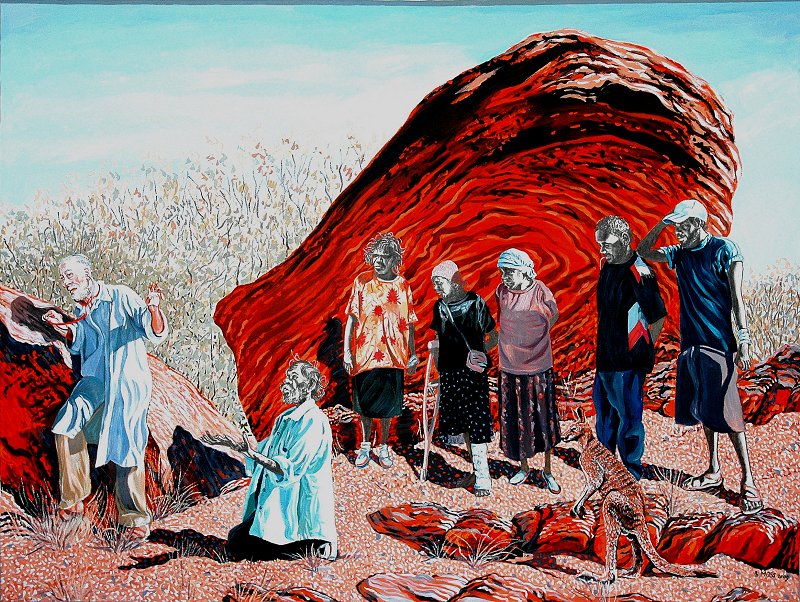
In the present volume Hillman attempts the extremely ambitious exegesis of the utterly untranslatable term, “Dreaming.” He succeeds, in this reader’s view, brilliantly. In twenty five years and over sixty working visits to remote Aboriginal communities, I have never felt I came so close to apprehending (I doubt any whitefella will ever comprehend) the Dreaming, as in Hillman’s “Gurrumul, his life and music.”

Hillman has succeeded remarkably in penetrating the life of art and ceremony (the two amount to much the same thing) on Elcho Island. Seven years ago while I worked on Elcho ceremony was active but off limits for whitefellas. Clearly Robert Hillman won the trust of capable cultural brokers on the island, who ‘let him in’ wherever this was permissible. In return, Hillman repays trust with respect that neither fawns nor condescends. In this his text avoids the vapid tone of comments on the book’s photographs.

Which leads me to the one regret I have about the book, a quibble perhaps, but an important one. In an important sense Hillman’s publisher subverts the author’s enterprise, which is to render in words an art that is ineffable. It is the format of the handsome volume that works against the writing. You look at the book, you find the cover images arresting – and to one familiar with the singing – quite new. The book itself cannot be held in the hand and read: it is biography in a coffee table format. You open the book, you start to read and you find yourself distracted repeatedly from the text by beguiling photographs which tell their own story quite compellingly, but quite out of sync with Hillman’s theme at any point.

Better justice might have been done to both text and photos by physically separating them.

In the end the book succeeds to a remarkable degree. Importantly, it demonstrates how, as whitefellas embrace Aboriginal culture, Australia is becoming more Australian.

Hillman’s book is bound to succeed beyond these shores as Gurrumul’s audiences around the world drink deeply in their thirst for some understanding of his life and his music.

Mrs Hamlet’s Advice

Mr Hamlet Senior, formerly king of Denmark, has passed on. His son Hamlet Junior is sad, sulky, grumpy with Ophelia (who suicides), stabbish with Polonius lurking behind an arrass (who just happens to be Ophelia’s Dad, who dies incidentally of Hamlet’s stabbishness); obsessed, ruminative, haunted; angry, angryangry; refusing to be consoled, refusing to be reconciled.

His Mum, pragmatically re-queened to Hamlet’s uncle, offers some advice to  Hamlet Junior: ‘Tis common. Why seems it different with thee?

In other words, Get over it, son.

And in time we do. As a rule. ( If Hamlet fails to get over it’s because his uncle killed his Dad. And because Hamlet is, well, Hamlet.)


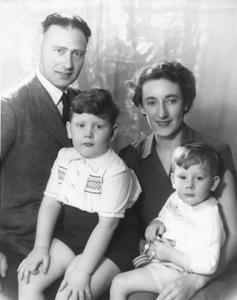
This week my sister and my surviving brother and I remember our father and our firstborn brother.  The anniversary of Dad’s death falls on the 13th day of the month of Ellul; Dennis died three years later, on Ellul 18.

Dad was 92, Dennis 63.

They died when they had to – Dad once his broken body began to break his iron will; Dennis, who lived for Mum, Dennis whose meaning was to be a son, Dennis constitutionally unable to live a motherless life. He died while Mum was alive. (Mum, most buoyant of my three lost ones, mourned Dennis, mourning lightly, living on, ever lightly.)


I think of them, all three. I wrestle with memories of the brother, he the first of his father’s strength, the brother who wrestled always with Dad. Two firstborn of firstborns, two men of fire who burned each other in their hot loving. I think of them, I remember their awful strife, I who knew, I who witnessed their mutual love, I, powerless to stop them hurting each other. Powerless in the end to stop the pain to myself.


I dream of them. The Dad dreams are never anything than pleasant. He smiles as we bump into each other in the lounge rooms of our lives. Dad prepares his enslaving coffee, I write, we smile, we know each other, we accept each other.

When I dream of Dennis the anxious need to rescue him clouds all. Not accepting, never reconciling to my brother’s pain, I strain against his self destruction. Aware always – in these dreams and when awake – aware of his love, his heavy tenderness towards me.

In my waking I recall Dad’s request, directed to me when I was twelve, Dennis fifteen: Some have a clear path in life. They are the lucky ones. You are one of those, one of the blessed. Your brother, your older brother, his path is not so easy. Help him, help Dennis when you can.

I tried, Dad. I never stopped trying.


The years pass.  ‘tis common. We get over it.


And yet, and yet, that Hamlet scene returns.

Hamlet’s Mum, Gertrude: “Thou knowest ‘tis common.

All that lives must die, passing through nature to eternity.”

Hamlet: “Ay Madam, ‘tis common.”

Gertrude: “If it be, why seems it so particular with thee?”

Hamlet: “I know not seems, Madam.”


I had a father. He passed through nature to eternity. I had an older brother, I lost him; I lost a limb. The phantom sensations do not end.


I write, a destiny. Until I have written the courageous, the impossible life of my brother, that hurt, hurting life, I will not earn dreamless rest.


Yitgadal ve’yitkaddash, shmei rabah.

Notice of the Death of a Son

A thin, linear lady, stringy, bounces in to my consulting room, sits down, beams at me from her lean oblong face. And waits. She has the grin of a six-year old.

We haven’t met before. Welcome. My name’s Howard.

A bony hand on a long arm grips mine vigorously and softly. The grin widens, shifting dentures. Hello Howard. I’m Lucy.

In general Lucy looks her age, which is seventy two years; but her skin looks a lot older. She might be a chicken, so scaly and irregular are her surfaces. The thicket of hair atop her bony head is fair. The skin is fair too, excepting for the plaques of pink, great blotches of healing. She is an old gum tree, her bark new, old, peeling, revealing, irresistibly alive.


She looks me over genially, taking my measure. She decides I will do and embarks on a story.

I had a son. He died last year. Lucy looks up, waits a bit, resumes: Your children are supposed to bury you, not the other way around.

Lucy bears her loss lightly. She hasn’t come here to shed grief. She looks at me, unbowed, light in her being.

I look back hard. There must be a wound.

How did your son die?

A heart attack, massive. He was forty-four.

Lucy has taken my measure. I am old enough. I will know the verities, the facts of death.

You know the smell of death.

A statement, not a question.

How does death smell, Lucy?

Indescribable. And unmistakeable. As you’d know.

I smelt death first the night Dad died. I was staying with him and I smelt that smell. When I found Dad he’d been dead a couple of hours. He was cooling. The smell started around the time he died…

I started smelling death again a year ago. I smelled it four nights in a row. My bed smelled of it, my pyjamas too. It was really strong. I wouldn’t let myself fall asleep: I thought I was the one dying. I was at my daughter’s place and I didn’t want her to have to find me.

After the fourth night they rang to tell me my son had passed. He died four nights before.

That smell starts ten minutes after they die. And it stops once you know.

Lucy looks at me, grins a smile of reality, of truth. Ultimate truth, the factuality of death.

I’ve lost both my boys; the first one died at birth.

But I’ve got my girls. They’re both good. And seven grandchildren and – a huge bright smile, a lightning strike in the summer of Lucy’s face – a little great granddaughter!

A pause. Lucy is a good pauser, unfrightened of the silences that flow, clear as her sentences. And in the pauses, Lucy smiles her knowings that I must share: the freshness of new life. How the fact of a baby redeems all.

You know I bounce back. Just about exactly a year come round since my boy passed, I lost a dear friend. Like sisters we were. That was tough… for a while.

This is a pause unlit by smiling. Lucy looks at me steadily.

But I bounce back.


At Prayer

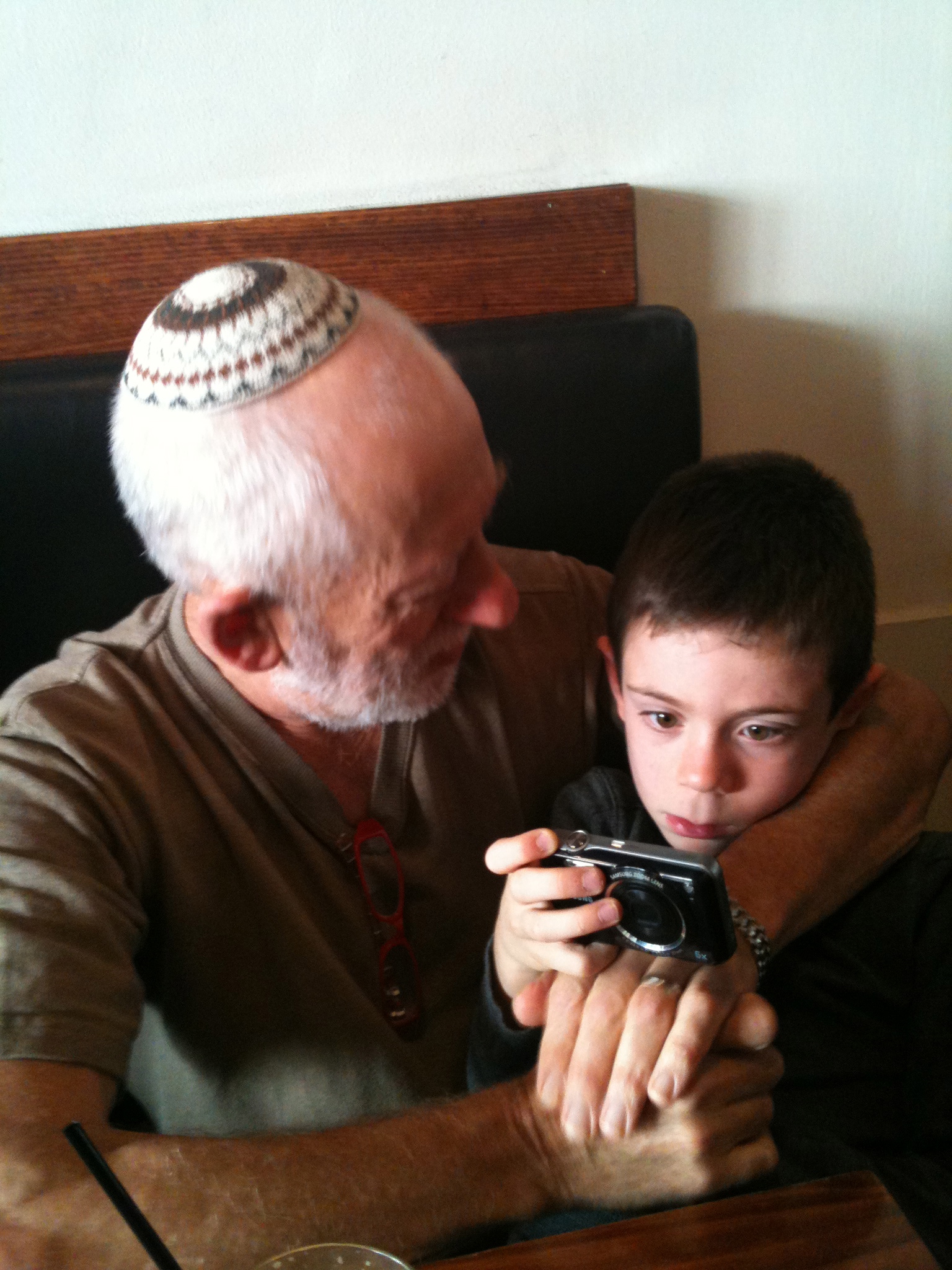
The pale wintry sun descends and I recite my everyday afternoon prayer. Watching me, my eight year old grandson moves to sit on my knee. “What are you praying for, Saba?”
The enquiry jolts me to consciousness. If he’s asking, what’s your purpose in praying? – it’s a good question.
I fancy he’s asking, what are you praying for – in particular?
Still a good question.

He sits on my knee, this fleaweight who holds me captive. He forces me to interrogate the ritualized murmurings that issue half-bid, half-conscious. I translate for him:
The eyes of all look to You for good news,
And You give them their bread in good time.
You open up Your hand – here I open my closed hand, enacting the gifting of food –
And You satisfy the want of all that lives

I want the child to share my sense of wonder, of providence, however unevenly it might fall.
Grandson takes my face in his hands, brings his face close. Closer. His lips touch mine. He holds my face a little longer.
I contemplate Dickenson’s telegrammatic:
Prayer is the little implement
Through which Men reach
Where Presence—is denied them.
They fling their Speech
By means of it—in God’s Ear—

Grandson is in no rush to return to Lego and the other urgencies of his life. He sits while I entertain Tennyson:
More things are wrought by prayer than this world dreams of.

What does Saba pray for? He prays because he can, because he needs to.
Another kiss and grandson descends. Thank you Saba.

I am left to wonder whether a grandchild might be the answer to the prayer I sent to God’s Ear and never knew it.

A High Churchman in Hobart

It is my first day at work in the Royal Hobart Hospital. Apart from my bride, I know no-one in this town. From the far side of the ward I become aware of a wide smile upon a moon face. The face sits above a clerical collar and a generous body and it is moving relentlessly closer to me. The nearer it comes, the wider the smile, until it is upon me and I am a bit wary.

I don’t know this bloke and he doesn’t know me. Why is he so happy to see me? It can only be the yarmulka on my head that attracts him.

I sense the imminence of uninvited salvation.

Friar Tuck sticks out his hand. The hand is soft and warm and firm. Hello, he says, welcome to the Royal. I’m Father Jim.

This bloke is irresistibly charming. I say – I’m about to go home to eat. How do you like Indonesian cooking, Father Jim? My wife is making fish, it’s a new recipe – would you like to join us?

Jim accepts and is delighted to meet Annette. He makes no comment about the fine garfish bones which are inextricable from Annette’s delectable Indonesian sauce.

It turns out that Jim is the Anglican chaplain at the hospital. That is his day job. By night and at weekends, he is one of the founders of a tiny Order of celibate Christian men who provide refuge for people who are lost or homeless or in crisis. They call their Community St. Michael’s Priory.

Every needy person, every demanding, manipulative and lost person in Hobart comes to the community and is greeted by wide smile Jim.

Celibate himself, Jim marries everyone else at the Royal. Nurses, doctors, morticians and clerks – Jim ushers them all into matrimony. But Jim’s best efforts are not proof against the rising tide of divorce that washes away his marriages. So he stops marrying people.

Father Jim joins us for Shabbat meals on Friday night. He reads the Haggadah with us at Passover, recounting our exodus from Egypt.

We leave Hobart but whenever he can, Jim visits us in Melbourne for Shabbat or Passover.

Years later, he leaves the Royal and the Priory and becomes a prison chaplain, then a chaplain to the dying in Melbourne. He welds himself to our children with the warmth of his smile. He comes to Synagogue with us, collarless, wearing one of my yarmulkas, and soon is taken for an Israeli.

He retires and goes to live in England, writing to us, posting us cuttings from texts by his favourite religious leader, Jonathan Sacks, Chief Rabbi.

Over 35 years Father Jim is our friend. He celebrates the religious differences between us.

“Slip me a Mickey”

Mum is about sixty. She speaks with her doctor son, aged thirty. He’s still a bit wet behind his medical ears.

Mum: One of these days I’ll have stroke darling…

Son, provoked: How can you know that, Mum? I’m a doctor and I’m not able to predict that. You can’t know you’ll have a stroke.

Mum: Well, I do have high blood pressure and my cholesterol is high. Those are the factors. Anyway, when I do, I want you to slip me a Mickey.

Son: You mean kill you? No! I won’t.

Mum: Alright, darling.

Son, contrite: Look Mum, if you do have a stroke, I’ll come and visit you every day. I’ll read every word of Dickens to you. And after that, I’ll read all of Shakespeare to you.

Mum: Thank you darling. That would be nice.


Son, six months later: Mum, remember how you asked me to knock you off if you had a stroke? Would you still want me to do that?

Mum: No, certainly not.

Son, triumphant: You see Mum, if you’d had a stroke, I’d have killed you – and you wouldn’t have wanted to be dead.

Mum: No, darling – I’d have been dead and happy, and you’d be alive and feeling guilty.


Fifteen years pass. Mum goes to see the Australian Ballet and suffers a mini-stroke. Her doctor – a specialist, not her son – starts her on aspirin. She suffers a cerebral thrombosis, a full sized stroke. Her hand is weakened and her memory is patchy. Her specialist decides she needs warfarin – rat poison – to thin her blood. After watching ”In the Name of the Father” with her doctor son she vomits suddenly. Son helps her to her feet, but she falls, a dead weight. Her son and her daughter in law heave and drag her to the car. They drive to hospital.

Mum’s blood has become so thin she’s suffered a cerebral haemorrhage. Her specialist doubts she will recover consciousness. She does so. While she remains in her coma someone in the hospital relieves her of her engagement ring. She never sees it again.

Mum wakes up. Half her hindbrain is demolished and with it her balance and her ability to walk. Her champagne voice loses its sparkle. She speaks huskily now, coughing often, searching for sounds to carry her meanings.

She says to her doctor son: I reckon the next stroke will get me.

What do you mean?

It will see me out. Dead.

Son, not irritably: I don’t know, Mum. How can anyone know?

Mum: I’ve had two strokes now. Isn’t that what they say – ‘three strokes and you’re out’?

The son laughs. The old lady laughs too. A stroke is a nuisance – “boring” is her word for it – but time spent with any of her children is recompense.

Belatedly the son recalls his promise – Dickens! Shakespeare! Mum, remember I promised to read novels and plays to you?

Did you darling?

I did promise, but I never came good.

Never mind, darling.
She squeezes his hand with her own – the one that still works.

The son launches into reminiscences of the time, more than thirty years distant, when they lived in the country. His stories bring back the days when her young body obeyed her quick mind, when it was she who nurtured the stumbling child. He finishes his vignette. The mother smiles, squeezes his hand again and thanks him: That was lovely darling.

Son: You know what, Mum? I’ve got lots of stories from those times. How would you like it if I were to write them all down and read them to you?

Mum: I’d love that darling.

He starts to write the stories. He supplies them to Mum and to her oldest friend from those days. The two old ladies feast their tear glands on the stories.


Mum needs a helper now to shower herself. Sometimes the helper takes leave and bathing her falls to a son, the oldest one, not the doctor.

Mum: Isn’t this awful for you, darling? Bathing an old wreck?

Eldest son: When I soap your back, I remember with my skin how you soaped me. It’s a return, a coming home. I bless myself for the privilege.


The stairs in her old home are beyond Mum. The doctor son and his grown son carry her up and down on wrist-linked hands. Mum asks: Don’t you boys want to euthanase me?

Son: At last I can do something for you in return for carrying me all my life.


Mum and Dad settle into their new single storey home. After a time, the doctor son asks: Mum, do you remember a conversation many years ago? You wanted me to give you a fatal overdose of a sedative if you ever suffered a stroke. Now that you’ve suffered a few of them, do you still feel the same?

Oh no, dear. Certainly not. Do you know why?

Her emphasis makes her wheeze and cough.

Son waits for the squall to pass: No Mum. Why?

Mum: I thought if I suffered a stroke I’d be handicapped; and I was right. And if I was handicapped, I’d lose my independence; and I was right. I thought if I lost my independence I’d be a burden; and I was wrong.

A pause.

You know – I’ve never been happier in my life.

He stares at his mother.

Mum: And the reason is I am surrounded by people who love me.


20130604-204052.jpg

On Quietly Going Deaf

IMG_1696 IMG_1646 IMG_1046“What?”

“What did you say?”
My family is sick of my hardness of hearing. It seems that hearing hardens and arteries harden at just the time that other things soften.
One of my body’s pumps has softened noticeably. I refer to the one with the ventricles.
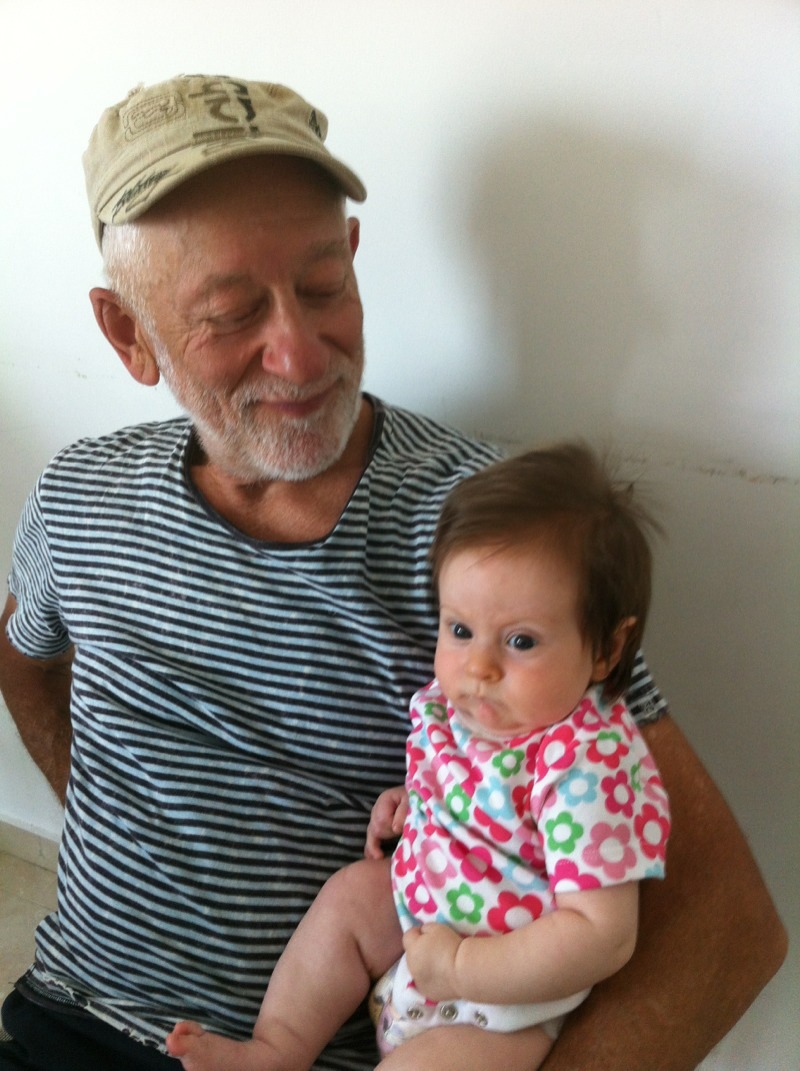
What human heart can stand firm against the arrival of grandchildren?
This happy, happy stage of life where our children use their sexual organs for the pleasure of us, their parents!
Technological Man has invented old age. Nature, blind and base, has no use for us once our litters have matured and reproduced. We are supposed to wither quickly and politely die. But doctors have intervened and prolonged the moments of aging into an epoch. From fifty to ninety we live on, noting the failing function of joints and arteries, of ears and eyes. Our teeth desert us, our balance fails, our uteri prolapse, our prostates swell, our bladders leak and we dare not trust a fart.
But we have grandchildren. I can hold a newborn on my knee and croon off key and she will not object. I can hold the toddler in my arms and tell him a thousand stories, long after my eyesight darkens, for just as long as memory holds strong. And when memory fails, I can confabulate.
Who needs hearing aids, dentures, titanium hips, dental implants? We have grandchildren.IMG_0009 IMG_1603 IMG_0482