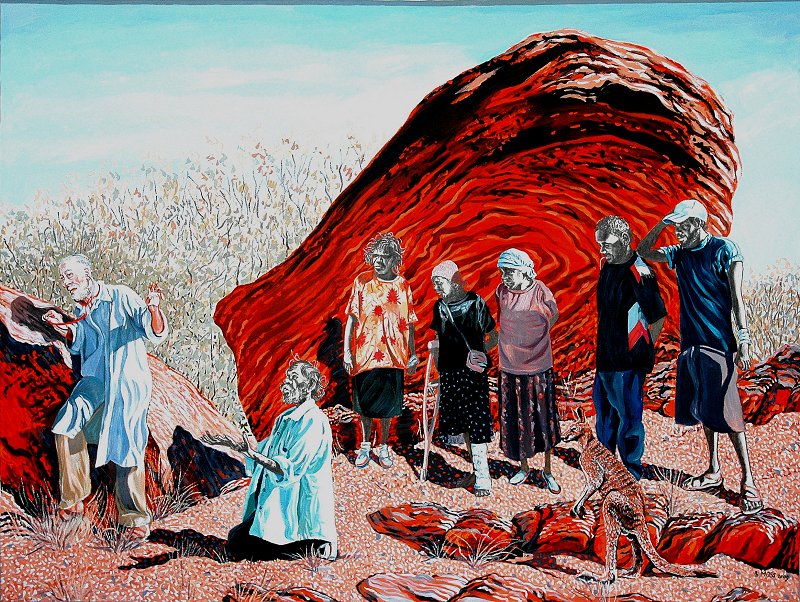
Mrs Hamlet’s Advice

Mr Hamlet Senior, formerly king of Denmark, has passed on. His son Hamlet Junior is sad, sulky, grumpy with Ophelia (who suicides), stabbish with Polonius lurking behind an arrass (who just happens to be Ophelia’s Dad, who dies incidentally of Hamlet’s stabbishness); obsessed, ruminative, haunted; angry, angryangry; refusing to be consoled, refusing to be reconciled.

His Mum, pragmatically re-queened to Hamlet’s uncle, offers some advice to  Hamlet Junior: ‘Tis common. Why seems it different with thee?

In other words, Get over it, son.

And in time we do. As a rule. ( If Hamlet fails to get over it’s because his uncle killed his Dad. And because Hamlet is, well, Hamlet.)


This week my sister and my surviving brother and I remember our father and our firstborn brother.  The anniversary of Dad’s death falls on the 13th day of the month of Ellul; Dennis died three years later, on Ellul 18.

Dad was 92, Dennis 63.

They died when they had to – Dad once his broken body began to break his iron will; Dennis, who lived for Mum, Dennis whose meaning was to be a son, Dennis constitutionally unable to live a motherless life. He died while Mum was alive. (Mum, most buoyant of my three lost ones, mourned Dennis, mourning lightly, living on, ever lightly.)


I think of them, all three. I wrestle with memories of the brother, he the first of his father’s strength, the brother who wrestled always with Dad. Two firstborn of firstborns, two men of fire who burned each other in their hot loving. I think of them, I remember their awful strife, I who knew, I who witnessed their mutual love, I, powerless to stop them hurting each other. Powerless in the end to stop the pain to myself.


I dream of them. The Dad dreams are never anything than pleasant. He smiles as we bump into each other in the lounge rooms of our lives. Dad prepares his enslaving coffee, I write, we smile, we know each other, we accept each other.

When I dream of Dennis the anxious need to rescue him clouds all. Not accepting, never reconciling to my brother’s pain, I strain against his self destruction. Aware always – in these dreams and when awake – aware of his love, his heavy tenderness towards me.

In my waking I recall Dad’s request, directed to me when I was twelve, Dennis fifteen: Some have a clear path in life. They are the lucky ones. You are one of those, one of the blessed. Your brother, your older brother, his path is not so easy. Help him, help Dennis when you can.

I tried, Dad. I never stopped trying.


The years pass.  ‘tis common. We get over it.


And yet, and yet, that Hamlet scene returns.

Hamlet’s Mum, Gertrude: “Thou knowest ‘tis common.

All that lives must die, passing through nature to eternity.”

Hamlet: “Ay Madam, ‘tis common.”

Gertrude: “If it be, why seems it so particular with thee?”

Hamlet: “I know not seems, Madam.”


I had a father. He passed through nature to eternity. I had an older brother, I lost him; I lost a limb. The phantom sensations do not end.


I write, a destiny. Until I have written the courageous, the impossible life of my brother, that hurt, hurting life, I will not earn dreamless rest.


Yitgadal ve’yitkaddash, shmei rabah.

At Prayer

The pale wintry sun descends and I recite my everyday afternoon prayer. Watching me, my eight year old grandson moves to sit on my knee. “What are you praying for, Saba?”
The enquiry jolts me to consciousness. If he’s asking, what’s your purpose in praying? – it’s a good question.
I fancy he’s asking, what are you praying for – in particular?
Still a good question.

He sits on my knee, this fleaweight who holds me captive. He forces me to interrogate the ritualized murmurings that issue half-bid, half-conscious. I translate for him:
The eyes of all look to You for good news,
And You give them their bread in good time.
You open up Your hand – here I open my closed hand, enacting the gifting of food –
And You satisfy the want of all that lives

I want the child to share my sense of wonder, of providence, however unevenly it might fall.
Grandson takes my face in his hands, brings his face close. Closer. His lips touch mine. He holds my face a little longer.
I contemplate Dickenson’s telegrammatic:
Prayer is the little implement
Through which Men reach
Where Presence—is denied them.
They fling their Speech
By means of it—in God’s Ear—

Grandson is in no rush to return to Lego and the other urgencies of his life. He sits while I entertain Tennyson:
More things are wrought by prayer than this world dreams of.

What does Saba pray for? He prays because he can, because he needs to.
Another kiss and grandson descends. Thank you Saba.

I am left to wonder whether a grandchild might be the answer to the prayer I sent to God’s Ear and never knew it.

The Last Lover of The Age

Dear Age

I have loved you now for sixty years. I have loved you in all seasons, for good reasons and despite the bad. I have loved you in pleasure and in pain.
It was you who, in 1953, introduced me to Collingwood, the football team that would always run second to the very mighty Melbourne.
My family made the pilgrimage to Melbourne every September for the Jewish High Holy Days, the annual Season of Judgement. It was the judgement of the Age that Collingwood would challenge and would fall short. So it came to pass year after year: the Age proposed and God disposed. Collingwood was David to Melbourne’s Goliath ; and when the Pies went down to the brook they found no smooth stones for their slingshot.

Yes, I loved you. I loved you for the Junior Age in which you published the writings of young readers. I loved you for your literary judgement when you judged my own writings worthy of publication.
I loved ‘A Country Diary’, by Alan Bell. Churchill sent Alan here during the War. His was to be a British voice to keep Australia British. Every Saturday Alan reported on the Australia of his very English garden in Diamond Creek. He kept readers informed about the first duckling sightings in spring. This very British voice did its job: Alan Bell and the Age won the war for Britain.
I loved you when you introduced me to ‘Family Matters’, Martin Flanagan’s weekly report about his pre-school children. He taught anew the old truth that you do not know you have known love until you have sat through the night comforting a child delerious with fever.
I loved you through the seventies when I saw through your selective reporting on Israel and on doctors. In those days the Age pursued three public enemies – Nasty Israel, Greedy Doctors and the Painters and Dockers. If I met someone for the first time at a party and I had to answer the question – what do you do for a living? – I’d say I was a painter and docker. It made no difference.
You no longer pursue the Painters and the Doctors but you pursue Nasty Israel still. Martin Flanagan went to Israel with the Peace Team. To retain his independence he paid his own way. You published his generally favourable reports and I loved you for that.
For a period in the nineties I read Helen Garner’s column in your pages on Wednesday mornings. What joy, what variety, what excellence.
Helen and Martin opened chinks to reveal their human selves and we readers learned more of our own human selves.
I loved you because you were not Rupert. Someone has to be not Rupert or we’d all be in Deep Murd.
I read The Australian wherever I am in the outback, simply because it is available. Impressively, it is available all over Australia. You can read that newspaper from cover to cover and you can weep for bleakness. It is not a good news newspaper. Neither, dear Age, are you – generally speaking. But every so quite often your shrunken front page cheers a reader who yearns and searches for sightings of the goodness of human beings.
Now, and terminally, we have the Internet. Fairfax News can be obtained daily on a screen. (Who is this Fairfax-come-lately? I long for auld lang syme.) So no-one needs newspapers any more.
The Age is preparing for its own Death Notice, slimming down to fit a narrow pauper’s grave.
When you die I will mourn you. You remain necessary. You have been a friend. And as another friend once remarked: no-man is so rich he can afford to throw away a friend.

Postscript: this morning I lit a fire in my fireplace, using yesterday’s Age in place of kindling. The fire took and burns warmly as I write.

A High Churchman in Hobart

It is my first day at work in the Royal Hobart Hospital. Apart from my bride, I know no-one in this town. From the far side of the ward I become aware of a wide smile upon a moon face. The face sits above a clerical collar and a generous body and it is moving relentlessly closer to me. The nearer it comes, the wider the smile, until it is upon me and I am a bit wary.

I don’t know this bloke and he doesn’t know me. Why is he so happy to see me? It can only be the yarmulka on my head that attracts him.

I sense the imminence of uninvited salvation.

Friar Tuck sticks out his hand. The hand is soft and warm and firm. Hello, he says, welcome to the Royal. I’m Father Jim.

This bloke is irresistibly charming. I say – I’m about to go home to eat. How do you like Indonesian cooking, Father Jim? My wife is making fish, it’s a new recipe – would you like to join us?

Jim accepts and is delighted to meet Annette. He makes no comment about the fine garfish bones which are inextricable from Annette’s delectable Indonesian sauce.

It turns out that Jim is the Anglican chaplain at the hospital. That is his day job. By night and at weekends, he is one of the founders of a tiny Order of celibate Christian men who provide refuge for people who are lost or homeless or in crisis. They call their Community St. Michael’s Priory.

Every needy person, every demanding, manipulative and lost person in Hobart comes to the community and is greeted by wide smile Jim.

Celibate himself, Jim marries everyone else at the Royal. Nurses, doctors, morticians and clerks – Jim ushers them all into matrimony. But Jim’s best efforts are not proof against the rising tide of divorce that washes away his marriages. So he stops marrying people.

Father Jim joins us for Shabbat meals on Friday night. He reads the Haggadah with us at Passover, recounting our exodus from Egypt.

We leave Hobart but whenever he can, Jim visits us in Melbourne for Shabbat or Passover.

Years later, he leaves the Royal and the Priory and becomes a prison chaplain, then a chaplain to the dying in Melbourne. He welds himself to our children with the warmth of his smile. He comes to Synagogue with us, collarless, wearing one of my yarmulkas, and soon is taken for an Israeli.

He retires and goes to live in England, writing to us, posting us cuttings from texts by his favourite religious leader, Jonathan Sacks, Chief Rabbi.

Over 35 years Father Jim is our friend. He celebrates the religious differences between us.

The Preacher of Princes Bridge

You see him on the bridge when you pass among the midday crowds. Alone among the moving multitude, he stands stationary, his voice raised as he addresses us. In his hands is a slim black volume with cheap plastic covers. He reads, rather, he declaims from this book words of prophecy and of admonition.

The preacher’s voice is thin and high pitched, too feeble an instrument to serve his purposes without help. He augments the thin piping of his voice with a little microphone which emerges like the head of a small serpent from somewhere near his collar. The serpent’s head stays firmly in place within cooee of the preacher’s mouth, a mere kiss away, without visible support.

Assisted by this miracle, the preacher delivers his text. His voice starts high and ascends higher. The higher it rises, the softer it becomes. Eventually, the voice reaches its zenith where all sound ceases, then it falls again to shoulder height to begin the ascent of the next phrase.

Alone among all the movers at noonday, I stop to listen and to learn. Continue reading

Star of the Sea

Yvonne and Doreen are among the very few Jewish girls at Firbank. Some unpleasantness occurs and Yvonne pretends it isn’t happening, but Doreen, the younger sister, is not so submissive. (At the age of four she had objected to the dentist hurting her. When he hurt her again Doreen bit his finger.)

When her classmates tease her for her Jewishness, Doreen fights back. After a few of these fights, their mother recalls how happy had been her own schooldays with the Presentation nuns in Perth. The family withdraws the girls from Firbank and sends them to the Presentation nuns at Star of the Sea.

Yvonne and Doreen arrive at Star to find they are the only Jewish girls. On the eve of the Depression their father falls ill and the whole school assembles to offer prayers for his recovery. He dies and the school prays for his soul.

Their father’s investments crash and the family is hard up. Compared to Firbank, the nuns are cheap, but Star reduces its fees so the girls can stay.

A new Jewish girl arrives. Her father has died, and she is to be a boarder. The nuns discover she has no prayer book. They are greatly concerned. They have lots of Catholic prayer books but they ask Yvonne and Doreen’s mother to find a Jewish prayer book for the new girl.

A couple of years after their father’s death, their mother’s heart fails. The school prays, she dies – of a broken heart, as the girls recall it – one day following the third anniversary of their father’s death. The whole school comes to a stop to pray for her soul and for the two orphan girls.

Neither of the girls is particularly studious, but Yvonne rewards the nuns with a perfect score in Catechism.

Years pass, the girls grow up, leave school and marry. Yvonne moves to a small town in the remote Riverina, where she raises a bunch of children without a family to support her. She misses her parents, her sister and grandmother. She bears and feeds these babies, deficient first in family, then in iron, later in red blood cells. Finally, she is confounded: fulfilled in motherhood, she is nevertheless tearful and faint. In crisis, Yvonne returns to the nuns and finds comfort. Will you pray for me, she asks.

Doreen too, turns to the nuns whenever she needs surgery. She too asks them to pray for her: You girls are the professionals, she says, I think you are better at it than I am.

As the years pass, Doreen has cancer surgery, bowel surgery, heart surgery, the list of operations grows longer, and always she goes back to the nuns. She speaks to her old school principal, now retired: Would you light a candle for me Sister?

I’d burn the whole bloody Church down for you if it would help you, Doreen.

Yvonne and Doreen go the nuns again and again. It only ends, after sixty years, when their old principal, the last of their nuns, dies at the age of 103.

Missionary Positions 1

A STRANGER ON A TRAIN

A ten year old boy is riding the red rattler across the suburbs of Melbourne. Plastic in his being, not yet firm in himself, quite unconsciously he absorbs the personas around him. One by one and all at once, he takes them in, trying to drink their apparent confidence, their certitude.

An older man enters the crowded carriage, looks around and selects the seat directly opposite the boy. He sits down, his knees only inches away. He carries a newspaper which is rolled into a cylinder. As he sits down, the train starts to move again, and quite quickly the movement makes the man sleepy and he nods off.

Every so often the boy senses the older man’s gaze upon him, but whenever he looks up to check, the man’s eyes are closed.

The ride is a long one. The deeper they go into the suburbs, the fewer the remaining passengers. Eventually, there are only the two of them in that whole cavernous compartment – the older one asleep and the younger one all too conscious.

He is uncomfortably aware of the man’s closeness in all that space: they haven’t even spoken. And the boy feels anxious, not knowing whether he even exists to this long distance sleeper.

He’d like to move, but he thinks he might offend.

The boy wonders whether the man will know when to get off. Perhaps he has already missed his stop. Soon the boy feels anxious about this too.

The train pulls into Hughesdale Station. The boy feels the stirrings of relief – his is the next stop. It will be okay then to move away.

But the sleeper has risen to his feet. He turns for the door, then pauses. The boy feels a light tapping upon the top of his head. It is the sleeper, using his furled newspaper to gain his attention.

He speaks: Good on yer, son. It’s a credit to you.

He taps the boy’s head again, this time touching the yarmulka that sits on his crown: You keep wearing that, son – it won’t let yer down.

The stranger alights and is gone.

The boy touches the top of his head. He feels somehow annointed.

The Festival of Eating Cheesecake

The festival has  a number of names: Feast of the Ingathering of the Harvest, Shavuoth (or Weeks), The Season of the Giving of our Torah; or Pentecost (for speakers of Ancient Greek); but in practice the festival we observe is The Feast of Eating Cheesecake AND Cheese Blintzes.

In the diaspora we will celebrate for 48 hours, commencing next Tuesday night. We eat dairy foods in appreciation of the promise of a “land flowing with milk and honey.” That is the standard translation, but the Hebrew – eretz zavath halav u’d’vash – really signals a land oozing milk and honey. The root comes from the verb ‘to sweat’. The land sweats milk, beads of honey form, merge and flow upon its surface.
This is intimate, physical language, the language of love. We consummate our love by the eating of cheesecake and cheese blintzes. We have loved this land and worked it and helped it to flow now as in ancient times.
Some will read these lines and lather themselves into a fury at my suggestion that my people have known and loved this land for thousands of years. They will diagnose my true racist, apartheid-mongering self. They will hate my love.
To all who read this, my greetings: Hag Sameach, happy festival! Good Yomtov.