The Man Who Had Cut Hands

A commotion from the waiting room. Raised voices, female voices, one shrieking, another, less frantic, also raised.

The frantic voice cries: Get him something for the pain. He’s in terrible pain. Get a doctor, he’s in pain.

Please don’t scream. Try to be calm. I’ll go and call the doctor… Here’s the doctor now.

The man who is in terrible pain lifts his hands,which are bleeding. Tall, in his mid-twenties, he has a scar that runs obliquely upward from his lower lip to the left hand corner of his upper lip. His eyes look yellowish. He bleeds from transverse lacerations on the backs of his hands. Both hands.

Odd.


In the treatment room the wounds are swiftly cleansed and anaesthetized. The man’s companion leans over the doctor’s shoulders squawking,  He’s in terrible pain. Give him something for the pain!

By this stage the doctor is busily suturing the numbed skin. The lacerations are jagged, roughly parallel, two on each hand.

Odd.

The young man’s companion is tall and thin, younger than he, agitated and relentlessly noisy.

The doctor looks up from his suturing, engages his patient’s gaze, asks confidentially, What happened?

Punched the windows. Both hands.

The doctor looks over his shoulder towards the injured man’s companion, still highly audible. He raises an eyebrow, asks: Was there a disagreement?

Bloody oath! It was her or the windows. I punched the windows.

The doctor thinks – wrong choice.


The young man’s skin is tough. It resists the doctor’s pressing needle. The doctor pushes harder, the skin abruptly gives way and the needle penetrates the doctor’s left index tip.

He pulls off his glove, washes the finger vigorously, asks over his shoulder – You’re not using any drugs are you?

Nah… hardly anything. Not now.

Are you injecting?

Nah. Not since I was inside.

The doctor scrubs harder.

The man adds: Look, you don’t need to worry. I haven’t got HIV. They test you before you leave.

The doctor looks unconvinced.

Look Doc, I’m clean. The only thing I’ve got is Hep C.


The doctor surveys the man’s hands: three lacerations down, one to go.

He asks the nurse for a syringe and a test tube, he draws blood from the wound, fills out a pathology slip, and sends the man’s blood for serological testing for a range of blood-borne infections.

In defiance of the law he does not seek consent from the patient. He scrubs again, re-gloves and resumes his suturing. He speaks: I’m testing your blood. I’ll give you the results when you come back to get the stitches out.


The wounds look tidy now, four curving rows of small black bows sit pretty as a flower bed against the thin red lines of closed lacerations.


The man and his lady friend leave without paying.

Only now does the doctor read the patient’s surname on the chart. He recognizes the name: he used to treat the man when he was a small child. His battling single mum did her best with the children. The sister turned out alright. Until today the doctor had lost track of the son.


The doctor sends off his own blood and learns that he has no antibodies against HIV, Hepatitis B, Hep C or syphilis. His patient does indeed have Hepatitis C. Now the doctor must wait three months to discover whether he has caught the incurable – and at this time, largely untreatable – liver virus.


The man who had cut hands never returns.

In the course of those months the doctor spends a lot of time in meditation.

The man who had cut hands was born in July 1972. Same month as my daughter.

He wonders about the birth of the young man.  Who delivered him? He asks his friend and celebrated senior partner, Dr. Donald Cordner: I met Rodney Blank the other day. I knew him as a kid. Did you deliver him?

Yes, I did… his sister too. What became of them?

The younger doctor fills him in. Then asks, You do believe in preventative medicine, don’t you Donald?

You know I do. What are you getting at, Howard?

Well I was just thinking – you could have saved lot of people a lot of trouble if you’d drowned him at birth.

What Would You Do? – Part 3


 This was one of Dad’s stories that made me when I was small – probably made my brothers and my sister too:

Dad said: “We lived in North Carlton, where all the Jews lived. We were all poor. Even after the Depression, when we weren’t so poor we never forgot the poor times.

“My Father – your Papa – told us a story about King and Godfree. Papa went there once in, the hard times, to buy food.

The grocer said: What can I get you, Mr. Goldenberg?

Three pounds of potatoes, please Mr. King.

What else?

A pound of flour.

The grocer weighed the spuds and the flour.

What else, Mr. Goldenberg?

That’s all. Nothing else thanks.

That’s not enough, Mr.Goldenberg.

What do you mean?

You’ve got three sons, growing boys. They need milk, eggs.

No thanks Mr. King.

The grocer left the counter for a moment. He came back and placed a dozen eggs and a quart of milk on the counter.

Papa shook his head. No Mr. King, I won’t take those. I’ll take what I can pay for.

You take them now Mr. Goldenberg. You’ll pay for them when you can.

Papa never forgot that. From that day he always shopped at King and Godfree.”

The Reunion

We met in the grounds of our old school. Cars drew up, old faces emerged, old bodies, sagging here and there, supported by stiffening joints. Faces lit in recognition or knitted in puzzlement – I can’t place you – then opened upon discovery. Older faces, stiffer frames – these were teachers, old and treasured. The pleasure was of a novel sort: it was as if one discovered an aged aunt or uncle not seen for fifty years; and the aged one was as delighted we were at the encounter.
Fifty years. A large chunk of time in anyone’s lifetime, an epoch unimaginable when we left in 1963.
We toured the school, the new and the old. The dunnies hadn’t changed except they were clean.
Afterwards we gathered in the dining hall.
I volunteered to speak about the lost eleven of our classmates. I didn’t want the ninety survivors of the class of 1963 to bee-suck on nostalgia and leave the dead unsung. So I read the following:

Here we are fifty years on.
We have become, I realise, walking memorials to those we have lost.
We travel the roads and the paths of our lives and our minds register: Aunty Sylvie lived in this street…Dennis used to walk his dog in this park…that’s the Shule Dad and his bothers walked to when they were kids…this is the street where my grandparents lived…

Now, gathered here at Scopus again, in this dining hall, beneath this roof, shadows of old friends, old rivals, flash across memory. Teachers we loathed, teachers we revered, those we mocked, those we feared, all move across the mind in their chalky academic gowns. They lived, they did their work and they passed on. And we – we who were once seventeen, eighteen years old and full of wonder about the future – we approach threescore years and ten, full of amazement about the years past.

But we have left some behind. I name them now.

Manny Olian, dead in 1964.
Faye Broons, dead only a few years later – in 1971.
Ephraim Bergner – died early – I haven’t been able to track down the year.
Leon Fust and Suzanne Gescheit in 2006;
Miriam Hamer, Norman Stern, Shareen Fremder – all in 2007;
Joe Serwetarz in 2008.
Zelda Slonim in 2009.
Michael Kowadlo, just over a year ago, in 2012.

The names are the bones. Some I can clothe in the flesh of concrete recollection.

Manny Olian.
Many memories, warm, smiling memories of a thin, manically funny boy, a stranger to malice, a friend who stood out from our glorious contemporaries for his originality of mind. Manny was the source of extraordinary insights that always astonished me. I see Manny holding a pen, grabbing a footy, his fingers spidering, hyperextending, exclamation marks at the extremities of a boy at the extreme.
Manny was a pioneer in death by drugs. During a trip on LSD, Manny stepped off a cliff in England and died.

In my imaginings I see Manny’s parents in 1946, at the time of his birth. They look upon their firstborn and they choose a name. The parents see their child before them and put the unspeakable past behind them. They called him Menachem, “comfort”. Eighteen years later, in 1964 – what comfort do they find?

Fay Broons.
I hardly knew Fay. I wonder how many did know her. Pretty, quiet, shy, ladylike, almost ephemeral at school, Fay was a mother of three little kids by 1971. She started the last weekend of her life in good health and was dead 48 hours later – of fulminating infection, or a brain haemorrhage? – even her family does not know to this day.

Ephraim Bergner.
Ephraim, Effy – that gifted, creative, wild child. Those fabulous good looks, that innocent disconnect from the rules, from the mundane, from consequences.
Our class’s James Dean.
Who was surprised that Ephraim’s life ended early?
Only the exact year, and the precise drug escape me.
What shadows, what secrets, what ghosts, was Ephraim escaping?

Leon Fust, skinny, nimble, fearless on the footy field, subtle and gentle in his thought; I last saw him in an Australian bank in Piccadilly, in an impeccable suit and a bowler. Leon looked the epitome of an English gentleman.
Never sighted again, what did Leon die of? Whom did he leave to mourn him?

Sue Gescheit, her kidneys failing after decades fighting off her viciously severe diabetes; Miriam Hamer, marrying for the first time at sixty, marrying for love, knowing her lung cancer had already spread to her brain; Norman Stern, one so jovial, often an innocent magnet for mischance, Norman, whom I had not sighted since school; he and Joe Serwetarz – the tall, the gregarious, the good looking, athlete – both of them, following just before or soon after Miriam and Sue.

Zelda Slonim – I think I knew her. Did I know her?

Shareen Fremder – I’m sure I didn’t know Shareen.

What does it mean that one passes and passes unknown?
Who knows? Who mourns?
Who carries their memory?

Finally, Michael Kowadlo, passing in 2012.

My first memory of Scopus is of Michael. This big friendly kid takes this very lost, very strange new kid –Howard Someone – from the country! – under his wing.
A week or so later I am climbing the steps of the slide when a bunch of interlopers races up the steps, pushing me aside. My face collides with the steel rail, a tooth chips, my mouth fills with blood and Michael, Big Michael, steps in and pushes the interlopers away. I take my turn and slide down. I meet and enrich a dentist. I become closest of friends with the principal slide aggressor – great to see you again Tommy – and Michael becomes a dentist.
The last 100 times I saw Michael occurred when we both spent a year reciting kaddish in memory of loved ones.

I want to recite kaddish now, and I invite everyone to stand and join with me, in memory of all our lost friends. In memory of Manny – “after the first death there is no other’’, as Dylan Thomas reminds us – in memory of youth, in memory – and in forgiveness – of our lost selves…

Yitgadal ve’yitkaddash sh’mei rabah…

***

After I delivered that sombre material, my voice dying at the end, I looked up. Fifty serious faces looked down. My schoolmates, silent for the first time in our twelve school years and in the following fifty years, did not meet my gaze. Gone was the buzz, the gaiety of moments ago. I had spoiled our evening. Or so I feared.

Mount Scopus College was born in Melbourne just after the end of the War. Fiercely partisan community leaders in their congregations and their factions came to historic agreement to bury difference and to create a school. The compromise they made was without precedent or subsequent. The leaders, the secular with the devout, the Yiddishists with the Hebraists, the political with the cultural, agreed on one thing: this ragged remnant of Jewry must educate its children if Jewry were to survive. So Mount Scopus was born at the same historic moment that we, the class of ’63, were born.
What did we know of the Shoah, what did we learn? Precious little at Scopus, only dark and unspoken shapes and silences from our parents. We did not realize until later that ours was a generation without grandparents.
Our Jewish teachers, burning with an intensity that burned us, cared unaccountably that we learn, that we incorporate the burden of their scholarship; while we, dull and distractible, remained unforgivably innocent, even indifferent to the heritage they were transplanting. Only in Rabbi Schwartz was truth writ clear in the body: his throat, a terrible terrain of wound and scar, remained red and swollen these years later. Somehow we all knew – the Nazis had pulled out his beard.
We are the result, their fruits, this class of 67-year olds, gathered again in the old Scopus dining hall that was also assembly hall and concert hall and community banquet room. Was I the only one to gaze about the room and to marvel at the achievement of Scopus, at the fruits of our parents’ sacrifice? The room crawled with professors, with doctors a dime a dozen, with lawyers, teachers, psychologists, with businesswomen, artists, computer greats. I could see how middle-of-the-roaders in our Scopus class rose to enduring distinction in the wider world. Truly the fires of the fathers had kindled huge drive in the children. Starved parents raised a generation hungry for success. We took our opportunities. Some seized the future, becoming pioneers and creators. We flamed, we made our mark.
Most of us had married Jews and produced Jews. Many of us had sent our kids to Mount Scopus. Making the real sacrifices needed for this costly schooling we endorsed the vision of the founders. Some of us had grandchildren at Scopus.

***

The class of ’63 has been decimated in two quite different ways – one in ten has died; one in ten has emigrated, made aliya – literally ascended – to Israel. Of these latter, three classmates have journeyed here solely for this occasion. It is a long and costly trip; why have they come? Why have others travelled from Western Australia and Queensland? Why have the remaining fifty-odd Melbourne residents bothered?
In the course of our four hours together clusters form and drift. Old intimates greet each other but do not linger, instead moving on to find others less known, less loved. A genuine thirst for connection, a tenderness, a respect – the things we all needed and often begrudged in those rougher days.
In place of the empty phrases of everyday greeting, men and women shake, hug, regard; they take in faces that have ripened and withered and deepened; they see and they don’t need to ask; the face of the other is the face they see in the mirror, a face stricken, blessed, stripped by the years. No-one is measuring, no-one comparing: that which we are, we are…

Four hours, equivalent to half a school day, long enough to discover

Equally interesting to me: why have others chosen not to come?
Two, I know, are disabled by mental illness. A third, with whom I am closer now than fifty years ago, told me she could not imagine a more distressing experience than to return to the terrain and personnel of her schoolday trauma. Having rebuilt herself from her remains, she has retreated to another state where she rusticates and has some peace. She begged me not to press her to come. She forbade me to explain. The committee was to erase her contact information. This friend would be astonished to know how many missed her, how many wondered aloud about her. In the face of this goodwill it was difficult for me to hold my peace. I fed friends scraps: She’s doing well…she couldn’t make it…
In the course of the reunion, another – likewise closer in adult life than in school days – turned up unannounced and stood at the rear, listening to the few speeches. The longest speech was my elegy for the lost. Upon completion of kaddish my friend turned and left in silence.
Not everyone won academic laurels. Not everyone had a stellar career. Some of those present at the reunion, vibrantly present, knew their unsuccess didn’t signify. As we toured the school, one removed his adhesive lapel tag and placed it between the names on the Honour Board. There he was, Dux of Mount Scopus College, now, after fifty years. There he was among us, huge in his mirth and delight.
There would be some who decided not to attend, conscious of ‘failure’ – in career, in material status, in family – unaware that no-one measures any more, no-one judges. We missed them.

***

What is the measure of the years? After fifty years what does it mean? I imagine the survivor of the Shoah washing up on this godforsaken Jewish wilderness, this godspared paradise, looking around, looking forward, never backwards, no never back to those places, those times. He stands, he mates with another survivor. Together they work, they scrape, they venture, they struggle and persist. They raise a generation, often of one only child – the previous children lost, burned – they find the tuition fees, they send the child to Scopus…

The Scopus of today dazzles. I venture to suggest there exist university campuses in Australia which would envy the facilities and the faculty of this school.

In all the vivacity of this evening, the buzz, the energy of this still radiant class of ‘63, in all the softening, the love, there abides among us grandparents the uneasy understanding that a Scopus education is beyond the means of many of our children to provide. Some of my contemporaries, I know, quietly pay their grandkids’ fees. Others work for the school, raising funds for scholarships and bursaries.

What would the founders say? Would they count Scopus a success if the rising generation were locked out?
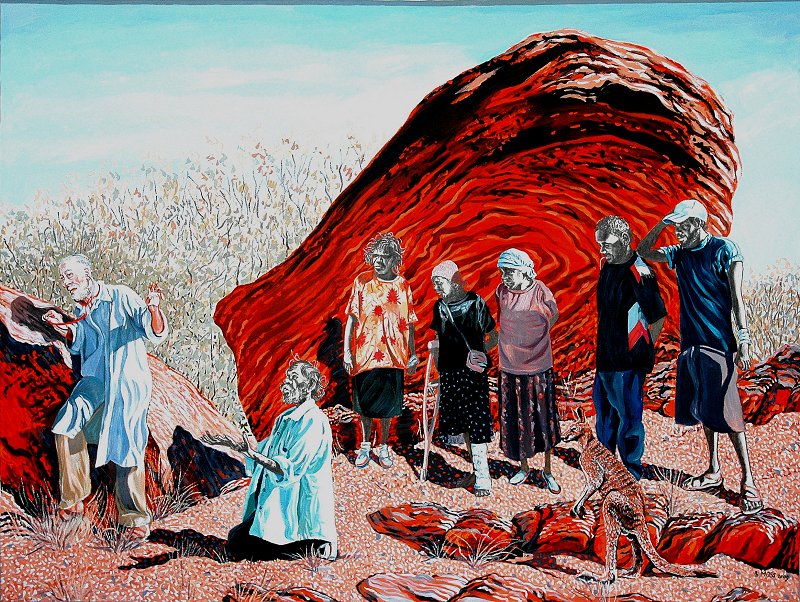
Virgin from Christmas Island to the Mainland

A man walks into my consulting room with a bouncing limp. He is tall and upright. He bows slightly and shakes my hand. The familiar courtesies.

I greet him: Salaam Aleikhum.

He responds: Aleikhum Salaam.

We exchange names. His name is Ahmed. He says: “My foot is painful. Please excuse me. I am afraid I must remove my shoe.”

His problem is visible through an opening in his sandal: the left great toe is infected. The flesh of the nail bed is hot and red, a crescent of swollen skin surrounding a sunken island of nail. The skin is shiny, stretched to bursting. A promising eyelet of pus peeps from beneath a corner of the cuticle.

The infected nail bed is about to burst in a flow of laudable pus. The pus will stink, Ahmed will feel better and so will I. Finally, a patient telling me a straightforward story. Finally a patient I can cure.

I treat the infection, dress the toe and ask Ahmed to return tomorrow to renew his dressing.

“I cannot come tomorrow.” His manner is politely regretful. “I will leave here tonight.” He speaks softly, practicality competing with swelling happiness: “I have my visa.”

Ahmed’s smile is a field of waving daffodils.

As it happens I will fly out tonight too. After three weeks of seeing patients here, Ahmed is the only one I meet to win a visa. The remainder reside in trailer parks of hope and despair.

Continue reading

Reunion in Eden

We left school a long time ago. After a decade it already seemed a long time had passed. We had become parents. Ten years further on a score of years separated us from those embarrassing teenage selves and, perhaps as a result, from each other. Now, it is half a century. A few of us have been meeting every few weeks to plan the Reunion.

I entered the most recent meeting and found I was the only male. Not unhappily. There was Leah, the hot blooded fish who brought me to a quick boil on my first day, still gorgeous. There was Virginia, brown skinned Virginia, flashing that smile that subverted my every chaste thought. Not that I had many. That tanned skin, that exposure of teeth in that open mouth, how her name seemed an impossible lie, a taunt. There was Bee, an artist now, an artisan in precious metals, in lapis, buxom Bee smiling broadly, Bee whom I never approached, never touched, too shy. Shy? Shocking, unforgiveable callous neglect!

Carmel was there and Carol, whom I have seen oftener and often, whom the years have kept real, who developed beyond the hot fancies and shapes of my adolescent mind.

And one was there, smiling. I didn’t know her at first, couldn’t place her. But her smile – of greeting, of welcome, of recognition – Howard, it’s me. It’s us – such a smile, so pregnant of shared knowing, of secret pleasure, of more, of something never reached. The smile waited upon dawning but the sun rose slowly. Meanwhile, what to do? I kissed her, a nice, slight, chaste kiss, that social gesture so easy now, so charged then. She spoke, her gaze, her smile unwavering, “Hello, Howard.”

Carmel’s voice broke the mystery: “Lilith has brought photos.”

Lilith! More quickly than for all the others I would fall for Lilith. More rapidly and more often. And equally quick in dissolution. The sun never set on our love. Falling in on the school bus, falling out by morning recess, burned by the abrasion, by the intensity, of Lilith’s mercurial moods.

“We’re all fucked,” she would tell me half a century later, “All of us, our parents, ourselves, our generations…”

I sat down at table with the ladies to plan the Reunion. Seated on the sole vacant seat, which happened to be at Lilith’s side, I didn’t contribute much. Neither did Lilith. Instead we whispered like two Grade Five kids, just like the two who met and fell in 1956, the country boy from Leeton, the tiny blonde from Bratislava, fresh from the embers of the Shoah.


Mrs Hamlet’s Advice

Mr Hamlet Senior, formerly king of Denmark, has passed on. His son Hamlet Junior is sad, sulky, grumpy with Ophelia (who suicides), stabbish with Polonius lurking behind an arrass (who just happens to be Ophelia’s Dad, who dies incidentally of Hamlet’s stabbishness); obsessed, ruminative, haunted; angry, angryangry; refusing to be consoled, refusing to be reconciled.

His Mum, pragmatically re-queened to Hamlet’s uncle, offers some advice to  Hamlet Junior: ‘Tis common. Why seems it different with thee?

In other words, Get over it, son.

And in time we do. As a rule. ( If Hamlet fails to get over it’s because his uncle killed his Dad. And because Hamlet is, well, Hamlet.)


This week my sister and my surviving brother and I remember our father and our firstborn brother.  The anniversary of Dad’s death falls on the 13th day of the month of Ellul; Dennis died three years later, on Ellul 18.

Dad was 92, Dennis 63.

They died when they had to – Dad once his broken body began to break his iron will; Dennis, who lived for Mum, Dennis whose meaning was to be a son, Dennis constitutionally unable to live a motherless life. He died while Mum was alive. (Mum, most buoyant of my three lost ones, mourned Dennis, mourning lightly, living on, ever lightly.)


I think of them, all three. I wrestle with memories of the brother, he the first of his father’s strength, the brother who wrestled always with Dad. Two firstborn of firstborns, two men of fire who burned each other in their hot loving. I think of them, I remember their awful strife, I who knew, I who witnessed their mutual love, I, powerless to stop them hurting each other. Powerless in the end to stop the pain to myself.


I dream of them. The Dad dreams are never anything than pleasant. He smiles as we bump into each other in the lounge rooms of our lives. Dad prepares his enslaving coffee, I write, we smile, we know each other, we accept each other.

When I dream of Dennis the anxious need to rescue him clouds all. Not accepting, never reconciling to my brother’s pain, I strain against his self destruction. Aware always – in these dreams and when awake – aware of his love, his heavy tenderness towards me.

In my waking I recall Dad’s request, directed to me when I was twelve, Dennis fifteen: Some have a clear path in life. They are the lucky ones. You are one of those, one of the blessed. Your brother, your older brother, his path is not so easy. Help him, help Dennis when you can.

I tried, Dad. I never stopped trying.


The years pass.  ‘tis common. We get over it.


And yet, and yet, that Hamlet scene returns.

Hamlet’s Mum, Gertrude: “Thou knowest ‘tis common.

All that lives must die, passing through nature to eternity.”

Hamlet: “Ay Madam, ‘tis common.”

Gertrude: “If it be, why seems it so particular with thee?”

Hamlet: “I know not seems, Madam.”


I had a father. He passed through nature to eternity. I had an older brother, I lost him; I lost a limb. The phantom sensations do not end.


I write, a destiny. Until I have written the courageous, the impossible life of my brother, that hurt, hurting life, I will not earn dreamless rest.


Yitgadal ve’yitkaddash, shmei rabah.

In truth, I am beshat*

In my days in the Diamond Valley I made the acquaintance of a man who enjoyed conversation, a school teacher. He saw that I enjoyed the odd excursion from the straight narrows of medicine and so he told me stories. A tall man, he needed his height to ferry his round tummy, pregnant with decades of plentiful daily ale. His face was merry, his cheeks red, his nose pitted and fretted and bulbous with the veritas of his vinous ways. His skin fell in furrows over his wasted muscles.

The teacher told me stories, breathing over me the rich aroma of his vegetable of choice, tobacco leaf.

He enjoyed company, he liked stories, he was avid to hear mine and generous with his own. Some times the teacher came to consult me about his health, but even then there was always a story.

Doc, I had diarrhoea yesterday. It was funny in a way.

“Are you any better today?”

Fine, as far as diarrhea goes. It’s just the cough. I’d better explain.

Yesterday we took all the Grade Twos and Grade Threes on an excursion. Great excitement. First excursion for those kids. We were taking them to the Museum, forty-one kids, two teachers, two aides and a few parents as volunteers.


There was this great buzz. You know the excitement of a bunch of kids? You can feel it, the hum, the excitement.

We herded the kids onto the bus, forty-plus of them, chirping, a bunch of chicks on a first flight from the nest. It took forever to get them aboard, get them seated.  Finally, are we all aboard? I was Senior. I called the roll: all present, all correct. Just to double check, I walked the aisle and did a count: forty-one kids. Two were away sick.


I stood up front, next to the driver, to make my little speech. I told the children how lucky we were, how we would visit the museum and see exhibits from olden times as well as models of dinosaurs.

At mention of dinosaurs all the kids are excited. One child near the front pipes up with a question: “Did you see dinosaurs when you were our age?”

You know a question like that, it can be a smartarse wisecrack from some show off, but this was spontaneous, straightforward curiosity. A little girl, free of artifice or design, just wanting to know. I saw myself as she saw me – old, clever, full of knowledge and memory, a relic, a museum piece. As a teacher you live for that freshness, those moments. You relish the child’s gravity and your own absurdity.


So the child asked, filled me with delight. And hilarity. I laughed. That’s where I went wrong. I laughed and laughed. Everyone joined in. I laughed until I started coughing. I coughed so hard I lost control of my bowel. I felt my pants fill. I felt it run down my legs.  The children up front smelled it.

We have arrived now at the symptoms – cough and diarrhea: “What did you do?”

The teacher’s face radiates mirth. He sees what the children saw.

What could I do? I said, ‘There will be a short delay while I duck home and clean up and change.’ And that’s what I did. Ten minutes later we were on our way.

I’ll tell you something, Howard. We all had a great day. And those  forty-one kids will never forget their first excursion, that day, that famous day the teacher shat himself in front of them.

*From The Sot Weed Factor, John Barth 

At Prayer

The pale wintry sun descends and I recite my everyday afternoon prayer. Watching me, my eight year old grandson moves to sit on my knee. “What are you praying for, Saba?”
The enquiry jolts me to consciousness. If he’s asking, what’s your purpose in praying? – it’s a good question.
I fancy he’s asking, what are you praying for – in particular?
Still a good question.

He sits on my knee, this fleaweight who holds me captive. He forces me to interrogate the ritualized murmurings that issue half-bid, half-conscious. I translate for him:
The eyes of all look to You for good news,
And You give them their bread in good time.
You open up Your hand – here I open my closed hand, enacting the gifting of food –
And You satisfy the want of all that lives

I want the child to share my sense of wonder, of providence, however unevenly it might fall.
Grandson takes my face in his hands, brings his face close. Closer. His lips touch mine. He holds my face a little longer.
I contemplate Dickenson’s telegrammatic:
Prayer is the little implement
Through which Men reach
Where Presence—is denied them.
They fling their Speech
By means of it—in God’s Ear—

Grandson is in no rush to return to Lego and the other urgencies of his life. He sits while I entertain Tennyson:
More things are wrought by prayer than this world dreams of.

What does Saba pray for? He prays because he can, because he needs to.
Another kiss and grandson descends. Thank you Saba.

I am left to wonder whether a grandchild might be the answer to the prayer I sent to God’s Ear and never knew it.

The Last Lover of The Age

Dear Age

I have loved you now for sixty years. I have loved you in all seasons, for good reasons and despite the bad. I have loved you in pleasure and in pain.
It was you who, in 1953, introduced me to Collingwood, the football team that would always run second to the very mighty Melbourne.
My family made the pilgrimage to Melbourne every September for the Jewish High Holy Days, the annual Season of Judgement. It was the judgement of the Age that Collingwood would challenge and would fall short. So it came to pass year after year: the Age proposed and God disposed. Collingwood was David to Melbourne’s Goliath ; and when the Pies went down to the brook they found no smooth stones for their slingshot.

Yes, I loved you. I loved you for the Junior Age in which you published the writings of young readers. I loved you for your literary judgement when you judged my own writings worthy of publication.
I loved ‘A Country Diary’, by Alan Bell. Churchill sent Alan here during the War. His was to be a British voice to keep Australia British. Every Saturday Alan reported on the Australia of his very English garden in Diamond Creek. He kept readers informed about the first duckling sightings in spring. This very British voice did its job: Alan Bell and the Age won the war for Britain.
I loved you when you introduced me to ‘Family Matters’, Martin Flanagan’s weekly report about his pre-school children. He taught anew the old truth that you do not know you have known love until you have sat through the night comforting a child delerious with fever.
I loved you through the seventies when I saw through your selective reporting on Israel and on doctors. In those days the Age pursued three public enemies – Nasty Israel, Greedy Doctors and the Painters and Dockers. If I met someone for the first time at a party and I had to answer the question – what do you do for a living? – I’d say I was a painter and docker. It made no difference.
You no longer pursue the Painters and the Doctors but you pursue Nasty Israel still. Martin Flanagan went to Israel with the Peace Team. To retain his independence he paid his own way. You published his generally favourable reports and I loved you for that.
For a period in the nineties I read Helen Garner’s column in your pages on Wednesday mornings. What joy, what variety, what excellence.
Helen and Martin opened chinks to reveal their human selves and we readers learned more of our own human selves.
I loved you because you were not Rupert. Someone has to be not Rupert or we’d all be in Deep Murd.
I read The Australian wherever I am in the outback, simply because it is available. Impressively, it is available all over Australia. You can read that newspaper from cover to cover and you can weep for bleakness. It is not a good news newspaper. Neither, dear Age, are you – generally speaking. But every so quite often your shrunken front page cheers a reader who yearns and searches for sightings of the goodness of human beings.
Now, and terminally, we have the Internet. Fairfax News can be obtained daily on a screen. (Who is this Fairfax-come-lately? I long for auld lang syme.) So no-one needs newspapers any more.
The Age is preparing for its own Death Notice, slimming down to fit a narrow pauper’s grave.
When you die I will mourn you. You remain necessary. You have been a friend. And as another friend once remarked: no-man is so rich he can afford to throw away a friend.

Postscript: this morning I lit a fire in my fireplace, using yesterday’s Age in place of kindling. The fire took and burns warmly as I write.

Bullying in Fifth Grade

Fifth grade is a long way behind us. The party is full of old faces. The boy I bullied back then walks towards me, his gait uneven, his face smiling. “Good to see you, Howard.”
Good to see me? Really?
“Hello Isaiah, great to see you. Hurt your leg?”
“Car accident, shortly after I got my Driver’s Licence. I was driving on the Hume. I hit a tree, hurt my head. I didn’t know I’d fractured my leg, not until three weeks later, when I came out of the coma.”
Three weeks in a coma! A shock.
“Will your leg heal?”
“They told me at the hospital I’d know after a year how good the leg would be. It’s been eighteen months…”
Isaiah leads me to a table where he takes the weight off his damaged leg.
“A single car accident. You’d know from medical school that a single car accident is usually a sub-suicide.”
“I didn’t know that.”
“Well it’s true. And I have no doubt that’s what mine was.”
I want to ask: what drove you to it? But the accidental pun will add hurt; and I am pretty sure I know the answer.

***

In grade five in our rural school, Isaiah is a philosopher and I am a social climber. Already taller than most of us by half a head, his hair a thicket of lustrous black, his manner professorial and his elocution like that of a news reader on the ABC, Isaiah is different. He wears glasses with wide black rims. He is an intellectual who is no good at sport; he’s neither rich nor fashionable nor popular. His voice is deeper than ours by a couple of octaves, a voice racing into puberty, but he is hopeless with girls.

It is fun to tease Isaiah for his mannerisms. We all do it from time to time and it raises a laugh. My social rise is based on performance, on raising a laugh. So I persecute Isaiah systematically. I organize a squadron of followers, to stalk Isaiah at recesses and at lunchtimes, and to chant my witticisms at his expense in a loud and public manner.

After one such lunchtime of bloodsport, Isaiah rises in his seat and addresses our teacher: Miss Redfern, allow me to introduce to you the Anti-Isaiah Army, organized and led by Howard Goldenberg.
Isaiah describes the marching and the stalking and the chanting, how the army surprises him in every nook and corner where he tries to hide. He lists the names of my volunteers and conscripts, he details the misery and humiliation, the desperation of his plight. Hearing this testimony the army deserts. Its generalissimo shrinks in shame, looks down, away from that tall figure, that crop of hair, that deep, true voice.

***

Isaiah’s speech marks the end of his persecution. He befriends me, confides in me. In his forgiving he heaps coals of fire upon my head. Neither he nor I speak again of the Army. School year follows year, Isaiah matriculates in unsung distinction and disappears. Three years on, he limps into my life at the party. He is glad to see me again. Really. He speaks and acts towards me as if his forgiving has been superseded by forgetting. As if his brain were injured.

***

The next time we meet we are in our sixties. Once again Isaiah is glad to see me, and I – glad in his gladness – feel relieved and warmed. And a strong need to be absolved. I tell him how sorry I am for my behaviour towards him in Fifth Grade. He searches my face for a joke. Or irony. Or mistaken identity.
Isaiah looks genuinely lost.
I explain, describing events that remain all too clear in my memory. Isaiah shakes his head, still crowned with its thicket: Howard I honestly don’t remember any of this. I do recall your friendship. I was grateful for it. Somewhere at some time over our lost decades someone has mentioned to me how Isaiah was one who suffered violence, real physical abuse, through his childhood years. Enough abuse, it seems, to obliterate the pain of small injuries perpetrated by Howard Goldenberg and his militia.

Copyright, Howard Goldenberg, 4 April, 2013