This morning I’m sighing. Long outbreaths emerge from somewhere deep, taking me by surprise. What are they? Why? Quickly I remember last night. Last night I didn’t sigh. Instead my heart hammered in my chest.
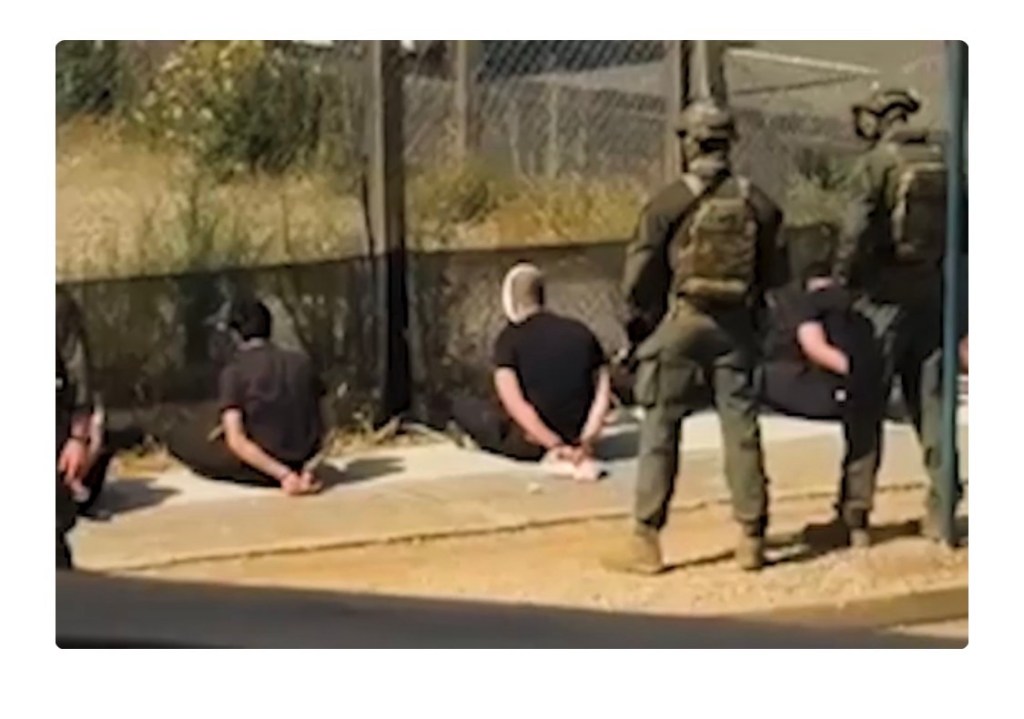
It was a news flash that set off my flight reaction. (My fight response is largely lacking). I’m not news-avid, not since October seven. Nevertheless, news flashes arrive, rudely piercing my tranquil cocoon. Last night’s sketchy flash lacked substance. It was opaque. Police had rammed a carload of adult male persons, who had been arrested. The police were described as Special Operations officers. A second car was apprehended. More were arrested. The report suggested the presence of a weapon.
I felt afraid. I said to myself, I thought Bondi marked an end! I asked myself, Is it hunting season on Jews now? And quickly, Where can we feel safe?
***
In 1894, Greenwich Observatory in London was the world’s wristwatch. Greenwich Mean Time set the time across the world in an erawhen the British Empire covered great swathes of the globe. The observatory was an icon of empire. It symbolised might and global reach in the same way as New York’s Twin Towers in a later century.
An explosion occurred at Greenwich in 1894 that shook the Empire. This was the first terror attack on British soil, attributed to a member of an anarchist group who was seen approaching the observatory carrying a parcel, and found immediately afterward, bleeding and lacking one hand. He died soon after, having said nothing.
***
Even as the reports came in, my mind threw up reservations: You’re panicking. There’s no proof. They might not even be Muslims. They could be Christians, driving to Sydney for Christmas, arrested enroute to the Maronite Cathedral in Redfern.
But my heart hammered still, unconvinced.That’s how terrorism succeeds. Even when the harm is slight or merely symbolic, terror flowers. We come to mistrust the schoolgirl in a headscarf. We get off the bus at the sight of a brown passenger with a spade beard. Community is broken.
In fact community had been fraying in the Bondi area since October 2023, when cavalcades of cars and motor cycles, emblazoned in Free Palestine flags, roared through Jewish neighbourhoods and past Shules on Shabbat.
My daughter faced dilemmas: should her kids continue to wear their Jewish school uniforms? Should they still ride the public bus to school?
My brain recalled my teenage grandson who had been, at the shooting hour, out riding his bike. Where was he? His Mum – my daughter – called him frantically, again and again. The boy frequented Bondi, his grandparents and cousins live there. Where was he? His Dad had been on the beach at Bondi earlier in the day. Bondi, those innocent sands…
Like everyone in the community that night, the family locked themselves up and awaited word. Like everyone in the Jewish community, my daughter’s family remains, in a real sense, locked up.
In calmer moments, I reflect on the attack at Greenwich. Terror doesn’t need many deaths. Its potency is as symbol. It murders trust.
***
Australia’s progressives who shouted Death! Death! received their answer in Bondi gunshots. One week on, anger has found its voices. “Governments have been weak… The nation’s leader refused to lead… Curtail Muslim immigration, expel their clerics.” Opportunists choose their preferred angle of political attack. A nation’s grief and soul-searching are drowned in the shouting.
The seven persons arrested and held on suspicion of intent to commit terrorist action have been released without charges. Police have determined there was insufficient evidence to hold them further. Perhaps the seven are indeed innocent. Innocent of intent or connection to terror. I cannot place my trust in that possibility. Terror has killed my trust.
What must we learn? Who among Australia’s university vice-chancellors would not wish to do better? Who among idealists who demonstrate can feel clean? Who in the government-funded media can look in the mirror and acquit themselves of carelessly fostering hate?
And there’s the remarkable but insufficiently remarked phenomenon of the man in the white shirt. Ahmed al Ahmed remains in hospital with his wounds. He is a key. Can we Australians, in our variety and our contrariety,take from his example inspiration and brotherly love?
 howardgoldenberg