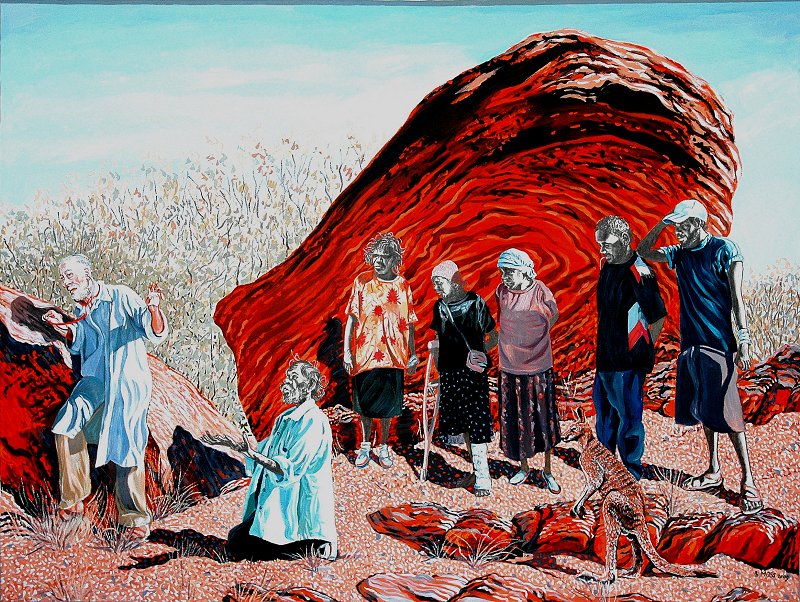
When Must we Disobey the Law?

I have written previously of my colleague and friend Dr Paul Jarrett of Phoenix, Arizona. Paul is old, smart, a tolerant arch-conservative, highly principled. He has no time for those who break his country’s laws. The term he uses for such people is ‘scofflaws’, a bright word, new to my lexicon, pregnant with possibility.

We have scofflaws abroad in Australia. A month or two ago I read – and wrote – of the suicide death of the Tamil refugee Leo. He took his life, apparently terrified of deportation. Around that time, at a school in Adelaide, two star pupils were arrested, separated and flown abruptly under guard to a detention centre in Darwin. The two had been granted temporary refuge in Australia. Their status was now under active – and in the circumstances – ominous review. Stunned, the astonished school population, from classmates to teaching body soon responding with a public petition to end the boys’ detention.

Meanwhile around a dozen fellow Tamil refugee students at the same school took fright and took flight. They disappeared from the school and from the place where the authorities required them to stay.

The students broke the law.

Four weeks later the scholars remained at large despite attempts to find them. The South Australian Police, challenged to explain this failure of policing, expressed a Pilate uninterest: “As there is no report of a breach of South Australian law this is a matter for federal authorities.” Those authorities are piously named Department of Customs and Citizenship. Officials of the Department warn citizens not to aid, abet or harbour the scofflaws on pain of penalties including gaol.

I am a citizen, one of the warned.

The idea of scoffing at the law worries Paul, a thoughtful person. I always ponder Paul’s thoughts, reflecting as they do his ninety five years of living with eyes and brain open. Australia, like the USA, is a nation of laws. The laws constrain me and protect me. Scoffing at the law carries serious implications for our community.

Scoffing at laws is not new. Ned Kelly did it. Any of us who chooses to park illegally or to speed is guilty of disrespect towards that indispensible strut that supports society, which is our communal assent to be governed.

From time to time governments find laws inconvenient; the Howard government chafed at being constrained by the treaty granting rights of persecuted people to seek refuge on Australian soil. The government created a new law that excised parts of our country from Australia. In this highly imaginative act, the laws of our country removed parts of our country from the laws of our country.

Our legislators scoffed at our laws.

After the Nuremburg laws scoffed at the laws of Germany, certain citizens became non-citizens, subject to arrest, persecution and eventual extermination. Many of those former citizens took fright, took flight and sought shelter in the homes of their neighbours. Numerous German citizens aided, abetted and harboured those non-citizens. My people honour the memory of those scofflaws, whom we term ‘righteous gentiles’.

The words of the German pastor Martin Niemoller echo and echo again in memory:

First they came for the Socialists and I did not speak out – because I was not a Trade Unionist.

Then they came for the Jews and I did not speak out – because I am not a Jew.

Then they came for me – and there was non-one left to speak for me.

Niemoller spent the last seven years of Nazi rule in concentration camps.

Grateful that Abbott-Brandis Australia 2014 is so different from Hitler Germany, I wonder still how I will respond when a Tamil scofflaw knocks at my door?

Two Flies on a Wall and Darky Harris

fliesWhen I was a boy I came across cultural truisms like, “Aussies will bet on anything; they’ll bet on two flies walking up a wall.” What I heard was something to celebrate, a playfulness in the Australian spirit. When I inherited from a great uncle a curious little plank with two identical circular depressions, someone had to explain this relic of “two-up”, a national pastime. It spoke to me of the irrepressible Aussies of  “Songs of a Sentimental Bloke”. As a more than commonly sentimental bloke myself, I was not disposed to judge or diagnose any malady.

In 1972 I met Darkie Harris. I was the new GP in an ethnically homogenous semi-rural community, an oddity in a skullcap. Somehow the community embraced and included me while excluding the pig-raising Maltese and my only co-religionists ‘the Jews on the hill’.
Darkie Harris differed from everyone and in ways solely his own. Unprepossessing, short, stocky, swarthy, with a face marked by scars and improved by large purpling lips and a vocal tone that ranged from a growl to a bark, he looked older than his fifty-four years and fiercer than anyone so old (I was then exactly half his age) had a right to look.
Darkie distinguished himself by a sort of verbal pugilism. By word and facial expression, and yes, by facial complexion, Darkie dared everyone he encountered to fight him.

What was it that Darkie wanted to fight against? One thing, one thing only. Racism: I don’t care if you’re a chinaman or an abo or a white man. If I cut you, you’re blood’s the same colour as mine.* Darkie was the only person in the town who saw this Jewcomer doctor as undifferent. In equal parts alarmed and charmed, I found I liked him. To most in town I seemed exotic, to some a too shiny exception (‘you’re not like the others’), to some an emblem of a nobility I never earned.

Darkie was retired by the time I met him. He’d take up his position on a bench outside the Chinese café and the fish and chip shop run by a pair of Maltese brothers. He’d sit and glower, softening into a winning chivalry towards women (a sweep of the hat, a flash of gaptoothed smile, “Good morning, Ladies”) and to engage toddlers in amiable conversation while uncertain mothers tried to hide their nervousness and drag their children away.
Darkie sat on his bench and kept vigil. He was waiting for the unguarded comment, any reference he could take exception to, any sneer at the immigrants he championed.
Young hoons and would-be thugs about town learned to shy away from Darkie. As he informed me on a number of occasions, I’d sooner have a fight than a feed. Darkie was referring to his younger self in the Depression days when he was a runner for an illegal bookie, a risky position in a volatile industry. But in 1972 his interlocutor would take Darkie at his word as he’d rise and stride, frothing, barking menacingly to confront the casual bigot.

Darkie never gambled. Those were not the risks he’d take. He described his working life as an honest buccaneer. He served his boss – some degree of criminal – honourably. He’d take the blows and deliver his own and he’d return home and hand his earnings to Joyce, his leathery wife, who subsisted in a cloud of tobacco. Before Joyce Darkie would humble himself, confess his escapades and worship.

The stories of Darkie and flies on a wall and two-up created the sketchy image I had of gambling in Australia. We must have had gambling addiction but I never knowingly met one. I knew dimly of the ancient rabbinic edict that disqualified a gambler as a witness in court proceedings because an addict could neither trust himself or be trusted by others.

In 1976 I went for an early morning run in Launceston, pausing to poke a curious nose into the local casino, a gruesome cellar where women in curlers and moccasins sat mechanically before fruit machines from six in the morning.
Shaken, I ran away.
For some years in the late nineties my younger daughter, a psychologist, worked as a therapist at Gambler’s Help. Her stories of human wreckage at our dinner table opened my eyes. In 2000 I met Alan, a shining youth who became my patient. He starred at hockey, graduated from his elite school, studied business, was recruited by a leading financial institution that trained him as a currency dealer. Two years ago Alan married his golden girl Helen, a primary teacher. They bought a house together in the regional city were she grew up. Neither Alan nor Helen yet realised the bank Alan worked for had trained him as one of their corps of gamblers.
A year ago doctors in the city’s ICU worked on Alan through a Saturday night and all the next day and night. At 27 years of age, Alan’s life seemed at its end, his blood pressure unrecordable, his breathing and heartbeat negligible. It must have been his hockey that saved Alan, his underlying fitness, that brought him back from where his overdose had taken him. After gambling away the contents of the joint bank account, Alan punted on the marital home and lost it. On a weekend when Helen was out of town for a friend’s hen’s night, Alan wrote a note and swallowed the tablets that were to end his self-loathing and his shame. Only Helen’s dog, locked out of the house all Friday night and Saturday, raised the ire of neighbours with her barking.

The marriage died and was buried in a divorce. In the settlement there was little to apportion: Helen took her dog, Alan his shame. His need, his comfort, his fateful hoping – I mean his urge to gamble – survives. It is a daily battle which Alan does not always win.

I turn on the TV to watch sport. Sport still has the power to inspire me, to express nobility, to create wonder, to delight, to unite and uplift. Before and after and between plays, the gambling industry shouts its messages of slim hope, seducing, reducing the game to mere exchange. It is not possible for a child to watch sport on TV without seeing gambling ads. I turn off and prowl my bitter old mind and think of Alan.

In these wrinkled years the past glows, the present moulders, the future threatens. We need someone to blame. That’s why we elect governments – there are some things you just can’t blame on your wife. In the matter of our gambling pandemic I blame governments. Governments bankrupt of funds fall hard for the revenue that streams from gambling. Soon the treasury is addicted to gambling. A few budgets later, we have a government bankrupt of judgement and ultimately of morality. In their lonely amorality, our representatives fall into bad company, the Gambling Lobby. Governments collude with the industry to prevent and foil the simplest attempts to ameliorate our national malaise.

Over two decades I have witnessed the card games in remote Aboriginal communities. Large numbers, women usually outnumbering men, sit on the ground beneath huge trees and gamble from first light to nightfall. Darkness falls and the players shift to the bitumen and sit on the roadway and play through the night.
In Arnhem Land once a nurse and I battled through a long day to save an underweight, undersized infant with life-threatening pneumonia, the child starved because his mother had no money for food. After the necessities – I mean cigarettes and Coca Cola – the young mother consumed the family income at the card games.

Continue reading

How we Killed Leo

Leo was an asylum seeker.  Let us put aside that weary term and see what Leo was and how we came to know him. Leo was a Tamil. That means he was born into that minority in Sri Lanka which gave rise to the Tamil Tigers. The Tigers rebelled violently against the Sinhalese majority, earning a reputation for terrorism.
A civil war was conducted over many years, culminating in a government offensive that put down the rebellion and targeted civilians. If I read the story right, both the Tigers and the government were guilty of atrocities.
Leo was a baby when, during the worst of the bombings, his father wrapped him in banana leaves and hid him in the jungle. The family fled to India when Leo was five. He lived there in a miserable camp for twenty years, visiting Sri Lanka once to see family. He was imprisoned and tortured. Why? I don’t know precisely, but the explanation would have to start with the fact he was a Tamil.
Leo became an asylum seeker, a boat person, a “queue jumper”, and made his way to Cocos Islands. After only four months of detention, Leo was resettled near Geelong.
That means the Australian authorities – Customs, Immigration, ASIO – found him to be a non-terrorist. They found that speedily.  Leo was judged not to be a risk to Australia.  He was given a Bridging Visa, which allowed him to work but did not endow him with Permanent Resident status.

We said, “Leo, although you jumped our queue, we are letting you into the country and out into the community. But you are a guest. We can tell you at any time to go back where you came from.”
In the last few weeks Leo learned that a couple of Tamil men with stories similar to his own had been taken back into detention. These two faced the prospect of joining the one thousand Tamils whom we have sent back to Sri Lanka where they face persecution. Leo knew that persecution; he knew it in his tortured mind and in his body.

How did Leo spend his time on the Bellarine Peninsula? He worked two days a week for an asphalting company, cleaning greasy trucks. In his spare time he volunteered in an aged care home, he donated blood, he helped bring aid packages to asylum seekers new to the community, he sent money every month to an orphanage in the refugee camp in India that is still his parents’ home.

Leo became an organ donor. Did he expect to die?
Mister Morrison, our Immigration Minister, declares Leo showed no signs of suicidal intent. We know Mister Morrison, a minister who acts as Ruddock spoke, with icy resolve. Only Morrison doesn’t speak to us much. We might judge from his record his capacity for empathy, for humanity. Our minister said Leo’s death “is a terrible and tragic incident and none of us can know the mind of a person in this situation.”
Here is where I can help the minister. I know the mind of a person in the situation of such parlous existence, endlessly uncertain what his fate will be, of having it determined by the opaque decisions of governments and ministers. I know it by the accident of my unusual experience working among detained people in Christmas Island. I know it too by the not unusual gift of empathy. I know Leo’s death was not an incident – far from incidental – it was our doing and it was in the statistical sense, predictable. We saw that with the Tamil man who burned himself to death a few weeks before Leo.

Continue reading

The Twin Bond

He’s a big bloke in all directions, tall and broad. His face is round and it smiles widely as he enters the Doc’s consulting room. He has an open gaze.

The Doc makes room for the big man to pass.

“Thanks Doc.” He offers a large hand. Doc’s hand disappears inside his patient’s. The grip is manly firm, manly gentle.

“My name’s Alexander, Doc. Call me Alex.”

“Good to meet you, Alex.”

“I’ve got hypertension. Need a repeat of my tablets.” He smiles, his jowls rise and shine and recede. He tells the Doc he is sixty six. He is a man who invites conversation.

The Doc asks Alex where he lives.

“Port Augusta. Been there forever. Born there. Father met mother there, in primary school.

They’re long gone.

I’ve got a sister, a good bit older.

I had a brother – we were twins…”

The glow on Alex’s large face gives way to something deeper as the man slows his flow. Something is happening. Homage? Damage?

The Doc wants to know: “Were you identical?”

Alex nods. “And close.”

He clears his throat.

“What happened to your twin?”

“Cancer.”

In Alex’s mouth, the word is a sentence.

“You know we only saw each other three times in the last thirty years, but we were close.”

The Doc looks at him.

“Very close…Thirty years back he went to New Zealand for a fortnight and he stayed. He came back to see me, stopped with me here, for 12 months. Here we are together.” Alex fishes in his wallet and pulls out an old colour photo. Two large round men in their thirties sit in a small fishing boat and smile goofily into the sun. The light bleaches their faces and sets fire to their red hair. One of the men rests his hand on the other’s shoulder.

“After that year he went back to N.Z. To his friends and his life.

Then he got sick and died. Cancer.”

“It was tough?”

The serious face recedes inward for a moment. The Doc is forgotten. Alex is alone with memory of the feeling, with feeling returned.

He looks out at the younger man: “Knocked me around something terrible.” He stops, shakes his head.

“People used to ask us: ‘What’s it like being twins?’

We’d ask each other: ‘What’s it like not being a twin?’”

The Doc looks away while the other man composes himself. At length he resumes. His face is earnest now as he searches for words to carry feeling: “You know, I lost my son. Suicide.

My wife and I only ever had the one son… Terrible…

I wouldn’t wish it on anyone.

But it’s my brother I think of. Half of me is gone.”

The old man’s eyes are wet. “It’s been seven years…”

A pause as he searches for dates…“Seven years and one day.

There wouldn’t be a single day when I don’t think of my brother.

The large man takes his prescription and shakes the Doc’s hand. He conjures a smile for the Doc and he leaves.

Bullying in Fifth Grade

Fifth grade is a long way behind us. The party is full of old faces. The boy I bullied back then walks towards me, his gait uneven, his face smiling. “Good to see you, Howard.”
Good to see me? Really?
“Hello Isaiah, great to see you. Hurt your leg?”
“Car accident, shortly after I got my Driver’s Licence. I was driving on the Hume. I hit a tree, hurt my head. I didn’t know I’d fractured my leg, not until three weeks later, when I came out of the coma.”
Three weeks in a coma! A shock.
“Will your leg heal?”
“They told me at the hospital I’d know after a year how good the leg would be. It’s been eighteen months…”
Isaiah leads me to a table where he takes the weight off his damaged leg.
“A single car accident. You’d know from medical school that a single car accident is usually a sub-suicide.”
“I didn’t know that.”
“Well it’s true. And I have no doubt that’s what mine was.”
I want to ask: what drove you to it? But the accidental pun will add hurt; and I am pretty sure I know the answer.

***

In grade five in our rural school, Isaiah is a philosopher and I am a social climber. Already taller than most of us by half a head, his hair a thicket of lustrous black, his manner professorial and his elocution like that of a news reader on the ABC, Isaiah is different. He wears glasses with wide black rims. He is an intellectual who is no good at sport; he’s neither rich nor fashionable nor popular. His voice is deeper than ours by a couple of octaves, a voice racing into puberty, but he is hopeless with girls.

It is fun to tease Isaiah for his mannerisms. We all do it from time to time and it raises a laugh. My social rise is based on performance, on raising a laugh. So I persecute Isaiah systematically. I organize a squadron of followers, to stalk Isaiah at recesses and at lunchtimes, and to chant my witticisms at his expense in a loud and public manner.

After one such lunchtime of bloodsport, Isaiah rises in his seat and addresses our teacher: Miss Redfern, allow me to introduce to you the Anti-Isaiah Army, organized and led by Howard Goldenberg.
Isaiah describes the marching and the stalking and the chanting, how the army surprises him in every nook and corner where he tries to hide. He lists the names of my volunteers and conscripts, he details the misery and humiliation, the desperation of his plight. Hearing this testimony the army deserts. Its generalissimo shrinks in shame, looks down, away from that tall figure, that crop of hair, that deep, true voice.

***

Isaiah’s speech marks the end of his persecution. He befriends me, confides in me. In his forgiving he heaps coals of fire upon my head. Neither he nor I speak again of the Army. School year follows year, Isaiah matriculates in unsung distinction and disappears. Three years on, he limps into my life at the party. He is glad to see me again. Really. He speaks and acts towards me as if his forgiving has been superseded by forgetting. As if his brain were injured.

***

The next time we meet we are in our sixties. Once again Isaiah is glad to see me, and I – glad in his gladness – feel relieved and warmed. And a strong need to be absolved. I tell him how sorry I am for my behaviour towards him in Fifth Grade. He searches my face for a joke. Or irony. Or mistaken identity.
Isaiah looks genuinely lost.
I explain, describing events that remain all too clear in my memory. Isaiah shakes his head, still crowned with its thicket: Howard I honestly don’t remember any of this. I do recall your friendship. I was grateful for it. Somewhere at some time over our lost decades someone has mentioned to me how Isaiah was one who suffered violence, real physical abuse, through his childhood years. Enough abuse, it seems, to obliterate the pain of small injuries perpetrated by Howard Goldenberg and his militia.

Copyright, Howard Goldenberg, 4 April, 2013

After Uluru

‘… There’s been a death.’

I am in my small house in Yulara, cooking for shabbat on a Friday in December 2006, when the phone ringImages. A male voice speaks: ‘It’s Sergeant Benjamin, Doctor, of the Mutitjulu Police … I’m sorry to trouble you … there’s been a death.’

A pause.

The voice resumes: ‘It was a hanging. We need someone to certify the death. The nurses here can’t do it; it has to be a doctor. I am sorry, Doctor.’

The voice is careful, it is feeling its way. I don’t know the officer. The voice I hear is sober – sobered almost to a halt by the news of a death.

I ask the officer to bring the body to the clinic. We arrange to meet in twenty minutes’ time.

It is early evening – 1830 hours in official language – when they pull up at the clinic. Even at that hour the heat is relentless. The sky is painted blue. There are two vehicles, a police car followed by an ambulance in its familiar livery of white slashed with red. A large oblong man steps out of a police car of such startling blueness that the sky pales behind it. The officer’s face is deeply creased.

We shake hands.

His offsider gets out and straightens. She dwarfs her sergeant. Apart from the odd post-adolescent pimple, her face is smooth. She walks over to the ambulance and commences a laughing conversation with the nurses who have driven the body.

After a time the nurses are free to attend to my questions. I address the older of the two, the one I know from the clinic: ‘When was she found?’

She turns to her associate. For a moment, both are silent, then she says, ‘I’m not really sure. The family called us an hour ago – when they felt ready to let us take the body, I guess. Someone found her before that and called the family. We don’t know when …’

We release the latches and the heavy door of the ambulance clunks open, revealing a large white bag resting on a collapsed stretcher. Warm air flows from the interior.

The nurses step backward. Fumbling, I try to pull the stretcher a distance from the vehicle’s dark interior. The nurses step forward and help, then again retreat. I pull on the zipper and the bag falls open, exposing the head and upper body of a human.

I pause. No sound, no movement.

There is a moment of reverent peacefulness. The skin of the person whom I stand and regard is brown, the same brown that glows from the earth and the many heads of rock in the early sunshine during my early morning run. That colour has penetrated me, claiming me like a mother.

I place the back of my gloved hand against the brown skin. It is still warm. Just as shocking, the face is very small.

I straighten and ask the nurses, ‘Do you have a date of birth?’

One shows me a file. She points upper left, where I read, ‘19 November, 1991’.

I look again at the small face. There are a couple of blotches of acne. The child has buckteeth. The body is short and slender, the body of a girl who has scarcely begun the journey to womanhood.

I have no doubt, I feel no hope, but I rest my fingers lightly over her carotid artery. It is still.

I check her eyes. Dull now, pupils wide, fixed and unresponsive to the light – those are pearls that were her eyes.

I apply my stethoscope to her chest. The silence of death is drowned in a distracting chorus of inanimate rustling and chafing sounds. These are the artefacts of my examination. I hear no heartbeat. No air moves in or out of the chest.

This is the body of a fifteen-year old girl whose life is extinct.

No motion has she now, no force; 

She neither hears nor sees; 

Rolled round in earth’s diurnal course, 

With rocks, and stones, and trees.

I have another question for the nurses: ‘What do you know of her health before today?’

‘Six months back she was sniffing, but not since then; there’s been no sniffable petrol in the community since then … There were some family problems. She had been seen by Mental Health …’

The answer is unsatisfactory. Any possible answer would be unsatisfactory. It all boils down to one thing: we do not know.

On an afterthought I lean forward again, peering past the fine cheekbones and the slender jaw, peering at the soft tissues beyond. There, on her throat I see what had to be seen, a bracelet patterned in her flesh, a curvilinear design that is unexpectedly graceful. It is the embossing in her skin of the fatal rope.

Continue reading