Where Else But Alice?

Where else but Alice Springs can you run through Honeymoon Gap (part of the Macdonell Ranges, not part of the body) and see the world ablaze as the sun rises, greeting a file of self-selected marathoners with silent fanfare?
Where else than Alice can such a mediocre runner place fifteenth in a marathon? (There were only seventeen starters that year).
Where else than Alice do the volunteers – endlessly cheering us, feeding us, hydrating us – outnumber the runners?
Where else in the running world can you run through air as pure as crystal and finish your marathon in the mild golden glow of mid-morning?

Alice has the best kept secret in the world of marathon running. I’ve done Boston (four times), New York (thrice), Traralgon (ten times), Melbourne (15 times) – and Alice just as often. I come back for every third Sunday in August. My wife is suspicious: she should be: Alice Marathon is my secret love.

So Foul and Fair a Day

Howard at the Boston Marathon 2013

Howard at the Boston Marathon 2013

When I solicited funds as a charity runner in the 2013 Boston Marathon I promised to write a report on the race and my donors’ ‘investment.’ The moment the race started I started to compose my report. The mood was light, the crowd a united force of love, the events and sights all affirming a shared humanity. This would be a report of smiles. The serious counterpoint would be the 26.2 long miles.

At 2.07pm the mood changed. After that the playful response would feel profane. But I did promise a race report.

I slept on the matter. The evil was great and real, certainly. Real too was the goodness. Both demand to be written.

***

Does any runner sleep well the night before a marathon? I don’t. To prevent dehydration on race day I drink plenty through the previous day and every cupful demands its exit through the night. I am excited, nervous, a kid before his birthday party. Boston, after all, is to marathoners as Wimbledon is to tennis players. An enormous privilege, unearned by any effort of my legs, paid for in thousands of donated dollars.

The playful mind must be carried by legs that are 67 years old. Some prudence surfaces. The sixty-seven year old prepares methodically. The experience of forty past marathons insists I vaseline my second toes (which always blister), my armpits (which chafe), my nipples (which bleed) and my private bits (none of your business).
To prevent my shoelaces untying over the distance I double knot them: a trivial detail? No, not in Boston, for it was at the start line of one Boston Marathon back in the seventies that the favourite, noting his arch rival’s single-knotted shoes, bent down and double-tied them.

Continue reading

Let Me Tell You a Story

It’s about the Melbourne Marathon.

I know, I know, there’s nothing more boring to a non-runner than the idea of someone putting one leg in front of another about 42,000 times. And, yes, I did try to your patience with a little marathon piece a few days ago. Yet this is a nice story…

Last Sunday I ran the Melbourne Marathon. The weather forecast was for a horrible day – wild winds, light rain, thunder, more wind, hail. Hail!

We lined up for the start at 0645 and the weather was overcast, still, mild. Perfect for running. The forecaster lied. An attractive young woman approached me: Hello Howard. Remember me? You used to come to my shop in the city.

I don’t really remember: Yes, of course I remember! But I’ve forgotten your name…

Jeanette. Beaming, dimples in full flight: You helped me have a baby.

What a thought.

Jeanette continues: One day at the shop you asked me if I wanted kids. If I did I should not waste time. Thirty five was better than forty, you said, and twenty five was better still. I was thirty five. I did want children, we were trying, not succeeding. You sent me to the right people. We have a child, one only. IVF failed when we wanted a second. He’s wonderful. He’s Lucca, he’s six now. I work closer to home, Closer to Lucca.

I do remember now. I remember Jeanette serving in her shop, that smile, those dimples flashing above her burgeoning tummy.

We wished each other luck for the marathon and lost each other among the thousands.

The promised rain started at 25 kilometres, the slightest fall, a runners boon, like the quality of mercy ‘that droppeth as the gentle rain from heaven upon the place beneath’Still no wind. Blessed weather.

By 35 kilometres the quality of mercy had been eclipsed. Heavy rain, rising winds attacked slowing legs, cooling bodies. Brutal conditions for the final, always testing phase of a marathon. If self pity is the sincerest of human emotions, then I was desperately sincere at the 35 km mark.

Running a little ahead of me in St Kilda Road a young couple, both tall, slim, both wearing black, caught my attention. The young man leaned down and across and kissed the woman slowly, a tender kiss, gentle rather than passionate.

I slowed and the two disappeared ahead of me.

One kilometre later I came upon the young blackshirts again. They were walking, the man’s arm around the woman’s shoulders. As I drew alongside I saw she was weeping. Are you hurt?

A shake of her head.

Can I help you? Is it medical?

The man answered: No… Thanks for offering. She’ll be okay.

I jogged on, pondering. The marathon injures your body and your spirit. Tired, deeply deeply tired, cold, unable now to run, perhaps this girl is simply sad.

My own spirit had suffered bruising as I saw my target of four hours disappear, then my fall-back aim of 4.20. Even 4.30 was beyond my moral strength as I allowed the pacemaker lady to glide ahead. One resolution – to finish. Another – not to chase, not to torment myself.

The wind redoubled its force, the rain soaked us, we lifted slow feet in their Nikes, their Asics, their New Balances, which were once lightweight running shoes, now receptacles of water. We moved forward towards a Finish that we could not see.

An hour later? An age unmeasured, the MCG at hand, the Finish somewhere inside and a small lady just ahead of me carried her little flag that identified her as the 4.30 hours pacemaker.

Wise resolutions forgotten, I raised my knees, I swung my arms, I lifted my head, I raced. Through a tunnel, onto the MCG, following the armies in their soaked flags, I raced. Huge breaths sped my new legs. Around a bend, leaning into the curve, chasing my wild legs, I raced. And crossed the line, gasped, managed not to vomit and looked at the digits on the clock that said: four hours, thirty minutes and 18 seconds.

It was a long and shivering walk of four kilometres to my car. Enjoying the sincerest self pity, I was disturbed by a young lady on my right, who exclaimed: Dr Goldenberg! Do you remember me?

The same lie: Yes, of course.

Remember I came to you when I couldn’t get pregnant? You sent me to Dr Raphael and – look in the pusher – there’s Chloe!

Chloe, her round face pink and warm inside her rain spattered shelter, slept peacefully. I thought of my newest granddaughter, Ruby. Same age, same round face.

Yes, I do remember.

Virgin from Christmas Island to the Mainland

A man walks into my consulting room with a bouncing limp. He is tall and upright. He bows slightly and shakes my hand. The familiar courtesies.

I greet him: Salaam Aleikhum.

He responds: Aleikhum Salaam.

We exchange names. His name is Ahmed. He says: “My foot is painful. Please excuse me. I am afraid I must remove my shoe.”

His problem is visible through an opening in his sandal: the left great toe is infected. The flesh of the nail bed is hot and red, a crescent of swollen skin surrounding a sunken island of nail. The skin is shiny, stretched to bursting. A promising eyelet of pus peeps from beneath a corner of the cuticle.

The infected nail bed is about to burst in a flow of laudable pus. The pus will stink, Ahmed will feel better and so will I. Finally, a patient telling me a straightforward story. Finally a patient I can cure.

I treat the infection, dress the toe and ask Ahmed to return tomorrow to renew his dressing.

“I cannot come tomorrow.” His manner is politely regretful. “I will leave here tonight.” He speaks softly, practicality competing with swelling happiness: “I have my visa.”

Ahmed’s smile is a field of waving daffodils.

As it happens I will fly out tonight too. After three weeks of seeing patients here, Ahmed is the only one I meet to win a visa. The remainder reside in trailer parks of hope and despair.

Continue reading

Bostonians reach out and turn their goodness on me

The Boston Marathon is the oldest and most celebrated of the mass marathons. You need to qualify. Twice I qualified and ran. In 2005 I ran again, this time as fundraising runner.

Today’s Boston was to be my fourth. I was running as a fundraiser for the Michael Lisnow Respite Centre. This morning I visited their HQ in Hopkinton, near the starting line. I met people who face their colossally difficult lives with genuine joy. I met the fundraisers who punctuate their serious marathon training by devoting themselves for months to help fund this small enterprise.

Why am I going on at this length about these small matters in the face of the bombings?

You need to be in Boston on Patriots’ Day to appreciate the celebration that is the marathon. A city of less than one million comes to a stop; people take their chairs, their picnic rugs, the treats they will give to the runners; they line the 42.4 kilometres and stay all day, cheering on every runner; they hold banners – everything from “You are all Kenyans” to “Kiss me, I’m flexible”.
Picture Melbourne on Cup Day or Grand Final day without the booze. Boston is high on its marathon and the runners. Patriots Day is the time to enjoy the embrace of the city’s people.

If you have the good fortune to be a charity runner, you run at the tail of the field, feeling that embrace, the surges of love for the people – usually young – who are supporting local causes. One young woman survived melanoma; another is in remission from her leukaemia. I have close relatives saved from those diseases. So, apparently, do hundreds in the crowd who roar their gratitude.

Someone else came to the marathon today with a different purpose than to celebrate. Someone whose malignity exceeds his knowledge: his bombs exploded near the finish around the four-hour mark; in an elite marathon like this, the ‘bulge’ – the greatest concentration of finishers – occurs 30 to 60 minutes earlier. The terrible toll might have been much heavier.

I plodded to the 35-kilometre mark, when a spectator offered me a slice of orange. His kindly young face looked troubled. “There have been explosions near the finish line. The marathon has been temporarily suspended.”

Naively I ran on.

A kilometre further on, I was one of very few still running. Police and runners were mingling on the course, faces dark. Hands held mobiles, sending text messages; local phone coverage was out. Some wept wrenchingly, their features distorted in grief or shock or anxiety for others ahead on the course. Many had relatives waiting near the Line.

The crowds fell quiet. Overhead, helicopters gathered and clattered. Police vehicles racing everywhere, ambulances, sirens shrieking, tore between barriers as the crowds melted out of their path. Not for the first time, the matter of placing one foot in front of another felt slight. Here was immediate danger and evident bloodshed.

Police turned back those of us who were running into danger. I needed to contact family. Strangers handed me their phones. I asked a teenager for directions to a local landmark, where my relatives would be; the teen insisted on escorting me.
As I waited, strangers stopped to offer help. One bloke wanted to give me his jacket so I wouldn’t get cold. Passers by touched me, or took my hand to shake. One gazed at me, shaking his head. “I am sorry,” he said.

Boston silenced, in shock, in grief. Its citizens reaching out to each other in spontaneous solidarity. More than that, people felt implicated in a wrong, embarrassed: their guests had been hurt, frightened, frustrated. They turn their goodness upon me and I feel like crying.

A terrible beauty born.

Reproduced from The Age 17 April 2013.

The Age Boston piece

20130417-084521.jpg

What I Have Been Doing With Your Donated (and Undonated) Monies

Late Training Notes from the Bristol Downs.

I promised to report on your Unusual Investment. (If, as you read this, you don’t know about that Investment, please visit these links http://hopkintonrespite.com or
http://www.youtube.com/user/HopkintonRespiteTV
It is not too late for your dollars to join the nearly-four thousand dollars that preceded yours, whose donor investors will never see them again.)
Since I first wrote to you the grass has not grown beneath my feet. A certain amount of tinea has, but this is inevitable: I have been training hard. The Boston Marathon will be run on Monday 15 April and investors in my little Scheme are helping the Michael Lisson Memorial Respite Centre.
Michael’s mother, who created the Centre, wrote one week ago, reminding me that Michael died on the day of the 100th running. I ran that day, unknowing. Now I know and marathon running feels like a small matter.

They ought to call the Downs the Ups, these vast, everlasting, uptwisting hills. Or the Steeps. From one end of the Downs you can’t see the other for distance. And even if you could, you couldn’t – because of the mists. In spring, season of mists and frosts.

My father, not a lewd man nor crude, told few risqué jokes. However this semi-liquid air brings to mind one of Dad’s one-liners: Did you hear about the man who took his girlfriend out into the night air and mist?

Enough complaining. Hilly Bristol, like coastal Israel, is terrific training ground for Monday’s Boston Marathon. We’ll run up the Newton Hills between miles 18 and 21, hills famous for breaking hearts, but the Bristol Ups, like the long, high dunes of Herzliyah, have toughened mine.

This is my race preview. I have trained long and hard, six days a week, resting only on the Sabbath. Each run feels easier than the last. Gone is the sense of labour in a run of a mere hour’s duration. My legs feel wonderful, muscular and light. There is the little matter of the creaking discomfort in the left knee – my good knee – a new sensation. The knee hurts only when it bears weight. Best ignored.

With the exception of a 3.5 hour run in the Jerusalem Forest all my training runs have been solitary. This is not of my choosing: running with a friend is four times easier than running alone. This is true for all runs, over all distances. I know: I have done the maths. However all my friends have stopped running; they have heard the call and they have gone inside for dinner or for breakfast or to their homework or to dull duty. So I run alone.

In Bristol Alfred Lord Tennyson has kept me company. Some fluke or inadvertence has selected the poems of Tennyson on my i-phone. Useless here in the UK for telephony, my i-phone has become the perfect companion. Deaf and mute to the world outside my earbuds, my Apple sings the songs of my choosing, or in this case, the poems of my non-choosing.

He was keen on death, was Lord Alfred. From ‘Ulysses’, where he found romantic allure in Death, the Adventure; to the dying of King Arthur; to the demise of the Lady of Shallott; through lyric after lyric, the Laureate spoke to me, morning after morning, of death. Last Sunday he spoke to me at great length of the loss of his friend Arthur Hallam.
Endless his grieving, dark his spirits, Tennyson’s mood finds its echoes on these misty Downs.

That day found me running near the railing that kept me from stepping out into air and falling hundreds of feet in near-dark to the river, tirra lira, below. A blaze of red in the gloom, patches of white at shoulder height; what are these? A brief breather is permitted. The patches of white turn out to be cards, handwritten by members of a local junior cricket team and a junior football team, in memoriam to a teammate. The blaze of red is a football club scarf inscribed in black marking pen: Russell Simmons # 14.
Fresh posies of daffodil and another, paler flower, bloom from the railings.

No-one else in sight. No-one to ask or tell. No-one else to lament. My head bends, defeated. A sudden roar, a cry of raw sorrow bursts from my throat. My voice thickens, my eyes are wet.

Running is an easy thing, marathon training now trivial.

Shaking my head, shaking it to shed reality, I look up once more. There are more words to be read on that blood-red scarf: You’ll never walk alone.

Postscript: Afterwards I Googled Russell Simmons, deceased Bristol sportsman, and felt still sadder.

Copyright, Howard Goldenberg, 10 April, 2013

20130411-184933.jpg

OVERPOWERING REASONS TO SPONSOR ME IN THE BOSTON MARATHON

The Boston Marathon is the premier amateur marathon in the world. “Amateur” is surely an oxymoron – who could love running up 26.2 miles of hills, let alone 42.185 kilometres?
Answer: only an oxy moron would love that – ie a moron who enjoys oxygen deficit.

Your representative in this blue-riband, black-chip event is such an oxymoron.

I have been training every day, dainty little 5-10 kilometer runs in the Central Australian desert and Israel’s Mediterranean coast – runs that will prepare me for Boston as usefully as picking dandelions for a world heavyweight bout. However, as of yesterday, all has changed, changed utterly: a terrible fitness is born.

There I was slouching towards Bethlehem when I lost my way. The result? I ran for three hours. I became a distance runner once again. I loved the feeling. I can’t wait for next Sunday’s four-hour run, after which I’ll taper my training. First time in a decade of marathons that I’ll have reached a high-enough point of preparation from which tapering is feasible.

Following yesterday’s odyssey I looked at my legs: they are indeed beautiful. Even the varicose veins at the back are beautiful. If there is a demand, I will send photos of the veins to my donors.

Around mid-year, Hybrid Publishers will publish my new book, a novel (titled Carrots and Jaffas). This is a sensational creation in which a pair of humans of opposite genders meet, fall in love, fall into bed, copulate, conceive and deliver – a story. If you love it half as much as I do, you will be thrilled to receive a copy of the first edition, signed and inscribed by the author. All you have to do is to read the attached Unusual Offer. The largest subscriber/donor wins the copy.

Every donor of $50.00 or more will receive a signed copy of my earlier book, My Father’s Compass. This book, too, was HIGHLY recommended by the author.

Avoid the rush: donate now, donate often.
Many of you have friends who have a lot of money and very large hearts; please pass on my offer to them.

If you look at where the money is going at http://hopkintonrespite.com or http://www.youtube.com/user/HopkintonRespiteTV , you won’t need the special offer to feel good.

Go for it! All you need to do to say goodbye to your money is to sponsor me in the Boston Marathon.

Time is short: the marathon will be run – as always – on Patriots Day, falling this year on 15 April, 2013. Please send your donations directly through this link– http://www.razoo.com/Pheidipides-Foolproof-Investment-Opportunity

I’ll send you news from now until the aftermath (is there ever a beforemath?) of the marathon.

Howard/Pheidipides Goldenberg

A Man Does Not Go To The Rock Twice

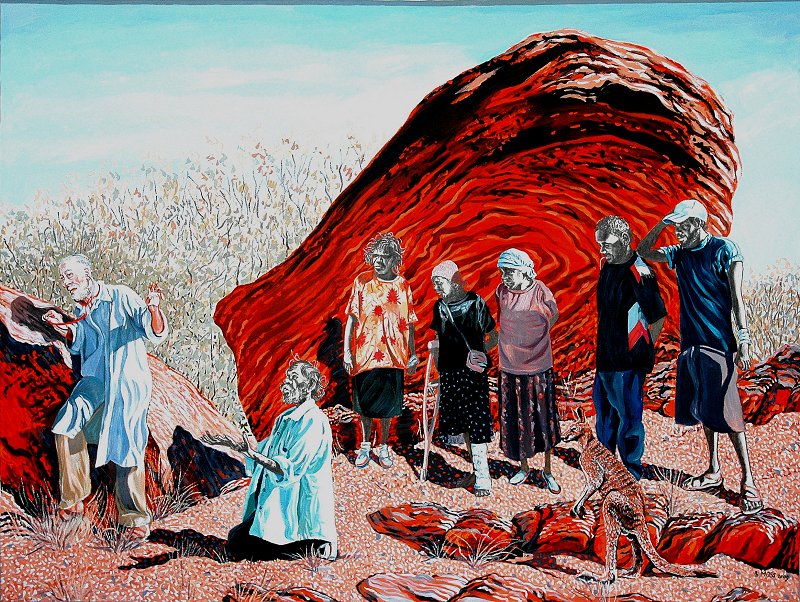
0600. The rock squats, silent, a massive cupcake among the grasses. Moment by moment the light changes: dark gives way to deep blues, to a steel blue, now to a primrose glimmering. All is quiet, still. Life suspended, the plain broods, foreknowing sunrise.

0621.The rock as image is too familiar. The rock as concrete reality forbids familiarity. I emerge from my small car, and regard the great terracotta thing before me: after all these years its immensity, everfresh, astonishes me. My car winds its way to the carpark. At every bend the rock changes; every aspect surprises and evokes the overpowering question: what immortal hand or eye? My question and the custodians’ questions are the same as Blake’s. The very greatness demands a myth.

I glance at the steep wall at my side and the slope flings my gaze up, up, upward beyond my range of cervical extension. The human neck cannot accommodate the reality; only if I lie on my back can I take it in. The human ant needs a postcard.

0623. Time to start: I am alone, the sole ant. The base walk used to be nine kilometres in length. Now it’s 10.6 kilometres. The rock hasn’t grown but the people who manage the Park have decided to keep us at a distance. And I need to finish my circuit by 0730: time to start.

Every one of my 67 years finds voice and protests in my lower back as I shamble into movement. I intended to run but for now this hobbling is the best I can do. The gravel path underfoot is soft and red. It cushions and retards. Slower going and harder. But with only a hundred metres behind me slow going and aching back are forgotten. The rock compels, demands all attention, with its folds and bends, its clefts and pits, its elegant curves, its sweep and breach, its sudden secret shades and sulci.

That face – those many faces – prefigure every expression of humanity. The rock gazes down with idle incuriosity, here it is a pockmarked teenager, here a gaunt pensioner, now a lady, elegant in her long dress that falls and sweeps and moves gracefully in concert with my passing. The rock shows the many faces that are human faces: here is calm, here inscrutability, here obduracy.

Three great gouges side by side at great height, these are eye sockets, empty: what is this sight that sears her eyeballs?  The rock gazes out at our killing fields, at Crusades and Inquisition, at Babi Yar, Rwanda, Cambodia, at Holocaust, at the Armenian Genocide. The rock’s eyeless sockets see all. She has no tears. No mouth here, no words.

0630. Right on time the sun comes up, shining, burning directly in my eyes as the rockface heads me due east. The wind comes up too, blowing hot hard warnings of today’s forty degrees: you step outside from your cooled habitat, you breathe, your palate dries and you gasp. The second breath confirms the first impression.

For now the hot headwind is welcome: an early headwind promises a following wind in the later stages when I’ll head west and home.

But the sun, this sun, this blaze, this interrogator’s light right in my eyes: son of man, why have you come?

My innocent run is no longer blameless.

Son of man, what business have you here?

What? Why? What do I seek – peace? Innocence?

The light glares: What gift do you bring?

Consciousness. It is all I have.

The bright light relents, winking now, filtered by thin foliage, broken by gentle rises and bends.

At this point the run might become a chore; the vista is relatively unremarkable, the rock radiating yesterday’s stored heat, the glare, the difficult going underfoot, the headwind – all might sap a runner. Instead the mechanical affair of placing one foot before another feels charged, significant. Plod, plod, breathe, breathe, the ordinary is transmuted. It is said of William Blake that he took a visitor outside, directed him to look at the midsummer sun and report what he saw. “Bright sunshine”, said the visitor. Said Blake, “I see hosts of fiery angels surrounding the Throne, singing Holy, Holy, Holy.”

I feel fires in my throat. I sip my iced water. But first I recite the customary blessing over the water, an act in which this mortal congratulates his Maker on His good idea in creating and providing the mortal with water. Water never tasted better. Like everything it is charged, touched with the sublime.

I have passed twenty minutes alone in the company of Uluru, an uncommon privilege. At my left, hidden in the scrub, is the village of Mutitjulu. Its people live in the lee of immensity. Daily they awaken to the view of deep terracotta that earlier was mine. At sunset, fire flames from the rock’s margins, the rock purples. Echoes follow me – another place, another colour scheme:

And I shall have some peace there, for peace comes dropping slow,

Dropping from the veils of the morning to where the cricket sings;

There midnight’s all a glimmer, and noon a purple glow,

And evening full of the linnet’s wings.

Around the bend now, heading south, the greens and greys relieve the eye. I can’t complain of sameness. More faces in the rock, caves that grimace, bluffs that lower, red rock that slopes down towards my feet, down, down, a slow, shy approach. The rock is within a metre of my shod foot. To step on it a profanation. I do not walk this rock. Not now.

Around another bend and another, tracing waving folds, the rock shapes here are emphatically, anatomically feminine. Inescapably feminine. Curves that flow, flow, ineffably graceful, to deepening clefts, soft in the gentling light. These mother forms beckon, embrace, call me home.

My old legs move fluently, easily. They swallow the miles. My mouth burns, it sends messages – drink, drink – messages you receive only when it’s too late. Above me rockmouths gape toothlessly, vast, cavernous, inaccessible. My eye searches the sheer face; only a mountaineer equipped with hammer, piton and ropes could reach those high hollows. But in their depths ochreous markings, patterns, declare themselves; these impossible deeps are painting sites.  No white foot might imaginably intrude. Good!

Nearing the beginning of the end, here is the Mutijulu pool, a cool, shaded dell between three high surrounding walls. Its waters are permanent. But no, not so today, not in this heat. I gaze amazed at  naked sands. Even dry they keep their cool, concealing water close to the surface. This dryness is a mirage; at all hands the growth is green, tender, silvan.

0715. Nearer the end and I am not alone. Cars pass on the bitumen that runs unseen, parallel to my path. Above me the rock has mouths with calcific projections, teeth that do not smile at what passes below. I look ahead: there, formicating on the slope, scores, hundreds of whitefellas climb hand over hand along a chain that will take them to the top. They will climb Uluru, they will conquer, they’ll be able to tell everyone.

At the top they’ll see the pits and gullies, the moonscape no-one below imagines, the scales and plaques of red; and the smallness of humans below.

I know what they see. I know the climbers haven’t seen or haven’t understood or haven’t cared what the owners write on the notice: Anangu do not want you to climb the rock.

I am not happy to see them climbing. It seems disrespectful. I feel it as if it were a personal sIight. I know and I care about it because I too have climbed the rock. A quarter of a century ago, I drove up, leaped from my car and ran up the slope. I did not see the notice. Hubris sped my feet: I would conquer Uluru; I would do it at the run, I would not stop.

Of course I did stop – after only fifteen metres – stopped and gasped, ran again, stopped, fought a breathlessness I had not known before. I made it to the top, saw how small we are and descended. I do not climb now.
Running in the Breeding Grounds of Yangon

The weather forecast is for a hot day. That’s the forecast every day in Yangon. My own forecast – it’s hot now at 8.00 am, it will be hotter soon: if I am going to run today I should leave now.
I take a taxi to the park. Were I hungrier for inhaled hydrocarbons I’d run there, but I’ve already breathed enough smog to create a decent cancer.
Yangon boasts the largest city park in the known world. I do like to boast that I have run around the largest park in the known world: in Vancouver I ran around the world’s biggest, then in Bristol I did the same on the Downs.
But this beauty might just be the real thing. I can’t see its further end. Its jewel is the lake, a lime green affair that stretches further than my eyes or legs can follow.
The world’s longest boardwalk is a joy, bouncy and springy underfoot, launching my every next step upward and onward – and backwards in time to when running fast was effortless. Zooming around the lake, I find myself running parallel and close to the shore, close enough to feel like a voyeur as I pass numerous courting couples. The young people, engaged discreetly in the business at hand, hear my footfalls and look up in surprise. I keep my eyes on the winding boardwalk which flings me around bend after bend. At every turn I disturb another couple’s progress.

The shoreline is ringed by tall trees and shrubbery. Between the botanical specimens the park’s designers have placed benches large enough for two adults to recline, one beneath the other. The plantings afford privacy which the occupants appear to enjoy and take for granted. So when an old foreign mountain goat speeds into their breeding grounds, the locals are surprised. The consternation is mutual and thankfully brief.
After a time the boardwalk deserts the shore and heads off into open waters. The circumambient lime-green is the colour of too much life, of a watery milieu where plant growth is phenomenally fast and rotting keeps pace. The confectionary colour makes me slightly uneasy: I’m not anxious to take a dip in it.
Abruptly that becomes a real prospect as the boardwalk comes to a fullstop. I jam on the brakes and retrace my bouncing steps. Once again I disturb the courting couples, who, I cannot help noticing, are making good progress.
It reminds me of Buenos Aires, city of the long slow kiss. Another town where the poor are many and libidinous and strong urges find no indoor accommodation.
I leave the lake and head deep inland. Atop a rise I come to a large emerald of lawn. Eight slim men, bare chested, wearing longhis, trim the grass, each wielding sort of scythe, a linear metal blade about a metre long, with which they shave the green. Labour must be cheap: the area they ‘mow’ is about the size of a doubles tennis court. Hot work on a hot day, their bronze bellies shine in the sun.

***

I’d like to have a longhi. Which man wouldn’t?
I enquire and the smiling men of the mowing brigade direct me to the market. Happily I get lost many times: lost among the strong-smelling smoked fish sellers, lost among the fruit vendors, lost in the laneways clustered with jade merchants, lost among the corn on the cobmen, the hot food stallholders, the fabric traders, the toysellers, the tobacco factors, the beggars, the amputees, the gleaming smiles of white, the grins that drip red with betel juice.
At last I ask: longhi? – indicating my below waist area. More smiles on every side. The word goes around, people point and smile and tell their neighbour about the old foreigner who points to his privates.
A kindly soul – they all seem kindly – taps my shoulder, points to the shop directly behind me and nods: longhi, longhi.
The shop is narrow, but easily wide enough for the four or five – they come and they go, so the count is fluid – four or five fetching females who attend to me. They show me bolts of fabric, all smartly pattered cotton affairs. I choose the two lariest fabrics. The four or five fit me with my longhi. I leave, beaming, a prince among princes, splendid in my longhi in Yangon.