My Mother’s Amygdala

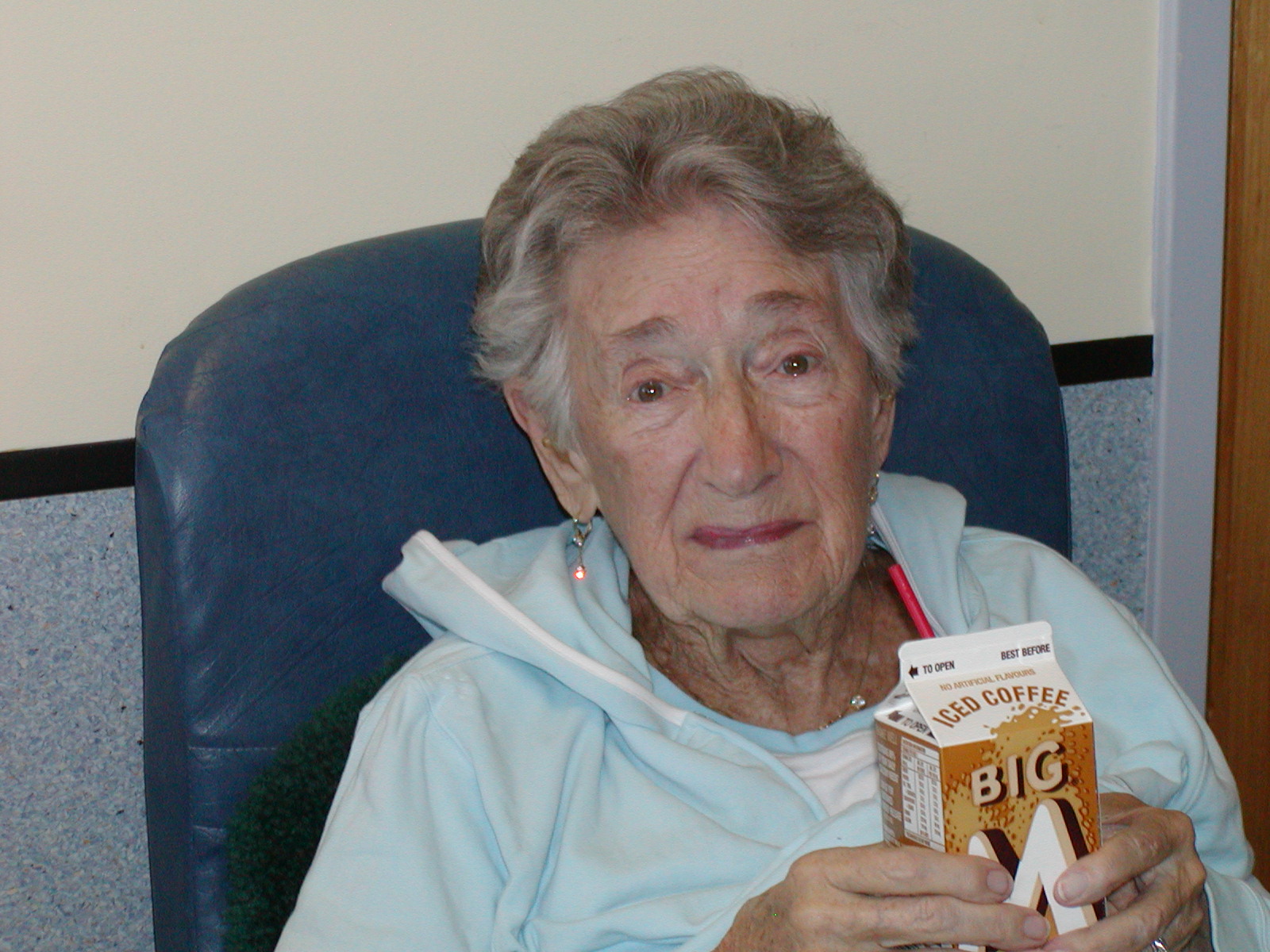
MumI am pretty sure my mother had an amygdala; every one of us does. If my friend Joe, who seems to know his amygdalas, is correct, Mum’s must have been smaller than most. He tells me the amygdala is the seat of fear in the brain.
Joe is a barrister. I remind him I am a doctor. “It’s fifty years since I last had need of any knowledge of the amygdala. How come you know about it?”
Joe says: “In my business it helps to keep up to date with neuroscience. Such things as the organ of fear can be important in court”. Which all makes sense for a criminal lawyer; but Joe does compensation cases only.

For a while I consider my mother. Then I describe her to Joe. Joe smiles. The more I speak of my mother the wider Joe’s smile.
“Mum lost her father to cancer when she was twelve. Then three years and one day later her mother died – “Mummy had rheumatic fever in her childhood. After Daddy went, she died of a broken heart.”
From the age of fifteen Mum and with her younger sister Doreen were raised by her widowed grandmother, “Gar”, a tender and enlightened and emancipated lady who taught her granddaughters to feel inferior to no-one on this earth. Nor superior, for that matter.

Mum failed her Intermediate Certificate, Year Ten in today’s language. She concluded she was a dunce (making no allowance for the effect on learning of the abrupt loss of a pair of parents) and left school. She attended secretarial college, worked as a bookkeeper, saved her salary and at the age of twenty set sail alone for Europe. The year was 1939. Her correspondence through that blithe passage via the Dutch East Indies into Western Europe is punctuated by increasingly urgent letters from Gar to hurry home: “There is going to be a war.”
Mum prepared for the war by sleeping on deck – “in case we were torpedoed” – on the last night at sea. Her ship made port in Fremantle on the day war was declared.

My parents raised us children in the country town of Leeton. Once a year we visited the great city of Melbourne where there were trams. Mum took me on a tram ride along Hawthorn Road, past the cemetery. “Mummy and Daddy are in there”, she remarked affably, indicating a long red brick wall. Behind the wall I glimpsed stone statues and crosses. Mum’s remark made no sense to me. ‘Mummy’ was on the tram with me and ‘Daddy’ was back home in Leeton. Mum explained: “It’s a cemetery. People who have died are buried there. That’s where my parents are.” Mum’s voice, warm with affection and remembered pleasure, sounded as it always did when she spoke of her mother and father. I heard no note of sadness. At seven years old I could only imagine losing parents as the absolute of perdition, of aloneness. A thought like the abyss. Mum seemed to think dying was a natural part of living; it happened but death didn’t spoil life. Not for Mum.

Mum told me once of a tram ride she took one night from Fitzroy Street to the home of her uncle (and co-guardian) in Beaconsfield Parade. “I was visiting a friend in St Kilda. I stayed later than I intended and I almost missed the last tram. I just caught it. In the morning I read in the paper that a young woman was murdered overnight at that same tram stop. She was killed some time soon after the last tram – my tram – left… Ever since I was fifteen I’ve known that people die. Last night just wasn’t my time.”

When we children were teenagers, now living in Melbourne, Mum sailed to Britain or Europe. She always stayed in the cheapest hotel, choosing the cheapest room that had private bathroom facilities. Invariably her accommodation was in some seedy district. One time she discovered she was staying in a brothel.”I was safely locked in my bedroom, when I heard a sound from the door. I looked up and I saw the door handle turning. Then the door that I’d locked opened. I sat quietly. No-one came in. The door closed and I heard footsteps walking away. Next day a man I didn’t know asked me to sleep with him. He couldn’t speak English but he showed quite clearly what he wanted in sign language. I couldn’t speak his language – which might have been Kurdish. But I showed him in sign language the answer was no.”
“How did you ‘show’ him?”
“I took out my photos of you four children. I told him your names and your ages. Your faces must have changed his mind.” I picture Mum recounting with delight details of her brood, regaling a puzzled predator with biography, smiling and brimming with goodwill in her natural belief that blood was thicker than semen. I think Mum’s sunny innocence would dent anyone’s carnal ardour.

Another trip, this one around the time of the Cuban missile crisis: mum decided to travel to Yugoslavia. Friends tried to talk her out of it, reminding her of the Cold War. Mum said, “I know it’s an Iron Curtain country, but I don’t think it’s very iron.” People in Tito’s concentration camp in the mountains probably felt both the iron and the cold. Mum, blessed in her innocence, did not sense the chill.

One week before her 92nd birthday, Mum lay in her bed in Cabrini Hospital and breathed. Breathing was a labour as Mum’s heart was failing. Between small gulps of oxygen Mum chatted cheerfully with me and Miriam, a neighbour. Suddenly she coughed. And coughed again and again. Wordless now, Mum at up straight and took great desperate gasps, one after another. Quickly Miriam excused herself and left. I turned up the oxygen flow and called a nurse, who raced in and injected some diuretic into Mum’s drip. Minutes later Mum was gulping comfortably again. She pulled off her oxygen mask and grinned: “Miriam and the nurse both thought I was going to croak, didn’t they?” – huge crooked grin now, now laughing – “Well, I didn’t!”
After that Mum and I talked seriously: I asked her if she had any late – possibly last – wishes. Day and night in the hospital she had her two living sons and her daughter and a tribe of grandchildren with her. Mum never wished for more than that.

Even the smallest amygdala will not save you when your heart is shot. Mum lived a few more days before falling asleep and dying without fear.

Consider Phillip

Consider Phillip. He lies in his hospital bed, a person unknown. Deep in the stupefaction of alcohol he lies as one asleep. Possibly he is asleep.

I stand silently and watch Phillip and I consider him.

The police were alarmed when he vomited violently in their lockup. They called the ambulance that brought him to my one-doctor hospital. The nurses, veterans in the management of all forms of intoxication, called me, troubled by his scatterings of impulse, his wildly fluctuating state of mind and mindlessness.


I arrive to find a thin man of twenty-five lying on his side, inert. His body has curled into the position of a foetus in a textbook. Phillip’s narrow face, tapering downwards to a thin chin and a Ho Chi Minh beard, buries itself in a pillow. His eyes are closed.

I address him: “Phillip.”

No answer.

“Phillip. Phillip!”

Not a flicker.

“Phillip, I’m the doctor. I’ve come to help you…Phillip!”


Only minutes before my arrival the nurses found Phillip conscious and verbal. One moment he was weeping for the death earlier in the day of an aunty in his hometown on a nearby island; the next he was wolfing the sardine sandwiches the nurses prepared for him.

Now he is immobile, unhearing, a narrow form, a closed face, a straggle of black beard.


In these parts the death of “an aunty” can signify unbearable loss. And the access to alcohol can trigger irresistible impulse to harm.

I stand and consider Phillip.

Do I leave him lie – the chicken option? Or stir him up, revisit loss, possibly unleash the grog-drugged demons?

“Phillip, show me your tongue.”

Eyelids flicker, the eyes open. A mute question on a busy face: What – show my tongue?

“Phillip, I am the doctor. Please show me your tongue.”

Lips part, a pink lizard shows itself and retreats. Now it crawls from its dark cave and rests, clean, a healthy pink. But dry.

Phillip’s chart records a low blood pressure reading. Less than 100/60, it might betoken the relaxant action of alcohol on blood vessels. Equally such a reading might simply reflect his norm, his youthful good health. He’s a stranger here. We don’t know his normal BP. And it matters.

Abruptly Phillip sits up in bed. A pillow goes flying, bedclothes are flung aside. Phillip’s scrawny arm reaches behind his back, deep into his undies. He scratches furiously. He looks around. A wildness in his movements. He lies down and begins to whimper. He buries his head in the crook of an arm and weeps now, regular little bleating sounds, a child giving way to grief. Before I arrived, the nurses tell me, Phillip squatted on the floor, folded his head in to his torso, his body a concertina; at the same time he drew his arms against his chest and his fingers into the attitude of prayer – the nurses were taken by the strange gracefulness of his fingers – and he began to cry.

This second weeping exhausts itself. Quietness falls in the darkened room.

Without warning Phillip’s fingers race around his belly, scratching in a frenzy. Now they plunge to his undies and pull them down, exposing a circumcised member. Meanwhile my own hands yank bedclothes upwards to restore what? – dignity? – modesty? For the exhibition is so insistent, so obscure, so confusing, I feel alarmed and I am sure my alarm is for the women around me, anxiety occasioned by the actions of the thin man in the bed, actions quicker than thought, movements without reason or purpose. As the bedclothes jump and subside before me I am reminded of the inscrutable movements of the unborn. And indeed there is much that is infantine about Phillip, his way of looking at and into the attending nurse or at me, his helplessness, his mute, unknowing enquiry, his submission to tenderness.


I decide on an intravenous saline infusion to rehydrate Phillip, to wash out the grog and to lift his BP. And not incidentally, to provide immediate access to a vein in case of urgent need. I am thinking of sedation that might short-circuit a fatal impulse. On the other hand, sedation can further lower a low pressure and depress grogged breathing.

First I have to sell the deal. Phillip is (still) a voluntary patient of whom involuntary treatment would be assault.

“Phillip, we’re going to give your body a drink. We’re going to put a needle in your vein so we can make you feel better.”

The busy face, thinking what?

“We’ll put a needle in here.”
Phillip looks at the finger I have placed on his arm vein as at  something mystic.

Nurses bring the gear for a drip. The nurses who are due to go off duty do not go. Every able bodied person in the hospital gathers around Phillip. No-one has expressed it but all of us feel anything might happen.

The sharp trochar pricks Phillip’s cubital skin. Beneath my sentinel palm that rests gently on his shoulder I feel his muscles bunch. Now his hand flies up towards the face of the cannulating nurse. Her face tightens and darkens, her voice finds steel: Don’t. You. Think. Of It.

A moment that freezes. Ten eyes stare, Phillip subsides, we breathe out.

“Midazolam, 2.5 milligrams, now!” My command is a whispered shout. Moments later Phillip is sedated, leaving nurses and doctor unsedately measuring blood pressure and monitoring respirations.


Two hours later the nurse in command calls me, apologising needlessly: “Phillip is agitated again, should we repeat the sedation?”

“Should we? We have to!”

Incidentally the nurse’s midnight enquiries to the clinic on Phillip’s island confirm that his BP is always low. The pressure of a healthy child.


Sleep will not come. The eye in memory sees a teenager, crazed, sad, helpless, feeling everything, understanding nothing, terrified of the feelings that clamour and hammer in his head.

At length a question crystallizes and brings me back to Phillip’s bedside. We two are alone in his dark room. His eyes are open, his body at rest. Before I can pose my question Phillip has one of his own. He gazes at the inside of his elbow. He fingers the bandage that holds his cannula inside the vein. The white bandage is bright in the gloom. “What if I pull all this out?” His finger explores dangerously, his voice asks innocently. I beg Phillip not to touch the tubes, not to disturb the bandage. “We want to help you Phillip.”

Now for my question: “Phillip, what else have you had today – apart from the beer?” There has to be something else. I don’t see this behavior with grog alone. And more than that, Phillip stays beneath the roof a special house in this community. It is the house of an older white man. A white man with many younger black visitors and residents. A nurse at the hospital says: “We treat a great deal of sexually transmitted disease among the young residents of that house, and too many drug-taking people.”


Artlessly Phillip gives answer: “I smoked ganja today doctor. You know, dope.” He looks to me, that look he has, free and clear of adult care, of consequence. He looks to me, the grownup. Aunty has passed: it is for me to know, for me to be a parent.


Copyright, Howard Goldenberg, 27 February, 2014.


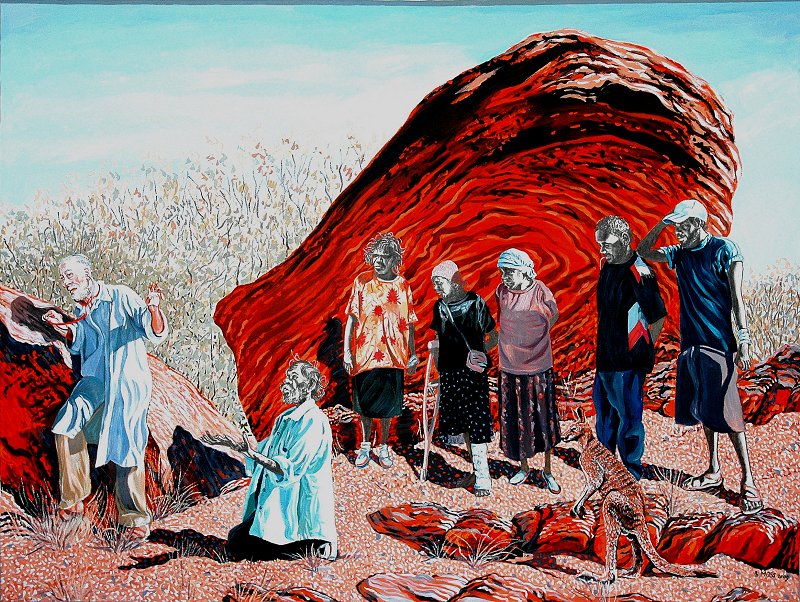
A Review of One Thousand Cuts, by Rod Moss

One Thousand Cuts by Rod Moss

One Thousand Cuts by Rod Moss

One Thousand Cuts: Life and Art in Central Australia

A book of the dead?

Yes, explicitly so.

Names are named, a violation of all norms, all practice in both whitefella and blackfella Australia.

Rod does this by virtue of trust, explicit consent, indeed the command of Rod’s friends.

Rod Moss’ singular role – to witness, to record and transmit.

Rod Moss grew up in the country. Well, in the 1950’s the Dandenong Ranges were country-ish. But he was never “in country” until some time well into his long apprenticeship under Edward Arranye Johnson, in and around Alice Springs.

Moss’ first book, “The Hard Light of Day” recounts that apprenticeship, which began with a spontaneous act of neighbourliness and evolved through friendship to become a connection of spiritual father to son. The building and the losing of that bond are the subjects of that first book, winner of the Prime Minister’s Award. It might sound like a large statement that the second book builds on and exceeds the first in its power. It does so by the swelling sorrow of loss after loss after loss, of the weight of pain.

The present volume is unique in the way it illuminates the experience of being “in country” – an opaque expression that whitefellers who work outback hear often from blackfellers. Subtly, delicately, in a characteristic Moss undertone, being ‘in country’ becomes luminous. The light is shed by Moss as he moves around Arranye’s hereditary domain as his named spiritual heir.

Moss gives us birdsong, birdflight as he walks beneath. He breathes the breezes and tempests that flutter or flatten foliage and carry mood or prophecy.

He names and describes the fauna – from grub to reptile to marsupial – that create the country.

Moss does all this in the same manner as in his painting. His colours are florid, his verbal sallies frequently outrageous, his attack fearless. But in all this bravura there’s nothing flash or glib, as Moss walks and paints and photographs the lands of his spiritual patrimony, bearing the loss of spiritual father (and of many brothers and sisters), accruing more and more losses until their weight becomes unbearable.

Most of the losses come abruptly. Each comes with the force of a thump to the solar plexus.

Moss, with his reader at his shoulder, absorbs blow after blow.

At this point we have Moss Agonistes, crying: “It rains in my heart. One drop at a time.”

Moss misses a much anticipated funeral: “I find myself crying on Saturday morning …Though I was sad at the gravesite, it has taken until now, opening the brochure and studying the commemorative words…for me to be sobbing.”

Continue reading

Mrs Hamlet’s Advice

Mr Hamlet Senior, formerly king of Denmark, has passed on. His son Hamlet Junior is sad, sulky, grumpy with Ophelia (who suicides), stabbish with Polonius lurking behind an arrass (who just happens to be Ophelia’s Dad, who dies incidentally of Hamlet’s stabbishness); obsessed, ruminative, haunted; angry, angryangry; refusing to be consoled, refusing to be reconciled.

His Mum, pragmatically re-queened to Hamlet’s uncle, offers some advice to  Hamlet Junior: ‘Tis common. Why seems it different with thee?

In other words, Get over it, son.

And in time we do. As a rule. ( If Hamlet fails to get over it’s because his uncle killed his Dad. And because Hamlet is, well, Hamlet.)


This week my sister and my surviving brother and I remember our father and our firstborn brother.  The anniversary of Dad’s death falls on the 13th day of the month of Ellul; Dennis died three years later, on Ellul 18.

Dad was 92, Dennis 63.

They died when they had to – Dad once his broken body began to break his iron will; Dennis, who lived for Mum, Dennis whose meaning was to be a son, Dennis constitutionally unable to live a motherless life. He died while Mum was alive. (Mum, most buoyant of my three lost ones, mourned Dennis, mourning lightly, living on, ever lightly.)


I think of them, all three. I wrestle with memories of the brother, he the first of his father’s strength, the brother who wrestled always with Dad. Two firstborn of firstborns, two men of fire who burned each other in their hot loving. I think of them, I remember their awful strife, I who knew, I who witnessed their mutual love, I, powerless to stop them hurting each other. Powerless in the end to stop the pain to myself.


I dream of them. The Dad dreams are never anything than pleasant. He smiles as we bump into each other in the lounge rooms of our lives. Dad prepares his enslaving coffee, I write, we smile, we know each other, we accept each other.

When I dream of Dennis the anxious need to rescue him clouds all. Not accepting, never reconciling to my brother’s pain, I strain against his self destruction. Aware always – in these dreams and when awake – aware of his love, his heavy tenderness towards me.

In my waking I recall Dad’s request, directed to me when I was twelve, Dennis fifteen: Some have a clear path in life. They are the lucky ones. You are one of those, one of the blessed. Your brother, your older brother, his path is not so easy. Help him, help Dennis when you can.

I tried, Dad. I never stopped trying.


The years pass.  ‘tis common. We get over it.


And yet, and yet, that Hamlet scene returns.

Hamlet’s Mum, Gertrude: “Thou knowest ‘tis common.

All that lives must die, passing through nature to eternity.”

Hamlet: “Ay Madam, ‘tis common.”

Gertrude: “If it be, why seems it so particular with thee?”

Hamlet: “I know not seems, Madam.”


I had a father. He passed through nature to eternity. I had an older brother, I lost him; I lost a limb. The phantom sensations do not end.


I write, a destiny. Until I have written the courageous, the impossible life of my brother, that hurt, hurting life, I will not earn dreamless rest.


Yitgadal ve’yitkaddash, shmei rabah.