“Slip me a Mickey”

Mum is about sixty. She speaks with her doctor son, aged thirty. He’s still a bit wet behind his medical ears.

Mum: One of these days I’ll have stroke darling…

Son, provoked: How can you know that, Mum? I’m a doctor and I’m not able to predict that. You can’t know you’ll have a stroke.

Mum: Well, I do have high blood pressure and my cholesterol is high. Those are the factors. Anyway, when I do, I want you to slip me a Mickey.

Son: You mean kill you? No! I won’t.

Mum: Alright, darling.

Son, contrite: Look Mum, if you do have a stroke, I’ll come and visit you every day. I’ll read every word of Dickens to you. And after that, I’ll read all of Shakespeare to you.

Mum: Thank you darling. That would be nice.


Son, six months later: Mum, remember how you asked me to knock you off if you had a stroke? Would you still want me to do that?

Mum: No, certainly not.

Son, triumphant: You see Mum, if you’d had a stroke, I’d have killed you – and you wouldn’t have wanted to be dead.

Mum: No, darling – I’d have been dead and happy, and you’d be alive and feeling guilty.


Fifteen years pass. Mum goes to see the Australian Ballet and suffers a mini-stroke. Her doctor – a specialist, not her son – starts her on aspirin. She suffers a cerebral thrombosis, a full sized stroke. Her hand is weakened and her memory is patchy. Her specialist decides she needs warfarin – rat poison – to thin her blood. After watching ”In the Name of the Father” with her doctor son she vomits suddenly. Son helps her to her feet, but she falls, a dead weight. Her son and her daughter in law heave and drag her to the car. They drive to hospital.

Mum’s blood has become so thin she’s suffered a cerebral haemorrhage. Her specialist doubts she will recover consciousness. She does so. While she remains in her coma someone in the hospital relieves her of her engagement ring. She never sees it again.

Mum wakes up. Half her hindbrain is demolished and with it her balance and her ability to walk. Her champagne voice loses its sparkle. She speaks huskily now, coughing often, searching for sounds to carry her meanings.

She says to her doctor son: I reckon the next stroke will get me.

What do you mean?

It will see me out. Dead.

Son, not irritably: I don’t know, Mum. How can anyone know?

Mum: I’ve had two strokes now. Isn’t that what they say – ‘three strokes and you’re out’?

The son laughs. The old lady laughs too. A stroke is a nuisance – “boring” is her word for it – but time spent with any of her children is recompense.

Belatedly the son recalls his promise – Dickens! Shakespeare! Mum, remember I promised to read novels and plays to you?

Did you darling?

I did promise, but I never came good.

Never mind, darling.
She squeezes his hand with her own – the one that still works.

The son launches into reminiscences of the time, more than thirty years distant, when they lived in the country. His stories bring back the days when her young body obeyed her quick mind, when it was she who nurtured the stumbling child. He finishes his vignette. The mother smiles, squeezes his hand again and thanks him: That was lovely darling.

Son: You know what, Mum? I’ve got lots of stories from those times. How would you like it if I were to write them all down and read them to you?

Mum: I’d love that darling.

He starts to write the stories. He supplies them to Mum and to her oldest friend from those days. The two old ladies feast their tear glands on the stories.


Mum needs a helper now to shower herself. Sometimes the helper takes leave and bathing her falls to a son, the oldest one, not the doctor.

Mum: Isn’t this awful for you, darling? Bathing an old wreck?

Eldest son: When I soap your back, I remember with my skin how you soaped me. It’s a return, a coming home. I bless myself for the privilege.


The stairs in her old home are beyond Mum. The doctor son and his grown son carry her up and down on wrist-linked hands. Mum asks: Don’t you boys want to euthanase me?

Son: At last I can do something for you in return for carrying me all my life.


Mum and Dad settle into their new single storey home. After a time, the doctor son asks: Mum, do you remember a conversation many years ago? You wanted me to give you a fatal overdose of a sedative if you ever suffered a stroke. Now that you’ve suffered a few of them, do you still feel the same?

Oh no, dear. Certainly not. Do you know why?

Her emphasis makes her wheeze and cough.

Son waits for the squall to pass: No Mum. Why?

Mum: I thought if I suffered a stroke I’d be handicapped; and I was right. And if I was handicapped, I’d lose my independence; and I was right. I thought if I lost my independence I’d be a burden; and I was wrong.

A pause.

You know – I’ve never been happier in my life.

He stares at his mother.

Mum: And the reason is I am surrounded by people who love me.
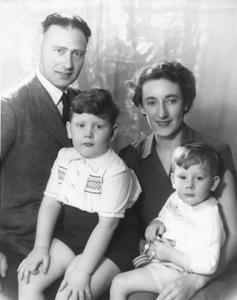


20130604-204052.jpg

On Quietly Going Deaf

IMG_1696 IMG_1646 IMG_1046“What?”

“What did you say?”
My family is sick of my hardness of hearing. It seems that hearing hardens and arteries harden at just the time that other things soften.
One of my body’s pumps has softened noticeably. I refer to the one with the ventricles.
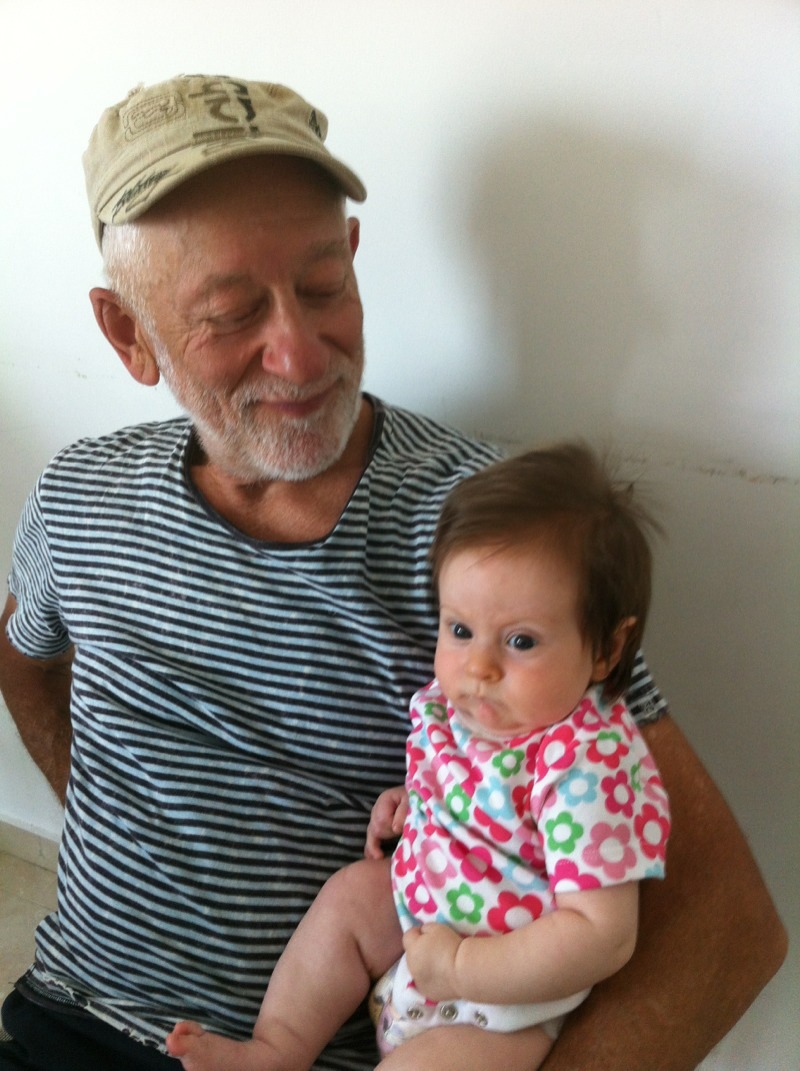
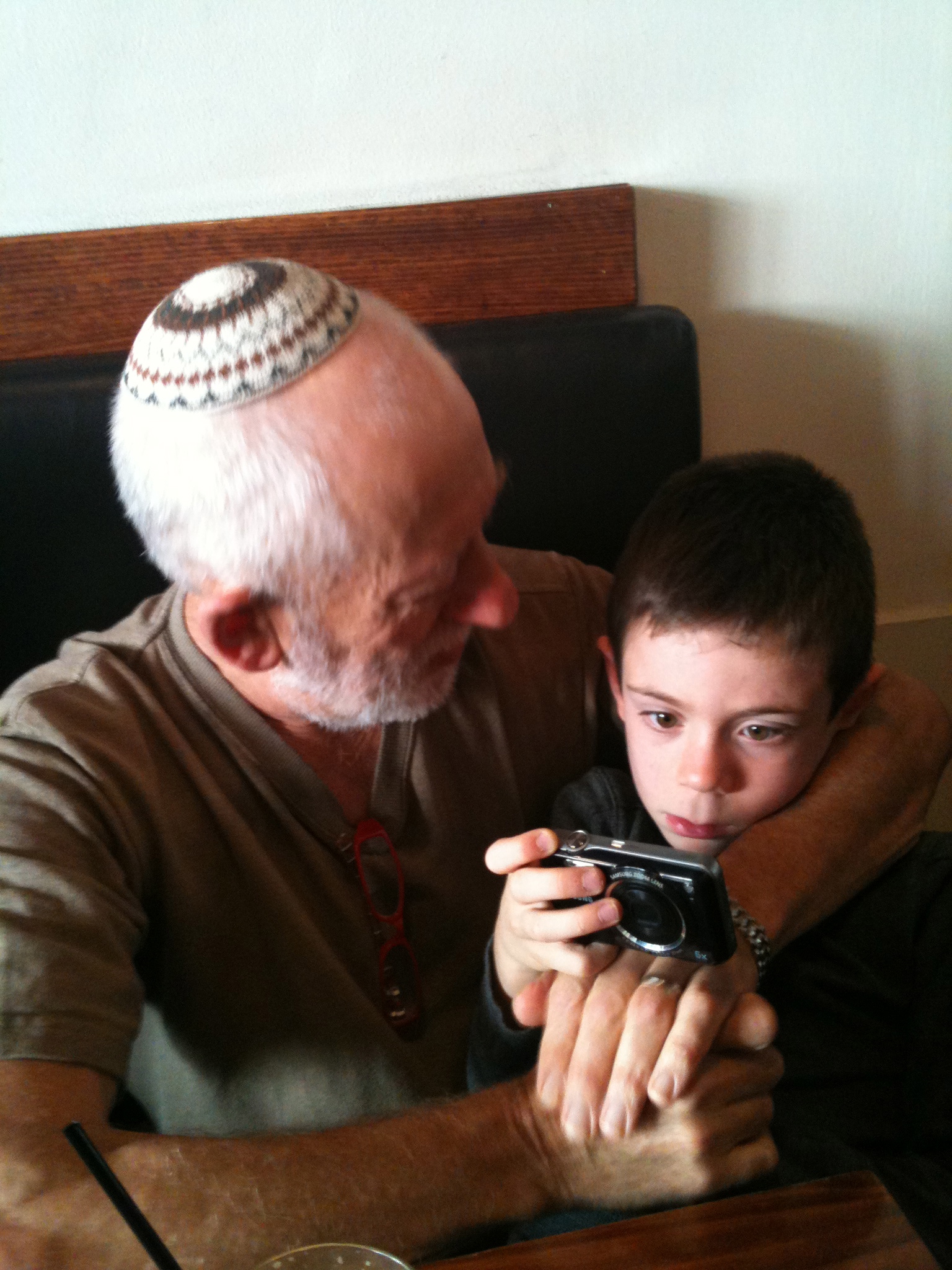
What human heart can stand firm against the arrival of grandchildren?
This happy, happy stage of life where our children use their sexual organs for the pleasure of us, their parents!
Technological Man has invented old age. Nature, blind and base, has no use for us once our litters have matured and reproduced. We are supposed to wither quickly and politely die. But doctors have intervened and prolonged the moments of aging into an epoch. From fifty to ninety we live on, noting the failing function of joints and arteries, of ears and eyes. Our teeth desert us, our balance fails, our uteri prolapse, our prostates swell, our bladders leak and we dare not trust a fart.
But we have grandchildren. I can hold a newborn on my knee and croon off key and she will not object. I can hold the toddler in my arms and tell him a thousand stories, long after my eyesight darkens, for just as long as memory holds strong. And when memory fails, I can confabulate.
Who needs hearing aids, dentures, titanium hips, dental implants? We have grandchildren.IMG_0009 IMG_1603 IMG_0482

Done Because We Are Too Menny

I think maybe we are done; humans I mean.

I am a baby boomer. My generation is used to the success of antibiotics. We contracted tonsillitis, we saw the doctor and he – it was almost always a he – prescribed penicillin and we recovered quickly. We didn’t develop a strep pneumonia, we seldom developed a post-strep kidney disease or heart disease.

Same story with ear infections: penicillin cured them.

We had an ear abscess, we had antibiotics and we won.

That might have been our first mistake.

We used them so often and so promiscuously they stopped working. How long is it since penicillin – plain, old fashioned, shot-in-the-bum , narrow spectrum penicillin – worked for an ear infection?

Yonx.

Because we killed off the susceptible ear infecting germs and bred resistant ones.

Those days of successful antibiosis are going. In fact they have probably gone.

My generation never saw siblings dying from whooping cough or double pneumonia. Parents gave birth to a litter and raised the full complement to adulthood.

That might have been a second mistake: we enjoyed the survival of the second-fittest.

My grandparents’ generation – growing up in the nineteenth century – lost numerous siblings to infections. It was natural. It was not unexpected.

That was the way in the battle between germs and humans through all history. All too often, the germs won. It must have been unbearably sad.

In the ‘seventies we were visited by herpes. For a while herpes won: we said herpes is forever . Then came acyclovir, also known as Zovirax. Herpes skulked off with its tail between its legs – our legs, actually.

In the ‘eighties we were visited by AIDS: incurable by definition. But bugger me (and that might have been how some of us contracted it), anti-retrovirals slowed the virus, survival lengthened and now the disease is a disease, but not universally a death sentence.

Horrible horrible hep-C is in retreat too.

So much (and so little) for the immortal killer viruses.

Meanwhile bacteria are doing better. Go to hospital nowadays for surgery and there is a good chance you’ll emerge with a multi-resistant resistant staph. All the perfumes of Arabia, all the antibiotics of Big Pharma won’t touch those staph.

Go to Asia for traditional sex tourism and there’s a good chance the gonorrhoea you bring back will resist all my antibiotics.

We have had our successes. We have seen off smallpox. The only copies of this germ live in research and germ warfare labs. Humans have it in our power to extinguish the smallpox germ utterly. The germ that killed many many more Australian Aborigines than shooting and starving blackfellas is abolishable. And replaceable. Whenever we change one population we affect another. Take antibiotics for your sore sinuses today and your vagina catches fire with thrush tomorrow.

I happen to be a human. I am on the side of humans in this epochal struggle. But nature does not seem to take sides: she seems to love the earthworm, the spider and the king brown snake precisely as much as she loves the species that gave rise to Moses, Jesus, Martin Luther King and the Beatles.

Nature, unlike the writer, is not sentimental. She wishes species to survive. She loves us all equally. So fondly does nature love the plasmodium (I refer to the parasite responsible for malaria, still the greatest killer of humans), that she raises the temperature of the infected human to a maximum in the evening, at just the time that mosquitoes take their evening meal. The anopheles aegyptii drink the infected blood that superheats the human skin.  Frequently the infected person expires, but such is the grace of nature, the plasmodium species survives such deaths and is transmitted by the mozzie into the next human it stings.

(If you read any of the works of plasmodial theology, you will understand that their god created humans and mosquitos alike as expendable vectors for the plasmodium, which was created in the image of that god.)

It is possible that nature – implacably fair, resolutely unsentimental, big picture regarding nature – having observed the humans that have bred so successfully that we overrun the earth, has decided that she must reduce our numbers.

Perhaps we humans, like the boy in Jude the Obscure, are done because we are too menny.

Sorry.

Copyright, Howard Goldenberg, 30 January, 2013.

(Of course, if I truly anticipated the imminent eclipse of my species, would I claim copyright?)

The title is a quote from Jude the Obscure, a deeply depressing book by Thomas Hardy. Only go to Hardy if my little article has failed to spoil your life or your day. My piece is cheerful in comparison.

Broaden the Intervention?

I am working in my general practice in the CBD when the phone rings. The receptionist’s voice is urgent: Howard, there’s a man collapsed outside on the street. Can you go?

I can. Grabbing a few tools, I race out into the street where a small crowd is gathering around a man in a suit. He lies flat on his back on the footpath outside the bookshop. Behind his head is a cylindrical object in a brown paper bag. Liquor leaks through the brown paper.

The man lies hard against the foot of a large window displaying the cream of our written culture. The man would have leaned against the window for support, fallen and stayed where he fell.

The man lies, motionless. The authority of my stethoscope opens a space for me between spectators, ambulance callers, vociferous suggesters, silent gawkers, head cradlers. The stethoscope reassures, the suggesters fall silent.

The man we all regard, the man we all fear, does not respond to questions. Nor to deep pressure of my thumb against his forehead. He lies insensible in Martin Place, grunting his shallow breaths, creased face purpled and puffy, grey hair, grey suit awry. Beneath my finger a thin pulse beats, fast and feeble.

His breath is a brewery. The wrist in my hand is criss-crossed with ancient slash marks, white against ashen skin.

It is 10.00 a.m.

This is a human person of my age, nameless to us, nameless to himself, his being reduced by alcohol and secret griefs.

The ambulance arrives and I go back inside.

*** Continue reading

My Doctor My Self – A Fiction

A very old doctor?

A very old doctor? (Photo credit: revger)

Washing myself in the shower, it suddenly registers that I haven’t farted this morning. Straight away I know I am in trouble. A tummy ache is a commonplace, tummy aches come and go, but this one is different. My bowel has fallen silent. No wind music. Big news, bad news.

I dry myself, lie down and palpate my abdomen.

Is it distended?

Hard to tell.

Is it tender?

Decidedly.

Listening with the stethoscope, I hear nothing.

I listen harder, longer.

Silence. A clamorous silence, speaking in clinical tongues of bowel obstruction, of an absence of vomiting, of a pain that has been colicky in nature, and is worsening.

I am 64.

A person of that age with a large bowel obstruction most probably has bowel cancer.

That can’t be me. I don’t do cancer. I eat, I run, I work, I fart, I tell fart jokes.

I am large with life, I don’t have cancer.

And yet I hear myself observe that this patient is an Ashkenazic Jew. He has no comforting past history, of diverticular disease, of ulcerative colitis, of Crohn’s Disease.  And his aged mother had a pre-cancerous bowel polyp.

This old bloke, this rationalising self-deceiver has bowel cancer.

I feel a surprising, deep calm. I have cancer, I have ignored two decades of advice to undergo colonoscopy, and now I have bowel cancer.

I will die. Continue reading

An Ancient Mariner

A tall man with silver hair and brown skin enters my consulting room, hunched forward a little. His voice is husky in the familiar way of his people, his speech deliberate.

“I cannot say quickly what is wrong, doctor. Please allow me time to explain.”

The face is a compound of care and charm. He is not young but he is well muscled and broad. He bends his torso somewhat, and inclines his head a little as he speaks, his mouth almost smiling  – in propitiation? Has a lifetime among white people taught him to smile as he speaks, even when – as now – his speech is full of sorrow and care?

“I have a boy”, he says. “He is twelve years old.”

(Irresistibly, he delivers his story. His words arrest me, the consultation has stopped; here is Coleridge’s Ancient Mariner: There was a ship, said he…)

My patient continues: “I’ve had him since he was a baby. He is my son’s boy.  The boy’s mother brought him to me when he was newly born. She said – ‘You take this boy. I cannot look after him.’  I told her – ‘You need to think about that. You take him away and think again. A child needs his mother…’ ”

The man breaks off his narrative to explain his meaning. “Doctor, I said that about a mother because I didn’t have my mother with me when I was a boy.”

“Well, she brought the baby back a couple days later. She said – ‘You take this boy. I can’t have him.’”

A pause.

“Doctor, I’ve lost my license to drive trucks. I want to get it back. I want to get back into work again. They say I can’t drive trucks any more because of my heart and because I used to have diabetes. So I went to Adelaide and had heart tests. They put a needle into your groin and they send dye into your heart – you know?”

I nod.

“They tell me I am good, my heart is good. I feel good, doctor. And when I came back, they tested me again, but they can’t find any diabetes, because I am eating good food – you know – no Kentucky  Fried… no Red Rooster. No grog either. I don’t smoke. But I am very strong, doctor, I am fit. Every morning and most nights I do hard exercise…”

I nod again, admiring again his lean, muscled body.

“I am going to school. I am learning computer. That’s hard, those words are very hard. I was raised on the Catholic mission, in the Kimberley, out Fitzroy Crossing way. They didn’t teach me much to read and write, not English. I learned mostly prayers…in Latin. I can still say all the prayers in Latin, but I don’t understand Latin. I didn’t have much schooling in the Kimberley.”

I look up and scan his face, looking for something that seems to be missing: where is the irony, where is the anger? He seems to have none.

“Last year my wife got sick. She was in the hospital, but in the end they say to me – ‘you take her’.

So I take her home. She was in the wheel chair, she liked to be outside, so I would take her out there, she’d sit in the chair with a mask on her face – for oxygen. The boy would come out to her and sit with her, and he would cry.

I see them and I cannot bear it.

I told the boy – you have to go to your mother now. I can’t look after you, you’re too big for me now. You need your mother…

A boy needs his mother.

I didn’t have…

The boy cried when I sent him back. He wanted to stop with me.

My wife died.

After a good while I went to my country, you know, the Kimberley, that’s good country. I wanted to see my sisters…”

I contemplate the distance from where we sit, in Alice Springs. “Did you fly?”

“I fly my car. I don’t mind the drive, it is good country, beautiful, all the way.

When I get there, the boy wants to be with me all the time. He camps with me, he won’t stop with his mother.”

The man pauses, looks at me. The part-smile returns. “Doctor, I need a letter so I can drive trucks again. I want to be working again. I have to do something…”

Heavily, I tell him that the doctor who decided he must not drive trucks is probably right. The Law says a doctor can’t let you drive trucks if you have a history of heart troubles. But I tell him I will obtain the reports from the Adelaide doctors and forward them to an independent heart doctor and see whether he can have another chance. I try not to raise his hopes.

The old man rises, takes my hand. The smile is full now, his hand large, dry, warm.

He thanks me and goes away. Sadder, wiser, I watch him go.

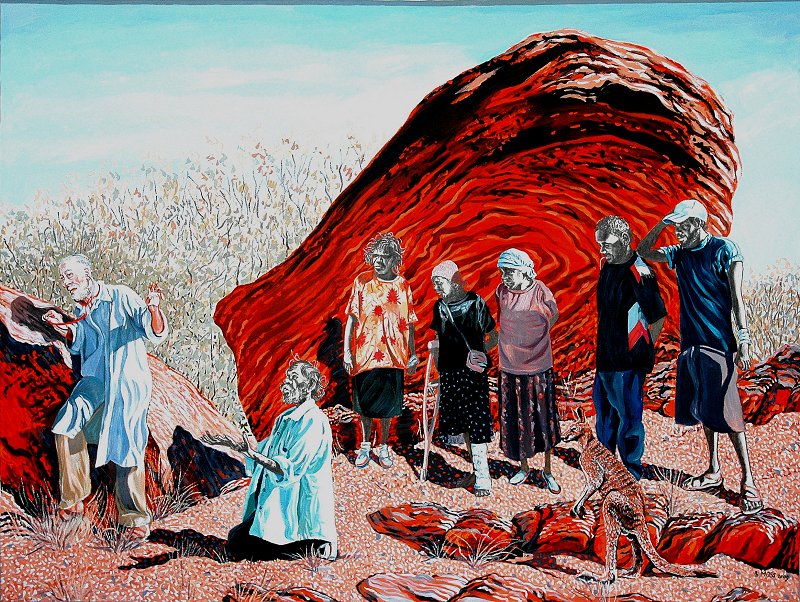
This is an excerpt from Raft by Howard Goldenberg. Hybrid Publishers, 2009.

The Slashed and the Hanged

After three days on Christmas Island I take night call. The phone rings at 0045. It’s Henry the Team Leader, Henry the unflappable, Henry who smiles at every reverse, at all bad news.

Henry has the oblong face and slab-shaped skull of the adult who was once a very premature infant. His crooked smiles and wry look – ‘it could be worse’ – sit well on the slopes of that narrow face. Tonight, however, his voice is direct: no smile is audible: “Security is bringing five men in to the clinic who’ve slashed themselves and another man who tried to hang himself.”

“I’m on my way.”

The drive along half known, unmade, unlit roads  takes longer than it should, as I make a number of wrong turns. There is a moon, bright against the island’s dark sky. A black cloud bisects the moon transversely, sitting across its upper half. The black is very black, the white brilliantly silvery. I have never seen a southern hemisphere of moon like this.

When I arrive in the clinic, all cubicles are full. There are the five men who have cut themselves, and not one, but two, who’ve tried to hang.

I don’t know where to look first. I don’t want to look at all.

In the nearest cubicle a man lies flat on his back, his throat livid in the glare of the examination light. He does not move.

I speak, asking his name.

No word, no movement.  Continue reading