The Eve of the Eve of Yom Kippur

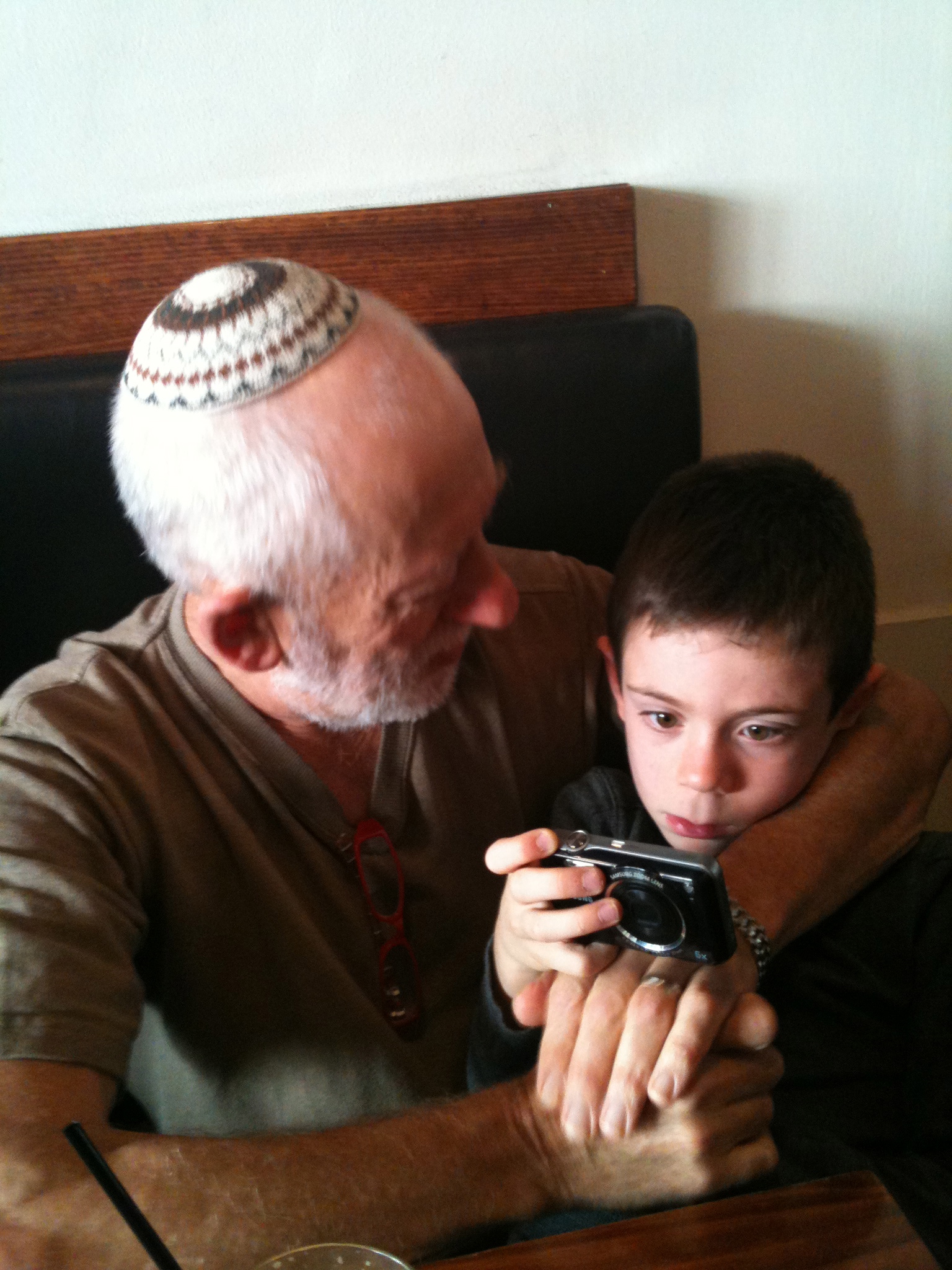
The house, emptied now of the insurrection that is a bunch of grandboys on school holidays, is quiet. These are the peaceful moments when the house exhales, the pulses slow and thought recovers.

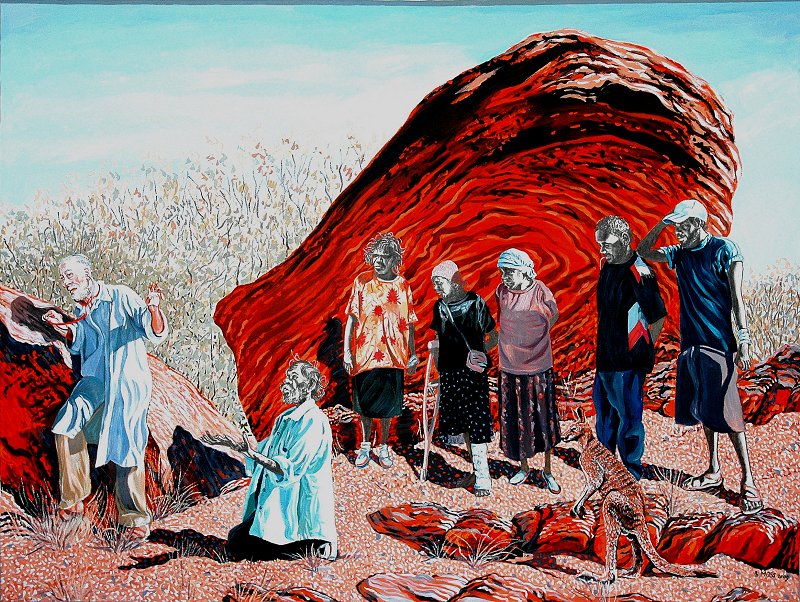
Tonight is the night before the eve of Yom Kippur, the Jewish Day of Atonement, our Sorry Day. What am I sorry for? For what need I atone? Almost all my sins are those committed in words: I am sorry for the words shouted in anger at my grandrats, sorry for careless slights and unkind witticisms, sorry for speaking faster than my thinking.
And as this blog consists of words, I should search them.

I wrote (in How we Killed Leo) unkindly of Mister Scott Morrison. Elsewhere I have written uncharitably of Mr Shorten and Mr Abbott. All of these public people have private families who would feel wounded when writers such as I play the man instead of attacking the issue. I referred – wittily I felt – to our homegrown press baron as Murd. I should wash my mouth out. I am sorry for the hurt I have done those men and their families.

I remain sorry – and ashamed – that we Australians choose representatives who follow our baser instincts instead of those who might lead us and inspire our finer selves.

In the person of the successor in Sydney to Cardinal Pell, we might have found such a leader. On the morning after his accession the new archbishop spoke like one repentant for wrongs, transparent in confession, compassionate towards those hurt, and creative and courageous in his declared resolve to seek out his brother clerics in the Muslim community, ‘to find ways we can work together to heal our community’. This on the very morning we all read of the arrest of one Australian suspected of plotting to kidnap and behead another – any other – Australian.

A few weeks ago a Jewish democrat, tirelessly active in the struggle to improve our policies towards refugees, shared with me a bright new idea. “Howard,” he said, “Instead of attacking politicians I want to mobilise members and leaders of all of Australia’s faith communities to work together with government to create some softer policies that will be less cruel in their effects on those already here and kept in limbo.” Many, many are the Australians who wish our practices were not so harsh. Many are ashamed. Many have raised voices – as I have – in rancour. What I heard now was the echo of the quiet wisdom of Petro Georgiou, former Member for Kooyong, the man who spoke softly to a hard-faced Prime Minister and brought some humanity into policy.

As the prophet said, “Come, let us reason together.”
Two Writers Wrote My Novel

One of the two, a good bloke, would get up too early in the morning, charge himself with caffeine, and – sparking with imagination and creative drive – write passages of prose that really excited me. I liked that bloke. The second, born on the same day as the first, was much older. A sour individual, crepuscular and nocturnal in habit, he’d cast a jaundiced eye over the other bloke’s matutinal erections and scorn them into impotence. He’s scratch out every virtuoso phrase, he’d cut through digression and elaboration. Mean as catshit, he believed less was more, and least was most. I found him unpleasantly convincing. I hated the bastard.

Both antagonists worked on Carrots and Jaffas from start to finish. They managed to draw out a six-month project to four and a half years. By the time the book was printed I was nearing sixty-eight and I resolved I was done with the novel: how many more fifty-four month projects did I have left? Bugger the novel, I decided. I’d read them still, I just wouldn’t write any more.

Three months later I had finished my second novel. Titled “A Threefold Cord”, it is a novel for shared reading between an adult and a child of eight to twelve. And it is a cracker. The book comprises sixty-seven chapters of action, suspense, hilarity, and the unremitting contest between good and evil. In addition there is sufficient reference to bodily functions to delight and liberate a well brought up child.

As the book raced towards Chapter Sixty I informed my oldest grandson I would end it after the sixty-seventh. “Why, Saba?”
“Because I am sixty-seven.”
“But what if it’s not finished?”
“Doesn’t matter. I’ll just stop.”
“But you can’t!”
“Yes I can. I’m the boss of this book.”
“But…” The notion of such a summary ending outraged him.
I relented: “I might just start a second book where this one finishes…”
Grandson’s 10-year old face blazed with a happy prospect: “Wow! A series!”
Where were the antagonists of “Carrots and Jaffas” during the writing of “Cord”? I sacked them. I simply wrote for my five oldest grandchildren, aged eight to ten years. No virtuoso passages, no miserly pinching, “Cord” was a conversation with five kids who knew my voice, five kids whose tastes I knew: tastes I had helped to create.
My older daughter, a combined Regan and Goneril in her criticism towards my writerly Lear, assures me no child will tolerate a book with such a title as dull as “A Threefold Cord”.

I know she is wrong. Grade Four at a primary school near Shepparton served as unwitting testers when their teacher resolved to read aloud a daily chapter. Ordinarily, she informs me, the wrigglers would wriggle, the whisperers would whisper and the autists would be up and away. But when she read a Threefold Cord all sat, transfixed. The teacher got through five chapters on the first day.
Since then the children and grandchildren of selected Australian literary figures have read Cord and approved it mightily. From time to time over coming weeks I’ll post the odd sample chapter and you’ll see I am right: “A Threefold Cord” is, as I remarked earlier, a cracker.

At Prayer

The pale wintry sun descends and I recite my everyday afternoon prayer. Watching me, my eight year old grandson moves to sit on my knee. “What are you praying for, Saba?”
The enquiry jolts me to consciousness. If he’s asking, what’s your purpose in praying? – it’s a good question.
I fancy he’s asking, what are you praying for – in particular?
Still a good question.

He sits on my knee, this fleaweight who holds me captive. He forces me to interrogate the ritualized murmurings that issue half-bid, half-conscious. I translate for him:
The eyes of all look to You for good news,
And You give them their bread in good time.
You open up Your hand – here I open my closed hand, enacting the gifting of food –
And You satisfy the want of all that lives

I want the child to share my sense of wonder, of providence, however unevenly it might fall.
Grandson takes my face in his hands, brings his face close. Closer. His lips touch mine. He holds my face a little longer.
I contemplate Dickenson’s telegrammatic:
Prayer is the little implement
Through which Men reach
Where Presence—is denied them.
They fling their Speech
By means of it—in God’s Ear—

Grandson is in no rush to return to Lego and the other urgencies of his life. He sits while I entertain Tennyson:
More things are wrought by prayer than this world dreams of.

What does Saba pray for? He prays because he can, because he needs to.
Another kiss and grandson descends. Thank you Saba.

I am left to wonder whether a grandchild might be the answer to the prayer I sent to God’s Ear and never knew it.

On Quietly Going Deaf

IMG_1696 IMG_1646 IMG_1046“What?”

“What did you say?”
My family is sick of my hardness of hearing. It seems that hearing hardens and arteries harden at just the time that other things soften.
One of my body’s pumps has softened noticeably. I refer to the one with the ventricles.
What human heart can stand firm against the arrival of grandchildren?
This happy, happy stage of life where our children use their sexual organs for the pleasure of us, their parents!
Technological Man has invented old age. Nature, blind and base, has no use for us once our litters have matured and reproduced. We are supposed to wither quickly and politely die. But doctors have intervened and prolonged the moments of aging into an epoch. From fifty to ninety we live on, noting the failing function of joints and arteries, of ears and eyes. Our teeth desert us, our balance fails, our uteri prolapse, our prostates swell, our bladders leak and we dare not trust a fart.
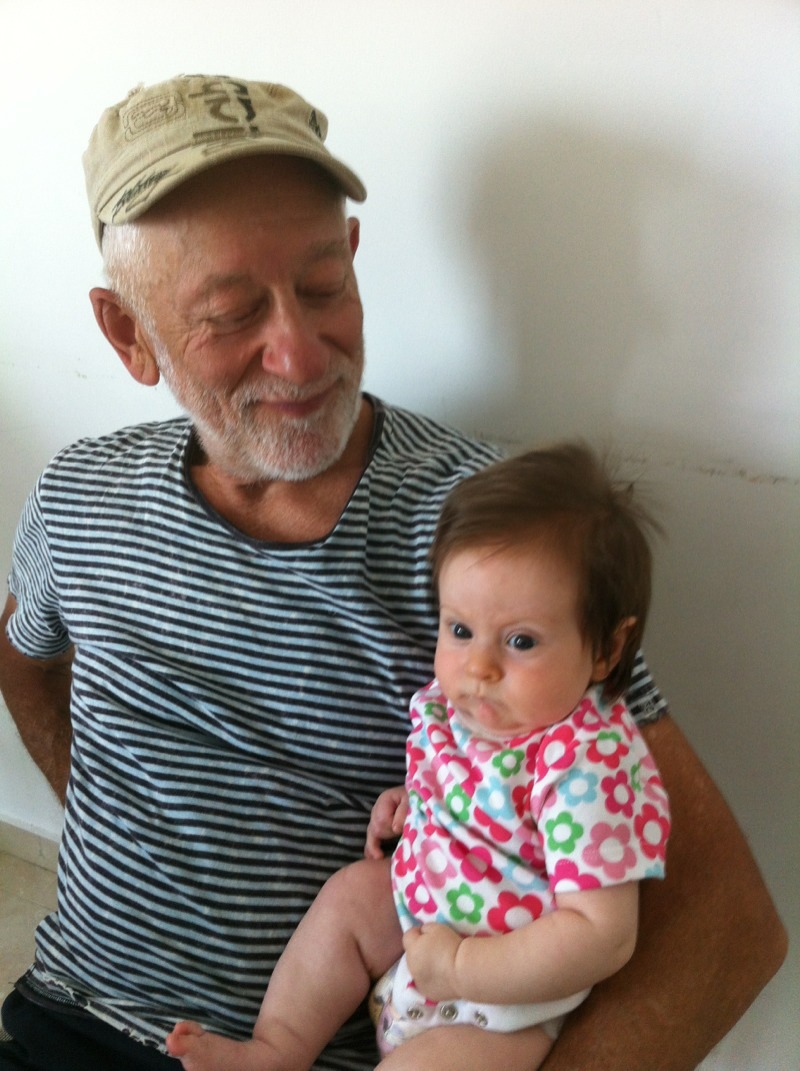
But we have grandchildren. I can hold a newborn on my knee and croon off key and she will not object. I can hold the toddler in my arms and tell him a thousand stories, long after my eyesight darkens, for just as long as memory holds strong. And when memory fails, I can confabulate.
Who needs hearing aids, dentures, titanium hips, dental implants? We have grandchildren.IMG_0009 IMG_1603 IMG_0482