Where Innocence Died

I wandered down to Bondi Beach, having no particular plan. Arrived in Sydney for a quite different purpose, long-planned – to celebrate a birthday – I felt myself drawn now to the fatal site. Once there, I found flowers in heaps, tributes and cards. There were candles in clusters. A Hannukah candelabrum stood before the Pavilion. Families were there, some clearly Jewish, many more of them miscellaneously human. 


I fell into step with a Jewish youth wearing Chabad costume. His congregation lost a rabbi last Sunday, a young father. I asked the youth, Whattefillah* do we say?

Say what your heart prompts you to say.

We exchanged names: Levi

Zvi Yehonasan.


I wandered on. Here were two young women wearing tunics emblazoned, MENTAL HEALTH. I paused by the tributes, bowing to read, The World Rests on Three Things, on Truth, on Justice and on Peace. This was pencilled and illustrated in a child’s hand. I wept, sobbed actually, rocking as I cried, undone by innocence. I felt the close presence of someone. It was Mental Health in the person of a young Chinese woman, proffering a Kleenex. I said, Weneed to believe people are good. She said, We do. At our side a colourful sign read, Celebrate Waverley.


I wandered on. Here was the footbridge.Over the past four decades I’ve jogged across this little bridge many times as I completed a run. Last Sunday evening two figures in black used the bridge. This morning I looked at that familiar little landmark with new eyes. I bethought myself of the Arch of Titus in Rome. Graved into the stones of that arch are images of Judaean slaves, taken captive in the sack of Jerusalem in the year 70CE. They carry holy objects, trophies of destruction. Among them is the great candelabrum of the Temple in Jerusalem. An arch of triumph for ancient Romans, it has ever stung Jewish eyes. Traditionally Jewish people make a point of not walking beneath Titus’ Arch. Today I detoured around the Bondi footbridge and took a long cut. 


Police were everywhere to be seen this morning. Police cars were positioned to limit vehicular access to the site. Insteadpeople walked freely, streaming from all sides, down towards the memorials. Young people walked, drained of gaiety. Children too, somehow solemn in the general pall.


Down by the candelabrum, a trio of women in uniform garb. I think they were nuns in summer garb. Here, a younger man, tall and well made, formally dressed in a grey suit in the bright sunlight, stooped to listen gravely to someone explaining, pointing, what happened just here, what just there. The man bowed and took his leave. I guess he was a politician.


Here was an aged lady, lipsticked, dressed colourfully, her face deeply wrinkled. She seemed old enough to recall the War. She was deep in conversation with a younger person. She looked through her companion, her gaze fixed on some other place, some other time. I fancied she might be a survivor of similar attacks. She appeared oblivious of the person filming her.


Photographers and news crew everywhere, today uncharacteristically decorous. Trying to orient myself, I approached a young police officer. Diffident, reluctant to distract him, I asked which directions were the shooters aiming. He listened, conferred with a fellow officer and gave me answer with a most tender seriousness, as if I myself were among the wounded and must be gentled. I thanked the officer, turning away with my tears. Undone again, by kindness. 


I took my meandering leave. I was struck suddenly by what was not at the site. Hundreds and hundreds were there, in all ages and conditions. But missing was haste. Absent from here was noise. Hedonist Bondi, transformed into a secular place of sanctity.


I left the place and wandered on, up the hill. The sun bathed the scene. Sydney balmed, just as it was around 6.30 pm last Sunday. I walked on, asking myself whether people were in fact good. Down the hill, in an endless stream, came people bearing flowers. This family carried two large bunches, florist-wrapped. This teenage girl carried but three large roses, home-picked. 


At the top of a long hill I rested in the shade. A man approached with a dog, which he secured by a lead to a post. A dog of middle size, his coat a golden bronze, he turned and watched his master enter the adjacent fruit shop. Wondering whether a dog experiences wistfulness, I made way for a boy just a little larger than the dog, walking with Grandma. The boy sighted the dog, left Grandma’s side, and trotted over to the dog. The child rubbed the creature’s neck and fondled his ears. He bent far forward until his brow rested on the dog’s. For a short interval, the two were a single organism.

Then the boy trotted on and caught up with Grannie.
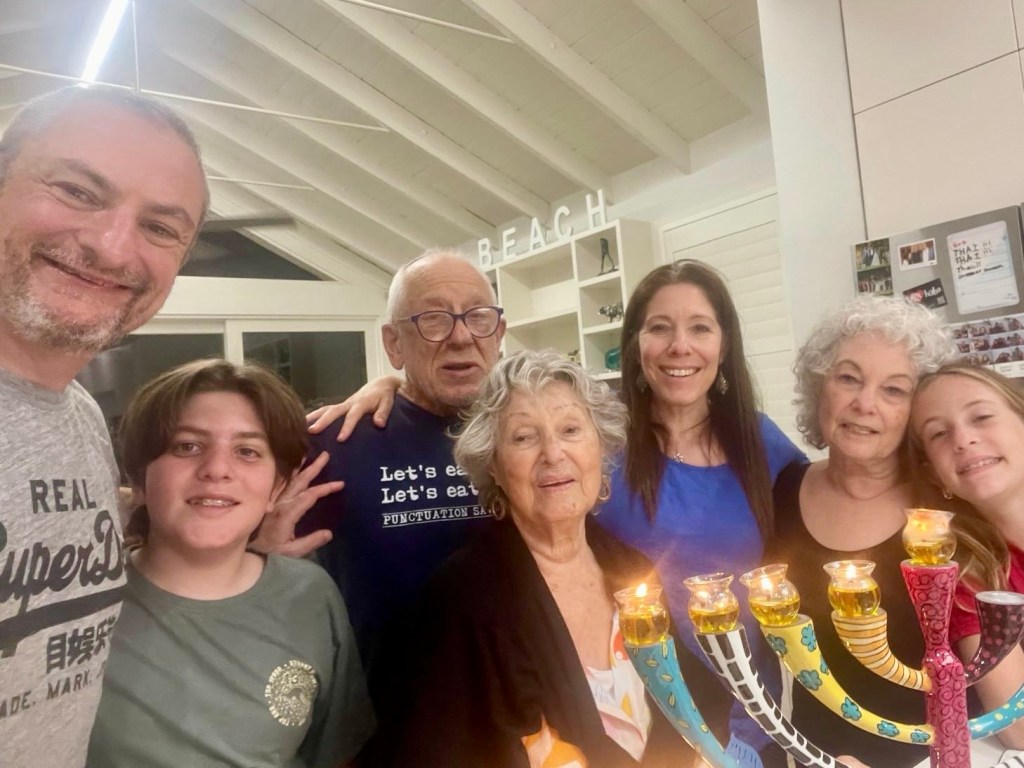


*tefillah is Hebrew for prayer.
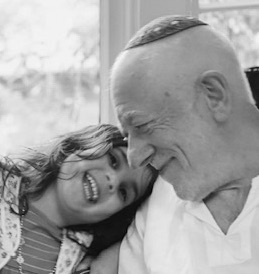
A Small Child, a Shirtless Man

The child peers at the headlines in the newspaper. She has become interested in letters that make up words. She points at a letter:

That’s an N.

And that one is A.

Her grandfather joins her and looks at the ‘paper.

The image of a man standing bare-chested in the open in midwinterseizes his attention. 

And that is Z!

And that’s an I. 

What is that word, Grampa?


***


Grandfather feels sick as he reads the headline.: “Nazis march in Melbourne”. The image shows a powerfully built man with his back to the camera. Grandfather notes heavily muscled arms clenched aloft. He sees in the posture defiance, menace. In the grey streetscape, the man’s exposed skin is very white.

What is that word?

It’s a name, darling.

What does it mean, Grampa?


How do you explain Nazism to a child of five?

How explain it at all?


Darling, that man doesn’t like Jewish people.

Puzzled, she speaks: I’m Jewish…

He doesn’t want people in Australia who have dark skin.

I’ve got dark skin, Grampa. And Mummy…


The five-year old brain whirrs.

Why isn’t he wearing a shirt?

Perhaps he wants to show people he’s tough. He wants people to be scared of him, I think.

Does he scare you, Grampa?


***


Grandfather would prefer not to answer. Is he scared? No, not for himself. But for the little ones, yes. What Australia will this Jewish-Sri Lankan-Australian child grow into? 

No darling, he doesn’t frighten me.

Darling, most people are kind. 

This man feels angry. 

Perhaps, inside, really deep, perhaps he’s scared.


Grandfather feels dissatisfied with his replies. The child looks up andsees his look, careworn and sad. She comes close and throws her arms around his legs.


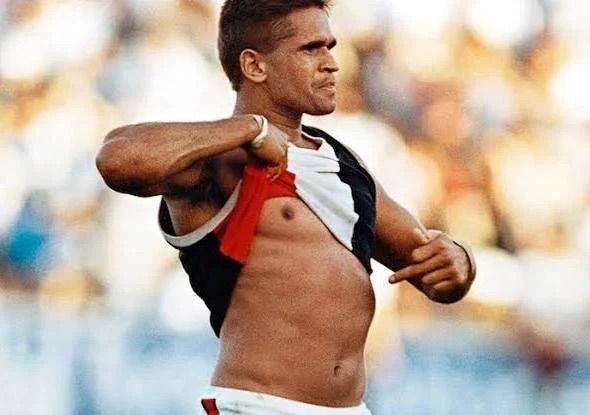
Nicky


An old man who should know better runs through the drizzle. In his wrong season sunhat and his non-lycra, he’s an odd-looking figure, a lulu and a lemon. Walking toward him is a taller man, perhaps half his age. The man is well built, his face dark. At the sight of the quaint old man, that face breaks into a smile.


This happens quite often to the older man, younger people smiling at him when he runs. Nowadays the run is more a shuffle, the limbs jerking and creaking arthritically. The smiles signal a sort of surprised admiration, with a bit of amusement, a touch of sympathy for something at once pathetic and brave.

The smiles always warm him.


Today there’s all of that, but something more. The smiling face looks familiar. The runner stops and turns and calls a name. Nicky! The smiler turns and walks back to the old man. He smiles again.


Nicky? Nicky Winmar?

Yeah. That’s me.

Nicky, I saw you on the cooking show. 

I want to say something to you. You changed Australia – that day at Victoria Park. I’m a Collingwood supporter and I was ashamed that day. You pulled up your shirt and you showed yourself and we started to learn. You helped Australia to change.


The tall man’s smile deepens, goes inward inward. He steps forward and throws his arms around the older man and pulls him close and holds him. The men unclinch. The black man extends a hand to the old bloke. The grip is firm,the clasp is warm. The smile has widened. They shake and part.


And I run on through the light rain.


Photo by Wayne Ludbey

The Sounds of Two Silences

Since its inception, this blog has proceeded on tiptoe. Ever since my own inception as a person conscious of myself, this blogger has walked on the tips of his toes. We have been moderate, fair, civil, politically correct. This blog and I don’t like stridency. Not for us the megaphone,but the voice of sweet reason. We’ve been progressive, we’ve been likeable, and we’ve been liked.

Until we ceased being likeable and started to appear tribal. Tribal is not so likeable. This blog has not been liked much since… well, since October 7 last year. Over that period we tiptoed less.

Allow me to explain what I mean by tiptoe, and why we do it. By ‘we’ I mean Jewish Australians. But I could just as easily refer to minority Australians of all stripes. We walk on tiptoe, careful, so careful not to tread on the toes of others. We walk on tiptoe as an act of self-humbling, as an act of apology really. We understand how a turban or a hijab or kippah marks us as different. We understand how difference piques discomfort. We don’t wish to offend or confront. We tiptoe so we’ll be excused for being not entirely the same. 

From very early in our lives as minority Australians we know we represent our tribe. As children starting school, we know that all of us Sikhs, all of us Moslems, all of us Jews, all of us Africans, Asians of every origin, all of us Indigenous people – we all must behave nicely in public, because we kids stand for all of us. If one of us misbehaves or offends or speaks our foreign language too loudly in public, we all will be judged. Our entire group will be judged by the worst of us. Speaking only for myself, this self-consciousness has weighed but lightly. It feels good to behave likeably because Australian people broadly reward us with affection.

There’s a very good reason for anyone – for everyone – in Australia to tiptoe. Once they see past the difference, once they see you’re just like them, Australians embrace you. You feel the love, you return the love. 

Over the decades that I have worked among AboriginaI people I have witnessed much conduct that seems placatory in nature: voices normally loud, lowered for the whitefella; rage directed at their own people rather than at the dispossessor; humble acceptance of the Gap that never closes. It’s at once excruciating and absurd that a First Owner might feel obliged to live a life of apology.

Tiptoeing can be detected, I think, in highly unexpected places. Have a look at photos of women in public life. Note how many face the camera with head held a little aslant. You don’t see this posture in the public male. When I see this, the woman’s face is invariably smiling. The posture and the smile win trust; they say, ‘Yes, I am successful, I am known, but don’t worry, I’m not a threat.’ In a country where a woman dies every week at the hands of a man, such tiptoe might be ingrained in childhood. I like the images of a woman facing the camera squarely, without the obligatory smile.

Until the turn of this century, my tiptoeing was unnecessary. If I tiptoed, I did so, not on account of outside hostility, but on account of my own native timorousness. Until about the year 2000, I had tiptoed beneath my public kippah. But tremors, intimations, opinions, voices, all drove my kippah into hiding. I walked the ways and byways of this beloved country with my kippah in hiding beneath a non-sectarian hat. Only within Aboriginal communities was my kippah nakedly seen. My mob was much honoured by their mob. 

Was I being over-sensitive in the mainstream? Possibly so. But come October 8 last year, when the mob outside the Opera House howled and burned flags and hunted Jews, there was no mistake. Look online where hatred of Jewish people has found its voice, where all shame has been shed, and know why I might walk on tiptoe. 

But I’ve stopped apologising for being Jewish. My kippah can be seen again wherever I go now. It asks Australia a question. And Australia answers with a nod or a smile or a pat on the back, as I guessed it would. But not so on this blog: I suspect I have confused my readers, whom I guess are mainly of progressive mind. Since October last year I have written as a Zionist – albeit as a supporter of Palestinian aspiration – and I sense progressive peoplefind this confronting. I think my readership feels nonplussed. Hence the likeable bogger is no longer ‘liked’. I imagine also that my gentle readers wish to protect my feelings by their reticence. 

Hence, silence.

But I’m not afraid of civil debate. We can agree to disagree. Most days I disagree with myself.

Awful conflict in the Middle East has polarised Australians. A hush has fallen. For many, feelings are too strong for calm utterance. I understand this, because my own feelings are so strong and so painfully conflicted. But that conflict on other shores need not silence us on racism on our own shores. I feel confident the silent majority of Australian people detests anti-semitism. The majority is nonplussed, often offended and irritated by this hatred and wishes us well. The great problem here is the very silence of the silent majority. Anyone who is offended by racism and who remains silent misses a precious opportunity to protect and repair harmony in our community.

Little Old Lady

You’d see her on the high street every morning, pushing the walker that she really doesn’t need.

She’d walk the 1.2 kilometres to her coffee shop where the staff would welcome her as a sort of celebrity.

At the age of ninety-seven she looks good wearing fashions of women two generations younger. Her white curls are cropped short, her still pretty face opens into a smile that brightens the day. A waiter pulls out a chair for her: What will you have, Helen? The usual?

The usual is coffee and a pastry. If you asked Helen what sort of coffee – a caffe latte or a flat white – she’d look puzzled. I like it how they make it, she’d say, gesturing vaguely in the direction of  the barrista.

Her morning yoga session, a practice of seventy years, keeps her joints moving smoothly. After coffee she’d head back up the high street and make her way to the supermarket. The old lady was heading cheerfully towards her centenary.  

A long life has delivered its burdens. She’s buried partners, she’s watched her daughters grapple with their cancers, there have been the hip fractures, the blocked arteries, the eye that will not work. These burdens she has set aside. Other burdens, burdens acquired in childhood remained buried deeply. 

The old lady kept herself active and cheerful. There were her children and her grandchildren and their little ones. A total of twenty-three descendants lightened life’s burdens. Sons in law and grandsons in law joined her tribe and she embraced them all. The old lady saw her generations, saw her futurity, and life shone. She drank her coffee, she practised her yoga and she walked and walked.

Until the day following October 7 this year. That day she read how the mob in Sydney cried Death to the Jews! Gas the Jews!  Her eldest great-grandchild had told his hijab-clad workmate he was a Zionist. She had replied, You deserve death. On the TV news the old lady watched the mob in Dagestan hunting for Jews.

Now the wounds of childhood in Danzig burst open, an abscess of humiliation and terror. The old lady said, I can’t remember a single happy day in those eleven years… We were the lucky ones, we caught a boat to Australia. All my cousins who remained, perished. Cousin Josephina was burned to death in the Synagogue. And now they’re burning Jews in Israel!

If you walk the high street today you won’t sight the little old lady with her walker. She’s not to be found in her coffee shop. She awakens to a day of heaviness. The news appals. Her mind swims and fails. The new griefs and the old griefs literally drive the old lady out of her mind. She says, I have nothing to live for. There’s nothing for me to look forward to.

Little Old Lady

You’d see her on the high street every morning, pushing the walker that she really doesn’t need.

She’d walk the 1.2 kilometres to her coffee shop where the staff would welcome her as a sort of celebrity.

At the age of ninety-seven she looks good wearing fashions of women two generations younger. Her white curls are cropped short, her still pretty face opens into a smile that brightens the day. A waiter pulls out a chair for her: What will you have, Helen? The usual?

The usual is coffee and a pastry. If you asked Helen what sort of coffee – a caffe latte or a flat white – she’d look puzzled. I like it how they make it, she’d say, gesturing vaguely in the direction of  the barrista.

Her morning yoga session, a practice of seventy years, keeps her joints moving smoothly. After coffee she’d head back up the high street and make her way to the supermarket. The old lady was heading cheerfully towards her centenary.  

A long life has delivered its burdens. She’s buried partners, she’s watched her daughters grapple with their cancers, there have been the hip fractures, the blocked arteries, the eye that will not work. These burdens she has set aside. Other burdens, burdens acquired in childhood remained buried deeply. 

The old lady kept herself active and cheerful. There were her children and her grandchildren and their little ones. A total of twenty-three descendants lightened life’s burdens. Sons in law and grandsons in law joined her tribe and she embraced them all. The old lady saw her generations, saw her futurity, and life shone. She drank her coffee, she practised her yoga and she walked and walked.

Until the day following October 7 this year. That day she read how the mob in Sydney cried Death to the Jews! Gas the Jews!  Her eldest great-grandchild had told his hijab-clad workmate he was a Zionist. She had replied, You deserve death. On the TV news the old lady watched the mob in Dagestan hunting for Jews.

Now the wounds of childhood in Danzig burst open, an abscess of humiliation and terror. The old lady said, I can’t remember a single happy day in those eleven years… We were the lucky ones, we caught a boat to Australia. All my cousins who remained, perished. Cousin Josephina was burned to death in the Synagogue. And now they’re burning Jews in Israel!

If you walk the high street today you won’t sight the little old lady with her walker. She’s not to be found in her coffee shop. She awakens to a day of heaviness. The news appals. Her mind swims and fails. The new griefs and the old griefs literally drive the old lady out of her mind. She says, I have nothing to live for. There’s nothing for me to look forward to.

My Kippah Speaks

In 1964 I left my Jewish school and my kippah entered the world. My kippah was the first to appear on a university campus. My kippah spoke to the world. My kippah said, I sit on top of a person who is Jewish. I’m a symbolic expression of that person’s belief in a higher Being.


My kippah asked a question of Australia: Can you accept me, can you like me, can you see the person beneath the kippah?


An answer came from the man on the train. As the red rattler rattled its way to Oakleigh, Howard Goldenberg nodded off. His sleep was disturbed by a light percussion on his head, a tap, tapping of a newspaper rolled into a cylinder. Howard woke up, he looked up and saw a man standing over him. The man held a furled newspaper above him. The man spoke. He said, Good on you son. You keep wearing that – another tap with the newspaper – you keep wearing that; it’ll never let you down. With that the man turned and exited the train at Hughesdale Station.


On campus came a similar response. Here too, my kippah spoke. It said, Beneath me you see a proud Jew. He ventures to hope that the country he loves will love him.People on campus, students and staff alike, were united in their rejection of racism. They knew of the Holocaust. Antisemitism was dead. Never again,said the campus. The campus was yet to learn the mantra, Zionism is racism. The campus embraced the kippah and its wearer.


Emboldened, my kippah travelled all over Australia, meeting occasional puzzled looks and many more smiles. My kippah said to Australia, what it had always said, beneath me you see a proud Jew, a happy Australian.


Around the turn of this century, my kippah started to hide beneath secular headgear. No longer sure of itself, my kippah often took shelter, whispering to itself, Never Again has become Once Again. Jewish schools hired armed guards; outside synagogues, men in kippoth with walkie-talkies patrolled the streets.


Windows were broken, swastikas appeared, Jewish graves were defaced. A Neo Nazi group showed its face. In 2022 they numbered one hundred thousand. Social media became antisocial media. My kippah remembered Darkest Europe. It decided to go underground. It sat atop a proud Jew, now intimidated. It peeped out and saw a community polarising, fragmenting. It saw and it cried the beloved country.


Until October 7, 2023. Following those acts of depravity my kippah came out of hiding and found its voice. It exclaimed, beneath me you see a proud Jew. Beneath me you see one whose family has been proudly Australian and proudly Jewish since the 1840’s.


My kippah showed itself and asked every Australian it encountered, Can you love me? I’m a Jew. I’m a Zionist. I’m Pro-Palestinian. Can you weep with me for what’s happening to community here?

Unflagging

Deep in the South Australian outback, outside a hamlet of perhaps twenty souls, there resides a man named Cornelis Alferink. The man sculpts in talc, a material found in the hills of Adnyamathanha country, the rock country of the Flinders Ranges. Talc Alf, as the man is known, chooses to live at a remove from the centre, reflecting his independent character. He is literally an eccentric man.

When you drive into Alf’s encampment you encounter a number of structures that he has built. The first is a timber arch upon which you see the words, The Pub with No Beer. Alf is a republican, conducting his own campaign. He explains, ‘So long as Australia is a monarchy I’ve vowed not to drink.’

Alf shows me – he’ll show you too; he shows everyone who visits – postcards of the Australian flag he’s had made. In place of the British flag in the top left hand corner Alf has inserted the Aboriginal emblem. ‘That’s how our flag ought to look’, he says. Alf wants Australia to feel proud of our Aboriginal back story. He wants to show that pride within our Constitution and in our insignia.

I wonder about Alf’s idea. The time will come, I believe, when Alf will drink beer in his pub in the Republic of Australia. When that time arrives andwe look upon our present flag with fresh eyes, might we not see something incongruous in the top left hand corner? 

The time has already come when Australians of all opinions hanker for reconciliation. We want to heal this ache, this discomfort of the spirit that we feel about our place in this land.We sorely wish this shadow over our success as a nation would be no more. 

One early Sunday morning recently I looked out of a second storey window across the wide, empty street of my home town. Nothing moved except a couple of flags flying from the roof of the shire building opposite. One was the Australian flag and the second was the Aboriginal emblem. The thought occurred to me that the emblem that I’d prefer would unify the two: a single oblong of fabric with one design on one side, the second design on the other. In my fancy this would satisfy those who wish to preserve the historic national symbol and honour this country’s first inhabitants. Of course this is fancy. I don’t imagine anyone would embrace it.

Meanwhile January 26 presses down on us. This date of mainstream celebration hurts Aboriginal people. We must seem insensitive and heartless to those lamenting. I am not alone in feeling this and looking for a better way.

By the rivers of Babylon there we sat down,

Yea we wept, when we remembered Zion…

For they that wasted us required of us mirth, 

Saying, Sing us one of the songs of Zion.

The Passing of the Scavengers

Warning to the squeamish reader: Skip the unseemly second paragraph of this story)

The first sign appeared twenty years ago, early one Sunday morning. A man in his fifties, an active fun-runner, set out before first light to drive from his domicile in the capital to the regional city of Ballarat. The annual Courier Classic, a tough 14-kilometer run in late summer was calling once again. The drive to Ballarat called to mind his ancestors, Nanny and Papa, who met and married there, one hundred years earlier. He smiled as her drove, for Nature was smiling on him. The highway wound between pleasing hills, plunged down through gullies and valleys where mists slowed his car, and for a time he moved as in a dream. Then the sky pinked at his left side, the sun announced itselfand the road straightened and levelled out.

The runner relaxed. He felt a pain, a sharp tightening in his lower abdomen. This was followed quickly by an urgent spasm in his rectum. He pulled over, climbed a fence, hurried to a shrub and relieved himself of his pain. He looked down and about him and found himself solitary. He listened: no sound. Of blowflies, the customary attendants at such ceremonies in his past, he saw and heard none. His ablutions completed, the runner returned to the car in a deep perplex. Where were the scavengers? Perhaps the long drought…

Years later, Moth Season came but the moths failed. Every spring, ever since the family moved in, a plague of kitchen moths would arrive and set up camp in the kitchen. Here they’d feed and breed. For six to eight weeks the moths would occupy the pantry and scavenge on farinaceous remnants. Their visitation provided a diversion. Unless one were an omnivore, one had to separate particles of moth from particles of Muesli. The hunt demanded close attention, a kitchen moth and a muesli particle being of similar hue. A helpful giveaway was the occasional fluttering of a wing in the cereal.

Moth Season would see our runner become a climber. The breeding moths liked to do it hanging from the ceiling. Each morning the runner descended to the kitchen, looked about him and above, climbed the kitchen benches and reached for the maggots cocooned above. Maggots are not everyone’s cup of tea, aesthetically speaking. Of course your Moths Senior probably look upon their unborn young with undiluted pride. The tastes of creatures differ. In Nature there seems to be space both for the polluting species (to which our runner-climber belongs) and the scavenger species. That’s the plan, but for seven years Moth Season has come but the moths have not.

Last week a juvenile rat lay down and died beneath the runner’s clothesline. Looking innocent, he lies where he fell, odourless and unattended by truant blowflies. The posture of the deceased, resembles that of the foetal human.  The runner hangs out the washing, the sun shines, the wind blows, Nature is busy. Later the runner returns and notes his rodent guest still at rest. The rat waits upon the crows, but the crows fail.

The Scavengers have passed from the Earth.

A Visit to the Post Office


I have a letter to send to my sister and her husband in New York City. It’s a large envelope crammed with pages I’ve selected from the papers. It’s stuff they’d have heard about, stuff they might like to read about in greater detail. I slipped in a note: Here’s the News and the Olds. (News refers to the Aussies thrashing England in the Ashes, Olds will tell them Bob Hawke is dead.)
I ask the Postal Lady for stamps to New York by airmail. Postal Lady weighs my envelope: 64 grams, say the scales. Thirteen dollars sixty cents says Postal Lady. It will be delivered in twenty to twenty-five days.I wonder whether the postie walks to New York. That’s airmail? Yes. Everything is held up. Thirteen bucks? Wow! It is a lot, says Postal lady. Hold on, I’ll check. Postal lady gives her computer further instructions.Thirteen dollars, sixty, replies that avaricious device. Is it a problem of weight, or the size of the envelope? Weight, says Postal Lady, adding, If you can make it ten grams lighter it will come down to six dollars. Righto, I’ll get rid of something over at the counter, then I’ll come back to you. Over at the counter I remove two pages of Harvey Norman and Frydenberg’s Big Plans for the Budget.Three dollars something, says Postal Lady. I pay, rejoicing as one does who has just found a bargain at Harvey Norman. Do you mind if I ask you something? Are you Doctor Howard Goldenberg? I am. I thought so. You were my doctor when I was a baby in Diamond Creek fifty years ago. Really? Lucky me! I must say it’s hard to recognise you in the mask. Postal Lady removes her mask. I’ve changed since I was a baby. My mum says you told her I was the most beautiful baby you’d ever seen. I suppose you said that to all the mothers. (I suspect I did say just that.) I’d like to see a photo of yourself as a baby some time. I’ve got one here.Postal Lady starts interrogating photo archives in her phone. The queue of customers in the Post Office grows longer. It’s in here somewhere, Doctor. Further search. Matthew, Postal Lady’s colleague, gives her a Look. Postal Lady, engrossed, doesn’t notice. Found it! Here, look Doctor. Doctor looks at the photo in black and white of a newborn baby. She is in fact the most beautiful baby I’ve ever seen.I say those words once again. Postal Lady says, You’d remember my mother better than me. I’ve got a photo somewhere here…I’m sorry I’m detaining you…I look around. The post office is filling with customers. Matthew looks over towards the second half of the PO’s workforce, but lingering as his look is, and withering withal, Postal Lady is oblivious in her quest for a snap of Mum. I decide there’s a problem in this office and I am that problem, and I can solve it by removing myself. Look, here’s my phone number. Send the photo to me, later, to my phone. I leave by the side door that gives onto one of Melbourne’s famed little lanes. The lane buzzes as throngs drink and dawdle in the bright sun. I wind my way quickly into a second lane. A voice behind hails me: Doctor! Doctor Howard! I turn. It’s Postal Lady. Look, this is Mum, here. She points at the pleasant, forgettable face in black and white of a young mother. I try to recognise her, but memory fails before visions of civil unrest in the Post Office.