Howard is a doctor, marathon runner and author. He has written two non-fiction books, My Father’s Compass (2007) and Raft (2009). Carrots and Jaffas (2014) is his first novel. His latest novel is A Threefold Cord (Hybrid, 2107)
I write to you from quarantine. My wife and I have been ordered to isolate ourselves.
Old friend, you and I are old. We have passed the threescore and ten years of the Psalmist. A short time ago we were heading confidently full steam ahead for one hundred. So we proposed. So life seemed to promise. But now, this virus.
Man proposes, Virus disposes. The virus has disposed of thousands. In Spain overnight, three hundred. Overnight in Italy, 800. I’ll write that more plainly. Three hundred persons. Eight hundred persons.At the start of the year all eleven hundred would have been steaming ahead. I imagine them looking confidently to the future as recently as the start of the month of March. By the close of the equinox all were dead. Few will be those who follow their caskets to their burial.
While going about my work in the past weeks I’ve found the most worried people have been those with the least to fear. Young parents have been terrified for their young children. Truly that suffering has been unnecessary. For most people younger than forty, COVID-19 is a milder illness than the ‘flu. I have heard of no deaths of children anywhere in the world. That should bring blessed relief, but although those facts are widely known, the fear for their young extinguishes parents’ peace of mind.
Curiously, we old ones need fear not so much for our young, as from them. The theory runs that children are unhygienic creatures that act as vectors for this novel virus (they certainly do that service for the influenza viruses), and they endanger and infect us older, more vulnerable subjects. That is why I am writing.
If you are over seventy, go inside now, close the door. Shun your children, ban the grandchildren. Ours is the age group in which most of those hundred of persons died. Ours is the sector at greatest risk of the pneumonia that fulminates and kills. Ours is the group who will not receive respirator treatment and Intensive Care when those services are rationed.
This is cautious advice that might later be seen to be over-cautious. As the W.H.O. Chief of the Ebola response advises, ‘Go early, go hard’ when it comes to responding to pandemic. There will be no second chances for us once we catch this catchiest of germs.
My wife and I passed a weekend of grotesque denial of the love between us and our grandchildren. Encounters were fleeting, spatial remoteness was enforced, no-one kissed, no-one cuddled. Time and again, puzzled children approached instinctively, loud voices repulsed them. Astonished, the children felt every instinct of love denied; and the deniers were precisely those wrinkled figures who ever doted and dandled. Suddenly loving behaviour was wrong.
My resolve wavered. My wife, the softest being in our family constellation, commanded austerity. One of my children has a newborn; we cannot visit, cannot cuddle, cannot relieve exhausted parents at 2.00 in any morning. Our daughters, both recovering from surgery, wait on us, rather than the reverse. The fibres of parenthood are warped and strained by fear of a new virus. And it is precisely those deprived adult children who direct us: go inside, stay inside, keep the world away. ‘‘We’d sooner miss out on you both for weeks or months than miss you forever.”
Old friend, I won’t be with you this Friday for lunch. We won’t see each other at the coffee shop in the mornings. Our house of worship is forbidden to us. Seeing each other as faces on a screen is a cold change after years, after decades of warm touch. I don’t know when we’ll be together in those old ways again. I reckon our best chance of those old pleasures again, some day on the far side of this fear and horror, is cold resolve today.
In times far, far darker than ours, Primo Levi called these, ‘moments of reprieve’. The Nazis set up the death camps as places where morality would be inverted. It was dangerous to be good. Every man for herself. We saw that here in the all-in toilet-paper wrestling.
But there’s a softening abroad, a gentling of human intercourse. We wash our hands today, not of each other, but for each other. Commerce has slowed, people have time, give each other time. Working here in the central business district of a great city, I find us breathing our minutes and our days as folk do in a country town.
In the foyer of a giant apartment building, in a far distant town, this notice appeared:
Its author is seven-year old Dash Unglik, of New York City.
Two epidemics: Covid-19 and Community Panic Disorder.
We are feeling our way. This is new territory for all. The last time was in 1919, when the epidemic of Spanish Flu came, burned itself out and left scarsin memory. It’s those same scars, and earlier ones, back to the Black Death and beyond, that we are feeling now. In 1919 we needed someone to blame: that time it was the Spanish, this time the Chinese.
New experiences every day, new government edicts, new behaviours. Our governments are leading, not following public opinion. This blog has never before found anything kind to say about our governments. (I missed an opportunity to praise our leaders for the National Disability Insurance Scheme.) I offer praise now. According to the experts in public health, those appointed to advise government, no-one in power is playing politics with their advice. Government offices send daily bulletins to doctors, bringing us up to date. We are segregating corona suspects from non-contagious patients.We’re doing this methodically and with sensitivity. Contingency planning for various crisis scenarios is advanced. The planning has been rapid, decisive, bold. The War on Drugs has not made us safe; the War on Terror has made us less free; but the War against COVID-19 makes sense to me.
What have we learned? The Coronavirus numbers suggest the following: Infectivity is high, mortality is low. COVID-19 is easily caught and generally safely survived. If you are old your risks are higher.If you are a child or a baby your chances seem better. This is unexpected and so far unexplained.We can expect the numbers of infected persons in our community to mount and to mount further. So far Australians are far, far likelier to encounter a person with influenza than coronavirus infection.
What follows?
I think it’s a numbers game.
Think before you travel.
Don’t go to Iran (corona) or to Syria (bombs).
If your immune system is poor or if you are old, avoid peak hour public transport, avoid mass gatherings, including at your house of worship.
Work from home if you can.
If you develop a fever or flu symptoms, CALL UP YOUR LOCAL DOCTOR before arriving. Don’t just lob.
Don’t read the newspapers. Yesterday the national broadsheet called it the Killer Virus. That is unhelpful and misleading. And of course, irresponsible.
Trust the advice of the Chief Medical Officer.
Be thoughtful about contact with your touching professionals.These are your barber, your manicurist, your physiotherapist, myotherapist, osteopath, chiropractor and sex worker. And your doctor.We professional of touch take the greatest risks and are potentially the most dangerous to you.
Finally, kissing is a high-risk act. Do it only in emergency. Handshaking is forbidden in NSW. Various alternatives have been suggested. One is the mutual forearm grip, where your palm rests on the inside of your shakee’s elbow. Now that we are urging everyone to cough into the elbow recess, this grip offers you the best chance of a handful of fresh snot.
Here are some facts about Australia’s epidemic. In 2019, Australia had 300,00 proven cases of influenza. The true number of cases was probably in excess of 900,000. (The numbers of cases exceeds the number of tests, because most doctors recognised the flu without sending off swabs for laboratory confirmation. Further, not all flu sufferers saw a doctor.) Since the start of 2020, there have been 12,713 PROVEN cases of influenza in Australia.
8000 Australians died of influenza in 2019.
In the course of the Vietnam War we lost 521 soldiers killed. Those are the facts of our true epidemic. In 2019 despite the epidemic, despite the death toll, you could buy toilet paper, you could buy pasta and rice.In 2019 no-one panicked.In 2019 no-one thought of boycotting Chinese restaurants. In 2019 we had no panic and we had no recession.This year we have a limited outbreak of a viral infection which is less contagious than influenza. Xenophobia comes into full flower.In our formerly happy country we now have an outbreak of racism. Chinese restaurants stand empty. The swastika flies in Wagga.
Ever since 9/11, we in the West have lived in a climate of anxiety. I am one who sees much of the anxiety as confected. Leaders have responded to serious events with alarming rhetoric. Our media have obliged with headlines that enhance the ambient anxiety. And unofficial media respond with ungoverned hype. And so we tremble.
The news of the climate ought to alarm our governments more than it does. I think our kids get this right.
The economy has gone to the bathroom and hasn’t returned.
And now this. By this I mean THIS. I mean the Coronavirus outbreak.
No-one but a fool would say there’s no cause for concern. We know that; we’ve heard that from the fool in the White House.
In Anatomy, the corona is the rim around the glans penis (aka the nob). We know who the nob is.
Is there reason to panic? Many have decided they should panic. Supermarkets are crowded, while the shoppers in Collins Street have thinned.
No-one knows how serious the coronavirus epidemic will become. This blog will report on what it sees. In my clinic some patients are seeking advance prescriptions in case medications become unavailable. If/when this becomes common, medications will certainly become scarce
I close with two modest predictions: firstly that panic will feed on panic; secondly, that this blog will pop up on your screens more frequently.
Brother: Hang on, Howard. I’m asking the questions here. You’re the religious one. Do you believe in God?
HG: A classmate in grade six wrote an essay that offended me. He said there’s no such thing as believe. Either you know or you don’t. I wasn’t ready for his rigour. But I can’t fault his position. Either you know something or you don’t.
Brother: Exactly. I don’t know. That’s why I’m asking you: Do you know?
HG: Sometimes.
Brother: Answer me. Do you know or don’t you?
HG: Both.
Brother: Don’t dodge the question.
HG: I’m not. Sometimes I do know.
Brother: And the rest of the time?
HG: Look, I am the victim of a scientific education. Nothing in science is proven. My education in science taught me Heisenberg’s Uncertainty Principle. Heisenberg was interested in knowability of the position of an electron, I seem to recall. I learned the difficulty in knowability of everything. You could say my position is uncertainty.
Brother: So you’re an agnostic.
HG: I don’t know.
Brother: I know why you’re dodging the question. As an observant Jew you’re embarrassed. I’ll ask you a different question, why do you pray?
HG: That’s easy. I need to.
Brother: Who do you pray to? When you don’t know if God exists?
HG: You mean whom.
Brother: Don’t dodge. Whom do you pray to?
HG: God.
Brother: That’s absurd, isn’t it? Talking to someone when you don’t know He’s there?
HG: I can tell you what I do believe in, all the time…
Brother: What?
HG: I believe in prayer.
Brother: That would be even more absurd, wouldn’t it? To pray to a being when you can’t say he exists; and to believe in prayer when you know prayers aren’t answered.
HG: What prayers aren’t answered?
Brother: When Dad was dying you prayed for him to be cured!
HG: Not exactly. I prayed for him to be healed. But I can explain what it is about prayer I believe in.
Brother: I don’t think I’m interested until you answer the big question.
HG: Humour me. I believe in prayer like I believe in breathing. I need to do it. I need to say thank You. I need to cry halleluya! I need to cry out in pain. I need to keep faith.
Brother: Keeping faith with a God whom – whom, notice – you don’t know exists!
HG: I do know sometimes.
Brother: That’s crazy. What happens to your other faith – I mean Science?
HG: Science actually means knowing. But it’s only one way of knowing.
Brother: Let me remind you, either you know or you don’t know. If you know, that must mean scientific knowing.
HG: Wrong! I know lots of things through my senses: I know hunger, thirst, pain. You certainly do too. You know when you’re randy.
Brother: That’s true. But it’s not religious truth. That’s not absolute truth. God is absolute or He’s nothing.
HG: I do know an absolute. I know love.
Brother: What’s that got to do with it?
HG: Possibly everything. When I worked at a Catholic hospital a nun said to me, God is love. I didn’t get it. I asked her to explain. She repeated, God is love, and she left me to puzzle over it. I thought it sounded profound, but mysterious. That was nearly fifty years ago. It’s still a mystery to me. But I can tell you what you believe in.
Brother: What?
HG: Love. You love your children.
Brother: You’re twisting words. You and your nun. If you believed in love as God, you’d worship love. You’d pray to it. You’d personify it. But you’re actually an agnostic. Probably a Godfearing agnostic.
HG: Fair enough. There is another angle on love and God. It’s in Les Mis:To love another person is to see the face of God. Too banal for you? Let me tell you how I do know God is real.
Brother: How?
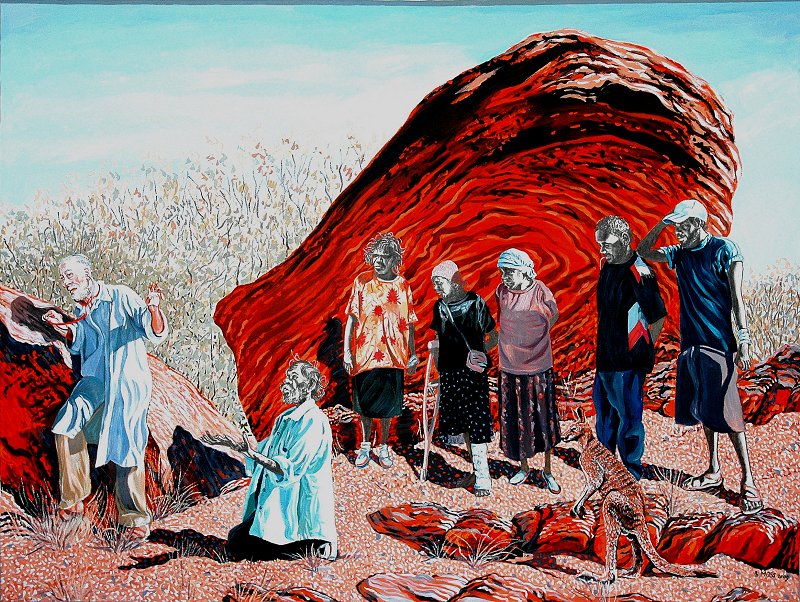
HG: I visited The Breakaway at Coober Pedy.
Brother: So?
HG: I stood there in that desert immensity. Silence. Vast emptiness. And the still soft voice that spoke without sound.
Brother: And God?
HG: I stood in creation and I knew the Creator.
Brother: Very nice. But unconvincing.
HG: I’m not trying to convince you. I’m searching on my own behalf. But I know you’ve stood in immensity and been overwhelmed.
Brother: When? Where?
HG: In Yosemite. At the foot of El Capitan. We stood there together, with Dad. The universe spoke to us all, no words, no sound, but a state of inspiration.
Brother: I didn’t see God there. Feeling overwhelmed, feeling uplifted like that, that’s not knowing. That’s something distinct from knowing.
HG: It is knowing, you just don’t recognise it. Let me tell you of your knowing that you don’t know to be knowing. Deep knowing, incontrovertible knowing, beyond argument, beyond doubt.
Brother: I’m all ears.
HG: When you listen to music, when you know its beauty is truth, when that knowing clinches in your being. Sometimes I know God like that.
Brother: You’re twisting again. You don’t now whether God exists. You’re an agnostic.
HG: You think you know that. Hold on to it as an article of faith if it helps you. But would you like to know why I pray when I’m in a non-knowing state?
Brother: Tell me.
HG: When faith eludes me, I pray to keep faith. I keep faith with Dad. I keep faith with his father, with all the fathers – and with the mothers – who’ve prayed.
Brother: Perhaps your prayers are a request to God to please be.
HG: If God exists, that is The Great Fact. I can’t think of anything more prudent than praying to cover that possibility. But that’s not why I do it. I do it because I love it. It’s the marriage of words to existence.
As my fingers hit the keys to write this, I imagine a reader shifting in her seat, adjusting, resuming a familiar position. If you squirmed a little on reading the title of this post, I guess the reason to be the word, the noun, the divisive name, Israel. When it comes to Israel everyone has a position. The position has been preformed, (too often prepackaged, bought cheaply off one shelf or another, marked respectively, ‘’Approve of Everything” and “Disapprove”.) ‘Israel’, the word itself, is derived from ‘struggle.’ The geography of the place, situated at the very crossroads of the ancient world, determines contest. The land sits plonked in a Valley that has seen every kind of Rift.
In my own way, I’m with you, squirmer; I too have opinions and sentiments. What follows is a list of happenings, little events. The reader can weave with these threads, as I do, the pattern of her choosing. I expect I might affront readers of every stripe.
While in Israel, travelling in the family caravanserai, a thirteen-year old grandson visited Yad Va’shem, the Holocaust Memorial in Jerusalem, an emotionally hazardous experience for anyone. This is especially true for a child equipped with limitless empathy and less resilience. At the exit the child noticed a black book into which a visitor might register a reaction to the experience: Saba, wait! I want to write something. ‘Writing something’ took some time. A head of dark curls bent over the page, the pencil moved slowly, words were crossed out and replaced as a person of action and quick movement, slowed, stilled and searched within. At last he was done. Saba, you can read it now, he said. I read the following:
On December 15 last year I celebrated my barmitzvah. But here, today, I became a man.
I dedicate this to the person who prepared me for my Barmitzvah.
While in Israel we ate at a beachfront meat restaurant. In Israel ‘Meat’ and ‘beachfront’ both signal ‘expensive’. I decided to choose something affordable; on the menu, Turkey Testicles caught my eye. Do turkeys actually have testes? – I wondered.
No reason why not, I realised. They’d be very small, surely, if all were to be in proportion. More likely than true gonads, the ‘testicles’ would be some oblate spheroid of other flesh, colourfully named. I ordered them.
The family chose the safe and familiar, all the time speculating colourfully on my choice. Grilled meats arrived at table, chicken portions, sausages, kebabs. No surprises, nothing scrotal. Finally, five spheroids of dun flesh arrived on a plate. These would be mine. Breaths were held as I raised my fork, cameras sought, found and aimed as I impaled the first and smallest. It tasted meaty, turkeyish. My teeth struggled for purchase as the nimble little nugget slipped to one side or another. Finally trapped between a couple of molars, the testis yielded and collapsed, releasing a thin fluid (ejaculate, perhaps?) which was not entirely repulsive. The texture? I couldn’t decide. So I ventured a second of the near-spheres. This was unambiguously unpleasant – not the taste but the texture, which was of offal and quite awful. My mouth grappled for gristle, or fibre, for something chewable, but tongue, teeth and gums found only a slippery Gollum of near-solid goop. I cannot really commend turkey testicle. But don’t let me put you off.
While in Israel we went down to the Dead Sea. (Here some exposition of terminology is helpful: from abroad, one goes up to the Holy Land; within the land one goes up to Jerusalem. A spiritual ascent is intended.) But from anywhere on the surface of the planet you go down; the Dead Sea is the lowest point on Earth. We went down.
Nature too goes down to this sea. The Jordan flows from the snows of Lebanon (the name means ‘whiteness’) southward, ever downward, passing through Earth’s many trauma sites – Sodom, Gomorrah, the Cities of the Plain, where fire fell and brimstone rained – down, down to a sunlit sea. The sea is mineral-rich, life-poor. It kills all. All excepting the credulous, who bring their diseases to its waters for the Cure.
With the Negev Desert hulking above you on the right, you follow a road that winds down and down: you have entered and you now descend that storied Rift Valley. Arid Geography from schooldays comes alive in the dramatic silence of that descent. Huge tumbled sandstone cliff-faces on your right fling the gazing eye ever upward. Rugged, broken, appearing ever ready to break open afresh, to swallow you up like the biblical Korach, those Negev steeps keep their menacing silence. In colour the stones of the Negev resemble turkey testes (vide supra), while in sound they resemble nothing at all, so annihilating their silence.
And all the time we whizz and plunge car-bound, so many frantic ants, as if retreating from some dull terror that has no name. All about, on every side, the heat presses down, time pushes down, the brief moment of human history is swamped utterly.
And then the Dead Sea appears below you on your left, its silvery waters silent too, but this the silence of the ineffable serene. You look and you sigh. There on the far side loom the hills of Jordan. Before you on the water, an image of those hills lies reflected. All is still. You, the watcher, feel yourself stilled, your being subsides, the world of cares recedes, quiet rapture consumes you.
Later, as the day begins to die, the waters begin to colour. Pale blue opal appears, giving way slowly, slowly to deepening pinks as the unrippling waters darken and turn metallic. Night falls and your sated soul fills with contentment. Now the moon rises, near-full, and the sea shimmers once more.
Up betimes while the hotel slept, I wandered down to the beach, seeking more glimmer and shimmer. But cloud had settled upon the Rift overnight. I sought sight of the sun that should have been rising above Jordan. The merest glow in the grey was all I saw. The world lay beneath a muted light, lovely beyond words. I wished for a camera and the skill to capture a captured sun. I wished for words I would never find for this moment of deep peace. Alone on the beach I recited the dawn prayers and gave thanks for peace and for beauty.
Had I prayed for a camera and a photographer to operate it I might have found what then materialised, a man and a woman, Nordic blond upon the sand. They too had drunk deep of peacefulness. We greeted each other. I said the sea and the sky and the quiet were beyond capture by word or camera. The man, Johann, produced a telephone and captured these images. Johann and his wife, Gro (pronounced ‘Grew’, Norwegian for ‘Grow!’) were old enough to know we three had stumbled into unwonted moments of gift. The gift bound us in a web of memory. Weeks later, with few words shed, I feel those enduring bonds. The man had photographed shanti.
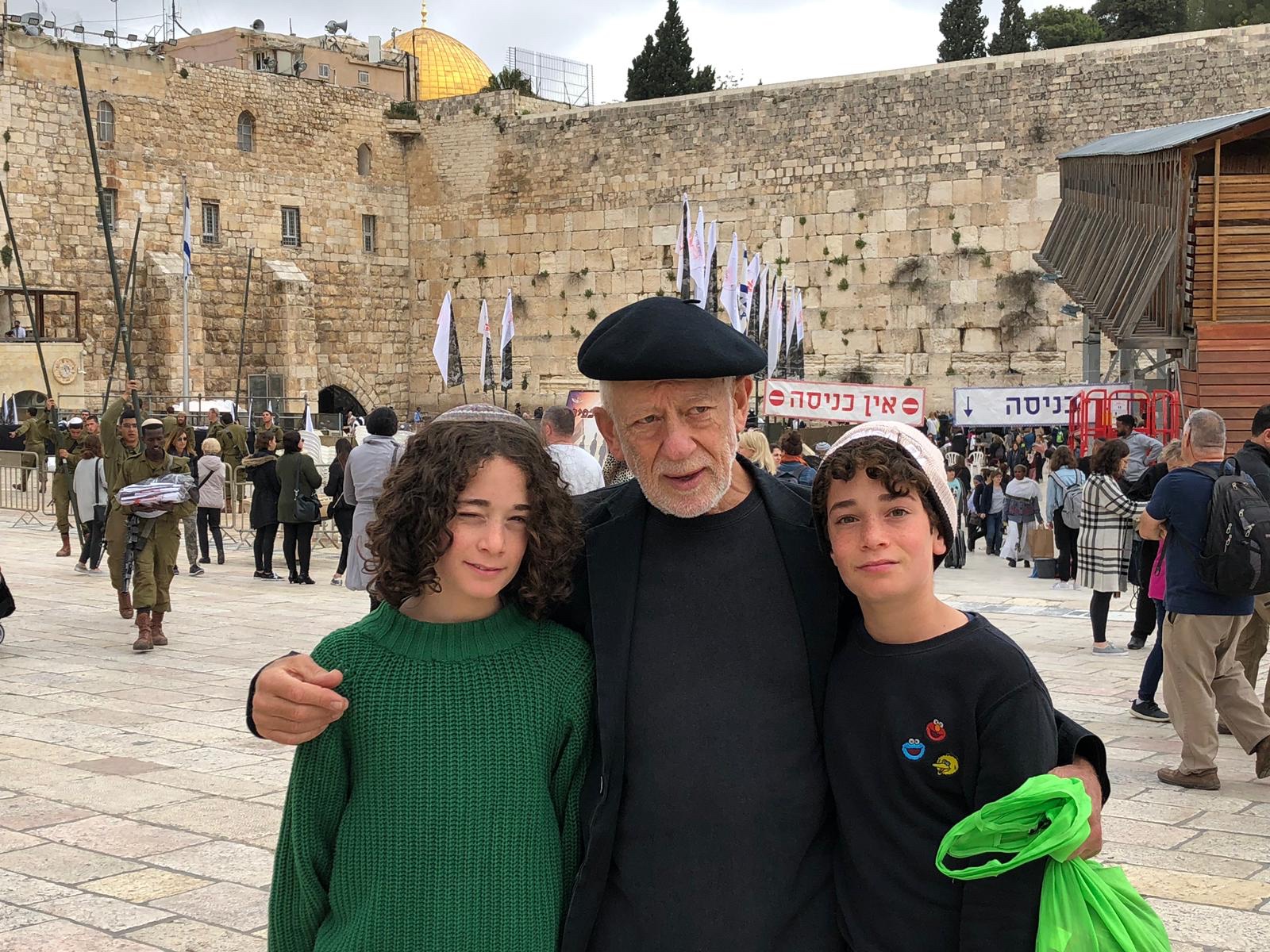
While in Israel we visited the Western Wall of the ancient Temple in Jerusalem. The Kotel, as it is known, is Jewry’s holiest site. You go up to the Kotel. Going up with me were our two recent barmitzvah graduates, a pair of happy philistines who seldom have troubled their Creator with prayer. (They don’t like to impose.) But on visiting this location the sense of occasion, of significance, falls upon all. Would the boys feel lost? I made a suggestion: There’s no fixed prayer. There’s nothing you have to say. Some say the she’ma, which is the first prayer you boys learned. Or you could think of your dearest, secret wish or feeling. You could say that at the Kotel.
We stood before the Wall, its huge stones creamy in the morning sun. There was room to stand a nose-length from the stones. Antiquity, the weather, and a million kisses have all opened small cracks between the stones. Here worshippers have written down personal prayers and squeezed them in, little letters to God. My eyes closed and I whispered to God what He must already know. The boys were not heard, not sensed. At length I opened my eyes. One boy stood close, bending, posting something in a minute gap. The other was nowhere.
In due course we came together and we blessed each other, the three of us. Later I found written in my notebook, the following fragment, prepared for posting in a crack:
Hey God.
Please try to manage hate, discrimination and sad…
‘Try to manage’ – a modest enough way to couch a heartfelt plea – but my heart lurched to think of ‘hate, discrimination and sad’ hurting one of my tender ones. Did he find a crack?
There is a crack/a crack in everything/that’s how the light gets in.
While in Israel, we visited the pavilion that honours the Anzacs at the charge of Beersheba. Here, British, Australian and New Zealand soldiers defeated the Turkish defenders of the strategic wells dug by my biblical ancestors the Patriarchs. The respective allied forces took distinct roles in the battle; it fell to Australian horsemen to attack Turkish gun emplacements on horseback in what is described as the last cavalry charge in history.
At the pavilion we bumped into an ocker individual called Colin, a volunteer guide to the place. Colin grew up in Melbourne and came up to Israel forty-five years ago. He’s older than I, taller than Goliath, rounder than Falstaff, utterly devoted to the place and its Australian heroes. He’s also rigorously honest and quite unwilling to gild any historic lilies in his narrative. He doesn’t need to. If you are Jewish or Australian, or if you’ve ever thrilled to the power of horseflesh at the gallop, I defy you to hear Colin’s account of the charge and to watch footage of the re-enactment and to emerge with dry eyes.
While in Israel my thirteen-year old twin grandsons and I accomplished in 45 minutes at Masada what took besieging Roman armies three years: we reached the top of this mesa on foot. The Snake Path takes its name from its serpentine coiling route up the rugged steeps from Dead Sea level. Only Ancient Romans and boys at puberty choose to make the climb on foot in that blazing desert. Others take the cable car.
While in Israel we visited a cousin whose incurable medical condition is so extremely rare most doctors have never heard of it. (I hadn’t.) Of the details of my cousin’s plight I have nothing to say here. Rather, it is of a community that so elevates the care of its disabled that I feel moved to write. I witnessed among Israelis a broad embrace. No-one is hidden away. In the synagogue, in the streets, at tourist sites, in all manner of public places, the ill-formed, the mentally ill, the amputee, the palsied, the intellectually deficient, alongside those extremely aged, ride their electric conveyances and live among their people. Tough Israelis, old and young, include their disabled with tenderness. I saw it on all sides and always I felt thankful and oddly humbled.
While in Israel, at the precise moment of our landing at Ben Gurion airport, the people learned of the results of their elections to the national parliament. We lugged and sweated our way through Immigration and emerged into the dazzle of Israel light. Our cab driver had no words for us; he was listening to the election news.
Mi nitzach (who won)? – I asked.
Bibi.
Our driver discharged himself of those two syllables – that were to comprise his entire conversation – without emphasis or feeling. It was a fact.
In Tel Aviv, on the beaches, in the streets and cafes, on the buses, neither excitement, nor surprise, nor exultation. I sensed a numbness, a resignation: Bibi had gained victory, but respect? Irrelevant question, it appeared.
(An aside, a quiz:
1. Who won five of the last six elections in Israel?
2. Who won five of the last six free, clean elections in the Middle East ?
Answers to 1 and 2: the same person)
While in Israel the New York Times cartoon appeared: Trump in a black yarmulke, led by dachshund–Netanyahu, wearing a Star of David. Oops, sorry, a mistake, said ‘The Times.’ Some readers were surprised, some shocked. I was one who felt both, personally, and deeply disturbed. A violence had occurred in my immediate vicinity; a newspaper like the ‘The Times’ is that territory of thought occupied by people of moderation, of contemplation, of liberal values.
The cartoonist pleads the absolute, inviolable sanctity of free speech. A week or so after ‘The Times’ published the cartoon, someone decided to attack a Jewish house of prayer and study in Poway, California. Only one fatality.
Barely seventy years have passed since the unspeakable. Few remember, fewer know. Memory does not prevent repetition. Where today does the Jew feel secure? As I write this news arrives of four hundred rockets fired from Gaza onto civilian targets in Israel. Illogically, in precisely that place where most attacks occur, a Jew feels safest. Ultimately there exists but one land where the Jew is not the stranger, not dispensible.
On an isolated beach south of Haifa I went running with a friend and colleague, an Israeli Paediatric Emergency Physician. Picking out a ragged path between clumps of ground cover I kept a sharp eye out for snakes. ‘Do you treat much snakebite in Israel? – I asked. ‘Not so much in the cities, but down south, around Beersheba, plenty.’
‘What species?’
‘Viper.’
‘What about scorpion bite?’
‘Plenty.’
I thought about our countries’ respective biters. Scorpion bite in the Australian outback is not common. I’ve not heard of any fatalities.
An old story came to mind; my friend had never heard it, so I told him: A frog was swimming in the Nile when a scorpion called to him from the bank.
A latecomer entered a mosque in Christchurch and he saw, among the larger human forms, a child.
The NZ Herald reported:
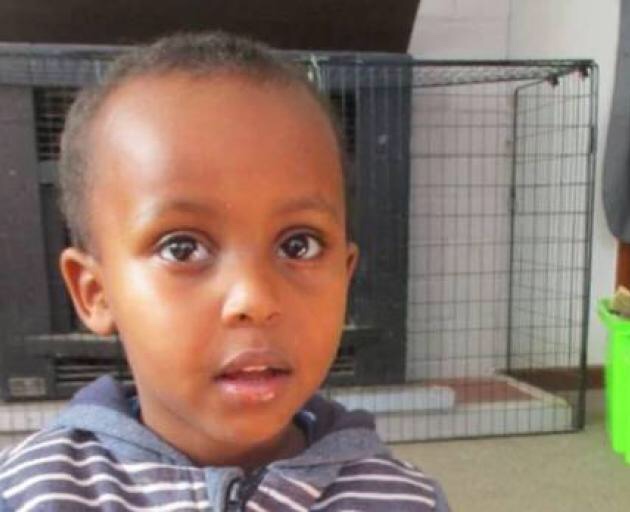
Mucad Ibrahim.
At just three years old, Mucad Ibrahim is thought to have been the youngest victim of the massacre.
The toddler had gone to the al Noor mosque with his father and older brother Abdi when the family were caught up in the deadly attack. Mucad was lost in the melee when the firing started, as Abdi fled for his life and his father pretended to be dead after being shot. The family searched in vain for the toddler at Christchurch Hospital and later posted a photograph of Mucad, smiling with Abdi, along with the caption: “Verily we belong to God and to Him we shall return”.
Rachid was the one I thought of first. I sent him a note.
Stunned with grief, Rachid, we reach out to you and to your family with love.
In the synagogue today, a great and heavy solemnity.
Someone offered a public prayer for “our cousins” in NZ.
It came to me as I stood and mourned I was glad my father was not alive to hear and know this.
How much more so, your father, the peace-loving Mufti .
Asalaam aleikum
Shalom
Rachid wrote back:
Thank you Goldy.
How true about how our fathers would have felt about this.
What a beautiful gesture from inside your synagogue.
Rachid.
I wondered whether Farooq’s parents knew of the attack.
Yes, my parents heard about it back in Iraq. They were upset.
I wondered, Aren’t they used to that sort of thing? Fifty killed – that wouldn’t be so rare, would it?
No. No, it’s not. Sometimes many more. Once six hundred died; a truck loaded with bombs drove into the Mall.
Three storeys collapsed. Six hundred – burned. But this, last Friday, we all feel upset.
I said quietly, I’m sorry. Everyone I know is sorry. We feel sad.
Farooq said, It helps.
The bloke on the phone, quoting on my car insurance, said: The premium would be sex hundred and sexty-two dollars…
I said, I’m sorry about the events in Christchurch. Everyone I talk to is staggered. In grief. We’re a nation shaking our heads.
The phone fell silent. A throat cleared, a voice followed, now hoarse: Excuse me. You caught me off guard. Hasn’t been easy being the chirpy salesperson these last few days… You know, we’re a close team here, we’re all nations, all creeds, one of us a Moslem.
He can’t work at present. We sent him home.
I sent a text to Waleed:I have nothing I can write, nothing adequate for the need. Nothing equal or useful or valuable
in any way beyond the human need to share the wound. To express my grief. I need my cousins to know I am with them.
Waleed replied:Thanks for sending it. The human need to share the wound is among the most important, most civilised needs we have. So that act of civility means an unbelievable amount. Thanks, cousin.
Speaking on TV, Waleed said:I know what the worshippers were doing in the moments before the attack. I know because I go to the mosque on a Friday. I know the prayers, the quiet, how far they were from this world, in the meditation, in the perfect quiet, in the peace inside the Mosque.
A mosque calledAl Noor –‘the candle, the light.’ So close to the Hebrew of my prayers. I thought of bodies bowed, of backs turned to an intruder, of those moments of innocence when the worshipper turns away from the world, turning inward in faith. As I entered my synagogue from the rear I saw anew how, in those sublime moments, we all are children, all undefended. In churches too, the faithful face forward, turning trusting backs to any entering latecomer.
***
Suddenly we all were Kiwis. Suddenly a change; we gasped, we shook our heads, we wept. We sawAl Noor,a light. Suddenly the Moslem was not the stranger.
Around 1980 I came across a supposed distinction between a runner and a jogger. A runner, I was pleased to learn, was one who could beat one kilometre every five minutes. At that stage I could run the 42.2 kilometres of the marathon at a rate just quicker than 5-minutes a kilometre, finishing in three-and-a half hours or less. To be classed as afastrunner, you had to beat forty minutes for the 10K. Over the next fifteen years I raced a dozen 10K’s, finishing always in 42 minutes and 23 seconds, precisely. I was consistently not fast.
Running not fast, I’ve barely outpaced packs of semi-wild dogs on hot dusty outback tracks; I’ve chased my childhood along the perimeters of Leeton, where I lived my halcyon seed time; I’ve outpaced skinny dogs in Old Havana and reproachful cats in Israel; I’ve skidded on the black ice in New York City and plodded through the silence of snow falling heavily about me in Mount Kisco and Pittsburgh; I’ve run past the legendary spud farmer Cliff Young, and side by side with the heroic Manny Karageorgiou, who never stopped for Death until Death stopped for him. I’ve trained at Olympic Park as Cathy Freeman whizzed past me. I’ve run in the Rockies with Rob DeCastella, in Alice Springs with Steve Monaghetti, and in NYC behind the gracious Juma Ikaanga. I know I’ve dogged the heels of greatness.
Running alone on the scorched desert floor beneath The Breakaways out of Coober Pedy, on the abrupt slope of The Gap at Balgo, climbing the Snake Track at Masada, in the darkness before dawn at Uluru, I’ve encountered my sole self, arriving – it seemed – but moments after the Creator completed the work.
In the dark of a starless night in midwinter, following a road in the hills of the Diamond Valley, my feet traced the sole marker of my way, the luminous white median line on the bitumen. No sound save for my footfalls and my breathing. No hum of motor, no bark of guard dog, no lowing of cattle; just me, the sharp intake of breath, the slap of my foot. In that world of black I shivered not for the cold but for desolation. Then – a sound? – impossible. But heard again, approaching me, low, rhythmic, utterly unaccountable, utterly real sounds. Hairs stood rigidly erect. Then a collision! My legs registered some mammalian presence as I leaped into the air. A thoroughly startled wombat, a speechless runner, silence restored.
The mother of my brother-in-law was a midget dynamo who’d survived Belsen. When I entered her orbit in the mid-70’s she reproved me for my waste of a life: “Marathon running is somehow disordered”, she said. She spoke with the moral authority of one who knew too much. I listened but I kept running. I considered her words as I ran marathons, some of them alongside my brother-in-law, her only child. I recalled the legend of Pheidipides of Marathon. I came to see my life as the marathon, a passage through time and space, blessed and made rich by encounters with those who make the passage with me, and before me, and who will jog on after I have passed.




 howardgoldenberg