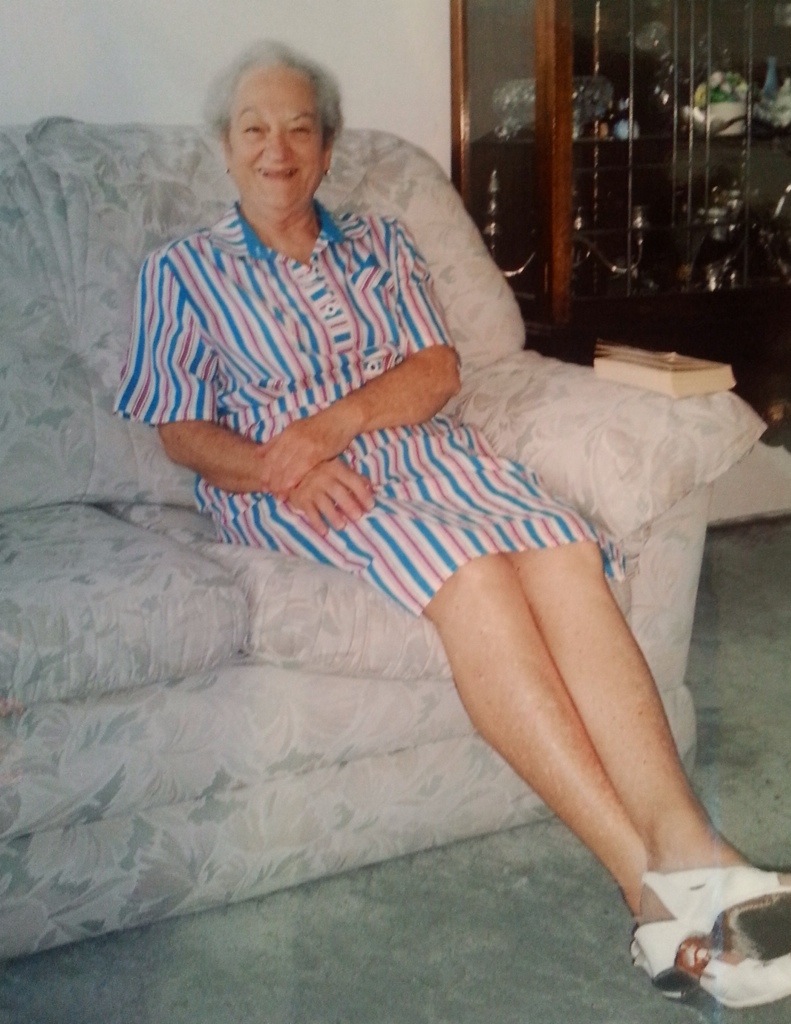
The Eve of the Eve of Yom Kippur

The house, emptied now of the insurrection that is a bunch of grandboys on school holidays, is quiet. These are the peaceful moments when the house exhales, the pulses slow and thought recovers.

Tonight is the night before the eve of Yom Kippur, the Jewish Day of Atonement, our Sorry Day. What am I sorry for? For what need I atone? Almost all my sins are those committed in words: I am sorry for the words shouted in anger at my grandrats, sorry for careless slights and unkind witticisms, sorry for speaking faster than my thinking.
And as this blog consists of words, I should search them.

I wrote (in How we Killed Leo) unkindly of Mister Scott Morrison. Elsewhere I have written uncharitably of Mr Shorten and Mr Abbott. All of these public people have private families who would feel wounded when writers such as I play the man instead of attacking the issue. I referred – wittily I felt – to our homegrown press baron as Murd. I should wash my mouth out. I am sorry for the hurt I have done those men and their families.

I remain sorry – and ashamed – that we Australians choose representatives who follow our baser instincts instead of those who might lead us and inspire our finer selves.

In the person of the successor in Sydney to Cardinal Pell, we might have found such a leader. On the morning after his accession the new archbishop spoke like one repentant for wrongs, transparent in confession, compassionate towards those hurt, and creative and courageous in his declared resolve to seek out his brother clerics in the Muslim community, ‘to find ways we can work together to heal our community’. This on the very morning we all read of the arrest of one Australian suspected of plotting to kidnap and behead another – any other – Australian.

A few weeks ago a Jewish democrat, tirelessly active in the struggle to improve our policies towards refugees, shared with me a bright new idea. “Howard,” he said, “Instead of attacking politicians I want to mobilise members and leaders of all of Australia’s faith communities to work together with government to create some softer policies that will be less cruel in their effects on those already here and kept in limbo.” Many, many are the Australians who wish our practices were not so harsh. Many are ashamed. Many have raised voices – as I have – in rancour. What I heard now was the echo of the quiet wisdom of Petro Georgiou, former Member for Kooyong, the man who spoke softly to a hard-faced Prime Minister and brought some humanity into policy.

As the prophet said, “Come, let us reason together.”

Aunty Pearly’s Sorry Business

I think many families have an aunty who is not really an aunt. That sort of aunt, usually a contemporary of a parent, is a person treasured across generations. You inherit that sort of aunty.

For many of my Jewish school friends in the fifties and sixties that was the only sort of aunt and uncle they knew: their parents’ blood siblings had perished in the gas chambers. Afterwards, close contemporaries were clutched and held closer, people who shared the stories and the memories.

The auntness of Pearly wasn’t woven of that tragic weft. Pearly was the sister of the wife of my father’s brother Abe. The earliest encounter I recall with Aunty Pearly occurred on a winter’s evening at the start of half a year of exile from my home and family. My older brother Dennis and I were to board with Aunty Clare and Uncle Abe in Melbourne, while Dad sold his medical practice in Leeton, our hometown. Transactions of that type take a long time.

The evening was erev shabbat, Sabbath eve, that fulcrum in the week that still finds me emotionally suggestible. The sun set and sank, and with it my mood.

While I enjoyed a period of self-pity – always the sincerest of emotions – our cousins Ruth and Carmel spoke elatedly: “Aunty Pearly’s coming for Shabbat. She always gives us a whole Vanilla Nougat or a Cherry Ripe. Each!

I didn’t know Aunty Pearly. She wouldn’t know me. Vanilla and Cherry and Pearly would be strangers to me. My sincerity deepened.


A knock at the door, a scamper of cousins, gleeful ‘thank you’s, and a deepish womanly voice called: “Where’s Dennis? Where’s Howard?”

Down the short hallway the voice approached, a bulky figure loomed, a smell of perfume, a slash of lipstick, and we were hoisted, one after the other, up into the soft valley between two mountainous breasts. Pearly handed me a Violet Crumble Bar. To Dennis she gave a Vanilla Nougat.

Somehow this stranger knew me, liked me, perhaps even loved me. In that instant I loved Aunty Pearly and the feeling never changed.


When Pearly’s real nephew – a blood nephew – called me early on a Sunday morning sixty years later, his slow agricultural voice had slowed further. “Aunty Pearly just passed away. The funeral will be tomorrow.” The day of Pearly’s passing was filled with celebrations at far ends of a widening clan: there was a Barmitzvah to attend of the grandson of my wife’s cousin and the wedding of the son of my first cousin. Such mixing of significant life moments!


Next day a wintry afternoon found us in a garden burial ground. In this light the grass took on a deeper shade. Black clothing against the green brought a sombre richness.

A crowd, many, many scores of people, gathered. Although some of the names eluded us we all knew each other’s faces from generations of family events. This was a gathering of the many from the fringes of a number of intermarrying clans. Pearlie was one of seven siblings. All of her siblings married and multiplied. Pearlie alone never married: she’d smile and call herself an unclaimed treasure. She treasured her siblings’ children and grandchildren, and their spouses, a growing multitude. But there were non-bloods there as well, numerous as her true kin. Pearlie gathered the young in her wake and we followed her, long after our own youth had gone, to her end. Everywhere eyes shone while mouths smiled, people cradled each other, faces looked serious but not in grief; for aunty Pearly died at the right time – before her dementia could ruin her, her slow cancer suddenly accelerated and she was gone.


Aunty Pearlie led a religious life. Her sacred places were the MCG and the Melbourne Synagogue. She never wavered from the worship of her idols at the Melbourne Football Club. But today it was the curate from her synagogue who led the ceremonies. It was a sweet moment when the young man – no relation to Pearlie or to anyone present – called her “Aunty Pearlie” as we all had. He was another honorary nephew, full of affectionate personal reminiscence. Pearlie’s life of faith ensured she would not be buried by a stranger.


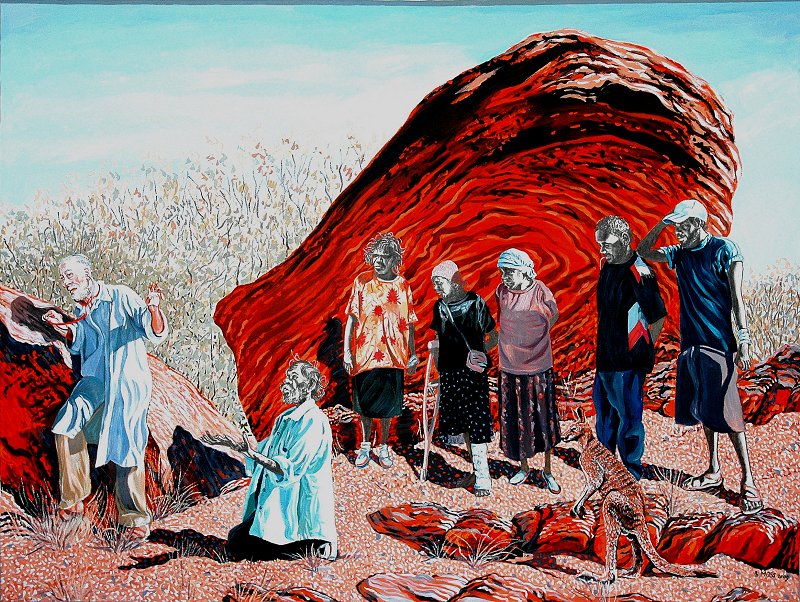
In Aboriginal communities a burial takes place after indeterminate delay long enough for families to scrape the money together for a funeral. Then follows a further chapter of mourning where people gather from across a life history, from across a continent, for the Sorry Business.

Jews are buried with all decent haste. Then our own Sorry Business follows, the precisely calibrated period of shiva when first degree relatives sit low to the floor and receive condolence from their community. But Aunty Pearlie had neither spouse nor children to sit in her honour. Instead we gathered the next two evenings for successive memorial services at her synagogue. Same crowd as at the garden funeral, swollen now, and at a different venue. The Melbourne Synagogue is grand, cavernous, dripping with history, but too often attended by too few. A beautiful shell, the Shule waited for throngs that rarely came. But Aunty Pearlie came, Shabbat after Shabbat, at festival times, at all seasons. Over nearly seven decades she befriended each new rabbi, kept him company in his inevitable disillusion, saw him leave and welcomed and supported his highhoping successor. In this manner Aunty Pearlie outlasted seven Rabbis.


In the course of the Sorry Business I learned more of Pearlie’s growing up in Brisbane, of her service in WWII, of her friendships there with many women and men including a young Zelman Cowen. Pearlie seems to have won and kept many devoted friends.


Poignantly, one who resided so deeply in so many affectionate bosoms left no son to recite the mourning prayer Kaddish for her. Anxiously, I waited to see who might step forward and assume the mantle of the sons who never were. An aged brother in law, still erect, together with his not young son, and a couple of his not young cousins, all recited it together. One or two, more fluent in the Aramaic, led the others as they hobbled and stumbled in and out of time with each other. The four men freighted the feeling and the yearning of us hundreds, all of Aunty Pearly’s “young ones”, all of us wanting hard for her to be sung and storied, lamented and remembered, celebrated in this her holy place. Hundreds of us, all with our personal memories of some moment like mine with a Violet Crumble Bar when I was a child missing a mother’s love.
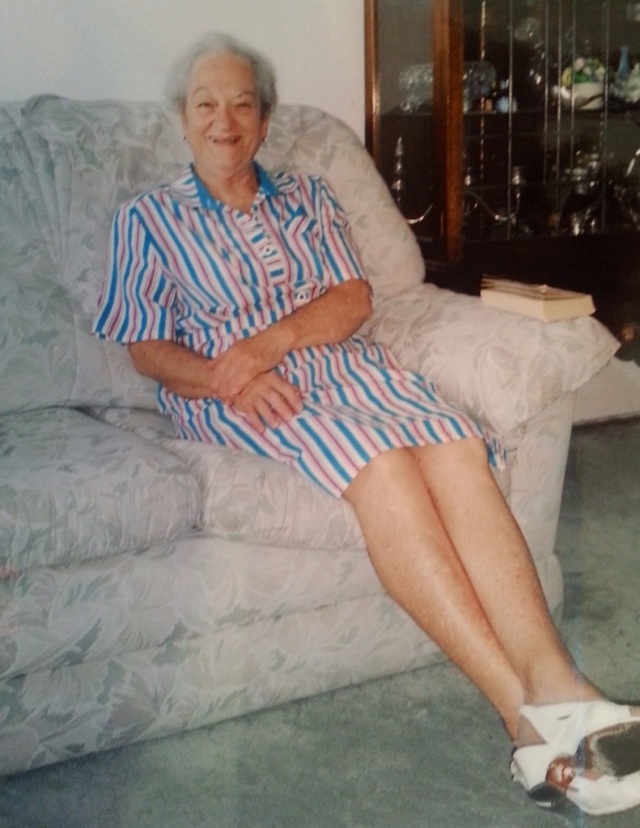
 

20140616-064031-24031367.jpg

Do You Believe?

Do you believe in the theory of evolution?

Do you believe in man-made climate change?

Do you believe in creation science?

Each of these claims the status of scientific respectability.

At the risk of hurting your feelings, I suggest that belief in the first is scientifically unsound. Likewise, if you believe in man-made climate change, your belief is unscientific. So too with creation science.

How can they all be wrong?

I didn’t suggest that any of them is “wrong”. What is wrong is believing in the truth of any scientific theory. A theory is never proved correct: we can never hold firm to scientific truth. We can demonstrate only that the data to hand are consistent with a given theory. Tomorrow’s datum can – and generally will – force us to modify our theory – or to ditch it. Kepler, my hero in science, loved his perfect model of a geometric planetary system, a truly beautiful, enormously intricate offering to his God. It was a Ptolemaic system in which everything orbited the earth. Kepler heard that Tycho de Brahe had a better telescope than his own, so he went off to Bohemia to check out his observations using Tycho’s ‘scope. He noted minor discrepancies. He checked and rechecked. And ditched his own observations, ditched his own theory, discarded his life’s work and started again.

I learned and embraced and soon loved Newtonian physics in high school. I still love it. But Einstein and Heisenberg damaged Newton at the edges, so, with an intellectual courage that I can only call Keplerian, I ditched Newton. As a belief.

I went to school with a remarkable classmate called Robert. It was in sixth grade that Robert wrote an essay on the nature of knowledge, the need for scepticism and the matter of knowing. Our teacher honoured the essay. He asked Robert to read it aloud. I remember still its final lines. Verbatim they ran: I suggest there is no such thing as ‘believe’; there is either proof or there is not; either you know or you do not. Robert was the Galileo of Sixth Grade.

Recently my younger brother, assuming that I claim to be both a practising Jew and a scientist, challenged me: Does God exist – yes or no?

I said I could not answer in those terms.

You’re an Agnostic then.

I said I would never claim such a lofty status.

So you’re a smart arse and an Agnostic. 

I suggested I could have constant faith with inconstant belief.

That sort of faith is just wishfulness. 

I told him science didn’t provide me with a reliable answer to his initial question. It couldn’t.

So, why worship when you can’t even say you believe?

I asked him to consider music: I could listen to music and experience a knowing that eluded proving, that rose above and beyond science, that transcended measurement and observation. In similar vein, moments of knowing come to me – sometimes in the depth of the poetry of prayer, at other times simply as a lone human in a vast landscape.

That’s not knowing. That’s just romantic love.

Precisely. And speaking of love – it is in some similar way I know I love my wife, and I know I love my kids (yes, all of them), and my grandchildren too… and the Collingwood Football Club…

I build my life upon some values – that kindness is better than cruelty, that justice must be pursued, that freedom and equality are human rights. I cannot prove these values to be valid – indeed, in some cases they show signs of Darwinian invalidity. The more valid my sort of moralism, the less firmly it can attach itself to scientific evidence. My moral life, with the lives of all non-machiavellians, is built upon those unshifting sands.

But all that knowing, that value system, all that is distinct from proof.

Do you believe in God?

Do you believe in fairies?

Do you believe in Santa?

Do you believe in naturopathy? 

Do you believe in scientology?

We are entitled to believe but science won’t take us there. In these matters our knowing must be made of different stuff. And our knowings will often attach themselves to strong feelings of identity, feelings that are passionate in intensity. That is part of the reason that you only raise climate science at a dinner party if you are prepared to wreck the evening. After I have done that my wife rises from the table, apologises for my rudeness and takes me home. Works every time.