The District Medical Officer’s Logbook


Hg is a district medical officer in remote australia

The DMO takes phone calls from the remotest places in Australia

The cases he describes are typical and fictional. And true:

2100 hours – a large man screaming in pain from his twisted testis.

2105 – given morphine intravenously

2110 – still screaming; more morphine

2115 – in agony; crying; more morph

2118 – no better; given a fourth dose; settles; given an oral opiate for continued effect

2120 -2150 – called Flying Doctor, arranged retrieval to the Base Hospital, briefed Flight Nurse, briefed Emergency Dept at the hospital.

Plane will take off at 2235, pick up patient at 2355, ETA at hospital 0045 hours. He has six times the normal dose of opiate aboard his large body. He will undergo urgent ultrasound to confirm the diagnosis. If confirmed surgery will follow to save the testis.

Meanwhile the phone has not cooled in the DMO’s hand:

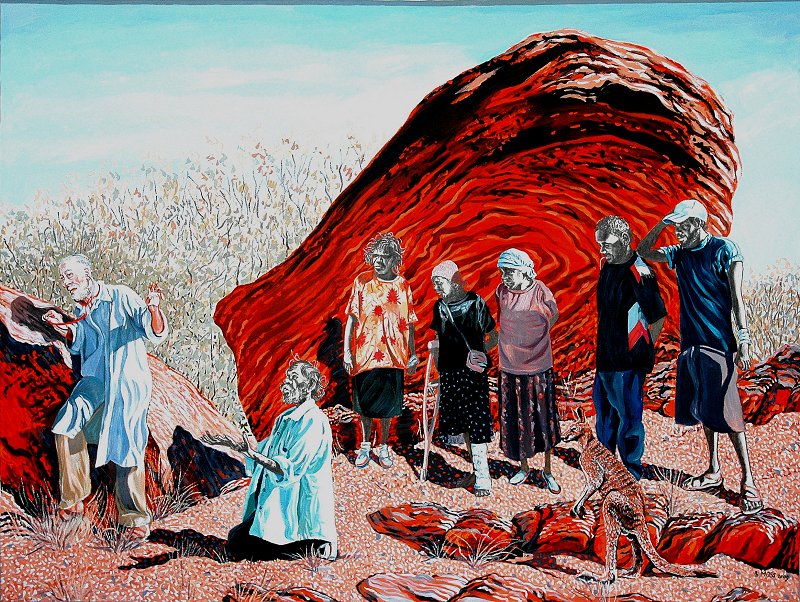
2107 hours – a doctor in an Aboriginal community some 2 flying hours away calls seeking retrieval of a 79 year old Aboriginal man, normally active, sociable, a traditional healer, a man of high degree who has suddenly fallen ill. His urine tests positive for infection and his high fever and racing heart and falling blood pressure register a likely septicaemia.

Air retrieval is urgent. DMO makes a further six phone calls to the parties to this retrieval. The plane will not arrive for a further three hours, leaving the remote nurse and the remote doctor with a failing treasure.

2204 – A triple zero call to the ambulance alerts all services to a rollover 20 kilometres from the nearest settlement, about 130 kms from the Base Hospital. Two grey nomads have hit their heads and walked away from the wrecked vehicle. They will be treated as fractured necks until a CT scan proves otherwise: a vehicle that overturns while travelling at 100 kph belts a neck with sudden brutality. Persons walking away from the car might never walk again.

2224 – An unconfirmed and unclear report of a third person trapped in the wreckage. Ambulances set out from the small community driven by remote nurses who handle everything from births to deaths to attempted hangings. None of those tonight, thankfully. So far.

2241 – Six hundred kms distant from the septicaemic old man another goes down with a similar illness. This man, aged sixty, looks eighty. We send a plane, knowing that the flight will not commence until 0300. Aviation hazard statistics show that risk is highest after 3.00 am. This retrieval will end at some time from 0600 to 0800, when the crew will be at their lowest ebb. More phone calls – at least six per evacuation, sometimes as many as twenty.

The DMO’s shoulders and neck tighten during the 13 hours of the night shift. The bladder calls but calls in vain.

2300 – a baby has bronchiolitis, needs oxygen, is supported capably in a clinic 350 kms from the nearest hospital. The planes are both out. Two nurses pack up babe, mother and all their gear into the ambulance and commence the 8-9 hour return trip. The nurses will be on call tomorrow night too.

2340 – a bloke has a headache. His head has ached for the last six days, ever since the rock chucked at him hit him on the head. He looks well enough, his vital signs are alright, but who knows which little artery bleeds quietly away, building, building a pressure on the brain that might bring a stop to respiration?

The DMO arranges this man’s evacuation for first thing in the morning. Meanwhile the man sleeps. He will probably wake up. The plane that retrieves him will also bring the station hand whose ovaries, tubes and womb are on fire with the infection that her man gave her before abandoning her 15 months ago.

Midnight and the calls come less frequently. The DMO climbs onto the couch by his desk and waits for oblivion. He yawns great, jawcracking yawns. He falls asleep. The phone rings at 0040: the nurse in the most remote community calls about a woman whose labour has started. The baby was expected in 13 days. Mother-to-be is nineteen and this is her first baby. Her English is poor, she is shy – or scared mute. The nurse – “I am not a midwife, doctor” – reckons the contractions are infrequent and brief. The waters have not broken. There is no blood. There will be no aircraft until 0930 at the earliest. The non-midwife will be alone in a room with a ticking womb through the remainder of this long night. Telephone calls proliferate – from DMO to obstetrician , to RFDS, to Emergency Department, to the flight nurse, and – repeatedly – to the solitary nurse in the clinic in Deepest Woop-Woop. Drugs are ordered to halt labour. Observations are taken, reported, discussed: Nessun Dorma.

The DMO keeps notes, trying to enter them in real time into the computer whose softwear has an inbuilt stuttering tendency, suddenly freezing in mid-sentence, then as abruptly thawing. From time to time the computer does its programmed unbooting. The DMO is old, computers are new and the NBN cannot come fast enough. The DMO swears a lot at the softwear while reserving the most supportive and encouraging words for his allies, the nurses, with their patients in their far and lonely posts.

The labouring lady sleeps. The non-midwife checks an inscrutable belly for contractions, peeks furtively at a pad for liquor or blood, listens to the baby’s heartbeat, monitors blood pressure,

The DMO wants to sleep. He lies down, looks balefully at the phone – silent for now – and delivers a little speech to himself: The phone will ring. It will wake me. That’s what I signed up for. That’s my job – no phone, no job. Don’t complain. The DMO finds this speech inspiring: he will fight on the beaches, he will fight in the streets, he will never, never… The phone rings. It is the flight nurse, reporting on the safe arrival of the old seer with sepsis. She needs the current observations on the second bloke. More telephony. More self-conversations about sleep, work, the meaning of life.

0350 – the ambulance service rings. A triple zero call has come in of a man, raging, threatening harm to himself and to others. The call came from a clinic 80 kms distant. The caller says the patient lives in House No. 174. Police have been called.

The DMO calls the clinic in that community, disturbs the sleep of a nurse who must go out into the dark to find a patient who hasn’t called her and who is quite unpredictable. DMO enlists her help but commands her to keep her distance until the Police arrive. Once she can safely assess the patient she is to call back and the DMO will face the mutually demeaning task of certifying another human insane. The nurse goes out into the cold – it is minus two centigrade. In the event she searches with the Police, fruitlessly. The harmer is not found.

0600 – the DMO briefs the flight nurse on the first of the day shift aircraft. Before this he answers phone calls from nurses supplying the latest observations and reports on their charges.

It is 0635. The shift will end at 0800 – give or take the handover to the day shift DMO, and the paperwork, and the catch-up note-keeping on the flukey computer.

The DMO decides to make a cuppa. Night will soon be over.
“Slip me a Mickey”

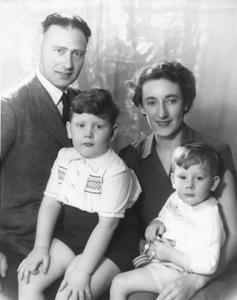
Mum is about sixty. She speaks with her doctor son, aged thirty. He’s still a bit wet behind his medical ears.

Mum: One of these days I’ll have stroke darling…

Son, provoked: How can you know that, Mum? I’m a doctor and I’m not able to predict that. You can’t know you’ll have a stroke.

Mum: Well, I do have high blood pressure and my cholesterol is high. Those are the factors. Anyway, when I do, I want you to slip me a Mickey.

Son: You mean kill you? No! I won’t.

Mum: Alright, darling.

Son, contrite: Look Mum, if you do have a stroke, I’ll come and visit you every day. I’ll read every word of Dickens to you. And after that, I’ll read all of Shakespeare to you.

Mum: Thank you darling. That would be nice.


Son, six months later: Mum, remember how you asked me to knock you off if you had a stroke? Would you still want me to do that?

Mum: No, certainly not.

Son, triumphant: You see Mum, if you’d had a stroke, I’d have killed you – and you wouldn’t have wanted to be dead.

Mum: No, darling – I’d have been dead and happy, and you’d be alive and feeling guilty.


Fifteen years pass. Mum goes to see the Australian Ballet and suffers a mini-stroke. Her doctor – a specialist, not her son – starts her on aspirin. She suffers a cerebral thrombosis, a full sized stroke. Her hand is weakened and her memory is patchy. Her specialist decides she needs warfarin – rat poison – to thin her blood. After watching ”In the Name of the Father” with her doctor son she vomits suddenly. Son helps her to her feet, but she falls, a dead weight. Her son and her daughter in law heave and drag her to the car. They drive to hospital.

Mum’s blood has become so thin she’s suffered a cerebral haemorrhage. Her specialist doubts she will recover consciousness. She does so. While she remains in her coma someone in the hospital relieves her of her engagement ring. She never sees it again.

Mum wakes up. Half her hindbrain is demolished and with it her balance and her ability to walk. Her champagne voice loses its sparkle. She speaks huskily now, coughing often, searching for sounds to carry her meanings.

She says to her doctor son: I reckon the next stroke will get me.

What do you mean?

It will see me out. Dead.

Son, not irritably: I don’t know, Mum. How can anyone know?

Mum: I’ve had two strokes now. Isn’t that what they say – ‘three strokes and you’re out’?

The son laughs. The old lady laughs too. A stroke is a nuisance – “boring” is her word for it – but time spent with any of her children is recompense.

Belatedly the son recalls his promise – Dickens! Shakespeare! Mum, remember I promised to read novels and plays to you?

Did you darling?

I did promise, but I never came good.

Never mind, darling.
She squeezes his hand with her own – the one that still works.

The son launches into reminiscences of the time, more than thirty years distant, when they lived in the country. His stories bring back the days when her young body obeyed her quick mind, when it was she who nurtured the stumbling child. He finishes his vignette. The mother smiles, squeezes his hand again and thanks him: That was lovely darling.

Son: You know what, Mum? I’ve got lots of stories from those times. How would you like it if I were to write them all down and read them to you?

Mum: I’d love that darling.

He starts to write the stories. He supplies them to Mum and to her oldest friend from those days. The two old ladies feast their tear glands on the stories.


Mum needs a helper now to shower herself. Sometimes the helper takes leave and bathing her falls to a son, the oldest one, not the doctor.

Mum: Isn’t this awful for you, darling? Bathing an old wreck?

Eldest son: When I soap your back, I remember with my skin how you soaped me. It’s a return, a coming home. I bless myself for the privilege.


The stairs in her old home are beyond Mum. The doctor son and his grown son carry her up and down on wrist-linked hands. Mum asks: Don’t you boys want to euthanase me?

Son: At last I can do something for you in return for carrying me all my life.


Mum and Dad settle into their new single storey home. After a time, the doctor son asks: Mum, do you remember a conversation many years ago? You wanted me to give you a fatal overdose of a sedative if you ever suffered a stroke. Now that you’ve suffered a few of them, do you still feel the same?

Oh no, dear. Certainly not. Do you know why?

Her emphasis makes her wheeze and cough.

Son waits for the squall to pass: No Mum. Why?

Mum: I thought if I suffered a stroke I’d be handicapped; and I was right. And if I was handicapped, I’d lose my independence; and I was right. I thought if I lost my independence I’d be a burden; and I was wrong.

A pause.

You know – I’ve never been happier in my life.

He stares at his mother.

Mum: And the reason is I am surrounded by people who love me.


20130604-204052.jpg

The Birth and Premature Death of a Literary Genre

About fifteen years ago I created a distinct literary genre, which, to the best of my knowledge, remains mine alone. No imitators have leapt into print in flattery of my bold success. The genre is that of the rhyming clinical letter.

In the course of my work as a general practitioner it frequently falls to me to write letters of referral to colleagues. This task awakens the creative impulse. Imagine a patient named Giles. Imagine the poor man suffering from a painful swelling in or around the anus that extinguishes the quotidian joys of defaecation.

The referral letter ought to inform and entertain the recipient and embody the cardinal* virtue of empathy. It might read as follows:

Dear John**/Julia**,

imagine the grief of poor giles –

not for him the lavatory smiles,

nor for him excretory joy

as he strains

with pains,

poor afflicted boy

and what can ail this knight at arms

alone and palely toiletting?

the sedge is withered on the lake

and no birds sing

for giles is sore in his ring

perusal of his fundament reveals

a bunch of grapes.

imagine how the poor man squeals

like a bunch of barbary apes

sitting down to canapes

i know dear john/dear julia

surgeons care not for poetic wiles:

so i’ll be brief, i will not fool ya’

giles poor boy, suffers from piles

So far so brilliant. And so obscure: the creative writer can never publish the rhyming referral for fear of violating the confidentiality of the patient.

So it is that for fifteen years I have strained my muse in the service of the ill and the illiterate.

The birth and the flowering of a special genre, the eruption into the clinical arena of lofty thought and sublime expression. A covert cultural revolution.

Farewell, a long farewell, to all this greatness.

It so fell that one such referral that described the distressing cyst-making propensity of a patient in the following

terms:

Jules*** creates full many a cyst

Jules*** is thus much offpyst…

This elegant epistle found its way to the specialist’s office, where an officious secretary took it upon herself to read it. The lady bridled, telephoned the practice of the referring GP and registered her strong objection.

We poets might describe the secretary as much offpyst.

The GP was urged to resist the poetic urge and to desist.

And so he does.

High Art, Great Literature, the World of Letters are of course much the poorer. Sic transit gloria ****

* this virtue should ring a pell

**john and **julia are names created for my fictive purpose;

i declare that there is no resemblance between these imagined names and any real person or (in the case of any surgeon you might know) of any half-real person.

*** giles is not the true name of the lady in question

**** gloria is not the name of any real lady

Dedicated to edward john anstee, robin hood with a scalpel.

Broaden the Intervention?

I am working in my general practice in the CBD when the phone rings. The receptionist’s voice is urgent: Howard, there’s a man collapsed outside on the street. Can you go?

I can. Grabbing a few tools, I race out into the street where a small crowd is gathering around a man in a suit. He lies flat on his back on the footpath outside the bookshop. Behind his head is a cylindrical object in a brown paper bag. Liquor leaks through the brown paper.

The man lies hard against the foot of a large window displaying the cream of our written culture. The man would have leaned against the window for support, fallen and stayed where he fell.

The man lies, motionless. The authority of my stethoscope opens a space for me between spectators, ambulance callers, vociferous suggesters, silent gawkers, head cradlers. The stethoscope reassures, the suggesters fall silent.

The man we all regard, the man we all fear, does not respond to questions. Nor to deep pressure of my thumb against his forehead. He lies insensible in Martin Place, grunting his shallow breaths, creased face purpled and puffy, grey hair, grey suit awry. Beneath my finger a thin pulse beats, fast and feeble.

His breath is a brewery. The wrist in my hand is criss-crossed with ancient slash marks, white against ashen skin.

It is 10.00 a.m.

This is a human person of my age, nameless to us, nameless to himself, his being reduced by alcohol and secret griefs.

The ambulance arrives and I go back inside.

*** Continue reading