Where Innocence Died

I wandered down to Bondi Beach, having no particular plan. Arrived in Sydney for a quite different purpose, long-planned – to celebrate a birthday – I felt myself drawn now to the fatal site. Once there, I found flowers in heaps, tributes and cards. There were candles in clusters. A Hannukah candelabrum stood before the Pavilion. Families were there, some clearly Jewish, many more of them miscellaneously human. 


I fell into step with a Jewish youth wearing Chabad costume. His congregation lost a rabbi last Sunday, a young father. I asked the youth, Whattefillah* do we say?

Say what your heart prompts you to say.

We exchanged names: Levi

Zvi Yehonasan.


I wandered on. Here were two young women wearing tunics emblazoned, MENTAL HEALTH. I paused by the tributes, bowing to read, The World Rests on Three Things, on Truth, on Justice and on Peace. This was pencilled and illustrated in a child’s hand. I wept, sobbed actually, rocking as I cried, undone by innocence. I felt the close presence of someone. It was Mental Health in the person of a young Chinese woman, proffering a Kleenex. I said, Weneed to believe people are good. She said, We do. At our side a colourful sign read, Celebrate Waverley.


I wandered on. Here was the footbridge.Over the past four decades I’ve jogged across this little bridge many times as I completed a run. Last Sunday evening two figures in black used the bridge. This morning I looked at that familiar little landmark with new eyes. I bethought myself of the Arch of Titus in Rome. Graved into the stones of that arch are images of Judaean slaves, taken captive in the sack of Jerusalem in the year 70CE. They carry holy objects, trophies of destruction. Among them is the great candelabrum of the Temple in Jerusalem. An arch of triumph for ancient Romans, it has ever stung Jewish eyes. Traditionally Jewish people make a point of not walking beneath Titus’ Arch. Today I detoured around the Bondi footbridge and took a long cut. 


Police were everywhere to be seen this morning. Police cars were positioned to limit vehicular access to the site. Insteadpeople walked freely, streaming from all sides, down towards the memorials. Young people walked, drained of gaiety. Children too, somehow solemn in the general pall.


Down by the candelabrum, a trio of women in uniform garb. I think they were nuns in summer garb. Here, a younger man, tall and well made, formally dressed in a grey suit in the bright sunlight, stooped to listen gravely to someone explaining, pointing, what happened just here, what just there. The man bowed and took his leave. I guess he was a politician.


Here was an aged lady, lipsticked, dressed colourfully, her face deeply wrinkled. She seemed old enough to recall the War. She was deep in conversation with a younger person. She looked through her companion, her gaze fixed on some other place, some other time. I fancied she might be a survivor of similar attacks. She appeared oblivious of the person filming her.


Photographers and news crew everywhere, today uncharacteristically decorous. Trying to orient myself, I approached a young police officer. Diffident, reluctant to distract him, I asked which directions were the shooters aiming. He listened, conferred with a fellow officer and gave me answer with a most tender seriousness, as if I myself were among the wounded and must be gentled. I thanked the officer, turning away with my tears. Undone again, by kindness. 


I took my meandering leave. I was struck suddenly by what was not at the site. Hundreds and hundreds were there, in all ages and conditions. But missing was haste. Absent from here was noise. Hedonist Bondi, transformed into a secular place of sanctity.


I left the place and wandered on, up the hill. The sun bathed the scene. Sydney balmed, just as it was around 6.30 pm last Sunday. I walked on, asking myself whether people were in fact good. Down the hill, in an endless stream, came people bearing flowers. This family carried two large bunches, florist-wrapped. This teenage girl carried but three large roses, home-picked. 


At the top of a long hill I rested in the shade. A man approached with a dog, which he secured by a lead to a post. A dog of middle size, his coat a golden bronze, he turned and watched his master enter the adjacent fruit shop. Wondering whether a dog experiences wistfulness, I made way for a boy just a little larger than the dog, walking with Grandma. The boy sighted the dog, left Grandma’s side, and trotted over to the dog. The child rubbed the creature’s neck and fondled his ears. He bent far forward until his brow rested on the dog’s. For a short interval, the two were a single organism.

Then the boy trotted on and caught up with Grannie.


*tefillah is Hebrew for prayer.

A Man Died Today

Kylie says Ernie died.

Her face is tight, closed. She was Ernie’s only friend.


Ernie

Ernie was a sad person. He saw doctors and they prescribed tablets for his sadness. He said he felt a bit better on the tablets, and then said he was worse. He stopped the tablets.


Ernie lived alone. I visited him once in his rented house. His dogs greeted me. I found Ernie in his dark bedroom, in bed, blinds drawn, in mid-afternoon. He said he wasn’t crook. Nothing to get up for, he said. Only the dogs.


Kylie said he was paying $350 a week in rent for the mean little house on a back road in the country. She reckoned Ernie was past caring.


One time Ernie spoke a little of his childhood. Dad abused him violently. Mum didn’t care. After a couple of short sentences, his old face hanged from his neck, wordless, wrought with injury remembered. 


Doctors encouraged him to join Men’s Shed. He wasn’t interested. The visiting nurse was worried. He didn’t answer calls, he’d be grouchy. Then he became confused. No, he wouldn’t go into the local hospital. His dogs would pine.


The day came when he couldn’t speak. His mouth couldn’t make words. He found himself on the ground in his yard, with no memory of going outside. The dogs licked him into awareness.


He was taken to the big hospital two hours distant, where doctors found him recovered from a mini-stroke. They told him to go home. Unable to drive, alone, at night in winter, he lay down on the floor of the hospital’s unheated waiting room. Kylie called to check on him, then drove to the big town and brought him home.


From time to time I’d sight Ernie talking with Kylie. She’d sit quietly, leaning forward, allowing Ernie’s words to find their way out of him. The words would stop and start, like a streamlet wending around rocks, hard obstacles of pain interrupting the flow. In their cave of trustI’d see Ernie smiling.


Kylie

Three days ago Kylie said, Ernie’s in hospital. He’s got pneumonia. The old man’s friend. Kylie visited him that day and again two days later.

Today Kylie said, Ernie died.

Bibas

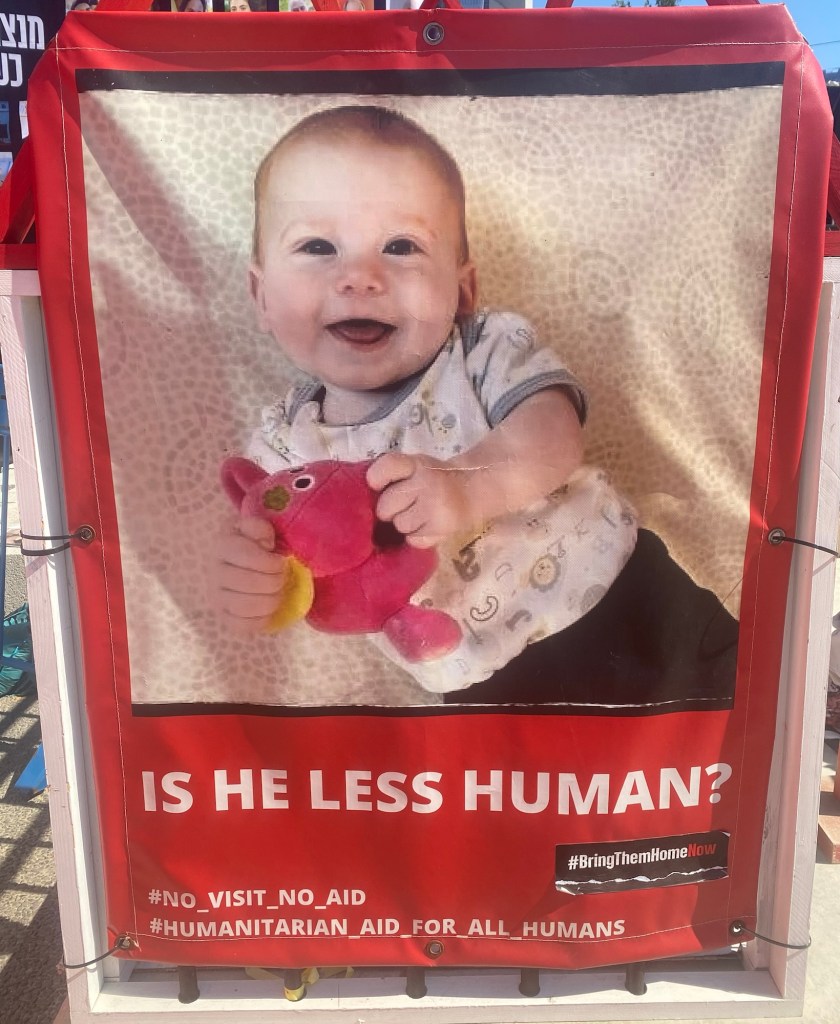
That name haunts me. Images of that family haunt me. Weeks have passed since we learned the news that wasn’t news, that they were dead, em al habanim, mother upon children, as the psalmist phrases it. Weeks have passed since we learned not just dead, but in the case of the four-year old and the one-year old, murdered with bare hands by their captors. Weeks have passed since scenes were shown of triumphant crowds jeering at little coffins, parents bringing their own live children to mock the dead. 

Although the mind was haunted, the pen was stilled, the tongue silenced. These were known facts but the mind needed to unknow them. The mind rebelled. As if to give them voice, to write the words would bring the inadmissible into admission, the unthinkable into thought.

The mind reverts to nightmare: to kill with bare hands? A babe requires no great force of hand, only the extinction of love (of self-love actually, for the human impulse to nurture the littlest is instinctiveand mighty); but the four-year old – what might, what main? – what grunt, what strain? To pen the imagined is to write filth. I might delete the words, but not the thoughts, the horrific wondering. The things that are known do not belong in the realm of the human. If these be facts, if these acts be the work of human hands and human minds, what might my hands, my mind devise?

No, no! The mind rebels.

But we do know it. What now to do with that knowing? Beyond wailing, beyond raging, what light can the human flame show? In two separate but concurrent polls conducted in Israel, Israelis gave answer. A majority was ready to countenance the Trump proposal to clear Gaza of Gazans. At the same time a majority still favoured a two-state solution. The flame of revenge burned bright, butstill the flame of hope flickered.

Last Prayer

I might die tonight

I don’t expect to

But I might…

I’m old.

I have my diseases.

I could go tonight, 

I’m eligible;

It’s not terrible.

We all must leave,

But before I leave

Just in case it’s tonight

Here’s my last prayer.

Hear me, I pray:

Hear me say

shema yisrael

Thanks for today

And yesterday:

Thanks for the mother,

the father in our Tabernacle

of love

And the sister,

The brothers

In that Tabernacle

Of love

Thanks for Annette, 

my love, my wife,

for her lovingkindness.

Netti, you are in my mind tonight.

My children so dear, 

Do you feel, do you hear

The pulse of my love

Tonight, 

As every night?

To the children of my children

You will not know until

Your own children

Have children

How you’ve sweetened 

This, the evening of my life.

If I’m to depart tonight

Let me today spare

For one in need

A kind face,

A kind deed.

Let me leave to my world

A smile, a laugh

As an epitaph.

Keeping Faith with Nick Cave: Day 551.

An age ago a woman of my acquaintance surprised me when she suggested I listen to the music of Nick Cave. Nick Cave, the disreputable? The woman was not young, not a member of any of the alphabet generations, old enough to be shocked. Listen to his love ballads, she said.

I trusted her. I googled Nick Cave love songs and came upon ‘Into my Arms’. Moved and much surprised and not a little abashed, I became a Cave fan, and in time my informant became premier of her state.

It is 551 days now that sons and daughters are dying in the war. 551 days since sons and daughter and mothers and fathers were taken hostage, some already dead, most of them alive. Only a few days since we learned how the captors of two smallest hostages killed them with their bare hands; just days since the small coffins were paraded by Hamas, jeered and mocked.

I listen to Cave in his wrenching interviews. I listen to him speak openly of the deaths of his two young sons. I read his ‘Faith, Death and Carnage’. I listen to Ghosteen. I need Nick Cave today. I’ve needed him these 551 days. I need him to show me his path from the further shores of grief. I need him too, as a model of holding on to belief. I want to hold on, to believe in humans, after humans have killed hostages and disgraced their remains before cheering crowds.

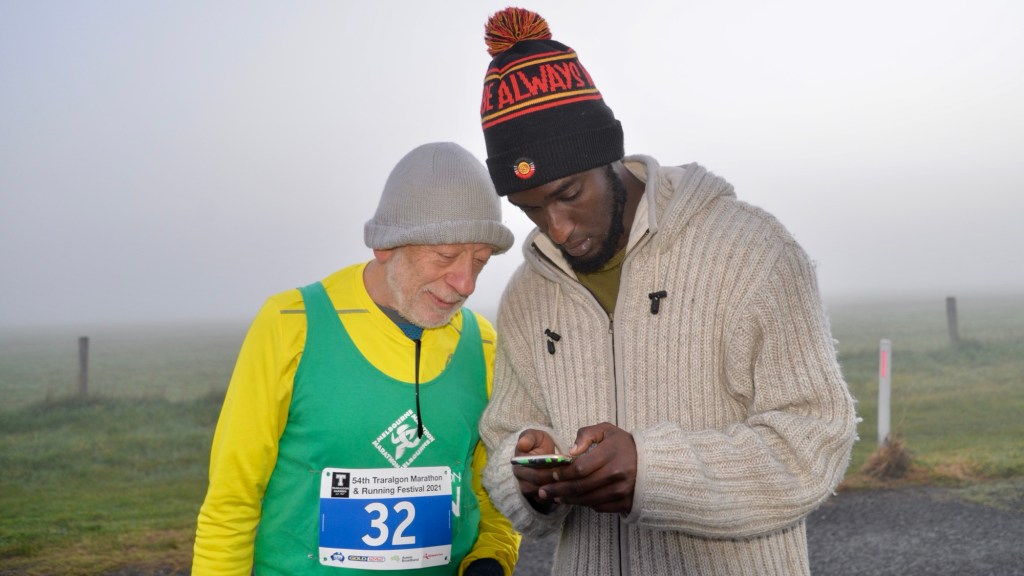
My Friend from Rwanda

My friend from Rwanda has been a teacher to me. I listen to his beautiful voice: his words, exquisitely chosen, percolate unto my being. In those moments I am in harmony with my friend and with my essential self.

My friend from Rwanda lived through war in his homeland. He lost a brother in war. He watches TV images from Gaza. Children climb through the rubble.

I was one of those children, he says.

My friend from Rwanda watches TV and he sees children dying.

He cannot see Hamas putting the children in the way of harm. 

My friend does not see self-defense. He does not see intent. He only sees genocide, where I am convinced of the opposite intent.

When my friend from Rwanda sends us footage that uses language of ethnic cleansing, of colonialism, he hurls me into a distance that neither of us wants. He cannot hear my words. Drenched in blood memories, clad hard in his own pain, he cannot know mine.

Distance, silence, alienation.

And yet we love each other.

A Myrtle in the Middle East

The righteous are called myrtles, likened to a good tree with a pleasant smell…

Rabbi Shmuel Eliezer Edels, the Maharsha

On my way to Hadassah Hospital, I mused on its name. Hadassah is the alternative name of the biblical Queen Esther. As a humble, common noun it means myrtle, a modest shrub with a pleasant scent. To the Persians, Arabs and Jews, myrtle was a symbol of paradise, of purification and rebirth.

A tall thin bloke called Nir and a wider tall man called David, met me at the entrance of the Gandel Rehabilitation Centre of the hospital. We entered by the car park. It looked like any car park. The men opened a great door nearly a metre thick and led me deeper into concrete catacombs. They turned on some lights. I found myself facing underground wards of hospital beds, each equipped with all the fittings of an intensive care department. The great door, the hundreds of beds, Nir told me, have been very recently prepared in frantic haste against the fearful prospect of bombardment by Iran or Hizbullah.

The Gandel Rehab Centre isn’t finished. It wasn’t supposed to be operational yet. Suddenly there was war, instant improvisation followed and this underground place of grim realism was the fruit. 

We ascended.

We emerged into a place of brightness. Here was a functioning rehabilitation ward in full swing. Room after room for Occupational Therapy, Physical Therapy, Speech Therapy, Psychological Therapy. Wide gyms equipped with exercise machines adapted to the limbless and the weakened; to those ravaged by plain civilian disease as well as those torn apart by the machines of war. The equipment, its conceptual ingenuity, the human imaginativeness are marvels. But these were not what I marvelled at. Marvellous is the spirit abroad in these wards of happiness and hope.

I looked around and I saw old people, young people, wounded or weakened by illness, with their clinical attendants, all smiling as they chatted and worked. I’ve never seen such a happy hospital. The hospitals I know reduce their patients to subjects. They erode agency. As patients, we all regress, we’re infantilised. Here at Hadassah I had entered a level community. Hierarchy of authority must surely exist, but I could not detect it. Everywhere I looked, I saw worker greeting worker greeting doctor greeting therapist greeting mother, father, spouse of the afflicted. And the afflicted showed no bearing of affliction. Here was a team and the patient was a member of the team, looking forward.

The palpable harmony and camaraderie cross all lines. I saw Jewish Israelis and Arab Israelis working together, joking together, conferring earnestly about the care of patients. The patients themselves were Jewish and Arab, some whose dress identified them as strictly religious. When I looked I saw difference. The workers looked and they saw only people. David said, the Director of Emergency Medicine at Hadassah is an Israeli Arab. The Chief of Surgery is an Israeli Arab. Outside, a war is raging. People who work here love others who are being hurt or killed. Yet everyone turns up to work. Everyone works to repair people who are damaged.

I wondered how these people hold within themselves their personal pain or sorrow or rage. I marvelled at their tranquillity. Is it their work, their knowledge of purpose, that sustains them? Does the repair of others somehow repair them?

Emerging from the ward into a communal area where people played electronic games and drank coffee, I found myself on a high balcony overlooking semi-arid valleys and gullies and wadis. If I lifted my gaze I could see Jordan. I looked out from this place of repair and allowed myself to hope.

Remembering at the Wall

Jerusalem in high summer. We awaken at 4.30, depart the apartment at 5.00 and already the sky is blue, cobalt blue.

Jerusalem is quiet. The roads are quiet. Quiet is rare in this city that teems with the pious, the fervent, the urgent.

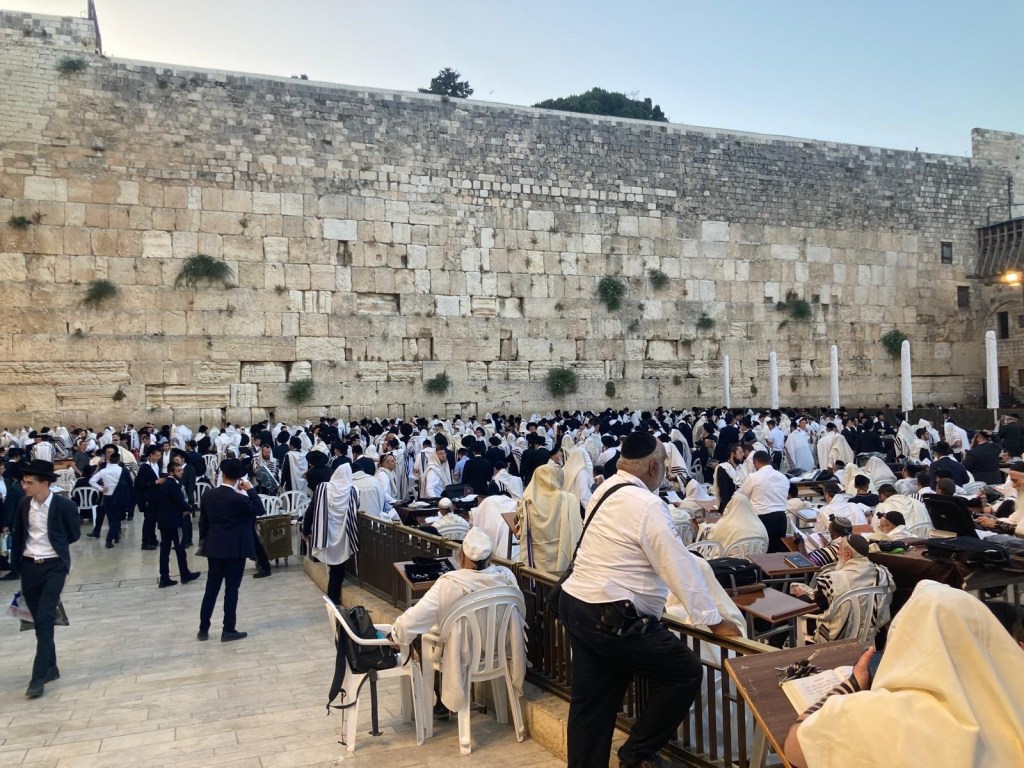
Wondering whether we’ll find people enough at the Wall for a minyan (quorum), we walk with fast steps along twisting ways. We need a quorum in order to recite Kaddish, the mourner’s prayer. Erupting from an alley into the broad square we sight the Wall. Before it, in their many hundreds, the devout, already at prayer.

We three are not in mourning, we are here to remember. We are our mother’s surviving children. An indispensable fourth is her son-in-law John, devoted to Mum now as in life. The remembering starts with the first sighting of the Old City’s perimeter wall. How ancient, these creamy stones, mutely dramatic, forever contended. So many conquerors, so many defeats, such passions, stones soaked in blood.


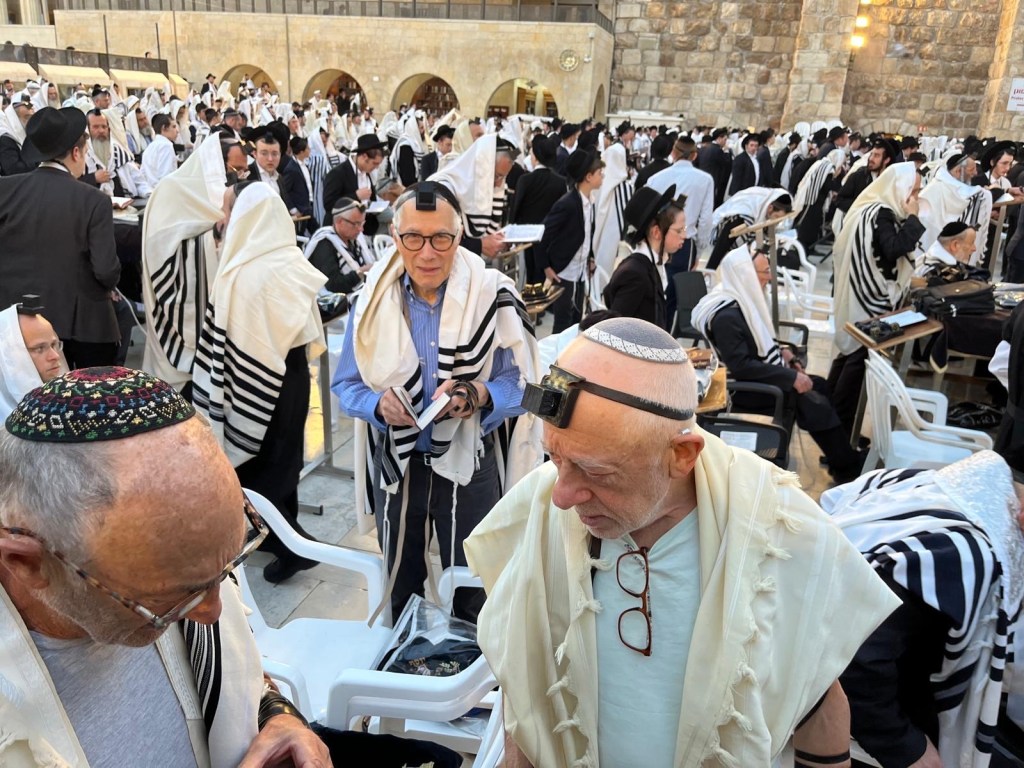
From the plaza, we sight many minyans of minyans, male bodies cloaked in tallithot (prayer shawls). Some wave and sway, others shake metronomically, all moving to intensify intention. One youth in front of me flings his arms to the heavens, his hands clench and unclench in his entreating to God. May his prayers be answered for the good.

Past the beggars, past worshippers of all stripes, past Haredim Caucasian, and Haredim North African, past modern orthodox, past the odd Ethiope, past a pair of the pious deeply asleep, my brother and I wind and wend to the far side where, separated by less than one metre, our sister will hear us recite kaddish.

A memory of my first visit. November 1967. It’s afternoon in early winter, the air crystalline, the skies blue. An impromptu service is in progress. I attach myself to a congregation that is the chance aggregation of the moment. Those elect who are of the line of Aharon the High Priest offer their hands for a Levite to wash, prior to giving the priestly blessing. I raise my washed hands and intone: May the Lord bless you and keep you…

An afterthought lands: here I am, delivering this blessing at the Temple. This my forebears did for centuries until the Temple was destroyed, almost precisely nineteen hundred years ago. My people went into exile. At some stage in the 1800’s my grandfather’s grandparents returned to the land, settling in Petakh Tikvah, the Gateway of Hope, far to the north of here.

Is it possible that I am now, in 1967, the first lineal priest in my family to officiate here since the year 70 C.E.? 

Today, together with my brother I will offer that same blessing. The blessing concludes: May the Lord lift up His face unto you, and give you peace.

Peace!

Our mother was a serene soul. She lived a long life of love, somehow happy through all of life’s losses and afflictions. Today, I remember her and honour her, without sorrow or pain. Late in her life, Mum said to me, You know I never did anything remarkable or distinguished. I never was famous or exceptional. But I did give birth to four children and I raised them and they all love me. So I suppose I was successful.

Mum, you don’t know the half of it: so well did you love us four, that every single one of us felt sure that we were your favourite.

Mum lived her life of peace. I can imagine her in no other state than peace. She went with heart at ease. My tears today are not for Mum. I shed a few sweet tears for this son who misses her. But many are my tears for my people, detested today, deserted by fair weather friends, threatened today, abroad and at home. There is tension in the air, fear too, appalled pain and grief. And mighty resolve.

But here, at this hour of pure air and quiet, Jerusalem is at peace. Have I ever attended prayers so quiet, so ruly? We hundreds recite the words, a soft hum rises from many lips. Until the Amidah (the silent devotion). Quietnessnow, perfect and complete. Torsi swing, sway and shake, hands clench and unclench. 

Prayers completed, kaddish recited, Mum honoured, I make my way to my sister Margot. We fall into a fierce hug that does not quickly end. My body heaves with sobs. I’m a good sobber. There’s much to shed tears about. Tears for the present pain, tears of hope for the future good.

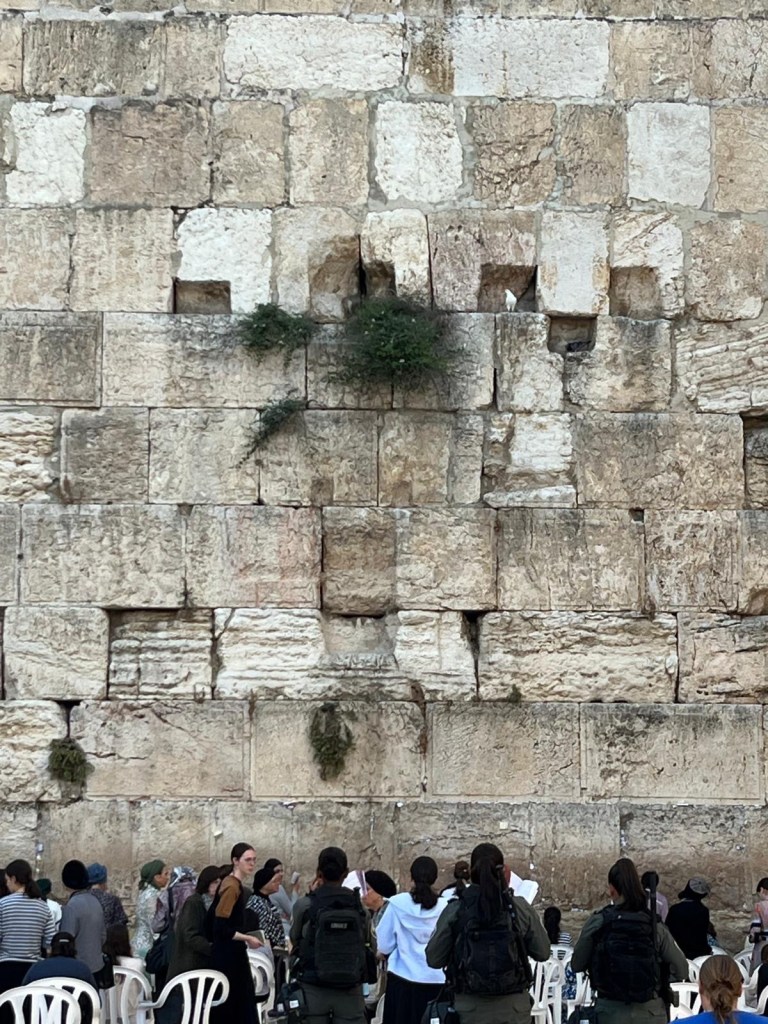
White dove high in the cleft of the Wall

Catching Up


I’m gaining on my parents. Dad died at ninety-two years and nine months, Mum died one week short of her ninety-second birthday. It occurred to me when I turned seventy-eight recently that I’m catching up with them.

It would be nice to catch up with them in the contemporary sense of a catch-up. But in reality, such a catch-up wouldn’t be face to face, but bone to bone. I’m not ready for that, not structurally nor emotionally.

I do catch up with my parents from time to time. One of the two will appear in my visual field when my eyes are closed in sleep. They don’t speak, but we know each other and we understand each other. They smile. I expect I smile in turn. I know I feel smilish, a feeling of being loved and deeply known, a feeling of loving back.

The feelings are sweet, sweet. 

It’s when I’m awake that I muse on the narrowing gap between us. Somehow the musing carries no pain, no fear, no sorrow. This contrasts with the fear I had as a child, of the annihilation of death. Death has no sting now: Dad did it, Mum did it. Their time had come and they went. We wept, we remember and the loving feeling is unquenched. They died, the love loves on. 

It was the love of my parents that formed me and sustained me. They taught me how to live. Now they are helping me as I approach the exit. If, as is written, the task of a lifetime is to come to terms with life’s finity, then my parents have taught me one final time.

Little Old Lady

You’d see her on the high street every morning, pushing the walker that she really doesn’t need.

She’d walk the 1.2 kilometres to her coffee shop where the staff would welcome her as a sort of celebrity.

At the age of ninety-seven she looks good wearing fashions of women two generations younger. Her white curls are cropped short, her still pretty face opens into a smile that brightens the day. A waiter pulls out a chair for her: What will you have, Helen? The usual?

The usual is coffee and a pastry. If you asked Helen what sort of coffee – a caffe latte or a flat white – she’d look puzzled. I like it how they make it, she’d say, gesturing vaguely in the direction of  the barrista.

Her morning yoga session, a practice of seventy years, keeps her joints moving smoothly. After coffee she’d head back up the high street and make her way to the supermarket. The old lady was heading cheerfully towards her centenary.  

A long life has delivered its burdens. She’s buried partners, she’s watched her daughters grapple with their cancers, there have been the hip fractures, the blocked arteries, the eye that will not work. These burdens she has set aside. Other burdens, burdens acquired in childhood remained buried deeply. 

The old lady kept herself active and cheerful. There were her children and her grandchildren and their little ones. A total of twenty-three descendants lightened life’s burdens. Sons in law and grandsons in law joined her tribe and she embraced them all. The old lady saw her generations, saw her futurity, and life shone. She drank her coffee, she practised her yoga and she walked and walked.

Until the day following October 7 this year. That day she read how the mob in Sydney cried Death to the Jews! Gas the Jews!  Her eldest great-grandchild had told his hijab-clad workmate he was a Zionist. She had replied, You deserve death. On the TV news the old lady watched the mob in Dagestan hunting for Jews.

Now the wounds of childhood in Danzig burst open, an abscess of humiliation and terror. The old lady said, I can’t remember a single happy day in those eleven years… We were the lucky ones, we caught a boat to Australia. All my cousins who remained, perished. Cousin Josephina was burned to death in the Synagogue. And now they’re burning Jews in Israel!

If you walk the high street today you won’t sight the little old lady with her walker. She’s not to be found in her coffee shop. She awakens to a day of heaviness. The news appals. Her mind swims and fails. The new griefs and the old griefs literally drive the old lady out of her mind. She says, I have nothing to live for. There’s nothing for me to look forward to.