In Search of Uncle Bert, or a living relative

Uncle Bert wasn’t actually my uncle. He wasn’t a blood relative to my Mum or Aunty Doreen,* or to any of their succeeding generations. The family had bestowed the uncle title upon Bert on account of his being married to Aunty Sara. And Aunty Sara wasn’t really anyone’s aunt.


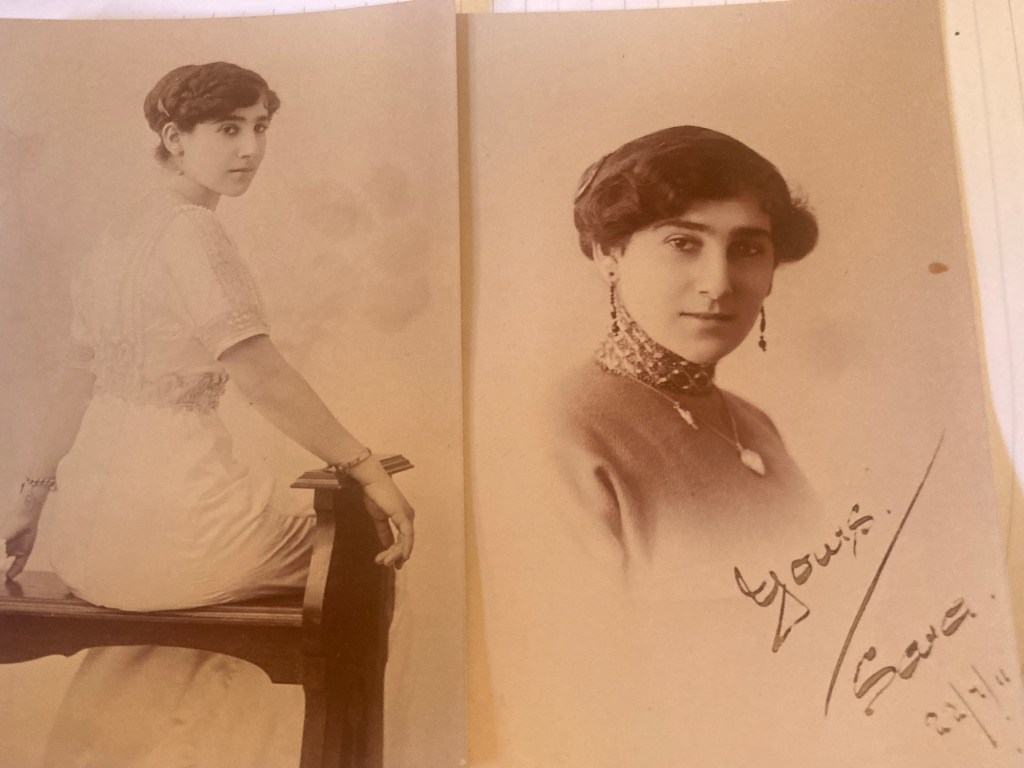
Mum and Aunty Dor cherished Sara, the sole surviving friend of their parents, who died while the sisters were young girls. Dor and Mum loved Sara and honoured her, and tended to her until she died, deaf and blind and loved, at ninety-seven. Uncle Bert died in his eighties, when Sara was still a vital lady of about seventy.


I knew Uncle Bert. He was quiet and gentle. He wore a suit of black material. I recall a black waistcoat. I have a mind picture of a pocket watch and a chain. I don’t remember what work he did. That’s not much to know of an entire living person. 


Uncle Bert and Aunty Sara had but one child, a boy, whom they named Basil. I met Basil once. Basil died in his early forties of an overdose of pethidine, an opiate in clinical use at the time. Mum reported Uncle Bert’s reaction. He said simply, My son is dead. Otherwise, Bert took the death in his quiet way, without demonstration. About ten years later, Bert too, died.


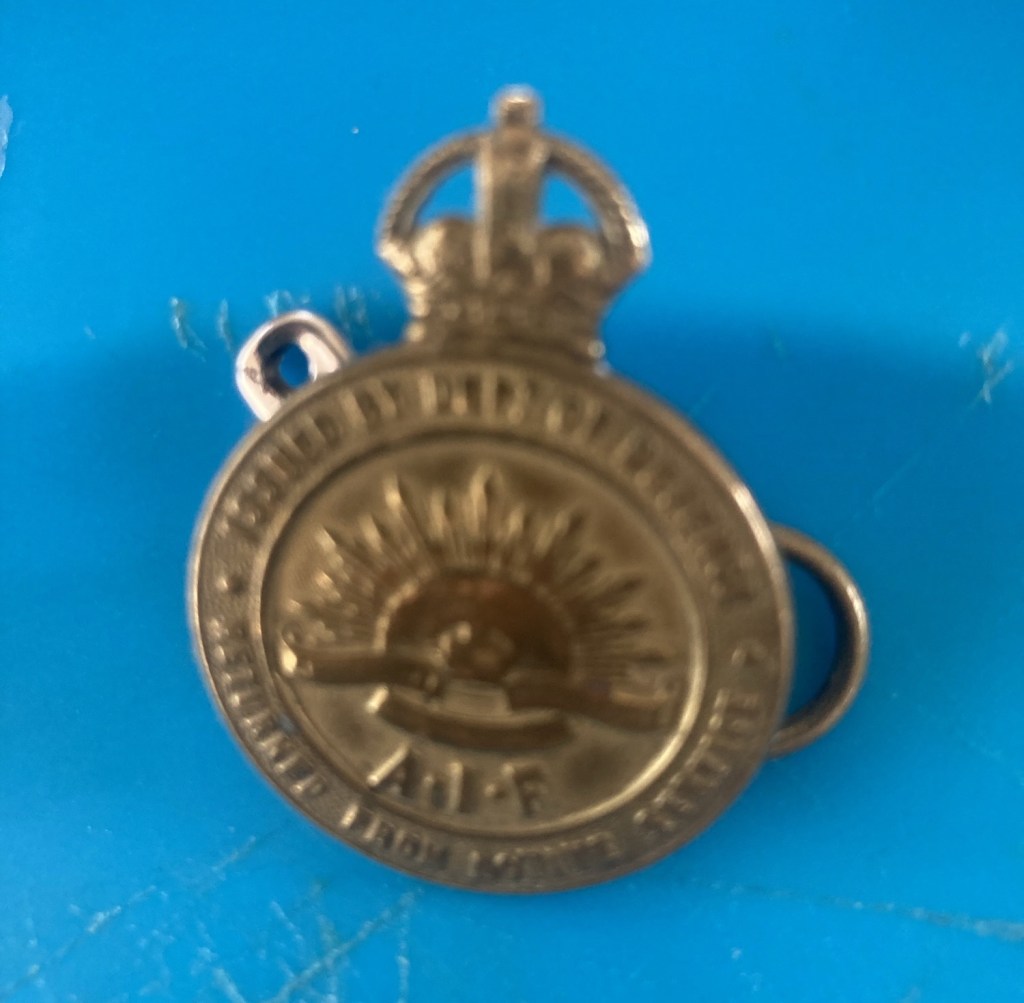
All of this came back to me recently while I was decluttering my study. Among odds and ends of my late elder brother Dennis, I found some papers relating to Sara and Bert, and tumbling free from them, a returned soldier’s medal. 


Uncle Bert a serviceman! I had no idea. The medal signified facts undreamed. The quiet man in elegant Sara’s shadow had served overseas in the First World War. Had he been in the trenches in France?

Had he, by chance, been gassed?

I never heard the quiet quasi-uncle speak of such.


The little medallion weighed on me. It was not mine to keep. It signified a young nation’s acknowledgement of a man’s service. The medal knew more than I did, and I was one of a very few people still alive who knew Bert Harper. And Bert left no posterity. Time passed, and every day that passed brought me closer to the end of my own life. I worried that the medal, and what it signified, might die with me.  


***


A couple of months pass before family matters bring me to Canberra. I pack the medal and I hike my way to the Australian War Museum. As I drive I realise I can’t confidently name my former serviceman. Was Uncle Bert just Bert? Probably not. He might have been Herbert. Or Bertram or Osbert, maybe even Egbert…or Albert; probably not Umberto…


I ask the courteous guard, Where can I research a relative’s war record?

Climb those stairs, Sir, and there, to the left of the café, you’ll find Research.


In Research a young woman sitting behind a large screen smiles a welcome:

How can I help you?

I have a medal left by a relative. I want to find out about his war service.

We can help. Follow me please.

We take a couple of chairs before a second large screen. My companion and guide looks about twenty-five. She has fair hair and a friendly way about her. It transpires that we two will spend a good while together. After about ten minutes I introduce myself. She gives her name – we’ll call her Miranda – and she shakes my hand firmly.


By this stage we have dealt with the question of Uncle Bert’s first name. I gave Miranda my list of suggestions to which Miranda said, If he really was Egbert Harper it will make my day.

Howard: It would make mine if he was Sherbert.


We have already dealt with the medal. It signifies more than the fact of Bert’s service in the AIF. It certifies he had served overseas, had returned to Australia, and had returned alive.There’s a number on the medal’s reverse side. Miranda explains, This number isn’t a serviceman’s AIF number. It just signifies where this particular medal exists in a series of such medals. 


Quite a few Herbert Harpers served in the Australian Infantry Forces in the First World War. All are documented. We troll through all the Herbert Harpers.   


One Herbert Harper returned with a lengthy and eloquent citation. This Herbert had behaved with conspicuous gallantry, had been decorated repeatedly, and had been killed. My Uncle Bert had not died.


Miranda looks over to my covered head: What was his religion?

Jewish.

None of these Herbert Harpers put Jewish as their religion. Many Jewish recruits did not admit Jewishness. Usually they’d write C of E for convenience. What was his date of birth? Where was he born?

I thought he was born in Perth. His date of birth? I do not know. 

I call my eldest cousin. He knew the Harpers before I did. He should know more. Eldest Cousin knows less than I. He says, I remember Uncle Bert, but I never knew he went to war. I don’t remember much about him Doff. I’m afraid I’m useless.


Miranda asks where Bert was born. Mum told me the Harpers and her parents had all been friends in Perth. I assume that’s where Uncle Bert comes from. Miranda finds a Herbert Harper in the National Archives who enlisted in the AIF in Perth, in 1916. This Bert was five foot, seven inches tall, which Miranda informs me was close to the median height for a male serviceman in WWI. His full name was Herbert John Harper, his stated religion is Church of England. Miranda adds, All personal details are self-reported, their truthfulness self-attested. My grandfather, for example, gave his age as twenty when he signed up, but he was only seventeen.

I happen to know a few solid facts about Uncle Bert. He married in the Perth Synagogue, an Orthodox congregation. I know this from his ketubah, one of the documents that I stumbled upon when I found the medal. An Orthodox rabbi will not marry you unless you can prove you are Jewish. Customarily, you do this by producing your parents’ ketubah. 

This a Jewish marriage certificate, written in an ancient Aramaic formula.

Uncle Bert and Aunty Sara were definitely Jewish, not C. of E.


As I muse on Herbert John Harper of Perth, my phone rings: It’s the Eldest Cousin. Doff, I’ve googled Bert. He was born in 1885. He wasn’t from Perth, the family lived in Malvern, in Alice Street – where my nephew lives today!


I deliver this intelligence to Miranda, who checks the First World War Embarkation Roll of all Herbert John Harpers. Here she finds a Herbert John Harper who enlisted in the 44th Australian Infantry Battalion on December 30, 1915. He is listed as single, a commercial traveller, aged thirty years. His home address is 123 Raglan Road, North Perth. Herbert’s next of kin is his father, who lives in Alice Street, Malvern.


This Herbert is our family’s Uncle Bert. He is indeed, prosaic Herbert, not Egbert, not Sherbert. Before enlisting, he works as a commercial traveller, that is, an itinerant salesman, the humble line of work of many Jews at the time, (and in my own family, up to the 1960’s).

Sydney Myer was one such. Myer Emporia are his legacy.


So it’s at the end of 1915, when Uncle Bert is well beyond his callow days, that he joins up. Uncle Bert didn’t join the great romantic adventure of the War at its outset. Why join just now? I learn the War is going very badly for Britain and her Allies at the end of 1915. Britain has just withdrawn from Gallipoli, is retreating in Salonika, and has withdrawn from Macedonia. The British Commander in Chief in Flanders and France has resigned and been replaced. On December 30, the armoured cruiser, HMS Natal explodes, with 400 lost; and Herbert John Harper, commercial traveller resident in Perth, joins up. His Service Number in the 44th AIF Battalion is 804. Miranda informs this number will stay with Private Harper wherever he serves, and in all records. He might be seconded to a different unit, but he’ll remain Number 804.


Miranda directs me to the First World War Nominal Roll where we find an Embarkation Date of February 7, 2016, and a date of return to Australia twenty-two months later, in December 2017. She tracks his movements between those dates to Great Britain and subsequently to France.


Now, there’s normally no discharge so long as hostilities continue. Exceptions occur in the case of Dishonourable Discharge and in the cases of illness and injury. Why does Herbert Harper, 804, come back early?


Miranda finds Bert’s disciplinary record. He has misbehaved, being Absent Without Leave. This is pretty grim reading. Miranda finds the details: “CRIME: Absent from Reveille.” “Punishment: Admonishment.” By way of context, Miranda gives the story of her grandfather when he was AWOL. He nicked off somewhere for 4 or 5 hours. Grandfather’s punishment was docking of eight days pay! Our Private Harper, 804, has no pay withheld.


So this delinquency would not explain Bert’s early return. Was he injured or otherwise unfit? We turn to Bert’s Medical Record. We read his Certificate of Medical Examination upon enlistment: He does not present any of the following conditions, viz. : –

Scrofula; phthisis; syphilis; impaired constitution; defective intelligence; haemorrhoids; varicose veins, beyond a limited extent; marked varicocele with unusually pendant testicle; inveterate cutaneous disease; chronic ulcers; traces of corporal punishment; or evidence of having been marked with the letters D. or B.C.; contracted or deformed chest; abnormal curvature of the spine; or any other physical defect calculated to unfit him for the duties of a soldier.


Bert’s later records state he is discharged medically with Hyphasis. This is not a diagnostic term I learned at Monash Medical School between 1963 and 1969. I have not heard of it since. Neither has my colleague, Dr Google. The copperplate writing is very clear: the word written is clearly HYPHASIS. Does the recording officer misspell KYPHOSIS? This condition is not rare and used to be called hunchback. I don’t recall Uncle Bert having any spinal deformity. What is more, in his examination upon enlistment, Private Harper, 804, showed no abnormal curvature of the spine. His spine was straight and his “testicle not unusually pendant.”


Miranda moves on and shows me Herbert Harper’s request, in 1917, for a War Pension. Quite promptly he is awarded a pension of forty-five shillings per fortnight. Is this handsome or meagre? Quick enquiry suggests the equivalent in Australian currency is $270.00. By way of comparison, today’s Australian Disability Pension pays $1149.00 per fortnight.


These discoveries explain the somewhat unusual fact of Aunty Sara conducting her own business. Sara Harper owned and ran a women’s clothing shop in elegant Ackland Street. That precinct was known as The Village Belle. Aunty Sara’s was not a thrift store. It sems likely Aunty Sara worked because Uncle Bert could not.


Miranda has been musing: Herbert Harper is found fit to fight in December 2015. He remains fit for embarkation two months later. He is shipped to Britain and onward to France. After twenty-two months, he enters hospital in Australia, is soon discharged, and after only a few months, is awarded a pension. He must have been injured or otherwise medically unfit.


I wrack my medical brain. A formerly straight spine will collapse into a ventral hunch if one or more vertebrae collapses. Commonly this occurs in postmenopausal females who have osteoporosis. Cancer in a vertebra can also cause this, as can tuberculosis of the spine. Gunshot injuries might also destroy vertebrae, leading to collapse into kyphotic deformity.


We find no record of spinal injury or disease in Private Herbert Harper, just the enigmatic word, Hyphasis. 


So, here is Herbert Harper, unmarried on enlistment, a bachelor still. The War continues and he takes a wife, Sara. The couple are blessed with a son, who grows, becomes addicted and dies. Uncle Bert dies, and much later, Aunty Sara follows. Their line comes to an end. I recall my Mum corresponding with a woman in Perth who was connected to Sara. I think she was a niece on the non-Harper side. I don’t know her name. She was older than I, and eligible therefore, for extinction.


By the end of 2026, I estimate there might be twenty people at most who are alive today and who knew Uncle Bert. Most of that number are themselves aged. When all of our cohort departs this life, there will remain of Uncle Bert no memorial but the medal. And perchance, this record.


This troubles me. A quiet man, a patriot, who put his life at hazard and lost his health; who knew the joys of marriage and fatherhood; who lost his only son. Insignificant to me in my childhood, he matters to me now. He signifies.


A realisation dawns. Uncle Bert had a father, William Harper of Alice Street, Malvern. Did William father additional children? Did he have siblings? Who knows? – flocks of Harpers probably exist, unaware of their connection to Herbert John Harper, AIF, 804. Unaware too, of the medal that is rightfully theirs.


This little memoir is posted here in the hope it will find its way to a descendant or relative of William Harper, who lived in Alice street, Malvern, Victoria, in the early 20th Century.


(*Aunty Doreen, on the other hand, was sister to my Mum, authentic and authenticised.)


In Quiet Terror

This morning I’m sighing. Long outbreaths emerge from somewhere deep, taking me by surprise. What are they? Why? Quickly I remember last night. Last night I didn’t sigh. Instead my heart hammered in my chest.


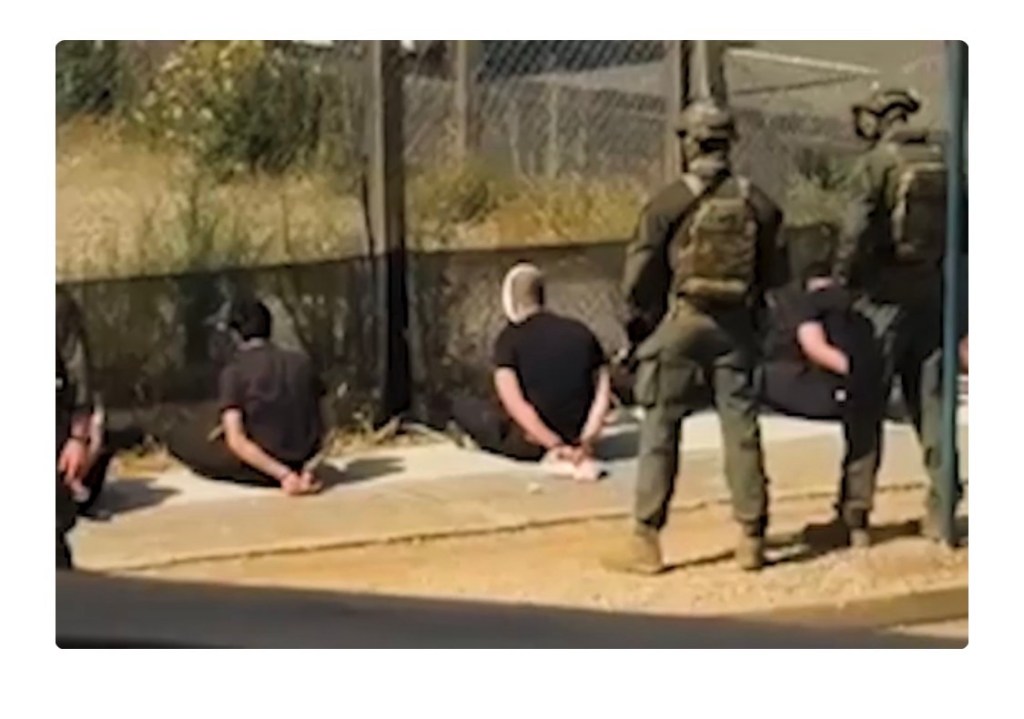
It was a news flash that set off my flight reaction. (My fight response is largely lacking). I’m not news-avid, not since October seven. Nevertheless, news flashes arrive, rudely piercing my tranquil cocoon. Last night’s sketchy flash lacked substance. It was opaque. Police had rammed a carload of adult male persons, who had been arrested. The police were described as Special Operations officers. A second car was apprehended. More were arrested. The report suggested the presence of a weapon.


I felt afraid. I said to myself, I thought Bondi marked an end!  I asked myself, Is it hunting season on Jews now? And quickly, Where can we feel safe?


***


In 1894, Greenwich Observatory in London was the world’s wristwatch. Greenwich Mean Time set the time across the world in an erawhen the British Empire covered great swathes of the globe. The observatory was an icon of empire. It symbolised might and global reach in the same way as New York’s Twin Towers in a later century. 


An explosion occurred at Greenwich in 1894 that shook the Empire. This was the first terror attack on British soil, attributed to a member of an anarchist group who was seen approaching the observatory carrying a parcel, and found immediately afterward, bleeding and lacking one hand. He died soon after, having said nothing. 


***


Even as the reports came in, my mind threw up reservations: You’re panicking. There’s no proof. They might not even be Muslims. They could be Christians, driving to Sydney for Christmas, arrested enroute to the Maronite Cathedral in Redfern. 


But my heart hammered still, unconvinced.That’s how terrorism succeeds. Even when the harm is slight or merely symbolic, terror flowers. We come to mistrust the schoolgirl in a headscarf. We get off the bus at the sight of a brown passenger with a spade beard. Community is broken.


In fact community had been fraying in the Bondi area since October 2023, when cavalcades of cars and motor cycles, emblazoned in Free Palestine flags, roared through Jewish neighbourhoods and past Shules on Shabbat. 


My daughter faced dilemmas: should her kids continue to wear their Jewish school uniforms? Should they still ride the public bus to school?


My brain recalled my teenage grandson who had been, at the shooting hour, out riding his bike. Where was he? His Mum – my daughter – called him frantically, again and again. The boy frequented Bondi, his grandparents and cousins live there. Where was he?  His Dad had been on the beach at Bondi earlier in the day. Bondi, those innocent sands…


Like everyone in the community that night, the family locked themselves up and awaited word. Like everyone in the Jewish community, my daughter’s family remains, in a real sense, locked up.

In calmer moments, I reflect on the attack at Greenwich. Terror doesn’t need many deaths. Its potency is as symbol. It murders trust. 


***


Australia’s progressives who shouted Death! Death!  received their answer in Bondi gunshots.  One week on, anger has found its voices. “Governments have been weak… The nation’s leader refused to lead… Curtail Muslim immigration, expel their clerics.” Opportunists choose their preferred angle of political attack. A nation’s grief and soul-searching are drowned in the shouting.


The seven persons arrested and held on suspicion of intent to commit terrorist action have been released without charges. Police have determined there was insufficient evidence to hold them further. Perhaps the seven are indeed innocent. Innocent of intent or connection to terror. I cannot place my trust in that possibility. Terror has killed my trust.


What must we learn? Who among Australia’s university vice-chancellors would not wish to do better? Who among idealists who demonstrate can feel clean? Who in the government-funded media can look in the mirror and acquit themselves of carelessly fostering hate?


And there’s the remarkable but insufficiently remarked phenomenon of the man in the white shirt. Ahmed al Ahmed remains in hospital with his wounds. He is a key. Can we Australians, in our variety and our contrariety,take from his example inspiration and brotherly love?

Where Innocence Died

I wandered down to Bondi Beach, having no particular plan. Arrived in Sydney for a quite different purpose, long-planned – to celebrate a birthday – I felt myself drawn now to the fatal site. Once there, I found flowers in heaps, tributes and cards. There were candles in clusters. A Hannukah candelabrum stood before the Pavilion. Families were there, some clearly Jewish, many more of them miscellaneously human. 


I fell into step with a Jewish youth wearing Chabad costume. His congregation lost a rabbi last Sunday, a young father. I asked the youth, Whattefillah* do we say?

Say what your heart prompts you to say.

We exchanged names: Levi

Zvi Yehonasan.


I wandered on. Here were two young women wearing tunics emblazoned, MENTAL HEALTH. I paused by the tributes, bowing to read, The World Rests on Three Things, on Truth, on Justice and on Peace. This was pencilled and illustrated in a child’s hand. I wept, sobbed actually, rocking as I cried, undone by innocence. I felt the close presence of someone. It was Mental Health in the person of a young Chinese woman, proffering a Kleenex. I said, Weneed to believe people are good. She said, We do. At our side a colourful sign read, Celebrate Waverley.


I wandered on. Here was the footbridge.Over the past four decades I’ve jogged across this little bridge many times as I completed a run. Last Sunday evening two figures in black used the bridge. This morning I looked at that familiar little landmark with new eyes. I bethought myself of the Arch of Titus in Rome. Graved into the stones of that arch are images of Judaean slaves, taken captive in the sack of Jerusalem in the year 70CE. They carry holy objects, trophies of destruction. Among them is the great candelabrum of the Temple in Jerusalem. An arch of triumph for ancient Romans, it has ever stung Jewish eyes. Traditionally Jewish people make a point of not walking beneath Titus’ Arch. Today I detoured around the Bondi footbridge and took a long cut. 


Police were everywhere to be seen this morning. Police cars were positioned to limit vehicular access to the site. Insteadpeople walked freely, streaming from all sides, down towards the memorials. Young people walked, drained of gaiety. Children too, somehow solemn in the general pall.


Down by the candelabrum, a trio of women in uniform garb. I think they were nuns in summer garb. Here, a younger man, tall and well made, formally dressed in a grey suit in the bright sunlight, stooped to listen gravely to someone explaining, pointing, what happened just here, what just there. The man bowed and took his leave. I guess he was a politician.


Here was an aged lady, lipsticked, dressed colourfully, her face deeply wrinkled. She seemed old enough to recall the War. She was deep in conversation with a younger person. She looked through her companion, her gaze fixed on some other place, some other time. I fancied she might be a survivor of similar attacks. She appeared oblivious of the person filming her.


Photographers and news crew everywhere, today uncharacteristically decorous. Trying to orient myself, I approached a young police officer. Diffident, reluctant to distract him, I asked which directions were the shooters aiming. He listened, conferred with a fellow officer and gave me answer with a most tender seriousness, as if I myself were among the wounded and must be gentled. I thanked the officer, turning away with my tears. Undone again, by kindness. 


I took my meandering leave. I was struck suddenly by what was not at the site. Hundreds and hundreds were there, in all ages and conditions. But missing was haste. Absent from here was noise. Hedonist Bondi, transformed into a secular place of sanctity.


I left the place and wandered on, up the hill. The sun bathed the scene. Sydney balmed, just as it was around 6.30 pm last Sunday. I walked on, asking myself whether people were in fact good. Down the hill, in an endless stream, came people bearing flowers. This family carried two large bunches, florist-wrapped. This teenage girl carried but three large roses, home-picked. 


At the top of a long hill I rested in the shade. A man approached with a dog, which he secured by a lead to a post. A dog of middle size, his coat a golden bronze, he turned and watched his master enter the adjacent fruit shop. Wondering whether a dog experiences wistfulness, I made way for a boy just a little larger than the dog, walking with Grandma. The boy sighted the dog, left Grandma’s side, and trotted over to the dog. The child rubbed the creature’s neck and fondled his ears. He bent far forward until his brow rested on the dog’s. For a short interval, the two were a single organism.

Then the boy trotted on and caught up with Grannie.


*tefillah is Hebrew for prayer.

A Man Died Today

Kylie says Ernie died.

Her face is tight, closed. She was Ernie’s only friend.


Ernie

Ernie was a sad person. He saw doctors and they prescribed tablets for his sadness. He said he felt a bit better on the tablets, and then said he was worse. He stopped the tablets.


Ernie lived alone. I visited him once in his rented house. His dogs greeted me. I found Ernie in his dark bedroom, in bed, blinds drawn, in mid-afternoon. He said he wasn’t crook. Nothing to get up for, he said. Only the dogs.


Kylie said he was paying $350 a week in rent for the mean little house on a back road in the country. She reckoned Ernie was past caring.


One time Ernie spoke a little of his childhood. Dad abused him violently. Mum didn’t care. After a couple of short sentences, his old face hanged from his neck, wordless, wrought with injury remembered. 


Doctors encouraged him to join Men’s Shed. He wasn’t interested. The visiting nurse was worried. He didn’t answer calls, he’d be grouchy. Then he became confused. No, he wouldn’t go into the local hospital. His dogs would pine.


The day came when he couldn’t speak. His mouth couldn’t make words. He found himself on the ground in his yard, with no memory of going outside. The dogs licked him into awareness.


He was taken to the big hospital two hours distant, where doctors found him recovered from a mini-stroke. They told him to go home. Unable to drive, alone, at night in winter, he lay down on the floor of the hospital’s unheated waiting room. Kylie called to check on him, then drove to the big town and brought him home.


From time to time I’d sight Ernie talking with Kylie. She’d sit quietly, leaning forward, allowing Ernie’s words to find their way out of him. The words would stop and start, like a streamlet wending around rocks, hard obstacles of pain interrupting the flow. In their cave of trustI’d see Ernie smiling.


Kylie

Three days ago Kylie said, Ernie’s in hospital. He’s got pneumonia. The old man’s friend. Kylie visited him that day and again two days later.

Today Kylie said, Ernie died.

A Small Child, a Shirtless Man

The child peers at the headlines in the newspaper. She has become interested in letters that make up words. She points at a letter:

That’s an N.

And that one is A.

Her grandfather joins her and looks at the ‘paper.

The image of a man standing bare-chested in the open in midwinterseizes his attention. 

And that is Z!

And that’s an I. 

What is that word, Grampa?


***


Grandfather feels sick as he reads the headline.: “Nazis march in Melbourne”. The image shows a powerfully built man with his back to the camera. Grandfather notes heavily muscled arms clenched aloft. He sees in the posture defiance, menace. In the grey streetscape, the man’s exposed skin is very white.

What is that word?

It’s a name, darling.

What does it mean, Grampa?


How do you explain Nazism to a child of five?

How explain it at all?


Darling, that man doesn’t like Jewish people.

Puzzled, she speaks: I’m Jewish…

He doesn’t want people in Australia who have dark skin.

I’ve got dark skin, Grampa. And Mummy…


The five-year old brain whirrs.

Why isn’t he wearing a shirt?

Perhaps he wants to show people he’s tough. He wants people to be scared of him, I think.

Does he scare you, Grampa?


***


Grandfather would prefer not to answer. Is he scared? No, not for himself. But for the little ones, yes. What Australia will this Jewish-Sri Lankan-Australian child grow into? 

No darling, he doesn’t frighten me.

Darling, most people are kind. 

This man feels angry. 

Perhaps, inside, really deep, perhaps he’s scared.


Grandfather feels dissatisfied with his replies. The child looks up andsees his look, careworn and sad. She comes close and throws her arms around his legs.


Nicky


An old man who should know better runs through the drizzle. In his wrong season sunhat and his non-lycra, he’s an odd-looking figure, a lulu and a lemon. Walking toward him is a taller man, perhaps half his age. The man is well built, his face dark. At the sight of the quaint old man, that face breaks into a smile.


This happens quite often to the older man, younger people smiling at him when he runs. Nowadays the run is more a shuffle, the limbs jerking and creaking arthritically. The smiles signal a sort of surprised admiration, with a bit of amusement, a touch of sympathy for something at once pathetic and brave.

The smiles always warm him.


Today there’s all of that, but something more. The smiling face looks familiar. The runner stops and turns and calls a name. Nicky! The smiler turns and walks back to the old man. He smiles again.


Nicky? Nicky Winmar?

Yeah. That’s me.

Nicky, I saw you on the cooking show. 

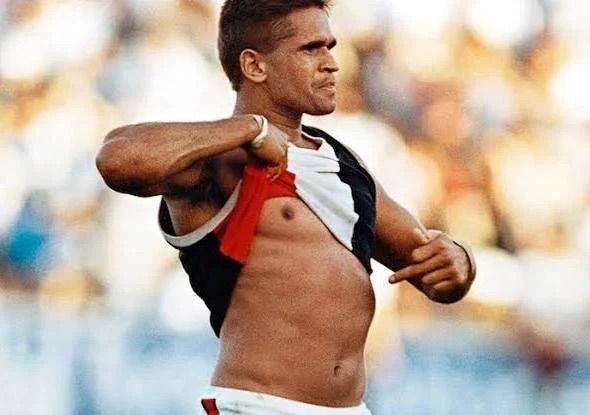
I want to say something to you. You changed Australia – that day at Victoria Park. I’m a Collingwood supporter and I was ashamed that day. You pulled up your shirt and you showed yourself and we started to learn. You helped Australia to change.


The tall man’s smile deepens, goes inward inward. He steps forward and throws his arms around the older man and pulls him close and holds him. The men unclinch. The black man extends a hand to the old bloke. The grip is firm,the clasp is warm. The smile has widened. They shake and part.


And I run on through the light rain.


Photo by Wayne Ludbey

Flying the flag


My father was the eldest of three brothers growing up in the then Jewish suburb of North Carlton.


That suburb boasted synagogues, a thriving playhouse, a choir, houses of Torah study and a dedicated Jewish segment in the nearby Melbourne General Cemetery.


That Jewish enclave was sufficient to itself. But every shabbat morning, Dad and his little brothers walked the five kilometre round trip to the East Melbourne Shule.* They didn’t choose East Melbourne, their father did. I think Grandpa’s choice was driven by social climbing. East Melbourne was less foreign, more English, hence advantageous.


That social climb would always remain too steep for Grandpa, who arrived in Australia alone in 1898, as a twelve-year old, a refugee from Palestine, a boat person, speaking only Yiddish and Arabic. But Grandpa wanted his boys to ascend. So they went. Grandpa himself did not walk the five kms. My Dad explained, ‘Father’s knee was bad on Saturdays.’


Have you ever visited the East Melbourne synagogue? (They hold open days and host school groups. In these days of smaller congregations, the cumulative total of visitors might well exceed the tally of worshippers.) If you have seen East Melbourne Shule, you’ll feel sad as I do about the attack. For the shule is beautiful, a small Jewish gem surrounded by the august institutions of Christendom.


In conjunction with St Peter’s Eastern Hill, the rabbi at East Melbourne set up a feeding initiative for hungry people in the locality. I’ve been a friend of that rabbi since his family moved in around the corner when he was a boy of four. Nowadays he’s the Jewish Chaplain in the Australian Military Reserve. He takes his flock on a trip to country, guided by Aboriginal custodians. He’s a bloke with a beard who wants to help.


This then is the story of a bunch of very foreign foreigners who find their place in Australia. It’s an Australian story, replicated in thriving immigrant enclaves all over this land. And all of us non-Aboriginal groups are new arrivals, all of us more or less recent immigrants.  This is the Australia that nurtured me, the home I cherish.


Last Friday night a person attacked that Australia. Since then, solicitous friends who are not Jewish have reached out to us in shock and anger and kindness. They ask are you alright? I reply I feel sad more than I feel scared. I feel sad for Australia, for my Australia, for this place that I love so dearly.


***


Last week I wrote the following little piece for the newsletter of my current congregation:

“Readers will not know, and certainly couldn’t care less, about the principles that underlie my daily selection of headgear. But permit me to suggest you should know and care, and ponder and decide. ‘Way back in history, there existed in the western world the phenomenon of Jew-hatred. For a good while it went out of fashion. It got a bad name in the 1940’s. 

About the middle of that century, I popped up, and I lived in a world that execrated antisemitism. I walked the halls of my university beneath my kippah and encounteredonly warmth and respect. In Aboriginal Australia, I was a celebrity. The blackfella mob said, ‘You mob, you got your culture, you got back your language, you got your land. Us mob need to be like you mob.’ In whitefella Australia, I prowled the wards and corridors of greater and lesser hospitals and met only honour. 


Honour? This was unexpected. For what? – I wondered. If I read the great Australian character aright, we Aussies respect oddity, wherever we sense authenticity. I think Aussies, often ignorant of history, generally devoutly secular, looked at me and thought, this bloke looks funny, but I reckon he’s fair dinkum. 


About the year 2000, I began to hear antisemitic whispers. It took me a while to learn these were not whispers or mutterings but a swelling to a roar on social media, a world to which I am a stranger. From that time, when I ventured outside, I began to cover my kippah with a secular hat. I still looked odd, but not so Jewish. I was no longer living my proud Jewish Australian self. 


From the time of the Opera House riot of October 9, 2023, I have resumed wearing my public kippah. My kippah asks Australia a question. It asks, ‘Is this old Jew still welcome in your world? Or does he need to piss off back to Palestine?’ 


I spend most of my days in gentile company. Wherever I go beneath my kippah, Australia shows me neither surprise nor hostility. Often strangers flash warm, wide smiles of surprise and recognition. Here and there an ockker delivers a small oration: I hate this antisemitism! Or, I stand with Israel. Or, Burning synagogues! That’s not Australia! 


In a coffee shop well outside the ghetto, I meet my son for coffee. He wears his Let Them Go t-shirt. In Carlisle Street, flowing beards and peyot (side curls) are all the go, stout Lubavitch Hassidim waddle in their Kapottehs, and broad-chested Adassniks flash their vast public ritual fringes. 


I think we all, wittingly or otherwise, are asking the same question. I think the kippah, the beard and sidelock, the pectoral tzitzith, the t-shirt all fly the flag. The flag asserts Jewishness in Australia. It’s not aggressive, but it is challenging. Thechallenge to Australia is that of diversity. Pauline Hanson rejected diversity, and Australia has largely rejected her. I urge readers to consider how you can fly this honest, and decent and respectful and proud flag.”


*** 


As antisemitism came out of hidingaround 2000, I suggested to my adult children they owed it to their own children to listen and watch, and decide whether the time had come to flee. They laughed then.


First the Opera House riot, with cries of Fuck the Jews. That night a carful of young men drove around Melbourne, stopping repeatedly, shouting to passers-by, Where’s the Jews? Where’s the Jews? Policeintercepted them and talked them down. Soon cars and fences burnedin Sydney, then Adass Israel Shulewas burned out. Now the attack atEast Melbourne. 


The copycat is at large. Anyone who sets fire to a building with people inside is willing to harm them, to burn them, to see them die. 


First, come the words of hate. Inert governments, passive police sit on their hands. The words set fire to hands; then schools burn, then a Jewish MP’s office, now sacred places.


The pace of hatred accelerates, the acts of menace mount to violence against property. We have now – following the synagogue fires -crossed athreshhold. Next comes the taking of life. 


My children are not laughing today.


*Shule, a Yiddish term derived from the German word for school, has come to mean synagogue, always a place of religious instruction and learning.


From ‘Jerusalem Notes, 1967’. 

I was born in 1946. The State of Israel was born in 1948. I cannot remember a time in my own life when we did not have the Jewish state. Mine was one of many religiously observant families at the time whose experience of Zion was one of a longing that defined us. Jerusalem was our dreaming. Our emotions had not caught up with history. In 1967, I visited Israel for the first time. I went to pray at the Wall. It was a Thursday, market day in ancient Judea, a weekday when the Torah is read, both in ancient times and today. As a descendant of the priestly line of Aaron, although a visitor, I exercised a prerogative and gave the priestly blessing. Soon after it was time to read from the Torah. The layman conducting the service called: Let the Cohen come forward. Arise, Z’vi Yehonatan ben reb Melech hacohen. 

He was calling me first, using my patronymic, linking me with my preceding generation, choosing me – for my caste – to witness the reading of the Torah. It occurred to me that here I was, the first in my family in 1900 years to serve as a Cohen at the site of the Temple. It was a moment of déjà vu: I had been there before. I felt I was part of history and history was part of me. A light feeling and a deep one. 

The next afternoon, I returned to the Old City. I followed its narrow winding ways and realized after a while I was lost. I accosted a young man coming out of a house and asked, in Hebrew, directions to the Wall. He was about my age. He wore a dark suit and carried a cheap attaché case. He asked me in English: ‘From which country do you come?’ ‘

Australia.’ 

‘Australia! So far! Will you honour my house by coming inside for refreshment?’ 

I came inside and the young man introduced himself: ‘Yousef.’ I told him that was the name of my grandfather, who was born in Petakh Tikvah. ‘He never came here to Jerusalem. It was not possible for a Jew. Now I am here for him.’ 

Yousef ushered me to a narrow stairway. It was dark. I followed the stairs to a sunny balcony, where he sat me down and excused himself. I could see the Wall now, its stones creamy in the sunshine. Behind the Wall and looking down on it, was the Dome of the Rock. Beguiled, I sat in the sunshine 

and forgot who I was and who Yousef was. And who each of us was not. 

Footsteps behind me brought me back. Yousef carried coffee that he poured into a little cup. It had a muddy look, but it smelled good and tasted sweet. ‘What is that aroma, Yousef?’ ‘Cardamom. You do not like?’ 

‘I do, very much. Thank you.’ Next Yousef bought a large bowl brimming with baby mandarins.‘Clementinas. Please take, eat, drink. Please forgive me that I do not partake: it is Ramadan.’ 

Yousef told me he was a school teacher, but he was not teaching today on account of the Fast. Throughout my afternoon tea, Yousef was smiling. I must have smiled too. He wore a cheap suit and he carried a cheap valise, but he knew himself rich, living in Jerusalem and extending to a cousin the hospitality of Abraham who is Ibrahim, our father. Eventually, I left, my head swimming with Yousef’s directions to the Wall. As we parted, Yousef asked me to visit again next time I was in the Old City. I said I would. On numerous return visits, over the late months of 1967, and over decades since, my eyes would roam about the Old City, looking for a house with a balcony and a parapet, and a man of my years, with suit and valise, smiling. Yousef and I never found each other again. 

*** 

After taking my leave of Yousef, I set off for the Wall, striding after the setting sun. I soon got lost in an alleyway. I climbed an outer wall, and recited the Mincha prayer alone, in the late sunshine. I was reciting the Amida, the silent prayer, when a clattering disturbed me; stones were landing on a roof, around me and just next to my feet. I realized that someone was throwing these stones: someone did not welcome me here.

Play Nicely Together, Children

The Hebrew patriarch Abraham raises a blended family. He fathers two sons; the elder by thirteen years is Ishmael, the younger, Isaac. The boys have different mothers and the mothers don’t get on.


When the younger boy is about three or four, he is weaned.Abraham, as is customary, throws a great feast for all the friends and neighbours. Ishmael, the elder, feels miffed. He starts to torment Isaac.


Abraham says mildly, Play nicely together, children.

But they don’t.

Perhaps they can’t.


Abraham, sore distressed, separates his sons, sending Ishmael away.

God comforts Abraham, promises Ishmael will become the father of a mighty nation.

That nation is the Arab people. 

God also promises Abraham that Isaac will be his heir. 

Isaac becomes the father of Israel.


Just as the father loves both his sons, both sons love the father. Upon the death of Abraham, the sons reconcile and bury their father together, in the sepulchre at Hebron that Abraham had purchased on the death of Sarah.


Two nations born in discord, cannot live peaceably together.

When separated, peace prevails.

Following bereavement, they unite in shared grief.


Bibas

That name haunts me. Images of that family haunt me. Weeks have passed since we learned the news that wasn’t news, that they were dead, em al habanim, mother upon children, as the psalmist phrases it. Weeks have passed since we learned not just dead, but in the case of the four-year old and the one-year old, murdered with bare hands by their captors. Weeks have passed since scenes were shown of triumphant crowds jeering at little coffins, parents bringing their own live children to mock the dead. 

Although the mind was haunted, the pen was stilled, the tongue silenced. These were known facts but the mind needed to unknow them. The mind rebelled. As if to give them voice, to write the words would bring the inadmissible into admission, the unthinkable into thought.

The mind reverts to nightmare: to kill with bare hands? A babe requires no great force of hand, only the extinction of love (of self-love actually, for the human impulse to nurture the littlest is instinctiveand mighty); but the four-year old – what might, what main? – what grunt, what strain? To pen the imagined is to write filth. I might delete the words, but not the thoughts, the horrific wondering. The things that are known do not belong in the realm of the human. If these be facts, if these acts be the work of human hands and human minds, what might my hands, my mind devise?

No, no! The mind rebels.

But we do know it. What now to do with that knowing? Beyond wailing, beyond raging, what light can the human flame show? In two separate but concurrent polls conducted in Israel, Israelis gave answer. A majority was ready to countenance the Trump proposal to clear Gaza of Gazans. At the same time a majority still favoured a two-state solution. The flame of revenge burned bright, butstill the flame of hope flickered.