Foreword:
We in Australia now know the Islamic Republic of Iran has been held responsible for terror attacks in Australia. Less well known have been fatal terrorist attacks across Europe, Africa and Asia. My friend from Iraq reminds me of the innumerable Iranian terror attacks there that have, he claims, destroyed the country. And largely forgotten now was the Iran’s mass murder of Jews (and others) three decades ago in Argentina.
***
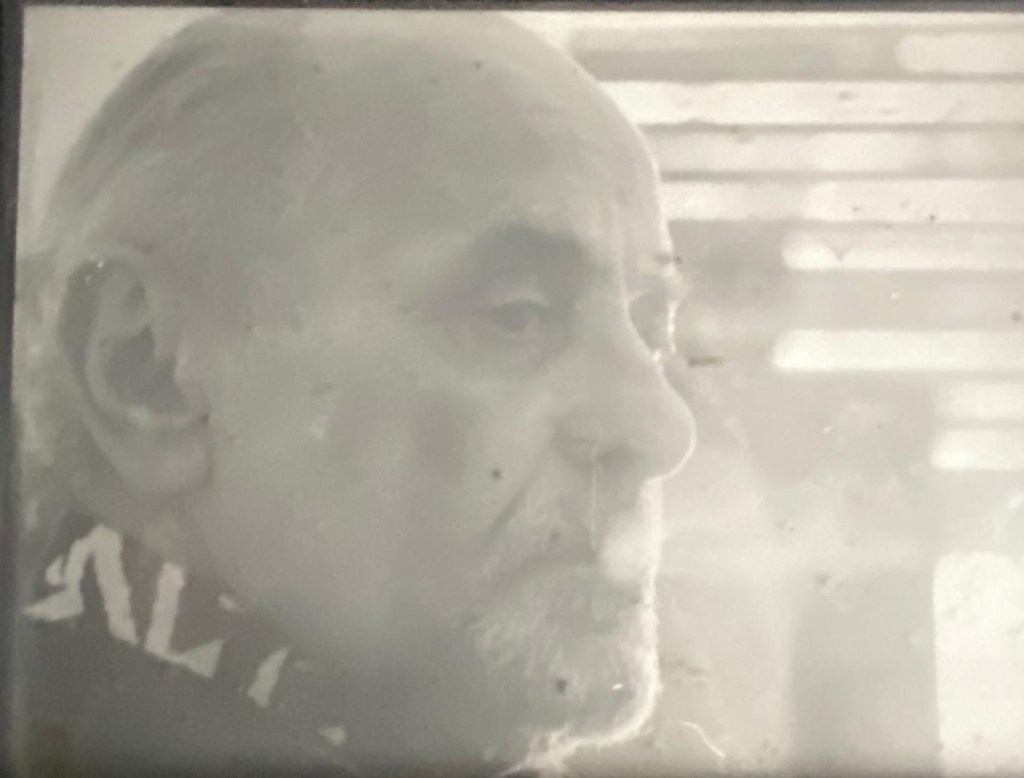
Adrian is our consuegro . Our poor English doesn’t have an equivalent expression for this beautiful Spanish term for the father of your son-in-law. Adrian says it means “of the same blood”.
We have asked Adrian to take us on a walking tour of his Buenos Aires, and today he takes us to the Jewish district called Once. He explains that once is Spanish for eleven – similar to the French onze – signifying the eleventh district of the city.
Adrian wishes us to see the “AMIA”. He explains that AMIA is an anagram for Associacion Mutual Israelitica Argentina – which refers to the principal building of the Jewish community of Buenos Aires. It is a hot afternoon. The sun bakes us steadily throughout the three hours of our walk with Adrian. During these three hours, we will walk a distance of perhaps only one kilometre, but the time will not drag.
We start our tour at a coffee house where Adrian begins
his account of the tragedy that struck the AMIA on July 19, 1994. “It is ten o’clock in the morning when I hear the sound of the explosion. I hear it and I feel it, and I know from the direction of the sound that I have to run straight away to the AMIA. I know they have hit our AMIA. And after five minutes I have arrived and I see it is true.”
Adrian stops speaking and tries to compose himself. His face tells us what he saw – what he sees still – is unspeakable.
We finish our coffee and Adrian consults his watch. It is
time to go to meet his friend, who is highly placed in the security services of the Jewish community, and who will conduct us to the AMIA.
We walk around the corner and a short distance down a side street to an unprepossessing stone building. On its facade there is Hebrew lettering placed discreetly out of direct line of sight from the street. A casual passer by might guess from the presence of the armed policeman stationed outside that the building is sensitive in some
way.. As usual, this is an officer in the River Police, an out of town force seconded to the work of protecting Jewish sites. The hope is that this force might be uncontaminated by the traditional anti-Semitism of the Buenos Aires police.
A man appears from nowhere and stands at Adrian’s side.
He is about Adrian’s age – that is, not young, nor yet very old – and he looks at each of us in turn, then through us and beyond us, and up and down the street. Adrian makes the introductions: we are his consuegros, Annette and Howard, and this is our son, Raphael.
We are not to learn the name of Adrian’s friend. He says little but keeps looking up and down the street and up and down the buildings.
We follow Adrian and his friend to the end of the block
where we pause for further surveillance before turning the corner and stopping again. Adrian points to a building near the further end of this small street. That is the AMIA, he says, indicating a building site where a concrete structure is nearing completion.
A river policeman stands outside the building and another is stationed across the street. On the kerbside there are some makeshift tables upon which sit scores of memorial candles, and vases filled with flowers which are now starting to fade. Above us is a large hoarding covered with names painted crudely in large black letters. I count the names: there are 86 of them – the names of those whose
bodies were identified in the ruins of the bombed building.
Raphael points out a familiar name – Goldenberg.. We stand in silence for a long time.
Adrian and his friend stand to one side, speaking in
Spanish. Adrian translates for us, pointing out the office building adjacent to the AMIA. When the bomb went off there were office workers in that building, he says. Those people were not Jewish, they had no connection with the activities of the AMIA. But they were there, fellow citizens in the commonwealth of death, and their names appear among the names of the slain.
There are twelve whose names are absent from the list
because their bodies could not be identified, twelve unknown persons.
The dozen were recruited, unwilling and unwitting, into a war which was supposed to have been won in Europe fifty years ago.
Among those who searched the ruins for the missing was
Adrian’s second son, Damian. Day after day, horror heaped upon horror, hope dying and dying again, the searchers find few alive, many dead.
Years later, Damian`s memory of it remains all too fresh. Youth passes, innocence and faith die, only wretched memory lives on.
Adrian then tells us of two who visited the AMIA building that day; their mother had passed away – of natural causes – the previous night. Her lamenting husband, too stricken to make the arrangements for her funeral and the shiva in her memory, sent their two sons to the ChevraKadisha – the Sacred Society of Lovingkindness and Truth – which was housed at the AMIA. They were there when the building was destroyed, and their father was left to sit shiva, to mourn not for one but for three…
The afternoon is passing and it seems like a good time and a suitable place to say my afternoon prayers. I stand at the kerbside before all those fading flowers, those spent candles, and that crudely lettered memorial, and my face is awash as I pray.
Not since visiting Yad Vashem have I been grief-drenched at prayer like this.
My reverie is disturbed by swift movement behind me. I turn and see a small man who has approached the AMIA, possibly intent on unauthorised entry. Converging swiftly upon him are the two River Police, as well as Adrian’s friend and another man in plain clothes, whose
presence in the street I had not noticed. Abruptly, the small man stands stock still in the middle of the street. Confused, his would-be interceptors stand where they are. Facing the little shrine of candles and flowers, the man shakes his head twice, infinitely slowly, profoundly sorrowfully. Then he bows his head for a long moment, straightens – and crosses himself. Evading believers, he
hurries off down the street.
Adrian’s friend now broaches the gateway, where he
encounters another man in the shadows of the massive new concrete wall behind which the new AMIA is arising. The two confer, and our guide returns, beckoning us into the building. We are led up a flight of steps, through a doorway, into a lobby then into a grand foyer. At each stage electronic sensors mark our passage; at every point an electronic barrier exists which must be lowered to allow us to advance.
Once in the lobby we barely have time to look around before we are ushered out to the street again.
Together with our guide, we quit the little street and
repair to a second coffee shop, where we sit and listen as the guide speaks and Adrian translates and adds comments of his own. We hear how, four years after the crime, no-one has been prosecuted for the bombing. The car which became the bomb was traced to two police
officers who had hired it. They were junior officers, small players in a conspiracy.
The Jewish community has no doubt that further arrests and prosecutions could only embarrass people at the very summit of Argentinian life, and this will not be allowed to eventuate.
The grief of Adrian and his friend is palpable. It is the
grief of patriots who know that they can never trust their own institutions. At this point, the nameless one begins to address us directly. Under the weight of mounting emotion, he forgets that he can’t speak English, and becomes quite voluble. Together, he and Adrian outline the multiplicity and the necessity of anti-terrorist
provisions in the new AMIA, which is currently nearing completion.
We begin to appreciate the reality, the insecurity and frailty of bricks and mortar, and concrete invention, where the foundation of polity is lacking.
During this conversation our guide`s name somehow escapes his taciturnity into the open air. He is Geraldo, pronounced in Spanish almost as Heraldo. The silent herald says he used to work in the state security service, where, for many years he was detailled to the protection of senior ministers of state. Eventually, he became bodyguard to the President, before leaving the service in disgust.
Now he sees out the balance of his working life protecting his brothers and sisters from those whom he used to serve.
One of Adrian`s initial phrases comes to mind : “I know they have hit our AMIA….” In Adrian`s Argentina “they” are still hitting “our” people. He loves his country, this Europe in the New World, this cradle of culture and passion, but it does not love him.
Never has, never will.
Six months later, back home in Australia, we receive the news that Adrian has died suddenly, in his bed. Our son-in-law, Pablo speeds to his homeland to join his loved ones.
And Adrian’s consuegros in Melbourne see him still, sitting in a coffee shop, sitting and crying the beloved country.
Shalom, Adrian. Vaya con Dios, mi querido consuegro.
Copyright, Howard Goldenberg, 29 December, 2013
 howardgoldenberg