A Myrtle in the Middle East

The righteous are called myrtles, likened to a good tree with a pleasant smell…

Rabbi Shmuel Eliezer Edels, the Maharsha

On my way to Hadassah Hospital, I mused on its name. Hadassah is the alternative name of the biblical Queen Esther. As a humble, common noun it means myrtle, a modest shrub with a pleasant scent. To the Persians, Arabs and Jews, myrtle was a symbol of paradise, of purification and rebirth.

A tall thin bloke called Nir and a wider tall man called David, met me at the entrance of the Gandel Rehabilitation Centre of the hospital. We entered by the car park. It looked like any car park. The men opened a great door nearly a metre thick and led me deeper into concrete catacombs. They turned on some lights. I found myself facing underground wards of hospital beds, each equipped with all the fittings of an intensive care department. The great door, the hundreds of beds, Nir told me, have been very recently prepared in frantic haste against the fearful prospect of bombardment by Iran or Hizbullah.

The Gandel Rehab Centre isn’t finished. It wasn’t supposed to be operational yet. Suddenly there was war, instant improvisation followed and this underground place of grim realism was the fruit. 

We ascended.

We emerged into a place of brightness. Here was a functioning rehabilitation ward in full swing. Room after room for Occupational Therapy, Physical Therapy, Speech Therapy, Psychological Therapy. Wide gyms equipped with exercise machines adapted to the limbless and the weakened; to those ravaged by plain civilian disease as well as those torn apart by the machines of war. The equipment, its conceptual ingenuity, the human imaginativeness are marvels. But these were not what I marvelled at. Marvellous is the spirit abroad in these wards of happiness and hope.

I looked around and I saw old people, young people, wounded or weakened by illness, with their clinical attendants, all smiling as they chatted and worked. I’ve never seen such a happy hospital. The hospitals I know reduce their patients to subjects. They erode agency. As patients, we all regress, we’re infantilised. Here at Hadassah I had entered a level community. Hierarchy of authority must surely exist, but I could not detect it. Everywhere I looked, I saw worker greeting worker greeting doctor greeting therapist greeting mother, father, spouse of the afflicted. And the afflicted showed no bearing of affliction. Here was a team and the patient was a member of the team, looking forward.

The palpable harmony and camaraderie cross all lines. I saw Jewish Israelis and Arab Israelis working together, joking together, conferring earnestly about the care of patients. The patients themselves were Jewish and Arab, some whose dress identified them as strictly religious. When I looked I saw difference. The workers looked and they saw only people. David said, the Director of Emergency Medicine at Hadassah is an Israeli Arab. The Chief of Surgery is an Israeli Arab. Outside, a war is raging. People who work here love others who are being hurt or killed. Yet everyone turns up to work. Everyone works to repair people who are damaged.

I wondered how these people hold within themselves their personal pain or sorrow or rage. I marvelled at their tranquillity. Is it their work, their knowledge of purpose, that sustains them? Does the repair of others somehow repair them?

Emerging from the ward into a communal area where people played electronic games and drank coffee, I found myself on a high balcony overlooking semi-arid valleys and gullies and wadis. If I lifted my gaze I could see Jordan. I looked out from this place of repair and allowed myself to hope.
Prayers

Not long ago a man holidaying with his family falls suddenly to the floor, crying to his little boy as he falls, Call an ambulance! The man does not speak again. He lies in a coma in the Intensive Care Unit of a little hospital in Bali, with injuries to his brain that can’t be measured or treated properly there.


Around the bedside of the man his mother and his 10 year-old son and his elder sister stand and try to understand. A mother looks at her only son; a sister, burdened by her knowledge of the brain, gazes at her wounded brother.  The sister’s husband grips her hand. The boy who gave the man his chance of life sees his father, inert, intubated, silent. The child has no language, no words, in his world overturned.


The mother, the sister, the child speak – when they can bring forth words from their grief – soft, urgent  murmurs of love. The brother in law breathes his prayers.


The man is surrounded by love and tears. Does he hear the murmured prayers of his loved ones? Will he learn one day of the care and the grief of his many, many friends?


An aircraft is sent from Australia to retrieve the man, to bring him home, to get the most advanced care. The plane is an airborne ICU with the super-nurse and the intensivist doctor who can keep the injured man safe as he crosses half a world.


All of this will be hideously expensive. The insurer pauses, ponders, plays for time as time races. How much time does the  wounded man have? The wounded man lies outside time, while his loved ones, their desperation growing, plan to fund the costs privately. 


The man flies home and is admitted to the excellent hospital. The family scrambles for flights, eventually rejoining the man who does not speak.


After all their frantic haste the family falls now into a world of no haste, a world of deliberate care. No idle speech. Words of yearning love whispered into the ears of the stricken. The words spoken aloud are the necessary words of critical work, as gauges flash, tubes drip, drip, drip and respirators observe their slow rhythm of rise and fall.


All wait.


Many come, the aunt, the man’s friends from today, and from all his yesterdays, stretching back to early boyhood. Solemnity sits heavily upon them.


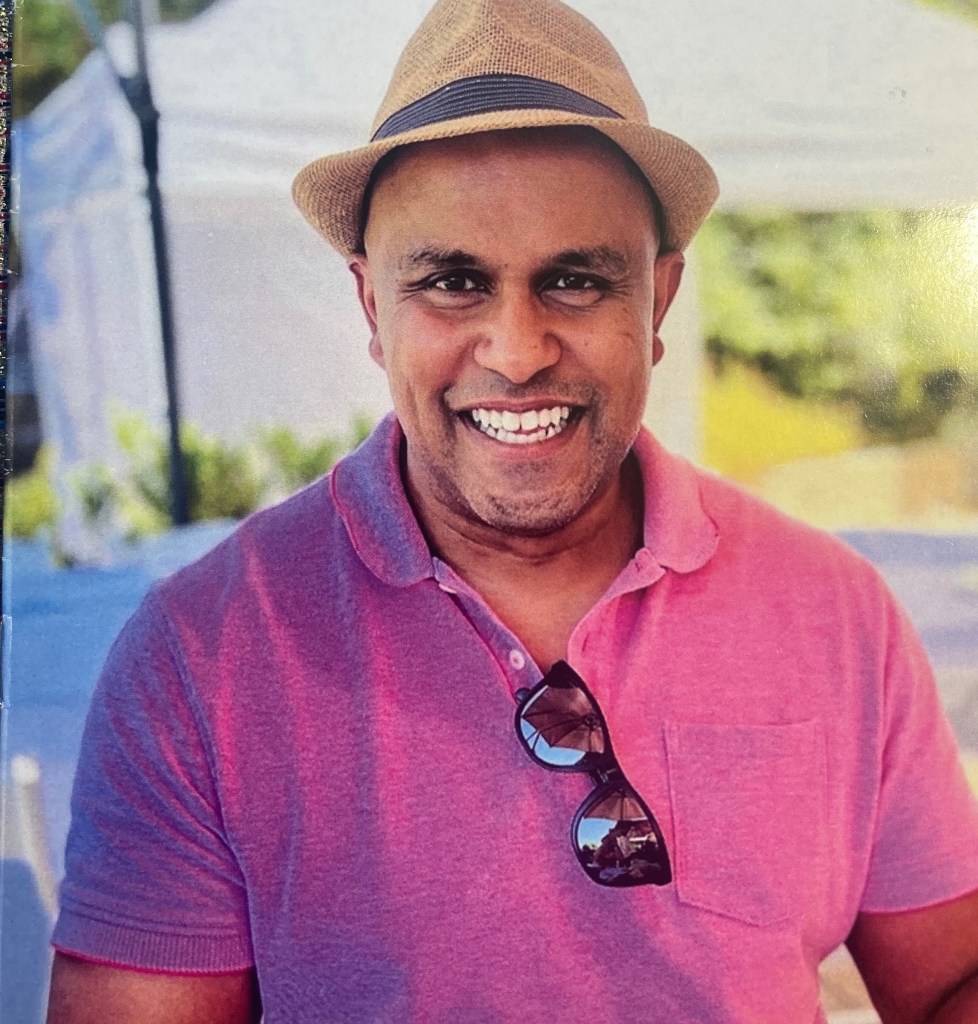
The man Raj, has a wide, wide smile. He has innumerable anguished friends and a family – to which I belong: Raj is my daughter-in-law’s brother, her younger brother who, from earliest times, she lived to protect. Sister and brother planned this holiday time together, with their spouses and children.

The sister landed in Bali only to learn that Raj had fallen, and had undergone emergency surgery that same morning.


In all the deliberating silence doctors search the damage. An early image unveils the haemorrhage-surge that tore through the delicate brain. Later tests answer the question we dread to ask: when stimulated, the unliving brain shows no response.

No flicker, no spark.


The brain subsists in its inscrutable dark. We in our world of talk and think and act, exist utterly separated from Raj. We are exiles from Raj’s new world.


Raj has known this world before. Before his birth, before his conception, Raj existed as thought, as hope, as desire. This world lacked Raj. When he came into being, Raj was answer to prayer, he completed a world.


Now Raj and we inhabit worlds distinct, we with memory, with yearning, and with lack.


Raj’s world is eternal, ours ephemeral. Confined here for our instant of being, we know nothing of eternity. From that place where Raj now abides for all time, time itself is exiled, together with pain.


Who knows, but perhaps prayer lingers there, together with love?


My Ever Fertile Meadows

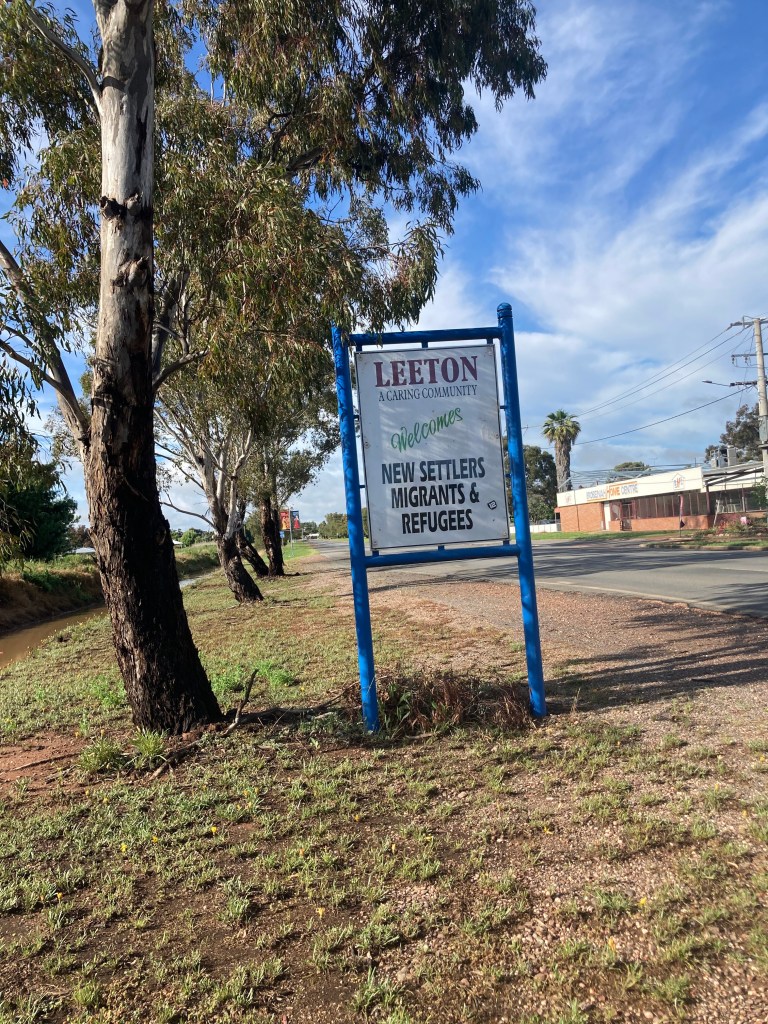
In the early years of my life I dwelled in a paradise called Leeton. Leeton is a small country town in south-west New South Wales, designed by Walter Burley Griffin. Irrigation and imagination provided the infrastructure for small boys to live a life of freedom and adventure. However, quite abruptly, at the age of nine-and-a-half years, I was kidnapped by my parents and transported to a city where I have lived in captivity ever since. 


It never occurred to me until recently that this abruption might be a trauma. But ever since I have contrived to escape the city for short intervals, to breathe cleaner air, to look at horizons, to listen to the silence. It is during such an escape that I am writing this. This escape is different from the many which have preceded it; my beloved is here with me. 


Together my beloved and I have journeyed around the sun almost fifty-three times, but it is only today that we will visit my hometown together. It was here, in this small town that I spent my seed time. Here the seeds germinated; it is from this soil and this sun that the shoots of my whole life spring. The roots persist and grow and they sprout, ever green. This town, those times haunt me. They haunt my loved ones too, to their puzzlement.


Today, perhaps, my beloved will feel her own enchantment. And perhaps she will not. A small town in the country is, after all, a commonplace thing. You can walk the wide streets and find them empty of sound or movement, unremarkable and untouched by charm. Perhaps the charm lies solelyin memories which I have watered and cherished and improved over a lifetime of years.

What will I show her, my beloved? How to water her imagination?


Of course, we’ll visit the old house. The new owner gave us permission to explore alone, trusting us with his own new love. She’ll see the bathroomwhere, behind a locked door, we played Murder in the Chookhouse. I’ll show her the hallway where my younger brother was circumcised. She’ll see the space where we sat in the Succah and celebrated Tabernacles. On the front doorpost we might find the scars of Dad’s mezuzah. I’ll show her the odd, circular window high in the wall of Dad’s old consulting room. That’s how the light got in.

But the obvious landmarks in town, such as the school, the kindergarten, the hospital, the olive oil factory that Dad built, do not call to me as loudly as certain unexpected sites. Will we visit the railway bridge under which we chose to play, drawn by the special allure of the forbidden?  Here we’d come into the domain of the locomotive, hot and blackand noisy, the very embodiment of implacable power. On one occasion we were playing under the bridge as the train entered, with its noise and its smoke. Too thrilled even for terror, we spent perhaps thirty unforgettable seconds in intimate relation to the monster, amazed dumb. I’ve never spoken of this escapade. My beloved will learn of it before you who read this.


Before we sight Leeton, we’ll pass Wamoon, where I’ll stop and we’ll walk across the bridge over the fatal canal. What will she see, what will she feel, this person who knows me so deeply and so long?

I’ll take her into the great park across the street from the old house. I’ll show her where the man lounging on a picnic rug with his girlfriend and a bottle of beer accepted my challenge to wrestle, one slow Shabbat afternoon. Here he pulled down my shorts. I’ll show her the Police Station just around the corner, where, a few days later, I went to report that strange event. Sergeant Stewart walked me to the spot and bid me look around. He asked, ‘Can you see the man you wrestled with?’ I could not, but to oblige the sergeant I pointed to a man at random. Sergeant Stewart observed: ‘Making a false accusation is a serious matter, Howard.’ The officer enlarged my vocabulary.

I’d like the two of us to climb the high boundary wall of Number Two Jarrah Street and peer over into the odd, kite-shaped backyard of my first friend’s home. That home was as much a refuge and a place of love for me as my own home, twenty yards distant. Through one rare day of soaking rain, that friend and I played in a room filled with enormous cardboard cartons, large enough to walk in. When, years later, that house was stolen and became a pizza shop I knew the meaning of sacrilege.


On the morning of our departure in 1955, my friend’s mother stood on her front step and took me and my elder brother into her arms and embracedus. She held us there and she delivered her benediction: You two boys have the duty to become the finest Jewish gentlemen ever – because of what your parents are giving up for you.


My parents? Did they suffer their own trauma? Did this commandment from our gentile friend shape my life?


Perhaps such memories are too strong for others to feel or know. Perhaps, in time, they can become malignant. Perhaps, on the other hand, I need to share them, to lay them bare to new eyes, to exorcise a haunting from the life I share with my beloved.


Afterword:

My beloved came, admired, and fell, quite charmed.